
三星

Search documents
AI眼镜群雄并起 带旺台积电、联发科、玉晶光、达迈等运营
Jing Ji Ri Bao· 2026-01-10 23:15
Group 1 - The demand for AI smart glasses is increasing due to the growing popularity of AI applications and the maturity of lightweight technology, prompting major tech companies like Meta, Google, Samsung, Xiaomi, and Baidu to accelerate product launches [1] - Meta has announced a pause on international market expansion for its AI smart glasses due to high demand in North America and limited production capacity, indicating that consumer demand exceeds market expectations [1] - The introduction of AI language models and advancements in lightweight technology have significantly improved previous pain points of AR and VR glasses, making them more appealing to consumers [1] Group 2 - Major players in the AI smart glasses market include Meta, Google, Samsung, Xiaomi, and Baidu, with Meta leading the market by integrating silicon-based liquid crystal technology and expanding multimodal visual AI features [2] - Meta's use of mature LCoS technology in its new AI smart glasses addresses past issues faced by AR and VR glasses, resulting in a market share of 70% for Meta [2] - Other brands are expected to follow Meta's technological advancements, although they will need to overcome patent barriers set by Meta, indicating a competitive landscape in the AI smart glasses market [2]

喜娜AI速递:昨夜今晨财经热点要闻|2026年1月11日
Sou Hu Cai Jing· 2026-01-10 22:21
Group 1 - China's application for over 200,000 satellite frequency resources to the International Telecommunication Union (ITU) indicates a strategic move to enhance its commercial space industry and compete with SpaceX [2] - Foreign investment in Chinese assets is increasing, with JPMorgan heavily investing in companies like CATL and Innovent Biologics, reflecting confidence in China's economic recovery and the attractiveness of tech stocks [2] - The price surge in storage chips is impacting downstream consumer electronics, leading to price increases from major PC manufacturers and a downward revision of shipment expectations for smartphones and laptops [2] Group 2 - Over 40 banks have issued announcements for large-denomination time deposits, with a clear trend towards shorter maturities and declining interest rates, influenced by factors such as net interest margin pressure and monetary policy [3] - The State Council's investigation into the competitive landscape of food delivery platforms aims to address issues of excessive competition and promote fair practices within the industry [3] - The Ministry of Finance announced the cancellation of VAT export rebates for solar products starting April 1, 2026, which is expected to help eliminate low-quality competition and promote healthy industry development [3] Group 3 - Xiaomi's CEO Lei Jun announced that the Xiaomi SU7 is the only electric sedan to surpass the Tesla Model 3, with ambitious delivery targets set for 2025 and 2026 [4] - Jewelry brands are raising gold prices, with significant increases noted, and analysts predict continued upward movement in gold prices due to geopolitical tensions [5] - Tianpu Co. is under regulatory investigation for stock price manipulation following its ownership change and unclear statements regarding AI business plans, with a stock resumption scheduled [5]



三巨头收缩中国业务?3000亿空窗期来了,中国芯迎来泼天富贵
Sou Hu Cai Jing· 2026-01-10 20:13
Core Viewpoint - The global semiconductor market is approaching a trillion-dollar valuation, with WSTS estimating it at nearly $975 billion, but major companies like ASML, Micron, and Nvidia are retracting their operations in China, leaving a significant gap of nearly 300 billion yuan for domestic manufacturers to fill [1] Group 1: Market Dynamics - ASML, Micron, and Nvidia are key players in the semiconductor industry, with ASML being the sole supplier of lithography machines, Micron consistently ranking among the top three in memory, and Nvidia holding a 95% market share in AI chips in China [1] - The Dutch government plans to raise the export threshold for DUV lithography machines from 7nm to 14nm by October 2025, which is expected to impact ASML's sales and market expectations significantly [1] - ASML's stock dropped over 8% in a single day following the announcement, with market forecasts predicting a revenue decline of more than 10% in the coming year [1] Group 2: Domestic Manufacturers' Response - Domestic companies like Yangtze Memory Technologies (YMTC) and ChangXin Memory Technologies (CXMT) are ramping up production, with YMTC optimizing its Xtacking production line and achieving a 12% increase in speed and an 8% reduction in power consumption [3] - CXMT has increased its LPDDR5 memory speed to 6400MT/s, resulting in a 30% surge in industrial-grade orders, and has begun to receive significant orders from major players like Samsung [3] - Domestic manufacturers are also making strides in lithography and chemical materials, with Shanghai Micro Electronics achieving a 90% yield rate for its 28nm machines and increasing the domestic market share of lithography materials [1][3] Group 3: Challenges and Opportunities - The exit of major players from the Chinese market presents both challenges and opportunities for domestic firms, as they must stabilize yield rates, reduce costs, and build a complete ecosystem [6] - The Chinese semiconductor industry is under pressure to meet ambitious targets, such as the commercial launch of HBM3 by 2025, supported by significant funding from the national big fund [6] - The shift in market dynamics due to the withdrawal of ASML, Micron, and Nvidia is seen as a potential turning point for domestic manufacturers, who need to capitalize on this opportunity to fill the gaps left behind [6]



破 3000 万台!报告称三星 Galaxy S25 系列手机打破安卓魔咒
Xin Lang Cai Jing· 2026-01-10 16:26
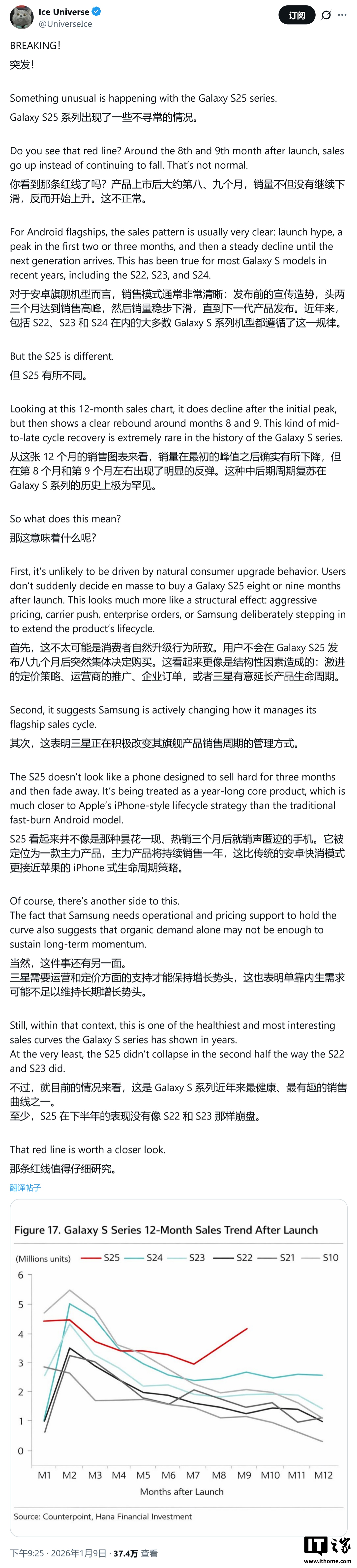
Core Viewpoint - The Samsung Galaxy S25 series has achieved over 30 million units in sales, experiencing an unusual sales rebound in months 8 and 9 post-launch, contrary to typical smartphone sales trends [1][12]. Group 1: Sales Performance - The S25 series has broken the conventional sales pattern, showing a significant rebound in sales during the 8th and 9th months after launch, which is rare in the history of the Galaxy S series [2][12]. - The sales curve of the S25 is one of the healthiest seen in years, as it did not experience the typical decline in the second half of the year, unlike the S22 and S23 models [6][7]. Group 2: Strategic Changes - Samsung appears to be actively changing its flagship sales cycle management, moving away from a fast-burn model to a longer core sales period, similar to Apple's iPhone lifecycle strategy [4][5]. - The sales rebound is attributed to Samsung's strategic adjustments, including aggressive pricing, promotional activities with carriers, and capitalizing on enterprise bulk orders towards the fiscal year-end [12][14]. Group 3: Market Dynamics - The upcoming Galaxy S26 series is expected to have only minor upgrades, which may have led consumers to opt for the already proven and competitively priced Galaxy S25 instead of waiting for the new model [14].
半导体材料:电子特气的国产替代(附77页PPT)
材料汇· 2026-01-10 15:49
Core Viewpoint - The article discusses the industrial gas sector, focusing on the classification, applications, and market dynamics of bulk gases and specialty gases, particularly in the semiconductor industry, highlighting the increasing demand for high-purity electronic gases and the challenges faced by domestic companies in achieving technological advancements and market competitiveness [7][10][39]. Group 1: Industrial Gas Classification - Industrial gases are categorized into bulk gases and specialty gases based on purity and usage. Bulk gases are used in large quantities with purity levels less than or equal to 99.99% (4N), while specialty gases are used in specific applications requiring higher purity [7][9]. - Bulk gases include air separation gases (oxygen, nitrogen, hydrogen) and synthetic gases (acetylene, carbon dioxide), which are essential in various industries such as metallurgy, chemical, and food processing [9][10]. Group 2: Applications of Specialty Gases - Specialty gases are critical in semiconductor manufacturing, particularly in processes like chemical vapor deposition (CVD), etching, and cleaning, where high purity and stability are paramount [12][16]. - The semiconductor industry accounts for 71% of the global demand for electronic specialty gases, with domestic demand in China at 42%, indicating a significant growth opportunity as the industry evolves [40][41]. Group 3: Market Dynamics and Challenges - The electronic specialty gas market is characterized by high entry barriers due to technological, certification, and qualification requirements, making it a capital-intensive and technically demanding industry [20][34]. - Domestic companies are actively pursuing research and development to achieve technological breakthroughs and reduce reliance on foreign suppliers, as many electronic specialty gases are still imported [23][39]. Group 4: Purity and Quality Requirements - The purity of specialty gases is a critical parameter, with requirements often reaching 5N to 6N (99.999% to 99.9999%), which significantly impacts the yield and performance of semiconductor products [25][32]. - The production process for high-purity gases involves complex techniques such as distillation and adsorption, which require advanced technology and expertise [27][29]. Group 5: Customer Relationships and Certification - The certification process for electronic specialty gases is lengthy, with strong customer loyalty due to the critical nature of these gases in production processes, leading to high switching costs for suppliers [30][33]. - Companies must navigate strict regulatory requirements and obtain various certifications to operate in the industrial gas sector, which adds to the complexity of market entry [35][36].
iPhone阵容调整,库克卸任倒计时
Sou Hu Cai Jing· 2026-01-10 13:59
Group 1 - Tim Cook, the current CEO of Apple, has expressed feelings of fatigue and is considering stepping down, potentially as early as this year, with plans to transition to the role of chairman of the board [3][5] - Apple is reportedly accelerating the selection process for Cook's successor, with John Ternus, the Senior Vice President of Hardware Engineering, being a leading candidate [5][8] - The company has not confirmed any details regarding Cook's departure or the identity of his successor, indicating that further confirmation is needed [5] Group 2 - Apple has been preparing for the "post-Cook era" in various ways, suggesting that leadership change is on the agenda [8] - The launch of the next-generation iPhone Air has been delayed due to lower-than-expected sales, with the project removed from the 2026 fall release schedule [8] - Despite the delay, Apple continues to develop the iPhone Air second generation and is considering using Samsung's CoE packaging technology to reduce thickness [9][10] Group 3 - The iPhone Air second generation is expected to feature a 6.5-inch high-refresh-rate display, a 48-megapixel main camera, and a potential additional lens [10] - The upcoming iPhone Fold is anticipated to have a 5.5-inch outer display and a 7.8-inch inner display, with advanced features aimed at enhancing durability and user experience [12] - Apple's product lineup is set for innovative adjustments this year, with the standard version of the iPhone's release pushed to next year [14]

闪迪(SNDK.US):涨价,且必须全款!
智通财经网· 2026-01-10 13:18
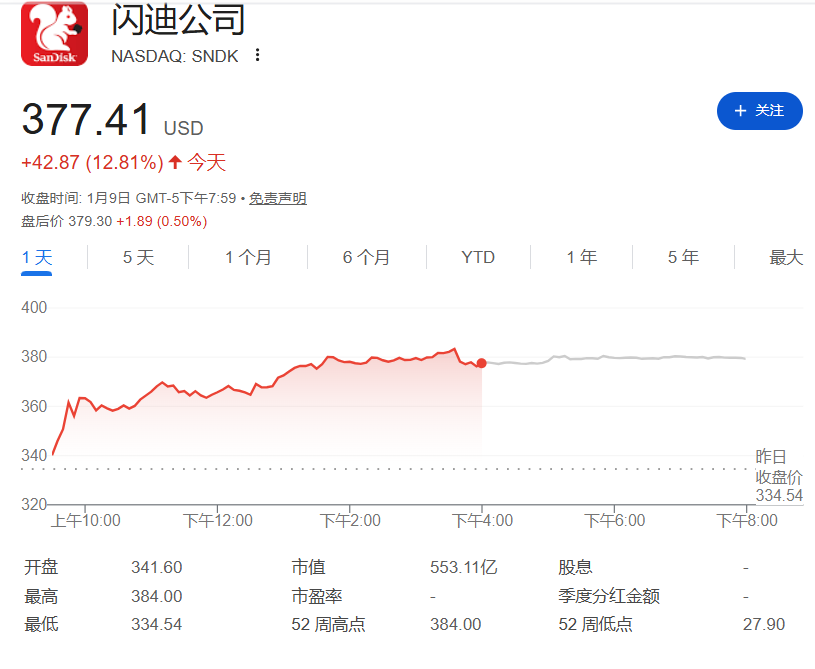
Core Viewpoint - The storage chip market is undergoing a significant transformation driven by AI demand, leading to a seller's market where buyers face unprecedented contract terms and price increases [1][4]. Group 1: Contractual Changes - SanDisk has introduced a "100% cash prepayment" requirement for customers to secure supply quotas for 1 to 3 years, breaking industry norms [1][4]. - This unconventional contract form poses significant cash flow challenges for buyers, as traditional payment methods typically involve installment payments or credit terms [4]. Group 2: Price Increases - SanDisk plans to raise prices for enterprise-grade SSDs by over 100% month-on-month in March, driven by short-term supply shortages and increasing mid-term demand from the AI sector [1][5]. - The demand for enterprise storage is significantly influenced by NVIDIA's inference context memory storage platform, which requires substantial amounts of 3D NAND [5]. Group 3: Supply Chain Dynamics - Major storage manufacturers (Samsung, SK Hynix, Micron) have shifted their production capacity towards higher-margin HBM for AI applications, leading to a structural shortage in standard DDR4/DDR5 and NAND production [6]. - Tech giants like Google and Meta are actively seeking additional capacity and hiring specialized procurement managers to strengthen their supply chain relationships [6]. - Panic buying is prevalent, with companies like Lenovo stockpiling inventory and placing orders for future needs to avoid price hikes and shortages [6].
闪迪:涨价,且必须全款!
Hua Er Jie Jian Wen· 2026-01-10 12:09
Core Insights - The storage chip market is undergoing a significant transformation driven by AI, leading to a seller's market where buyers face unprecedented terms [1] - SanDisk has introduced a "100% cash prepayment" contract model to secure supply for 1 to 3 years, which is a departure from traditional payment methods [3][4] - The price of enterprise-grade SSDs is expected to rise dramatically, with SanDisk planning a price increase of over 100% for high-capacity 3D NAND flash memory chips in March [5] Group 1: Contract Changes - SanDisk's new contract requiring full cash prepayment has disrupted industry norms, posing challenges to buyers' cash flow [3] - The demand for AI infrastructure is forcing some cloud service providers to consider accepting these stringent terms to avoid supply shortages [4] Group 2: Price Increases - The enterprise-grade storage segment is experiencing the most aggressive price hikes, with SanDisk's NAND prices projected to increase significantly [5] - NVIDIA's ICMS platform is identified as a key driver of enterprise storage demand, necessitating substantial 3D NAND consumption [5] Group 3: Supply Chain Dynamics - Major storage manufacturers are reallocating production capacity towards higher-margin HBM for AI applications, leading to a structural shortage in standard DDR4/DDR5 and NAND production [6] - This shift has caused chaos in the supply chain, with buyers increasingly willing to accept short contracts and high prices, even adopting a "buy at any price" mentality [6] Group 4: Market Behavior - Tech giants like Google and Meta are actively seeking additional storage capacity and are restructuring their procurement teams to strengthen ties with manufacturers [8] - Companies like Lenovo are stockpiling inventory and placing early orders to mitigate the impact of price increases and shortages [8]
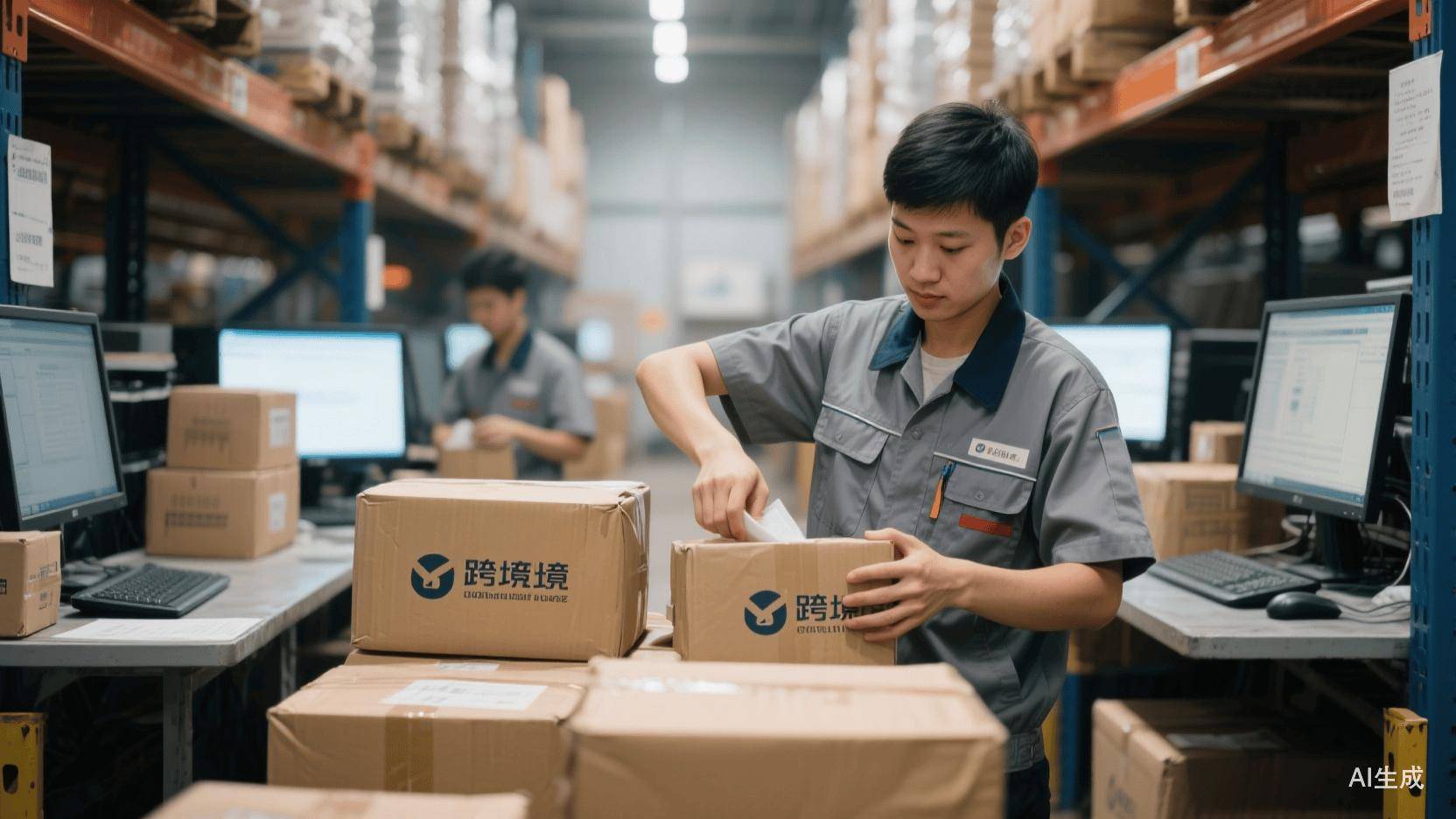
2025年,跨境电商跑进下半场:告别低价,搏杀品牌
Sou Hu Cai Jing· 2026-01-10 11:13
Core Insights - 2025 presents significant challenges for cross-border platforms and merchants due to the end of the "small exemption" policy in the U.S. and the establishment of fixed tariffs by the EU, marking the end of the "low-price direct mail + tax exemption" model that has supported overseas trade for years [2] - Despite the dual pressures of tariffs and compliance, the growth of the "four dragons" of cross-border e-commerce has not slowed, with TikTok Shop and Temu both approaching the $100 billion GMV mark, and the industry focus shifting from North America to Europe and Latin America [2] Summary by Sections 1. Dual Pressure of Tariffs and Compliance - In 2025, cross-border merchants are under the shadow of tariff pressures, with the U.S. imposing a 10% tariff on Chinese goods starting in February, leading to the suspension of tax exemption for packages valued at $800 or less by August [2][3] - A 3C seller noted that tariff costs increased by approximately 25%, erasing price advantages in the consumer electronics sector, prompting many merchants to seek alternative markets, particularly in Europe, where demand for high-quality products is rising [3] - From January to September 2025, exports to the EU reached $20.5 billion, surpassing the total for 2024, while exports to the U.S. dropped significantly [4] 2. Compliance Challenges - The EU plans to impose a fixed tariff of €3 on small packages valued under €150 starting July 1, 2026, indicating a global shift away from the "tax-free era" [7] - New regulations require all platforms serving Chinese operators to report seller identities and transaction data quarterly, marking the entry of cross-border e-commerce into a fully compliant era [8][9] 3. Growth of the "Four Dragons" - Despite challenges, the "four dragons" of cross-border e-commerce are experiencing substantial growth, with TikTok Shop's GMV nearing $100 billion and Temu's projected GMV between $90 billion and $95 billion for 2025 [10] - TikTok Shop's active consumer base reached 400 million, with a fourth-quarter GMV exceeding $25 billion, surpassing eBay [9][10] 4. Shift to European Markets - The four dragons are increasingly focusing on the European market due to U.S. tariff policies, with Temu's monthly active users in Europe surpassing 140 million, a 74% increase year-on-year [12] - SHEIN is also shifting focus to Europe, with projected revenue growth of 30.7% in 2026, expected to exceed U.S. revenue for the first time [12] 5. Brandization as a Consensus - TikTok Shop is recognized as the third fastest-growing brand in the U.S. in 2025, with a 95% increase in large brands earning over $30 million joining the platform [13][14] - SHEIN opened its first permanent store in Paris, aiming to enhance brand image, while AliExpress launched a "super brand plan" to attract top brands [14] 6. Conclusion - The year 2025 has seen Chinese cross-border e-commerce navigating through policy, cost, and market restructuring, with a shift from low-price driven models to brand-focused and diversified market strategies [15] - AI is poised to reshape the e-commerce landscape, with OpenAI introducing instant checkout features, indicating a future where e-commerce platforms evolve into AI-driven shopping experiences [15]
惠普拟采购长鑫存储 DDR5!
Ju Chao Zi Xun· 2026-01-10 07:28
Core Insights - HP plans to incorporate Chinese memory suppliers into its supply chain to alleviate DRAM memory supply constraints amid ongoing shortages from major international manufacturers like Micron and Samsung [1] - Longsys (CXMT), a Chinese memory supplier, is expected to gain broader market recognition through this collaboration, with projected DRAM wafer production capacity reaching 300,000 pieces per month by 2026 [1] - HP's CEO Enrique Lores indicated that the company anticipates significant challenges in the second half of 2026 and may raise prices if necessary, as memory costs account for 15% to 18% of the average PC cost [1] Industry Context - In the context of ongoing global memory supply shortages, Chinese memory suppliers have emerged as competitive alternatives, particularly as Longsys has not yet significantly shifted its production capacity towards HBM [2] - The output from Longsys is expected to alleviate supply pressures in the consumer market until the demand for memory in the artificial intelligence sector stabilizes [2]
