福耀玻璃

Search documents
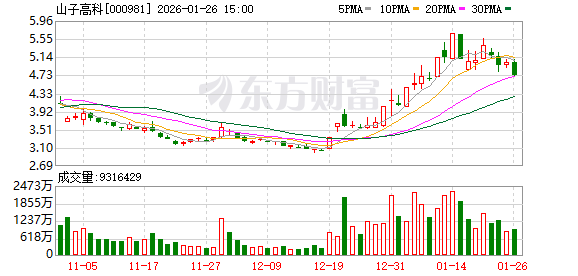
汽车行业今日净流出资金92.66亿元,山子高科等27股净流出资金超亿元
Zheng Quan Shi Bao Wang· 2026-01-26 09:24
Market Overview - The Shanghai Composite Index fell by 0.09% on January 26, with 10 sectors experiencing gains, led by non-ferrous metals and petroleum & petrochemicals, which rose by 4.57% and 3.18% respectively [2] - The sectors with the largest declines were defense & military and automotive, which dropped by 4.47% and 2.31% respectively [2] - Overall, there was a net outflow of 114.32 billion yuan in the main funds across the two markets, with six sectors seeing net inflows [2] Automotive Industry - The automotive sector experienced a decline of 2.31%, with a net outflow of 9.27 billion yuan in main funds [3] - Out of 284 stocks in the automotive sector, 31 stocks rose while 246 stocks fell, with 5 stocks hitting the daily limit down [3] - The stocks with the highest net inflow included Huamao Technology with 87.69 million yuan, followed by Smart Agriculture and Zhaomin Technology with 71.94 million yuan and 53.44 million yuan respectively [3] Fund Flow Analysis - The automotive sector had 76 stocks with net inflows, while 27 stocks had net outflows exceeding 100 million yuan [3] - The stocks with the largest net outflows included Shanzigaoke with 638.27 million yuan, Chaojie Co. with 535.61 million yuan, and Top Group with 497.19 million yuan [5] - The top gainers in terms of fund inflow included Huamao Technology, Smart Agriculture, and Zhaomin Technology, while the top losers included Shanzigaoke, Chaojie Co., and Top Group [5]





汽车行业:26年数据点评系列之一:乘用车25年复盘和26年展望:从“量稳价缓”到“价升量稳”
GF SECURITIES· 2026-01-26 01:49
Investment Rating - The industry investment rating is "Buy" [2] Core Insights - The report indicates a transition from "stable volume and slow price" to "price increase and stable volume" for the automotive industry in 2026 [6][16] - The domestic demand for passenger vehicles is expected to show positive growth in 2026, supported by policies such as scrapping and replacement subsidies [27][28] - The report highlights that the average selling price (ASP) of passenger vehicles is projected to increase, with a notable rise in ASP observed in December 2025 [16][20] Summary by Sections 1. Passenger Vehicle Sales and Market Dynamics - In December 2025, domestic passenger vehicle sales reached 2.278 million units, a year-on-year decrease of 16.4% but a month-on-month increase of 13.6% [16] - The total sales for 2025 were 23.052 million units, reflecting a slight year-on-year increase of 0.6% [16] - The report notes that December's performance was significantly below seasonal norms, attributed to the suspension of scrapping subsidies in some regions [16] 2. ASP Trends and Market Expectations - The ASP for passenger vehicles in 2025 showed a year-on-year decline of 2.1%, with December 2025 ASP increasing by 13.7% compared to the previous year [16][20] - The report anticipates that the continuation of scrapping policies will enhance the sales of mid-to-high-end vehicles, contributing to price increases [27] 3. Inventory and Supply Chain Considerations - As of December 2025, the inventory of passenger vehicles stood at 4.708 million units, with a dynamic inventory-to-sales ratio of 2.48 [40] - The report suggests that short-term inventory risks are manageable, as leading domestic manufacturers may adjust production based on current demand [40] 4. Investment Recommendations - The report recommends focusing on various companies within the passenger vehicle supply chain, including Geely, BYD, and Xpeng Motors for growth potential [6][27] - It also highlights companies like Great Wall Motors and SAIC Group as having potential turning points in their performance [6][27]



汽车行业周报:补贴政策变化致25Q4翘尾现象消失,对26年需求透支有所减少-20260125
GF SECURITIES· 2026-01-25 09:48
Investment Rating - The report provides a "Buy" rating for several companies in the automotive sector, indicating an expected performance that will exceed the market by more than 10% over the next 12 months [5][22]. Core Insights - The change in subsidy policies has led to the disappearance of the tail effect in Q4 2025, resulting in a reduction of demand overdraw for 2026. In December 2025, the number of insured vehicles was 2.278 million, down 16.4% year-on-year but up 13.6% month-on-month. The total number of insured vehicles for the year reached 23.047 million, a slight increase of 0.6% year-on-year, with the penetration rate of new energy vehicles rising to 54.0%, an increase of 7.1 percentage points year-on-year [4][7][16]. Summary by Sections 1. Changes in Subsidy Policies - The report highlights that the changes in subsidy policies have caused consumers to adopt a wait-and-see approach, leading to a decrease in demand overdraw for 2026. The expectation is that as replacement subsidy application channels open, pent-up demand will materialize, and the domestic terminal market will trend towards "price increase and stable volume" [4][7]. 2. PHEV Market Share Tracking - The focus is on the performance of PHEV market shares, particularly for BYD and Geely, as the "mid-level assisted driving equity" leads to share differentiation. The report emphasizes the importance of monitoring configuration adjustments and terminal discount changes to understand further market share differentiation [9][16]. 3. Recent Report Insights - The report notes that the passenger vehicle inventory saw a slight reduction in December 2025, with an estimated 1.5 million vehicles in demand waiting to be fulfilled. The overall industry theme for 2025 was "emerging from deflation," with a judgment of "stable volume and slow price increase" being validated. The outlook for 2026 remains "price increase and stable volume," differing from market consensus due to regulatory changes and risk-return assessments [16][17]. 4. Investment Recommendations - The report suggests a "shelf-style" investment approach, recommending various companies across the passenger vehicle chain. Right-side targets include Geely, BYD, and others, while left-side targets include Great Wall Motors and Changan Automobile. In the commercial vehicle chain, recommended companies include China National Heavy Duty Truck Group and Weichai Power [17].
汽车行业研究周报:小鹏汽车全球累计布局超60国家 宇树2025年人形机器人出货量超5500 台
Xin Lang Cai Jing· 2026-01-25 08:35
Group 1: Industry Developments - Geely's self-developed all-solid-state battery is set to complete its first Pack offline this year and will undergo vehicle validation [1] - Tesla has quietly adjusted its Model S, 3, X, Y, and Cybertruck models in the U.S. by removing the standard Autopilot basic driving assistance feature following Musk's announcement of a full shift to FSD subscription [1] - Xiaopeng Motors has established over 1,000 sales outlets globally, expanding to 60 countries [1] - Yushutech announced that it will exceed 5,500 units of humanoid robot shipments by 2025, with over 6,500 units of this category expected to be mass-produced [1] Group 2: Market Performance - The CSI 300 Index fell by 0.62% this week, while the automotive sector rose by 2.21%, ranking 8th among A-share primary industries [2] - The passenger vehicle II index decreased by 0.67%, with Xiaopeng Motors and Geely leading the gains [2] - The commercial vehicle index increased by 7.38%, with Weichai Power and Jinbei Auto leading the gains [2] - The automotive parts index rose by 2.70%, with Aikalan and Jiaoyun Co. leading the gains [2] Group 3: Investment Recommendations - In the passenger vehicle segment, demand for domestic high-end luxury vehicles exceeds expectations, and with an expanding product matrix, performance is expected to ramp up, recommending Jianghuai Automobile and Seres, with Geely as a beneficiary [3] - In the parts sector, the industry's profitability is expected to turn upward against a backdrop of reduced internal competition, with high growth potential, recommending Desay SV, Zhejiang Xiantong, Meili Technology, Bojun Technology, and Jingu Co., with Weichai Power, Kobot, Huayu Automotive, and others as beneficiaries [3]

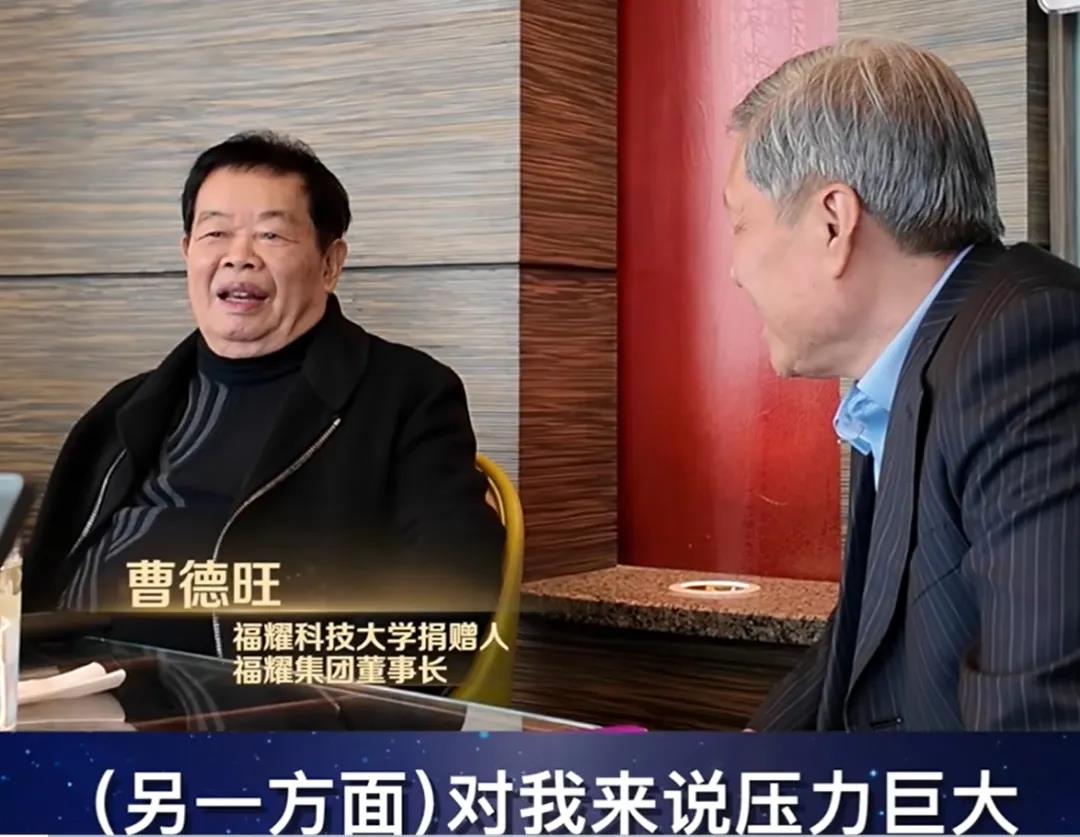
曹德旺预警实锤!2026年房价 3 大巨变来袭,多套房持有者怎么办?
Xin Lang Cai Jing· 2026-01-24 12:26
Core Viewpoint - The real estate market is undergoing significant changes, moving away from a universal appreciation phase to a differentiated landscape where assets are either valuable or burdensome. The warning from Fuyao Glass founder Cao Dewang about the unsustainable nature of real estate speculation has proven accurate as of 2026, with a substantial increase in the number of second-hand homes listed and rising holding costs, necessitating a strategic adjustment for property owners [1]. Group 1: Market Dynamics - The era of universal price increases in real estate has ended, with a stable differentiation emerging between core and peripheral areas. This shift is driven by population movement, resource concentration, and industrial support, leading to a widening gap in property values [3]. - Core areas in first-tier and strong second-tier cities show resilience, with new home prices in regions like Haidian in Beijing and Lujiazui in Shanghai experiencing slight increases of 2%-3% in 2025, while demand remains stable [3]. - In stark contrast, third- and fourth-tier cities are experiencing prolonged price declines, with a net population outflow of 3.12 million in 2025 and predictions of a further 10% drop in prices in 2026 [5][6]. Group 2: Holding Costs - The cost of holding real estate is on the rise, with many property owners facing significant financial pressure. Despite a decrease in the LPR to 3.5%, many owners who purchased at higher rates are still burdened by interest rates above 5% [8]. - Daily operational costs for properties are increasing, with annual expenses for a 100 square meter property estimated at a minimum of 5,000 yuan, alongside additional taxes for properties valued at 2 million yuan [8]. - The rental market is weakening, particularly in third- and fourth-tier cities, where rental prices have dropped by 10%-15% annually, making the "rent to pay mortgage" model unviable [8]. Group 3: Product Logic and Market Trends - The market is witnessing a fundamental shift in product logic, with a return to the core residential nature of real estate. Buyers are prioritizing living quality, amenities, and property services, leading to the accelerated elimination of inferior properties [9]. - Demand for quality housing has increased, with properties sized between 90-144 square meters now accounting for 45% of transactions. High-quality developments continue to see stable sales despite higher prices, while older, poorly designed properties struggle to sell [9][10]. - The market is re-evaluating property values, emphasizing quality over quantity. Properties in core areas with scarcity and practicality maintain their value, while inferior properties face ongoing depreciation [10]. Group 4: Strategies for Property Owners - Property owners should proactively optimize their asset portfolios by selling off weaker properties and retaining stronger ones. This includes divesting from non-core, older, or poorly located properties that are unlikely to recover in value [11]. - Focus should be placed on retaining quality assets in prime locations, such as newer properties near transportation and amenities, which are expected to remain resilient in the market [11]. - Owners are encouraged to leverage policy incentives and manage cash flow effectively, ensuring that debt levels remain manageable and exploring opportunities to upgrade their asset portfolios by selling weaker properties and investing in stronger ones [12].
宏观对话行业-出海的-第二增长曲线
2026-01-23 15:35
Summary of Key Points from Conference Call Records Industry Overview - **Macro Dialogue Industry**: The acceleration of Chinese enterprises going abroad is expected to continue until mid-2027, initially focusing on infrastructure sectors such as construction machinery, logistics equipment, and power equipment, transitioning to manufacturing equipment in the second half of 2026, followed by local production and operational phases [1][3] Core Insights and Arguments - **Currency and Debt Risk Mitigation**: Chinese enterprises can reduce exchange rate and debt risks through the internationalization of the RMB and the establishment of international financial infrastructure, such as the Hong Kong Gold Exchange. For instance, investments in Egypt can now be made directly in RMB [1][4][5] - **Innovative Drug Export Stages**: The export of innovative drugs is categorized into three stages: licensing out (collaborating with top global pharmaceutical companies), independent development (self-research and international clinical trials), and global sales. Significant increases in licensing transactions are expected by 2025, with investment opportunities in bispecific antibodies, ADC drugs, and weight-loss medications anticipated for 2026 [1][8][9][10] - **Basic Chemical Industry Advantages**: The basic chemical industry ranks fourth in direct exports, leveraging its industrial chain and scale advantages to gain market share and price advantages in overseas markets, benefiting from the "East rises, West declines" trend [1][11][12] Emerging Opportunities - **Automotive Industry Export Growth**: The export of passenger vehicles is projected to reach 6.5 million units in 2026, with over 50% being new energy vehicles. Companies like BYD are expected to perform well, with a target of 1.5 million units for 2026 [2][22][23] - **Household Appliance Industry Strategies**: The household appliance sector employs strategies such as OEM, acquisitions of local brands, and independent brand expansion. Companies like Midea and Haier have established a global presence, with significant contributions from vacuum cleaner and small appliance sectors [1][17][20] Systemic Risks and Financial Innovations - **Systemic Risks in Going Abroad**: Geopolitical risks, emerging market debt risks, and exchange rate inflation have historically suppressed overseas revenue valuations. However, these risks are expected to ease starting in 2026, allowing for more stable international operations [4][6][7] - **Debt Risk Reduction for Emerging Markets**: High interest rates in emerging markets limit their ability to mitigate debt risks. China can help by issuing sovereign debt backed by commodities like gold, thereby lowering financing costs and default risks for these countries [6] Future Role of Chinese Enterprises - **Global Economic Order Evolution**: As the old order disintegrates, China's strategic push for international financial infrastructure and RMB internationalization is expected to significantly reduce systemic risks for outbound enterprises, enhancing their role in the global economy, particularly in Asia, Africa, and Latin America [7] Investment Focus Areas - **Key Investment Areas**: Attention should be directed towards the tire industry, pesticide formulations, fertilizers, and products benefiting from downstream exports, such as long filaments and spandex, which show strong growth potential [16] Conclusion - The conference call highlighted the ongoing transformation and international expansion of Chinese enterprises across various sectors, emphasizing the importance of strategic adaptation to global market dynamics and the potential for significant investment opportunities in the coming years.

汽车行业双周报(2026、1、9-2026、1、22):中欧电动汽车反补贴案达成积极成果-20260123
Dongguan Securities· 2026-01-23 09:41
Investment Rating - The report maintains an "Overweight" rating for the automotive industry, indicating an expectation that the industry index will outperform the market index by more than 10% in the next six months [42]. Core Insights - The report highlights positive developments in the China-Europe electric vehicle anti-subsidy negotiations, which are expected to boost market confidence and create a stable business environment for Chinese automakers in Europe. This is anticipated to lead to a release of previously suppressed export demand in the short term [38]. - The automotive sector has shown resilience, with the Shenyin Wanguo automotive index rising 2.84% over the past two weeks, outperforming the CSI 300 index by 3.13 percentage points [9][11]. - The report suggests monitoring the export data of various automakers for marginal improvements following the recent policy developments [38]. Industry Data Tracking - In December 2025, China's automotive production was 3.296 million units, a year-on-year decrease of 2.1%, while sales were 3.272 million units, down 6.2% year-on-year. However, exports reached 753,000 units, marking a 49.4% increase year-on-year [15][16]. - The dealer inventory warning index for November was reported at 57.70%, reflecting a year-on-year increase of 7.50 percentage points [15]. Industry News - Guangdong province is promoting the orderly opening of autonomous driving testing applications, expanding the areas for high-level autonomous driving [23]. - The total number of electric vehicle charging facilities in China has surpassed 20 million, with a year-on-year growth of 49.7% [26]. - The Ministry of Finance has introduced a loan interest subsidy policy for small and micro enterprises, focusing on key industries including new energy and automotive [27]. Corporate News - Hongqi has successfully launched its first solid-state battery prototype, marking a significant step in battery technology [31]. - Geely has introduced the Galaxy V900, a luxury MPV with a starting price of 269,800 yuan, featuring advanced AI capabilities [32]. - Chery has invested in a self-driving chip design company, enhancing its technological capabilities in autonomous driving [34]. Investment Recommendations - The report recommends focusing on companies that are actively expanding into overseas markets, such as BYD and Seres, as well as those in the intelligent driving supply chain like Fuyao Glass and Joyson Electronics [38][39].
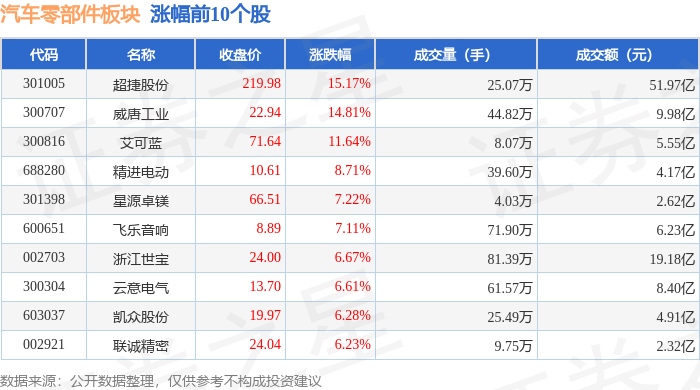
汽车零部件板块1月23日涨1.5%,超捷股份领涨,主力资金净流入5.08亿元
Zheng Xing Xing Ye Ri Bao· 2026-01-23 09:04
证券之星消息,1月23日汽车零部件板块较上一交易日上涨1.5%,超捷股份领涨。当日上证指数报收于 4136.16,上涨0.33%。深证成指报收于14439.66,上涨0.79%。汽车零部件板块个股涨跌见下表: | 代码 | 名称 | 主力净流入(元) | 主力净占比 游资净流入 (元) | | 游资净占比 散户净流入 (元) | | 散户净占比 | | --- | --- | --- | --- | --- | --- | --- | --- | | 000338 | 潍柴动力 | 3.55 Z | 7.48% | -2.52 Z | -5.31% | -1.03 Z | -2.17% | | 301005 | 超捷股份 | 2.28亿 | 4.38% | -296.97万 | -0.06% | -2.25 Z | -4.32% | | 601689 拓普集团 | | 1.81亿 | 5.03% | 1874.19万 | 0.52% | -2.00 Z | -5.55% | | 603119 | 浙江荣泰 | 1.77 Z | 8.61% | -6571.23万 | -3.21% | -1.11 乙 | -5 ...
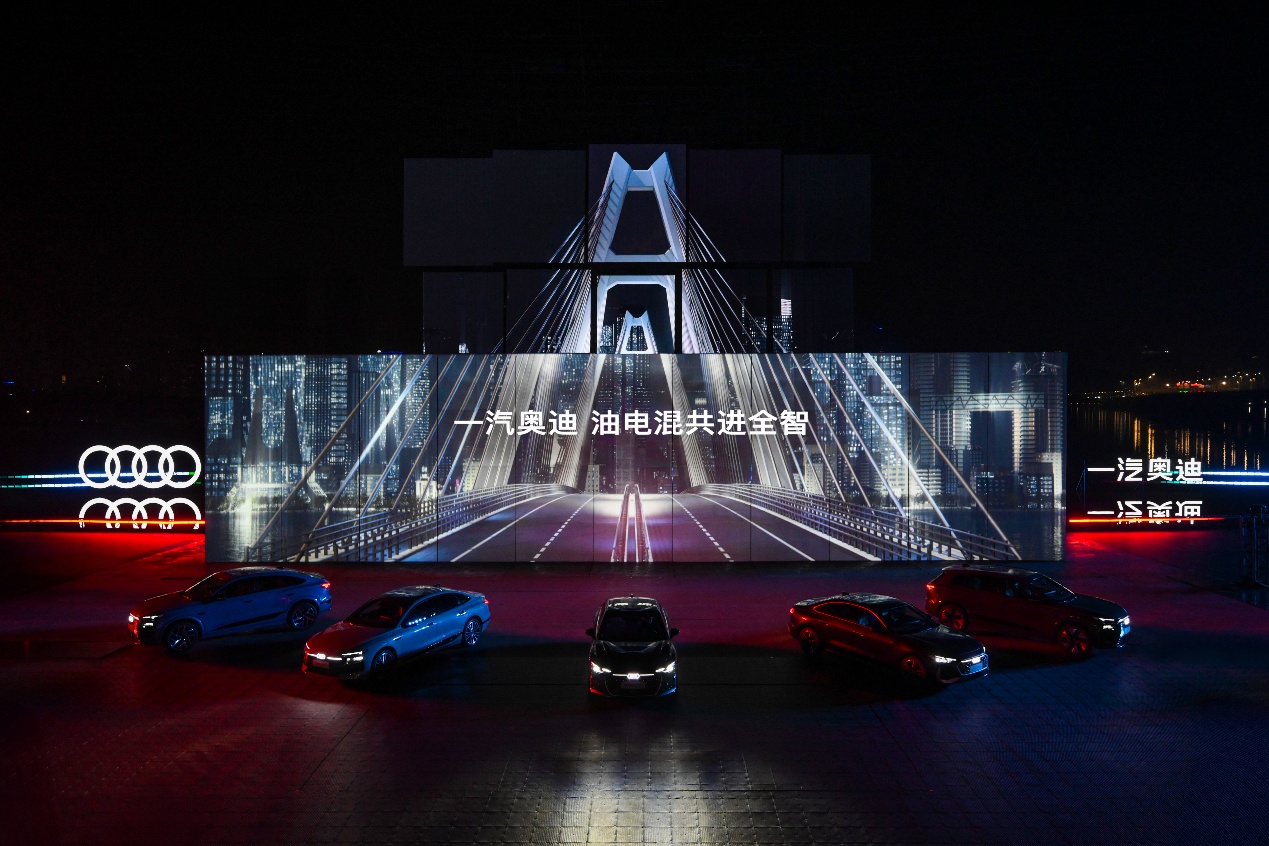
一汽奥迪,从未停止的技术突破
Di Yi Cai Jing· 2026-01-23 06:50
Core Insights - FAW Audi has achieved a significant milestone by becoming the first luxury automotive brand in China to reach ten million users, marking a pivotal moment in the high-quality development of the Chinese automotive industry [1][3][9] Group 1: Company Development - FAW Audi's development trajectory has closely aligned with the upgrade of the Chinese automotive industry, transitioning from technology introduction to full localization of the value chain [3][4] - The ten million user milestone reflects not just market growth but also the brand's leadership and evolution of cross-national cooperation models [3][4] - Over 38 years, FAW Audi has become a benchmark in the luxury car sector, reshaping the market through continuous innovation and ecosystem upgrades [4][5] Group 2: Market Strategy - FAW Audi has pioneered the introduction of localized products, such as the extended wheelbase design of the Audi A6, which has become a standard in the luxury segment [5][6] - The company has developed a comprehensive product matrix that includes both fuel and electric vehicles, catering to diverse consumer needs [5][8] - FAW Audi's introduction of the 4S sales service system has standardized service quality in the automotive industry, enhancing customer experience [6][9] Group 3: Technological Innovation - The company has launched the "Oil-Electric Hybrid Intelligent" strategy, introducing platforms that provide advanced smart experiences for both fuel and electric vehicles [8][11] - The collaboration with Huawei on the Q5L model exemplifies the integration of traditional automotive manufacturing with cutting-edge technology [11][12] Group 4: Economic Contribution - FAW Audi has contributed over 100 billion yuan in taxes over 38 years, supporting local and national economic development [13] - The brand's technological advancements have elevated China's position in the global automotive value chain, contributing to high-quality economic growth [13][15] Group 5: Industry Evolution - The achievement of ten million users signifies a shift in the cross-national cooperation model from "market for technology" to "value co-creation," providing a framework for high-quality development in the automotive sector [10][15] - FAW Audi's approach emphasizes long-term collaboration and innovation, setting a standard for future global automotive partnerships [15]
福耀科技大学50名大一学生被企业抢光?校长王树国回应:本科生不是目标 要把他们培养成卓越创新人才!曹德旺曾称“对标斯坦福”
Mei Ri Jing Ji Xin Wen· 2026-01-22 16:51
日前,"福耀科技大学大一50名学生已被企业抢光"的消息引发众多关注。 2025年3月11日,福建省人民政府办公厅在微信公众号发布关于设置福建福耀科技大学的通知。《函件》披露,教育部同意福建福耀科技大学首批设置计 算机科学与技术、智能制造工程、车辆工程、材料科学与工程等4个普通本科专业,学校全日制,在校生规模暂定为8000人。 福建福耀科技大学办学许可证信息显示,该校由河仁慈善基金会举办,王树国担任校长,学校类型为全日制普通本科学校。 据新京报报道,"要说定也对,因为去的企业太多了,每个企业去都跟我们说你们学生太好了。但是如果说这么早就把学生就业去处完全确定了,我们还 没这心思,本科生并不是福耀科技大学的培养目标,而是要把孩子培养成硕士、博士,培养成卓越创新人才。至于孩子们未来上哪一艘'大船',需要孩子 们自己选择。"王树国说。 王树国还提到,在就业焦虑的背景下,公众对学校投入了很多关注,这无可厚非,同时大家应该也已经感受到了拔尖创新人才培养的过程非常艰苦,不是 那么轻而易举的。"不是说到工厂转两圈,就是拔尖创新人才了。" 谈及新一年的招生规模,王树国表示,具体还需要等待教育部批准才能确定。"多于50名是肯定的 ...