联影医疗

Search documents
医药生物行业2026年投资策略:关注创新出海,重视新技术方向
Guoxin Securities· 2026-01-26 15:27
Core Insights - The report emphasizes the importance of innovation in the pharmaceutical and biotechnology industry, particularly focusing on the overseas expansion of innovative drugs and the adoption of new technologies [1][4]. - The investment rating for the sector is maintained at "outperform the market" [2]. Group 1: Market Overview and Trends - The overseas market for innovative drugs and the CXO industry is expected to perform exceptionally well in 2025, driven by continuous business development (BD) activities, strong clinical data, and supportive policies [4]. - The domestic supply and demand remain stable, with a shift in payment systems favoring innovation. National health expenditure increased by 4.7% year-on-year in the first 11 months of 2025, marking a recovery after two years of decline [4]. - The report highlights the significant growth potential in new drug forms such as dual antibodies and small nucleic acid drugs, as well as innovations in AI healthcare and brain-machine interfaces [4]. Group 2: Investment Recommendations - The report recommends focusing on companies with global competitiveness and differentiated innovation capabilities, as well as domestic CXO leaders with high barriers in cost control, technology accumulation, and production capacity [4]. - Recommended stocks include Mindray Medical, WuXi AppTec, Kelaiying, Aier Eye Hospital, and several others, with specific mention of H-shares like Kelun-Bio and CanSino Biologics [4][5]. Group 3: Financial Performance and Projections - The report provides a detailed strategy portfolio for 2026, listing companies along with their projected net profits and price-to-earnings (PE) ratios, indicating a generally positive outlook for the sector [5]. - The pharmaceutical sector's overall performance in 2025 was strong, with significant gains in sub-sectors such as medical services and chemical pharmaceuticals, driven by BD collaborations and clinical data releases [12][23]. Group 4: Fund Holdings and Market Sentiment - As of Q4 2025, the net asset value of pharmaceutical funds decreased by 9.0%, with a notable shift where passive funds surpassed active funds for the first time since 2019 [25][32]. - The report indicates a decline in the proportion of pharmaceutical holdings in both active and non-pharmaceutical funds, with a concentration in chemical preparations and other biological products [32][40].





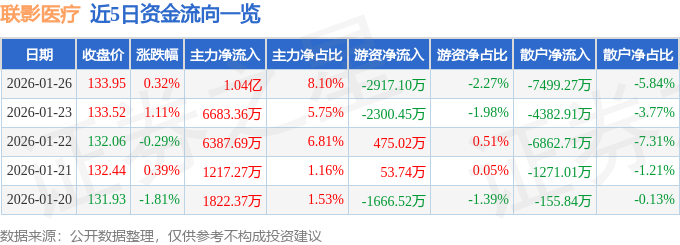
股票行情快报:联影医疗(688271)1月26日主力资金净买入1.04亿元
Sou Hu Cai Jing· 2026-01-26 12:53
证券之星消息,截至2026年1月26日收盘,联影医疗(688271)报收于133.95元,上涨0.32%,换手率 1.16%,成交量9.58万手,成交额12.85亿元。 联影医疗2025年三季报显示,前三季度公司主营收入88.59亿元,同比上升27.39%;归母净利润11.2亿 元,同比上升66.91%;扣非净利润10.53亿元,同比上升126.94%;其中2025年第三季度,公司单季度主 营收入28.43亿元,同比上升75.41%;单季度归母净利润1.22亿元,同比上升143.8%;单季度扣非净利 润8761.41万元,同比上升126.24%;负债率30.08%,投资收益6068.47万元,财务费用-4382.33万元,毛 利率47.02%。联影医疗(688271)主营业务:提供高性能医学影像设备、放射治疗产品、生命科学仪 器及医疗数字化、智能化解决方案。 1月26日的资金流向数据方面,主力资金净流入1.04亿元,占总成交额8.1%,游资资金净流出2917.1万 元,占总成交额2.27%,散户资金净流出7499.27万元,占总成交额5.84%。 近5日资金流向一览见下表: | | | | | 日期 收盘价 ...

氪星晚报|爱立信预计2026年继续裁员5000人;马化腾:腾讯唯一花钱投入比较多的就是AI;肯德基外卖涨价,平均上调0.8元
3 6 Ke· 2026-01-26 10:24
Group 1: Company Developments - Jia Guolong, founder of Xibei Catering Group, announced a return to frontline operations, focusing on core business rather than personal branding, with an expected cumulative loss exceeding 600 million yuan from September 2025 to March 2026, and plans to close 102 stores, accounting for 30% of total outlets [1] - Ericsson's CEO Börje Ekholm indicated plans to continue layoffs, with approximately 5,000 employees expected to be cut in 2025 and a similar reduction anticipated in 2026 [3] - Merck has ceased acquisition talks with Revolution Medicines, which was valued at around 30 billion yuan, due to disagreements on pricing, although negotiations could potentially resume [6] Group 2: Market Trends and Pricing - KFC has raised delivery prices by an average of 0.8 yuan while keeping dine-in prices unchanged, citing the need to address operational cost changes [5] - The Chinese Ministry of Commerce emphasized the country's commitment to high-level opening-up and innovation in trade, positioning China not only as a global factory but also as a significant market for international products [9] - The service retail sector in China is projected to grow by 5.5% in 2025, with notable growth in cultural, leisure, tourism, and transportation services [10] Group 3: New Product Launches - United Imaging Medical announced the approval of its innovative dual-source CT, uCT SiriuX, by the National Medical Products Administration (NMPA) [7] Group 4: Investment Activities - CVC Capital Partners has agreed to acquire Marathon Asset Management for a total consideration of up to 1.2 billion USD, including 400 million USD in cash and up to 800 million USD in CVC equity [8]
科创板收盘播报:科创综指跌2.23% 体外诊断和疫苗领域相关股涨幅靠前
Zhong Guo Jin Rong Xin Xi Wang· 2026-01-26 07:51
Market Performance - The Sci-Tech 50 Index opened slightly higher on January 26 but experienced a significant drop after an initial rise, closing down by 1.35% at 1532.80 points with a total trading volume of approximately 108.9 billion yuan, a slight decrease from the previous trading day [1] - The Sci-Tech Comprehensive Index also opened slightly higher but fell sharply, closing down by 2.23% at 1857.50 points, with a total trading volume of about 344.9 billion yuan, which was an increase compared to the previous trading day [1] Stock Performance - Among the stocks listed on the Sci-Tech board, 109 stocks rose, accounting for approximately 18.17% of the total, while the majority experienced declines [1] - Notable gainers included Zhijiang Biology, Yike De, Ruihua Tai, and Jindike, which all reached a limit-up of around 20% [2] - In contrast, Xinke Mobile saw the largest decline, dropping by 18.15% [2] Trading Metrics - The average decline for the 600 stocks on the Sci-Tech board was 2.12%, with an average turnover rate of 4.20% and a total trading volume of 344.9 billion yuan, reflecting an average fluctuation of 5.96% [1] - Lanqi Technology had the highest trading volume at 11.289 billion yuan, while ST Pava recorded the lowest at 951.73 million yuan [3] - Yike De led in turnover rate at 30.41%, while Bairen Medical had the lowest turnover rate at 0.22% [4]
2026中国创新医疗图景:源头活水何在,产业生态又将如何重塑?
Xin Lang Cai Jing· 2026-01-26 06:56
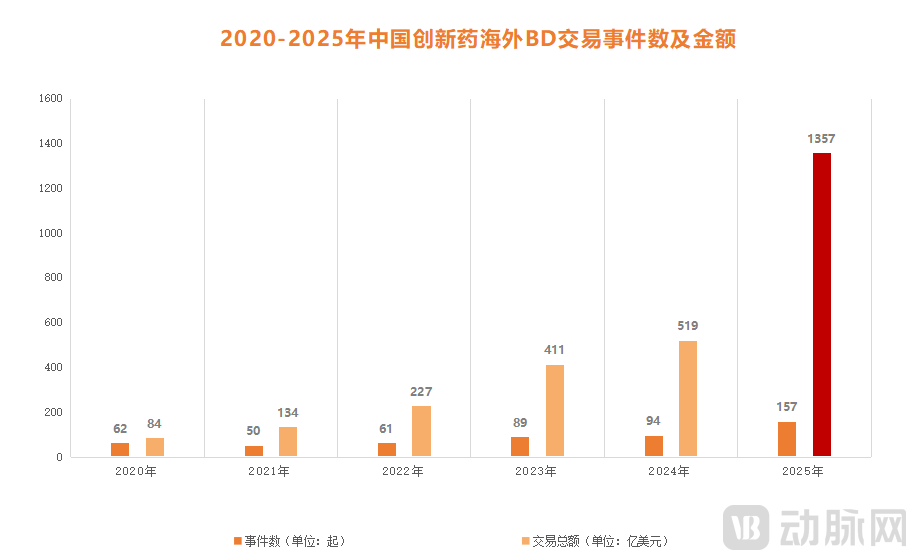
Core Insights - The Chinese healthcare industry experienced a significant surge in 2025, marked by a record number of innovative medical devices and drugs approved for market entry, indicating a growing focus on innovation in the sector [1][3] - The total value of overseas business development (BD) transactions for innovative drugs reached $135.7 billion in 2025, accounting for 49% of the global total, surpassing the United States for the first time [3] - The IPO market for healthcare companies in China saw a revival, with 37 companies successfully listed in 2025, doubling the number from 2024, reflecting strong investor interest in the sector [7] Innovation in Medical Devices and Drugs - In 2025, 109 innovative medical devices were approved, with a 19.67% year-on-year increase in Class III devices, while 76 innovative drugs were approved, focusing on advanced fields like oncology and autoimmune diseases [1] - The rapid growth in innovative drug approvals and medical device registrations highlights China's increasing capabilities in healthcare innovation [1][8] Business Development and Market Dynamics - The number of overseas BD transactions for innovative drugs reached 157 in 2025, with a total transaction value of $135.7 billion, both figures representing historical highs [3] - The increasing recognition of Chinese innovative drugs by global pharmaceutical companies is evident, particularly as they face pressures from patent expirations and global competition [8] IPO Activity and Market Sentiment - The healthcare sector in China saw a resurgence in IPO activity, with 37 companies going public in 2025, compared to 17 in 2024, indicating a robust market sentiment [7] - Over 60 healthcare companies are currently in the IPO pipeline on the Hong Kong Stock Exchange, reflecting sustained investor enthusiasm for the healthcare sector [7] Challenges and Industry Landscape - Despite the growth, challenges persist, including difficulties in financing and market entry for medical companies, exacerbated by domestic healthcare cost controls and intensified competition [7] - The industry is undergoing significant consolidation, presenting both opportunities and challenges for companies navigating this complex landscape [7][11] AI Integration in Healthcare - AI technology is increasingly integrated into the healthcare sector, enhancing the efficiency and safety of medical devices and drug development processes [10] - The shift towards data-driven, proactive healthcare solutions is transforming traditional practices, with AI expected to play a crucial role in future clinical pathways [10] Investment Trends and Future Outlook - The investment landscape in the healthcare sector is shifting towards high-tech, innovative companies, with a notable decrease in the number of financing events but an increase in total investment amounts [16] - The next 5-10 years are anticipated to be a golden period for innovation in Chinese healthcare, with a focus on projects that address unmet clinical needs [17]

高特佳投资:国内率先聚焦医疗健康赛道,以专业深度构建投资护城河
Jing Ji Guan Cha Wang· 2026-01-26 05:09
而如何为其提供专业化的投后赋能,更决定了项目是否能带来可持续性的回报。目前高特佳已搭建了聚焦"深度行业研究+丰富生态资源+成熟资本运作"为 特色的专业投后赋能平台,辐射战略咨询、产业对接、人才引进、品牌公关、融资服务等多个模块,助力生态圈企业价值提升。 展望未来,高特佳投资将继续坚守医疗健康单一赛道,深化专业壁垒。无论时代如何演进,生老病死的自然规律不会因技术飞跃而改变,健康始终是人类最 本质、最永恒的追求。在这一不可动摇的需求基石上,生物医药产业展现出穿越周期的强大韧性。从精准靶向的创新疗法,到普惠可及的预防保障,生物医 药产业所彰显出不可替代的战略价值,证明该赛道存在永续的投资机遇。高特佳投资将持续以金融资本的力量,发现并培育具有全球竞争力的创新企业,推 动中国生物医药产业的高质量发展,为投资人创造长期价值,为健康中国建设贡献专业力量。 高特佳投资是中国私募股权投资领域为数不多、长期坚持聚焦于单一赛道的专业投资机构。2001年高特佳投资在深圳成立,率先在业内提出"主题行业投 资"的投资模式,专注医疗健康产业投资。历经25年深耕,构建起跨越周期的产业认知体系与独特的价值投资框架。 高特佳投资资产管理规模超2 ...

最新!又2款创新医疗器械获批!
思宇MedTech· 2026-01-26 03:21
Core Viewpoint - The National Medical Products Administration (NMPA) has approved two innovative medical devices: a computed tomography (CT) scanner developed by Shanghai United Imaging Healthcare Co., Ltd. and a disposable peripheral vascular thrombectomy catheter developed by Jiangsu Jintai Medical Devices Co., Ltd. [2] Group 1: Innovative Medical Devices - The approved devices include the X-ray computed tomography device and the disposable peripheral vascular thrombectomy catheter, marking significant advancements in medical technology [2][3]. - The total number of innovative medical devices approved in China has reached 395 [3]. Group 2: Shanghai United Imaging Healthcare - United Imaging Healthcare, established in 2011 and headquartered in Shanghai, focuses on high-end medical imaging equipment and related technology development, production, and sales [7]. - The newly approved CT device is the first in China to utilize dual-source dual-wide detector technology, enhancing cardiac scanning capabilities and reducing patient requirements during CT heart examinations [6]. Group 3: Jiangsu Jintai Medical Devices - Jiangsu Jintai Medical Devices, founded in 2016, specializes in high-value consumables and high-end equipment for cardiovascular intervention, aiming to provide comprehensive solutions for thrombectomy [12]. - The TideSpin® thrombectomy system is a domestic innovation that meets international advanced standards, featuring high-speed cutting capabilities and adaptability to various types of thrombosis [10][11].
2026年中国MRI设备主磁体行业概述、产业链图谱、市场规模、竞争格局及发展趋势研判:中国市场规模突破30亿元,自产自用为行业主要模式[图]
Chan Ye Xin Xi Wang· 2026-01-26 01:14
Core Insights - The MRI equipment market is experiencing significant growth, with the global MRI main magnet market size projected to increase from 2.61 billion in 2020 to 3.08 billion by 2025, reflecting a compound annual growth rate (CAGR) of 3.4% [12] - In China, the MRI main magnet market is expected to reach 3.08 billion by 2025, with a year-on-year growth of 6.9%, surpassing the global growth rate [12] - Major companies like Siemens Healthineers, GE Healthcare, and Philips Healthcare are focusing on in-house production of core components, creating technological barriers and market advantages [12][14] MRI Main Magnet Industry Overview - MRI (Magnetic Resonance Imaging) relies on strong, stable magnetic fields, with the main magnet being a critical component that generates the magnetic field [1][5] - Main magnets can be categorized into permanent magnets and electromagnetic types, with superconducting magnets being the preferred choice for high-field MRI systems [5][6] - The main magnet system accounts for approximately 30%-40% of the cost in 1.5T MRI systems and up to 50% in 3.0T systems [11] Market Dynamics - The demand for MRI equipment is closely linked to the overall development of the MRI industry, which is expanding due to increased healthcare spending and technological advancements [12] - The Chinese MRI equipment market is projected to recover in 2024 after a decline in 2023, with an expected growth to 17.59 billion by 2025, marking a 6% increase [9] Competitive Landscape - The top five companies in the Chinese market for superconducting magnets in 2024 are Siemens Healthineers, GE Healthcare, United Imaging, Philips Healthcare, and the third-party supplier, Jiexin Superconductor, which holds a 7.2% market share [14] - Companies lacking the capability to produce their own magnets often rely on third-party suppliers, leading to a competitive disadvantage [12] Industry Trends - The MRI main magnet industry is evolving towards helium-free, high-field, and digital intelligent technologies, enhancing reliability and reducing maintenance costs [15] - Recent advancements include the development of a domestically produced 5.0T MRI system by United Imaging, indicating progress in breaking foreign technology monopolies [15]



医药生物行业跟踪周报:mRNA疫苗龙头释放积极临床数据信号,建议关注悦康药业、康希诺等-20260126
Soochow Securities· 2026-01-25 23:30
Investment Rating - The report maintains a "Buy" rating for the pharmaceutical and biotechnology industry, specifically highlighting companies such as Yuyuan Pharmaceutical and CanSino Biologics for potential investment opportunities [1]. Core Insights - The mRNA vaccine sector is experiencing significant advancements, with mRNA technology leading the shift towards efficient and personalized immunotherapy. This technology offers three main competitive advantages: rapid production capabilities, enhanced safety profiles, and flexibility in antigen design, which supports tailored treatments for cancer patients [1][4]. - The report identifies promising sub-sectors within the industry, ranking them as follows: innovative drugs, research services, CXO, traditional Chinese medicine, medical devices, and pharmacies. It suggests a focus on high-growth areas such as innovative drugs, particularly in small nucleic acid therapies, and high-dividend sectors like traditional Chinese medicine and pharmacies [10][11]. Summary by Sections Market Performance - The A-share pharmaceutical index has shown a year-to-date increase of 6.66%, outperforming the CSI 300 index by 5.10%. The Hang Seng Biotechnology Index has also seen a year-to-date rise of 12.40% [4][9]. - Notable performers in the market include *ST Changyao (+70.37%) and Hualan Biological (+32.21%) for the week, while the worst performers include Kain Technology (-13.83%) and Aidi Pharmaceutical (-13.70%) [9]. Clinical Developments - Corcept Therapeutics has reported positive results from its Phase III trial for relacorilant, which shows survival benefits for patients with platinum-resistant ovarian cancer. Additionally, Maiwei Biologics has initiated its first patient dosing in the U.S. for its CDH17-ADC innovative drug targeting advanced colorectal and gastrointestinal tumors [4]. Investment Recommendations - Specific companies to watch include: - From the PD1 PLUS perspective: 3SBio, Kanyin Biologics, Innovent Biologics, and Zai Lab [11]. - From the ADC perspective: InnoCare Pharma, Kelun-Biotech, and Baillie Gifford [11]. - From the small nucleic acid perspective: Frontier Biotechnologies, Fuyuan Pharmaceutical, and Yuyuan Pharmaceutical [11]. - From the self-immune perspective: Kangnuo Pharmaceutical, Yifang Biologics, and Yipinhong [11]. - From the innovative drug leaders: BeiGene and HengRui Medicine [11]. - From the CXO and upstream research services: WuXi AppTec, Haoyuan Pharmaceutical, and Aopumai [11]. - From the medical device sector: United Imaging Healthcare and Yuyue Medical [11].

【转|太平洋医药-26年度策略】聚焦创新,共赴新程
远峰电子· 2026-01-25 11:53
Market Overview - The pharmaceutical sector is experiencing a structural bull market in 2025, with the CITIC Pharmaceutical Index rising nearly 30% in the first three quarters, driven by the global recognition of the value of innovative drugs and devices [2][3] - The industry is expected to enter a critical phase of innovation realization and global expansion in 2026, shifting investment logic from expectation-driven to closely tracking clinical data, commercialization progress, and international achievements [2][3] Valuation Insights - The pharmaceutical sector's valuation remains at historical lows, with significant investment opportunities still available. As of December 31, 2025, various sub-sectors are trading at relatively low valuations, such as biopharmaceuticals at 35.16X and medical devices at 33.07X [7][9] - The medical services, chemical raw materials, and chemical preparations sectors have shown impressive growth, with increases of 29.22%, 22.03%, and 20.44% respectively [7] Revenue and Profit Trends - From January to November 2025, China's pharmaceutical manufacturing industry reported total revenue of 220.65 billion yuan, a year-on-year decline of 2.51%, while total profit decreased by 1.79% [9] - The performance of the biopharmaceutical, medical services, and pharmaceutical distribution sectors has improved, with biopharmaceuticals benefiting from rapid drug volume growth post-collection [9] Fund Management and Investment Opportunities - As of the end of Q3 2025, public funds' holdings in the pharmaceutical sector were at 11.22%, below the ten-year average of 8.15%, indicating potential for excess returns as the sector approaches a performance inflection point [11] - The low allocation of public funds and the sector's historical low valuations present significant opportunities for investment in high-potential sub-sectors and individual stocks [11] Innovation and Policy Support - The Chinese biopharmaceutical industry is entering a new phase of high-quality development, with significant improvements in innovation capabilities among the top 100 pharmaceutical companies [14][21] - The government has implemented comprehensive policies to support the development of innovative drugs and medical devices, transitioning from single-item support to a full-chain, regional, and financial support system [15][28] Global Market Position - China has become the second-largest market for innovative drug launches globally, contributing approximately 30% of the world's innovative pipelines as of Q3 2025 [50][66] - The country is increasingly recognized for its efficiency and cost-effectiveness in drug development, with a significant number of clinical trials initiated in China, particularly in oncology [53][66] Licensing and Commercialization Trends - The number of license-out transactions for Chinese innovative drugs has surged, with 103 deals recorded in the first three quarters of 2025, totaling $92.03 billion, marking a 77% increase year-on-year [43][63] - The successful inclusion of innovative drugs in the new commercial insurance directory is expected to enhance their commercialization prospects [30] Future Growth Areas - Next-generation therapies, including ADCs, bispecific antibodies, and cell and gene therapies, are becoming focal points for research and investment, with China leading in these areas [76][87] - The oncology drug market is projected to reach $441 billion, with new therapies expected to account for about 20% of treatment expenditures by 2029 [82]