
零跑汽车

Search documents
特朗普松绑油耗标准:全球车企抢跑“油电同强时代”
智通财经网· 2025-12-06 09:08
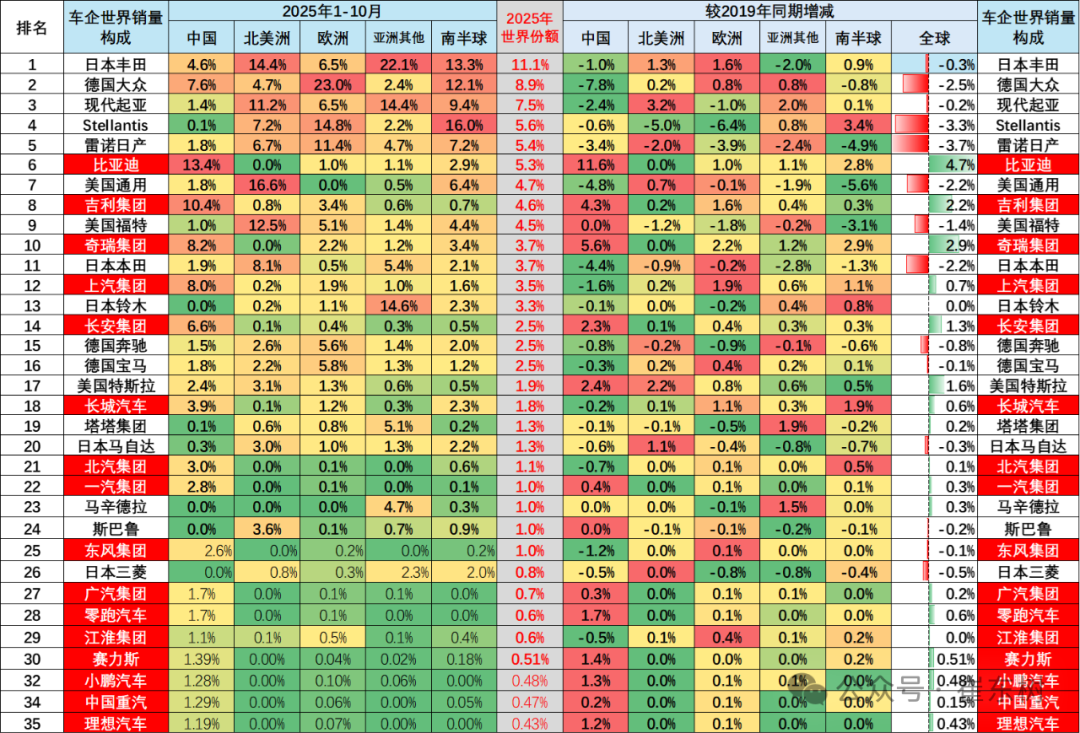
Core Viewpoint - The proposal by former President Trump to terminate strict fuel economy standards set by the Biden administration poses a significant challenge to Europe's aggressive policies on banning fuel vehicles, highlighting a shift in the automotive industry's dynamics towards a more sustainable and diversified future led by China's oil-electric hybrid strategy [1][9]. Group 1: Policy Changes and Impacts - Trump's proposal aims to reduce the average cost of purchasing new cars by $1,000, potentially saving Americans $109 billion over five years [3]. - The new fuel efficiency standard proposed by Trump's administration requires vehicles to achieve approximately 34 miles per gallon by 2031, compared to Biden's target of 50 miles per gallon [2]. Group 2: Industry Dynamics - The automotive industry's core profits are derived from fuel vehicles, and the transition to electric vehicles represents a significant restructuring of interests, with traditional automakers facing survival pressures due to lost profits from engine manufacturing and after-sales services [4]. - The shift in stance among U.S. automakers from supporting electric vehicle initiatives to opposing stringent regulations reflects the industry's struggle with profit erosion amid changing policies [4]. Group 3: European Market Challenges - European automakers are under severe pressure from the EU's legislation to ban fuel vehicles by 2035, which is seen as overly ambitious and detrimental to businesses [5]. - The EU's "Fit for 55" plan aims for a 55% reduction in new car carbon emissions by 2030, with a complete transition to zero emissions by 2035, but this has led to some companies planning to abandon engine development altogether [5]. Group 4: Global Automotive Trends - The trend of oil-electric hybrid strategies is gaining traction globally, with Asian automakers, particularly Chinese brands like BYD, Geely, and Chery, significantly increasing their market share [7][8]. - The global automotive market remains predominantly fuel-based, with 73% of vehicles still using fuel, indicating that a rapid transition to electric vehicles is unlikely in the short term [8]. Group 5: China's Strategic Position - China's oil-electric hybrid strategy is viewed as a successful model, with the recent release of the 3.0 roadmap emphasizing the continued importance of internal combustion engines alongside electric vehicles [10]. - By 2040, it is projected that 85% of new passenger vehicles in China will be electric, with a significant market still remaining for non-pure electric models, positioning Chinese automakers as key players in the global automotive technology landscape [10].




中国汽车的真正考验,才刚开始
Xin Lang Cai Jing· 2025-12-06 07:04
Core Viewpoint - The Chinese automotive industry is facing a significant downturn, with 2026 expected to be one of the most challenging years in its history due to declining sales and market conditions [5][37]. Group 1: Market Performance - Retail sales of passenger cars in China saw a 15% year-on-year increase earlier this year, but growth has rapidly declined since July, with October experiencing an overall negative growth [7][39]. - In November, daily retail sales averaged 4.6 million units, down 19% year-on-year in the first week, and 6.7 million units, down 9% in the second week [8][39]. - Major automakers are struggling to meet their sales targets, with only a few smaller new players achieving their goals by November [8][40]. Group 2: Industry Challenges - The automotive industry is transitioning from subsidy-driven growth to competition based on real demand and efficiency, indicating a significant shift in market dynamics [40][41]. - The impact of subsidies is diminishing, with over 50% of sales in 2025 attributed to trade-in programs, highlighting a reliance on government incentives [9][41]. - The market is experiencing a "strategic waiting" phase among consumers, leading to a decline in new orders as buyers anticipate better deals [15][48]. Group 3: Future Outlook - The expected decline in new energy vehicle purchase tax incentives in 2026 is anticipated to further exacerbate market challenges [15][47]. - The penetration rate of new energy vehicles is slowing, with a notable drop in total retail volume despite high growth rates in percentage terms [15][47]. - The industry is likely to undergo a significant restructuring, with weaker companies facing exit from the market, marking a shift from scale expansion to value competition [32][65]. Group 4: Technological Developments - The automotive sector is exploring various technological advancements, including smart driving and battery innovations, but progress varies across different areas [51][54]. - The introduction of solid-state batteries and centralized computing is underway, but widespread adoption is not expected until 2026 or later [54][55]. - The smart driving sector is experiencing a technological leap, with new models expected to enhance user trust and influence purchasing decisions in 2026 [57][60].


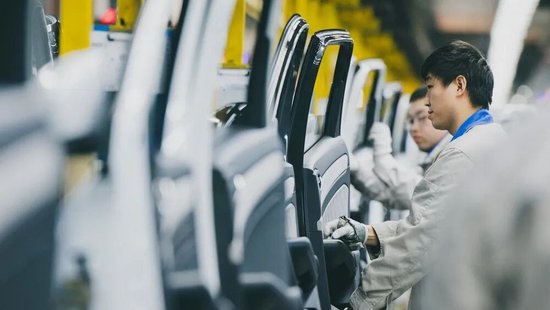
中国汽车的真正考验,才刚开始
虎嗅APP· 2025-12-06 03:32
Core Viewpoint - The article highlights that 2026 is expected to be a challenging year for the Chinese automotive industry, with significant declines in sales and a shift from subsidy-driven growth to competition based on real demand and efficiency [2][9]. Sales Performance - Retail sales of passenger cars in China saw a 15% year-on-year growth at the beginning of the year, but the growth rate has sharply declined since July, with October experiencing an overall negative growth [4][8]. - In November, the average daily retail sales of passenger cars were 46,000 units, down 19% year-on-year in the first week, 9% in the second week, and 7% in the third week [6]. Company Targets and Achievements - BYD aimed for 4.6 million units and achieved 4.18 million units by November, facing challenges to meet its target [7]. - SAIC Group set a target of 4.5 million units, with 4.11 million units sold by November, likely to meet its goal [7]. - Chery and Li Auto are unlikely to meet their targets, while Xiaomi and Leap Motor have already achieved theirs [11]. Market Dynamics - The automotive industry is experiencing its lowest profit margins in five years, with an average profit margin of only 3.8%, leading to significant price reductions [8]. - The market is shifting from a subsidy-driven model to one focused on genuine consumer demand and efficiency, indicating a potential industry "cold wave" in 2026 [8][41]. Subsidy Impact - The impact of subsidies is diminishing, with over 50% of sales in 2025 attributed to trade-in programs, which are now facing adjustments and reductions in many regions [10][13]. - The withdrawal of subsidies is leading to a significant drop in consumer purchasing activity, as many are adopting a "wait-and-see" approach [19][23]. Technological Developments - The article discusses various technological advancements in the automotive sector, including developments in autonomous driving and battery technology, which are seen as potential growth areas for 2026 [26][30]. - The shift towards "software-defined vehicles" and advancements in intelligent driving systems are expected to play a crucial role in the market's future [30][40]. Industry Outlook - The automotive industry is facing a structural adjustment, with weaker companies likely to exit the market as competition intensifies [47]. - The transition from scale expansion to value competition is seen as essential for the long-term health of the industry, with a focus on innovation and efficiency [47][48].

美国知名机器人公司爆雷,欠中国代工厂超25亿;奈飞5000亿元收购华纳兄弟;塔斯汀回应门店大开大关;美的官宣超人形机器人丨邦早报
创业邦· 2025-12-06 01:08
Group 1 - Pang Donglai is recruiting top talents under the age of 50 with a minimum annual salary of 1 million yuan and at least 60 days of paid leave [4][8] - Tasting responded to media reports about store closures, stating that the data was inaccurate and confirmed they have 11,124 operating stores as of November 2025 [8][9] - iRobot is facing a liquidity crisis and owes over 3.5 billion yuan to its Chinese supplier, Shenzhen Shanchuan Robotics, with a total cash and cash equivalents of only 24.8 million dollars [10][11] Group 2 - Meta has formed a new design team led by former Apple VP Alan Dye to focus on next-generation AI glasses and wearable devices [12] - Midea Group announced its humanoid robot strategy, which includes humanoid, super-humanoid robots aimed at achieving high efficiency and low costs [14] - Logitech's CEO reported a turnaround in the Chinese market with over 20% business growth for three consecutive quarters, emphasizing the integration of AI into existing products [16] Group 3 - Netflix has agreed to acquire Warner Bros. Discovery's film and streaming business for 72 billion dollars, significantly impacting Hollywood's power dynamics [11] - AMD has received permission to export certain MI 308 chips to China, preparing to pay a 15% tax to the U.S. government [11] - The global smart vacuum cleaner market saw a shipment increase of 18.7% year-on-year in the first three quarters of 2025, with Chinese manufacturers dominating the top five positions [28]






1699起,理想AI眼镜开卖!整花活还是真刚需?
电动车公社· 2025-12-05 16:05
关注 「电动车公社」 和我们一起重新思考汽车 零跑 虽然表面上没整什么花活,但别忘了零跑母公司大华可是安防龙头。 似乎, 理想 成了一 股清流,除了 造车以外很少干" 出格 "的事。 但如今,理想这个浓眉大眼的也" 叛变 "了 。 12 月 3 号晚上,理想汽车发布了旗下首款人工智能附件—— AI 眼镜 Livis ,正式进军 具身智能行业。 15% 国补后, 起售价 1699 元。 大家好,我是电动车公社的社长。 如果把现存的新势力整一个 "花活度" 排名,我想大概应该这样去排: 做 3C 、家电产品起家的 小米 必然是浓度最高的, 人车家全生态应有尽有。 小鹏 野心最大,飞 行汽车、人形机器人、机器狗 …… 一抓一大把,争当科技排头兵。 蔚来 也差不多,又造手 机又研发芯片,NIO Life有声有色,还在换电站上投了不少光伏项目。 在理想 Livis 上市之后,我怀着好奇的心态,对比了一下市面上同类型智能眼镜的售价(小米、 Mate 、雷鸟等),发现这个定价 已经算非常亲民的了。 我们就借此机会,一起聊聊理想 AI 眼镜到底怎么样?对于理想汽车的发展有什么意义?今后的 AI 眼镜,又会朝着什么形态发展? ...

12月5日港股通净买入13.41亿港元
Zheng Quan Shi Bao Wang· 2025-12-05 15:05
Core Viewpoint - On December 5, the Hang Seng Index rose by 0.58% to close at 26,085.08 points, with a net inflow of HKD 1.341 billion through the southbound trading channel [1] Group 1: Market Activity - The total trading amount for the southbound trading on December 5 was HKD 82.7 billion, with a net buy of HKD 1.341 billion [1] - The Shanghai Stock Exchange's southbound trading had a total trading amount of HKD 47.323 billion, resulting in a net sell of HKD 0.394 billion [1] - The Shenzhen Stock Exchange's southbound trading had a total trading amount of HKD 35.377 billion, resulting in a net buy of HKD 1.735 billion [1] Group 2: Active Stocks - In the Shanghai Stock Exchange's southbound trading, Alibaba-W had the highest trading amount at HKD 3.538 billion, followed by Xiaomi Group-W at HKD 2.751 billion and Tencent Holdings at HKD 2.339 billion [1] - In terms of net buy amounts, Industrial and Commercial Bank of China had the highest net buy of HKD 0.287 billion, with its stock price increasing by 1.77% [1] - Tencent Holdings experienced the highest net sell amount of HKD 0.889 billion, with its stock price decreasing by 0.33% [1] Group 3: Shenzhen Stock Exchange Active Stocks - In the Shenzhen Stock Exchange's southbound trading, Xiaomi Group-W led with a trading amount of HKD 3.753 billion and a net buy of HKD 2.855 billion, closing up by 1.91% [2] - Alibaba-W had a net sell of HKD 1.433 billion, closing up by 0.39% despite the sell-off [2] - Tencent Holdings had a net sell of HKD 0.889 billion, closing down by 0.33% [2]




南向资金今日净买入13.41亿港元,小米集团-W净买入30.13亿港元
Zheng Quan Shi Bao Wang· 2025-12-05 15:01
Core Viewpoint - The Hang Seng Index rose by 0.58% on December 5, with southbound capital recording a total transaction amount of HKD 82.7 billion, resulting in a net inflow of HKD 13.41 billion [2] Group 1: Southbound Capital Transactions - Total southbound capital transactions amounted to HKD 82.7 billion, with buy transactions at HKD 42.02 billion and sell transactions at HKD 40.68 billion, leading to a net buy of HKD 13.41 billion [2] - The Shenzhen Stock Connect saw a cumulative transaction amount of HKD 35.38 billion, with net buying of HKD 17.35 billion, while the Shanghai Stock Connect recorded a cumulative transaction amount of HKD 47.32 billion, resulting in a net sell of HKD 3.94 billion [2] Group 2: Active Stocks - Alibaba-W had the highest transaction amount among southbound stocks at HKD 69.86 billion, but experienced a net sell of HKD 17.76 billion, despite a closing price increase of 0.39% [2][3] - Xiaomi Group-W recorded a total transaction amount of HKD 65.04 billion with a net buy of HKD 30.13 billion, closing up by 1.91% [3] - Meituan-W had a total transaction amount of HKD 17.28 billion with a net buy of HKD 6.07 billion, closing up by 0.97% [3] Group 3: Continuous Net Buying and Selling - Xiaomi Group-W and Meituan-W were among the stocks with the longest continuous net buying days, with 6 and 7 days respectively, and total net buys of HKD 50.66 billion and HKD 28.96 billion [3] - Tencent Holdings and SMIC were notable for continuous net selling, with total net sells of HKD 39.05 billion and HKD 35.68 billion respectively [3][4]

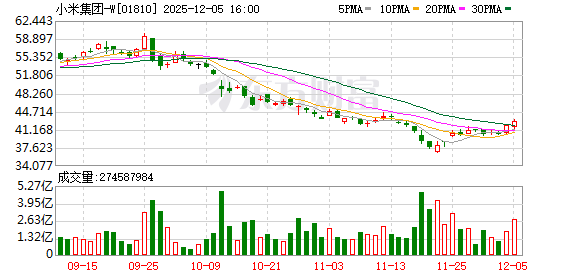
小米、小鹏、零跑提前完成KPI
财联社· 2025-12-05 13:38
Core Viewpoint - The Chinese automotive market is experiencing a competitive end-of-year push, driven by policy changes, sales targets, and consumer demand [2]. Group 1: Sales Performance of Key Automakers - Leap Motor, XPeng, and Xiaomi have achieved their annual sales targets ahead of schedule, while NIO and Li Auto are struggling to meet their goals, with completion rates below 70% [2]. - Leap Motor delivered 536,132 vehicles from January to November, achieving a year-on-year growth of 113.42% and exceeding its annual target of 500,000 vehicles by 7.23% [3][4]. - XPeng's deliveries reached 391,937 units, a year-on-year increase of 155.54%, successfully meeting its annual target of 380,000 vehicles [3][5]. - Xiaomi's total sales for the year are approximately 350,000 units, also meeting its annual target [3][6]. - Geely, SAIC, and BYD have shown solid growth, with Geely's sales at 2.787 million units (up 41.76%) and BYD at 4.182 million units (up 11.3%) [3][6][7]. Group 2: Market Dynamics and Challenges - The overall passenger car market in China saw a wholesale volume of 26.766 million units from January to November, reflecting an 11% year-on-year increase [10]. - The market is facing challenges due to tightened policies on trade-in and scrappage subsidies, leading to a cautious consumer sentiment [10]. - NIO and Li Auto are experiencing a divergence in market performance, with NIO's deliveries at 277,893 units (63.16% of its target) and Li Auto's at 361,697 units (56.52% of its target), both struggling to maintain growth [9].

北水动向|北水成交净买入13.41亿 科技股分化明显 小米集团-W获加仓超30亿
Zhi Tong Cai Jing· 2025-12-05 11:12
Summary of Key Points Core Viewpoint - The Hong Kong stock market experienced significant net buying from Northbound funds, with a total net inflow of 1.48 billion HKD on December 5, 2025, indicating a positive sentiment towards certain stocks while others faced net selling pressure [1]. Group 1: Northbound Fund Activity - Northbound funds recorded a net buying of 1.48 billion HKD, with the Shanghai Stock Connect showing a net selling of 394 million HKD and the Shenzhen Stock Connect showing a net buying of 1.735 billion HKD [1]. - The stocks with the highest net buying included Xiaomi Group-W (01810), Meituan-W (03690), and Li Auto (09863) [1]. - The stocks with the highest net selling included Alibaba-W (09988), Tencent Holdings (00700), and ASMPT (00522) [1]. Group 2: Individual Stock Performance - Xiaomi Group-W (01810) received a net buying of 3.013 billion HKD, supported by a bullish report from Goldman Sachs predicting future AI developments to enhance its ecosystem [5]. - Li Auto (09863) saw a net buying of 392 million HKD, with a record delivery of 70,327 vehicles in November, achieving its annual sales target ahead of schedule [5]. - BYD Company (01211) had a net buying of 339 million HKD, reporting a record monthly sales figure of 480,186 vehicles in November, with a year-to-date sales increase of 11.3% [5]. Group 3: Insurance and Banking Sector - China Ping An (02318) received a net buying of 151 million HKD, with Morgan Stanley raising its target price by 27% to 89 HKD, citing growth opportunities in wealth management and healthcare [6]. - Industrial and Commercial Bank of China (01398) had a net buying of 287 million HKD, while China Construction Bank (00939) saw a net buying of 184 million HKD, indicating continued interest from institutional investors [7]. - The banking sector is viewed positively due to ongoing reforms and improved profitability, with expectations of continued dividend payouts [7]. Group 4: Technology Sector Trends - Semiconductor stocks faced significant selling pressure, with Huahong Semiconductor (01347) experiencing a net selling of 56.97 million HKD, and SMIC (00981) facing a net selling of 119 million HKD [7]. - Alibaba-W (09988) faced a substantial net selling of 1.776 billion HKD, while Tencent Holdings (00700) saw a net selling of 1.445 billion HKD, reflecting a bearish sentiment towards major tech stocks [7].
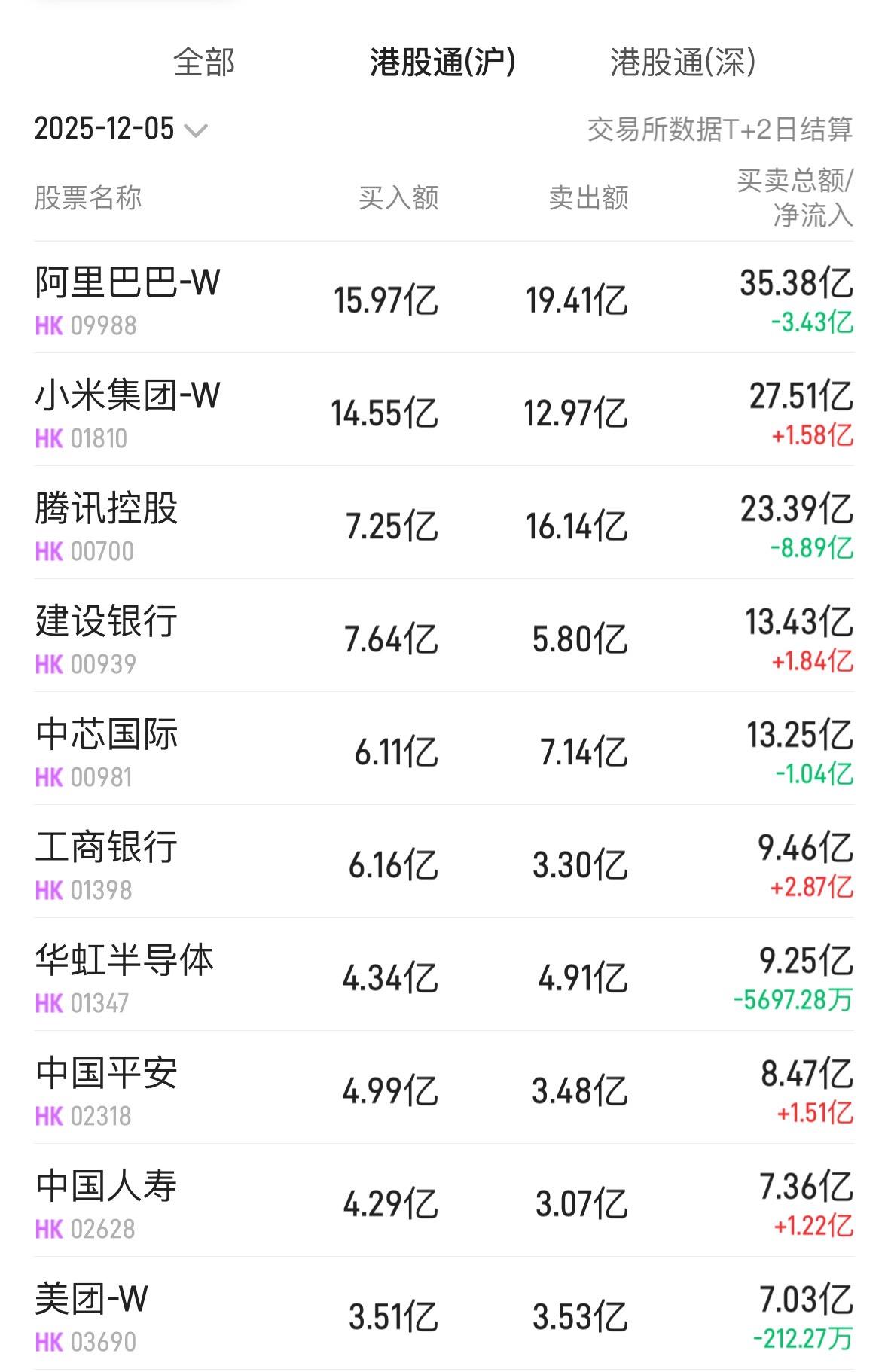
智通港股通活跃成交|12月5日





智通财经网· 2025-12-05 11:02
| 公司名称 | 成交金额 | 净买入额 | | --- | --- | --- | | 小米集团-W(01810) | 37.53 亿元 | +28.55 亿元 | | 阿里巴巴-W(09988) | 34.47 亿元 | -14.33 亿元 | | 腾讯控股(00700) | 18.44 亿元 | -5.56 亿元 | | 中芯国际(00981) | 10.32 亿元 | -1549.07 万元 | | 美团-W(03690) | 10.25 亿元 | +6.09 亿元 | | 零跑汽车(09863) | 6.04 亿元 | +3.92 亿元 | | 快手-W(01024) | 5.41 亿元 | -2.57 亿元 | | 中国海洋石油(00883) | 4.88 亿元 | +6206.91 万元 | | ASMPT(00522) | 4.52 亿元 | -4.39 亿元 | | 比亚迪股份(01211) | 4.15 亿元 | +3.39 亿元 | | 公司名称 | 成交金额 | 净买入额 | | --- | --- | --- | | 阿里巴巴-W(09988) | 35.38 亿元 | -3.43 ...