
东鹏饮料

Search documents
沪市公司“期中考”发挥稳定 “消费+科技”重塑增长动能
Shang Hai Zheng Quan Bao· 2025-09-01 00:36
Core Viewpoint - The overall performance of Shanghai Stock Exchange listed companies showed a slight decline in revenue but an increase in net profit, indicating a gradual recovery and a shift towards high-quality, sustainable growth driven by consumption and technology [1][2]. Group 1: Financial Performance - As of August 31, over 2,280 companies on the Shanghai Stock Exchange reported a total revenue of 24.68 trillion yuan, a year-on-year decrease of 1.3%, while net profit reached 2.39 trillion yuan, an increase of 1.1% [1]. - In the second quarter, the operating data showed a clear recovery trend, with revenue and net profit increasing by 6.1% and 0.1% quarter-on-quarter, respectively [2]. - The manufacturing sector remained stable, with revenue and net profit growing by 3.9% and 7.1% year-on-year, contributing significantly to overall performance [2]. Group 2: Sector Performance - Emerging industries such as electronics, communications, and biomedicine showed robust growth, with revenue and net profit growth rates of 7.5% and 6.5%, respectively [2]. - The automotive industry experienced a 6% year-on-year revenue increase, driven by the "trade-in" policy, with major companies like GAC Group and SAIC Motor seeing nearly 30% growth in new energy vehicle sales [3]. - The home appliance sector also performed well, with net profit increasing by 10%, led by Hisense's dominance in the large-screen market [3]. Group 3: Innovation and R&D - Companies on the Shanghai Stock Exchange increased their R&D investments, totaling 432.6 billion yuan, a year-on-year increase of 1% [5]. - The integrated circuit industry saw significant growth, with 138 companies reporting a combined revenue of 246.68 billion yuan and a net profit of 18.94 billion yuan, reflecting year-on-year increases of 14% and 57%, respectively [4]. - The biopharmaceutical sector is entering a new phase of sustainable growth, with innovative drug companies achieving significant milestones, including 17 new drug approvals and a total potential transaction value exceeding 26.4 billion USD [6]. Group 4: Mergers and Acquisitions - The activity level of mergers and acquisitions among Shanghai Stock Exchange companies has significantly increased, with 378 new asset restructurings reported, a year-on-year growth of 23% [8]. - Major transactions included the acquisition of China Shipbuilding by China Shipbuilding Industry Corporation and the privatization of Hong Kong-listed companies [8]. - The "Science and Technology Innovation Board" policies have facilitated over 130 new industry mergers, with disclosed transaction amounts exceeding 40 billion yuan [8][9].
408家沪市公司现金分红达5552亿元
21世纪经济报道· 2025-08-31 15:47
Core Viewpoint - The article highlights the steady growth and transformation of listed companies in the Shanghai market, driven by consumption and technology, leading to a more balanced and sustainable development pattern by mid-2025 [1] Group 1: Performance Growth - In the first half of 2025, Shanghai-listed companies achieved a total operating revenue of 24.68 trillion yuan, a slight decrease of 1.3% year-on-year, while net profit reached 2.39 trillion yuan, an increase of 1.1% [2] - The mid-term dividend reached a new high, with 408 companies announcing cash dividends totaling 555.2 billion yuan, a year-on-year increase of 12% [2] - Manufacturing sector showed stability with operating revenue and net profit increasing by 3.9% and 7.1% respectively, contributing 78% and 50% to the overall growth excluding non-bank financials [2] Group 2: New Growth Engines - The integrated circuit and biopharmaceutical industries are emerging as new growth engines, with integrated circuit companies increasing to 138, generating a total revenue of 246.68 billion yuan, up 14% year-on-year [3][4] - Biopharmaceutical companies reported revenues of 251.11 billion yuan, with a net profit increase of 14% [3] - The rapid penetration of AI technology is a key variable for the upgrade of the integrated circuit industry, with several companies achieving significant profitability improvements [4] Group 3: Consumption Expansion and Quality Improvement - The consumption potential continues to be released, with the food and beverage sector seeing revenue and net profit growth of 12% and 2% respectively [6] - The automotive industry experienced a revenue increase of 6%, with new energy vehicle sales rising nearly 30% [6] - New consumption trends are emerging, with companies like Dongpeng Beverage and Haier achieving significant revenue growth through innovative products [7] Group 4: Traditional Industry Transformation - Traditional industries are undergoing transformation, with sectors like steel and machinery achieving net profit growth of 235% and 21% respectively [9] - Digital and intelligent transformation is being deeply implemented, enhancing production efficiency significantly [10] Group 5: Foreign Trade Resilience - Over 830 manufacturing companies in Shanghai achieved overseas revenue of 1.1 trillion yuan, a year-on-year increase of 5% [11] - Private enterprises contributed nearly 70% of the total overseas revenue, highlighting their role as the main force in innovation and expansion [11] Group 6: ETF Product Expansion - By the end of August, the scale of ETFs in the Shanghai market exceeded 3.7 trillion yuan, with significant inflows of over 350 billion yuan this year [13][14] - The introduction of new ETF products has diversified investment options for investors, particularly in the technology sector [14] Group 7: Policy Implementation and M&A Activity - The "Six Merger" policy has led to a significant increase in M&A activity, with 378 new asset restructuring cases in the first half of 2025, a 23% year-on-year increase [15][16] - The implementation of the "1+6" reform measures has further supported the development of new productive forces, with numerous successful cases of mergers and acquisitions [16]

沪市公司“期中考”稳定发挥 “消费+科技”重塑增长动能
Shang Hai Zheng Quan Bao· 2025-08-31 13:05
Group 1 - As of August 31, over 2,280 companies listed on the Shanghai Stock Exchange reported a total operating revenue of 24.68 trillion yuan, a slight decrease of 1.3% year-on-year, while net profit reached 2.39 trillion yuan, an increase of 1.1% year-on-year [1] - The overall performance of companies in the first half of the year showed gradual improvement, with a marginal recovery in the second quarter where operating revenue and net profit increased by 6.1% and 0.1% quarter-on-quarter, respectively [2] - The manufacturing sector remained stable, with operating revenue and net profit growing by 3.9% and 7.1% year-on-year, respectively, accounting for 78% and 50% of the overall revenue and profit when excluding non-banking financials [2] Group 2 - The automotive industry saw a 6% year-on-year increase in operating revenue, with major companies like GAC Group and SAIC Motor reporting nearly 30% growth in new energy vehicle sales [3] - The home appliance sector experienced a 10% year-on-year increase in net profit, with Hisense leading the large-screen market [3] - The beverage industry, particularly electrolyte drinks, saw significant growth, with Dongpeng Beverage reporting a 214% increase in revenue [3] Group 3 - The integrated circuit and biopharmaceutical industries are emerging as new engines for growth, with integrated circuit companies reporting a total operating revenue of 246.68 billion yuan and net profit of 18.94 billion yuan, representing year-on-year growth of 14% and 57%, respectively [4] - Biopharmaceutical companies achieved total revenue of 251.11 billion yuan and net profit of 31.86 billion yuan, with year-on-year growth of 1% and 14% [4] - A record high in mid-year cash dividends was reported, with 408 companies announcing a total cash dividend of 555.2 billion yuan, a year-on-year increase of 12% [4] Group 4 - Companies on the Shanghai Stock Exchange increased their R&D investments, with total R&D spending reaching 432.6 billion yuan, a year-on-year increase of 1% [5] - The integrated circuit industry is experiencing full-chain growth, with leading companies maintaining full production capacity and some chip design firms doubling their profits [5] - The biopharmaceutical sector is entering a phase of commercial success, with 17 new drugs approved for domestic market and significant international transactions [6] Group 5 - The merger and acquisition activity among companies on the Shanghai Stock Exchange has significantly increased, with 378 new asset restructuring cases in the first half of 2025, a year-on-year increase of 23% [7] - Major asset restructuring cases include the acquisition of Huatai Securities by Guotai Junan and the merger of China Shipbuilding with China Shipbuilding Heavy Industry [7] - The "Science and Technology Innovation Board" policies have facilitated over 130 new industry mergers, with disclosed transaction amounts exceeding 40 billion yuan [8]
51家粤商上榜民企500强:腾讯纳税居首,小鹏汽车飙升
21世纪经济报道· 2025-08-30 05:38
Core Viewpoint - The private economy is a vital force in China's modernization and a key engine for the high-quality development of the Guangdong-Hong Kong-Macao Greater Bay Area, as highlighted by the release of the "2025 China Private Enterprises Top 500" list and the accompanying research report [1]. Group 1: Performance of Private Enterprises - Guangdong has 51 companies on the list, showcasing its economic strength and innovative vitality, with notable companies like Huawei, BYD, and Tencent ranking in the top ten [1]. - The threshold for entering the top 500 has increased to 27.023 billion yuan, with total revenue reaching 4.305 trillion yuan and total tax contributions of 127 billion yuan [1]. - The number of companies with over 1 billion yuan in revenue has risen to 105, with 11 companies exceeding 50 billion yuan [1]. Group 2: Financial Metrics - The average revenue per company in the top 500 is 86.102 billion yuan, reflecting a 2.72% increase year-on-year, while total net profit reached 1.8 trillion yuan, with an average net profit of 360.5 million yuan, up 6.48% [3]. - The total R&D expenditure among the top 500 companies is 1.13 trillion yuan, with an average R&D intensity of 2.77% [3]. Group 3: R&D Investment - Leading companies in R&D investment include Huawei, Tencent, Alibaba, BYD, and others, with Huawei's R&D spending at 96.95 billion yuan, accounting for 22.7% of its revenue [4][5]. - The number of valid patents held by the top 500 companies has increased to 721,600, marking an 8.23% growth, with domestic patents rising by 12.42% [3]. Group 4: Notable Companies and Contributions - Tencent leads in tax contributions with 59.187 billion yuan, followed by BYD with over 50 billion yuan [7]. - New entrants to the top 500 include several Guangdong companies, indicating a vibrant and evolving private sector [7]. - The private economy in Guangdong is characterized by a high number of new enterprises, with 41.2% of new businesses in the "four new economies" sector [8].



A股分红大爆发
2 1 Shi Ji Jing Ji Bao Dao· 2025-08-29 23:15
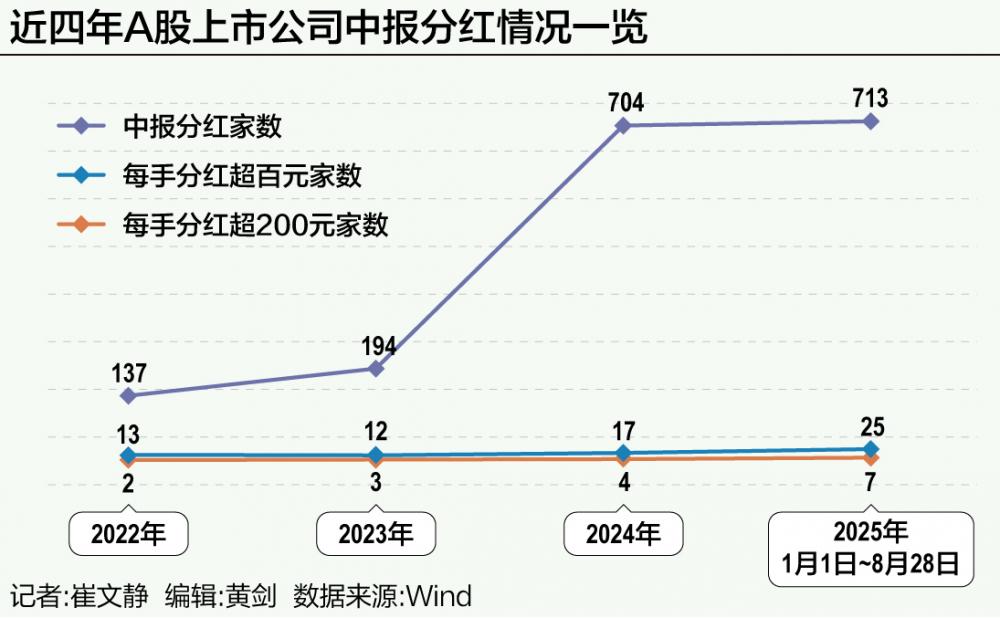
Group 1 - A-share listed companies are experiencing a significant positive change in their dividend distribution patterns, with 713 companies disclosing mid-term dividend plans as of August 28, 2025, surpassing the previous year's figures and indicating a strong trend since 2024 [1][5] - The number of companies distributing mid-term dividends has increased from fewer than 200 annually to several hundred, reflecting a shift towards greater shareholder returns driven by regulatory policies and internal demand [1][5] - Traditional high cash flow sectors such as finance, energy, and telecommunications remain the primary contributors to dividends, while consumer and manufacturing sectors are also rapidly releasing their dividend potential [1][11] Group 2 - The new "National Nine Articles" policy links dividend distribution to refinancing and share reduction behaviors, significantly enhancing companies' motivation to distribute dividends [2][11] - The information disclosure evaluation mechanism includes incentives for companies to increase the frequency and proportion of dividends, promoting a more stable, transparent, and efficient dividend system in the A-share market [2][11] Group 3 - The number of companies with mid-term dividend distributions exceeding 100 yuan per share has risen from 13 in 2022 to 25 in 2025, indicating a notable increase in dividend strength [6][11] - Companies like China Mobile and JiBit have established a consistent high-dividend style, with China Mobile's mid-term dividend per share increasing from 222.47 yuan in 2023 to 250.25 yuan in 2025, reflecting strong confidence in future profitability and cash flow [9][10] Group 4 - More companies are adopting clear medium- to long-term dividend plans, enhancing predictability and market trust, with firms like Mindray Medical committing to distribute at least 65% of their distributable profits over the next three years [11][12] - The shift in dividend philosophy among companies is evident, with many viewing dividends as a means to actively reward shareholders and foster a healthy investment ecosystem [12]



食品饮料周报:透视A股白酒板块中期业绩,机构看好弱复苏下的配置机会
Zheng Quan Zhi Xing· 2025-08-29 07:39
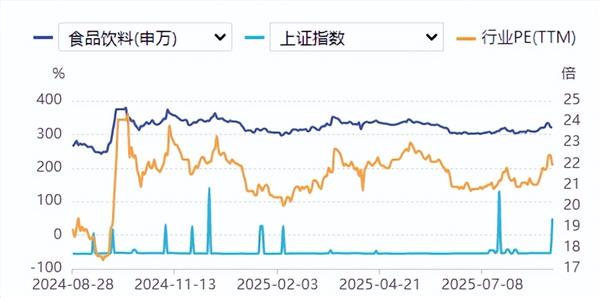
Core Viewpoint - The food and beverage industry is experiencing a recovery phase, particularly in the liquor sector, with a focus on high-quality brands like Kweichow Moutai and Wuliangye as potential investment opportunities [2][3][7]. Market Performance - The Shanghai and Shenzhen 300 Index rose by 2.71%, mirroring the increase in the Shenwan Food and Beverage Index during the week of August 25-29, 2025 [1]. Institutional Insights - Dongxing Securities suggests that liquor stocks are at the bottom of their asset pricing cycle, indicating a potential recovery despite a weak overall consumption rebound [2]. - Aijian Securities highlights that with easing policy pressures and consumption promotion measures, there is potential for a weak recovery in liquor demand, recommending investment in leading companies with stable pricing and attractive dividend yields [3]. Macro Events - The State Administration for Market Regulation emphasizes the need for comprehensive food safety oversight, focusing on risk management and the integration of technology in regulatory practices [4]. Consumption Data - Hangzhou's retail sales reached 527.1 billion yuan from January to July 2025, showing a year-on-year growth of 5.1%, driven by consumption policies and a shift towards green and smart consumption [5]. - Shanghai's retail sales totaled 129.14 billion yuan in July 2025, reflecting a 7.8% year-on-year increase, with strong performance in clothing, high-quality food, and communication devices [6]. Industry News - The A-share liquor sector is still in a cyclical downturn, with total revenue of 176.88 billion yuan and a net profit of 74.14 billion yuan for 13 listed companies, both showing slight declines year-on-year [7]. - The average gross margin for the industry has decreased to 64.61%, with inventory levels rising by 11.55% [7]. Company Performance - Wuliangye reported a net profit of 19.5 billion yuan for the first half of 2025, a growth of 2.28%, with total revenue of 52.77 billion yuan, up 4.19% [10]. - Laobaigan achieved a net profit of 321 million yuan, reflecting a growth of 5.4%, with total revenue of 2.481 billion yuan [11]. - Shanxi Fenjiu's revenue reached 23.964 billion yuan, a 5.35% increase, with a net profit of 8.505 billion yuan, growing by 1.1% [12]. Industry Developments - Five liquor companies have been recognized as 5G factories, indicating advancements in technology within the industry [9].


千禾味业(603027):Q2业绩显著承压,盈利能力边际下降
GUOTAI HAITONG SECURITIES· 2025-08-29 06:17
Investment Rating - The report maintains an "Accumulate" rating for the company [3][11] - The target price is set at 14.04 CNY [3][11] Core Insights - The company experienced a significant decline in revenue and net profit in Q2 2025, with revenue dropping by 17.07% year-on-year to 1.318 billion CNY and net profit decreasing by 30.81% to 173 million CNY [11] - The sales expense ratio increased, leading to a decline in profitability, with a net profit margin of 13.16%, down 2.61 percentage points year-on-year [11] - The company’s gross margin improved slightly to 36.58%, attributed to lower prices of key raw materials [11] Financial Performance Summary - For H1 2025, the company reported a revenue of 1.318 billion CNY, down 17.07% year-on-year, and a net profit of 173 million CNY, down 30.81% year-on-year [11] - The Q2 2025 single-quarter revenue was 487 million CNY, a decline of 29.86% year-on-year, with net profit at 13 million CNY, down 86.66% year-on-year [11] - The company’s soy sauce and vinegar revenues fell by 16% and 22% respectively in H1 2025, with a notable 23.71% decline in the western region [11] Financial Forecast - The company’s earnings per share (EPS) estimates for 2025-2027 are adjusted to 0.37 CNY, 0.58 CNY, and 0.64 CNY, reflecting a year-on-year decrease of 25.3% in 2025, followed by increases of 54.1% and 11.4% in subsequent years [11] - The projected revenue for 2025 is 2.764 billion CNY, with a forecasted growth to 3.139 billion CNY in 2026 and 3.462 billion CNY in 2027 [10][12]

市场再度高低切换,规模超200亿份的消费ETF(159928)大涨超2%,近5日累计净流入超21亿元!
Xin Lang Cai Jing· 2025-08-29 02:35
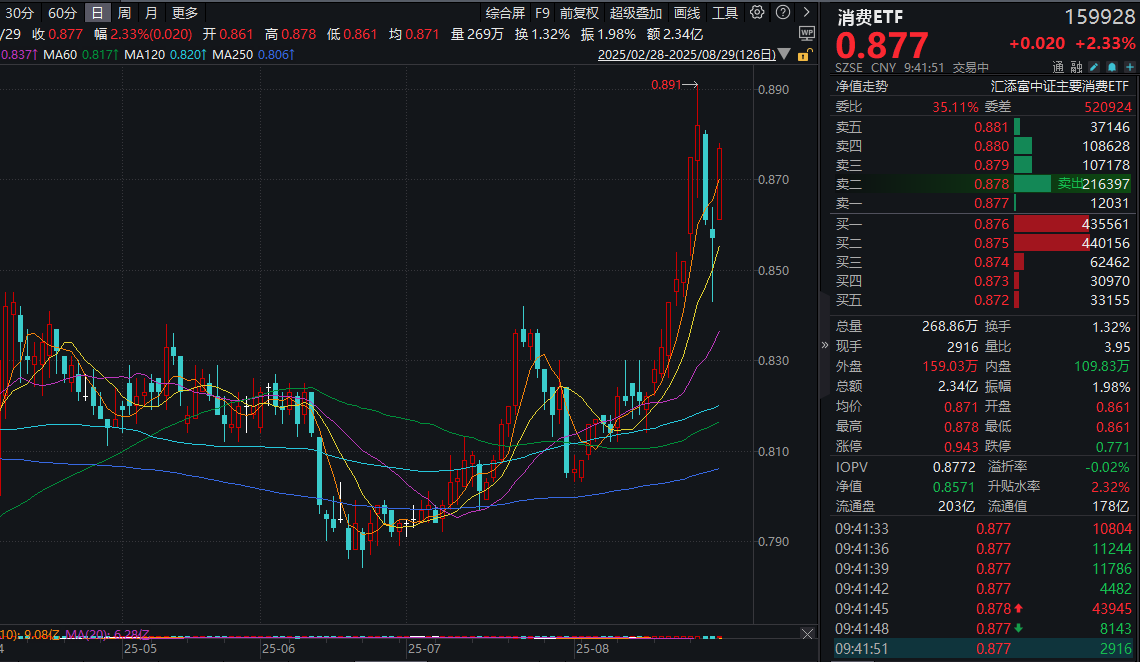
Market Overview - The market is experiencing a style switch, with the consumption ETF (159928) rising over 2% and achieving a trading volume exceeding 500 million yuan during the day, indicating a significant inflow of funds [1] - The consumption ETF has accumulated over 2.1 billion yuan in net inflows over the past five days, with its latest share count surpassing 20 billion, leading its peers [1] Hong Kong Market - The Hong Kong consumption ETF (159268) also saw a nearly 1% increase, with a trading volume approaching 20 million yuan and a net inflow of over 5 million yuan during the day [3] - In the past ten days, the Hong Kong ETF has recorded net inflows on six occasions, totaling over 150 million yuan [3] - Notable stocks in this ETF include Haier Smart Home, which rose nearly 6%, and other companies like Mao Geping and Smoore International, which also saw significant gains [3] Policy Developments - New policies aimed at promoting high-quality urban development have been introduced, with goals set for 2030 and 2035 to enhance urban living quality and governance [5] - The focus on real estate and urban development is expected to influence market dynamics positively [5] Industry Insights - Current market conditions indicate accelerated sector rotation and a "high cut low" strategy among individual stocks, with TMT and military sectors showing strong performance since April [6] - Analysts suggest that the next market direction may focus on eliminating undervalued stocks, as the overall industry valuation has reached historical highs [6] - The consumption sector is showing signs of recovery, with a notable increase in retail sales and cinema box office performance [6] - The "small happiness" consumption trend is gaining attention, characterized by high-frequency, emotional-value purchases rather than purely cost-effective options [6][7] Investment Opportunities - The consumption ETF (159928) is highlighted for its resilience across economic cycles, with top holdings including major liquor brands and agricultural companies [7] - The Hong Kong consumption ETF (159268) is positioned as an efficient investment vehicle for capturing trends in cultural and emotional consumption, appealing to younger generations [8]
食品饮料股盘初上扬,伊利股份涨超5%
Xin Lang Cai Jing· 2025-08-29 01:41
Core Viewpoint - The food and beverage stocks experienced an upward trend, with significant gains in specific companies and related ETFs [1] Company Performance - Kweichow Moutai saw a limit-up increase - Yili Co., Ltd. rose over 5% - New Dairy, Guyue Longshan, Dongpeng Beverage, and Bairun Co. also experienced gains [1] ETF Performance - The Food and Beverage ETF (515170) increased by 2.01%, with a trading volume of 45.5995 million yuan - The Food ETF (515710) rose by 1.89%, with a trading volume of 18.6777 million yuan [1]

东鹏饮料20250828
2025-08-28 15:15
Summary of Dongpeng Beverage Conference Call Industry Overview - Dongpeng Beverage is positioned in the energy drink, electrolyte water, and juice tea markets, with a focus on price-sensitive consumers driving overall demand growth in the energy drink sector, expected to maintain over 25% growth in 2025, with potential for 10%-15% growth after reaching 20 billion in sales [2][4][3]. Key Points Dongpeng Beverage's Market Position - Dongpeng Beverage leverages its cost-performance advantage to attract price-sensitive consumers, such as laborers and delivery drivers, which contributes to the growth of the energy drink market [2][4]. - The company is actively expanding into multiple product lines, including tea drinks, sugar-free and sugar-containing products, health water, electrolyte water, and energy drinks, focusing on larger markets with relatively loose competition [2][7]. Competitive Landscape - In the energy drink market, the main competitor is Red Bull, while the electrolyte water market includes brands like Pulse and Pocari Sweat. Dongpeng aims to capture market share through efficient channel management and production capabilities [9]. - The juice tea market is highly competitive, with major players like Master Kong and Uni-President, posing significant challenges for Dongpeng despite its growth potential [5][6]. Financial Performance and Projections - Dongpeng's projected net profit for 2026 is approximately 6 billion, corresponding to a price-to-earnings ratio of 26.5, indicating a favorable valuation in a liquidity-rich and growth-oriented environment [3][13]. - The company has experienced improved gross margins due to declining raw material costs, but increased competition and rising expenses may slow profit improvement in the future [11][12]. Challenges and Strategic Focus - The ready-to-drink coffee market faces challenges due to consumer habits and competition from coffee chains like Starbucks and Luckin Coffee, which offer convenience and customization [10]. - Dongpeng must continuously innovate and introduce new products to maintain its market position in the energy drink and electrolyte water sectors, while managing the impact of product mix changes on overall profitability [12]. Market Potential - The electrolyte water market, with competitors like Pulse, has a potential market size of 70-80 billion, while the juice tea market remains competitive but offers growth opportunities [2][5][6]. - Dongpeng's existing distribution network of 4.2 million sales points could yield approximately 2 billion in market space for juice tea if successfully leveraged [6]. Additional Insights - The company is cautious about entering smaller markets like coconut water and health water due to limited growth potential, preferring to focus on larger, more competitive segments [8]. - The long-term profitability of Dongpeng is uncertain, as the company navigates increased competition and the need for strategic pricing and product development [12].
