
晶澳科技

Search documents
光伏股集体走强,资金年内抄底光伏ETF、光伏50ETF
Ge Long Hui· 2025-06-20 02:48
Group 1 - The photovoltaic sector in the A-share market is experiencing a collective surge, with companies like GCL-Poly Energy and JA Solar seeing significant gains, while various photovoltaic ETFs have also increased by over 1% [1] - Despite a decline of over 15% in photovoltaic ETFs this year, there has been a net inflow of funds, with notable amounts flowing into specific ETFs such as Huatai-PB and Tianhong [1] - The China Photovoltaic Industry Association is focusing on "production limits to maintain prices," with expectations of a 10%-15% reduction in operating rates in Q3, alongside strict controls on "below-cost sales" [1] Group 2 - CITIC Securities anticipates that the photovoltaic industry, as a representative of "anti-involution competition," will see policy support in the future, with a focus on the need for capacity clearance and technological advancements for a mid-to-long-term industry recovery [2] - Zhongyuan Securities highlights that by mid-2025, photovoltaic companies will face severe operational challenges due to excess manufacturing capacity and low product prices, leading to increased bankruptcies among small and medium enterprises [3] - The report emphasizes the importance of "capacity clearance" and "new technology iteration" as key themes for the industry, recommending attention to leading companies in the polysilicon and photovoltaic glass sectors [3]
多只光伏个股走强,A500ETF嘉实(159351)飘红,晶澳科技涨超5%
2 1 Shi Ji Jing Ji Bao Dao· 2025-06-20 02:37
Group 1 - A-shares opened mixed on June 20, with the A500 ETF gaining 0.31% and trading volume exceeding 700 million yuan, driven by strong performances in the photovoltaic and lithium battery sectors, particularly with Jingao Technology rising over 5% and several others increasing by more than 3% [1] - The China Photovoltaic Industry Association held a meeting focusing on "production limits to maintain prices," with expectations of a significant production cut in the third quarter, projecting a reduction in operating rates by approximately 10%-15% compared to the previous quarter [1] - The A500 ETF closely tracks the new benchmark index, the CSI A500 Index, which selects 500 stocks representing strong market capitalization across various industries, balancing large-cap stocks while covering core leading assets in A-shares [1] Group 2 - According to Wind data, the sector weightings of the CSI A500 Index include Electronics (10.7%), Banking (9.3%), Electric Equipment (8.5%), Pharmaceutical Biology (7.4%), and Food & Beverage (7.3%), indicating a diversified sector representation [1] - Southwest Securities noted that the CSI A500 Index is overweight in sectors such as Electronics, Electric Equipment, Pharmaceutical Biology, and National Defense, focusing more on new productive forces compared to the CSI 300 Index [1] - Bank of China International believes that the A-share market will continue to exhibit a short-term consolidation pattern, with market sentiment indicators at relatively high levels for the year, suggesting a need for patience as policies are implemented and macroeconomic support continues [2]

经营性现金流三年流出近8亿元,日御光伏董事长2023年年薪近3000万元
Sou Hu Cai Jing· 2025-06-20 01:01
Core Viewpoint - The company Jiangsu Riyu Photovoltaic New Materials Co., Ltd. (Riyu Photovoltaic) is planning to go public in Hong Kong amid a booming IPO market for the photovoltaic industry, despite facing challenges such as continuous operating cash flow outflows and increasing accounts receivable due to industry overcapacity [2][10][11]. Group 1: Company Performance - Riyu Photovoltaic has seen a significant increase in net profit, growing over a hundred times in the past three years, driven by the surge in TOPCon solar cell shipments [2][4]. - The company's revenue rose from 393 million yuan in the 2022 fiscal year to 2.285 billion yuan in the 2024 fiscal year, with net profit increasing from 877,000 yuan to 92.241 million yuan during the same period [4][11]. - Despite strong profit growth, the company has experienced continuous operating cash flow outflows, totaling nearly 800 million yuan over the reporting period [4][10]. Group 2: Financing and Cash Flow - To address funding needs, Riyu Photovoltaic has relied heavily on external financing, including multiple rounds of pre-IPO financing totaling 459 million yuan and significant bank loans [6][7]. - The company's interest expenses have increased year-on-year, with total interest payments rising from 6.649 million yuan in 2022 to 16.716 million yuan in 2024 [8]. - As of December 31, 2024, the company had only 113 million yuan in cash and cash equivalents, sufficient for approximately two months of operations [10]. Group 3: Customer Concentration and Accounts Receivable - Riyu Photovoltaic's revenue is highly concentrated, with the largest customer accounting for 46.9% of total revenue in the 2024 fiscal year [11]. - The company has faced challenges in accounts receivable collection, with accounts receivable increasing significantly and the turnover days rising from 76 days in 2023 to 117 days in 2024 [11][15]. - The company has made substantial provisions for bad debts, totaling nearly 600 million yuan over the reporting period, which is significant given its annual profit of less than 1 billion yuan [15]. Group 4: Management and Employee Compensation - The company's chairman and controlling shareholder, Guo Peng, has made multiple capital injections into Riyu Photovoltaic, including an 82 million yuan investment in 2021 and a 100 million yuan subscription in 2023 [5][16]. - The company has implemented stock incentive plans for key employees, with Guo Peng receiving 28.271 million yuan in stock incentives in 2023, while the general manager received 15.463 million yuan [18][19]. - The stock incentive plan has raised questions regarding potential conflicts of interest, particularly given the significant share of incentives awarded to top executives [19].


中证京津冀协同发展主题指数下跌1.67%,前十大权重包含晶澳科技等
Jin Rong Jie· 2025-06-19 12:01
从中证京津冀协同发展主题指数持仓的市场板块来看,深圳证券交易所占比52.04%、上海证券交易所 占比47.96%。 从中证京津冀协同发展主题指数持仓样本的行业来看,信息技术占比30.22%、工业占比27.61%、医药 卫生占比21.13%、原材料占比10.66%、房地产占比10.38%。 资料显示,指数样本每季度调整一次,样本调整实施时间分别为每年3月、6月、9月和12月的第二个星 期五的下一交易日。每次调整的样本比例一般不超过20%。权重因子随样本定期调整而调整,调整时间 与指数样本定期调整实施时间相同。在下一个定期调整日前,权重因子一般固定不变。特殊情况下将对 指数进行临时调整。当样本退市时,将其从指数样本中剔除。样本公司发生收购、合并、分拆等情形的 处理,参照计算与维护细则处理。 金融界6月19日消息,上证指数低开低走,中证京津冀协同发展主题指数 (CS京津冀,930701)下跌 1.67%,报1329.79点,成交额199.68亿元。 数据统计显示,中证京津冀协同发展主题指数近一个月下跌2.12%,近三个月下跌8.87%,年至今下跌 2.63%。 据了解,中证京津冀协同发展主题指数结合各地特色经济、国 ...
中企获全球首张自清洁光伏组件认证!
Zhong Guo Dian Li Bao· 2025-06-19 11:01
Core Viewpoint - The photovoltaic industry is transitioning from a focus on "single-point cost" to "system efficiency" and "full lifecycle operation capability" under the "dual carbon" vision, with functional coatings being a key innovation to enhance the lifecycle value of solar modules [1][4]. Group 1: Strategic Collaboration - JA Solar Technology Co., Ltd. and Hesenmeike have signed a joint development agreement for self-cleaning and anti-reflective coatings for photovoltaic modules, marking a significant step towards large-scale application of high-performance functional coatings [1][4]. - The collaboration aims to create a new standard for surface technology in photovoltaic modules, driven by advancements in material science [4][6]. Group 2: Technical Innovations - The joint research will focus on three main areas: enhancing optical transmittance through multi-layer anti-reflective structures, creating low-adhesion self-cleaning surfaces using a "super-hydrophilic + anti-static" nano-structure, and improving environmental durability against harsh conditions [4][5]. - The self-cleaning technology has achieved a 5% reduction in reflectance loss compared to conventional double-coated modules under international dust conditions, indicating its effectiveness in various environments [5][6]. Group 3: Comprehensive Development - The partnership will establish a closed-loop technology chain from material design to large-scale verification and on-site application, leveraging JA Solar's experience in module integration and Hesenmeike's expertise in nano-coating materials [6][7]. - The developed nano-coating system has been tested for long-term reliability and practical application value under various environmental conditions, ensuring its effectiveness in enhancing photovoltaic module efficiency [6][7]. Group 4: Future Applications - The coating solution is compatible with both new module manufacturing and upgrading existing modules, making it suitable for diverse applications including ground power stations and distributed rooftop systems [7]. - Hesenmeike aims to accelerate scene validation and system integration to promote the evolution of photovoltaic modules towards higher efficiency, lower maintenance, and greater reliability [7].

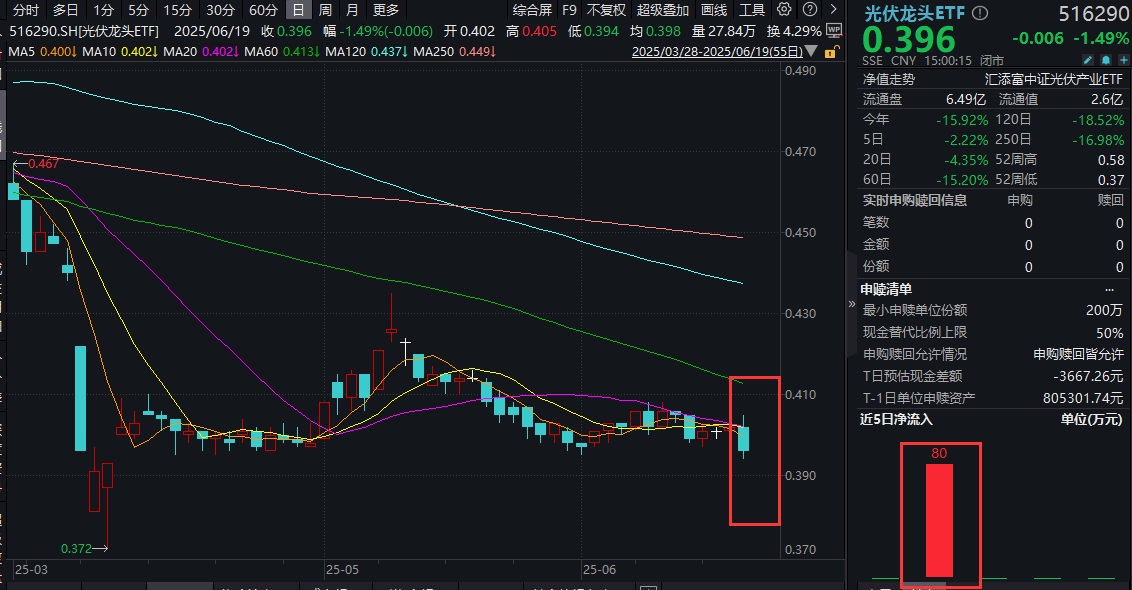
光伏三季度“减产令”升级!“反内卷”呼声再加大,低费率的光伏龙头ETF(516290)跌1.49%,光伏产业出清走到哪里了?
Sou Hu Cai Jing· 2025-06-19 10:27
Core Viewpoint - The Chinese photovoltaic (PV) industry is facing a critical supply-side reform, with expectations of production cuts and stricter policies to curb below-cost sales, aiming to improve industry profitability and stability [3][4][5]. Industry Summary - A significant decline was observed in the A-share market on June 19, with a total trading volume of 1.28 trillion yuan and over 4,600 stocks falling [1]. - The photovoltaic sector, particularly low-fee ETFs, experienced a downturn, with the leading ETF (516290) dropping by 1.49% [1][6]. - Major companies in the PV sector, such as 阳光电源 (Sungrow Power), 德业股份 (Deye), and 晶澳科技 (JA Solar), reported declines exceeding 3% in their stock prices [6]. Production and Policy Changes - The China Photovoltaic Industry Association held a meeting focusing on "production limits to maintain prices," indicating a projected reduction in operating rates by 10%-15% in Q3 [2][3]. - A third-party audit group will conduct comprehensive audits to identify evidence of below-cost sales, with various measures planned against non-compliant companies [2][3]. Technological Advancements - The industry is witnessing a push for supply-side reform, with leading companies advocating for market-driven consolidation and technological upgrades to phase out outdated capacities [4][5]. - New technologies, such as TOPCon and perovskite, are gaining attention, with several companies showcasing advancements in efficiency and production capabilities at the SNEC conference [5]. Market Outlook - The PV sector is expected to experience a fundamental recovery, with signs of a potential turning point in market sentiment as production cuts and technological advancements take effect [7]. - The low-fee photovoltaic ETF (516290) is highlighted as a favorable investment option, with management fees significantly lower than the market average [7].




15个月亏损近800亿,光伏主产业链寻找出路
Cai Jing Wang· 2025-06-19 08:29
Core Viewpoint - The photovoltaic industry is currently facing significant losses, with a projected net loss of approximately 787 billion yuan for A-share and Hong Kong-listed companies in the upstream supply chain for 2024 and the first quarter of 2025, indicating a challenging period ahead for the sector [1][2]. Industry Overview - The photovoltaic industry is experiencing a downturn, with major companies like Trina Solar's chairman highlighting the severe losses expected in the coming quarters [1]. - The surge in new installations in early 2024, driven by policy incentives, has not alleviated the supply-side pressures, leading to a rapid decline in component prices from 0.75 yuan/W to 0.65 yuan/W [1][2]. Market Dynamics - The transition to a fully market-oriented approach for renewable energy projects starting June 1 has created uncertainty in investment returns, resulting in decreased demand for photovoltaic projects [2]. - The SNEC exhibition revealed a decline in serious business discussions, with a notable increase in foreign attendees, indicating a shift towards international markets [2]. Supply Chain Adjustments - The upstream sector is contemplating consolidation efforts, with major players like GCL Group advocating for industry-wide cooperation to navigate the current challenges [4]. - There are ongoing discussions about mergers and acquisitions among leading silicon material companies to streamline production capacities and improve financial stability [5][6]. Technological Advancements - The downstream sector is focusing on technological upgrades, with companies like LONGi Green Energy and JA Solar investing in new product lines and efficiency improvements [7][9]. - The introduction of new technologies such as the HIBC and BC products is expected to enhance performance and market competitiveness, with LONGi's new products achieving significant efficiency milestones [9][10]. Future Outlook - Industry leaders anticipate a difficult third quarter but expect conditions to improve in the fourth quarter due to increased centralized installations [3]. - The long-term outlook suggests that clean energy will become a dominant power source, driven by ongoing technological advancements and market adaptations [2][3].
知情人士:光伏三季度“减产令”升级,开工率环降10%
第一财经· 2025-06-19 08:07
Core Viewpoint - The Chinese photovoltaic industry is facing significant challenges, including overcapacity, price fluctuations, and losses, leading to a clearer path towards "production reduction to maintain prices" [1][2]. Group 1: Industry Challenges - The photovoltaic industry is experiencing a supply-demand imbalance, with many companies facing financial losses. In the first quarter, 18 out of 21 listed companies reported net profit losses, with major manufacturers like Tongwei Co., Ltd. losing 2.61 billion yuan [1]. - The industry is under pressure to reduce production, with a projected decrease in operating rates by 10%-15% in the third quarter [1][2]. - The price of polysilicon has been declining due to weak downstream demand and significant price drops in silicon wafer products, leading to a challenging market environment [3]. Group 2: Regulatory Measures - The China Photovoltaic Industry Association is implementing measures to combat below-cost sales and promote self-discipline within the industry, including setting minimum price standards and enhancing technical standards [2]. - A third-party audit group will conduct comprehensive audits to identify and address low-price sales practices among companies [1][2]. Group 3: Market Dynamics - Recent data indicates that prices for 183N silicon wafers have fallen to around 0.9 to 0.91 yuan, with some quotes dropping below 0.9 yuan [2]. - The average prices for 183N and 210N battery cells have also decreased to 0.24 yuan and 0.255 yuan per watt, respectively [2]. - The number of polysilicon producers remains at 11, all operating at reduced capacity, but the market anticipates an increase in production due to capacity replacement [3].



【安泰科】单晶硅片周评--需求偏弱成交清淡 硅片价格小幅下跌(2025年6月19日)
中国有色金属工业协会硅业分会· 2025-06-19 07:52
Group 1 - The core viewpoint of the articles indicates that silicon wafer prices are under slight downward pressure due to weak terminal demand and significant declines in raw material prices, particularly polysilicon [1][2] - The average transaction prices for N-type silicon wafers have decreased slightly: G10L at 0.90 yuan per piece (down 3.23%), G12R at 1.04 yuan per piece (down 1.89%), and G12 at 1.25 yuan per piece (down 0.79%) [1][3] - The overall operating rates in the industry remain relatively stable, with major companies operating at rates between 50% and 80% [1] Group 2 - Downstream battery and module prices have remained stable, with mainstream battery prices at 0.24-0.25 yuan/W and module prices at 0.66-0.67 yuan/W, showing no change from the previous week [2] - Short-term demand in the downstream market is not expected to show significant recovery, which will continue to exert pressure on silicon wafer prices [2] - Companies are showing a strong willingness to reduce production to maintain prices amid widespread losses in the industry, suggesting limited downward space for silicon wafer prices if polysilicon prices do not decline significantly [2]
独家|知情人士:光伏三季度“减产令”升级,开工率环降10%、低价销售将审计核查
Di Yi Cai Jing· 2025-06-19 07:39
光伏第三季度将迎来更大力度减产,预计开工比例将环比降低10%-15%左右。 光伏"反内卷"路径越发清晰。 减产效果不理想,使得当前光伏产业链价格弱势运行,6月16日以来的这一周,价格仍出现小幅下跌。 InfoLink6月19日上午发布的光伏产业链价格周评认为,由于市场需求走弱,产业链各环节价格承压持 续。其中,183N硅片价格本周的成交价已逐步下探至0.9至0.91元区间,市场报价亦向0.9元以下靠拢, 并出现0.88元的报价。183N、210N电池片本周均价下滑至每瓦0.24 元与0.255元。 对于组件价格僵持,Infolink认为,近期需要注意海外退货以及组件库存水平攀高之下影响,部分现货 价格有低价出清的迹象。 中国有色金属工业协会硅业分会(下称"硅业分会")数据显示,本周光伏展后多晶硅签单数量较少,价 格再度下滑。具体来看,一线大厂在目前下游要价极低的情况下接近无法成交,其余企业价格松动较为 严重。 第一财经从知情人士处获悉,中国光伏行业协会本周召开的会议主题,仍是关于"限产保价"。知情人士 称,光伏三季度将迎来更大力度减产,预计开工比例将环比降低10%-15%左右。 同时,针对"低于成本销售"的严 ...