一汽

Search documents
车企承诺支付账期不超60天!多家上市公司回应影响
2 1 Shi Ji Jing Ji Bao Dao· 2025-06-17 13:46
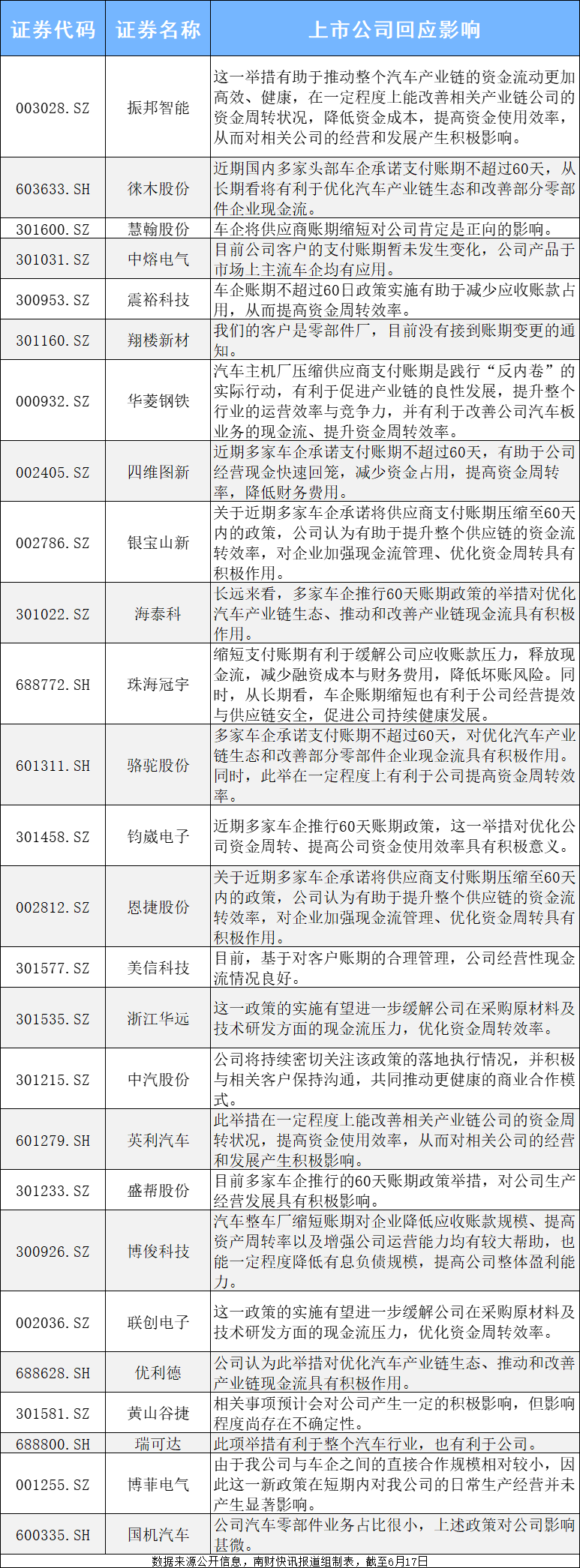
Core Viewpoint - Major automotive companies in China have committed to a payment term of no more than 60 days for suppliers, which is expected to enhance the cash flow of small and medium-sized enterprises in the supply chain and promote a healthier industry ecosystem [1][2]. Group 1: Industry Impact - The commitment to a 60-day payment term is seen as crucial for building a collaborative and win-win development ecosystem between vehicle manufacturers and parts suppliers, which is essential for sustainable industry growth [1]. - The automotive industry has historically faced long payment terms, with an average accounts payable turnover of 182 days, significantly exceeding the international standard of 90 days, leading to cash flow challenges for suppliers [2][7]. - Shortening payment terms is anticipated to alleviate financial pressure on suppliers, allowing them to invest more in research and development, thus driving industry innovation and upgrading the supply chain [2][3]. Group 2: Company Responses - Companies such as Huahan Co. and Yuli Technology have expressed that the reduction in payment terms will positively impact their cash flow and operational efficiency [3][4]. - Several listed companies have reported that the new policy will enhance the efficiency of capital flow within the supply chain, reduce financial costs, and improve overall business operations [4][5]. - Some companies, however, indicated that their exposure to the automotive parts business is minimal, and thus the impact of the new policy may be limited [4][6]. Group 3: Challenges Ahead - Analysts have pointed out that breaking the inertia of long-standing payment practices will be challenging, as some companies previously maintained payment terms exceeding 170 days [7]. - The complexity of payment models and the lack of a robust credit system in the industry may hinder the effective implementation of the new payment terms [7]. - There may be discrepancies in understanding the new payment terms between suppliers and automotive companies, particularly regarding the timing of when the 60-day period begins [7].

车企承诺60天账期,但花样赖账还没结束
2 1 Shi Ji Jing Ji Bao Dao· 2025-06-17 09:41
Core Viewpoint - Multiple automotive companies have announced a unified reduction of payment terms to suppliers to within 60 days, responding to government regulations aimed at protecting small and medium-sized enterprises [1][2] Group 1: Industry Response - Over 16 automotive companies, including BYD, NIO, and Great Wall Motors, have committed to the new payment terms [1] - The government has implemented the "Regulations on Payment of Funds to Small and Medium-sized Enterprises," which prohibits large enterprises from delaying payments to smaller suppliers [1] Group 2: Challenges in Implementation - Suppliers report that the 60-day payment term starts only after invoicing, with lengthy negotiation processes prior to this, often taking two to three months [2] - The reconciliation process and invoice confirmation can take an additional two to three months, leading to significant delays in actual payment [2] - Suppliers may receive payment in the form of bank or commercial acceptance bills, which can extend the actual payment period to 180 days or more [2] Group 3: Industry Dynamics - The competitive pricing war in the automotive industry is pressuring both car manufacturers and suppliers, potentially harming consumer interests [3] - There is a call for a more respectful and cooperative relationship between leading automotive companies and their suppliers to foster a healthier supply chain ecosystem [3]


亚太股份(002284) - 2025年06月13日投资者关系活动记录表
2025-06-16 07:48
Group 1: Company Overview - Zhejiang Asia-Pacific Mechanical and Electrical Co., Ltd. has been focused on the automotive brake system industry since its establishment in 1979, accumulating a broad customer base including major companies like Geely, Changan, and SAIC [3] - The company has a sales network covering domestic and international markets, exporting to North America, Europe, and the Middle East, and has entered procurement platforms of global brands such as Volkswagen and Honda [3] Group 2: Product and Market Position - The company provides products for new energy vehicles, with sales of related components increasing annually, reflecting a positive correlation with the growth of the new energy vehicle market [2] - The main products offered include basic brake systems, automotive electronics, and wheel hub motors, with a focus on securing more clients and projects [2] Group 3: Financial Performance - The company's gross profit margin has improved due to increased domestic vehicle sales and new international projects, alongside ongoing optimization of product structure and cost reduction efforts [4] - The company aims to expand its market coverage and promote new products, particularly in automotive electronic systems, to drive future growth [8] Group 4: Production Capacity - The company operates three main production bases in Xiaoshan, Anhui, and Huzhou, with additional facilities in various locations to support local vehicle manufacturers [6] - Current production capacity utilization is high, and the company plans to adjust production lines based on market demand and sales performance [8] Group 5: Competitive Advantages - As a leading domestic automotive brake system manufacturer, the company offers customized products based on specific vehicle parameters, providing advantages in cost-effectiveness, service quality, and responsiveness compared to foreign brands [7] - The trend of domestic automakers increasing local procurement presents significant growth opportunities for domestic parts suppliers [8]

国芯科技:比亚迪等车企支付周期缩短将改善公司现金流
news flash· 2025-06-13 09:29
Group 1 - The core viewpoint of the article is that the reduction in payment cycles by major automotive companies such as BYD, FAW, Dongfeng, and GAC to no more than 60 days will improve the cash flow of Guoxin Technology [1] - The company plans to enhance cash flow budget management and implement a thorough management approach that integrates financial planning with business planning, ensuring a closed-loop control of budget preparation, execution monitoring, and variance analysis [1] - By 2025, the company expects to achieve significant results in expanding its automotive electronic chip market, particularly in the areas of vehicle networking security chips, airbag chips, and body and gateway chips, with a noticeable acceleration in shipments [1]

零跑极速出征香港
Hua Er Jie Jian Wen· 2025-06-13 09:23
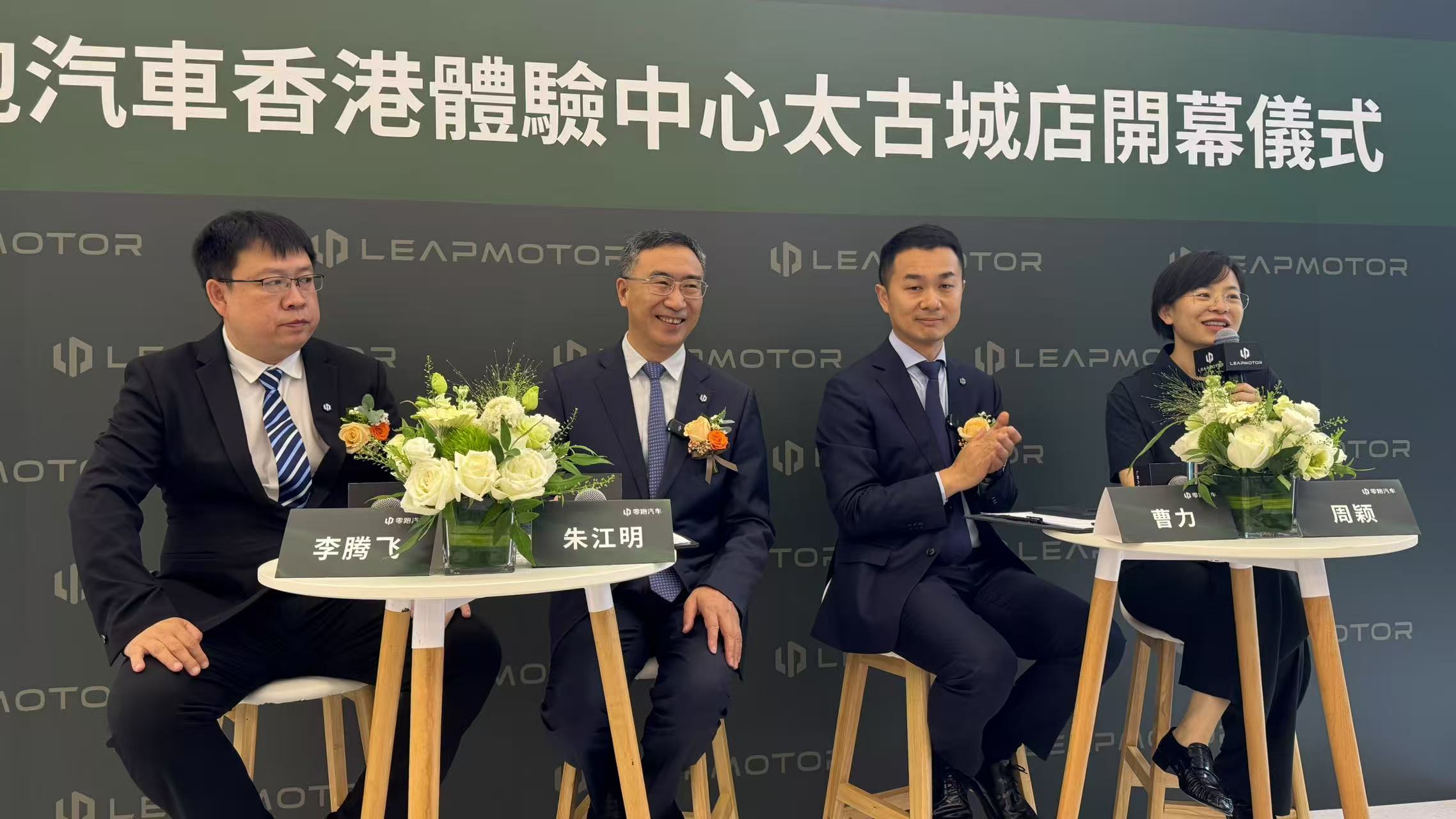
Core Viewpoint - Leapmotor's entry into the Hong Kong market is a strategic move aimed at brand positioning and market penetration, leveraging its successful models and understanding of local consumer behavior [2][3]. Group 1: Market Entry and Strategy - Leapmotor opened its 1500th store in Hong Kong's Central business district, showcasing its C10 SUV and T03 compact car at the Hong Kong International Auto Show [2]. - The C10 is targeted at young families and has been labeled as a "half-price ideal" in mainland China, while the T03 is designed for Hong Kong's congested driving conditions [2]. - The company aims to capture market share from established brands like Toyota by offering quality vehicles at competitive prices, addressing the price-sensitive nature of Hong Kong consumers due to high registration taxes [3]. Group 2: Policy and Market Conditions - The Hong Kong government has facilitated the growth of electric vehicles (EVs) by exempting pure electric models from initial registration taxes and reducing annual license fees, contributing to a 68% penetration rate of EVs in the first four months of the year [3]. - Despite the favorable policies, the limited annual market size of 40,000 to 50,000 vehicles raises questions about the scale of Leapmotor's investment in the region [3]. Group 3: Future Plans and Global Expansion - Leapmotor's founder, Zhu Jiangming, views Hong Kong as a key window for brand exposure and attracting investment, with plans to introduce a flagship D series model priced between 200,000 to 300,000 yuan [4]. - The collaboration with Stellantis allows Leapmotor to share development costs for right-hand drive vehicles, facilitating entry into markets like the UK, Australia, and Southeast Asia [4][8]. - The company has set ambitious sales targets, aiming for 500,000 to 600,000 units this year, 1 million units in two years, and 4 million units in five years [6]. Group 4: Financial Performance and Market Position - Leapmotor achieved nearly 300,000 total sales last year and has maintained a leading position among new energy vehicle manufacturers, with increasing gross margins [4]. - The company is focused on achieving profitability by 2025, with strategies including scaling production, maintaining cost control through in-house development, and improving product offerings [17][18]. - Leapmotor's market capitalization is expected to grow significantly, with the potential to reach a valuation of 100 billion yuan [10][9].
汽车行业双周报(2025、05、30-2025、06、12):车企积极响应《保障中小企业款项支付条例-20250613
Dongguan Securities· 2025-06-13 09:22
汽车行业 超配(上调) 汽车行业双周报(2025/05/30-2025/06/12) 行 业 车企积极响应《保障中小企业款项支付条例》 2025 年 6 月 13 日 投资要点: 本报告的风险等级为中风险。 本报告的信息均来自已公开信息,关于信息的准确性与完整性,建议投资者谨慎判断,据此入市,风险自担。 请务必阅读末页声明。 资料来源:iFinD,东莞证券研究所 分析师:刘梦麟 SAC 执业证书编号: S0340521070002 电话:0769-22110619 邮箱: liumenglin@dgzq.com.cn 申万汽车行业指数涨跌幅:截至2025年6月12日,申万汽车板块近两周 下跌0.61%,跑输沪深300指数1.47个百分点,在申万31个行业中排名第 26名;申万汽车板块从6月初至今上涨1.33%,跑输沪深300指数0.02个 百分点,在申万31个行业中排名第19名;申万汽车板块从2025年初至今 上涨10.01%,跑赢沪深300指数11.10个百分点,在申万31个行业中排名 第6名。 周 报 行 业 研 究 研究助理:吴镇杰 SAC 执业证书编号: S0340124020014 电话:0769- ...



车企“反内卷”风暴:“60天内支付”还不够
汽车商业评论· 2025-06-12 16:30
Core Viewpoint - The article discusses the commitment of 17 automotive companies to adhere to the new payment regulation for suppliers, which mandates a maximum payment period of 60 days, as part of the government's efforts to alleviate the financial pressure on small and medium-sized enterprises [4][5][27]. Group 1: Implementation of Payment Regulation - A total of 17 automotive companies, including major players like BYD, Geely, and NIO, have pledged to comply with the new payment terms [8]. - The regulation, effective from June 1, aims to address the long-standing issue of delayed payments to suppliers, which has been a significant concern in the industry [5][27]. - The average accounts payable turnover days for 32 automotive companies is reported to be 109.74 days, indicating a substantial gap compared to the new regulation [9]. Group 2: Supplier Perspectives - Suppliers express cautious optimism regarding the new payment terms, but they remain skeptical about the actual implementation and potential loopholes [6][27]. - Reports indicate that payment periods for suppliers can vary widely, from one month to over a year, with some waiting nearly two years for payments [11][12]. - The relationship between automotive manufacturers and suppliers is described as deteriorating, with a lack of trust and ethical business practices being highlighted [12][24]. Group 3: Challenges in Payment Terms - The article raises questions about how the payment period is calculated, whether it starts from receipt of goods or invoice date, and the implications of commercial acceptance notes [17][29]. - Some suppliers are concerned that the new 60-day payment term may come with additional conditions, such as interest deductions [28]. - The article notes that only a few companies, like BAIC and SAIC, have fully eliminated the use of commercial acceptance notes, which have been criticized for extending payment periods [30][39]. Group 4: Industry Dynamics - The article highlights the significant power imbalance in the supplier-manufacturer relationship, with many suppliers feeling pressured to accept unfavorable terms [14][24]. - It discusses the practices of certain manufacturers that delay payments based on price negotiations, further complicating the financial situation for suppliers [37][41]. - The article concludes with a call for a return to normal business practices, emphasizing the need for government and industry collaboration to ensure fair payment terms [41].


中美贸易原则上达成框架,腾讯音乐收购喜马拉雅 | 财经日日评
吴晓波频道· 2025-06-12 00:20
Group 1: US-China Trade Negotiations - The US and China have reached a preliminary framework for trade negotiations, indicating a mutual desire for a stable foreign trade environment to support domestic economic development [1][2] - The US is considering lifting recent restrictions on various sectors, contingent on China easing its export restrictions on rare earths [1] Group 2: Gaming Industry Support - Zhejiang province has introduced measures to support the international expansion of the gaming industry, focusing on nurturing market players and promoting high-quality 3A game projects [3] - Local governments are increasingly implementing policies to enhance the global influence of gaming brands, reflecting a growing emphasis on the international market [3] Group 3: Automotive Industry Payment Terms - Several Chinese automotive companies, including BYD and Xiaomi, have committed to keeping payment terms within 60 days in response to new regulations aimed at improving the payment environment for small and medium enterprises [5][6] - The effectiveness of this regulation remains to be seen, especially as many new energy vehicle companies face financial pressures and may struggle to meet these terms [5][6] Group 4: Smartphone Market Trends - A UBS survey indicates that the expected replacement cycle for smartphones has extended from 29.7 months to 31.1 months, reflecting a trend towards longer device usage [7] - The decline in purchase intent for smartphones, particularly in the US market, suggests a saturation in the market with little innovation in hardware [7][8] Group 5: Cloud Services Market - According to IDC, ByteDance's Volcano Engine holds a dominant 46.4% market share in China's public cloud large model service market, significantly outpacing competitors like Baidu and Alibaba [9][10] - The competitive landscape has shifted as traditional cloud service providers face new demands from AI large models, allowing Volcano Engine to leverage its internal technology for market advantage [9][10] Group 6: Tencent Music Acquisition - Tencent Music has announced a $1.26 billion cash acquisition of Ximalaya, aiming to enhance its presence in the long audio content market [11][12] - The merger is expected to combine Tencent's music streaming capabilities with Ximalaya's strengths in audiobooks, potentially revitalizing Ximalaya's market position amid increasing competition [11][12] Group 7: Tesla's Autonomous Driving Developments - Tesla plans to deliver its first fully autonomous vehicle in Texas, marking a significant step in its autonomous driving technology, although it currently remains at Level 2 automation [13][14] - The introduction of Robotaxi services is also on the horizon, which could enhance Tesla's market confidence and performance [13][14] Group 8: Stock Market Performance - The stock market experienced a rebound, with the Shanghai Composite Index rising by 0.52% and trading volume decreasing to 1.26 trillion yuan [15] - Various sectors, including rare earths and automotive parts, showed strong performance, while others like nuclear power and biopharmaceuticals faced declines [15][16]
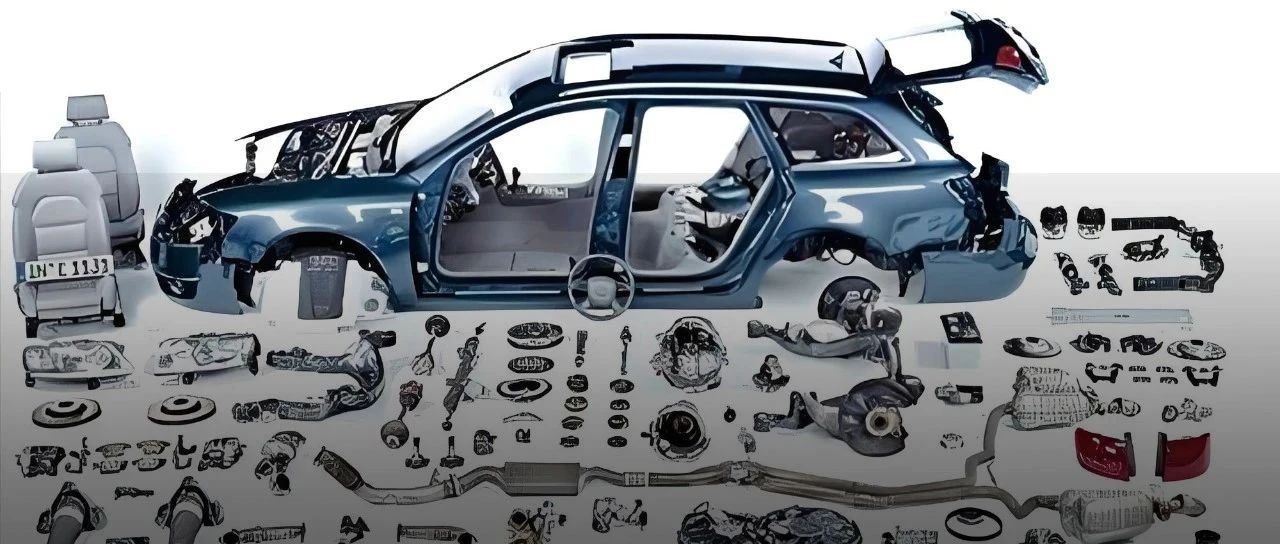
车圈60天账期革命,压力最大的是新势力
吴晓波频道· 2025-06-12 00:20
Core Viewpoint - The automotive industry is experiencing a "payment term revolution," where major companies are committing to pay suppliers within 60 days, responding to increasing competition and internal pressures within the industry [2][3][6]. Group 1: Industry Dynamics - Major automotive companies like GAC, FAW, Dongfeng, and BYD have initiated a commitment to limit supplier payment terms to 60 days, which has been followed by other traditional and new energy vehicle manufacturers [2][3][5]. - This movement is seen as a reaction to the escalating price wars and competitive pressures within the industry, particularly after significant price cuts announced by BYD and others [8][9][11]. - The Ministry of Industry and Information Technology and the China Automotive Industry Association have criticized the ongoing price wars and are advocating for a return to rational and high-quality development in the sector [11][24]. Group 2: Financial Implications - The new payment term policy is expected to alleviate financial pressure on suppliers, who have historically faced long payment cycles averaging over 120 days, with some exceeding 200 days [22][44]. - The implementation of the "Payment Protection for Small and Medium Enterprises" regulation aims to enforce timely payments and eliminate non-cash payment methods that extend payment periods [16][22]. - The shift to a 60-day payment term will challenge automotive companies to improve their financial management and may require significant capital adjustments, particularly for larger firms like BYD [30][31]. Group 3: Market Reactions and Future Outlook - The commitment to shorter payment terms is viewed as a positive step towards improving the operational efficiency of suppliers and the overall competitiveness of the automotive industry [34][36]. - However, there are concerns that strong automotive companies may still exploit their market position, potentially leading to new forms of delayed payments or other tactics to maintain cash flow [29][40]. - The ongoing changes in payment terms are part of a broader effort to address "involution" in the industry, with regulatory bodies pushing for a more equitable and sustainable market environment [24][37].

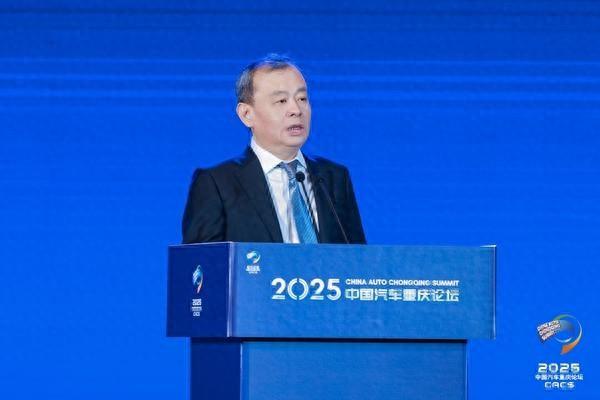
山城激辩火药味渐起 中国汽车打响新一轮“反内卷”发令枪
Zhong Guo Qing Nian Bao· 2025-06-11 22:49
Core Viewpoint - The automotive industry in China is experiencing intense price wars and restructuring due to mergers and acquisitions, which are reshaping the market landscape [2][3] Group 1: Industry Challenges - The price war has escalated, with over 200 models experiencing price cuts in 2024 and more than 60 models in the first four months of 2025, leading to industry profits dropping below 4% [2][3] - The competition is characterized by excessive price reductions and blind technological advancements, which threaten reasonable profit margins and product/service quality [3][5] - The Chinese government has initiated measures to prevent "involution-style" competition, with various departments deploying strategies to stabilize the supply chain and promote high-quality development in the automotive sector [5][6] Group 2: Recommendations for Companies - Companies are urged to adhere to three bottom lines: maintaining quality and safety standards, practicing integrity and contract spirit, and committing to long-termism through technological innovation [3][8] - The automotive industry must focus on innovation, green transformation, and enhancing collaboration across the supply chain to navigate the current challenges [4][5] Group 3: International Expansion and Opportunities - The automotive sector is encouraged to explore overseas markets as a key strategy to alleviate domestic competition pressures, with significant growth in exports noted [7][8] - The total number of cars exported from China reached 695,000 in May 2025, with a cumulative export of 2.853 million units from January to May, marking a 16.8% year-on-year increase [7] - Companies are advised to strengthen partnerships with global firms and enhance local market strategies to overcome challenges such as tariffs and technology restrictions [9]