佳能

Search documents
“中国线上消费品牌指数”亮相服贸会,淘宝天猫助力“品质消费”研究
Huan Qiu Wang Zi Xun· 2025-09-11 09:07
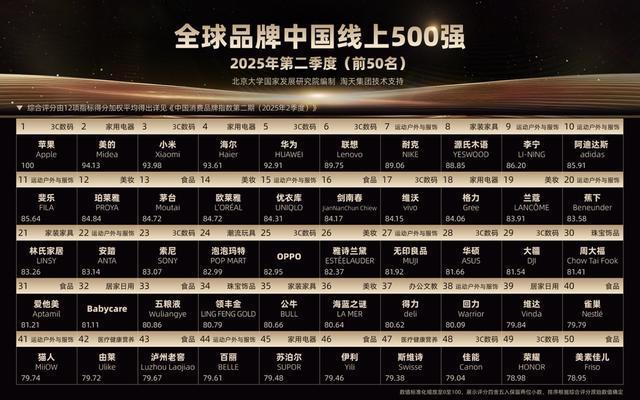
Core Insights - The "China Online Consumption Brand Index" (CBI) was prominently featured at the 2025 China International Service Trade Fair, showcasing its significance in measuring online consumer quality [1][3] - The CBI index reflects a shift towards higher quality consumption in China, with the average score increasing from 59.42 in Q1 2023 to 65.21 in Q2 2025, indicating a notable improvement in consumer brand quality [5][6] Group 1: CBI Index Overview - The CBI index is the first of its kind to utilize real consumer data to focus on high-quality development in online consumption, filling a gap in macroeconomic statistics regarding consumption quality [2][3] - The index includes various sub-indices such as the China Online Brand Purchasing Power Index and the Global Brand China Online 500 Strong list, providing insights at both national and regional levels [3] Group 2: Industry Insights - The highest CBI scores are found in the 3C and home appliance sectors, indicating a consumer preference for high-scoring brands in these categories [5] - Emerging sectors like pet products and jewelry are experiencing the fastest growth in CBI scores, reflecting an increasing consumer focus on quality and brand [5] Group 3: Regional Characteristics - New first-tier and second-tier cities exhibit stronger CBI scores, suggesting higher average consumption quality in these areas, while first-tier cities dominate in total purchasing power [5] - Regions with a high proportion of mobile populations show a balanced consumption quality and strong purchasing power [5] Group 4: Consumer Demographics - The middle-income group in China exceeds 400 million, providing a solid foundation for quality consumption growth, despite perceptions of a "white label era" [6] - The research indicates that new brands on the list share characteristics such as strong originality and a focus on product innovation in niche consumption scenarios [5]

全球份额调查:日企在增长市场处于劣势
日经中文网· 2025-09-06 00:34
Core Viewpoint - Japanese companies dominate the global market in 9 categories but are struggling in rapidly growing markets, particularly in AI-related sectors, highlighting a significant challenge for the industry [2][4][5]. Market Share Analysis - A survey by Nikkei identified that Japanese firms hold the top position in 9 categories, a decrease of 1 from the previous year, ranking third globally behind the US (27 categories) and China (18 categories) [4]. - The categories where Japan leads include automotive, motorcycles, CMOS image sensors, lithium batteries for mobile phones, digital cameras, A3 laser copiers, silicon wafers, photoresists, and mask blanks [4]. Market Growth and Decline - Japanese companies are facing difficulties in both shrinking and growing markets, with 16 categories experiencing a decline in market size compared to the previous year [5]. - In expanding markets, Japanese firms account for only 14% of the top 266 companies, while they represent 23% of the 79 companies in shrinking markets [5]. Specific Product Performance - The A3 laser copier market shrank by 7.1% year-on-year, with Canon, Ricoh, Konica Minolta, and Kyocera all showing declines in shipment volumes [6]. - Despite Canon's market share increasing by 0.9 percentage points to 18.6%, its shipment volume fell by 2.3% to 590,000 units [6]. Emerging Market Trends - The fastest-growing market is for text-generating AI tools, which saw a staggering growth rate of 18,700% year-on-year, with OpenAI's market share increasing by 12.7 percentage points to 81.7% [6][7]. - In the semiconductor materials sector, Japanese companies are noted for their strong presence, which is crucial for advanced semiconductor manufacturing processes [7][9]. Investment and Future Outlook - Japanese companies are investing significantly in semiconductor-related equipment, with total investments from the top 10 global semiconductor firms expected to reach $135 billion (approximately 20 trillion yen), a 7% increase from the previous year [8]. - Companies like Tokyo Ohka Kogyo and Fujifilm Holdings are planning substantial investments to expand their production capabilities in the semiconductor sector [8].

高盛:中国光刻机落后ASML 20年!
是说芯语· 2025-09-02 23:26
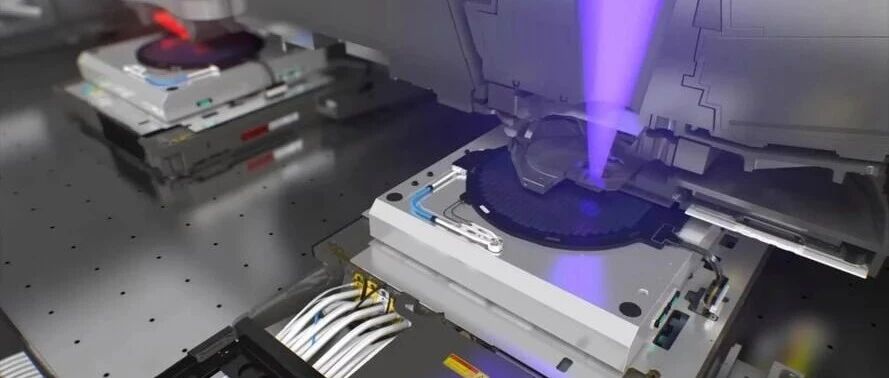
Core Viewpoint - Goldman Sachs' report highlights the significant challenges faced by China's semiconductor manufacturing sector, particularly in lithography machine development, indicating that China is at least 20 years behind Western technology, with current domestic lithography machines only achieving 65nm technology [1][3]. Group 1: Challenges in Lithography Machine Development - The complexity of lithography machines, which consist of over 100,000 components and require collaboration from thousands of global suppliers, poses a significant barrier to China's development efforts [1]. - Key components such as high-precision optical lenses from Zeiss are restricted from export to China, and the U.S. has expanded export controls on semiconductor equipment, including DUV lithography machine components [3]. - Shanghai Micro Electronics has achieved stable production of 65nm lithography machines, but there are still notable gaps in stability and wafer yield control compared to ASML, impacting economic viability [3]. Group 2: Progress and Innovations - China is adopting a strategy of "single-point breakthroughs driving system upgrades," with companies like Huazhuo Precision achieving significant advancements in core technologies, such as the dual-stage system for lithography machines [4]. - The development of a UV LED lithography light source by Bihua Optoelectronics has increased lifespan to 30,000 hours, significantly improving reliability and reducing costs compared to imported products [4]. - The domestic production rate for 28nm immersion lithography machines has reached 83%, which is crucial for key sectors like automotive electronics amid global chip shortages [6]. Group 3: Emerging Technologies - New lithography technologies such as electron beam lithography and nanoimprint technology are being explored, offering potential advantages in specific applications despite challenges in mass production [7]. - The introduction of Canon's FPA-1200NZ2C nano imprint lithography system, which operates on a different principle and is significantly cheaper than EUV machines, provides a valuable reference for Chinese semiconductor equipment companies [6]. Group 4: Strategic Outlook - The report emphasizes that while the technological gap is real, it is essential to recognize the nonlinear nature of technological innovation, as evidenced by recent breakthroughs in China's semiconductor industry [7]. - The development of lithography machines is not just a technical issue but also a comprehensive challenge involving industrial ecology and innovation systems, requiring strategic focus and innovative thinking to navigate the evolving global semiconductor landscape [7].

【太平洋科技-每日观点&资讯】(2025-09-02)
远峰电子· 2025-09-01 11:46
Market Performance - The main board led the gains with notable increases in stocks such as Wento Holdings (+10.15%), Jishi Media (+10.11%), and Xinhua Du (+10.07%) [1] - The ChiNext board saw significant growth with Xuanji Information (+20.06%) and Zhongrong Electric (+20.00%) leading the charge [1] - The Sci-Tech Innovation board also experienced a surge, with Tengjing Technology and Yuanjie Technology both increasing by 20.00% [1] - Active sub-industries included SW Communication Network Equipment and Devices (+8.74%) and SW Other Communication Equipment (+3.60%) [1] Domestic News - Aibang ARAI launched its first AI glasses at a retail price of RMB 1,599, featuring replaceable lenses and advanced stabilization algorithms [1] - In the semiconductor sector, Innosilicon reported a revenue of RMB 553 million for the first half of 2025, marking a 43.4% year-on-year increase and a gross margin improvement of 28.4 percentage points [1] - Alibaba Cloud responded to rumors regarding a purchase of 150,000 GPUs from Cambricon, clarifying that the information was inaccurate [1] - Aisen Co. announced that its self-developed positive PSPI photoresist has entered small-scale production with mainstream wafer customers [1] Overseas News - TrendForce reported that the global wafer foundry market is expected to reach USD 41.7 billion in Q2 2025, a 14.6% increase from the previous quarter, driven by consumer subsidy plans in China [1] - Canon showcased its 410-megapixel image sensor at an exhibition, featuring a resolution of 24,592 x 16,704 pixels [1] - Mitsubishi Chemical and Boyan Electronics announced a strategic partnership for the joint development of color photoresists for LCD panels in the Chinese market [1] - Yole Group's report indicated that advanced packaging technology is driving strong growth in the backend equipment market, with total revenue projected to reach USD 6.9 billion by 2025 [1]

全球数字减影血管造影系统市场前10强生产商排名及市场占有率
QYResearch· 2025-09-01 09:42
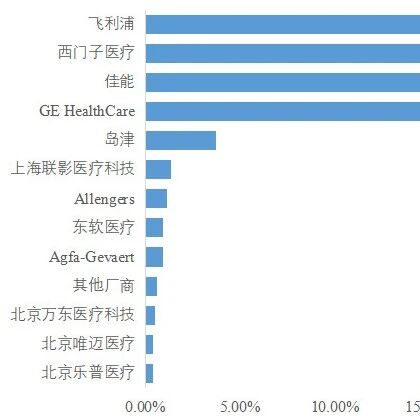
Core Viewpoint - The digital subtraction angiography (DSA) system market is projected to reach $7.974 billion by 2031, with a compound annual growth rate (CAGR) of 7.18% in the coming years [1][4]. Market Overview - Major manufacturers of DSA systems globally include Philips, Siemens Healthineers, and Canon, with the top five companies holding approximately 92.90% of the market share [4]. - The primary product type is the floor-mounted C-arm system, which accounts for about 51.50% of the market [5]. - Cardiovascular diseases represent the largest demand source, capturing around 67.60% of the market [10]. Key Drivers - **Aging Population and Disease Burden**: The acceleration of aging in China and the rising incidence of cardiovascular diseases are driving the demand for DSA in interventional surgeries [14]. - **Policy Support**: The Chinese government is encouraging domestic production of high-end medical equipment through policies like the "Healthy China 2030" plan, which includes funding and tax incentives [14]. - **Technological Integration and Upgrades**: The integration of AI and 3D reconstruction technologies is enhancing diagnostic efficiency and promoting the development of DSA towards precision and minimally invasive procedures [14]. Challenges - **Dependence on Core Components**: High-end DSA equipment relies on advanced components, and while domestic companies have made progress, they still lag behind international giants in key technologies [16]. - **Patent Barriers**: Domestic companies face potential patent infringement issues during R&D, which can hinder innovation [16]. - **Service and Maintenance Costs**: High maintenance costs and insufficient service network coverage for domestic companies compared to international brands pose challenges [17]. Industry Opportunities - **Government Initiatives**: The National Health Commission's guidance on promoting domestic high-end medical equipment development is expected to support local companies [18]. - **Market Expansion in Rural Areas**: The "Thousand County Project" aims for 90% of county-level hospitals to be equipped with DSA devices by 2027, with financial support covering 30%-40% of procurement costs [18]. - **Regulatory Support for Innovation**: The introduction of expedited approval processes for DSA devices with integrated AI functionalities is likely to enhance market entry for innovative products [18].
4.1亿像素图像传感器,首次展示
半导体行业观察· 2025-09-01 01:17
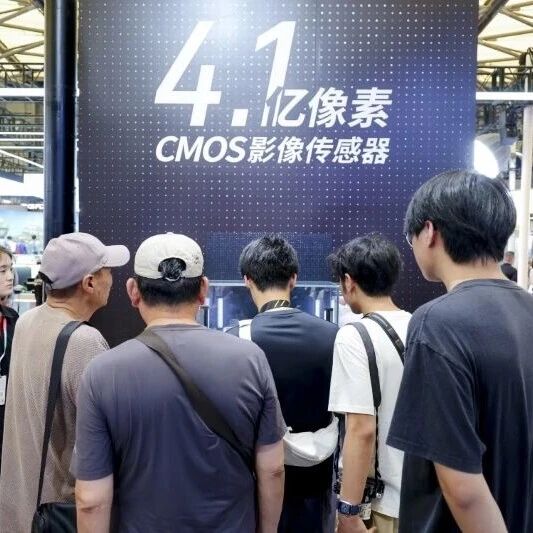
公众号记得加星标⭐️,第一时间看推送不会错过。 佳能 LI8030SA 的定位并非面向大众市场,而是面向监控、医疗和工业图像处理等高度专业化的行 业。在 2025 年 P&I 展会上,这款传感器被放置在玻璃后方进行展示,这通常清楚地表明它仍处于 开发阶段。佳能已经开始接受意向书,尽管最初的型号并非用于传统相机。然而,这项技术未来也可 能影响佳能的商用传感器。 凭借4.1亿像素的传感器,佳能令人印象深刻地展示了这一领域的发展方向。然而,对于业余摄影师 来说,这款传感器仍然是一个遥不可及的梦想。毕竟,我们大多数人并不需要如此高的分辨率。然 而,在专业领域,它却开辟了新的维度。 据佳能介绍,这颗新开发的CMOS传感器拥有相当于24K的分辨率(相当于全高清的198倍,8K的12 倍)。用户可以裁剪该传感器捕捉到的图像的任意部分,并在保持高分辨率的同时进行大幅放大。许 多超高像素CMOS传感器通常采用中画幅或更大画幅,而这款超高分辨率传感器则采用35mm全画幅 格式。这使得它可以与全画幅传感器的镜头组合使用,并有望为拍摄设备的小型化做出贡献。由于 CMOS传感器的数据读取时间会随着像素数量的增加而延长,因此实现超高像素 ...
佳能,能拉日本半导体设备一把吗?
3 6 Ke· 2025-08-25 10:45
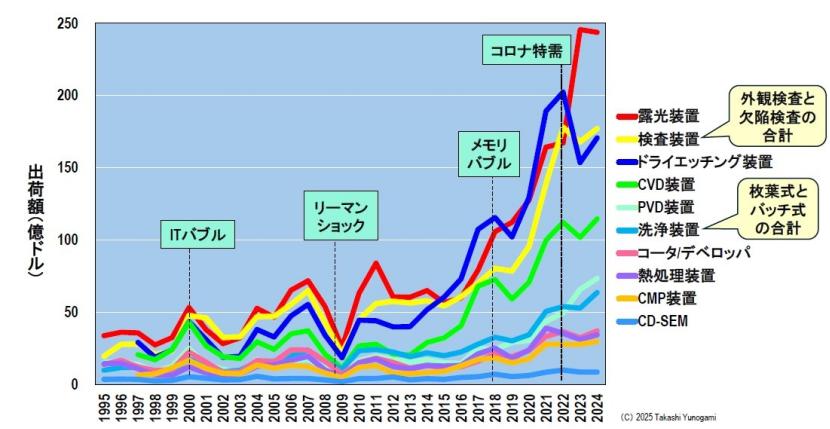
Core Insights - Canon is thriving in the semiconductor manufacturing equipment market, particularly with its Nano Imprint Lithography (NIL) technology, which is expected to bring a paradigm shift in optical lithography processes [1][34] - The semiconductor industry experienced a downturn in 2023 after a surge in 2022 due to COVID-19, but is projected to recover in 2024, with most equipment shipments expected to increase [1][9] - The market for front-end semiconductor manufacturing equipment is primarily dominated by European and American manufacturers, with significant market shares held by companies like ASML, Lam Research, and Applied Materials [2][6] Market Share and Trends - The market size for major equipment types exceeds $10 billion, with lithography equipment valued at $24.4 billion, primarily dominated by ASML (94.1% market share) [2][6] - Japan holds significant shares in several equipment categories, such as coating and developing equipment (94.5%) and vertical diffusion furnaces (82.2%), but these markets are relatively small [2][6] - Japan's market share in front-end equipment has been declining since 2011, with projections indicating a further drop to 21.7% by 2024, while the U.S. is expected to hold 44.3% and Europe 29.2% [9][11] Canon's Performance - Canon has shown strong performance in the lithography equipment sector, with its market share increasing from 14.5% in 2011 to an expected 32.7% by 2024, while Nikon's share has significantly declined [16][34] - Canon's strategy focuses on KrF and i-line technologies, where it has achieved a dominant market position, particularly in i-line with a projected share of 74.6% by 2024 [28][34] - The company is developing NIL technology, which offers a cost-effective and simpler method for creating fine patterns, potentially disrupting the current lithography market dominated by ASML [34] Future Outlook - If NIL technology is successfully implemented in semiconductor mass production, it could weaken ASML's dominance in EUV and ArF immersion technologies, positioning Canon to establish NIL as a new business pillar [34] - The NIL technology, while facing challenges related to defects from contaminants on masks, presents a lower-cost alternative compared to EUV systems, which are priced over 30.8 billion yen [34]


佳能副社长:2025年在中国相机销量力争增长10%
日经中文网· 2025-08-25 08:00
Core Viewpoint - Canon aims to achieve over 10% year-on-year growth in digital camera sales in China by 2025, targeting a return to the high growth era of the late 2000s to early 2010s, when annual growth rates exceeded 50% [2][4]. Group 1: Sales and Market Trends - In the first half of 2025, Canon's camera shipments in China increased by 16% year-on-year in terms of value, although this is a slowdown compared to the 28% growth rate in 2024 [4]. - The demand for cameras is recovering due to a surge in travel and the need for clear images and videos on social networks, with the camera market in China expected to exceed its 2019 size in 2024, reaching a historical high post-pandemic [4]. - The Z generation in China is shifting from smartphones to cameras for clearer photos and videos, prompting Canon to design models priced around 6,000 yuan that enhance video shooting convenience [4]. Group 2: Business Strategy - Canon plans to reverse the revenue decline in its enterprise business in 2024 and aims for overall revenue and profit growth in Canon China by 2025 [2][4]. - The company will leverage social networks, anime, and gaming to target student demographics in its marketing efforts [4].

卡片机卖到9000块,理光沾了富士的光
Hu Xiu· 2025-08-22 13:42
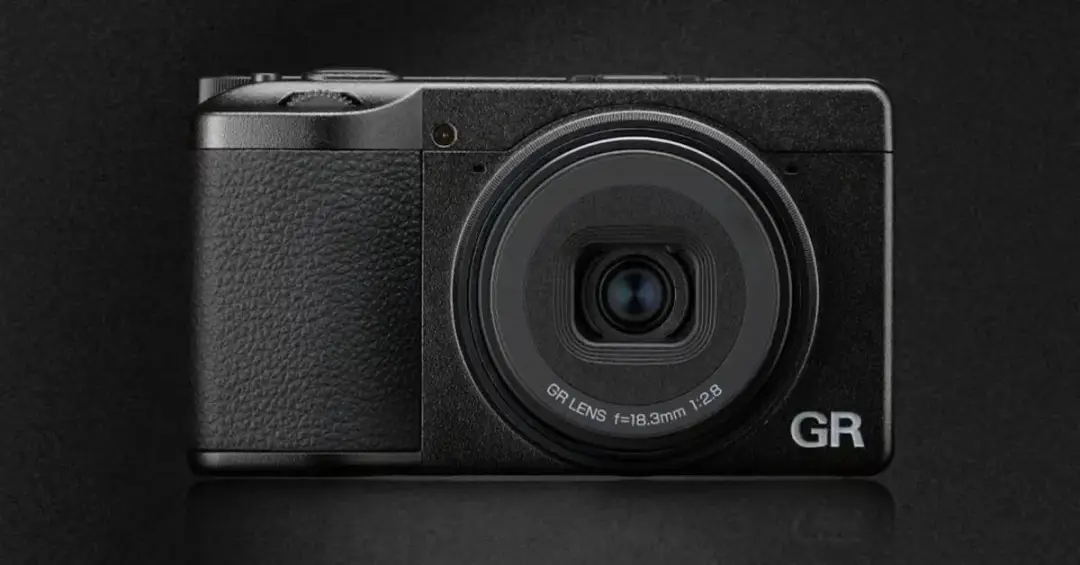
Group 1 - Ricoh has officially launched the fourth generation of its GR series camera, the GR4, priced at 8999 yuan, which is a significant increase of 2800 yuan compared to the previous GR3 model [4][5][27] - The pricing strategy reflects a broader trend in the camera market where traditional pricing structures based on specifications are being challenged, as seen with Fujifilm's similar pricing strategies [28][30][36] - The GR4's pricing is not an isolated case but part of a growing trend where emotional value and brand perception are becoming key drivers of pricing in the camera industry [32][33][36] Group 2 - The GR4 features several upgrades over the GR3, including a slightly larger sensor with a resolution increase from 24.24 million to 25.74 million pixels, five-axis stabilization, and improved autofocus capabilities [12][14][17] - The internal storage has been significantly increased from 2GB to 53GB, enhancing usability for users who may forget to bring an SD card [20][21] - The camera introduces new film simulation modes and enhanced customization options, appealing to its core user base that values unique color science and aesthetic output [22][26] Group 3 - The camera market is experiencing a shift from a focus on technical specifications to an emphasis on user experience and emotional value, as consumers seek cameras that provide a distinct style and ease of use [44][45][56] - The GR series is designed for quick and intuitive shooting, emphasizing a philosophy of simplicity and immediacy in photography, which resonates with users looking for a non-intrusive and enjoyable experience [53][55] - The current market dynamics suggest that the camera industry may not be shrinking but rather evolving into a more diverse and interesting landscape, similar to the watch market where different consumer needs coexist [65][66]
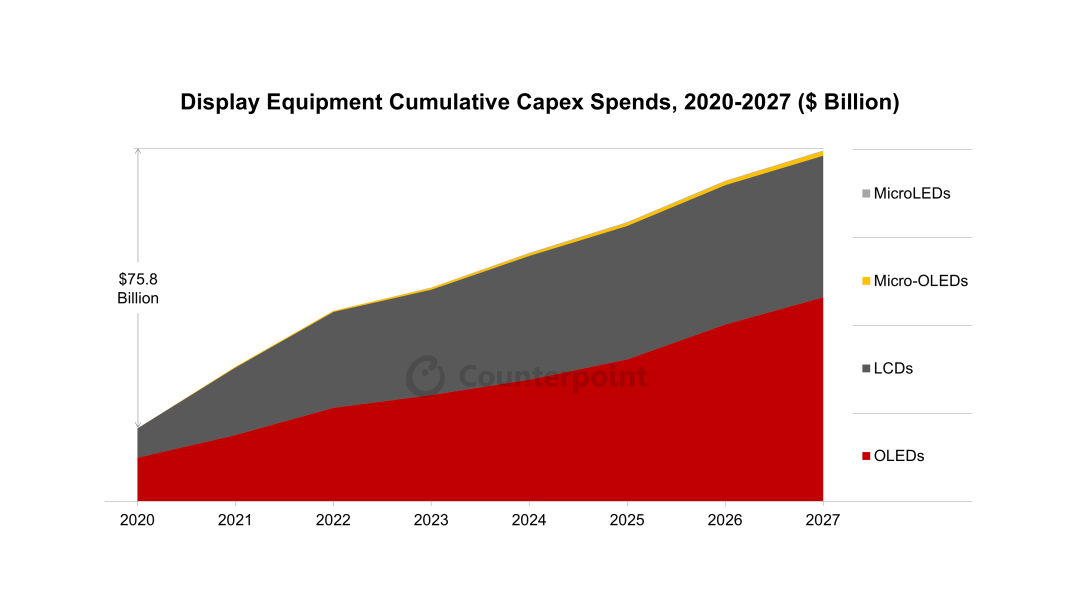
Counterpoint Research:2020-2027年期间全球显示器设备支出预计累计达到758亿美元
智通财经网· 2025-08-21 01:17
Group 1 - The core viewpoint of the article highlights the increasing capital expenditure in the display manufacturing sector driven by the growing demand for OLED and LCD displays across various industries, with a projected total global spending of $75.8 billion from 2020 to 2027 [1][5] Group 2 - The primary technology driving significant capital expenditure is OLED, with a projected 31% year-on-year growth in OLED-related equipment spending by 2025, while LCD spending is expected to decline by 45% [2] - From 2025 to 2027, OLED is anticipated to account for 80% of total investment, while LCD's share will drop to just 17% [2] Group 3 - Most OLED manufacturers with 6th generation production lines are expanding to 8.7 generation lines without changing deposition methods, benefiting from stable yields and advancements in Fine Metal Mask (FMM) technology [6] - Chinese manufacturers are exploring alternatives to FMM technology, with companies like Visionox and Tianma considering light-patterned OLED and RGB inkjet OLED processes, respectively, as key moves for competitiveness and cost advantages [6] Group 4 - The display equipment supply chain is lengthy and fragmented, with over 170 different manufacturers tracked in the display equipment industry [9] - Canon, including Anelva and Tokki, is expected to lead the market with a projected 9% revenue growth by 2025, achieving a market share of 12% [9] - Applied Materials' market share is expected to slightly decline to 9%, while Nikon's market share is projected to decrease with a 22% year-on-year revenue drop [9]