南方电网

Search documents
主题风向标1月第2期:主题轮动加快,聚焦国产半导体与电力
GUOTAI HAITONG SECURITIES· 2026-01-18 12:13
Group 1 - The report highlights that the trading heat of hot themes has reached historical highs, with advanced packaging and equipment themes in the semiconductor sector gaining strength, while the commercial aerospace theme has cooled down. The average daily trading volume of hot themes reached 1.436 billion yuan, with an average turnover rate of 5.9%, marking a historical peak [7][9][12] - The report emphasizes the acceleration of theme rotation, focusing on sectors with strong demand support and concentrated industrial catalysts, particularly in low-tech areas such as domestic computing power, new power grids, robotics, and domestic consumption [4][6][20] Group 2 - In the domestic computing power theme, TSMC's capital expenditure is expected to exceed expectations, boosting demand in the semiconductor advanced manufacturing sector. TSMC's net profit for Q4 2025 is projected to grow by 35% year-on-year, with capital expenditure potentially reaching a historical high of 56 billion USD in 2026, a 37% increase from 2025 [20][25][29] - The new power grid theme sees the State Grid announcing a fixed asset investment of 4 trillion yuan during the 14th Five-Year Plan, a 40% increase from the previous plan, aimed at constructing a new power system. The proportion of non-fossil energy consumption in China is expected to reach 20% by 2025 and 25% by 2030 [21][35][40] - The robotics theme is highlighted by the participation of Chinese robotics companies at CES 2026, showcasing advancements in various application scenarios. The industry is entering a phase of large-scale development, with significant growth in repetitive and dangerous industrial tasks as well as personalized consumer scenarios [22][39][41] - The domestic consumption theme is driven by government initiatives to cultivate new growth points in service consumption, with a focus on enhancing the domestic market. The report notes the emergence of new consumption scenarios in sports events, ice and snow tourism, and cultural performances, with significant economic impacts [23][43][44]


\十五五\电网投资扩张,关注电力建设龙头
Changjiang Securities· 2026-01-18 09:45
Investment Rating - The report maintains a "Positive" investment rating for the industry [8]. Core Insights - The State Grid announced that during the "14th Five-Year Plan" period, fixed asset investment is expected to reach 4 trillion yuan, a 40% increase compared to the "13th Five-Year Plan" period [2][6]. - The investment will focus on building a green and intelligent power grid system, aiming to support the national carbon peak goals and enhance the capacity for renewable energy integration [11]. - The rapid installation of renewable energy sources necessitates an accelerated investment in grid infrastructure, with the State Grid planning to invest over 650 billion yuan in 2025, marking a historical high [11]. Summary by Sections Investment Overview - The fixed asset investment during the "15th Five-Year Plan" is projected to be 4 trillion yuan, which is a 40% increase from the previous plan [2][6]. - The annual investment is expected to reach 800 billion yuan, significantly boosting power construction [11]. Focus Areas - The investment will target three main areas: 1. Green Transition: Aiming for an annual increase of 200 million kilowatts in wind and solar energy capacity, with non-fossil energy consumption reaching 25% [11]. 2. Strengthening Grid Platforms: Establishing a new type of grid platform and enhancing the transmission capacity by over 30% compared to the end of the "14th Five-Year Plan" [11]. 3. Technological Empowerment: Focusing on key core technology breakthroughs to establish a globally influential energy technology hub [11]. Market Dynamics - By the end of 2024, the cumulative installed capacity of renewable energy in the State Grid's operating area is expected to reach 1.14 billion kilowatts, accounting for 43.3% of total installed capacity [11]. - Major players in the power construction sector, such as China Power Construction and China Energy Engineering, are expected to benefit significantly from the increased investment [11].


海客谈|封关后首次赴外省考察交流,海南省党政代表团有何收获?
Hai Nan Ri Bao· 2026-01-18 03:12
Core Viewpoint - The Hainan provincial party and government delegation's visit to Guangdong marks a significant step in enhancing cooperation and learning from Guangdong's successful development experiences, particularly in the context of the Hainan Free Trade Port's recent full closure operation [1][3]. Group 1: Reasons for the Visit - The choice of Guangdong for the first post-closure visit is strategic, as both the Guangdong-Hong Kong-Macao Greater Bay Area and Hainan Free Trade Port are major national strategies personally planned and promoted by President Xi Jinping [1]. - The visit aims to implement Xi Jinping's directives on strengthening regional coordinated development and enhancing the integration of Hainan with the Greater Bay Area [1][3]. - Guangdong's status as a leader in reform and innovation, with a strong track record in technological advancement and industrial development, provides valuable lessons for Hainan as it enters a new development phase [3]. Group 2: Observations from Guangdong - The delegation visited various innovation and technology platforms, including the Southern Base of the National 863 Program for Marine Aquaculture Seed Engineering, and observed Guangdong's economic vitality and technological innovation capabilities [4][6]. - Guangdong's GDP exceeded 10.5 trillion yuan in the first three quarters of 2025, with significant growth in key sectors such as industrial robotics, new energy vehicles, and solar cells [6]. - The delegation noted the importance of a robust industrial ecosystem, as seen in Guangdong's thriving electronic information and new energy sectors, which provide a solid foundation for resilience and continuous upgrading [7]. Group 3: Future Cooperation Directions - The visit resulted in practical cooperation agreements, emphasizing the need for enhanced learning and collaboration between Hainan and Guangdong across various sectors [8][11]. - Both provinces agreed to strengthen industrial cooperation, focusing on emerging fields such as commercial aerospace, low-altitude economy, and marine economy, leveraging Hainan's advantages in application scenarios and free trade policies [8][11]. - The collaboration will also extend to tourism and cultural exchanges, aiming to maximize shared advantages and explore new market opportunities [11].

封关后首次赴外省考察交流,海南省党政代表团有何收获?
Hai Nan Ri Bao· 2026-01-18 01:24
Core Viewpoint - The Hainan provincial government delegation's visit to Guangdong marks a significant step in enhancing cooperation and learning from Guangdong's successful development experiences, particularly in the context of the Hainan Free Trade Port's recent full closure operation [1][3]. Group 1: Purpose of the Visit - The visit aims to implement President Xi Jinping's directives on strengthening the coordinated development between the Guangdong-Hong Kong-Macao Greater Bay Area and Hainan Free Trade Port [3]. - Hainan is entering a new development phase post-closure, facing challenges in institutional innovation and industrial optimization, necessitating the learning of advanced experiences from Guangdong [3][4]. Group 2: Observations from Guangdong - The delegation visited various innovation platforms and enterprises, gaining insights into Guangdong's economic vitality, technological innovation, and resilient industrial structure [5][7]. - Guangdong's GDP exceeded 10.5 trillion yuan in the first three quarters of 2025, with significant growth in industrial robots, new energy vehicles, and solar cells, showcasing the province's dynamic economic landscape [7]. - The delegation noted the importance of innovation efficiency, with Guangdong's research institutions creating a closed-loop system from basic research to industrial incubation, which could serve as a model for Hainan [7]. - The development of industrial clusters in Guangdong, particularly in electronics and new energy, provides a robust foundation for risk resilience and continuous upgrading, offering valuable lessons for Hainan's industrial development [7]. Group 3: Future Cooperation Directions - The visit resulted in practical cooperation agreements, emphasizing the need for enhanced learning and collaboration between Hainan and Guangdong [9]. - Both provinces agreed to deepen industrial cooperation, focusing on emerging sectors such as commercial aerospace, low-altitude economy, and marine economy, leveraging Hainan's unique advantages [9][10]. - Strengthening tourism market collaboration and enhancing product promotion between the two provinces were identified as key areas for future development [10].
南方电网计划“十五五”在琼投资460亿元
Hai Nan Ri Bao· 2026-01-18 01:11
南方电网计划"十五五"在琼投资460亿元 用于电力基础设施建设,较"十四五"期间增长近七成 海南日报讯(海南日报全媒体记者 邵长春 通讯员 肖玲 宋印官)海南日报全媒体记者从南方电网了 解到,"十五五"期间,南方电网将坚持适度超前,在海南投资460亿元,用于电力基础设施建设,投资 规模较"十四五"期间增长近七成,加快提升海南电网基础设施建设和电力支撑保障水平,为海南自贸港 高质量发展提供能源支撑。 在电网主网架建设方面,海南将新建一批500千伏变电站,建强"口"字形500千伏环网结构。预计 到"十五五"末,全省将建成坚强可靠的数智电网,显著增强省内电力调节能力,主网供电能力实现翻 番。 在输电通道建设方面,海南将重点推进琼粤联网通道、并加强省内西部电力送出通道,建成海上风 电500千伏儋州、东方等输变电工程,建强500千伏西部环网。预计到"十五五"末,全省清洁电力外送能 力将提升至120万千瓦。 在城市电网建设方面,海南将围绕经济圈、重点园区等重点区域布局高可靠性电网,在城市指挥中 心、航天发射基地、国际会议中心、港口及交通干线等关键区域超前规划建设配套电网,在中部地区建 成220千伏可好、冲山等一批输变电工 ...
坚持相向而行 加强协同联动 在服务国家重大战略实施中拓展新空间实现新发展
Xin Lang Cai Jing· 2026-01-18 00:58
羊城晚报讯 1月16日至17日,海南省党政代表团来粤考察交流。16日上午,两省在广州召开合作交流座 谈会,就共同学习好贯彻好习近平总书记在听取海南自由贸易港建设工作汇报时的重要讲话、视察广东 和出席第十五届全国运动会开幕式重要讲话重要指示精神,进一步推动两省相向而行、深化区域重大战 略联动发展进行交流会谈。省委书记黄坤明主持会议并讲话,海南省委书记冯飞出席会议并讲话。省委 副书记、省长、深圳市委书记孟凡利,海南省委副书记、省长刘小明分别介绍广东、海南经济社会发展 及两省合作交流情况。海南省委副书记、政法委书记杨晋柏出席会议。 省领导张虎、冯忠华、袁古洁、王胜、唐屹峰,广州市市长孙志洋;海南省领导巴特尔、王祺扬、范少 军、谢京、杨国强参加有关活动。 (徐林 骆骁骅 岳宗) 冯飞代表海南省委省政府感谢广东对海南经济社会发展的全方位支持。他表示,此次海南省党政代表团 赴广东学习考察,见证了广东科技创新实力、经济发展活力以及产业结构韧性,深切感受到广东走在前 列干事创业的非凡气象和经济社会发展取得的卓越成就。近年来,广东经济实力、科技实力、综合实力 跃上新台阶,续写了经济快速发展和社会长期稳定两大奇迹的广东新篇章,让 ...
专访核工业西南物理研究院副院长冯勇进:以强磁场与AI为翼 助力中国聚变能源加速产业化
Zhong Guo Zheng Quan Bao· 2026-01-17 02:56
Core Insights - The article discusses the advancements in nuclear fusion technology in China, particularly focusing on the Chengdu region's development as a hub for fusion energy, highlighted by the achievement of the "double hundred degree" breakthrough in the Chinese Circulation No. 3 project [1] Group 1: Technological Advancements - Strong magnetic field technology is becoming a crucial support for the commercialization of fusion energy, allowing for effective control of high-temperature plasma and reducing the size of Tokamak devices [2] - The Chinese Circulation No. 3 is the largest and highest-parameter magnetic confinement fusion device in China, achieving significant milestones such as the first domestic "double hundred degree" and a fusion triple product reaching 10^20 [2] - AI technology is being utilized to enhance plasma control, achieving near threefold energy confinement time through an "AI operator" that automates the adjustment of magnetic fields [4] Group 2: Industry Collaboration and Development - The Southwest Institute of Physics (西物院) plays a pivotal role in the fusion industry by driving the localization of key components and leading international collaborations, including participation in the ITER project [3] - The establishment of a controllable nuclear fusion innovation consortium aims to foster collaboration among various stakeholders, including state-owned enterprises and universities, to address key technological challenges [6] - The long-term goal is to achieve commercial fusion energy by 2045, with a roadmap that includes the development of experimental and demonstration reactors leading up to commercial deployment [6]
以强磁场与AI为翼 助力中国聚变能源加速产业化
Zhong Guo Zheng Quan Bao· 2026-01-16 20:47
Core Insights - The article discusses the advancements in nuclear fusion technology in China, particularly focusing on the Chengdu Nuclear Fusion Industry Corridor and the achievements of the Southwestern Institute of Physics (西物院) in developing the Chinese Circulation No. 3, which has reached significant milestones in fusion research [1][2]. Group 1: Technological Advancements - The Chinese Circulation No. 3 is the largest and highest-parameter magnetic confinement fusion device in China, achieving the first domestic "double hundred million degrees" and "million ampere billion degree high confinement mode operation," with fusion triple product reaching 10^20 [2]. - High-temperature superconducting magnets are identified as a core technology for enhancing magnetic field strength, which is crucial for effective plasma control and commercializing fusion energy [1][2]. - AI technology has been integrated into plasma control, allowing for near "autonomous driving" capabilities in managing plasma stability, significantly increasing energy confinement time [4]. Group 2: Industrial Development - The Southwestern Institute of Physics plays a pivotal role in the fusion industry by driving the localization of key components and achieving international standards in fusion technology, including the development of the first wall prototype for the ITER project [3]. - The institute is also fostering international collaboration, positioning the Chinese Circulation No. 3 as a satellite device for ITER and enhancing China's influence in global fusion research [3]. Group 3: Future Plans and Goals - The Southwestern Institute of Physics aims to achieve commercial fusion energy by 2045, with a roadmap that includes the construction of a demonstration reactor by that year, and plans to start fusion energy burning experiments by 2027 [6][7]. - The focus will remain on high-temperature superconducting technology, with a target of achieving 20 Tesla in large magnet engineering applications, while addressing challenges in the mechanical structure and quench protection technology [5][7]. - Collaboration with various stakeholders, including state-owned enterprises and universities, is essential for developing a closed-loop system for research, validation, and commercialization of fusion technology [5][7].
国网4万亿领衔电网大投资时代,五大板块迎确定性机遇
2 1 Shi Ji Jing Ji Bao Dao· 2026-01-16 13:33
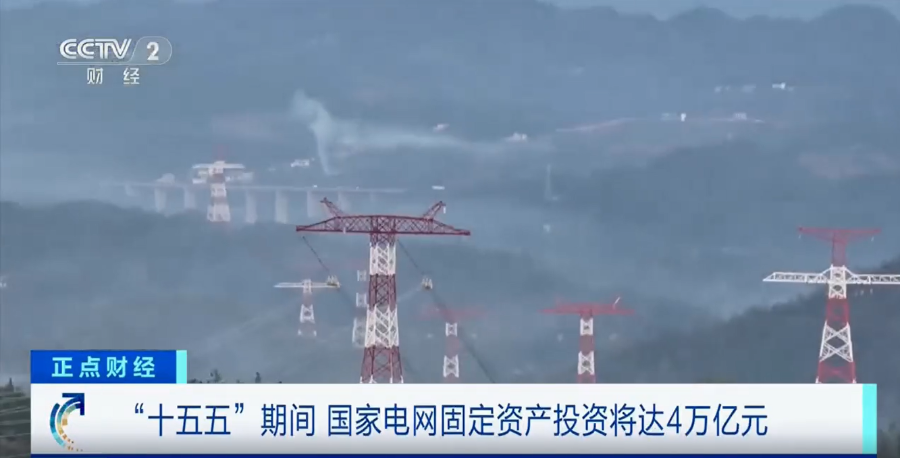
Core Viewpoint - The announcement of a 4 trillion yuan investment by the State Grid during the 14th Five-Year Plan period marks a significant increase of 40% compared to the previous plan, indicating a historic peak in investment aimed at technological innovation and the construction of a new power system [1][5]. Investment Plans - The State Grid's investment plan for the 14th Five-Year Plan is set at 4 trillion yuan, while the Southern Power Grid plans to invest 175 billion yuan in 2025, indicating a synchronized increase in investment from both major grid companies [5]. - The combined investment plans suggest that China's grid investment scale may reach an average of 1 trillion yuan annually during the 14th Five-Year Plan period [5]. Focus Areas of Investment - The 4 trillion yuan will primarily focus on technological innovation and the construction of a new power system, with an expected annual increase of 20 million kilowatts in installed capacity for wind and solar energy [6]. - The investment aims to enhance the system's adjustment capabilities, optimize the layout of pumped storage stations, and support the large-scale development of new energy storage [6]. Market Reaction - Following the announcement, the electric grid equipment ETF saw an opening increase of over 6%, closing with a 2.05% gain, with several stocks reaching their daily limit [3][4]. Industry Opportunities - The 4 trillion yuan investment is expected to create a ripple effect across the entire industry chain, benefiting five major sectors including ultra-high voltage, main network equipment, and distribution network upgrades [8]. - The ultra-high voltage sector is highlighted as a key focus, with significant projects already underway and more expected to be approved in the coming years [8]. Future Demand - The demand for grid upgrades is driven by the increasing electricity demand, projected to grow by over 40% globally by 2035, alongside a doubling of electricity consumption from artificial intelligence [7]. - The investment in distribution networks is also emphasized, with a focus on smart upgrades and the anticipated release of demand for primary and secondary equipment [9].




四川大决策投顾:全球电网投资加快背景下,特高压高景气可期
Sou Hu Cai Jing· 2026-01-16 08:51
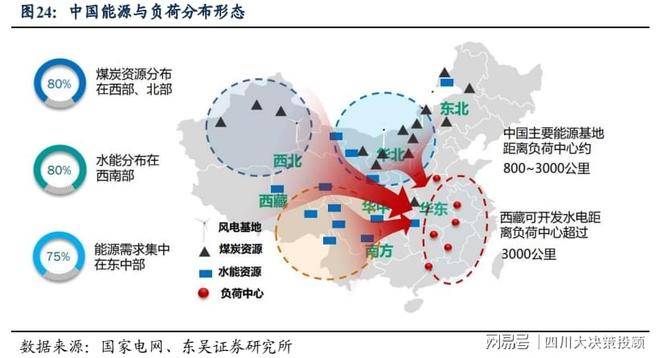
Core Insights - The ultra-high voltage (UHV) industry is a key carrier for energy transition, driven by the urgent demand for power delivery from western renewable energy bases under the "dual carbon" goals, leading to accelerated UHV construction [1][19] - Investment during the 14th Five-Year Plan period is expected to remain stable, with ample planned projects providing high certainty for upstream equipment performance [1][19] Group 1: UHV Construction and Demand - UHV construction aims to address the imbalance of electricity resources and demand in China, with resources concentrated in inland areas and demand in urbanized eastern coastal regions [2] - The recent peak in domestic UHV construction began in 2022, with approvals for 5, 5, 4, and 5 projects in 2022, 2023, 2024, and 2025 respectively, driven by the demand for power delivery from renewable energy bases [9] - The National Energy Administration has emphasized the importance of grid investment for renewable energy consumption, accelerating the construction of supporting projects [9] Group 2: UHV Industry Chain - The UHV industry chain is complete, divided into three main segments: upstream (core raw materials, special insulation materials, key components), midstream (core equipment manufacturing), and downstream (final users and investors like State Grid and Southern Grid) [4] - Key players in the midstream include companies like State Grid NARI, XJ Electric, Pinggao Electric, and TBEA, focusing on both DC and AC UHV technologies [4] Group 3: Global and Domestic Investment Trends - Global UHV investment is entering an upward cycle, with a projected CAGR of 6.7% from 2021 to 2024, driven by the integration of renewable energy and aging infrastructure [6] - The State Grid's fixed asset investment plan for the 14th Five-Year Plan has increased significantly to 4 trillion yuan, a 40% increase from the previous plan, focusing on UHV DC transmission projects [13] Group 4: Competitive Landscape - The competitive landscape of the UHV equipment market is stable, with high technical barriers and a consistent market share among core suppliers [15] - Major suppliers include State Grid NARI, XJ Electric, and China XD Electric, with significant shares in both DC and AC core equipment [16] Group 5: International Expansion Opportunities - The UHV industry is entering a significant international expansion phase, with China's mastery of core UHV technology and extensive experience in construction and operation [17] - Opportunities for international expansion are driven by demand for grid upgrades and renewable energy integration in countries along the Belt and Road Initiative and in developed regions [18] Group 6: Investment Logic - The investment logic in the UHV industry is clear, with urgent power delivery needs from western renewable energy bases driving continuous construction, supported by stable investment and ample project planning during the 14th Five-Year Plan [19]