腾讯

Search documents
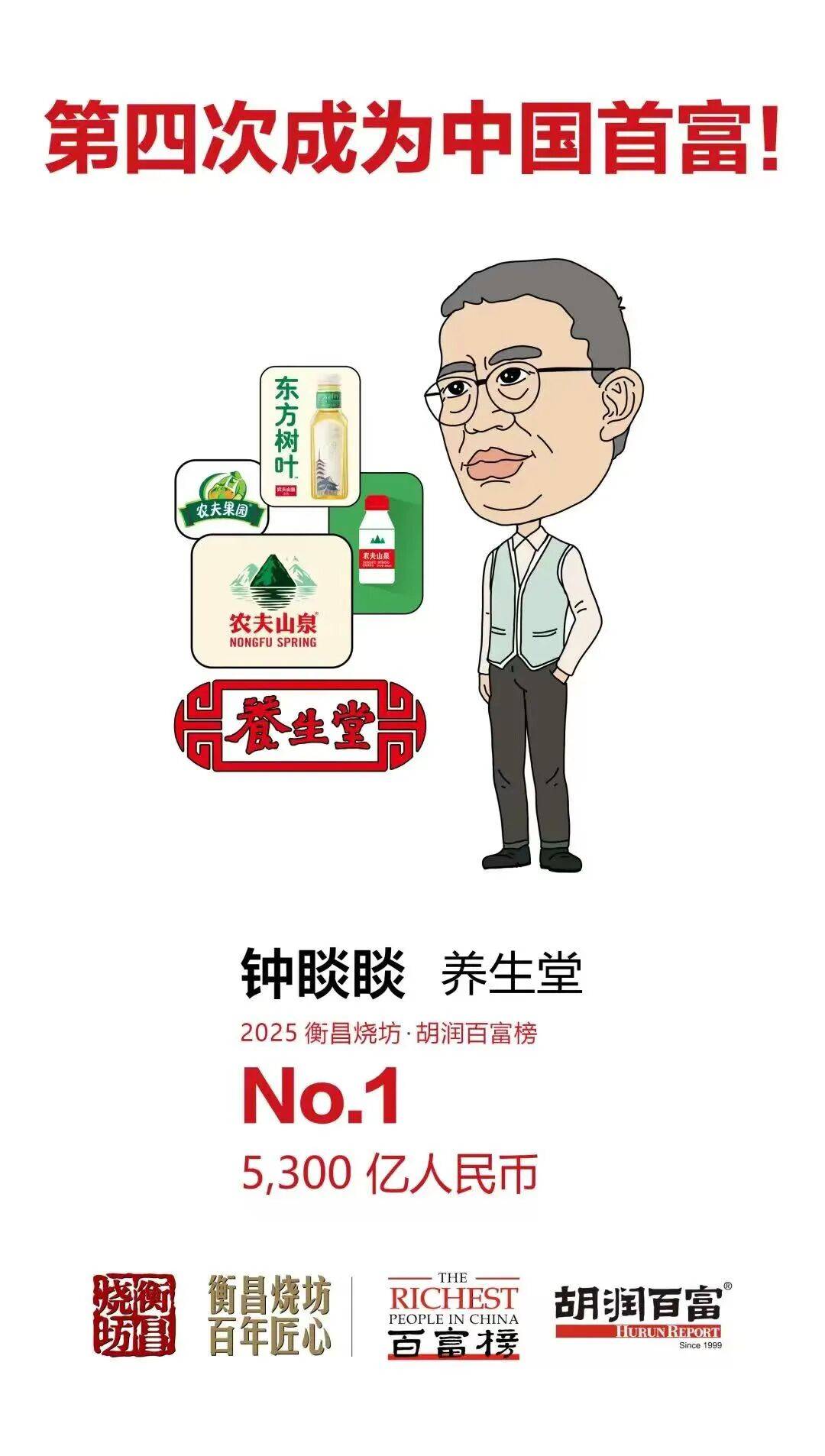
2025胡润百富榜:钟睒睒财富5300亿比去年增长1900亿,第四次成为中国首富!80%财富来源于农夫山泉,一年分红70亿
Sou Hu Cai Jing· 2025-10-28 07:10
Core Insights - The 2025 Hurun Rich List reveals that Zhong Shanshan's wealth has increased by 190 billion RMB, reaching 530 billion RMB, making him the richest person in China for the fourth time and setting a new record for wealth among Chinese billionaires [1] - Zhong Shanshan's wealth grew by 56% compared to the previous year, and he is a representative of China's vast domestic market with a population of 1.4 billion [1] Company Performance - Nongfu Spring, led by Zhong Shanshan, maintains the top market share in China's packaged drinking water, with sales exceeding 25 billion RMB in the first half of the year, reflecting a year-on-year growth of over 15% [1] - The company has made significant progress in the tea beverage sector, with new brands like Dongfang Shuye contributing to overall performance growth [1] - The market capitalization of Nongfu Spring has reached a record high of 520 billion RMB, driven by overall market recovery and rapid performance growth [1] Wealth Distribution - Approximately 80% of Zhong Shanshan's wealth is derived from Nongfu Spring, highlighting the company's pivotal role in his financial success [1] - In the past year, Zhong Shanshan distributed over 7 billion RMB in dividends, indicating strong cash flow and profitability within the company [1]


2025胡润百富榜发布:钟睒睒5300亿四度蝉联中国首富,雷军财富暴涨1960亿成“增长王”
Guan Cha Zhe Wang· 2025-10-28 07:06
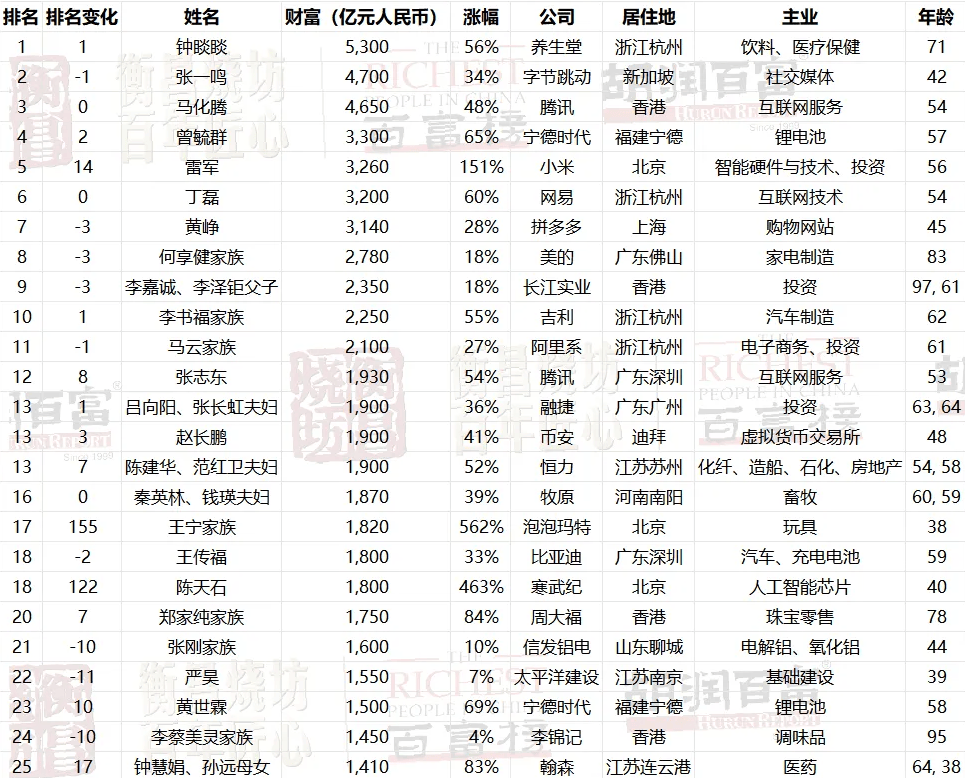
Core Insights - The 2025 Hurun China Rich List reveals significant wealth growth among top entrepreneurs, with the founder of Nongfu Spring, Zhong Shanshan, topping the list for the fourth time with a net worth of 530 billion RMB, marking a record high [1][4] - ByteDance's Zhang Yiming, last year's richest, saw his wealth increase by 120 billion RMB, placing him second with 470 billion RMB, while Tencent's Ma Huateng ranked third with a wealth increase of 150 billion RMB, totaling 465 billion RMB [1][3] - The list indicates a total of 1,434 individuals with wealth exceeding 5 billion RMB, a 31% increase from last year, and a total wealth close to 30 trillion RMB, reflecting a 42% growth [3][6] Group 1: Wealth Growth and Rankings - Zhong Shanshan's wealth increased by 190 billion RMB, while Zhang Yiming's grew by 120 billion RMB, and Ma Huateng's by 150 billion RMB [1][3] - The threshold for the top ten increased by 60 billion RMB to 225 billion RMB, with an average age of 62 years, which is three years younger than last year [3][4] - New entrants in the top ten include Lei Jun of Xiaomi and the Li Shufu family of Geely, with Lei Jun's wealth increasing by 196 billion RMB, marking a 151% growth [3][7] Group 2: Industry Insights - The food and beverage sector, represented by Zhong Shanshan, showed strong performance, with Nongfu Spring's stock price rising by 80% over the past year [6][7] - The technology sector also saw significant contributions, with Xiaomi's stock surging by 177%, contributing to Lei Jun's wealth increase [7] - The report highlights a shift in wealth concentration, with a notable decline in real estate entrepreneurs, indicating a changing landscape in the Chinese economy [6][8]
中美股市创新高,美联储料再降息,资管巨头揭秘配置思路
Di Yi Cai Jing· 2025-10-28 06:59
Core Viewpoint - The current monetary easing cycle by the Federal Reserve is expected to include three more rate cuts, with two cuts this year and one in the next year, indicating a clear environment of monetary easing [1][3]. Group 1: Federal Reserve and Interest Rates - The market anticipates a 25 basis point rate cut at the end of October, following a previous cut in September, with expectations for the Fed's rate to drop to 2.1% by 2026 [1]. - The yield on the 10-year U.S. Treasury bond has fallen below 4%, influenced by market expectations of rate cuts and recent economic data [3][4]. - Goldman Sachs predicts a total of four rate cuts by 2026, with the rate potentially reaching 3.375% by that year [3]. Group 2: U.S. Stock Market Outlook - The S&P 500 index has reached nearly 30 new highs this year, with predictions from Wall Street banks suggesting targets above 7000 points [5]. - The current environment of fiscal stimulus and monetary easing is expected to continue driving the U.S. stock market upward, with a preference for large-cap stocks due to their stability and quality [5]. - Stock buybacks are projected to exceed $1 trillion next year, contributing to daily demand of approximately $5 billion for stocks [5]. Group 3: AI and Technology Sector - Major partnerships and investments in AI, such as OpenAI's agreements with Oracle and Nvidia, are driving significant capital flows and stock price increases in the tech sector [6]. - The AI development is viewed in three phases, with the current phase focusing on hardware infrastructure, leading to future application innovations [6]. - There is a caution regarding stock selection in the AI sector due to potential high volatility and the need for in-depth analysis of company performance [6]. Group 4: China Market Positioning - There is a noticeable increase in foreign investment interest in the Chinese stock market, with a focus on the valuation advantages of Chinese stocks amid global AI innovation [7][8]. - The investment strategy includes not only technology stocks but also sectors like fast-moving consumer goods and retail, which are seen as resilient to external factors [8].
钟睒睒财富5300亿元比去年增长1900亿元,排名提升1位
Xin Lang Zheng Quan· 2025-10-28 06:57
Core Insights - Zhong Shanshan's wealth increased by 190 billion RMB, reaching 530 billion RMB, making him the richest person in China for the fourth time and setting a new record for wealth in the country [1][2] - His company, Nongfu Spring, maintains the largest market share in China's packaged drinking water, with sales exceeding 25 billion RMB in the first half of the year, reflecting a year-on-year growth of over 15% [1] - The company has made significant progress in the tea beverage sector, with new brands like Dongfang Shuye contributing to overall performance growth [1] Company Performance - Nongfu Spring's market capitalization has reached 520 billion RMB, driven by a recovery in the Hong Kong stock market and rapid growth in performance [1] - Zhong Shanshan's wealth is primarily derived from Nongfu Spring, accounting for 80% of his total wealth [1] - The company has been focusing on product premiumization and brand upgrading, representing a model for high-quality development among Chinese enterprises [1] Wealth Rankings - The 2025 Hurun Rich List shows Zhong Shanshan at the top, followed by Zhang Yiming with 470 billion RMB and Ma Huateng with 465 billion RMB [2] - The list highlights significant wealth increases among various entrepreneurs, with notable growth percentages, such as 151% for the Xiaomi founder [2]
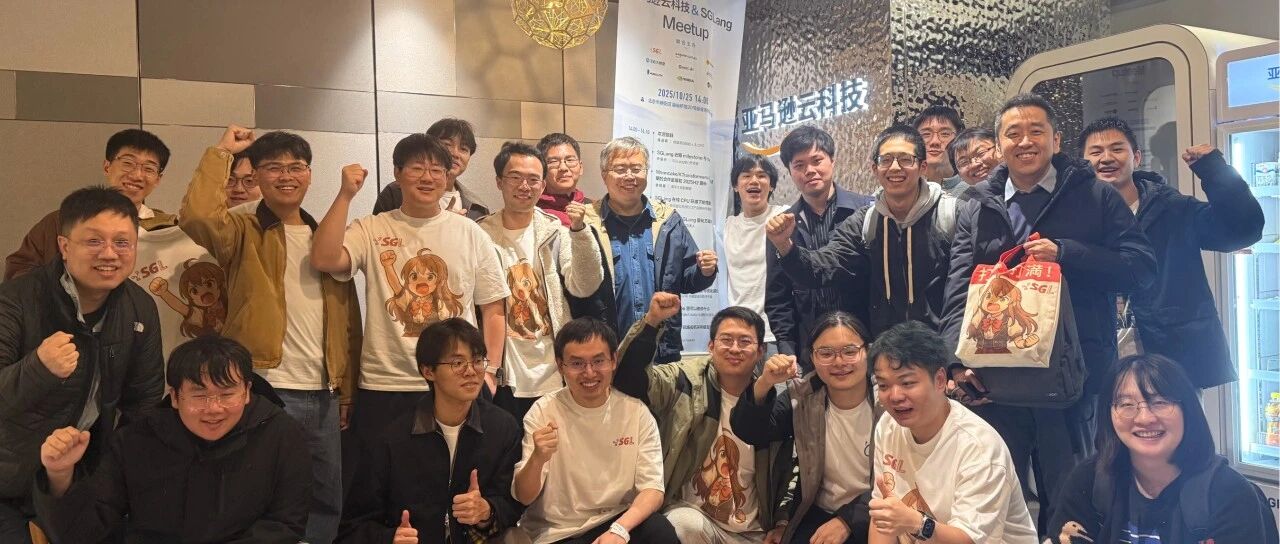
大模型优秀大脑齐聚硬核开源聚会,SGLang社区举办国内首次Meetup
机器之心· 2025-10-28 06:29
Core Insights - The Pytorch Conference 2025 showcased the vibrant community and significant developments in deep learning, particularly highlighting SGLang's contributions and potential in the industry [1][3][4]. SGLang Overview - SGLang, an open-source high-performance inference engine for large language models and visual language models, originated from RadixAttention and is incubated by the non-profit organization LMSYS. It offers low latency and high throughput inference across various environments, from single GPUs to large distributed clusters [7][8]. Community Engagement - The first Meetup event in Beijing, co-hosted by SGLang, Meituan, and Amazon Web Services, attracted numerous contributors, developers, and scholars, indicating a strong community presence and development potential [4][8]. Technical Developments - The Meetup featured technical discussions on SGLang's architecture, including advancements in KV Cache, Piecewise CUDA Graph, and Spec Decoding, aimed at improving efficiency and compatibility [21][22]. - SGLang's quantization strategies were also discussed, focusing on expanding application range and optimizing model performance [34][35]. Application and Practice - Various industry applications of SGLang were presented, including its integration with Baidu's Ernie 4.5 model for large-scale deployment and optimization in search scenarios [41][42]. - The application of SGLang in WeChat's search function was highlighted, emphasizing the need for high throughput and low latency in user experience [44]. Future Directions - The roadmap for SGLang includes further integration with various hardware and software solutions, aiming to enhance stability and compatibility across different platforms [22][35]. - The Specforge framework, developed by the SGLang team, aims to accelerate large language model inference and has been adopted by major companies like Meituan and NVIDIA [57][58].
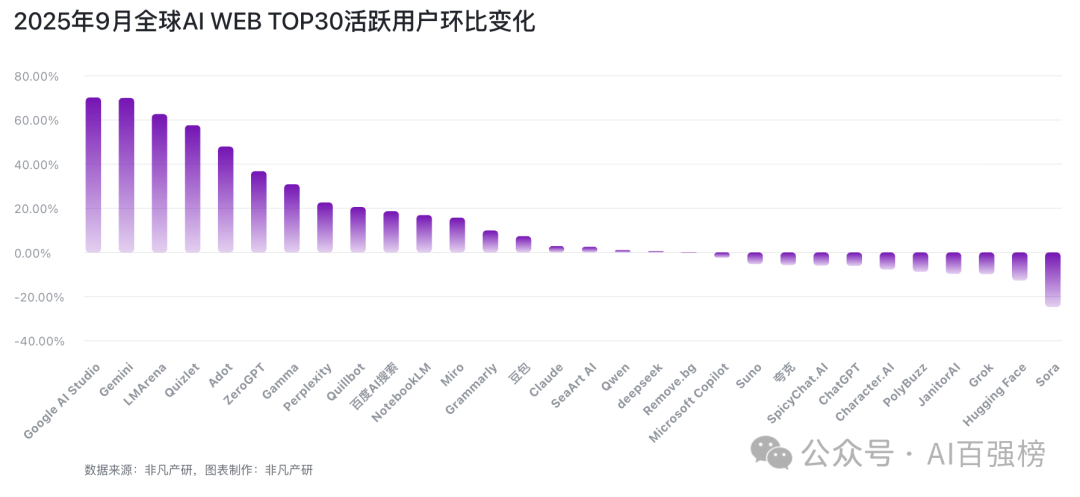
ChatGPT MAU下跌6.11%,用户正在逃向Gemini?|2025年9月AI百强榜
Xin Lang Cai Jing· 2025-10-28 05:14
Core Insights - In September 2025, global AI Web Top 100 sites generated approximately 10.135 billion visits, with overseas sites accounting for 91.9% and domestic + overseas combined at 8.1% [1][7] - The traffic is highly concentrated, with the Top 10 sites accounting for 82.2% and the Top 20 for 88.7% of total visits [1][7] - Chatbots dominate the traffic, contributing 76.7% of the total visits [1][7] Global Market Overview - The total web traffic in September reached 10.135 billion visits, with the Top 10 sites capturing 82.2% and the Top 20 capturing 88.7% [7] - The concentration indicates that new players may struggle to gain traction solely through generic traffic, necessitating a focus on specific categories and scenarios for sustainable growth [7] - The primary user behavior on the web revolves around "asking questions—receiving answers/generating content," with tools for rewriting, editing, and formatting being secondary [7] Product Performance - ChatGPT remains the leader in scale but saw a slight increase of only 0.98% [9] - Gemini and Google AI Studio exhibited significant growth, with increases of 46.24% and 64.13% respectively, indicating a resurgence of Google in the web space [9][12] - Perplexity continued to grow steadily at 14.35%, while Grok and JanitorAI experienced declines of 7.44% and 10.01% respectively [11][12] Domestic Market Insights - In the domestic market, web traffic totaled approximately 672 million visits, with the Top 10 sites accounting for 86.9% [4][14] - Chatbots contributed over 60% of the visits, with deepseek leading at 31.759 million visits [14][40] - Notable growth was observed in Qoder (+107%), iFlytek Zhizuo (+90%), and Baidu AI Search (+20%), indicating a strong demand for development tools and visual generation [14][43] Category Trends - The educational, content detection, sales, navigation, and PPT generation categories showed significant month-over-month growth, driven by seasonal factors and structural demand from B-end tools [8][12] - The demand for AIGC in lesson preparation and assignment understanding is becoming normalized, while content detection and rewriting are driven by platform review and content publishing needs [8][12] Emerging Opportunities - New entrants in the market, such as Nano Banana (image editing, +292%), DupDub (text-to-speech, +209%), and Subject.com (education, +279%), are contributing to structural growth despite not being top-tier products [12][30] - The focus on shortening the path from input to usable output is driving user engagement and retention, particularly in the domestic market [41][42]
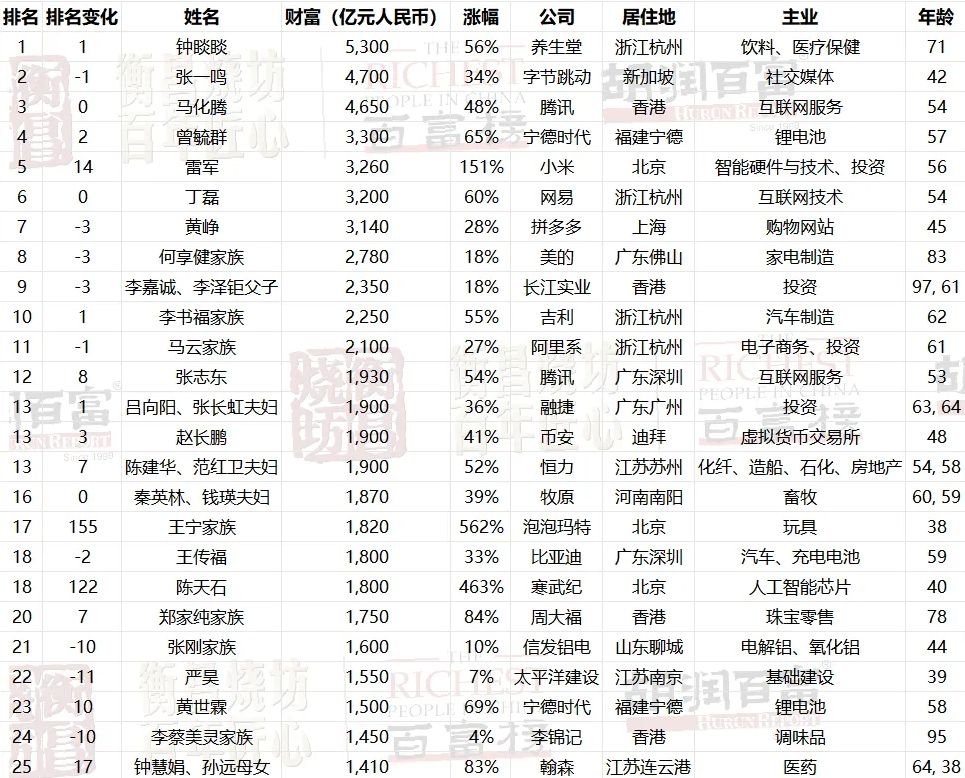
中国首富换人!71岁钟睒睒反超张一鸣,以5300亿元身价第四次登顶;雷军成为“增长王”,钟慧娟取代宗馥莉成为中国女首富
Sou Hu Cai Jing· 2025-10-28 05:08
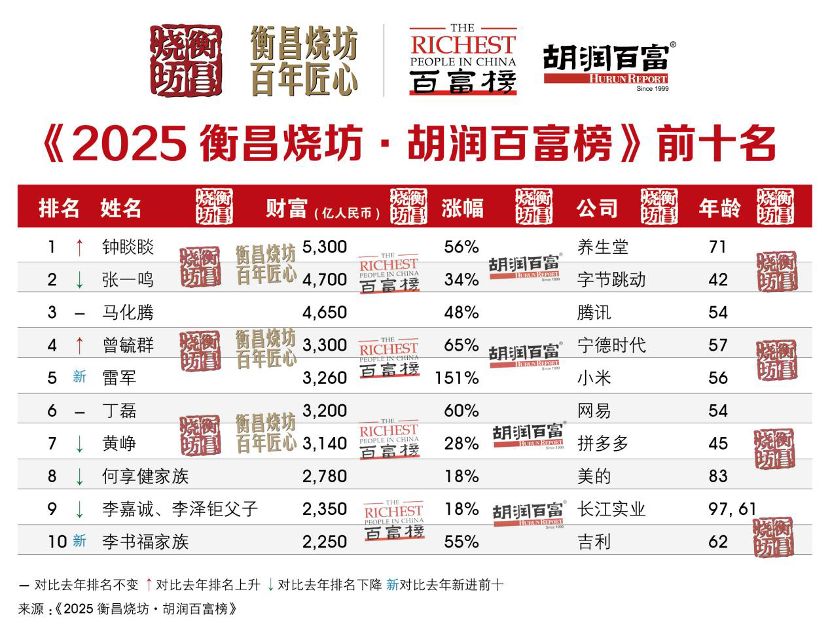
Core Insights - The 2025 Hurun Rich List was released, marking the 27th consecutive year since its inception in 1999, with the wealth calculation deadline set for September 1, 2025 [1] - The top three positions are held by Zhong Shanshan of Nongfu Spring, Zhang Yiming of ByteDance, and Ma Huateng of Tencent [1][3] - The total number of individuals with wealth exceeding 5 billion RMB reached 1,434, a 31% increase from the previous year, with total wealth nearing 30 trillion RMB, up 42% [2][3] Company Performance - Zhong Shanshan's wealth increased by 1,900 billion RMB, reaching 5,300 billion RMB, making him the richest person in China for the fourth time and setting a new record for wealth [3][6] - ByteDance's Zhang Yiming saw his wealth grow by 1,200 billion RMB to 4,700 billion RMB, driven by advancements in AI business [6][10] - Tencent's Ma Huateng's wealth rose by 1,500 billion RMB to 4,650 billion RMB, supported by growth in gaming, advertising, and fintech sectors [10][12] New Entrants and Trends - The list welcomed two new faces in the top ten: Lei Jun of Xiaomi and Li Shufu of Geely, with the threshold for entry raised by 600 billion RMB to 2,250 billion RMB [3][12] - The average age of the top ten billionaires is now 62, which is three years younger than last year [3] - The number of billionaires with wealth exceeding 1 billion USD increased by 268 to a total of 1,021 [2][3] Notable Wealth Increases - Lei Jun of Xiaomi was named the "growth king," with a wealth increase of 1,960 billion RMB, attributed to the explosive growth of Xiaomi's automotive business and high-end smartphone breakthroughs [12][14] - Other notable wealth increases include Wang Ning of Pop Mart, whose wealth grew by 1,545 billion RMB, and Chen Tian Shi of Cambricon, with an increase of 1,480 billion RMB due to AI chip advancements [12][14] Female Billionaires - The proportion of female entrepreneurs on the list decreased to 22.4%, with over 70% being self-made [16] - Zhong Huijuan of Hansoh Pharma became the richest woman in China, surpassing Zong Fuli of Wahaha, with a wealth of 1,410 billion RMB compared to Zong's 875 billion RMB [16][19]

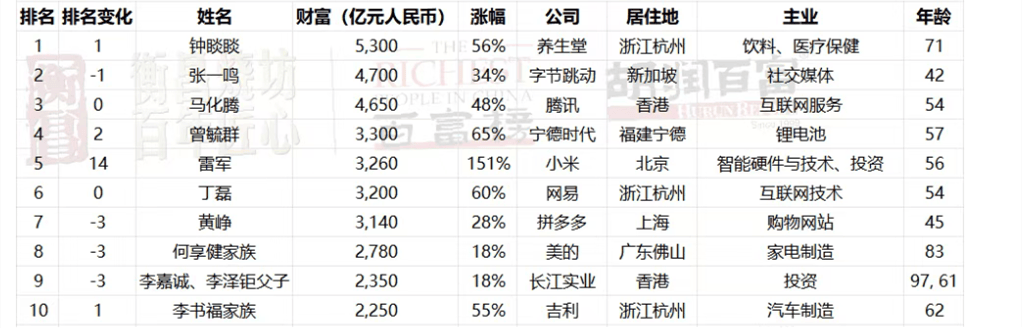
2025胡润百富榜发布:钟睒睒以5300亿元登顶中国首富,雷军增长最快
Sou Hu Cai Jing· 2025-10-28 04:49
Core Insights - Zhong Shanshan has become the richest person in China for the fourth time with a wealth of 530 billion RMB, followed by Zhang Yiming, Ma Huateng, Zeng Yuqun, and Lei Jun in the top five [1][4] - The threshold for entering the top ten has increased by 60 billion RMB to 225 billion RMB, with an average age of 62 years, which is three years younger than last year [4] Group 1: Wealth Changes - Wang Ning from Pop Mart saw his wealth increase by over 150 billion RMB, entering the top 20 and ranking among the top three in wealth growth this year [1] - Lei Jun of Xiaomi is recognized as the "growth king," with his wealth increasing by 196 billion RMB, driven by explosive growth in Xiaomi's automotive business and breakthroughs in high-end smartphone profitability [5] - Other notable wealth increases include Chen Tian Shi from Cambrian, whose wealth grew by 148 billion RMB due to rapid performance in AI chips [5] Group 2: New Faces and Rankings - The top ten list welcomed two new faces: Lei Jun and Li Shufu from Geely [4] - The Zhejiang business community dominates the top ten with four representatives, while Guangdong has three, Fujian two, and Hubei one [4] - Last year's top ten member Jack Ma has dropped to 11th place, and the founder of Henderson Land, Lee Shau Kee, has passed away, with his sons taking over the business [4]
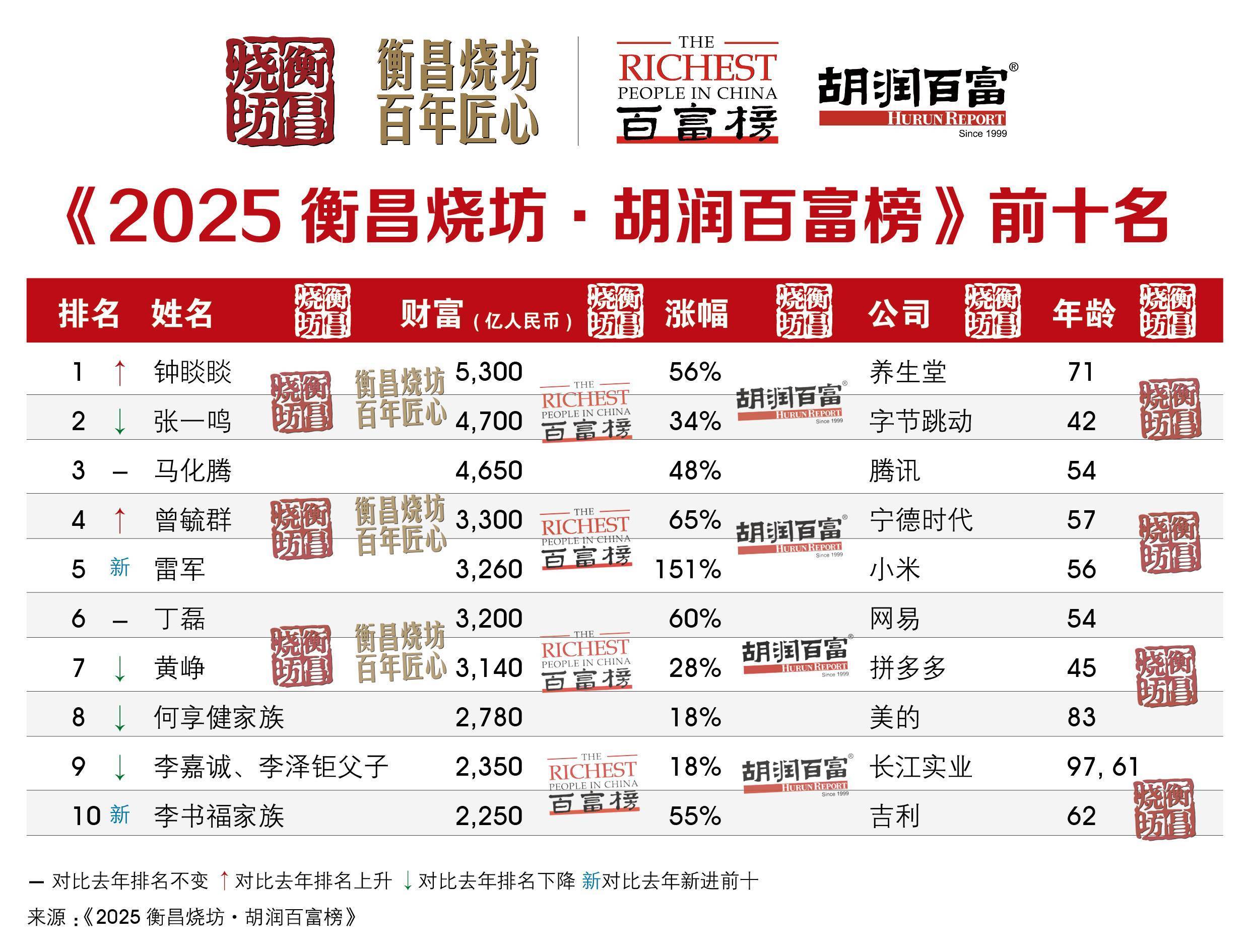
胡润百富榜公布!41名企业家资产超千亿元 | 名单
Sou Hu Cai Jing· 2025-10-28 04:38
Core Insights - The 2025 Hurun Rich List was released, marking the 27th edition since its inception in 1999, with wealth calculations as of September 1, 2025 [1] - A total of 1434 individuals with wealth exceeding 5 billion RMB were included, representing a 31% increase from the previous year [1] - The number of billionaires increased by 268 to reach 1021, while the number of billionaires worth over 100 billion RMB rose by 15 to 41 [1] Group 1: Top Billionaires - The threshold for the top ten increased by 60 billion RMB to 2250 billion RMB, with an average age of 62, which is 3 years younger than last year [1] - New entrants in the top ten include Lei Jun from Xiaomi and Li Shufu from Geely [1] - Jack Ma dropped to 11th place, while the late Li Ka-shing's sons ranked 44th [1] Group 2: Notable Wealth Increases - Zhong Shanshan's wealth grew by 190 billion RMB (+56%) to 530 billion RMB, making him the richest person in China for the fourth time [5] - Zhang Yiming's wealth increased by 120 billion RMB (+34%) to 470 billion RMB, placing him second [6] - Ma Huateng's wealth rose by 150 billion RMB (+48%) to 465 billion RMB, maintaining third place [6] Group 3: Industry Performance - Zhong Shanshan's company, Nongfu Spring, continues to lead the Chinese bottled water market with sales exceeding 25 billion RMB in the first half of the year, a 15% increase year-on-year [5] - ByteDance, led by Zhang Yiming, reported revenues exceeding 650 billion RMB in the first half of the year, a 25% increase, with AI business driving valuation growth [6] - NIO's stock surged, contributing to a 65% increase in the wealth of its founder, Zeng Yuqun, who ranked fourth with 330 billion RMB [7] Group 4: Regional Representation - Zhejiang entrepreneurs dominated the list with four representatives, including Zhong Shanshan and Ding Lei [1] - Guangdong entrepreneurs accounted for three spots, including Ma Huateng and He Xiangjian [1] - Fujian and Hunan also had notable representations with Zhang Yiming and Zhang Hongchao, respectively [1][10]
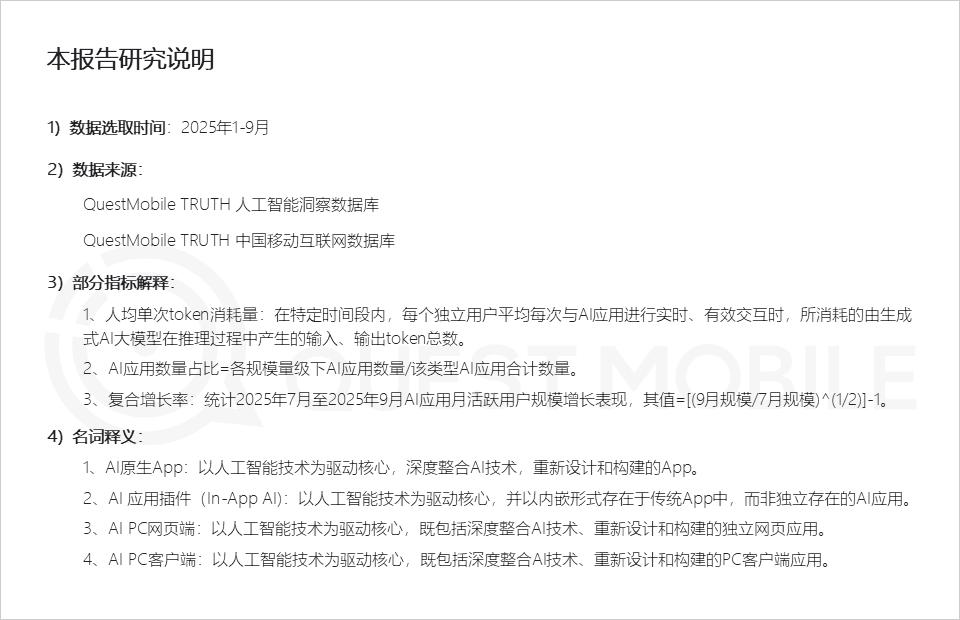
QuestMobile2025年三季度AI应用行业报告:移动端AI应用规模突破7亿大关,模型升级加速,MCP助推产业开放
3 6 Ke· 2025-10-28 03:26
Core Insights - The AI application market is experiencing significant growth, with mobile and PC active user counts reaching 729 million and 200 million respectively by September 2025, driven by a shift towards ecosystem collaboration and model optimization [1][6][14]. Market Overview - As of September 2025, the mobile AI application market includes 287 million users for native apps, 706 million for In-App AI, and 535 million for smartphone manufacturer AI assistants, with respective growth rates of 3.4%, 9.3%, and 1.2% [1][14]. - The overall scale of mobile AI applications has surpassed 700 million, indicating a maturation and commercialization of the industry [6][14]. User Engagement - In-App AI applications dominate the user engagement landscape, with 31 out of the top 50 AI applications being plugins, led by Baidu AI Search, Douyin AI Search, and WeChat AI Search [2][31]. - The average number of In-App AI applications per app in the top 20 has increased to 2.5, while PC web applications and smartphone AI assistants lag behind [2][31]. Competitive Landscape - The competition has shifted from a focus on parameter comparisons to ecosystem collaboration, with major players like Baidu, Alibaba, Tencent, and Douyin updating their models frequently [1][6][14]. - The user engagement time for native AI applications remains the highest at 117.7 minutes, compared to 31 minutes for AI plugins and 5.3 minutes for smartphone AI assistants [2][16]. Trends in AI Applications - The industry is moving towards a "value-driven" model, with pricing strategies becoming more refined and user stickiness increasing, particularly for In-App AI plugins [2][12][18]. - The average single-use token consumption has decreased, indicating improved efficiency and cost control in AI applications [18][20]. Ecosystem Development - The MCP (Model Cloud Platform) services have reached 9,384 by October 20, 2025, facilitating a shift from model development to a service-oriented ecosystem [1][20]. - The integration of AI assistants into smartphones has become standard, with a collective growth of 65 million users across six major manufacturers, reflecting a 13.9% year-on-year increase [40][61]. PC Application Dynamics - The PC application market is undergoing contraction, with over 75% of web applications facing growth challenges, while the client applications are also struggling with 75% showing negative growth [50][57]. - Successful PC applications are primarily in productivity sectors, with notable growth in applications like Xiaoyi and WPS Lingxi, indicating a need for professional value to sustain growth [54][57]. Strategic Focus - Internet companies are focusing on integrating AI with business scenarios to enhance their core offerings, while smartphone manufacturers are building open ecosystems around AI assistants [61][70]. - The evolution of AI applications is characterized by a shift from single-point technology competition to an ecosystem-based collaboration model, with payment capabilities marking a significant milestone in commercialization [74][78].