
中兴通讯

Search documents
新质资本论 (2026. Vol.1)
Xin Lang Cai Jing· 2026-02-10 06:37
Group 1 - The Guangdong government is launching a long-term investment fund with a flexible duration and a recycling investment mechanism, focusing on early-stage, small, long-term investments in hard technology [1] - The direct investment scale in Guangdong continues to lead the nation, with nearly 1,000 direct investments made in the year, covering 887 companies, and achieving 16 IPO projects in 2025 [1] - The Guangdong-Hong Kong-Macao Greater Bay Area Venture Capital Guidance Fund is expanding its LP team, with a target size of 504.5 billion RMB, managed by Shenzhen Capital Group [1] Group 2 - Guangdong remains the top province for mergers and acquisitions, with 909 new deals in the year, a 10.60% increase year-on-year, accounting for 15.85% of the national total [2] - The province is enhancing financial policies to promote a deep integration of technology, finance, and industry, moving beyond a singular financial perspective [2] - The commercial aerospace sector is experiencing rapid growth, with increased participation from venture capital and industrial capital, breaking the traditional dominance of state-owned enterprises [2] Group 3 - Investment income is primarily driven by CITIC Securities and its subsidiary, Yuexiu Industrial Investment, as Yuexiu Capital diversifies from traditional financial services into new energy and emerging industries [3] - Yuexiu Capital is actively involved in industrial integration, corporate venture capital investments, and capital operations, expanding its investment footprint beyond Guangdong to other provinces [3] Group 4 - Northbound capital is increasingly focusing on technology-related industries and Guangdong-listed companies [4] - Guangzhou's municipal government plans to allocate at least 15% of its annual technology innovation development fund for "supplementary and transformative investments" [4] - The Guangzhou real estate asset management service platform aims to revitalize existing real estate assets through innovative financial tools, attracting social capital for various real estate projects [4]
沪深北交易所同日“亮剑”:再融资新政对A股影响(附精选股票)
Sou Hu Cai Jing· 2026-02-10 06:14
Core Viewpoint - The simultaneous release of refinancing optimization measures by Shanghai, Shenzhen, and Beijing stock exchanges marks a significant transformation in China's capital market, aimed at enhancing capital allocation efficiency and reshaping the A-share market landscape [1]. Group 1: Policy Framework and Differences - The policy frameworks of the three exchanges are highly similar, focusing on "supporting the strong, limiting the weak, promoting innovation, and enhancing convenience and regulation" [2]. - Shanghai Stock Exchange emphasizes "main board" characteristics, tailoring financing rules for large, mature technology companies [2]. - Shenzhen Stock Exchange adopts a bolder stance on supporting technology innovation, easing fundraising restrictions for growth-oriented enterprises [2]. - Beijing Stock Exchange focuses on "innovative small and medium-sized enterprises," addressing their financing challenges with flexible policies [2]. Group 2: Strategic Insights on Separate Announcements - The decision to release policies on the same day rather than a joint announcement reflects the nuanced wisdom of tiered regulation in China's capital market [3]. - Different market positioning allows each exchange to cater to the unique characteristics and needs of the enterprises they serve, avoiding a one-size-fits-all approach [3]. - The simultaneous release creates a strong policy resonance, reinforcing market perception of deepening capital market reforms while maintaining the distinct identities of each exchange [3]. Group 3: Deep Impacts on Market Perception - The new measures aim to shift the long-standing fear of "blood-sucking" effects of refinancing, which was believed to drain market funds and destabilize the market [4]. - The principle of "supporting the strong, limiting the weak" will act as a catalyst for market differentiation, favoring quality companies, especially in hard technology, while raising barriers for poorly performing firms [4]. - The policy directs resources towards "new productive forces," providing strong support for leading companies in sectors like semiconductors, AI, biomedicine, and high-end manufacturing [5]. - Allowing companies that have experienced stock price declines to raise funds through methods like private placements and convertible bonds offers a lifeline to solid businesses facing temporary challenges [6]. - A complete regulatory loop is established, tightening post-fundraising supervision while relaxing initial approvals, transforming refinancing from a mere "money-raising tool" to an "engine" for corporate development [7]. Group 4: Implications for Investors - The coordinated actions of the three exchanges signify the entry of China's refinancing mechanism into a "precise drip irrigation" era, providing tailored financing support for different types of enterprises [8]. - Investors are advised to focus on genuinely innovative and well-governed companies while avoiding those that merely chase trends without substance [8]. - The transformation of refinancing from a "blood-sucking machine" to a "blood-producing pump" is expected to enhance the value discovery function of the A-share market, leading to a healthier and more vibrant capital market [8].








鼎通科技20260209
2026-02-10 03:24
Company Overview: DingTong Technology Industry and Company - The company primarily operates in two segments: communication connectors and automotive connectors [1][2] - It supplies individual components of connectors rather than assembling them [1] - Major clients include Amphenol, Molex, TE Connectivity, and China Aviation Optical-Electrical Technology [1] Core Business Insights - **Communication Connectors**: Comprises backplane connectors and IO connectors, with a significant focus on high-speed optical modules [2][8] - **Automotive Connectors**: Includes control system connectors and high-voltage interlock connectors, with a shift towards direct supply to end customers since 2021 [1][2] Revenue Trends - The revenue composition has shifted, with communication connectors dominating until 2023, when automotive connectors saw a rise due to a decline in communication connector demand [2][3] - By the end of 2023, communication connectors accounted for approximately 80% of revenue [3] Growth Path - The company has expanded its customer base from primarily Tier 1 and Tier 2 connector manufacturers to include end automotive manufacturers and battery pack manufacturers [3][4] - R&D efforts have led to the development of high-current and high-voltage connectors since 2020, with recent advancements in 112G and 224G products [5][9] Capacity Expansion - The company has established subsidiaries in various locations, including Henan, Dongguan, Malaysia, and plans for Vietnam [6] - The management team has a strong technical background, supporting the company's R&D and production capabilities [6] Profitability and Financial Performance - The company experienced negative net profit growth in 2023 due to a decline in communication connector demand [7] - However, profitability is expected to rebound significantly starting in 2024 as demand for communication connectors increases [7] Industry Dynamics - The connector industry is seeing a trend towards concentration, with major players capturing a larger market share [7] - The communication and automotive sectors are the primary application areas for connectors, with a notable increase in competition in the automotive sector [7] Future Market Outlook - The optical module market is projected to grow rapidly, driven by AI infrastructure and increased demand for high-speed transmission [8][9] - The overall market for high-speed optical modules is expected to exceed $22 billion by 2030 [9] Profit Forecast - Projections for 2025 to 2027 indicate significant revenue growth, with expected net profits of approximately $2.45 billion, $7.84 billion, and $20.04 billion respectively [10] - The anticipated demand for 112G and 224G connectors is expected to drive this growth [10]

中证粤港澳大湾区发展主题指数上涨0.02%,大湾区ETF(512970)成立以来超越基准年化收益达3.32%
Sou Hu Cai Jing· 2026-02-10 01:43
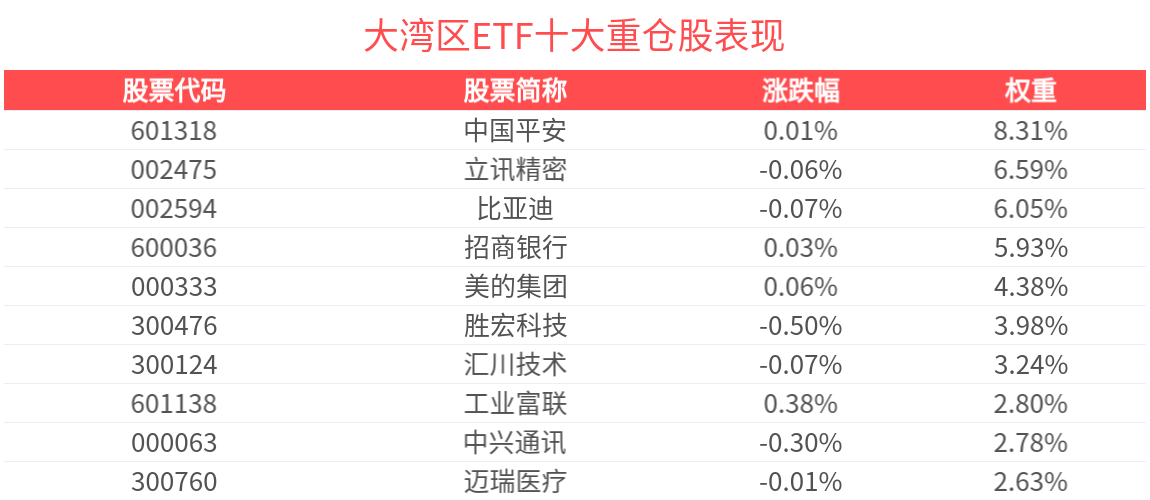
Core Viewpoint - The performance of the Zhuhai-Hong Kong-Macao Greater Bay Area Development Theme Index and its related ETF reflects the overall performance of companies benefiting from the development of the Greater Bay Area, with notable movements in specific constituent stocks [1][2]. Group 1: Index Performance - As of February 10, 2026, the Zhuhai-Hong Kong-Macao Greater Bay Area Development Theme Index (931000) increased by 0.02%, with notable gains from stocks such as Zhaochi Co. (+9.96%) and Mingyang Smart Energy (+1.56%) [1]. - The Greater Bay Area ETF (512970) showed a mixed performance, with a recent price of 1.52 yuan and a cumulative increase of 2.91% over the past week as of February 9, 2026 [1]. Group 2: Liquidity and Trading Data - The trading volume for the Greater Bay Area ETF was reported at 0.00 yuan, with an average daily trading volume of 711,700 yuan over the past month [1]. - The Sharpe ratio for the Greater Bay Area ETF over the past year was 1.41, indicating a favorable risk-adjusted return [1]. Group 3: Drawdown and Fees - The maximum drawdown for the Greater Bay Area ETF year-to-date was 5.52%, with a relative benchmark drawdown of 0.02% [1]. - The management fee for the Greater Bay Area ETF is set at 0.15%, while the custody fee is 0.05% [1]. Group 4: Index Composition - As of January 30, 2026, the top ten weighted stocks in the Zhuhai-Hong Kong-Macao Greater Bay Area Development Theme Index accounted for 44.55% of the index, with China Ping An, Luxshare Precision, and BYD among the leading constituents [2][3]. - The index includes a maximum of 50 Hong Kong market securities, 300 companies from the Shanghai-Hong Kong-Shenzhen market, and 100 mainland market securities, all selected based on their alignment with the Greater Bay Area development theme [2].



研判2026!中国宽带网络行业发展历程、产业链、固定宽带接入端口数、重点企业及未来前景:宽带网络建设持续推进,光纤接入(FTTH/O)端口占比达96.8%[图]
Chan Ye Xin Xi Wang· 2026-02-10 01:10
Core Viewpoint - The article highlights the significant growth and transformation of China's broadband network, emphasizing the shift from copper cable to fiber optic connections, and the increasing number of broadband access ports and users, reflecting a trend towards higher speed and full fiber networks [1][9]. Broadband Industry Overview - Broadband networks are defined as communication networks with bandwidth exceeding 155kbps, consisting of backbone and access networks that support various multimedia services [3]. - The industry has evolved from narrowband and dial-up internet to support high-definition video and immersive applications, with typical bandwidth increasing from 64Kbps to current levels of 1Gbps and beyond [3]. Broadband Industry Development History - The transition to fiber-to-the-home (FTTH) has been a key development, with significant upgrades in network infrastructure to meet growing user demands for high-quality digital services [3]. Current State of the Broadband Industry - The broadband network infrastructure in China is rapidly advancing, with a focus on broadband, intelligence, and integration to support diverse new business applications [5]. - As of the end of 2024, the number of fixed internet broadband access ports reached 1.202 billion, with a net increase of 66.12 million from the end of 2023 [1][9]. Key Companies in the Broadband Industry - Major players include China Telecom, China Unicom, and China Mobile, which dominate the market due to their extensive user bases and network coverage [2][10]. - Emerging companies like ZTE, FiberHome, and others are gaining traction in broadband network equipment manufacturing and services [10]. Industry Challenges - The broadband industry faces challenges such as unclear public infrastructure positioning, regional and urban-rural development imbalances, and insufficient service application diversity [12][13]. Future Trends in the Broadband Industry - The industry is expected to evolve towards "full-fiber" access and "cloud-network integration," enhancing speed and network architecture [14]. - The focus will shift from merely providing connectivity to offering comprehensive, intelligent digital service platforms, integrating various applications for enhanced user experience [15]. - There will be an emphasis on ensuring "deterministic experience" and "green low-carbon" development in network planning and operations [16].





电信ETF汇添富(560300)开盘涨1.29%,重仓股中国移动涨0.06%,中国联通涨0.41%
Xin Lang Cai Jing· 2026-02-09 13:06
Group 1 - The core viewpoint of the article highlights the performance of the Telecom ETF Huatai (560300), which opened with a gain of 1.29% at 2.040 yuan [1] - Major holdings in the ETF showed varied performance, with China Mobile up 0.06%, China Unicom up 0.41%, China Telecom up 0.35%, and China Satcom up 2.09% [1] - Notable gainers included Zhongji Xuchuang up 3.89%, Yinzhijie up 0.59%, Xinyi Sheng up 4.37%, ZTE up 1.35%, Tianfu Communication up 9.50%, and Zhongtian Technology up 4.75% [1] Group 2 - The performance benchmark for the Telecom ETF Huatai is the CSI Telecom Theme Index return [1] - The fund is managed by Huatai Fund Management Co., Ltd., with manager Wei Lizhu [1] - Since its establishment on December 5, 2023, the fund has achieved a return of 101.53%, while the return over the past month has been -5.46% [1]


A股1.88万亿研发投入开启AI元年 340万技术人才锻造新质生产力
Chang Jiang Shang Bao· 2026-02-09 06:54
Core Insights - The article highlights the significant breakthroughs in general artificial intelligence (AGI) technology and its integration across various industries, marking a transformative shift in productivity globally [1] - A-share listed companies in China are prioritizing technological innovation, particularly in AI, as a central aspect of their development strategy [1] Group 1: R&D Investment Overview - In 2024, the total R&D investment by A-share listed companies reached 1.88 trillion yuan, accounting for 51.96% of the national R&D expenditure [1] - The number of R&D personnel in these companies totaled 3.42 million, representing 11.08% of the total workforce [1] - The Shanghai Stock Exchange companies' R&D investment exceeded 1 trillion yuan, making up nearly 40% of the national corporate R&D spending [2] Group 2: Sector-Specific R&D Insights - The computer, machinery, defense, automotive, pharmaceutical, and communication sectors showed high R&D intensity, with respective contributions of 14%, 6%, 5%, 5%, 4%, and 4% [2] - The Science and Technology Innovation Board (STAR Market) saw its R&D investment reach 168.08 billion yuan in 2025, which is 2.5 times its net profit, reflecting a 6.4% year-on-year growth [2] - The Shenzhen Stock Exchange companies' total R&D investment surpassed 760 billion yuan, with 410 companies having an R&D intensity exceeding 10% [3] Group 3: Leading Companies in R&D - BYD led the A-share market with R&D expenses of 53.195 billion yuan, focusing on advancements in blade battery technology and smart driving algorithms [3] - China State Construction maintained a strong position with R&D investment of 45.459 billion yuan, focusing on smart construction and low-carbon materials [4] - Companies like ZTE, iFlytek, and Hikvision are increasingly investing in AI infrastructure and applications, with a significant portion of their R&D resources directed towards AI-related fields [4]



每日投资策略-20260209
Zhao Yin Guo Ji· 2026-02-09 04:41
Macro Commentary - The report indicates a slowdown in China's economic growth in Q1, but improvements in deflation are noted, with policymakers signaling a focus on stabilizing real estate, promoting consumption, and countering "involution" [2] - The US economy is expected to rebound, with rental inflation declining, offsetting a rise in commodity inflation, leading to a stable dollar liquidity environment [2] - The report anticipates only one interest rate cut by the Federal Reserve in June this year, with a potential for a spring rebound in the stock market [2] Internet Sector - In January, high beta stocks benefitting from event-driven catalysts significantly outperformed the industry, aided by improved market risk appetite and liquidity [2] - Major Chinese internet companies are increasing market spending on AI applications targeting end-users, with 2026 identified as a critical year for capturing user engagement in the AI era [2] Stock Market Performance - The Hang Seng Index closed at 26,560, down 1.21% for the day but up 3.63% year-to-date, while the US markets showed a rebound with the Dow Jones up 2.47% [2] - The report highlights the performance of various indices, with the Hang Seng Financial Index down 1.89% and the Hang Seng Property Index up 17.49% year-to-date [3] Investment Strategy - A "barbell" investment strategy is recommended, focusing on companies with certain profit growth and those benefiting from AI [5] - Specific stocks to watch include Tencent, Alibaba, and Kuaishou for their AI-driven growth potential, and NetEase and Trip.com for their stable earnings visibility [5] Software and IT Services - The report expresses optimism for the software sector, expecting revenue growth to support valuations, while cautioning about the competitive pressures from AI model vendors [6] - Recommended stocks include Palo Alto Networks in the US and Kingdee in China, which are expected to benefit from AI-related revenue growth [6] Semiconductor Industry - The semiconductor sector is viewed positively, driven by AI demand, with structural shortages in memory products like HBM and server DRAM [7] - Recommended stocks include Zhongji Xuchuang and Northern Huachuang, which are expected to benefit from the ongoing demand for computing power [7] Technology Sector - The report anticipates a continued high demand for AI computing infrastructure and innovations in consumer electronics, with specific recommendations for companies like Luxshare Precision and BYD Electronics [8] Consumer Sector - The Hang Seng Consumer Index has risen 8% year-to-date, driven by high elasticity in discretionary consumption sectors [9] - The report highlights the potential for increased consumer spending during the Spring Festival, supported by government policies aimed at boosting consumption [10] Automotive Sector - January saw a slowdown in automotive sales, particularly in the new energy vehicle segment, but a recovery is expected post-Spring Festival [11] - Recommended stocks include Geely for its expanding new energy vehicle matrix and Xpeng for its potential to turn profitable [11] Pharmaceutical Sector - The report emphasizes the long-term trend of innovative drugs going global, with a focus on clinical progress and data validation for drugs already in international markets [12] - Recommended stocks include Innovent Biologics and CanSino Biologics, which are expected to benefit from the ongoing trend of drug commercialization [12] Capital Goods Sector - The report notes a positive outlook for the capital goods sector, particularly in construction machinery, driven by rising metal prices and increased mining capital expenditures [21] - Recommended stocks include SANY Heavy Industry and Zoomlion, which are expected to benefit from the ongoing demand for construction equipment [21] Real Estate and Property Management - The real estate sector is optimistic due to favorable policies, with the Hang Seng Property Index rising 15% year-to-date [19] - Recommended stocks include China Jinmao and Greentown China, which have shown significant price increases [19]
太突然!刘强东拿下千亿大生意
Xin Lang Cai Jing· 2026-02-09 04:40
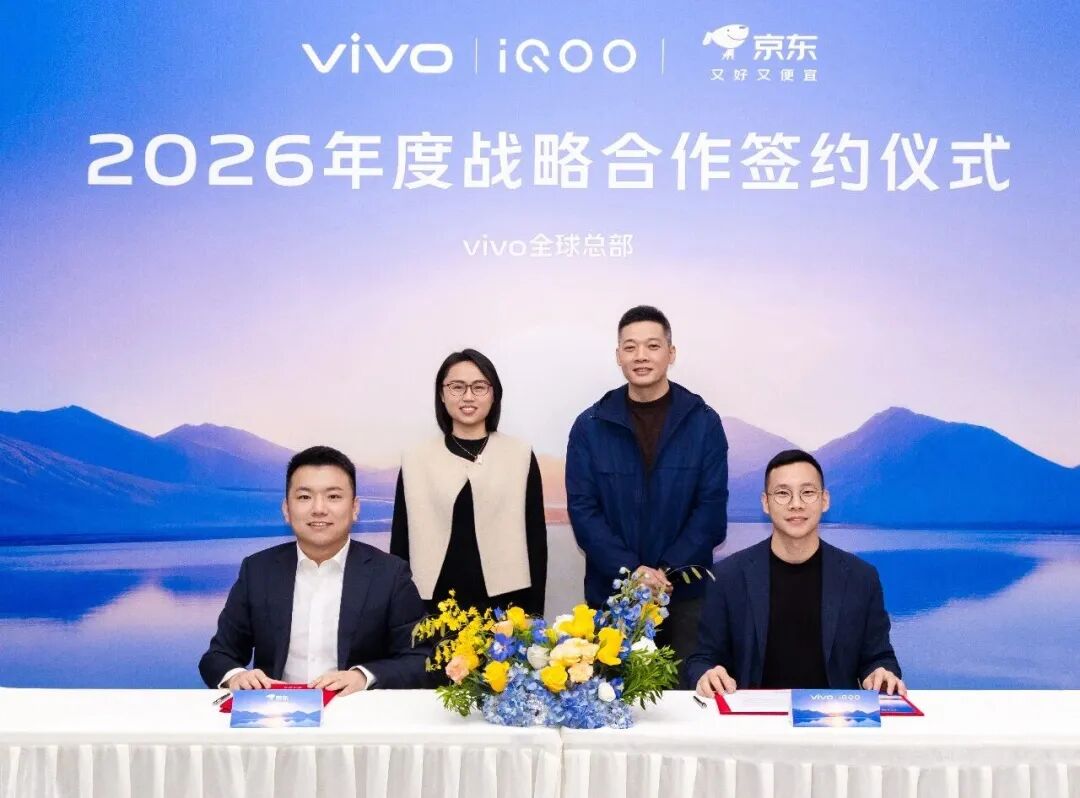
Core Insights - JD.com has successfully expanded its partnerships with major smartphone brands like Vivo, ZTE, Honor, and Xiaomi, aiming to sell 100 billion yuan worth of products through its channels over the next three years [1][18][20] - The collaboration between JD.com and smartphone manufacturers has evolved beyond simple supply and sales relationships into a more integrated ecosystem [12][27] Group 1: Strategic Partnerships - JD.com has secured exclusive national agency rights for brands like ZTE, Nubia, and Red Magic, setting ambitious sales targets of 10 billion yuan over three years [3][18] - The partnership with Vivo is characterized by a focus on user operations, product co-development, and deep channel engagement, leveraging JD.com's 700 million active users [20][21] - JD.com has also supported Honor in establishing overseas warehouses in the Middle East, facilitating the sale of over 2 million phones in Saudi Arabia [20][23] Group 2: Competitive Advantages - JD.com boasts a robust supply chain capability, with over 130 overseas warehouses across 23 countries, enabling rapid delivery times of 2-3 days in regions like Europe and Southeast Asia [9][24] - The company has transitioned from being a mere sales platform to a comprehensive partner for brands, offering services from market analysis to after-sales support, enhancing user experience [10][25] - JD.com has established a strong brand recognition among consumers for purchasing electronics, making it the go-to platform for 3C products, which is a significant advantage for smartphone manufacturers [11][26] Group 3: Market Positioning - The collaboration between JD.com and smartphone manufacturers has transcended traditional sales, evolving into a model of ecosystem co-construction [12][27] - JD.com has effectively utilized its long-term investments to create unique supply chain and service advantages that are difficult for competitors to replicate [12][28] - The company's strategic foresight has allowed it to secure a stable position in an increasingly uncertain market, benefiting both itself and its partners [13][29]

平安证券(香港)港股晨报-20260209
Ping An Securities Hongkong· 2026-02-09 02:44
Market Overview - The Hong Kong stock market experienced a decline, with the Hang Seng Index closing at 23,831 points, down 145 points or 0.61% [1] - The market turnover decreased to 82.799 billion, with net inflows of 484 million from the Hong Kong Stock Connect [1] - The technology sector, including mobile gaming, cloud computing, and AI applications, saw significant declines, with notable drops in stocks like Zhihui (02513.HK) down 6.01% and Alibaba-W (09988.HK) down 2.88% [1] US Market Performance - The US stock market rebounded significantly, with the Dow Jones Industrial Average surpassing 50,000 points for the first time, closing up 2.47% [2] - The surge was driven by technology stocks, particularly in the semiconductor sector, with the Philadelphia Semiconductor Index rising 5.7% [2] Investment Opportunities - The report emphasizes the importance of "technological self-reliance" and AI applications as key themes for future growth in the Hong Kong stock market, suggesting that leading companies in these sectors may benefit from long-term development opportunities [3] - The Ministry of Industry and Information Technology's recent policy on building national computing power nodes is expected to boost domestic semiconductor and communication sectors, highlighting companies like Hua Hong Semiconductor (1347.HK) and SMIC (0981.HK) as potential beneficiaries [9] - The global semiconductor market is projected to reach $791.7 billion by 2025, representing a 25.6% increase from 2024, indicating strong growth potential for related companies [9] Company Highlights - ZTE Corporation (0763.HK) is noted for its comprehensive product line in the communication industry, with a projected revenue of 121.299 billion in 2024, despite a slight decline [10] - The company is focusing on the computing power sector, launching advanced server solutions that could enhance its competitive edge [10] - Analysts expect ZTE's net profits for 2025 and 2026 to be 7.98 billion and 8.81 billion RMB, respectively, suggesting the stock is undervalued at current PE ratios [10]