中国核电

Search documents
全球首个双堆耦合核能综合利用项目开工 打造低碳转型“中国方案”
Zhong Guo Zhi Liang Xin Wen Wang· 2026-01-22 03:59
Group 1 - The core achievement in China's nuclear energy sector is the commencement of concrete pouring for the first nuclear power unit at the Jiangsu Xuwei Nuclear Energy Heating Power Plant, marking a significant step towards the integration of nuclear energy with the petrochemical industry [1] - This project is the world's first large-scale coupling of pressurized water reactors and high-temperature gas-cooled reactors, and it represents a shift in China's nuclear energy focus from primarily electricity generation to diversified supply [1][2] - The plant is expected to supply 32.5 million tons of industrial steam annually and generate over 11.5 billion kilowatt-hours of electricity, significantly reducing coal consumption and carbon dioxide emissions [2] Group 2 - The project will provide high-quality low-carbon industrial steam to the Lianyungang petrochemical industry base, supporting the green transition of the Yangtze River Delta region [2] - China Nuclear Group emphasizes the importance of green development and has a strong commitment to clean energy, with 27 operational nuclear power units and 18 under construction or approved, totaling a capacity of 46.859 million kilowatts [3] - The company is actively promoting the comprehensive utilization of nuclear energy in various sectors, including regional heating, industrial steam supply, seawater desalination, and hydrogen production [3]

里昂:阿里巴巴进军核电领域,今年业内或出现更多合作消息
Xin Lang Cai Jing· 2026-01-22 03:07
里昂发表研究报告指,阿里巴巴近期与中国核电(CNNP)成立合资企业,投资额达约3590万美元,虽然 该笔投资金额相对于阿里未来数年计划投入的530亿美元AI资本开支而言规模较小,但这反映中国科技 巨头正积极探索为其先进的AI模型提供高效且稳定的能源支持,以便在与美国的人工智能竞争中保持 优势。该行认为,中国在核电厂部署方面是全球领导者,相信未来数年仍将如此。该行预期今年业内将 会有更多中国数据中心与核能合作的消息。 ...

中泰国际每日晨讯-20260122
ZHONGTAI INTERNATIONAL SECURITIES· 2026-01-22 02:33
Market Overview - On January 21, Hong Kong stocks experienced a slight adjustment in the morning but rebounded in the afternoon, with the Hang Seng Index rising by 97 points (0.4%) to close at 26,857 points[1] - The Hang Seng Tech Index increased by 62 points (1.1%), closing at 5,746 points, with total market turnover reaching HKD 250.5 billion[1] - Southbound capital inflow expanded to HKD 13.89 billion[1] Sector Performance - The semiconductor sector remained strong, driven by Micron's announcement of a potential memory shortage lasting until 2028, with Hua Hong Semiconductor and SMIC rising by 4%-6%[1] - TCL Electronics surged by 14.8% after announcing a joint venture with Sony, holding a 51% stake[1] - Skyworth Group's stock jumped by 37.5% following its announcement of a spin-off and share buyback[1] Geopolitical Impact - Gold stocks generally rose due to heightened geopolitical tensions, with Lingbao Gold and Zhaojin Mining increasing by 5%-8%[1] - The report suggests a short-term focus on strong sectors such as semiconductors and gold[1] U.S. Market Reaction - In the U.S., the Dow Jones Index rebounded by 588 points (1.5%) to 49,077 points, while the Nasdaq and S&P 500 indices rose by 270 points (1.2%) and 78 points respectively[2] - Gold prices remained strong, peaking at USD 4,888.4 per ounce[2] Macroeconomic Policy - The National Development and Reform Commission outlined policy directions for 2026, focusing on strengthening domestic circulation and expanding domestic demand strategies[3] Automotive Sector - China National Heavy Duty Truck Group saw a 7.5% increase in stock price after a major shareholder reduced their stake by 2%[4] - The company is expected to maintain strong export growth and a high dividend yield of approximately 7%[4] Energy and Utilities - Defensive sectors like environmental protection and gas utilities received support amid rising geopolitical risks, with stocks like Hong Kong and China Gas and CLP Holdings rising by 1.1%-3.2%[4] - Alibaba and China National Nuclear Corporation formed a joint venture for nuclear energy, potentially benefiting related companies[4] Healthcare Sector - The Hang Seng Healthcare Index rose by 0.7%, with WuXi Biologics increasing by 3.5%[5] - The CXO sector is expected to see a rebound in demand, with a projected 20.6% increase in clinical trial projects per company by 2025[5]
财经早知道|格陵兰岛危机峰回路转美股大涨 马斯克推动SpaceX今年7月前完成IPO
Sou Hu Cai Jing· 2026-01-22 00:50
Group 1 - Greenland crisis has seen a turnaround with a framework agreement reached between the US and NATO regarding Greenland, which could benefit the US and NATO member countries [5] - The European Parliament has indefinitely frozen the review of the EU-US trade agreement due to threats to EU sovereignty and territorial integrity [6] - The People's Bank of China is accelerating the construction of a cross-border payment system for the renminbi and implementing strict regulatory measures for payment institutions [7] Group 2 - The cosmetics market in China is projected to exceed 1.1 trillion yuan by 2025, with domestic brands capturing over 57% market share [23] - China has become the world's largest exporter of machine tools, surpassing Germany with a 21.6% share of global exports [24] - The successful trial of automatic formation operation for heavy-duty trains in China marks a significant change in railway freight control [25] Group 3 - SpaceX plans to complete its IPO by July this year, as stated by CEO Elon Musk [27] - Xibei Catering has completed its Series A financing, with new investors including Zhang Yong, founder of New Rongji [28] - Apple is set to transform Siri into its first chatbot product by the second half of 2026, utilizing Google's Gemini model [29] Group 4 - TSMC's 3nm production capacity is fully booked until 2027 due to surging demand from artificial intelligence [30] - China Nuclear Power and Alibaba have established a nuclear energy company with a registered capital of 250 million yuan [31] - The download volume of Alibaba's Qianwen series models has surpassed 1 billion, making it the first open-source large model to achieve this milestone [32]


巴菲特最新专访:2026年应该怎么投资?
Xin Lang Cai Jing· 2026-01-22 00:40
Group 1 - The interview with Warren Buffett is seen as a significant moment, marking a transition in leadership as he praises new CEO Greg Abel's efficiency [3][4][27] - Buffett will remain as chairman and provide advisory input on major capital allocations but will not interfere in daily operations [3][27] Group 2 - Buffett expressed concern over Berkshire Hathaway's record cash reserves exceeding $380 billion, stating he cannot find suitable investment opportunities [4][29] - He indicated that 99% of companies are too small to impact Berkshire's performance, while the remaining 1% are overpriced, leading him to prefer short-term government bonds with yields of 4%-5% over high P/E tech stocks [5][6][29] Group 3 - Buffett compared the current AI hype to historical tech bubbles, emphasizing that great technology does not guarantee great investments [7][30] - He warned against the FOMO (fear of missing out) mentality prevalent in the market, which he finds concerning [9][31] Group 4 - Buffett shared personal insights on gambling and investment, highlighting the importance of understanding value creation over speculation [10][32] - He introduced the "ovarian lottery" theory, stressing the role of luck in opportunities and the responsibility to help those less fortunate [11][33] Group 5 - For ordinary investors, Buffett advised against picking individual stocks unless they understand the business thoroughly, recommending long-term holding and avoiding leverage [13][36] - He suggested that ordinary investors should primarily invest in low-cost S&P 500 index funds, with a potential 80/20 allocation strategy for those interested in sector ETFs [14][37] Group 6 - Buffett emphasized that the goal of investing in retirement should shift from wealth accumulation to wealth preservation, advising against taking unnecessary risks [17][39] - He concluded that true wealth is defined not by financial metrics but by the impact one has on others and the quality of life experienced [20][43]
独家|核电再迎民资!阿里系、雅戈尔等多家浙江民企入股金七门核电工程
Xin Lang Cai Jing· 2026-01-21 13:25
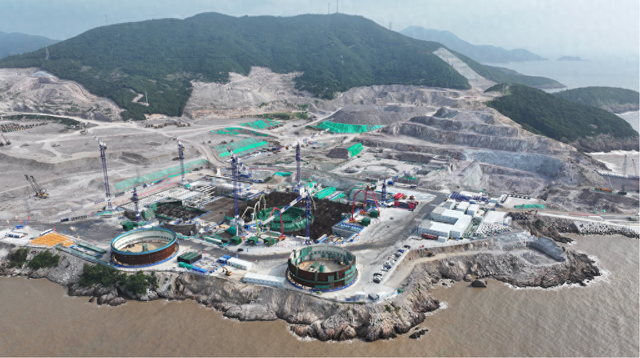
Core Viewpoint - The establishment of China Nuclear (Xiangshan) Nuclear Energy Co., Ltd. marks a significant step in the development of the Jinqimen Nuclear Power Project, with a total investment of approximately 120 billion yuan and plans for six nuclear units [1][2][4]. Group 1: Company Formation and Shareholding - China Nuclear (Xiangshan) Nuclear Energy Co., Ltd. was established with a registered capital of 250 million yuan, focusing on power generation, transmission, and supply [1]. - The company is jointly owned by several entities, including China Nuclear Zheneng Energy Co., Ltd., China Nuclear Power Development (Beijing) Co., Ltd., and others, indicating a mix of state-owned and private enterprises [1]. - The involvement of private companies such as Ningbo Riyue Group and Minsheng Life Insurance reflects a growing trend of private capital participation in the nuclear sector [1]. Group 2: Jinqimen Nuclear Power Project - The Jinqimen Nuclear Power Project is located in Xiangshan, Ningbo, and is currently under construction, with the first phase approved by the State Council [2][4]. - The project plans to build six million-kilowatt pressurized water reactor units, with an expected annual power generation of 55 billion kilowatt-hours, which will meet half of Ningbo's electricity demand in 2024 [4]. - The project is significant as it represents the fourth nuclear power base in Zhejiang Province, following other major projects [4]. Group 3: Investment Landscape and Trends - Zhejiang Province has the highest concentration of private investment in nuclear power in China, with several projects allowing for increasing private equity participation [5][6]. - The trend of allowing private capital in nuclear projects is supported by government policies aimed at sharing development opportunities and stabilizing long-term returns [6]. - The strategic importance of nuclear power in Zhejiang's energy landscape is emphasized, with plans to enhance renewable energy supply and develop coastal nuclear power [6].


核电再迎民资!阿里系、雅戈尔等多家浙江民企入股金七门核电工程
Xin Lang Cai Jing· 2026-01-21 13:21
Core Viewpoint - The establishment of China Nuclear (Xiangshan) Nuclear Energy Co., Ltd. with a registered capital of 250 million yuan marks a significant development in the nuclear energy sector, involving multiple stakeholders from various industries [1] Group 1: Company Formation - China Nuclear (Xiangshan) Nuclear Energy Co., Ltd. was founded on January 20, with a registered capital of 250 million yuan [1] - The company is jointly owned by several entities, including China Nuclear Zheneng Energy Co., Ltd., China Nuclear Power Development (Beijing) Co., Ltd., Ningbo Riyue Group Co., Ltd., Minsheng Life Insurance Co., Ltd., Hongrun Construction Group Co., Ltd., Shanghai Yiqi Network Technology Co., Ltd., and Youngor Group Co., Ltd. [1] Group 2: Stakeholder Information - China Nuclear Zheneng Energy Co., Ltd. and China Nuclear Power Development (Beijing) Co., Ltd. are subsidiaries of China National Nuclear Corporation, a major player in the domestic nuclear power industry [1] - Ningbo Riyue Group is a private enterprise focused on machinery manufacturing and has a listed company, Riyue Co., Ltd. [1] - Minsheng Life Insurance is the first national life insurance company in China funded by private capital [1] - Hongrun Construction Group is a private listed company specializing in engineering construction, with its major shareholder located in Xiangshan, Zhejiang [1] - Shanghai Yiqi Network Technology Co., Ltd. is part of the Alibaba ecosystem, fully owned by Zhejiang Alibaba Cloud Computing Co., Ltd. [1] - Youngor Group Co., Ltd. is a leading enterprise in the textile and apparel industry, headquartered in Ningbo, Zhejiang [1]
深化产品布局 ! 华宝电力ETF(159146)上市交易
Xin Lang Cai Jing· 2026-01-21 12:42
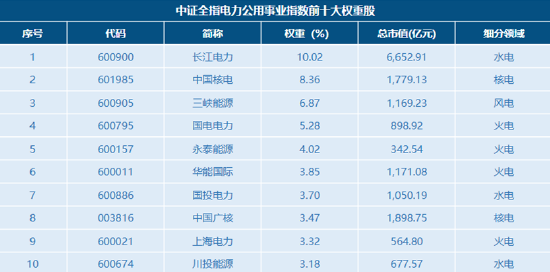
2026年伊始,华宝基金以"开局即冲刺、起步即争先"的姿态,将产品创新作为核心驱动力,于1月20日迅速推出华宝电力ETF(159146),并在深圳证券 交易所上市交易。 (来源:中国宝武) 邂逅 · 3496 期 · 11942 篇 作为中国宝武旗下金融板块的重要成员,华宝基金始终坚持"金融为民"初心,积极落实集团公司年度工作会议精神,不断提升把握规律、战略研判的本 领,主动对接国家"十五五"能源转型与AI算力发展战略,紧扣新质生产力发展脉络,持续构建覆盖核心赛道、攻守兼备的产品矩阵,为投资者提供专业 化、精细化的资产配置工具。 当前,AI算力的高速扩张,直接驱动数据中心耗电量呈指数级增长,电力供应与保障能力已成为决定算力发展的关键瓶颈。在此背景下,华宝电力ETF (159146)应时而生。该产品紧密跟踪中证全指电力公用事业指数,聚焦电力全产业链,覆盖火电、水电、风电、核电等多种电源类型。前十大权重股囊 括长江电力、中国核电等行业龙头,既呼应AI算力增长带来的电力需求,也契合"双碳"目标下的绿色转型主线,为投资者布局电力行业长期发展提供高效 便捷的工具。 近期,华宝基金还密集推出了华宝优势产业A/C、华宝上证 ...

砸完你的 砸你的
Datayes· 2026-01-21 10:54
Core Viewpoint - The article discusses the recent performance of the A-share market, highlighting significant gains in technology stocks, particularly in the semiconductor sector, driven by supply shortages and price increases in CPUs and memory chips [1][18]. Group 1: Market Performance - On January 21, the three major indices in the A-share market collectively rose, with the Shanghai Composite Index increasing by 0.08%, the Shenzhen Component Index by 0.70%, and the ChiNext Index by 0.53% [18]. - The total trading volume across the three markets was 26,240 billion, a decrease of 1,804.27 billion from the previous day, with over 300 stocks rising [18]. - A total of 91 stocks hit the daily limit up, with the maximum consecutive limit up reaching 16 [18]. Group 2: Semiconductor Sector - The semiconductor sector saw a significant rebound, with domestic chip stocks surging. Notably, Longxin Technology hit the daily limit up, and several other stocks like Yingfang Micro and Tongfu Microelectronics also reached their daily limits [18]. - The increase in stock prices is attributed to a shortage in memory chips, with U.S. companies like Micron, Seagate, and SanDisk hitting record highs [18]. - Intel and AMD are expected to raise server CPU prices by 10%-15% in 2026, further driving interest in the semiconductor supply chain [2][18]. Group 3: CPU Demand and AI Impact - The demand for CPUs is projected to increase significantly due to the rise of AI agents, with estimates suggesting a need for up to 1,760,899 CPUs in optimistic scenarios for 2024, compared to a global shipment of 3,200 million CPUs [3]. - The article emphasizes that CPUs may become a bottleneck before GPUs in AI applications, as they are crucial for generating and evaluating tasks in reinforcement learning [11]. - A new paradigm proposed in the DeepSeek paper highlights the importance of CPU memory in handling large parameters, suggesting a shift in how AI models are structured [11][12]. Group 4: Material Costs and Industry Outlook - Japanese semiconductor material manufacturer Resonac announced a price increase of over 30% for PCB materials starting March 1, which could impact the overall cost structure in the semiconductor industry [12]. - Goldman Sachs projects a compound annual growth rate of 34% for optical modules from 2026 to 2028, with expected shipments reaching 94 million units by 2028, indicating a positive outlook for the optical communication sector [18].


中国电力何时见底系列i:中美电价剪刀差:大国的相同与不同
HTSC· 2026-01-21 07:25
Investment Rating - The report maintains an "Overweight" rating for the public utility sector and the power generation sector [2]. Core Viewpoints - The report argues that the core logic determining the valuation of power stocks has changed in the new energy era, with expectations of a rebound in electricity prices and stock valuations as coal prices stabilize [4][6]. - It highlights that the most challenging phase for electricity supply and demand in China has passed, with expectations of a recovery in demand starting in 2026 [4][7]. - The report emphasizes that the valuation gap between U.S. and Chinese power stocks has widened significantly, with U.S. power stocks trading at 2-4 times the price-to-book (PB) ratio of their Chinese counterparts [4][6][7]. Summary by Sections Investment Recommendations - The report recommends several undervalued power operators, including Huaneng International, Guodian Power, and China Power [3][8]. - It suggests that the capacity price increase in 2026 will benefit thermal power, while the stabilization of energy prices will favor nuclear, green, and hydropower [8]. Market Dynamics - The report notes that both China and the U.S. are experiencing similar electricity shortages due to a slowdown in the growth of base-load power sources, with structural demand exceeding expectations potentially leading to supply crises [5][26]. - It discusses the significant differences in electricity pricing structures between the two countries, with U.S. electricity prices being significantly higher due to various systemic costs [56][58]. Price Trends and Projections - The report predicts that by 2026, the industrial electricity prices in China will be significantly lower than those in the U.S., enhancing the competitiveness of Chinese manufacturing [6][11]. - It highlights that the electricity price gap between the two countries is expected to continue to widen, benefiting China's manufacturing sector [6][8]. Supply and Demand Outlook - The report indicates that the most severe supply-demand imbalance in China has passed, with expectations of a recovery in electricity demand driven by increased manufacturing investment [7][8]. - It also notes that the U.S. is facing a similar situation, with a projected decline in gas-fired electricity generation and a potential increase in coal-fired generation [5][30].