京东方A

Search documents
2025全球数字经济大会AIGC与元宇宙融合发展论坛在京举办
Zhong Guo Jing Ji Wang· 2025-07-07 02:09
Core Insights - The 2025 Global Digital Economy Conference AIGC and Metaverse Integration Development Forum was held in Beijing, focusing on the theme "Digital Intelligence Coexistence, New Horizons for the Metaverse" [1] - Key speakers included industry leaders and experts discussing the integration of AIGC and the Metaverse, advancements in AI+XR technology, Agent technology innovation, content creation for the Metaverse, and its practical value [1] - A report titled "Metaverse Technology Development Trends" was released, compiled by the Internet 3.0 Application Scenario Research Institute in collaboration with Tsinghua University and NetEase [1] Group 1 - The forum highlighted the importance of seizing future industrial development opportunities to position Beijing as a leading source of future industry innovation [1] - The Chaoyang District's approach of "application scenarios driving technological innovation, and technological innovation promoting industrial development" was presented as a practical experience [1] Group 2 - The forum officially launched the 2025 Chaoyang District Metaverse benchmark demonstration application scenarios, including various innovative projects such as ULive Super Scene and 798 Super Dimension VR Cinema [3] - The Beijing Oriental Future Display Industrial Park was inaugurated during the forum, along with the initiation of the ULive Super Scene Broadcasting Control Center co-construction ceremony [5]


2025年中国电连接器行业市场政策、产业链图谱、市场规模、竞争格局及发展趋势研判:国产化替代进程加速[图]
Chan Ye Xin Xi Wang· 2025-07-07 01:38
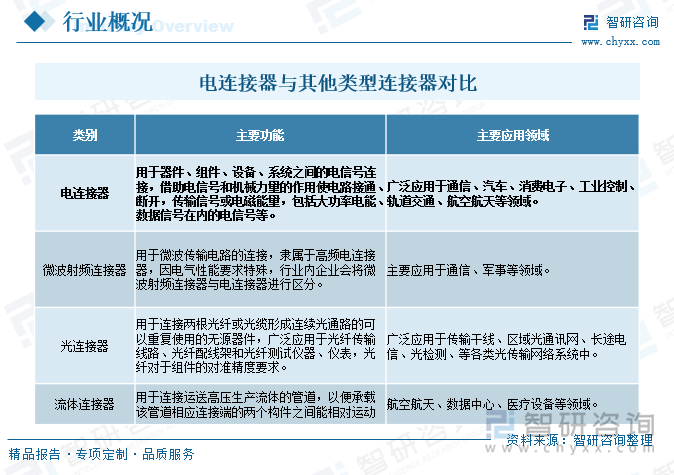
Core Viewpoint - The demand for electrical connectors in China is significantly increasing due to the rapid development of 5G and 6G networks, the growth of the electric vehicle industry, and the evolution of consumer electronics, leading to a projected market size of 174.9 billion yuan in 2024, representing a year-on-year growth of 6.27% [1][14]. Market Overview - Electrical connectors are essential components for transmitting electrical signals between devices, systems, and components, widely used in telecommunications, automotive, consumer electronics, industrial control, and aerospace [2][4]. - The electrical connector market is supported by various government policies aimed at promoting the development of the electronic components industry, creating a favorable environment for growth [5][7]. Industry Chain - The upstream of the electrical connector industry includes suppliers of raw materials such as metals, plastics, and plating materials, while the downstream encompasses application markets in telecommunications, automotive, consumer electronics, and industrial control [8][10]. Market Demand - The telecommunications and automotive sectors are the primary demand markets for electrical connectors in China, accounting for over 40% of the market share in 2024. The automotive industry is experiencing significant growth, with production and sales increasing by 14.5% and 11.2% year-on-year, respectively [12][14]. Competitive Landscape - The electrical connector market is dominated by established international brands like Tyco and Amphenol, which have advantages in funding, technology, and global sales networks. However, domestic companies such as Luxshare Precision and AVIC Optoelectronics are gaining ground through competitive pricing and improved technology [16][18]. Key Companies - AVIC Optoelectronics specializes in high-end interconnection solutions and is projected to achieve a revenue of 20.69 billion yuan in 2024, with 78.3% of its revenue coming from electrical connectors [18]. - Luxshare Precision focuses on providing integrated manufacturing solutions for consumer electronics and automotive products, with an expected revenue of 268.8 billion yuan in 2024, where consumer electronics account for 83.37% of its revenue [20]. Development Trends - Future trends in the electrical connector market include the need for higher transmission speeds, lower signal delays, and better electromagnetic compatibility, driven by advancements in 5G, big data, and cloud computing technologies. There is also a push towards miniaturization and high-density designs to meet the demands of modern consumer electronics [22].


钙钛矿行业深度:效率持续提升、GW线逐步落地,钙钛矿产业曙光渐近
2025-07-07 00:51
Summary of Perovskite Industry Conference Call Industry Overview - The perovskite solar cell industry is experiencing significant advancements, with laboratory efficiencies reaching 27% and leading manufacturers achieving module efficiencies exceeding 18%-19% [1][2][4] - Current mass production efficiency stands at approximately 26.36%, with expectations for tandem module efficiencies to surpass 30% [1][2][4] Key Points Efficiency and Cost - Perovskite solar cells have a theoretical efficiency limit of 30.3%, while current laboratory efficiencies are at 27% [4] - The cost of perovskite modules is below 0.8 yuan per watt, compared to approximately 0.6 yuan per watt for crystalline silicon [1][2][4] - The potential for higher efficiency and aesthetic appeal positions perovskite cells favorably in the market [2][4] Production Capacity and Market Development - Major companies like BOE and Jidian Energy are set to launch gigawatt-level production lines in the second half of the year, with additional lines expected from companies like GCL and CATL in the following year [1][2][3] - By 2030, the production capacity of perovskite cells is projected to reach 40-50 gigawatts, corresponding to a market space of nearly 400 billion yuan [2][28] Stability and Reliability - Stability issues that previously hindered perovskite cells have largely been resolved, with leading manufacturers accumulating three to four years of operational experience through outdoor testing [1][3][17] - Current outdoor station performance shows that perovskite cells can outperform equivalent crystalline silicon cells by over 10% in weak light conditions [19][20] Challenges and Future Outlook - Despite advancements, the industry faces challenges such as high costs for key equipment and the need for time to achieve large-scale production [5][28] - The investment for gigawatt-level production lines is currently estimated at 700-1,000 million yuan, but costs are expected to decrease to below 500 million yuan as technology improves [5][28] Additional Insights Market Dynamics - The perovskite solar cell production process is shorter and more efficient than that of crystalline silicon, allowing for faster scaling [22] - The materials market, including glass and encapsulation materials, is projected to reach hundreds of billions of yuan, with FTO glass alone expected to have a market space of 80-90 billion yuan by 2030 [29] Company Developments - Companies such as GCL, CATL, and others are actively pursuing advancements in perovskite technology, with GCL planning to launch its first gigawatt-level production line this year [30][32] - The A-share market is seeing increasing involvement in the perovskite sector, with companies like Jin Jing Technology and Yao Pi leading in FTO glass production [31][34] Investment Recommendations - Investors are advised to focus on the entire perovskite supply chain, from battery components to equipment and materials, with particular attention to leading manufacturers and emerging companies in the sector [34]
100余家德国和四川企业慕尼黑现场对接 川德签约33个项目
Si Chuan Ri Bao· 2025-07-07 00:20
Group 1 - Seven German Fortune 500 companies, including BMW, Allianz, Siemens, and Linde Gas, participated in the China (Sichuan) - Bavaria Economic and Cultural Cooperation Exchange Conference held in Munich, Germany [1] - A total of 33 signed projects were reached, with a cumulative amount exceeding 9.082 billion yuan, including six key projects signed on-site [1][2] - The signed projects cover various fields such as goods trade, service trade, industrial investment, cultural tourism, and traditional Chinese medicine [1][2] Group 2 - The Chengdu High-tech Zone Management Committee signed an industrial gas investment cooperation agreement with Germany's Messer Group, which will provide purification and supply equipment for BOE's production line, supporting the development of Sichuan's electronic information industry [2] - Sichuan Runzhao Food Co., Ltd. reached a cooperation agreement with Germany's N25 Caviar Trading Company to promote Sichuan Runzhao's caviar products in high-end consumption scenarios in Europe, leveraging N25's established sales network [2] - In the first five months of this year, the trade import and export volume between Sichuan and Germany reached 10.42 billion yuan, with a year-on-year growth rate of 10.1%, making Germany an important trade partner and investment source for Sichuan in the EU [2]


小米YU7首批正式交付,雷军现身为车主开车门;罗马仕客服回应停工;乐道L90起售价30万以内 | 邦早报
创业邦· 2025-07-06 23:57
Group 1 - Roma Technology is undergoing internal organizational adjustments following a large-scale recall of power banks, with a long-term recall plan in place [1] - The Shenzhen Market Supervision Bureau has established a special team to oversee the recall process, requiring daily reports from Roma Technology [1] - Anker Innovation has also announced a recall of over 200,000 power bank products due to safety hazards, with over 100,000 fireproof safety bags sent to users for the recall [3] Group 2 - Anpurs (Wuxi) Co., a supplier of lithium batteries for Roma Technology, has had 74 of its 3C certificates suspended or revoked, and all of its lithium battery products have been sealed by the Wuxi Market Supervision Bureau [3] - The recall of power banks from Roma and Anker has affected over 1.2 million units, raising concerns about the impact on the entire supply chain [1][3]

2026年折叠革命:iPhone变成乔布斯设想的「玻璃时空机」
21世纪经济报道· 2025-07-06 15:25
2025 年的苹果秋季发布会,将成为科技史上的重要里程碑。尽管 iPhone 17 系列仍以直板设 计为主,但折叠屏 iPhone 已进入 P1 原型测试阶段,预计 2026 年下半年正式亮相。 立讯精密在墨西哥工厂建立的「零库存」供应链模式,通过5G + 边缘计算实现 AI 服务器组 件的实时调配,订单响应速度提升 40%,同时将北美市场供货周期缩短至 3 天。这种「专利 壁垒 + 柔性制造」的组合拳,让中国供应商在苹果的技术封锁中撕开一道口子。 产业链公司观察:部分公司区域化布局的战略 这款被定位为「未来旗舰」的产品,采用三星独家供应的 7.8 英寸 LTPO OLED 内屏和 5.5 英寸外屏,铰链由蓝思科技采用非晶态金属玻璃复合材质打造,钛合金机身将重量控制在 250 克以内。 尽管苹果官方尚未公布具体上市时间,但供应链消息显示,其折叠屏方案已历经6代技术迭 代,仅铰链结构就申请了超过300项专利。西部证券指出:鉴于苹果在全球的销售规模及其对 产品的创新要求,随着苹果对折叠屏手机加速布局,我们认为一方面或将对全球折叠屏手机 销量有较大的拉动,另一方面其有望引领折叠屏产业链的创新升级。 产业链公司观察: ...


新材料产业周报:中国头部光伏玻璃企业计划7月起集体减产30%,GE再被获准向中国商飞出口喷气发动机-20250706
Guohai Securities· 2025-07-06 12:31
Investment Rating - The report maintains a "Recommended" rating for the new materials industry [1]. Core Viewpoints - The new materials sector is a crucial direction for the future development of the chemical industry, currently experiencing rapid growth in downstream demand. With policy support and technological breakthroughs, domestic new materials are expected to accelerate their long-term growth. The new materials industry serves as a foundational industry, providing the material basis for other sectors. The report emphasizes the importance of identifying and tracking companies with strong core supply chains, research capabilities, and excellent management in key areas such as electronic information, new energy, biotechnology, and environmental protection [4][16]. Summary by Relevant Sections 1. Electronic Information Sector - Focus areas include semiconductor materials, display materials, and 5G materials [5]. - Recent developments include the lifting of U.S. export restrictions on chip design software to China, allowing companies like Siemens and Synopsys to resume full access for Chinese clients [6][24]. - Samsung Display and LG Display have begun procurement for the iPhone 17 series, with an expected production of approximately 110 million OLED panels [7][25]. 2. Aerospace Sector - Key materials of interest are PI films, precision ceramics, and carbon fiber [9]. - GE Aerospace has been granted permission to export jet engines to COMAC, which will supply engines for the C919 aircraft [10]. 3. New Energy Sector - Focus areas include photovoltaics, lithium-ion batteries, proton exchange membranes, and hydrogen storage materials [11]. - Major photovoltaic glass manufacturers plan to collectively reduce production by 30% starting in July, which is expected to improve the supply-demand balance in the domestic market [11]. 4. Biotechnology Sector - Key areas of focus include synthetic biology and scientific services [12]. - A new synthetic biology research platform has been established to integrate AI with synthetic biology, aiming to enhance innovation and technology development [14]. 5. Energy Conservation and Environmental Protection Sector - Focus areas include adsorption resins, membrane materials, and biodegradable plastics [15]. - The Ministry of Ecology and Environment has initiated inspections in several provinces to enhance environmental protection efforts [16]. Key Companies and Earnings Forecast - The report highlights several key companies with their respective stock prices and earnings per share (EPS) forecasts for 2024 to 2026, indicating a mix of "Buy" and "Hold" ratings based on their projected performance [17].
苏超,快要踢散安徽?
Xin Lang Cai Jing· 2025-07-06 11:13
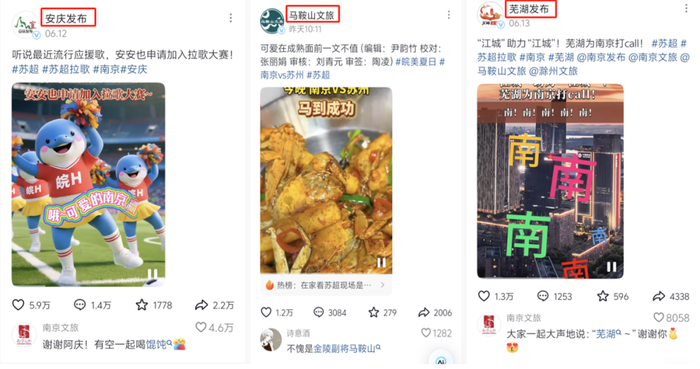
Core Viewpoint - The article discusses the regional disparities within Anhui province, highlighting the "scattered" nature of its cities and the lack of cohesion between the provincial capital, Hefei, and other cities like Wuhu, Ma'anshan, and Chuzhou, which tend to identify more with neighboring Nanjing than with their own provincial capital [1][10][20]. Group 1: Regional Dynamics - The recent Suzhou Super League match showcased the support from cities like Wuhu and Ma'anshan for Nanjing, while Hefei remained isolated, indicating a lack of unity within Anhui [2][4]. - Geographical proximity plays a significant role, with cities in southeastern Anhui being closer to Nanjing than to Hefei, leading to stronger economic and emotional ties with Nanjing [5][9]. - The historical context of Hefei's designation as the provincial capital has not fostered a strong identity or loyalty among other cities, leading to a perception of Hefei as a distant "big brother" [10][14]. Group 2: Economic Disparities - Hefei's GDP accounts for nearly 27% of the province's total, but the economic development is uneven, with cities like Wuhu and Chuzhou lagging significantly behind [19][21]. - The "strong provincial capital" strategy has led to complaints from other cities, which feel neglected and view Hefei as a "battery charger" that does not adequately support their growth [12][17]. - The economic gap is evident, with Wuhu's GDP being only 38% of Hefei's, highlighting the disparity in resource allocation and development opportunities [26][20]. Group 3: Cross-Provincial Strategies - In response to internal challenges, cities in Anhui are increasingly seeking to integrate into neighboring metropolitan areas, with several cities successfully joining urban circles in Jiangsu and Zhejiang [28][29]. - The push for cross-provincial integration aims to leverage resources and infrastructure improvements, enhancing connectivity and economic collaboration with more developed regions [32][33]. - While this strategy may provide short-term benefits, it also risks further fragmenting Anhui's identity and cohesion as a province, as cities align more closely with external regions rather than with Hefei [33].
创投的历史性变革,机遇何在
母基金研究中心· 2025-07-06 08:55
Core Viewpoint - The current capital winter is seen as a precursor to future prosperity, emphasizing that failures in the venture capital industry provide valuable lessons that drive progress [2][4]. Group 1: Industry Trends and Changes - Since 2018, China's venture capital industry has entered a painful period, marked by significant events such as the collapse of shared bicycles and the P2P lending crisis, leading to a cautious financing environment [2][3]. - The shift from a "short-term profit" focus to "long-term value creation" is essential for the transformation of the venture capital industry, which will help cultivate innovative companies with core competitiveness and provide quality investment targets for the capital market [4][6]. Group 2: National Policy and State Capital - The establishment of a "national-level" venture capital guiding fund is expected to mobilize nearly one trillion yuan in social capital, focusing on strategic industries such as AI, quantum technology, and hydrogen energy [6][7]. - State-owned capital is increasingly playing a leading role in the venture capital market, with significant investments in strategic emerging industries, reflecting a shift from being mere fund providers to becoming long-term capital leaders and innovation resource integrators [11][12]. Group 3: Regional Innovation Models - Different cities in China are developing unique models for venture capital and innovation, with Hefei focusing on "industry-investment linkage," Hangzhou on "collaborative ecosystems," and Shenzhen on market-driven resource allocation [13][14][26]. - Hefei's approach, termed the "Hefei phenomenon," involves using fiscal funds to attract major investments, leading to the establishment of a robust display panel industry and significant investments in semiconductor technology [16][18]. - Hangzhou's model emphasizes institutional innovation, talent policies, and the integration of industry and academia, resulting in a vibrant innovation ecosystem that supports technology transfer and commercialization [19][23]. Group 4: Evolution of Investment Strategies - The venture capital industry is moving away from traditional "betting agreements" and quick exits, reflecting a broader recognition of the need for patience in funding hard technology projects that require longer development cycles [27][30]. - New investment philosophies are emerging, focusing on deep industry engagement and value discovery, while policies are being reformed to create a comprehensive investment ecosystem that supports research, transformation, and exit strategies [30][32]. Group 5: Future Outlook - The transformation in the venture capital landscape aims to make capital a true enabler of technological innovation, aligning investment cycles with the realities of innovation [33][34]. - The industry is witnessing a shift towards nurturing long-term relationships with projects, with a focus on cultivating technologies and supporting companies over extended periods, which is expected to yield significant returns in the future [34].

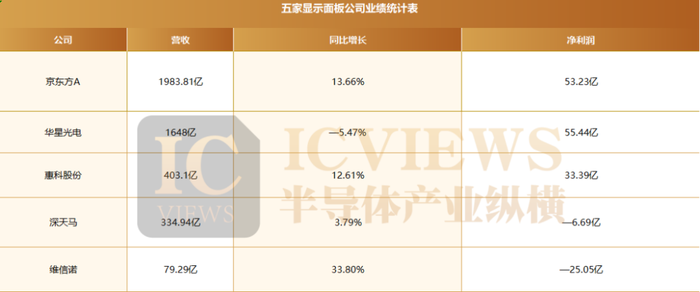
国产面板何以拿下全球七成江山?
Xin Lang Cai Jing· 2025-07-06 06:12
Group 1: Market Position and Growth - By 2024, Chinese companies will control 65% of global polarizer production capacity, expected to exceed 80% by 2027 [1] - In 2025, China's display panel production will account for 70% of the global market share, meaning 7 out of every 10 display panels produced worldwide will come from China [2] - The market size of China's display panel industry will reach 1.3 trillion yuan in 2024, capturing over 50% of the global market [3] Group 2: Key Players and Performance - BOE Technology Group leads the smartphone panel market with a projected shipment of 610 million units in 2025, holding a 68.8% market share in 2024 [2] - In the large-size LCD TV panel market, BOE holds a 25.9% market share, while Huaxing Optoelectronics and Huike occupy 20.2% and 14.4% respectively [2] - In 2024, BOE's revenue is expected to be 198.38 billion yuan, with a net profit of 5.32 billion yuan, marking a significant recovery from previous losses [7] Group 3: Technological Advancements - The introduction of 15 AMOLED production lines is challenging the dominance of South Korean manufacturers, with flexible screens and MiniLED technology driving a new display revolution [3] - Chinese companies are adopting a dual-track strategy, focusing on both LCD and OLED technologies to maintain market leadership [6] - The OLED gaming monitor segment is experiencing rapid growth, with a 132% increase in global shipments in 2024 [8] Group 4: Emerging Markets and Opportunities - The global automotive display panel market is projected to reach 232 million units in 2024, with a 6.3% year-on-year growth [8] - BOE holds a 17.6% market share in the automotive display sector, collaborating with various automotive brands [9] - The esports monitor market in China is expected to grow by 12.4% in 2025, driven by increasing consumer demand and the introduction of new products [12] Group 5: Strategic Developments - The acquisition of LG Chem's OLED polarizer business by Shanshan Holdings is a significant move towards vertical integration in the industry [4] - The construction of the world's first 3000mm ultra-wide polarizer production line by Hengmei Optoelectronics is set to enhance production capacity significantly [5] - The dual strategy of focusing on both LCD and OLED technologies has allowed Chinese manufacturers to effectively compete in the global market [6][13]