
平安人寿

Search documents
14连阳稳坐A股市值王,谁在买“银伟达”?
Ge Long Hui· 2025-10-22 07:57
Core Viewpoint - The A-share banking sector is experiencing significant gains, with Agricultural Bank of China (ABC) leading the charge, achieving a historical high in stock price and strong performance in the market [1][2][6]. Group 1: Stock Performance - Agricultural Bank's A-share price has risen over 58% year-to-date, reaching a total market capitalization of 2.83 trillion yuan, surpassing Industrial and Commercial Bank of China (ICBC) at 2.77 trillion yuan [6]. - ABC's stock price reached 8.09 yuan per share, marking a 14-day consecutive increase, while its Hong Kong shares also hit a record high with a 10-day consecutive rise [2][6]. Group 2: Dividend Yield - ABC maintains a stable and high dividend yield, which is a key attraction for long-term capital allocation. The dividend yields over the past five years were 5.79%, 6.30%, 7.11%, 6.10%, and 4.32%, significantly higher than the 10-year government bond yield of approximately 2.5% [9][10]. - The total cash dividend for 2024 is projected to reach 772.25 billion yuan, providing predictable cash flow for insurance funds [12]. Group 3: Financial Performance - In the first half of 2025, ABC reported operating income of 369.94 billion yuan, a year-on-year increase of 0.8%, and a net profit attributable to shareholders of 139.51 billion yuan, up 2.7%, making it the only major bank to achieve positive net profit growth [13]. - For the full year of 2024, ABC is expected to achieve a net profit of 282.7 billion yuan, with a year-on-year growth of 4.8% [14]. Group 4: Investment Interest - ABC has seen increased investment from insurance funds, with significant shareholding increases by Ping An Insurance, which raised its stake to over 20% by October 2025 [15][19]. - The main drivers of ABC's stock price increase are long-term institutional investors, including social security and insurance funds, attracted by its high dividend yield and low non-performing loan ratio of 1.2% [16]. Group 5: Market Outlook - The banking sector is expected to benefit from declining deposit costs and stable growth in intermediary business income, enhancing the attractiveness of bank stocks for long-term investors [17]. - Analysts suggest focusing on state-owned banks with strong fundamentals and high dividend yields, as well as regional banks with resilient economic performance and favorable valuations [18].


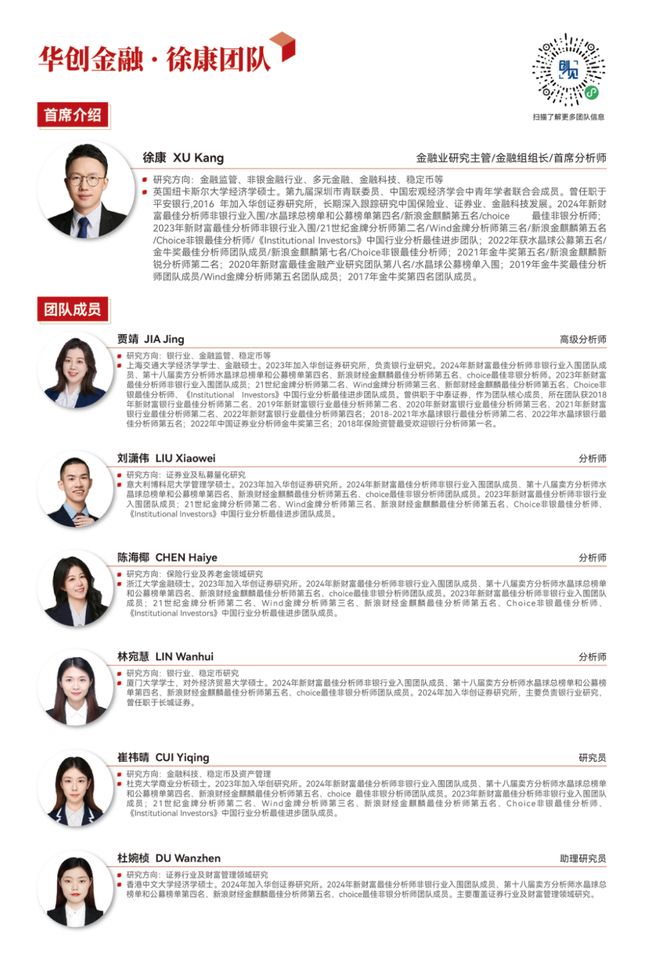
【华创金融 徐康团队】9月寿险增速承压,建议关注成本改善利好
Xin Lang Cai Jing· 2025-10-19 16:43
Core Viewpoint - The insurance sector has shown a mixed performance, with the insurance index rising by 3.73%, outperforming the broader market by 5.95 percentage points. Individual insurance stocks have varied in performance, with notable gains from major players like PICC and Xinhua Insurance, while others like AIA and ZhongAn have seen declines [1][2]. Weekly Dynamics - China Pacific Insurance expects a net profit growth of 40%-60% year-on-year for the first three quarters [2]. - Xinhua Insurance anticipates a parent net profit of approximately 299.86 to 341.22 billion yuan, reflecting a year-on-year increase of 45%-65% [2]. Premium Insights - China Pacific Insurance reported a cumulative premium of 392.4 billion yuan for January to September, a year-on-year increase of 6.2%, with life insurance premiums at 232.4 billion yuan (up 10.9%) and property insurance premiums at 160 billion yuan (up 0.1%) [4]. - Xinhua Insurance's cumulative life insurance premium reached 172.7 billion yuan, a year-on-year increase of 18.6% [4]. - ZhongAn Online reported a cumulative premium of 26.9 billion yuan, reflecting a year-on-year increase of 5.6% [4]. Market Trends - September marked a transition in the predetermined interest rate from the "2.5 era" to the "2.0 era," impacting the attractiveness of insurance products and leading to short-term demand shocks [5]. - Despite short-term pressures on new business growth, there is an expectation of positive effects from cost improvements and sustained growth in new business value (NBV) [5].




机构:四季度银行深蹲起跳!各路资金掉头加码,百亿银行ETF(512800)放量6连阳,农业银行涨超3%
Xin Lang Ji Jin· 2025-10-16 11:56
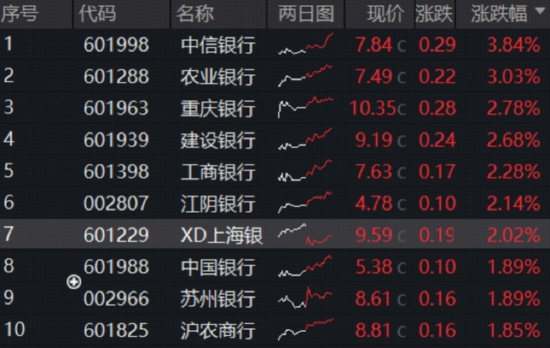
Group 1 - The banking sector in A-shares has shown strong performance, particularly as it rose against the market trend, indicating its defensive nature [1] - As of the market close, 39 out of 42 banking stocks increased, with notable gains from CITIC Bank and Agricultural Bank exceeding 3% [1][2] - The banking ETF (512800) saw a price increase of 1.48%, marking a six-day consecutive rise, with a trading volume of 2.419 billion yuan [2] Group 2 - Recent data indicates that insurance capital has been actively purchasing bank stocks, with Ping An Life increasing its holdings in China Merchants Bank and Postal Savings Bank [4] - There have been significant share buybacks from bank shareholders and executives, with Suzhou Bank reporting a total of 36.22 million shares bought back, amounting to approximately 298 million yuan [4] - The overall outlook for the banking sector remains positive, with expectations of revenue and profit growth in the third quarter, driven by narrowing declines in net interest income and increasing fee income [4] Group 3 - Market conditions, including geopolitical tensions, are expected to lead to a shift in investor preference towards defensive assets, benefiting the banking sector [6] - The banking ETF has experienced substantial inflows, totaling 3.893 billion yuan over the past five days, reaching a record high in size at 18.496 billion yuan [6][8] - The banking sector is anticipated to outperform the market in the fourth quarter, as investors seek safer investment options amid rising geopolitical risks [6]
又见险资扫货银行股!银行稳步6连阳,百亿银行ETF(512800)续涨逾1%,近5日“暴力”吸金39亿元!
Xin Lang Ji Jin· 2025-10-16 02:09
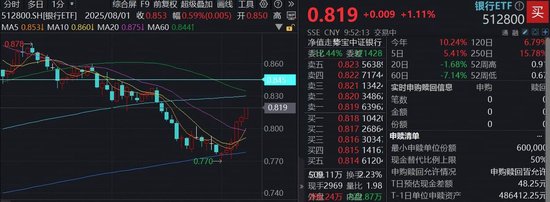
Core Viewpoint - The banking sector is experiencing a resurgence, with significant gains in bank stocks and ETFs, indicating a positive market sentiment towards the industry [1][5]. Group 1: Market Performance - As of October 16, the bank sector has shown strength, with the bank ETF (512800) rising over 1% and achieving six consecutive days of gains, with a trading volume exceeding 400 million yuan in less than half a day [1]. - A total of 42 bank stocks in the A-share market mostly showed positive performance, with Shanghai Pudong Development Bank leading with an increase of over 2% [3]. Group 2: Investment Trends - Insurance capital has been actively buying bank stocks this year, driven by a low interest rate environment and policies encouraging long-term funds to enter the market [5]. - The bank ETF (512800) has seen a net inflow of 3.893 billion yuan over the past five days, reaching a new historical high in total assets of 18.496 billion yuan [5][7]. Group 3: ETF Characteristics - The bank ETF (512800) tracks the CSI Bank Index and includes 42 listed banks, making it an efficient investment tool for tracking the overall performance of the banking sector [7]. - The bank ETF remains the largest and most liquid among the 10 bank ETFs in A-shares, with an average daily trading volume exceeding 700 million yuan this year [7].
前三季度社融增量突破30万亿元;两大热门股,今日复牌……盘前重要消息一览
Zheng Quan Shi Bao· 2025-10-16 00:37
Group 1 - Xi'an Yicai's IPO subscription code is 787783, with an issue price of 8.62 yuan per share and a subscription limit of 53,500 shares [1] - The Ministry of Commerce of China has filed a request for consultations with India at the WTO regarding India's electric vehicle and battery subsidy measures, claiming these measures violate multiple obligations and provide unfair competitive advantages to Indian industries [3] - The National Bureau of Statistics reported that in September, the Consumer Price Index (CPI) rose by 0.1% month-on-month but fell by 0.3% year-on-year, while the core CPI (excluding food and energy) increased by 1.0% year-on-year, marking the fifth consecutive month of growth [4] Group 2 - The People's Bank of China reported that as of the end of September, the broad money supply (M2) was 335.38 trillion yuan, growing by 8.4% year-on-year, while the narrow money supply (M1) was 113.15 trillion yuan, up by 7.2% year-on-year [5] - The National Development and Reform Commission has issued an action plan to double the service capacity of electric vehicle charging facilities by 2027, aiming to establish 28 million charging facilities nationwide [5] - The Ministry of Housing and Urban-Rural Development has released an action plan to promote the construction of smart road infrastructure to support intelligent connected vehicles and improve urban digital governance [6] Group 3 - Tianpu Co. will resume trading on October 16, and Zhonghao Xinying has initiated its IPO process after a significant stock price increase of 317.72% over 15 consecutive trading days [8] - *ST Zhengping's stock will also resume trading on October 16 after a trading suspension, with a cumulative increase of 101.86% during the previous month [8] - Ping An Life continues to increase its stake in China Merchants Bank's H-shares, surpassing 17% of the total H-shares [8] Group 4 - Changjiang Securities maintains a bullish outlook on the Chinese stock market, particularly favoring technology sectors and industries showing improving profitability [12] - Debon Securities notes that the market is experiencing a volatile upward trend, with a focus on policy support and sector rotation as the 20th Central Committee's Fourth Plenary Session approaches [12]
挚达科技、金叶国际集团登陆港股
Mei Ri Jing Ji Xin Wen· 2025-10-13 00:38
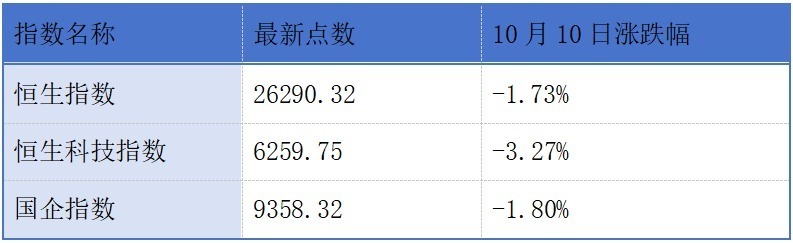
Group 1: Zhidatech's IPO - Zhidatech officially listed on the Hong Kong Stock Exchange on October 10, becoming the "first stock of global smart charging" in the market [1] - On its first trading day, Zhidatech's stock price opened high and closed at 195.50 HKD per share, reflecting a 192.14% increase [1] - Since its establishment in 2010, Zhidatech has focused on smart home electric vehicle charging piles, achieving a cumulative shipment of over 1.3 million units and holding a global market share of approximately 9.0% [1] Group 2: Jinye International Group's IPO - Jinye International Group, a Hong Kong electromechanical engineering contractor, also listed on the Hong Kong Stock Exchange on October 10 [2] - The stock price surged 330% on its first day, closing at 2.15 HKD per share [2] - For the fiscal years 2023/2024 and 2024/2025, Jinye International Group's projected revenues are 123 million HKD and 155 million HKD, respectively [2] Group 3: Hong Kong Stock Exchange Market Overview - As of September 30, 2025, the total market capitalization of the Hong Kong Stock Exchange reached 49.9 trillion HKD, a 35% year-on-year increase [3] - The average daily trading amount in September 2025 was 316.7 billion HKD, up 87% year-on-year [3] - The average daily trading amount for exchange-traded funds (ETFs) in the first nine months of 2025 was 34.2 billion HKD, reflecting a significant 163% year-on-year increase [3] Group 4: Ping An Life's Investment in Agricultural Bank - Ping An Life recently increased its stake in Agricultural Bank of China H-shares by acquiring approximately 39.63 million shares at a price of 5.2334 HKD per share, totaling about 207 million HKD [4] - After the purchase, Ping An Life's total holdings in Agricultural Bank reached approximately 5.236 billion shares, representing a 17.03% ownership stake [4] Group 5: Hong Kong Stock Market Performance - On October 10, the Hang Seng Index closed at 26,290.32, down 1.73% [5] - The Hang Seng Tech Index closed at 6,259.75, reflecting a decline of 3.27% [5] - The overall market showed a downward trend, with various indices experiencing losses [5]
租赁型不动产缘何成险资“心头好”
Zheng Quan Ri Bao· 2025-10-12 15:47
Core Viewpoint - The recent successful listing of Huaxia Kaide Commercial REIT reflects a growing trend of insurance capital increasing investments in rental-type real estate, indicating a shift towards more diversified and stable income-generating assets in the current economic environment [1][2]. Group 1: Investment Trends - Insurance capital is increasingly investing in rental-type real estate through various methods such as direct acquisitions, equity partnerships, and participation in REITs, with a significant increase in large real estate investments reported in the first half of the year [1][2]. - The preference for high-quality rental assets is driven by their cost-performance advantages, as valuations have declined due to market adjustments, making them attractive for stable cash flow generation [2][3]. Group 2: Asset Characteristics - Rental-type real estate aligns well with the long-term liabilities of insurance capital, as these assets typically offer lease terms of 3 to 5 years or longer, providing predictable cash flows that can mitigate short-term market volatility [3][4]. - The development of a closed-loop system for investment, management, and exit strategies in rental-type real estate has alleviated concerns about liquidity, allowing insurance capital to exit investments more easily through public REITs and internal asset management platforms [4][5]. Group 3: Market Dynamics - The collaboration between insurance capital and rental-type assets is fostering a healthier market ecosystem, encouraging a shift from a focus on short-term sales to long-term operational excellence in the real estate sector [4][5]. - As the supply of quality real estate in core cities increases and the REITs market matures, insurance capital is expected to deepen its engagement in rental-type assets, balancing stability and growth in the capital market [5].
横扫港股IPO!从“固收为王”到“股债双驱”,险资重塑资本角色
Hua Xia Shi Bao· 2025-10-09 19:35
纵观全局,险资正在从传统的"固收为主、权益为辅"转向"固收打底、权益增强"的资产配置模式。其在 IPO市场上的频繁出手,不仅是资产端寻求收益突破的战术调整,更是保险资金作为"耐心资本"服务实 体经济、支持国家战略的功能体现。 "险资正在从传统财务投资者向'产业赋能型资本'转型。"北京大学应用经济学博士后、教授朱俊生在接 受《华夏时报》记者采访时表示,传统险资更关注财务收益,而近年来,随着投资能力、产业研究能力 和投后管理能力的提升,一些险资机构开始通过IPO基石投资、战略配售、联合投后服务等方式深入参 与产业链发展,实现资本与产业的双向价值创造。 本报(chinatimes.net.cn)记者吴敏 北京报道 近年来,在资本市场深化改革与利率持续下行的双重背景下,保险资金正以前所未有的活跃姿态涌入 IPO市场,成为一级市场中不可忽视的长期资本力量。从港股基石投资到A股战略配售,从半导体芯片 到新能源电站,险资的触角正深入更多具备高成长性与战略价值的产业领域。 港股IPO:险资成为基石力量 今年以来,港股市场迎来多家重磅企业上市,其中紫金矿业旗下黄金业务板块紫金黄金国际的登陆尤为 引人注目。该项目不仅是今年港股募 ...



钱从“楼”中来:险资加码收租型资产
Zhong Guo Zheng Quan Bao· 2025-10-08 20:46
Core Insights - The article discusses the increasing involvement of insurance capital in the commercial real estate sector, particularly in REITs and rental housing projects, highlighting a strategic shift towards stable income-generating assets [1][2][3][4][5][6][7] - Insurance companies are focusing on high-quality, stable rental properties as they seek to balance cost and returns amid a challenging interest rate environment [1][2][6][7] Investment Trends - Insurance capital is increasingly investing in commercial real estate, including shopping centers and office buildings, with a notable example being the strategic allocation by Caixin Life in the Huaxia Kaide Commercial REIT, amounting to approximately 50 million yuan [1][2] - The investment strategy has shifted from non-standard private equity products to standardized products like public REITs and ABS, indicating a broader diversification in investment types [2][5] Market Dynamics - The rental housing market is emerging as a new focal point for insurance capital, with significant investments in long-term rental housing projects in major cities like Beijing and Shanghai [4][5][6] - The demand for stable cash flow assets is heightened due to declining yields on fixed-income investments, prompting insurance companies to explore high-yield rental properties [6][7] Performance Metrics - The occupancy rates of key assets are critical, with the Changsha Kaide Plaza reporting an occupancy rate of approximately 97%, showcasing the attractiveness of well-leased properties [1] - The rental yield for commercial properties in first-tier cities is reported to be between 5.5% and 6.5%, which is favorable compared to the yields on 10-year government bonds, enhancing the appeal of commercial real estate investments [7] Regulatory Environment - Recent regulatory support from financial authorities encourages insurance capital to invest in rental housing projects, facilitating a more structured approach to funding and investment [5][6] - The establishment of a closed-loop system for fundraising, investment, management, and exit strategies is becoming more defined, addressing concerns about liquidity and investment returns for insurance companies [5][6]
险资“南下”秀肌肉 频频出手港股IPO
Zheng Quan Shi Bao· 2025-10-08 17:37
Core Insights - Zijin Mining's subsidiary, Zijin Gold International, has successfully listed on the Hong Kong Stock Exchange, marking it as the second-largest IPO in Hong Kong this year [2][3] - The IPO attracted 29 cornerstone investors, including major insurance companies such as Taikang Life and China Pacific Insurance, highlighting the significant role of insurance capital in Hong Kong IPOs this year [1][3] Group 1: IPO Participation - Taikang Life has participated in at least five Hong Kong IPOs this year, with a total investment exceeding 1.4 billion HKD across various projects [2][3] - China Pacific Insurance has also been active in the IPO market, matching Taikang Life's investment scale in the same projects [3] - Other insurance companies, such as Dajia Life and China Post Life, have also made notable investments in recent IPOs, indicating a trend of increased participation from insurance capital [3] Group 2: Investment Strategies - Insurance capital is increasingly focusing on equity investments, not only in IPOs but also in the primary and secondary markets [4][5] - China Life has emerged as a strategic investor in the largest A-share IPO of the year, Huadian New Energy, showcasing the growing influence of insurance funds in various market segments [4] - Recent regulatory changes have improved the allocation advantages for insurance capital in IPOs, allowing them to secure a larger share of new offerings [5] Group 3: Market Performance - The performance of newly listed stocks has been favorable, with many IPOs achieving significant gains on their first trading day, such as Zijin Gold International, which rose over 68% [7] - The overall trend indicates that insurance capital has been able to realize substantial floating profits from their IPO investments, although the long-term profitability remains uncertain due to lock-up periods [7]


