沐曦

Search documents
摩尔线程启动申购!中一签需缴纳5.7万元
Di Yi Cai Jing Zi Xun· 2025-11-24 06:56
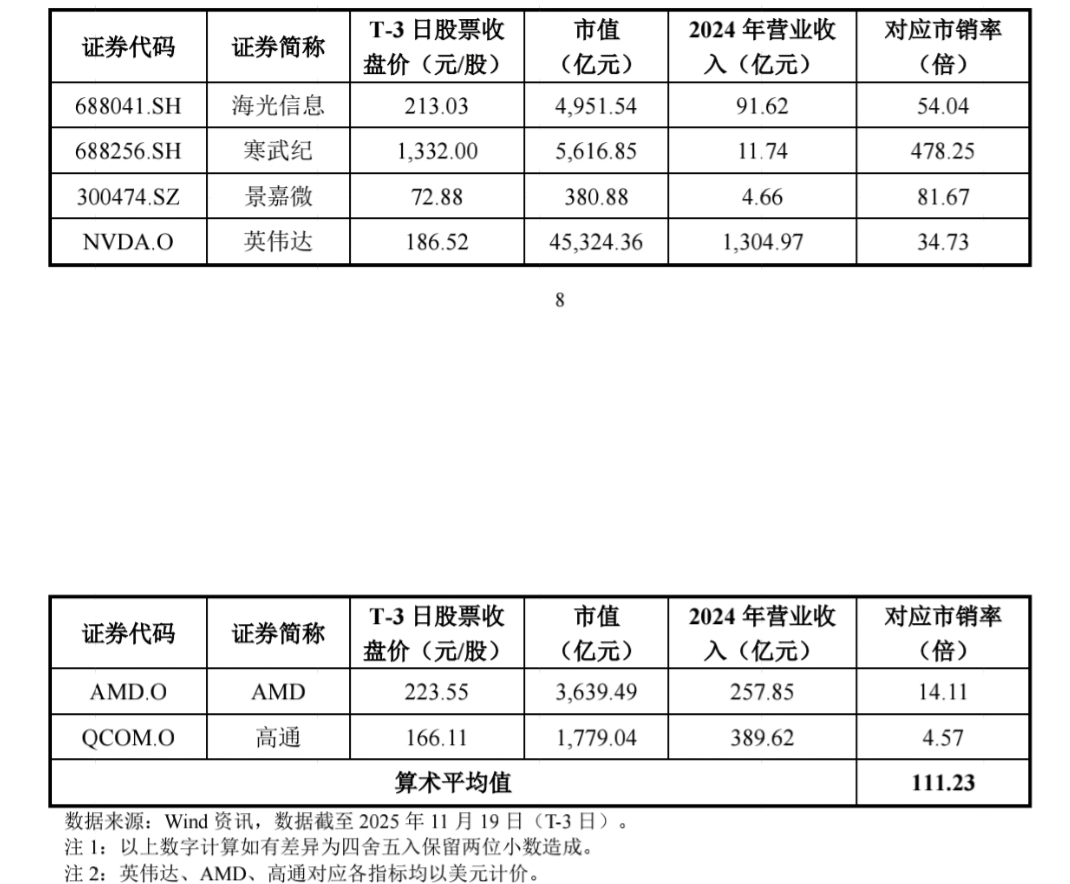
Core Viewpoint - The article discusses the IPO of Moer Thread, which is priced at 114.28 yuan per share, resulting in a total market capitalization of 53.715 billion yuan. The company warns that its price-to-sales ratio of 122.51 times for 2024 is significantly higher than its peers, indicating potential risks for investors [2]. Group 1: Company Overview - Moer Thread is the highest-priced new stock of the year, requiring an investment of 57,140 yuan for one subscription [2]. - The company reported a loss of 1.492 billion yuan in the previous year and a loss of 271 million yuan in the first half of this year [5]. - Moer Thread's total market capitalization at the time of listing is 53.715 billion yuan, while its comparable company, Jingjiawei, has a market capitalization of less than 40 billion yuan [5]. Group 2: Comparable Companies - Comparable companies listed include Nvidia, AMD, Qualcomm, and domestic firms such as Haiguang Information, Cambrian, and Jingjiawei. Their 2024 price-to-sales ratios are significantly lower than Moer Thread's [2][3][4]. - Nvidia, AMD, and Qualcomm have price-to-sales ratios of 34.73, 14.11, and 4.57, respectively, while Haiguang Information and Cambrian have ratios of 54.04 and 478.25 [3][4]. - The average price-to-sales ratio of these comparable companies is 111.23 [4]. Group 3: Financial Performance - Moer Thread's revenue for the previous year was 438 million yuan, while Jingjiawei's was 466 million yuan, both companies reported losses [5]. - Haiguang Information and Cambrian had revenues of 9.162 billion yuan and 1.174 billion yuan, respectively, with Haiguang Information achieving a net profit of 1.931 billion yuan last year [5]. - Cambrian began to turn a profit in the fourth quarter of last year and has continued to perform well in 2023 [5]. Group 4: Market Dynamics - The demand for AI chips is increasing, with Moer Thread focusing on GPU and related products for AI, cloud, and data center applications [6]. - The domestic AI chip market is highly competitive, with Nvidia holding over 80% of the global market share [7]. - Moer Thread's third-quarter loss expanded to 453 million yuan, indicating ongoing financial challenges [7].


摩尔线程启动申购!中一签缴5.7万元,国产AI芯片仍需突围
Di Yi Cai Jing· 2025-11-24 05:44
Core Viewpoint - The AI chip market is dominated by a duopoly of Nvidia and AMD, leading to intense competition among companies in the sector [1][7]. Group 1: Market Overview - The newly listed company, Moore Threads, has a high initial offering price of 114.28 yuan per share, resulting in a market capitalization of 53.715 billion yuan at listing [1]. - Moore Threads' price-to-sales ratio (P/S) is projected to be 122.51 times for 2024, significantly higher than its peers, indicating potential risks for investors [1]. - Comparable companies in the AI chip sector include Nvidia, AMD, Qualcomm, and domestic firms such as Haiguang Information, Cambrian, and Jingjia Micro [1]. Group 2: Financial Comparisons - As of November 19, Nvidia, AMD, and Qualcomm have P/S ratios of 34.73, 14.11, and 4.57 respectively, with significant revenue figures of 130.497 billion USD, 25.785 billion USD, and 38.962 billion USD [2][3]. - Domestic companies like Haiguang Information and Cambrian have lower revenue and profitability, with Haiguang's revenue at 9.162 billion yuan and Cambrian's at 1.174 billion yuan [4]. Group 3: Company Performance - Moore Threads reported a loss of 1.492 billion yuan last year and 271 million yuan in the first half of this year, while Jingjia Micro also reported losses [4]. - Haiguang Information and Cambrian have shown better financial performance, with Haiguang's net profit reaching 1.931 billion yuan last year [4]. Group 4: Market Dynamics - The AI chip market is characterized by a significant share held by Nvidia, which dominates with over 80% of the global market [7]. - Domestic AI chip manufacturers are experiencing rising market penetration, but the competitive landscape remains unclear [7]. - Moore Threads reported a loss of 453 million yuan in the third quarter, with losses widening compared to the previous year [7].
摩尔线程上市临近“中国版英伟达”之争硝烟渐浓
Jing Ji Guan Cha Bao· 2025-11-22 05:13
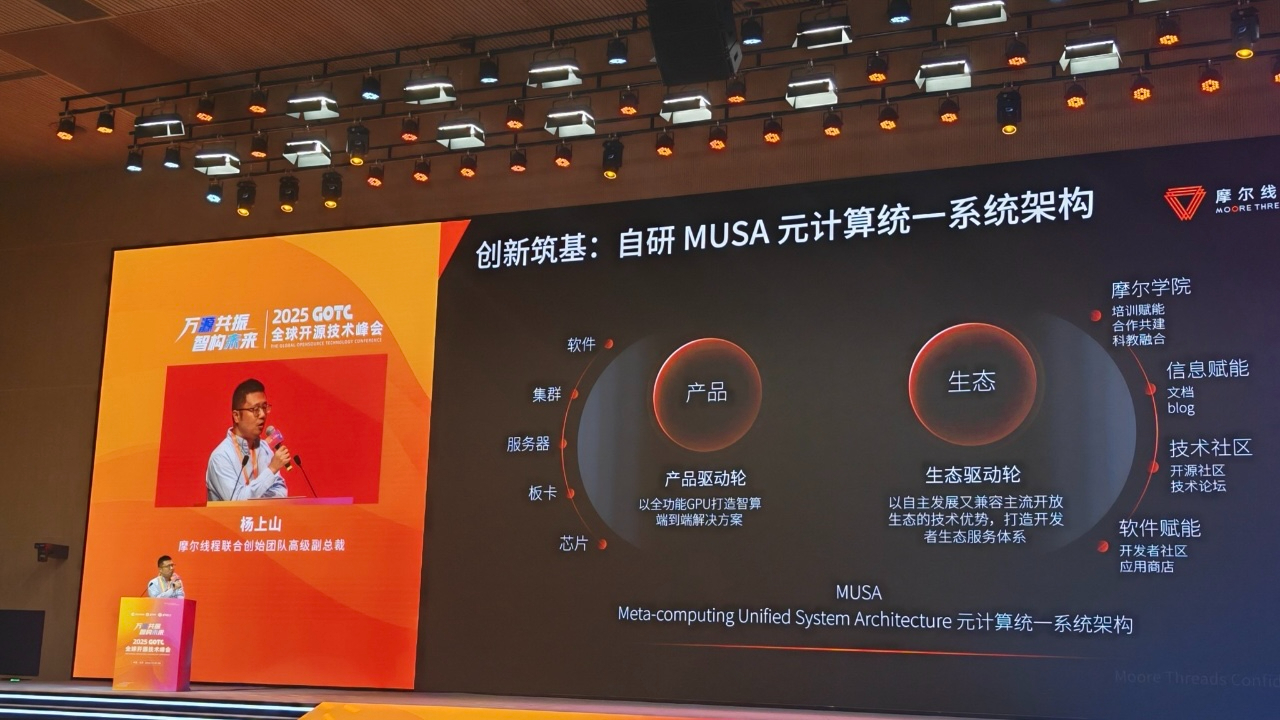
Core Viewpoint - Moore Threads has successfully launched its IPO on the Sci-Tech Innovation Board, with an issue price of 114.28 yuan per share, resulting in a post-issue market capitalization of approximately 53.7 billion yuan, marking it as the largest IPO project on the Sci-Tech Innovation Board since 2025 [2][3][4]. Group 1: Financial Performance - The company achieved significant revenue growth, with 7.02 billion yuan in revenue for the first half of 2025, up from 4.38 billion yuan in 2024 and just over 40 million yuan in 2022 [6][12]. - Despite the rapid revenue increase, the company has incurred substantial losses, totaling 5.486 billion yuan over the past three and a half years, necessitating the 8 billion yuan raised from the IPO to support ongoing high-intensity technology iterations and to address liquidity needs [3][8]. - The company reported a net cash flow from operating activities of -1.164 billion yuan for the first half of 2025, leading to increased short-term borrowings from 0 at the end of 2022 to 1.217 billion yuan by mid-2025 [8][9]. Group 2: Customer Structure and Market Position - Moore Threads has a highly concentrated customer base, with the top five customers accounting for 98.29% of revenue in the first half of 2025, primarily from large B-end clients such as telecom operators and intelligent computing centers [11][12]. - The company’s revenue structure indicates that it earns not only from selling graphics cards but also from integrated computing devices, with significant contributions from major clients [7][12]. Group 3: Research and Development - The company has invested heavily in R&D, with cumulative expenditures reaching 3.81 billion yuan from 2022 to 2024, which exceeds its revenue during the same period [8]. - The company aims to achieve profitability by 2027, projecting revenues of 5.983 billion yuan and a gross margin of 61%, although this includes approximately 307 million yuan in government subsidies [14][15][16]. Group 4: Technology and Market Outlook - The founder emphasized the competitive advantages of the MUSA architecture, which integrates GPU hardware and software, offering superior versatility and market adaptability compared to other technologies like ASIC and GPGPU [18][20]. - The GPU market is expected to grow significantly, with forecasts predicting the Chinese GPU market to reach 1.363 trillion yuan by 2029, driven by increasing demand across various applications [28][30]. - The company plans to focus on six key areas for future development in computing services, including deep integration of hardware and software, expansion into international markets, and sustainable development initiatives [30][31]. Group 5: Market Valuation - At the IPO price of 114.28 yuan, Moore Threads has a market valuation exceeding 53.7 billion yuan, corresponding to a static price-to-sales ratio of 122.51 for 2024, raising questions about whether this valuation is sustainable [32]. - The funds raised from the IPO will primarily be allocated to three R&D projects: next-generation AI training and inference chips, new graphics chips, and AI SoC chips [32].

摩尔线程上市临近 “中国版英伟达”之争硝烟渐浓
Jing Ji Guan Cha Wang· 2025-11-21 15:11
Core Viewpoint - Moore Threads has successfully launched its IPO on the Sci-Tech Innovation Board, achieving a total market value of approximately 53.7 billion yuan, marking the largest IPO financing scale since 2025 [2][4]. Group 1: Financial Performance - The company reported a significant revenue increase, with 2025 first-half revenue reaching 702 million yuan, compared to 438 million yuan in 2024 and just over 40 million yuan in 2022 [7][8]. - Despite rapid revenue growth, the company has incurred substantial losses, totaling 5.486 billion yuan over the past three and a half years, necessitating the 8 billion yuan raised from the IPO to support ongoing R&D and operational needs [3][10]. - The company’s cash flow from operating activities was negative 1.164 billion yuan in the first half of 2025, leading to increased short-term borrowings from 0 to 1.217 billion yuan within six months [10][11]. Group 2: Customer Structure and Market Position - Moore Threads has a highly concentrated customer base, with the top five customers accounting for 98.29% of revenue in the first half of 2025, primarily from large B-end clients such as telecom operators and intelligent computing centers [13]. - The company’s revenue model includes not only sales of graphics cards but also integrated computing devices, with significant contributions from major clients [8][13]. Group 3: R&D and Technology Strategy - The company has invested 3.81 billion yuan in R&D from 2022 to 2024, which exceeds its revenue during the same period, indicating a strong commitment to technological advancement [10]. - Moore Threads aims to achieve profitability by 2027, projecting a revenue target of 5.983 billion yuan and a gross margin of 61% for that year, although this includes approximately 307 million yuan in government subsidies [15][16]. Group 4: Market Outlook and Competitive Landscape - The CEO highlighted the explosive growth in demand for AI computing acceleration chips, asserting that GPUs remain the dominant chip type in the AI market despite competition from ASICs and GPGPUs [21][22]. - The Chinese GPU market is projected to grow to 1.363 trillion yuan by 2029, indicating significant long-term growth potential for the company [29]. - The company plans to focus on six strategic directions in the computing service sector, including deep integration of software and hardware, international market expansion, and sustainable development initiatives [30]. Group 5: Valuation and Investment Considerations - At an IPO price of 114.28 yuan per share, Moore Threads has a static price-to-sales ratio of 122.51 times for 2024, raising questions about whether this valuation is sustainable [33]. - The funds raised from the IPO will primarily be allocated to three R&D projects: next-generation AI training and inference chips, new graphics chips, and AI SoC chips [33].
国产推理芯片,赢了英伟达?
雷峰网· 2025-11-19 06:38
Core Viewpoint - The article discusses the shift in the computing power market towards domestic solutions, highlighting the decline in profitability for NVIDIA products and the rise of domestic computing power projects supported by substantial subsidies [1][6][10]. Group 1: Market Dynamics - The computing power market is witnessing a transformation, with domestic solutions gaining traction as NVIDIA's products fail to maintain their previous popularity [2][4]. - Major internet companies are adapting to domestic chip solutions, indicating a collective industry shift towards supply chain security and business development needs [2][3]. - The domestic computing power projects are becoming commercially viable due to policy support and increasing market demand [3][10]. Group 2: Financial Support and Subsidies - Financial institutions are actively supporting domestic computing power projects, with significant subsidies available, reaching up to 80% of project costs [6][8]. - The government is providing targeted assistance to domestic computing power projects, including lowering funding barriers and offering substantial financial incentives [7][10]. - The cost of domestic computing power is becoming more competitive due to these subsidies, which help bridge the price gap with NVIDIA products [8][9]. Group 3: Technological Advancements - Domestic chip manufacturers have made significant advancements, achieving performance levels comparable to NVIDIA's mainstream products [12][16]. - The demand for inference tasks is expected to drive the growth of domestic computing power, with a notable increase in token usage for AI models [13][20]. - The development of supernode products is emerging as a key trend, enhancing efficiency and reducing costs in the deployment of AI infrastructure [26][27]. Group 4: Market Competition and Strategy - The domestic chip market is entering a competitive phase, with the need for rapid commercialization and efficient deployment becoming critical [25][30]. - Pricing strategies are evolving, with manufacturers willing to offer discounts to penetrate the market and expand application scenarios [28][29]. - The lack of a unified standard in the software ecosystem poses challenges for the adoption of domestic chips, highlighting the need for improved interoperability [29][30].


从“内卷”到“竞合”:大模型时代,开源社区能否带领国产OS“场景突围”?
Ge Long Hui· 2025-11-18 12:23
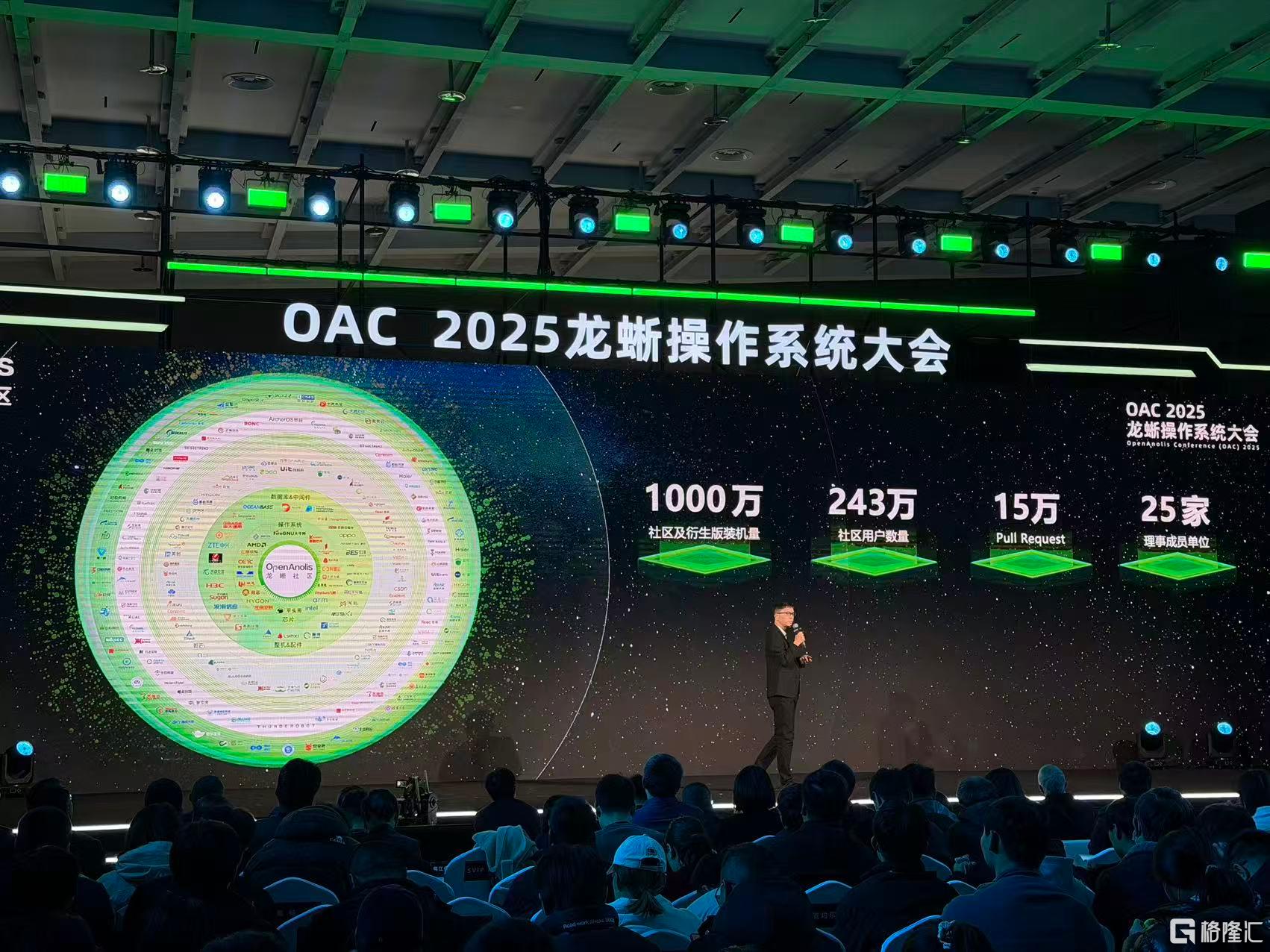
Core Insights - The article discusses the transformative impact of AI on traditional computing systems, particularly focusing on the evolution of the Anolis OS and the broader domestic software industry in China [2][11] - It highlights the shift from a stable replacement of operating systems to a co-evolution with AI, emphasizing the need for a new definition of operating systems in the AI era [2][11] Group 1: AI's Impact on Operating Systems - AI is reshaping the definition of operating systems from mere resource managers to active "transmission devices" that efficiently organize and schedule heterogeneous resources [5][11] - The new operating systems must support complex applications driven by AI models, requiring advanced memory and tool usage capabilities [4][6] - The demand for managing diverse computing resources, including GPUs and AI chips, presents new technical challenges for operating systems [4][6] Group 2: Domestic Operating Systems' Challenges and Opportunities - Domestic operating systems like Anolis and OpenEuler face a global competitiveness gap compared to top international systems, particularly in unified ecosystem representation [6][7] - However, the inability to rely on a single dominant computing supply has led domestic systems to develop unique experiences in supporting diverse computing environments [7][8] - The complexity of scenarios faced by Chinese enterprises provides domestic operating systems with a natural advantage in handling intricate systems [7][8] Group 3: Advantages of Open Source and Community Collaboration - The deep integration of open source with domestic operating systems enhances their ability to innovate collaboratively among various manufacturers [7][10] - Sustainable commercial investment is crucial for the long-term viability of open source communities, ensuring continuous iteration and development [7][10] - The growth of the Longxin community from 100 to 1000 partners illustrates the strong demand for collaborative solutions across the domestic industry [8][10] Group 4: Competitive and Cooperative Dynamics - The competition among domestic operating systems is characterized by a complex interplay of cooperation and competition, rather than a simple replacement model [8][10] - Multiple communities are necessary to address the diverse needs of the domestic industry, allowing for parallel development without hindering each other [8][10] - The focus should be on creating a "systemic prosperity" rather than a singular dominance, fostering a collaborative ecosystem [10][11] Group 5: Future Directions and Strategic Focus - The path for domestic operating systems involves leveraging open models to drive hardware and OS standards, facilitating a shift away from hardware dependency [10][11] - The ongoing evolution of computing paradigms and the need for high-level cooperation among communities will define the future of domestic operating systems [11][12] - The article concludes that the journey of domestic operating systems is a continuous process of conflict, cooperation, and evolution, positioning them as active participants in the AI-driven transformation [11][12]
围观!预算2100万GPU服务器别样标书
是说芯语· 2025-11-18 07:57
Core Insights - The article highlights a significant shift in the procurement strategy of AI computing power by top universities, moving from traditional hardware specifications to practical performance and compatibility with mainstream AI models like DeepSeek and Qwen [1][10]. Procurement Strategy - The procurement document emphasizes the importance of practical performance and compatibility over mere hardware specifications, marking a departure from the previous focus on "parameter stacking" [3][10]. - The core requirements include a focus on domestic production, ensuring real-world performance, and compatibility with existing CUDA ecosystems [3][10]. Technical Specifications - The procurement specifies the need for 13 GPU servers, with detailed requirements for CPU, memory, storage, and network capabilities, emphasizing the use of domestic components [4][6][8]. - Key performance indicators include the ability to run specific AI models under defined conditions, such as maintaining low latency and high throughput during inference tasks [9][11]. Trends in AI Computing Power Procurement - The article identifies three major trends in GPU server procurement by universities: 1. Transitioning from "indicator comparison" to "model testing" [10]. 2. Moving from a "NVIDIA-dominated ecosystem" to a "domestic compatible ecosystem" [10]. 3. Shifting focus from "hardware procurement" to "computing power system construction" [11]. Market Implications - The procurement strategy indicates a growing demand for domestic AI computing solutions that can effectively replace imported technologies, thereby fostering the development of a robust domestic AI ecosystem [12]. - Companies like Haiguang, Biran, and Muxi are highlighted as potential suppliers capable of meeting these stringent requirements, showcasing advancements in their GPU and CPU technologies [11][12].

【点金互动易】摩尔线程+沐曦,间接持有摩尔线程和沐曦股权,这家公司深度参与钍基熔盐堆从仿真到商业化建设
财联社· 2025-11-17 01:34
Group 1 - The article emphasizes the importance of timely and professional information interpretation in investment decision-making [1] - It highlights the investment value of significant events, industry chain companies, and key policy interpretations [1] - The company mentioned, which indirectly holds shares in Moer Thread and Muxi, is deeply involved in the commercial development of thorium-based molten salt reactors [1] Group 2 - In the storage and automotive electronics sector, new LPDDR4 process products are on the verge of release, while there is a shortage in the eMMC product market [1] - The company’s storage products are primarily utilized in the automotive industry, indicating a strategic focus on this growing market [1] - The DRAM product inventory is reported to be sufficient, suggesting a stable supply chain for the company [1]

行业周报:摩尔线程上市在即、沐曦IPO获批,国产算力进入快车道-20251116
KAIYUAN SECURITIES· 2025-11-16 11:43
Investment Rating - The industry investment rating is "Overweight" (maintained) [1] Core Insights - The domestic electronic sector continues to face pressure, with a notable decline in the electronic industry index by 4.44% this week, driven by factors such as the US tech stock pullback and ongoing storage price increases [3][4] - AI demand remains strong, leading to significant price hikes in storage, with Samsung increasing certain memory chip prices by 60% this month [5] - The North American data center construction is hindered by power shortages, impacting AI infrastructure development [5] Summary by Sections Market Review - The electronic industry index fell by 4.44% this week, with consumer electronics down 5.49% and semiconductors down 3.97% [3] - US tech stocks showed a slight recovery after the government shutdown ended, with notable gains from companies like Nvidia and AMD [3] Industry Updates - Domestic chip production is accelerating, with new product iterations and significant developments in AI-related hardware [4] - The AI glasses market saw a tenfold increase in sales during the Double Eleven shopping festival [4] Investment Recommendations - The report suggests focusing on technology sectors that have seen significant corrections but have potential catalysts, including companies like SMIC, Huahong Semiconductor, and others [6]



《经济学人》2026展望丨中国芯片产业2026年将让世界惊讶
美股IPO· 2025-11-15 23:55
Core Viewpoint - China's chip industry is poised to surprise the world with significant advancements in AI chip design and manufacturing, driven by a determination to innovate despite U.S. export restrictions [1][3]. Chip Design - Despite NVIDIA's dominance in the Chinese AI chip market, local suppliers like Huawei, Cambricon, and Moore Threads have captured 40% of the market demand, with projections indicating a market size of $38 billion by 2025 and $71 billion by 2027, potentially exceeding 50% market share for Chinese suppliers [5]. - Chinese chips, while not matching NVIDIA's top-tier products, have performance levels comparable to simplified versions approved for sale in China. The Chinese government has banned domestic companies from using NVIDIA's AI chips to promote local chip applications [5]. - Chinese chip design often sacrifices energy efficiency for performance, with Huawei's CloudMatrix system consuming over four times the power of NVIDIA's leading products. A promising approach involves tighter integration of chip design and software, with DeepSeek adopting FP8 data format to enhance efficiency [5][6]. Chip Manufacturing - By 2026, domestic production of AI chips in China is expected to increase significantly, primarily driven by SMIC and Huawei, with SMIC planning to double its capacity for chips at 7nm and below [6]. - Chinese foundries, restricted from acquiring advanced ASML equipment, must leverage older ASML machines to maximize potential. Even with lower yield rates, Chinese foundries are projected to produce millions of AI chips, sufficient to meet domestic demand [6]. Challenges and Future Outlook - While Chinese companies may struggle to surpass global leaders in efficiency or performance, they are expected to meet most of their domestic needs by the end of 2026, indicating a significant transformation in the industry [7].