爱旭股份

Search documents
银价高企倒逼产业变革-光伏金属化革命的-铜-时代开启
2026-01-26 15:54
Summary of Key Points from Conference Call Records Industry Overview - The photovoltaic (PV) industry is accelerating the transition from silver to copper in metallization processes, driven by high silver prices. This includes technologies such as silver-coated copper, electroplated copper, and pure copper paste. Silver-coated copper and electroplated copper have already achieved GWh-level production lines, while pure copper paste is still facing technical challenges but is being actively pursued by multiple companies [1][2][3]. Core Insights and Arguments - **Market Projections**: It is expected that 2026 will mark the year of significant adoption of copper in place of silver. If the penetration rates for silver-coated copper and copper paste reach 17.7% and 43% respectively, with battery production at 600 GW and 700 GW, the demand for copper will be approximately 1,000 tons and 2,900 tons for 2026 and 2027 respectively. The processing fee market could reach 1 billion yuan and 2.9 billion yuan in those years [1][3][4]. - **Company Highlights**: - **博迁新材 (Bojian New Materials)** is currently the only company capable of mass-producing nano-grade copper powder for photovoltaic applications. Their PVD method produces high-purity, high-conductivity nano-powders, which could lead to a market size of 20 billion yuan if fully adopted in the PV sector [1][7]. - **Samsung** has signed a nearly 5 billion yuan contract with 博迁新材 for AI server GPU chip capacitors, which positions 博迁新材 as a strong competitor in the AI server market, achieving a 40% market share [1][9]. - **Cost Structure Changes**: The rising price of silver has altered the cost structure of PV components, with silver costs nearing 20% of total component costs. Companies are actively seeking alternatives like copper to reduce metallization costs [1][11][16]. Additional Important Content - **Challenges in the PV Industry**: The main challenges include rising prices of silicon and silver, which have led to increased losses for battery and component manufacturers. The industry urgently needs to reduce costs through metallization innovations [2][11]. - **Technological Developments**: Companies like 聚合 (Juhua) and 帝科股份 (Dike) are making strides in pure copper paste technology and silver seed layer solutions, with expected net profits of 5.2 billion yuan and 4.3 billion yuan respectively for 2026 [3][30][32]. - **Market Dynamics**: The silver market is currently in a tight balance, with supply around 32,000 tons and demand at approximately 36,000 tons. The PV industry's demand for silver is expected to remain high due to the transition to N-type battery technology, which increases silver consumption [12][15]. - **Copper as an Alternative**: Copper is seen as a viable alternative due to its lower cost and stable supply, despite challenges such as oxidation and diffusion at high temperatures. Solutions from other industries, such as PCB and MLCC, may provide insights for overcoming these challenges in the PV sector [18][19]. - **Future Trends**: The global demand for PV is expected to grow rapidly, driven by carbon neutrality policies and energy crises. The industry must seek alternative materials or optimize processes to maintain sustainable development and control costs [12][16]. This summary encapsulates the critical insights and developments within the photovoltaic industry as discussed in the conference call records, highlighting the shift towards copper in metallization processes and the associated market dynamics.

2025年光伏上市公司业绩持续承压
中国能源报· 2026-01-26 13:28
Core Viewpoint - The photovoltaic industry is currently experiencing a cyclical downturn, with companies facing significant operational pressures, but there are signs of improvement such as narrowing losses and recovering gross margins [3][4][12]. Group 1: Industry Performance - As of the latest disclosures, the photovoltaic sector remains at the bottom of the cycle, with most companies reporting losses, including major players like TCL Zhonghuan, Trina Solar, and LONGi Green Energy, with expected losses ranging from tens to hundreds of billions [3][5]. - The China Photovoltaic Industry Association reported a 16.9% year-on-year decline in revenue for the main industry chain in the first three quarters of 2025, while gross margin improved to 3.64%, reaching 5.61% in Q3 [3][4]. Group 2: Losses and Variability - Despite widespread losses, there is a notable divergence in the extent of losses among companies. For instance, LONGi Green Energy's expected loss of 60 to 65 billion is a significant reduction from the previous year's loss of 85.92 billion [6]. - Some companies, like Daqo New Energy, are also showing signs of resilience with losses narrowing by 52.17% to 63.21% year-on-year [6]. Group 3: Market Dynamics - The industry is facing a severe imbalance between supply and demand, exacerbated by concentrated capacity release, leading to aggressive price competition and declining product prices [8]. - Key raw material costs, such as silicon and silver paste, have risen sharply in the second half of 2025, but this cost increase has not been effectively passed down to downstream products, further squeezing profit margins [8]. Group 4: Strategic Responses - Companies are adopting various strategies to navigate the downturn, focusing on technological innovation, global expansion, and business collaboration [10]. - R&D and innovation are seen as critical for overcoming challenges, with companies like LONGi Green Energy and Trina Solar investing in advanced technologies and exploring new market applications [10]. - The integration of energy storage solutions alongside photovoltaic manufacturing is emerging as a new competitive focus, with companies like JinkoSolar and Trina Solar emphasizing the growth of their storage businesses [10]. Group 5: Future Outlook - Industry leaders believe that the current downturn does not signify a decline but rather a necessary adjustment towards high-quality development in anticipation of future demand surges [12].

东君远行,芯光不灭 知名科创投资人朱旭东病逝
财联社· 2026-01-26 02:34
Core Viewpoint - The article discusses the passing of Zhu Xudong, a significant figure in China's semiconductor investment sector, highlighting his contributions to the industry and the impact of his leadership on various high-tech enterprises [1][5][10]. Group 1: Background and Achievements - Zhu Xudong was a PhD graduate from Tongji University and held various leadership roles, including Chairman of Shanghai Pudong Science and Technology Investment Co., and Chairman of Xian Dao Ji Dian [3][6]. - He played a crucial role in the development of China's semiconductor industry, leading significant investments and acquisitions that contributed to the sector's growth [3][8]. - Under his leadership, Shanghai Semiconductor Investment Management Co. managed over 10 billion yuan in funds, focusing on semiconductor, artificial intelligence, and robotics investments [8][9]. Group 2: Investment Strategies - Zhu Xudong shifted investment strategies to focus on integrated circuits, emphasizing the need for long-term commitment and resilience in the face of industry challenges [7][8]. - He implemented a "three-step" strategy for investments, which involved investing in technology companies, gaining control through listed companies, and integrating these investments [8][9]. - His notable investment cases include the privatization of Lattice Semiconductor for $690 million in 2014, which set a precedent for future cross-border mergers and acquisitions in the semiconductor sector [15][18]. Group 3: Legacy and Impact - Zhu Xudong is remembered as a strategic thinker and a pioneer in the high-tech investment landscape, with colleagues noting his ability to navigate challenges and his commitment to supporting promising enterprises [5][10][12]. - His contributions to the industry have left a lasting impact, with many of the companies he invested in becoming leaders in their respective fields [8][9]. - Zhu's philanthropic efforts included establishing a fund to support young professors at Shanghai Jiao Tong University, reflecting his commitment to nurturing future talent in the industry [12].

痛惜!上海半导体产投创始人朱旭东病逝,曾主导澜起科技、翱捷科技、先进半导体等项目并购投资
是说芯语· 2026-01-26 02:16
Core Viewpoint - The article highlights the significant contributions of Zhu Xudong in the semiconductor investment sector, emphasizing his role in establishing the Shanghai Semiconductor Equipment and Materials Industry Investment Fund and leading strategic transformations in companies within the semiconductor industry [2][3][4]. Group 1: Contributions to Semiconductor Investment - Zhu Xudong was instrumental in the establishment of the Shanghai Semiconductor Equipment and Materials Industry Investment Fund, which aimed to address financing challenges in the semiconductor sector, with a total scale of 100 billion yuan and an initial phase of 50 billion yuan [3]. - The fund has managed over 80 billion yuan and invested in more than 50 projects across the semiconductor value chain, including key companies like Chiplink, Aojie Technology, and Changjing Technology [3]. Group 2: Strategic Transformations - Zhu Xudong recognized the need for innovation and stable capital platforms, leading to the strategic transformation of Wanye Enterprises into the integrated circuit sector, including significant acquisitions such as the 3.98 billion yuan purchase of Kaishitong [4]. - Under his leadership, Wanye Enterprises also engaged in a management buyout (MBO) to enhance market operations, reducing state ownership to 49% [4]. Group 3: International Expansion and Innovation - Zhu Xudong pioneered the privatization of overseas semiconductor companies, notably leading the 6.9 billion USD acquisition of Lattice Semiconductor, which became a landmark event in cross-border mergers in the integrated circuit field [6]. - His investment philosophy focused on dual drivers of functionality and financial returns, prioritizing investments in critical areas like equipment and materials, while fostering a collaborative ecosystem between funds and listed companies [6].



先导智能通过港交所聆讯 为全球第二大新能源智能装备供货商 市场份额为2.9%
Zhi Tong Cai Jing· 2026-01-26 00:35
Core Viewpoint - XianDao Intelligent is a leading smart equipment company providing solutions across various emerging industries, including lithium batteries, photovoltaic cells, and smart logistics, aiming to facilitate the transition to highly automated factories and enhance production efficiency [4][5]. Company Overview - XianDao Intelligent delivers manufacturing equipment and solutions across multiple sectors, including lithium batteries, photovoltaic cells, consumer electronics, smart logistics, hydrogen production, fuel cell production, automotive manufacturing, and laser precision processing [4]. - The company has developed intelligent production solutions that integrate data-driven algorithms and digital twin simulations to support clients in establishing "unmanned factories" and "smart factories" [4]. Market Position - According to Frost & Sullivan, XianDao Intelligent is the second-largest supplier of new energy smart equipment globally, with a market share of 2.9% in 2024 [5]. - In the lithium battery smart equipment sector, XianDao Intelligent holds the largest market share globally at 15.5% and is the largest supplier in China with a market share of 19.0% [5]. Product Offerings - The company provides a comprehensive range of products for lithium battery production, covering various applications such as electric vehicles, energy storage, and consumer electronics, with equipment for all production stages [7]. - In the photovoltaic sector, XianDao Intelligent offers complete line solutions and individual equipment for solar module and cell manufacturing, serving leading companies in the solar industry [8]. Competitive Landscape - The global lithium battery smart equipment market is projected to grow from RMB 49.8 billion in 2024 to RMB 137.2 billion by 2029, with a compound annual growth rate (CAGR) of 22.5% [9]. - The global photovoltaic smart equipment market is expected to decline from RMB 176.9 billion in 2024 to RMB 131.3 billion by 2029, with a CAGR of -5.8% [9]. - The global smart logistics equipment market is anticipated to grow from RMB 133.9 billion in 2024 to RMB 338.1 billion by 2029, with a CAGR of 20.3% [9]. Financial Performance - XianDao Intelligent's revenue for the fiscal years 2022, 2023, and the first nine months of 2024 were approximately RMB 13.84 billion, RMB 16.48 billion, and RMB 11.71 billion, respectively [10]. - The net profit for the same periods was approximately RMB 2.32 billion, RMB 1.77 billion, and RMB 0.27 billion [10].

白银涨破100美元关口!光伏企业如何“渡劫”?
Zhong Guo Xin Wen Wang· 2026-01-26 00:19
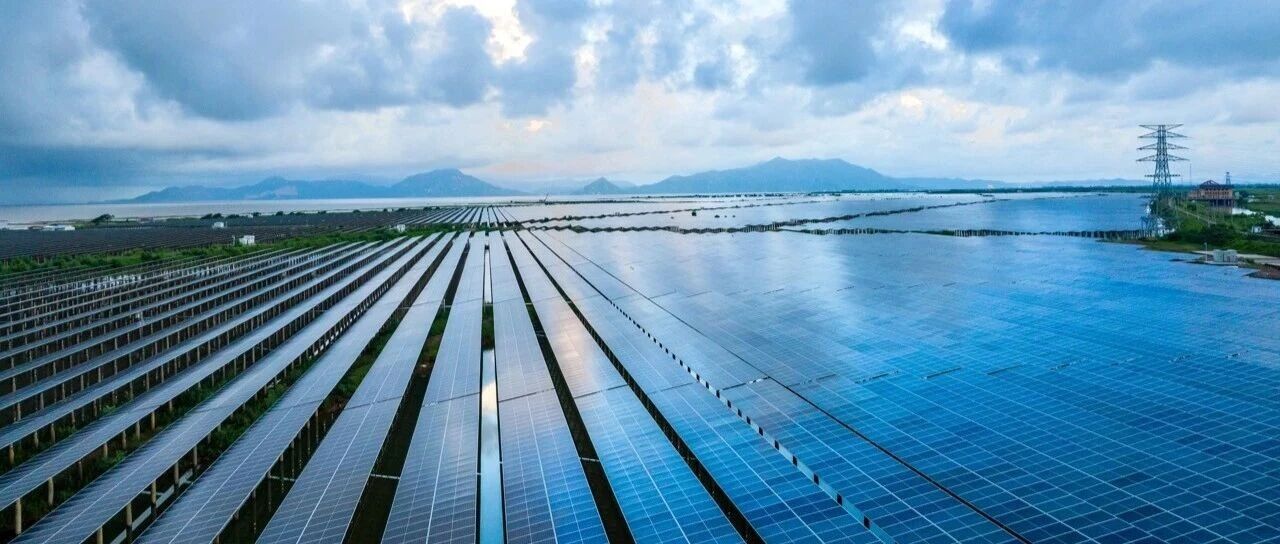
近日,晶科能源、通威股份、隆基绿能等多家光伏头部企业纷纷发布2025年业绩预告,晶科能源预计 2025年归母净利润亏损59亿元至69亿元,通威股份预计亏损90亿元至100亿元,隆基绿能预计归属于上 市公司股东的净亏损为60亿元到65亿元。 在谈到预亏的原因时,多家公司均提到了白银价格上涨对业绩的影响。隆基绿能在公告中指出,四季度 银浆、硅料成本大幅上涨,显著推升了硅片、电池及组件产品成本。通威股份在谈到亏损原因时也提 到"白银等部分核心原材料价格持续上涨"。 夏日进一步解释称,"一方面,尽管受到'反内卷'等行业约束,但光伏制造端供应能力仍在持续扩张;另 一方面,下游需求趋向萎缩态势,国内市场需求持续减弱,海外市场的采购需求也有所回落。未来,受 到地缘政治等因素影响,下游国内外需求大概率进一步减弱。" 成本转移面临下游制约,少用甚至不用银成为企业降低成本的重要路径。隆基绿能披露,目前高效BC 二代产品已实现规模化量产,贱金属替代银浆技术完成中试。爱旭股份也在推动铜电镀无银金属化方案 并已应用于珠海10GW(吉瓦)级量产线。通威、晶科、晶澳等企业,也在推动"银包铜"技术。 以白银作为原材料的银浆是制造光伏电池的重 ...
福达合金业绩翻倍增长:数据中心+储能全速前进,“太空光伏”注入预期值得期待
Quan Jing Wang· 2026-01-25 13:42
Core Viewpoint - Fuda Alloy Materials Co., Ltd. is experiencing significant growth driven by the expansion of global power infrastructure investments and the booming demand in emerging sectors such as data centers and energy storage, leading to a projected net profit increase of 119.14% to 219.95% in 2025 compared to the previous year [1] Group 1: Business Transformation - The company is transitioning from traditional low-voltage electrical applications to new scenarios involving data centers and energy storage, capturing the growth opportunities presented by the AI-driven surge in power demand [2] - Fuda Alloy has expanded its business with North American data centers, achieving a revenue increase of 507% in the first half of 2025, driven by its robust technology and supply chain resilience [2] - The company’s high-performance electrical contact materials have successfully penetrated the supply chains of major tech giants like Microsoft and Meta, enhancing its market position [2] Group 2: Energy Storage Developments - Fuda Alloy's products, such as silver-tin oxide and silver-copper contact materials, are being supplied to major clients like Sungrow and Huawei for energy storage inverters, showcasing their high performance and reliability [3] - The company is actively engaged in R&D projects aimed at developing new materials for energy storage applications, which are critical for enhancing product value and profitability [3] Group 3: Anticipated Asset Injection - There is market anticipation regarding the potential asset injection from Zhejiang Guangda Electronics, which is under the same controlling shareholder as Fuda Alloy, following a previous attempt to acquire a 51% stake [4] - Guangda Electronics is a leading player in the photovoltaic silver paste sector, with a strong technical position and a diverse product portfolio, which could significantly enhance Fuda Alloy's performance upon integration [5] Group 4: Space Photovoltaics Opportunity - The photovoltaic industry is poised for growth in the space sector, with significant developments anticipated in space solar power, driven by increasing energy demands from satellite deployments [7] - Fuda Alloy and Guangda Electronics are well-positioned to capitalize on this emerging market, leveraging Guangda's advanced technology in low-temperature silver paste and conductive materials [7] - The synergy between Fuda Alloy's electrical contact materials for data centers and Guangda's future space photovoltaic silver paste business aligns with the broader AI-driven demand for computational power [8] Group 5: Future Outlook - Fuda Alloy is at a pivotal moment, balancing steady growth in traditional business with the potential for explosive growth in new sectors, particularly in data centers and energy storage [9] - The anticipated asset injection from Guangda Electronics could further enhance Fuda Alloy's capabilities in the burgeoning space photovoltaic market, marking a transformation into a key player in the AI era [9]

连年巨亏 光伏业如何逃出“血海”
经济观察报· 2026-01-25 10:54
Core Viewpoint - The photovoltaic industry is undergoing a brutal survival elimination race and a deep restructuring of the industrial pattern, with the next phase expected to be redefined after this intense reshuffle [2][4]. Group 1: Industry Performance and Losses - In 2025, major companies in the photovoltaic sector are expected to report significant losses, with JinkoSolar forecasting a net loss of 5.9 billion to 6.9 billion yuan, Trina Solar predicting a loss of 6.5 billion to 7.5 billion yuan, and Tongwei expecting a loss of 9 billion to 10 billion yuan [2][6]. - The total expected losses from leading companies amount to hundreds of billions, indicating that the photovoltaic industry is still mired in a loss-making situation [2][5]. - The industry has shifted from a phase of rapid expansion to a deep adjustment period, with companies generally operating at a loss to maintain operations, severely squeezing overall profitability [7][12]. Group 2: Causes of the Crisis - The root cause of the current industry crisis is attributed to aggressive expansion in the past, leading to severe structural oversupply and intense price competition [3][6]. - The prices of key materials such as silicon have plummeted from 300,000 yuan per ton in 2022 to around 55,000 yuan per ton, while silver prices have nearly doubled in recent months, further exacerbating the challenges faced by companies [4][10]. Group 3: Strategic Responses and Industry Restructuring - In response to the crisis, leading companies are turning to mergers and acquisitions to strengthen competitiveness or are extending into related fields such as energy storage and hydrogen energy to seek strategic breakthroughs [4][12]. - TCL Zhonghuan announced plans to invest in a new energy technology company to enhance its integrated strategy and expand battery and module production capacity [12]. - The industry is experiencing a "淘汰赛" (elimination race), with smaller companies likely to exit the market or seek mergers as the competitive landscape narrows [13][14]. Group 4: Future Outlook and Recovery Potential - Companies like Tongwei have seen some operational profitability in the latter half of 2025, but overall losses are expected to continue due to declining sales prices and rising raw material costs [9][10]. - The recovery of profitability is contingent on the overall price recovery across the supply chain and the expansion of photovoltaic application scenarios, which could provide significant growth opportunities [9][10]. - The photovoltaic industry is witnessing a recent increase in component prices, with some manufacturers raising prices by 0.04 to 0.15 yuan per watt, indicating a potential shift in market dynamics [18][19].






电力设备与新能源行业1月第3周周报:马斯克宣布扩大光伏制造产能,碳酸锂价格延续强势-20260125
Bank of China Securities· 2026-01-25 09:25
Investment Rating - The report maintains an "Outperform" rating for the power equipment and new energy industry [1]. Core Insights - The global sales of new energy vehicles are expected to continue rapid growth through 2026, driving demand for batteries and materials [1]. - Lithium carbonate prices have been on the rise, recently surpassing 180,000 RMB per ton, which will impact the pricing of cathode materials and batteries [1]. - The solid-state battery technology is entering a critical phase of engineering validation, with a focus on related materials and equipment companies [1]. - In the photovoltaic sector, the report emphasizes a "de-involution" strategy, with Tesla's CEO announcing plans to enhance solar manufacturing capacity, which is expected to boost the output of core equipment and materials in China [1]. - The demand for wind power is projected to remain strong, with government initiatives supporting significant new projects [1]. - The energy storage sector is expected to maintain high demand, with a recommendation to focus on energy cell and large-scale integration manufacturers [1]. - Hydrogen energy is anticipated to see increased demand, particularly in green hydrogen applications, with a focus on equipment and operational segments [1]. - The report highlights the long-term potential of nuclear fusion as a future energy direction, suggesting attention to core suppliers in this area [1]. Summary by Sections Market Overview - The power equipment and new energy sector saw a 3.57% increase this week, outperforming the Shanghai Composite Index [2][10]. - The wind power sector experienced the highest growth at 7.78%, followed by power generation equipment at 6.54% and nuclear power at 4.16% [2][13]. New Energy Vehicles - The retail market for narrow passenger vehicles in January is estimated at around 1.8 million units, with new energy vehicles accounting for approximately 800,000 units and a penetration rate of 44.4% [2]. Battery Materials - Lithium carbonate prices have surged, with battery-grade prices reaching approximately 171,500 RMB per ton, reflecting a 12.46% increase [14]. - The report notes that the price of NCM523 and NCM811 cathode materials has also risen, indicating a trend of increasing costs across battery materials [14]. Photovoltaic Sector - The report indicates that silicon material prices are under pressure due to weak demand, with current prices for dense materials around 50-60 RMB per kg [15]. - The price of battery cells has increased, with N-type battery cells reaching approximately 0.42 RMB per watt [17]. Energy Storage - The price of lithium concentrate has risen significantly, with CIF prices reaching approximately 1,955 USD per ton, marking a 28.2% increase [24]. - Energy cell prices for square lithium iron phosphate have also increased, with a range of 0.395-0.465 RMB per watt-hour [25]. Hydrogen Energy - The report highlights the potential for green hydrogen demand to grow, particularly in applications related to coal chemical processes and green methanol [1]. Nuclear Fusion - The report suggests that nuclear fusion could catalyze future energy developments, recommending attention to core suppliers in this field [1].
太空光伏为产业链带来新机遇,宁德时代推出天行II方案
GOLDEN SUN SECURITIES· 2026-01-25 08:33
Investment Rating - The report maintains an "Overweight" rating for the power equipment sector [6] Core Insights - The report highlights new opportunities in the photovoltaic industry driven by space solar power initiatives and rising prices of battery components [1][17] - It emphasizes the importance of supply-side reforms and technological advancements in creating long-term growth opportunities within the industry [1][19] - The report identifies key companies to watch in various segments, including supply chain price increases, new technology growth, and perovskite solar cell developments [1][19][21] Summary by Sections Photovoltaics - The price of multi-crystalline silicon n-type raw materials remains stable, with an average transaction price of 59,200 RMB per ton [17] - N-type battery cell prices have increased to 0.42 RMB per watt, with a price range of 0.40-0.43 RMB per watt [17] - The report notes that rising silver prices have led to increased component costs, with distributed component prices now ranging from 0.70 to 0.80 RMB per watt [17] - SpaceX and Tesla plan to achieve a combined solar manufacturing capacity of 200GW annually in the U.S. within three years, with 40GW dedicated to space solar power [1][18] - Key companies to focus on include Tongwei Co., GCL-Poly, LONGi Green Energy, JA Solar, and Trina Solar for supply-side reform opportunities [1][19] Wind Power & Grid - The Netherlands will launch a 1GW offshore wind project tender in September 2026, with a subsidy budget of approximately 32.45 billion RMB [19][20] - Turkey plans to initiate its first offshore wind tender by the end of 2026, aiming for 5GW of installed capacity by 2035 [19][20] - Southern Power Grid has set a fixed asset investment of 180 billion RMB for 2026, focusing on new power system construction and strategic emerging industries [20] - Companies to watch include Goldwind, Yunda, Mingyang Smart Energy, and Sany Heavy Energy in the wind turbine sector [20] Hydrogen Energy - A ceremony for the operation of 300 hydrogen fuel heavy trucks was recently held, showcasing advancements in hydrogen energy technology [3][21] - The trucks are equipped with a 130kW fuel cell system and can achieve a range of over 600 kilometers [3][21] - Key companies in this sector include Shuangliang Energy, Huadian Heavy Industry, and Shenghui Technology [3][21] Energy Storage - The report forecasts that new energy storage installations in China will reach 58.6GW/175.3GWh in 2025, a year-on-year increase of 38%/60% [4][22] - The average bid price for 2-hour energy storage systems is projected to be 0.55 RMB/Wh in 2025, down 16.9% from 2024 [4][22] - Companies to focus on include Sungrow Power, Canadian Solar, and Kehua Data for large-scale energy storage opportunities [4][22] New Energy Vehicles - CATL launched the "Tianxing II" series solutions for light commercial vehicles, including the industry's first intelligent battery management application [5][27] - The solutions cater to various scenarios, including high-frequency urban distribution and extreme temperature conditions [5][27] - Key companies in the battery sector include CATL, Penghui Energy, and Guoxuan High-Tech [5][29]