迈瑞医疗

Search documents
强强联合!美敦力与迈瑞深化战略合作
思宇MedTech· 2026-01-29 03:29
Core Insights - Medtronic and Mindray are expanding their strategic partnership in patient monitoring technology from traditional hospital settings to Ambulatory Surgery Centers (ASCs) in the U.S. This aims to simplify access and integration of advanced monitoring technologies, enhance clinical efficiency, and improve patient care quality while reducing operational costs [2][10] - The collaboration reflects a shift in the healthcare monitoring technology landscape, adapting to the changing service delivery models in the medical field [2][10] Technical Foundation: Core Technologies and Applications in Perioperative Monitoring - Patient monitoring devices are essential infrastructure in modern healthcare, used for real-time tracking of physiological parameters such as blood oxygen saturation, carbon dioxide levels, and brain activity, particularly in surgery, critical care, and anesthesia management [5][6] - These technologies are crucial for assessing patient condition changes and supporting clinical decision-making [6] Strategic Extension: Adapting to ASC Scenarios - Previously, Medtronic and Mindray collaborated primarily in hospital settings focused on critical care and perioperative environments. The new partnership extends to ASCs, indicating a shift from high-intensity, complex scenarios to low-invasiveness, operational efficiency, and cost-sensitive outpatient settings [7][10] - ASCs emphasize ease of use, procurement convenience, and efficient support rather than solely complex monitoring capabilities, prompting suppliers to rethink market positioning and product offerings [7][10] Industry Impact and Collaborative Value - This partnership not only involves product integration but may also reshape equipment selection, clinical operations, and service support standards in the ASC sector [12] - For medical device manufacturers, this collaboration signifies that large technology suppliers are entering more niche markets through joint solutions. For ASC providers, integrated monitoring product offerings can lower procurement and training costs while enhancing clinical efficiency [12]




ETF日报|A股三大指数涨跌不一,大湾区ETF(512970)回跌0.58%
Xin Lang Cai Jing· 2026-01-29 01:55
Market Performance - As of January 28, 2026, the three major A-share indices showed mixed results, with the Shanghai Composite Index rising by 0.27% to 4151.24 points, the Shenzhen Component Index increasing by 0.09% to 14342.89 points, and the ChiNext Index declining by 0.57% to 3323.56 points [1] - The total trading volume of the two markets reached 2.97 trillion yuan, with northbound capital remaining balanced in terms of buying and selling [1] Industry Highlights - Precious metals performed exceptionally well, surging by 10.09%, followed by jewelry and oil service engineering, which rose by 8.05% and 7.46% respectively [1] ETF Insights - The Greater Bay Area ETF (512970) closed down by 0.58% at 1.55 yuan, with a trading volume of 57.92 million yuan and a turnover rate of 0.66% [1] - Over the past month, the Greater Bay Area ETF has accumulated a rise of 1.71% [2] - The index closely tracks the CSI Guangdong-Hong Kong-Macau Greater Bay Area Development Theme Index, which reflects the overall performance of listed companies benefiting from the Greater Bay Area development [2] Index Composition - As of December 31, 2025, the top ten weighted stocks in the CSI Guangdong-Hong Kong-Macau Greater Bay Area Development Theme Index accounted for 46.96% of the index, including companies like China Ping An, Luxshare Precision, and BYD [3]
公募顶流四季报揭秘:科技冲锋与价值深蹲下的业绩分野
2 1 Shi Ji Jing Ji Bao Dao· 2026-01-28 12:31
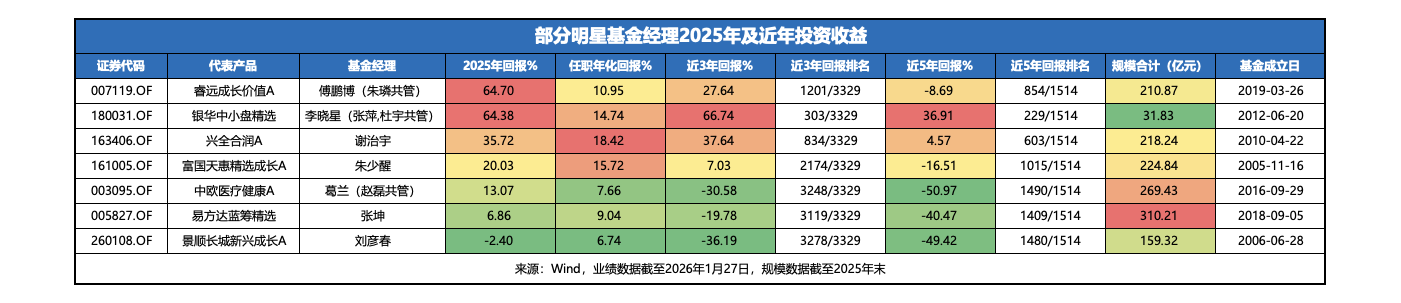
Core Viewpoint - The market experienced increased volatility in Q4 2025, with A-shares and Hong Kong stocks showing mixed performance, while sectors like AI computing and semiconductors thrived, contrasting with weaker performances in real estate and pharmaceuticals [1] Group 1: Market Performance - The Shanghai Composite Index rose by 2.22% in Q4 2025, while the Hang Seng Index fell by 4.56% [1] - The technology growth sector, particularly AI computing and semiconductors, showed significant gains, while industries such as real estate and pharmaceuticals faced challenges [1] Group 2: Fund Manager Performance - Star fund managers like Fu Pengbo and Li Xiaoxing achieved over 60% returns in 2025, focusing on AI computing and semiconductors [2] - Balanced allocation funds, such as Zhu Shaoxing's, demonstrated stability with a 20% annual return, benefiting from diversified investments across various sectors [3][14] Group 3: Investment Strategies - Fu Pengbo's fund increased its allocation to data center cooling and computing-related companies, with a top ten stock concentration of 70.38% [5] - Li Xiaoxing emphasized AI hardware innovation and semiconductor investments, with a focus on domestic advancements in the semiconductor industry [6] Group 4: Traditional Value Investments - Fund managers like Zhang Kun and Liu Yanhun maintained positions in traditional sectors like consumer goods and pharmaceuticals, despite facing net value pressures [8][12] - Liu Yanhun's fund experienced a 5.85% decline in Q4, reflecting the challenges faced by traditional value sectors [12] Group 5: Policy and Market Outlook - Fund managers noted the impact of "anti-involution" policies on corporate fundamentals, suggesting a shift towards supply-side optimization [17] - Despite market rebounds, equity assets are still viewed as attractive, with a focus on high-quality listed companies as scarce income-generating assets [18]





深圳南山跨越万亿关 创新驱动展新篇
Sou Hu Cai Jing· 2026-01-28 10:29
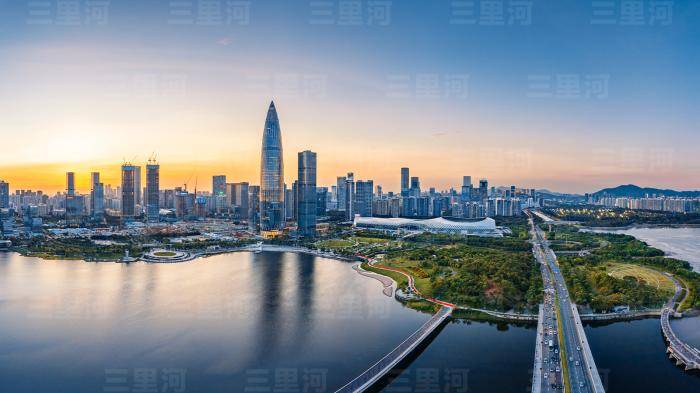
Core Insights - Shenzhen's Nanshan District is set to become the first district in China to surpass a GDP of 1 trillion yuan by 2025, marking a significant milestone in the country's urban economic landscape [1][3] - The economic density of Nanshan has reached an impressive 54 billion yuan per square kilometer, with a per capita GDP exceeding 540,000 yuan, showcasing its economic output comparable to that of a nation [3][4] Economic Growth - Nanshan's GDP has grown from 652.7 billion yuan at the end of the 13th Five-Year Plan to over 1 trillion yuan in just five years, achieving an average annual growth rate of over 5.8% [3][4] - The district has successfully crossed multiple GDP thresholds (700 billion, 800 billion, 900 billion, and 1 trillion yuan) during this period, demonstrating resilience and vitality in its economic structure [3][4] Innovation and Industry - Nanshan has transformed from low-end manufacturing to high-end intelligent manufacturing, becoming a key center for technological innovation and industrial manufacturing in the Guangdong-Hong Kong-Macau Greater Bay Area [4] - The district is home to 218 publicly listed companies and over 5,500 national high-tech enterprises, with significant contributions from industry leaders like Huawei, Tencent, DJI, and others [4] Innovation Ecosystem - By 2025, Nanshan is expected to have over 860 invention patents per 10,000 people, approximately 22.9 times the national average, indicating a robust innovation output [4] - The district has established a comprehensive innovation ecosystem that includes basic research, technological breakthroughs, industrialization of results, financial support for technology, and talent development [4] Strategic Importance - Nanshan benefits from its strategic location adjacent to Hong Kong, the policy advantages of being in a special economic zone, and a long-standing industrial foundation, making it a unique case in regional economic development [5] - The district's development model emphasizes innovation-driven growth, industrial upgrading, reform and opening-up, and an optimized business environment, which can serve as a reference for other regions [5]


上海浦东VS深圳南山,谁是中国第一强区
Sou Hu Cai Jing· 2026-01-28 10:29
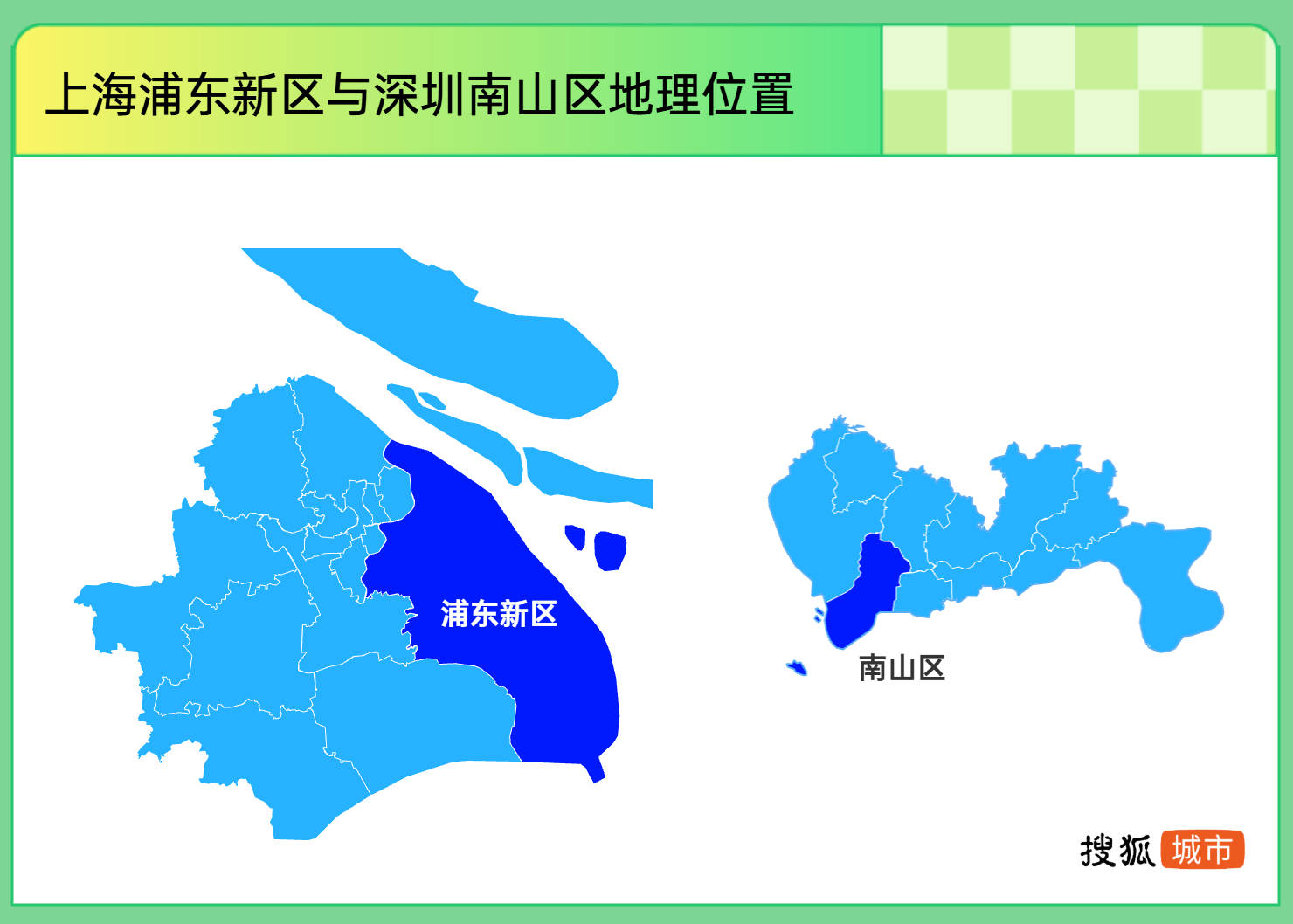
Group 1 - Shenzhen Nanshan District officially announced that its GDP will exceed 1 trillion yuan by 2025, becoming the third "trillion-yuan district" in the country and the first trillion-yuan district under a city jurisdiction [1] - Shanghai Pudong New Area disclosed that its GDP is expected to reach approximately 1.88 trillion yuan by 2025, positioning it as the first "2 trillion-yuan economic region" in the country [1][3] - In terms of economic scale, Pudong has a significant advantage with a resident population of 5.7858 million and a GDP of 1.88 trillion yuan, nearly double that of Nanshan [1][3] Group 2 - Nanshan District has a higher development efficiency, with a per capita GDP exceeding 500,000 yuan, which is 1.7 times that of Pudong, and a land GDP of over 5 billion yuan, which is 3.5 times that of Pudong [1][3] - Pudong New Area is a core functional area for Shanghai's international economy, finance, trade, shipping, and technological innovation, housing numerous high-end platforms [6][8] - Nanshan District is recognized for its high density of listed companies, with 218 listed companies and 6,037 high-tech enterprises, making it the highest in the country [10] Group 3 - Beijing's Chaoyang District is projected to be the next to reach a GDP of 1 trillion yuan, with an expected GDP of 966.85 billion yuan in 2025, just 350 billion yuan short of the target [11][13] - Chaoyang's economy is heavily reliant on the service sector, with over 95% of its GDP coming from tertiary industries, significantly higher than that of Pudong and Nanshan [13]
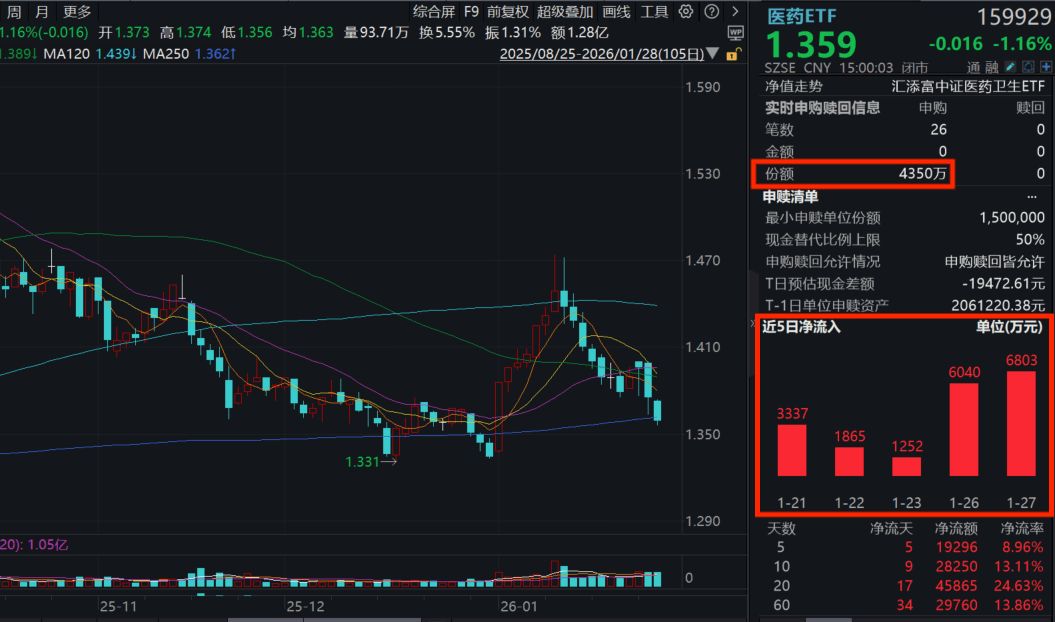
医药连续回调,药明康德一度翻红!医药ETF(159929)收跌超1%,资金逆势加仓近6000万元!机构:药明系业绩强劲,CXO板块后续发展动能充足!
Sou Hu Cai Jing· 2026-01-28 09:08
Core Viewpoint - The pharmaceutical sector is experiencing fluctuations, with the medical ETF (159929) showing a decline of 1.16% amidst a net inflow of nearly 60 million yuan, indicating ongoing investment interest despite market corrections [1][3]. Group 1: Market Performance - The Shanghai Composite Index has seen a rise, while the pharmaceutical sector is undergoing a pullback, with the medical ETF (159929) recording a trading volume exceeding 120 million yuan [1]. - Major stocks within the medical ETF have mostly declined, with notable drops including over 3% for United Imaging Healthcare and over 2% for Mindray Medical [3]. Group 2: Company Performance and Projections - CITIC Securities expresses optimism for leading pharmaceutical e-commerce platforms, highlighting their resource advantages and AI capabilities, which are expected to enhance revenue through AI medical applications [5]. - According to Everbright Securities, WuXi AppTec's companies have reported strong earnings forecasts, with WuXi AppTec expected to achieve revenue of 45.456 billion yuan in 2025, reflecting a year-on-year growth of 15.84% [5]. - WuXi Biologics anticipates adding 209 comprehensive projects in 2025, with two-thirds being dual-targeted antibodies and ADC drugs, indicating robust growth potential [5]. Group 3: Investment Trends and Strategies - Everbright Securities suggests that future investments in the pharmaceutical sector should focus on clinical value, emphasizing the importance of addressing clinical needs amid evolving domestic and international policies [6]. - CITIC Jinshi identifies four main investment themes for 2026: innovation, international expansion, marginal changes, and consolidation within the pharmaceutical industry [7]. - The innovation theme is particularly highlighted, with expectations for improved global liquidity and supportive national policies for innovative assets, including advanced technologies in pharmaceuticals and medical devices [8].
2026年将制修订82项医疗器械行业标准,医疗创新ETF(516820)持续获资金关注
Xin Lang Cai Jing· 2026-01-28 05:29
数据显示,截至2025年12月31日,中证医药及医疗器械创新指数(931484)前十大权重股分别为药明康 德、恒瑞医药、迈瑞医疗、爱尔眼科、片仔癀、新和成、华东医药、康龙化成、艾力斯、甘李药业,前 十大权重股合计占比63.75%。 截至2026年1月28日 13:15,中证医药及医疗器械创新指数(931484)成分股方面涨跌互现,新和成领涨 1.70%,兴齐眼药上涨1.39%,艾力斯上涨0.67%;英科医疗领跌。医疗创新ETF(516820)最新报价0.36 元。 东海证券指出,商务部等九部门联合印发的关于促进药品零售行业高质量发展的意见,从转型、支付、 供应、整合四大维度构建行业发展框架,推动行业从"单一卖药"向"健康服务"转型。政策明确鼓励兼并 重组与横向并购,叠加医保定点待遇与基层医疗机构平权、医保个人账户家庭共济等举措,将加速单体 药店出清,行业集中度有望加速提升;优化外配处方审核,打通线下药店处方堵点,允许企业自建药学 服务平台,加速处方外流和市场扩容;鼓励零售药店扩大经营范围,开展健康咨询、中医药文化、养老 照护、便民零售等,打造综合健康服务体。建议关注资金实力雄厚、并购整合能力强,合规运营与精细 ...
资金持续布局,医疗创新ETF(516820)连续8天获资金净流入
Sou Hu Cai Jing· 2026-01-28 03:41
创新药概念局部活跃,消息面上,新修订的《中华人民共和国药品管理法实施条例》将于5月15日起施 行。国家药监局表示,这是条例实施二十多年来,首次全面修订。支持以临床价值为导向研究和创制新 药,提升仿制药质量和疗效。 中信证券研报称,2026年1月,阿里健康、京东健康两家头部医药电商平台相继正式发布面向医生的AI 医疗应用产品。看好头部医药电商平台凭借上游药企、下游C端用户资源,以及其母公司具备的AI基模 能力与产品能力,在ToD AI医疗应用领域脱颖而出,并率先跑通商业模式,实现AI医疗对主业的增收 赋能。 医疗创新ETF紧密跟踪中证医药及医疗器械创新指数,中证医药及医疗器械创新指数从医药卫生行业的 上市公司中,选取30只盈利能力较好且具备一定成长性和研发创新能力的上市公司证券作为指数样本, 以反映兼具盈利性与成长性的医药及医疗器械上市公司证券的整体表现。 截至2026年1月28日 11:09,中证医药及医疗器械创新指数(931484)成分股方面涨跌互现,兴齐眼药领涨 1.42%,新和成上涨1.27%,片仔癀上涨0.27%;英科医疗领跌2.47%,华兰生物下跌2.22%,恩华药业下 跌2.22%。医疗创新ETF ...
创新药行业再迎政策支持,医疗创新ETF(516820)连续8天净流入
Xin Lang Cai Jing· 2026-01-28 02:25
截至2026年1月28日 10:09,中证医药及医疗器械创新指数(931484)下跌0.45%。成分股方面涨跌互现, 片仔癀领涨1.57%,兴齐眼药上涨1.00%,新和成上涨0.80%;华兰生物领跌。医疗创新ETF(516820)最 新报价0.36元。 风险提示:基金有风险,投资需谨慎。基金管理人承诺以诚实信用、勤勉尽责的原则管理和运用基金资 产,但不保证本基金一定盈利,也不保证最低收益。基金管理人提醒投资人基金投资的"买者自负"原 则,在做出投资决策后,基金运营状况与基金净值变化引致的投资风险,由投资人自行负担。基金的过 往业绩及其净值高低并不预示其未来业绩表现,基金管理人管理的其他基金的业绩不构成对本基金业绩 表现的保证。投资人购买基金,既可能按其持有份额分享基金投资所产生的收益,也可能承担基金投资 所带来的损失。投资人应当认真阅读《基金合同》《招募说明书》等基金法律文件,全面认识本基金的 风险收益特征和产品特性,并根据自身的投资目的、投资期限、投资经验、资产状况等判断基金是否和 投资人的风险承受能力相适应,理性判断市场,谨慎做出投资决策。本材料中相关信息来源于基金管理 人认为可靠的公开资料,相关观点、评 ...
“富”可敌市,中国第一个万亿GDP地市辖区,诞生
虎嗅APP· 2026-01-28 00:23
Core Viewpoint - Shenzhen's Nanshan District is set to become China's first district with a GDP exceeding 1 trillion yuan by 2025, marking a significant milestone in the economic landscape of non-direct-controlled cities [5][8]. Group 1: Economic Milestone - Nanshan's GDP surpassing 1 trillion yuan signifies a breakthrough for non-direct-controlled urban areas, positioning it alongside major economic districts like Shanghai's Pudong and Beijing's Haidian [6][12]. - The district's rapid economic growth is highlighted by its average annual compound growth rate of nearly 15% over the past 35 years, transitioning from a marginal area to a leading economic zone [17][15]. Group 2: Economic Density and Competitiveness - Nanshan boasts the highest economic density in the country, with a per capita GDP exceeding 540,000 yuan and a land GDP of over 5.4 billion yuan per square kilometer [19]. - The district is recognized for its innovation capabilities, with a significant number of patents and R&D investment intensity nearly three times the national average [21][23]. Group 3: Industrial Structure and Growth Drivers - Nanshan's economy is characterized by a balanced integration of high-end manufacturing and modern service industries, with nearly 80% of its GDP coming from the tertiary sector [30][31]. - The district is home to numerous leading enterprises, including Tencent and DJI, and has a high concentration of high-tech companies, with over 6,000 high-tech firms and 218 listed companies [34][35]. Group 4: Future Development and Strategic Initiatives - Nanshan aims to enhance its global competitiveness through a strategic framework focusing on domestic and international circulation, as well as marine economy development [44]. - The district is positioned to lead in emerging industries such as artificial intelligence and low-altitude economy, with significant investments and initiatives planned for the next decade [36][39].