美的集团

Search documents
超预期股票精选策略跟踪周报-20251214
Xiangcai Securities· 2025-12-14 12:10
证券研究报告 2025 年 12 月 14 日 湘财证券研究所 金融工程研究 跟踪周报 超预期股票精选策略跟踪周报 相关研究: 1. 《湘财证券-金融工程-超预期股 票精选策略》 2024.08.19 2. 《湘财证券-金融工程-超预期股 票 精 选 策 略 改 进 》 2024.11.19 分析师:别璐莎 证书编号:S0500524010001 Tel:(021) 50293663 Email:bls06644 @xcsc.com 地址:上海市浦东新区银城路88号 中国人寿金融中心10楼 核心要点: ❑ 主动型量化基金市场表现 本周(2025.12.08-2025.12.12),根据 Wind,主动型量化基金中位数收益为 -0.10%,沪深 300 指数收益为-0.08%,Wind 全 A 指数收益为 0.26%;本年, 主动型量化基金中位数收益为 26.41%,沪深 300 指数收益为 16.42%,Wind 全 A 指数收益为 24.80%。 本周,根据 Wind,收益排名靠前的主动型量化基金的收益率在 6%至 11% 之间,基金的重仓行业集中在电子行业;收益排名靠后的主动型量化基金 的收益率在-5%至 ...
内需主导,国补政策延续
Xiangcai Securities· 2025-12-14 11:46
证券研究报告 2025 年 12 月 14 日 湘财证券研究所 行业研究 家电行业周报 行业评级:增持(维持) 近十二个月行业表现 % 1 个月 3 个月 12 个月 相对收益 -1.4% 8.1% 9.7% 绝对收益 -1.5% 17.7% 17.1% 内需主导,国补政策延续 相关研究: | 1.《估值洼地,龙头业绩确定性 | | | --- | --- | | 强》 | 2025.12.01 | | 2.《铜登凌云处,上游觅新机》 | | | 2025.12.07 | | 注:相对收益与沪深 300 相比 分析师:李育文 证书编号:S0500523060001 Tel:021-50295328 Email:liyw3@xcsc.com 根据 ifind,本周家用电器行业涨跌幅为-1.98%,在申万同行业中排名第 25 位,同期沪深 300 指数涨跌幅-0.08%。子板块中,其他黑色家电(+1.29%)、 家电零部件Ⅲ(-0.54%)、冰洗(-1.84%)三个子行业在本行业涨幅靠前。 ❑ 估值低位,国补延续打开上行空间 估值历史低位,具备上涨空间。根据 ifind,以 PE-ttm 口径(整体法,剔除 负值 ...
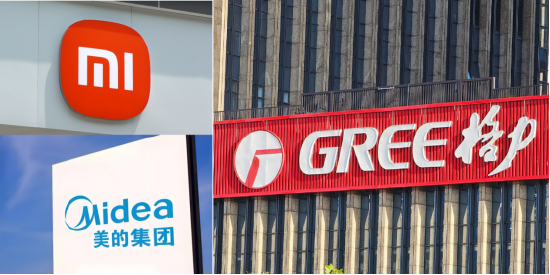
小米美的等抱团「铝代铜」,格力「缺席」:没把握,不跟!
Xin Lang Cai Jing· 2025-12-14 09:43
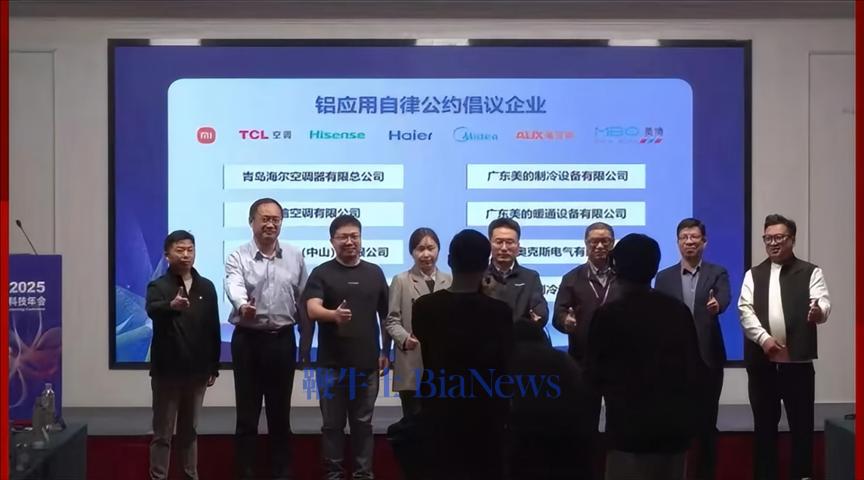
Core Viewpoint - Major companies in the air conditioning industry, including Haier, Midea, Xiaomi, and TCL, have committed to adhering to the "Self-Discipline Convention for Aluminum Reinforcement Application Research Working Group" to promote the "aluminum instead of copper" technology and enhance industry competitiveness. However, Gree Electric Appliances has notably not joined this initiative, expressing skepticism about the reliability of aluminum as a substitute for copper [1][3][5]. Group 1: Industry Developments - The air conditioning sector is focusing on the innovation and standardization of "aluminum instead of copper" technology, with new group standards being published for aluminum tube heat exchangers [3]. - Gree Electric Appliances has participated in the revision of national standards related to "aluminum instead of copper" but has not engaged in the self-discipline convention, highlighting its cautious stance on the technology [3][5]. - The ongoing debate over "aluminum instead of copper" has persisted for over a decade, often reignited by fluctuations in copper prices, which can account for 20% of the cost of an air conditioner [6]. Group 2: Technical and Economic Considerations - The cost of aluminum is significantly lower than that of copper, with aluminum costing about one-tenth of copper, which could lead to substantial price reductions for air conditioners if the transition is successful [6]. - Despite the potential cost benefits, copper's superior thermal conductivity, corrosion resistance, and long-term reliability present challenges for manufacturers considering the switch to aluminum [6]. - Experts suggest that the technology for a complete transition to aluminum has existed for two years, but progress has been slow due to public perception and varying technical capabilities among manufacturers [6][7]. Group 3: Strategic Implications - The push for "aluminum instead of copper" aligns with national strategies to reduce reliance on imported copper, as over 95% of copper used in China is imported, raising concerns about supply chain stability [7]. - The Ministry of Industry and Information Technology has proposed expanding aluminum consumption in various applications, including air conditioning, as part of a broader initiative for high-quality development in the aluminum industry [7]. Group 4: Gree's Position - Gree Electric Appliances maintains a conservative approach towards adopting "aluminum instead of copper," emphasizing the importance of product quality and consumer trust [9]. - The company has stated that it will not pursue aluminum until it can guarantee the quality and reliability of its products, reflecting a commitment to maintaining its brand reputation [9][10]. - With rising international copper prices exceeding $10,000 per ton, Gree's reluctance to adopt aluminum may lead to challenges in maintaining competitive pricing and managing supply chain risks [10].


小米美的等抱团“铝代铜”,格力“缺席”:没把握,不跟!
新浪财经· 2025-12-14 09:25
Core Viewpoint - Major air conditioning companies, including Haier, Midea, Xiaomi, and TCL, have committed to adhering to the "Self-Discipline Convention for Aluminum Reinforcement Application Research Working Group" to promote the "aluminum replacing copper" technology, while Gree Electric Appliances has notably opted out of this commitment [2][4][6]. Group 1: Industry Developments - The "aluminum replacing copper" initiative has gained traction among leading air conditioning manufacturers, with a collective push for industry standards and guidelines [4][9]. - Gree Electric Appliances has consistently stated that it does not have plans to adopt aluminum in its products until it can ensure 100% reliability, highlighting its cautious approach to product quality [6][11]. - The air conditioning industry is experiencing a significant shift towards aluminum, driven by the high costs of copper, which can account for 20% of the cost of a single air conditioner, while aluminum costs only about one-tenth of copper [8][9]. Group 2: Strategic Implications - The push for "aluminum replacing copper" is not only a technological evolution but also a strategic necessity for the domestic appliance industry, as over 95% of copper is imported, making the industry vulnerable to supply chain disruptions [9]. - The Ministry of Industry and Information Technology has proposed expanding aluminum consumption in various applications, including air conditioning, as part of a broader strategy for high-quality aluminum industry development from 2025 to 2027 [9]. - Gree's reluctance to adopt aluminum may lead to higher product costs, especially as international copper prices continue to rise, potentially pushing Gree's products out of competitive price ranges [11].





小米美的等抱团“铝代铜”,格力“缺席”:没把握,不跟!
Xin Lang Cai Jing· 2025-12-14 09:13
Core Viewpoint - Major air conditioning companies including Haier, Midea, Xiaomi, and TCL have committed to adhering to the "Self-Discipline Convention" for aluminum reinforcement in air conditioning, while Gree Electric has notably not joined this initiative, indicating a divergence in industry strategy regarding the "aluminum replacing copper" technology [2][3][5]. Group 1: Industry Commitment and Standards - The "Self-Discipline Convention" aims to enhance the industry's overall image and competitiveness, promoting the transition to aluminum in air conditioning systems [2]. - A significant focus at the 2025 China Home Appliance Technology Annual Conference was the innovation and standardization of aluminum applications in air conditioning, with several group standards being developed [3]. - Gree Electric's absence from the convention highlights its cautious stance on the aluminum replacement technology, contrasting with the collective commitment of other leading manufacturers [3][5]. Group 2: Gree Electric's Position - Gree Electric has reiterated its lack of plans to adopt aluminum in air conditioning until it can ensure 100% reliability, emphasizing the advantages of copper in terms of thermal conductivity and long-term reliability [5][6]. - The company has consistently expressed its concerns regarding the quality and performance of aluminum as a substitute for copper, with leadership stating that while aluminum can replace copper, it cannot guarantee the same quality [5][8]. Group 3: Technical and Economic Implications - The cost of copper can account for approximately 20% of the total cost of an air conditioner, while aluminum costs only about one-tenth of copper, suggesting significant potential for cost reduction if aluminum is successfully implemented [6]. - Despite the potential cost benefits, the physical properties of copper present challenges for manufacturers considering the switch to aluminum, leading to varied approaches among different brands [6]. - The push for aluminum replacement is also aligned with national strategies to reduce reliance on imported copper, enhancing supply chain stability [7]. Group 4: Market Dynamics and Future Considerations - The ongoing debate over aluminum versus copper has been fueled by rising copper prices, which have recently surpassed $10,000 per ton, prompting manufacturers to reconsider their material choices [8]. - Gree Electric's conservative approach may protect its brand reputation and customer trust, but it risks falling behind in a market increasingly driven by cost efficiency and material innovation [8].
中央经济工作会议:内需占主导,关注后续消费政策:家用电器
Huafu Securities· 2025-12-14 07:09
Investment Rating - The industry rating is "Outperform the Market" [7] Core Insights - The Central Economic Work Conference emphasizes domestic demand as a priority, with a focus on subsequent consumption policies to stimulate both goods and service consumption [3][15] - There is a strong emphasis on innovation, particularly in the artificial intelligence sector, highlighting investment opportunities within the AI industry chain [4][14] - The report indicates that the government will continue to implement policies to boost consumption, including potential extensions of subsidies and consumption vouchers [15] Summary by Sections Central Economic Work Conference - The conference outlined eight key points, prioritizing domestic demand and the construction of a robust domestic market, alongside innovation, reform, and external openness [3][13] - Specific actions include implementing consumption enhancement initiatives and urban-rural income increase plans, as well as optimizing the supply of quality goods and services [3][15] Market Data - The home appliance sector experienced a decline of 1.9% this week, with specific segments like white goods and small appliances seeing drops of 2.5% and 2.2% respectively [5][16] - Raw material prices showed slight fluctuations, with LME copper increasing by 0.82% and LME aluminum decreasing by 0.03% [5][16] Industry Tracking - The report tracks various segments within the home appliance industry, noting significant sales data and price trends for key brands and products [29][30][34][35] - For instance, brands like Haier and Midea have reported varying sales performance across different product categories, with some experiencing substantial declines [29][30][34] Upstream Tracking - The report includes tracking of raw material prices and shipping trends, which are crucial for understanding cost pressures within the industry [37][40] - It highlights the importance of monitoring these factors as they can significantly impact the profitability of home appliance manufacturers [37][40]
《2025/12/8-2025/12/12》家电周报:小米首座大家电工厂正式竣工投产,商务部回应墨西哥提税提案-20251213
Shenwan Hongyuan Securities· 2025-12-13 14:39
Investment Rating - The report maintains a positive outlook on the home appliance sector, indicating a "Buy" rating for key companies within the industry [3][5]. Core Insights - The home appliance sector index underperformed compared to the CSI 300 index, with a decline of 2.0% while the CSI 300 index fell by only 0.1% [5][6]. - Key developments include the completion of Xiaomi's first major home appliance factory, which marks a significant milestone in its strategy to expand into the home appliance market [15]. - The report highlights a notable increase in sales for cleaning appliances, with robotic vacuum sales rising by 40.65% year-on-year in November 2025 [37]. Summary by Sections Industry Performance - The home appliance sector index decreased by 2.0%, underperforming the CSI 300 index which saw a minor decline of 0.1% [5][6]. - Key companies such as Aopu Technology led gains with a 1.6% increase, while companies like Oujiahua and Wanhe Electric experienced declines of 7.1% and 6.0% respectively [9][6]. Industry Dynamics - The Ministry of Commerce is monitoring the impact of Mexico's proposed tax increases on non-free trade partners, which could adversely affect trade relations, including with China [13][14]. - Xiaomi's new smart home appliance factory in Wuhan has officially commenced production, contributing to its broader ecosystem strategy [15]. Data Observations - In November 2025, sales of cleaning appliances showed significant growth, with robotic vacuum sales reaching 535,500 units, a 40.65% increase year-on-year, and sales revenue of 714 million yuan, up 5.83% [37][38]. - The average price of robotic vacuums decreased by 24.75% to 1,334.20 yuan per unit [43]. - Hair dryer sales remained stable with a slight decline in volume but an increase in revenue, indicating a shift in consumer spending patterns [44]. Macro Economic Environment - As of December 12, 2025, the USD to RMB exchange rate has decreased by 1.73% since the beginning of the year, impacting import costs for the home appliance sector [52][53]. - The report notes a decline in residential property sales, which may influence consumer spending on home appliances [54].
腾讯副总裁李强:加码AI,过去一年大模型相关投入超千亿元
Nan Fang Du Shi Bao· 2025-12-13 14:05
Core Insights - Tencent has established partnerships with over 40 embodied intelligence companies nationwide, with more than 20 of them located in Guangdong Province [2] - Tencent's investment in embodied intelligence dates back to 2018 with the establishment of the Robotics X Lab, focusing on core robotic technology development [4] - The company has launched the Tairos modular embodied intelligence software platform, aimed at enhancing the software capabilities of robots [4] Investment and Development - Tencent has invested over 400 billion yuan in research and development since 2018, holding more than 15,000 AI invention patents, ranking first globally [5] - The company has made strategic capital expenditures exceeding 100 billion yuan in the past year, focusing on large model training, computing infrastructure, and data center construction [5] - Tencent's self-developed mixed Yuan model has released over 30 new models in the past year, achieving top rankings in various AI competitions [5] Industry Impact - The mixed Yuan model has been implemented across more than 30 industries, including finance, healthcare, education, and government, significantly enhancing efficiency in over 900 internal products and applications [6] - Tencent's AI initiatives have contributed to a continuous double-digit growth in its advertising business over the past 12 quarters [6] - The Guangdong-Hong Kong-Macao Greater Bay Area is highlighted as a fertile ground for AI technology implementation due to its robust manufacturing base and strong innovation capabilities [5][6]

累计金额超1375亿!1468家A股上市公司今年以来实施回购
Ge Long Hui· 2025-12-13 13:44
Group 1 - Since 2025, a total of 1,468 A-share listed companies have implemented share buybacks, with a cumulative buyback amount of 137.5 billion yuan [1] - Among these companies, 14 have repurchased more than 1 billion yuan, including Midea Group, Kweichow Moutai, CATL, XCMG, Muyuan Foods, COSCO Shipping Holdings, WuXi AppTec, Hikvision, BOE Technology Group, SF Holding, Sanan Optoelectronics, Sany Heavy Industry, Guotai Junan, and Haier Smart Home [1] - Midea Group leads in buyback amount, with a total of 11.545 billion yuan [1]




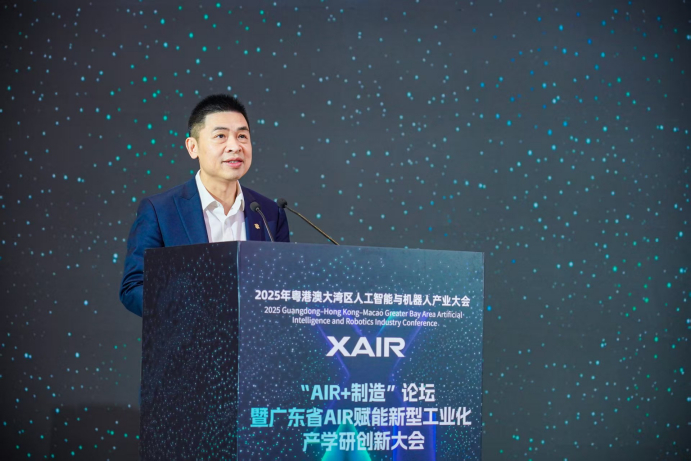
经济大省挑大梁|智聚湾区 广东联通加速布局“AI+制造”
2 1 Shi Ji Jing Ji Bao Dao· 2025-12-13 12:13
Core Insights - The Guangdong-Hong Kong-Macao Greater Bay Area is positioned as a key area for promoting new industrialization and intelligent manufacturing, driven by its strong industrial foundation and rich application scenarios [1][2] Group 1: Industry Development - The 2025 Guangdong-Hong Kong-Macao Greater Bay Area Artificial Intelligence and Robotics Industry Conference (XAIR Conference) was held in Guangzhou from December 12 to 14, focusing on the applications and integration of AI and robotics in manufacturing and transportation [1] - In the first ten months of this year, the core AI industry scale in Guangdong exceeded 230 billion yuan, with over 40% of industrial robots and over 80% of service robots produced in the province, maintaining the highest industrial robot output in the country for five consecutive years [1] Group 2: Corporate Initiatives - Guangdong Unicom has established the China Unicom (Guangdong) New Industrialization Research Institute, forming a team of over 1,000 experts to support digital transformation and innovation in the industrial sector [2][4] - The company is focusing on three key areas in the "AI + Manufacturing" sector: building a robust "cloud-network-computing-intelligence-security" foundation, enhancing platform applications, and accelerating AI empowerment in new industrialization [4] Group 3: Alliance Formation - The "Guangdong Province Artificial Intelligence + Manufacturing Industry Alliance" was officially established, aiming to tackle technical challenges, promote efficient sharing of production factors, and enhance the transition of technology from labs to large-scale production [5] - The alliance, initiated by Guangdong Unicom and leading manufacturing enterprises, has formed a team of over 1,000 professionals and established over 20,000 5G industry-specific networks, managing over 12.5 million devices and creating 800 5G factories [5]