李宁

Search documents
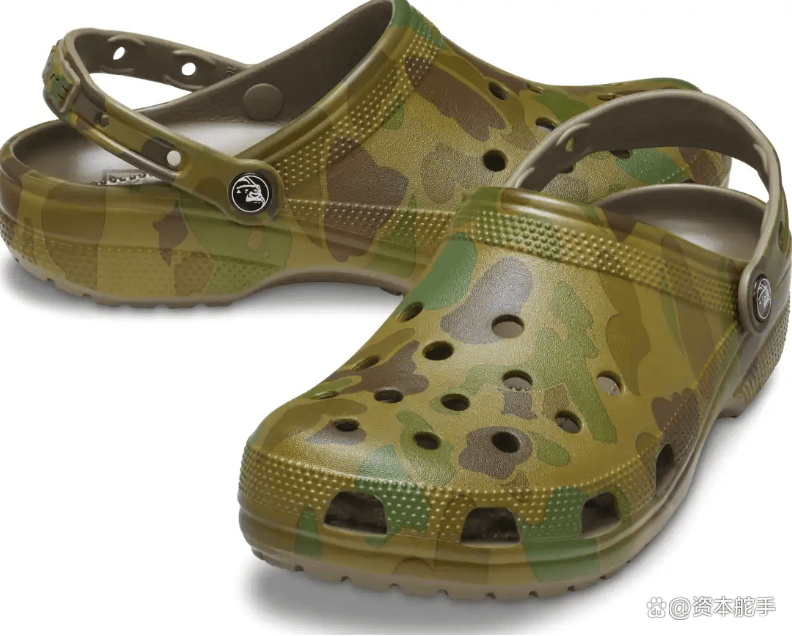
洞洞鞋一夜崩盘!CEO说美国人不买了,30%股价蒸发背后的真相
Sou Hu Cai Jing· 2025-08-10 01:23
Core Viewpoint - Crocs, once a leading brand in the footwear industry, is now facing unprecedented challenges, with a significant drop in revenue growth and a sharp decline in stock price, indicating a loss of consumer interest and market position [1][3]. Company Summary - In Q1 2025, Crocs' revenue growth plummeted from 14.6% to 2.4%, with negative growth reported in the North American market [1]. - The company's stock price fell nearly 30% in a single day, resulting in a market capitalization loss of over $1.7 billion [1]. - Crocs achieved sales of 120 million pairs and a profit of $793 million in 2023, showcasing its previous success [1]. - The company’s acquisition of the brand HEYDUDE for $2.5 billion in 2022 has led to a significant write-down, with a net loss of $490 million in Q2, exceeding half of its annual profit [7]. - Crocs is struggling with high inventory levels and declining consumer interest, particularly in physical retail channels [3][9]. Industry Summary - The footwear industry is experiencing a downturn, with 87% of shoe company executives expecting continued economic deterioration and 85% anticipating weak consumer demand [9]. - Sales in U.S. shoe stores fell by 8% year-on-year in January 2025, marking the 21st decline in 23 months [9]. - Competitors like Anta and Daphne are adapting by relocating production to reduce costs and leveraging social media for sales, while Crocs is caught in a dilemma between maintaining brand image and reducing prices [9]. - The economic pressures are affecting all segments, with low-income consumers cutting back on spending even in fast food [3].

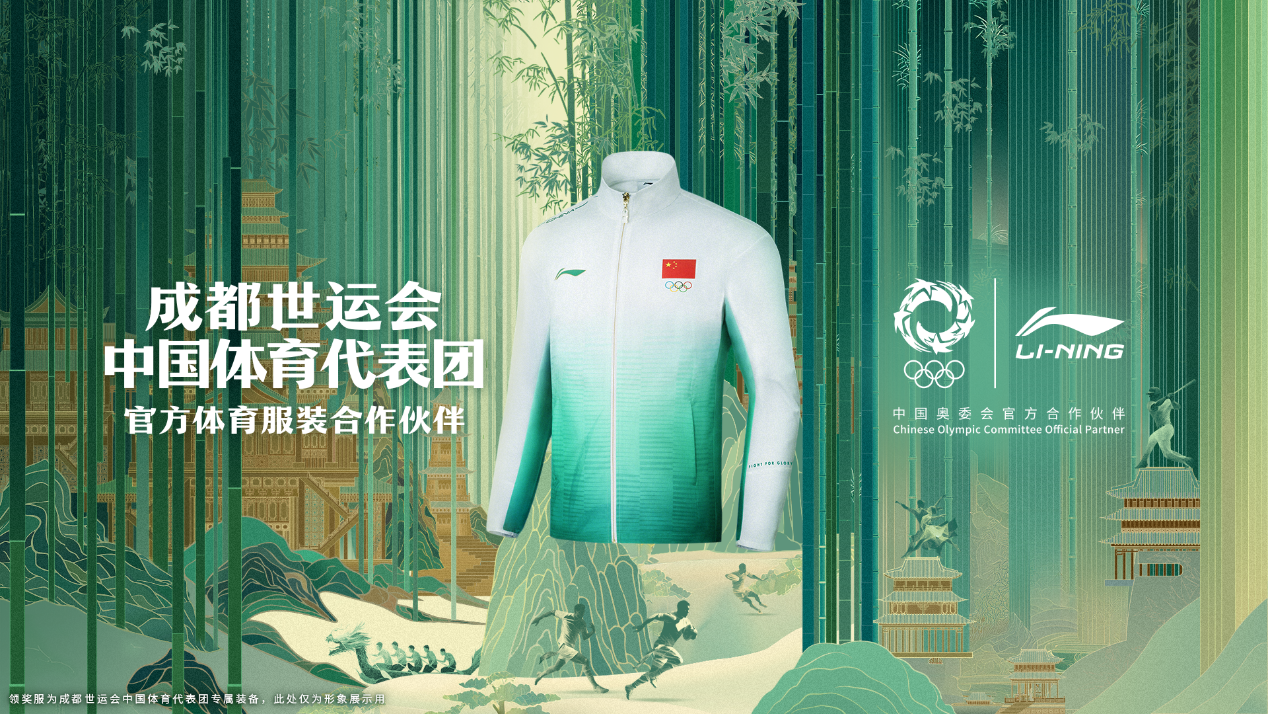
李宁发布2025世运会中国体育代表团领奖装备
Yang Guang Wang· 2025-08-09 04:53
Group 1 - The 12th World Games opened in Chengdu on August 7, showcasing non-Olympic sports and promoting cultural exchange [1] - Li Ning, as the official sportswear partner for the Chinese delegation, designed award outfits that reflect Sichuan culture and environmental technology [1][4] - The theme of this year's World Games is "Unlimited Sports, Diverse Atmosphere," featuring 34 major events including martial arts, rock climbing, and tug-of-war [1] Group 2 - The award outfits incorporate eco-friendly technology, using recycled yarn made from plastic bottles, with each outfit promoting the recycling of over 13 plastic bottles [4] - Li Ning has reused over 190 million plastic bottles in its clothing lines through the use of recycled yarn [4] - The fabric of the award outfits features LNDRY technology for quick-drying and cooling properties, enhancing comfort for athletes [4] Group 3 - Li Ning introduced a creative 3D short film featuring a "Sports Panda" to promote sports participation on China's 17th National Fitness Day [5] - The film showcases various sports while integrating local cultural elements, and Li Ning stores in Chengdu are hosting interactive events for consumers [5] - The award outfits serve as a vibrant representation of Chinese traditional culture and professional environmental technology, embodying the spirit of Chinese athletes [6]
安利股份:公司功能鞋材品类的客户结构覆盖广泛
Zheng Quan Ri Bao Wang· 2025-08-08 11:41
Core Viewpoint - Company Amway Co., Ltd. (300218) has a broad customer base in the functional footwear materials category, collaborating with both international and domestic sports brands, indicating strong market positioning and growth potential [1] Group 1: International Partnerships - Company maintains good cooperative relationships with renowned international sports brands such as Nike, Adidas, Puma, and Asics [1] - Company is the only qualified supplier of polyurethane synthetic leather and composite materials for Nike in mainland China, having upgraded to a strategic partner since January 2025, leading to increased product development opportunities [1] - Company became a qualified supplier for Adidas in May 2024, with existing orders in production and sales [1] Group 2: Domestic Market Engagement - Company has achieved comprehensive coverage with major domestic sports brands including Anta, Li Ning, Xtep, and 361°, enhancing its market presence [1] - Company is actively increasing its share in brand procurement through intensified development and interaction efforts [1] Group 3: Future Growth Strategy - Company is focused on building momentum for high growth in 2025, indicating a strategic approach to future expansion [1] - Company is steadily advancing collaborations with Puma and Asics, and has recently obtained certification from US NB suppliers, while also reaching out to brands like UA, HOKA, and ANTA to cultivate new growth drivers [1]

今日视点:险资频频举牌港股公司有四大逻辑
Zheng Quan Ri Bao· 2025-08-08 07:24
Core Viewpoint - The frequent equity stakes taken by insurance capital in Hong Kong-listed companies reflect a strategic shift towards value investment in a low-interest-rate environment, driven by the search for high dividend yields and quality assets [1][2][5]. Group 1: Investment Trends - Insurance capital has made a total of 17 equity stakes in the first half of the year, with 14 of these in Hong Kong-listed companies [1]. - 63% of insurance institutions plan to increase their investment in Hong Kong stocks by 2025 [1]. Group 2: Valuation and Market Conditions - The low valuation of Hong Kong stocks is a significant factor for insurance capital's interest, with the Hang Seng Index's P/E ratio at 10.7, compared to 13.1 for the CSI 300 [2]. - The AH premium index, despite a 9.13% decline, remains at 129.94, indicating that H-shares are undervalued compared to A-shares [2]. Group 3: Quality of Hong Kong Companies - The influx of high-quality mainland companies to the Hong Kong market, along with the active performance of technology and consumer sectors, enhances the attractiveness of Hong Kong stocks [3]. - Companies like Tencent, Meituan, and Xiaomi are leading in innovation, while brands like Anta and Li Ning are capitalizing on global market opportunities [3]. Group 4: Diversification and Risk Management - The internationalization of the Hong Kong market allows for better asset price diversification, reducing overall portfolio volatility for insurance capital [4]. - Hong Kong's mature financial infrastructure supports the global asset allocation strategies of insurance companies [4]. Group 5: Financial Reporting Standards - The implementation of IFRS 9 and IFRS 17 accounting standards necessitates a strategic approach to asset classification, with high-dividend stocks being favored to stabilize earnings [5]. - By classifying high-dividend Hong Kong stocks under FVOCI, insurance companies can smooth out performance fluctuations while securing stable income [5].





安利股份(300218) - 2025年8月7日投资者关系活动记录表
2025-08-08 00:28
Group 1: Customer Structure and Revenue Contribution - The company has a broad customer structure in functional shoe materials, including international brands like Nike, Adidas, and Puma, contributing significantly to revenue [1][2]. - As of January 2025, the company became a strategic partner of Nike, enhancing product development and project collaboration [1]. - The company has also become a qualified supplier for Adidas, with certain orders already in production [2]. Group 2: Automotive Interior Products - The company has established a strong competitive advantage in automotive interior products, serving major brands like BYD, Toyota, and Changan [3]. - There is potential for "low base, high growth" in this category, indicating confidence in future revenue increases [3]. Group 3: Consumer Electronics - The company has a good first-mover advantage in consumer electronics, with applications in keyboards, mobile phones, and laptops [4]. - Future growth in this category is expected from expanding new customer bases and developing new application scenarios [4]. Group 4: Sofa and Home Furnishings - The sofa and home furnishings segment has faced challenges due to a downturn in the real estate market and fluctuating tariffs, impacting demand [5]. - Despite these challenges, the company is expanding its customer base and optimizing its structure, collaborating positively with brands like Zhi Huashi and Kuka [5]. Group 5: International Operations and Cost Structure - Amway Vietnam has faced losses due to high initial costs and certification delays, but production volume has improved since Q3 2024 [6]. - The production cost in Vietnam is comparable to domestic costs, despite lower labor costs, due to the need for imported raw materials [6]. Group 6: Employee Stock Ownership Plans - The company has initiated a fourth employee stock ownership plan, increasing participation by nearly 100 individuals compared to the previous plan [7]. - This initiative aims to align employee interests with long-term company growth, fostering a shared risk and reward mechanism [7]. Group 7: Future Expansion Plans - The remaining production lines in Vietnam are ready for operation, and the company is focusing on technological upgrades and capacity optimization [8]. - The company plans to prioritize high-tech, high-margin products while gradually reducing the share of low-margin businesses in its overall structure [8].
纺织服装8月投资策略:7月越南纺织品出口增长提速,布局中报绩优个股
Guoxin Securities· 2025-08-07 15:19
Market Overview - The textile and apparel sector has outperformed the broader market since August, with the textile manufacturing segment showing better performance than branded apparel [15][21] - In July, the textile manufacturing sector increased by 4.5%, while branded apparel rose by 3.2% [15][21] - Key companies leading the gains include 361 Degrees (29.9%), Crystal International (26.8%), Tianhong International (25.0%), and Bailong Oriental (15.9%) [15] Brand Apparel Insights - Retail sales of clothing in June grew by 1.9% year-on-year, but the growth rate slowed down due to the Dragon Boat Festival holiday and the pre-promotion of the 618 shopping festival [2] - E-commerce sales saw a decline across various categories in June, with sportswear down by 17%, outdoor apparel by 2%, and home textiles by 24% [2] - Notable brand performances include Lululemon (48%) and Decathlon (76%) showing strong growth in their respective categories [2] Textile Manufacturing Insights - Vietnam's textile exports accelerated in July, with a month-on-month growth rate of 16.7%, while footwear exports turned positive at 4.5% [3] - China's textile exports showed no significant improvement in June, with textiles down by 1.6% and footwear down by 4.0% year-on-year [3] - The impact of currency fluctuations and tariffs on revenue has been noted, with companies like Ru Hong experiencing stable performance despite tariff pressures [3] Mid-Year Earnings Forecast - Bailong Oriental expects a net profit growth of 50.21% to 75.97% year-on-year for the first half of 2025, driven by strong order volumes and improved capacity utilization [4] - Tianhong International anticipates a net profit increase of approximately 60% for the same period, benefiting from improved sales and financial structure [4] Policy Impact on Consumer Demand - The introduction of a child-rearing subsidy policy is expected to boost demand in the baby and children's market, with a yearly subsidy of 3600 yuan for eligible children under three starting from January 2025 [4][7] - Companies like Sturdy Medical, which offers high-quality cotton products, are likely to benefit from this policy [7] Investment Recommendations - Focus on brands with growth potential and limited tariff impacts, such as Anta Sports, Xtep International, and 361 Degrees, which are expected to perform well in the current market environment [7][8] - In textile manufacturing, companies with low exposure to U.S. tariffs and high profit margins, such as Shenzhou International and Huayi Group, are recommended for investment [8]


贝莱德在李宁的持股比例于8月4日从5.06%降至4.61%

Mei Ri Jing Ji Xin Wen· 2025-08-07 09:19
每经AI快讯,8月7日,香港交易所信息显示,贝莱德在李宁的持股比例于8月4日从5.06%降至4.61%。 ...
成立一年7亿融资,匹克球不再只是“养老项目”
3 6 Ke· 2025-08-07 00:28
Core Insights - The capital interest in pickleball continues to grow, highlighted by the recent $15 million funding round completed by the USA Pickleball Association (UPA), which has achieved annual revenues of $70 million [1][2][5] - UPA aims to capitalize on the rising popularity of pickleball by establishing a dual model of franchise and tour-based professional sports IP [1][5] Group 1: Funding and Financial Performance - UPA has raised over $100 million in funding within a year, including a $10 million bridge loan and a $75 million equity financing last year [1][5] - The recent $15 million funding comes from existing shareholders, including key investors from the initial funding round [5] - The funds will be allocated to enhance player performance structures, improve broadcasting experiences, and accelerate international expansion [5][6] Group 2: Market Dynamics and Growth - Pickleball has seen a significant increase in participation, growing from approximately 4.82 million players in 2021 to over 48.3 million in 2023, marking a 311% increase over three years [10] - The global pickleball market is projected to grow from $2.2 billion in 2024 to $9.1 billion by 2034 [10] - The merger of PPA Tour and MLP into UPA reflects the need for a unified brand to meet the demands of the expanding pickleball market [2][9] Group 3: Development in China - In China, the development of pickleball is characterized by the establishment of the China Pickleball Tour (CPC) aimed at promoting the sport at various levels [17][19] - The CPC is focused on building a structured event system and enhancing the quality of pickleball events, while also promoting grassroots participation [19][21] - The Chinese market is still in the early stages of development compared to the U.S., emphasizing the importance of long-term cultivation and promotion of the sport [15][23]
智通港股沽空统计|8月7日
Zhi Tong Cai Jing· 2025-08-07 00:24
Core Insights - The top short-selling ratios for the last trading day were recorded at 100% for New World Development Co. Ltd. (80016), Anta Sports Products Ltd. (82020), and Li Ning Company Limited (82331) [1][2] - The highest short-selling amounts were for Tencent Holdings Ltd. (00700) at 2.284 billion, Alibaba Group Holding Ltd. (09988) at 1.855 billion, and Meituan (03690) at 1.779 billion [1][2] - The highest deviation values were for New World Development Co. Ltd. (80016) at 47.23%, Hang Seng Bank Ltd. (80011) at 43.60%, and China International Marine Containers (Group) Co., Ltd. (02039) at 39.58% [1][3] Short-Selling Ratios - New World Development Co. Ltd. (80016) had a short-selling amount of 170,500 with a 100% short-selling ratio and a deviation of 47.23% [2] - Anta Sports Products Ltd. (82020) reported a short-selling amount of 131,200 with a 100% short-selling ratio and a deviation of 32.87% [2] - Li Ning Company Limited (82331) had a short-selling amount of 91,300 with a 100% short-selling ratio and a deviation of 32.41% [2] Short-Selling Amounts - Tencent Holdings Ltd. (00700) led with a short-selling amount of 2.284 billion and a short-selling ratio of 19.43% [2] - Alibaba Group Holding Ltd. (09988) followed with a short-selling amount of 1.855 billion and a short-selling ratio of 21.48% [2] - Meituan (03690) had a short-selling amount of 1.779 billion with a short-selling ratio of 32.58% [2] Deviation Values - New World Development Co. Ltd. (80016) had a deviation value of 47.23% with a short-selling amount of 170,500 and a short-selling ratio of 100% [3] - Hang Seng Bank Ltd. (80011) reported a deviation value of 43.60% with a short-selling amount of 612,100 and a short-selling ratio of 89.42% [3] - China International Marine Containers (Group) Co., Ltd. (02039) had a deviation value of 39.58% with a short-selling amount of 16.5625 million and a short-selling ratio of 55.28% [3]


安踏李宁特步,集体撞上“中年墙”
创业邦· 2025-08-07 00:09
Core Viewpoint - The Chinese sports brand industry is experiencing a collective slowdown, marked by the end of the "national sports dividend" period and increasing competition from domestic brands, leading to a "mid-life crisis" for leading companies like Anta, Li Ning, and Xtep [6][10][8]. Group 1: Market Trends - The penetration rate of sports shoes in China has reached around 50%, comparable to the US and Japan, with the domestic sports shoe and apparel market expected to grow only 5.9% to 410 billion yuan in 2024, marking the end of the previous decade's double-digit growth [6][10]. - From 2021 to 2023, domestic brands gained market share due to the Xinjiang cotton incident, with Nike and Adidas dropping to 16.2% and 8.7% market shares respectively, while Anta, Fila, and other brands collectively surpassed 20% [6][10]. - The concentration ratio (CR5) of domestic sports brands has reached 53%, making China the market with the highest concentration globally, indicating a shift from offensive strategies to defensive ones for leading brands [6][10]. Group 2: Challenges for Leading Brands - Anta and Li Ning are facing a "mid-life crisis," with both brands reporting low single-digit growth for several consecutive quarters, and Anta's overall growth relying on other outdoor brands [10][11]. - Anta's recent half-year report highlighted increased discount rates and return rates, indicating heightened price sensitivity among consumers, leading to a downward revision of growth targets [10][11]. - The industry is projected to face a turning point in 2024, with Euromonitor forecasting a mere 5.8% growth over the next five years, suggesting that leading brands will not only face industry slowdowns but also market share declines [10][11]. Group 3: Brand Strategy and Operations - The article discusses the challenges of brand operation in the sports apparel sector, noting that while domestic brands have excelled in manufacturing, they have struggled to translate this into global brand recognition [13][14]. - Domestic brands have relied on celebrity endorsements and major events for brand promotion, but this strategy is losing effectiveness as market dynamics change [14][15]. - The article emphasizes the importance of learning from smaller niche brands that have successfully captured market segments by understanding consumer needs better than established brands [18][19]. Group 4: Consumer Engagement and Distribution - The shift from a supply-demand imbalance to oversupply has led to increased competition, with brands needing to adapt to a more consumer-centric approach [21][22]. - Direct-to-consumer (DTC) strategies are highlighted as essential for improving efficiency and understanding consumer preferences, with successful examples from both domestic and international brands [23][24]. - The need for brands to focus on value-for-money propositions is emphasized, as consumers increasingly demand better price-performance ratios, which could reshape the competitive landscape [26][27].