洋河股份

Search documents
宏观经济下行与禁酒令双重压力下,白酒行业的挑战与破局路径丨华策酒业评论
Sou Hu Cai Jing· 2025-08-16 06:38
Industry Challenges - The Chinese liquor industry is facing four major shocks: economic cycles, consumption stratification, generational shifts, and policy adjustments, which are more complex than during the "Eight Regulations" period in 2012 [3] - In Q1 2025, national liquor production is expected to decline by 7.2% year-on-year, with 59.7% of companies experiencing profit margin declines and 50.9% reporting reduced revenue [3] Economic Cycle and Consumption Stratification - The high-end price segment of 800-1500 RMB is experiencing price inversion, with products like Moutai 1935 being forced to lower prices to around 700 RMB to boost sales, reflecting a contraction in business banquet demand [3] - The market is witnessing a significant trend of consumption downgrade, with light bottle liquor under 100 RMB growing at a compound annual growth rate of 14%, projected to exceed 150 billion RMB by 2024 [3] Generational Shift in Consumer Behavior - The rise of younger consumers is reshaping market dynamics, with a 22% decline in liquor consumption frequency among the 25-35 age group, favoring lower alcohol content beverages [4] - Traditional drinking culture is declining, with wedding wine consumption dropping from one box per table to two bottles, indicating a shift from "face consumption" to "quality consumption" [4] Competitive Landscape - The concentration of the liquor industry is increasing, with CR6 companies accounting for 87.6% of A-share liquor revenue, highlighting a significant Matthew effect [5] - Emerging categories like low-alcohol and craft beer are growing at over 10% annually, diverting demand from traditional liquor [5] Policy Adjustments - The "ban on alcohol" policy introduced in May 2025 has significantly reduced the share of government consumption from 40% in 2011 to 5% in 2023, impacting major brands like Moutai [6] - The confidence of the capital market in liquor stocks has been shaken, with the liquor index experiencing a cumulative decline of 4.35% from May 19 to June 16 [6] Strategic Transformation - The liquor industry must innovate through product development, scene reconstruction, channel optimization, and global expansion to find new growth in a saturated market [8] Product Innovation - The trend towards lower alcohol content is irreversible, with major brands launching products with lower alcohol levels to attract younger consumers [9] - Luzhou Laojiao has increased its low-alcohol product share from 15% to 50%, indicating a strategic shift towards mid-low alcohol products [9] Scene Reconstruction - Leading companies are enhancing their offerings for various consumption scenarios, such as personal drinking and cultural tourism, to adapt to changing consumer preferences [10] - Moutai 1935 has seen significant sales growth by emphasizing its cultural significance and upgrading product quality [10] Channel Optimization - Companies are balancing online and offline sales channels, with e-commerce platforms like JD and Douyin playing a crucial role in inventory management [11] - Moutai is deepening its direct sales model and collaborating with distributors to stabilize partnerships [11] Global Expansion - In 2024, China's liquor exports are projected to reach 970 million USD, growing by 20.4%, indicating a consensus on the need for internationalization [12] - Major brands are participating in global events to enhance their international presence, adapting products to local consumption habits [12] Manufacturer Relationship Reconstruction - Leading companies are reassessing their relationships with distributors, focusing on shared goals and risk-sharing to alleviate channel pressures [14] - This collaborative approach aims to create a win-win situation, enhancing resilience against market fluctuations [14] Future Outlook - The long-term competitiveness of the liquor industry will depend on three core capabilities: brand rejuvenation, supply chain resilience, and policy responsiveness [15] - Companies must adapt to the preferences of younger consumers and enhance their marketing strategies through social media [16] - Strengthening supply chain efficiency and establishing policy response mechanisms will be crucial for navigating future challenges [17][18]



洋河股份:公司将积极做好品牌宣传推广工作
Xin Lang Cai Jing· 2025-08-15 10:40
Group 1 - The company is considering collaboration with Focus Media for brand promotion, particularly in first and second-tier cities, which could enhance brand visibility and appeal to high-end consumers [1] - The company acknowledges the importance of effective brand promotion and is committed to actively engaging in marketing efforts [2]

洋河股份:投资者建议发行以酒为资产的数字货币,董秘致谢
Xin Lang Cai Jing· 2025-08-15 10:40
Core Viewpoint - The company is considering innovative approaches to engage with younger consumers, such as the issuance of digital currency backed by its products, similar to Tesla's strategy [1] Group 1 - The investor suggested that Yanghe Brewery could learn from Tesla by issuing tokens backed by its liquor products to attract the younger demographic [1] - The company expressed appreciation for the investor's suggestion, indicating openness to exploring new ideas [1]
洋河股份:投资者期望守住本地市场,勿被今世缘碾压
Xin Lang Cai Jing· 2025-08-15 10:39
投资者提问: 洋河董秘好, 只要洋河 能守住江苏的本地市场就是胜利,不要被今世缘碾压就是胜利✌️! 加油,守土抗源! 董秘回答(洋河股份SZ002304): 尊敬的投资者,您好!感谢您的关注! 查看更多董秘问答>> 免责声明:本信息由新浪财经从公开信息中摘录,不构成任何投资建议;新浪财经不保证数据的准确性,内容仅供参考。 ...

山东会给郎酒机会吗?
Sou Hu Cai Jing· 2025-08-15 09:31
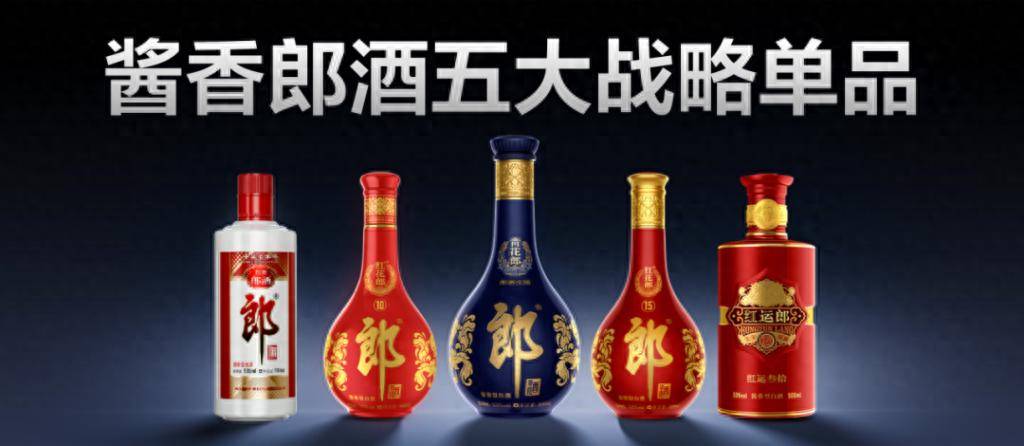
Group 1 - Shandong is a major province for the production and sales of Chinese liquor, with a market size of approximately 55 billion yuan in 2024, making it a competitive battleground for brands [1] - Langjiu Group's chairman, Wang Junlin, is leading efforts to strengthen the company's presence in Shandong over the next three years, despite facing challenges such as high inventory and price inversion in the industry [1] - The white liquor market is currently undergoing a deep adjustment period, with continuous price declines observed in the first half of 2025 [1] Group 2 - Langjiu's product matrix includes key items such as Qinghua Lang, Honghua Lang, and Hongyun Lang, with a focus on premium and high-end products [3] - The pricing structure of Langjiu's flagship product, Qinghua Lang, has shown significant weakness, with a price drop of 21.79% over the past five years [4] - The overall trend in the white liquor market indicates a decline in prices, with Moutai's price dropping by 36.15% since 2022, reflecting changes in consumer behavior and market dynamics [3][4] Group 3 - The competitive landscape in Shandong shows that the majority of consumers prefer strong aroma liquor, with over 70% of low-alcohol consumption in certain regions, posing a challenge for Langjiu's primarily sauce-flavored product lineup [11] - Langjiu's market position in Shandong is relatively weak compared to other brands, with a need to surpass the 1 billion yuan threshold to compete effectively [13] - The market is dominated by established brands like Moutai and Wuliangye, creating a challenging environment for new entrants like Langjiu [13][15]
14只白酒股上涨 贵州茅台1422.08元/股收盘
Bei Jing Shang Bao· 2025-08-15 08:15
Core Viewpoint - The stock market experienced a collective rise on August 15, with the Shanghai Composite Index closing at 3696.77 points, up by 0.83% [1] Industry Summary - The liquor sector closed at 2240.84 points, increasing by 1.13%, with 14 liquor stocks rising [1] - Huachuang Securities indicated that the long-term investment value of liquor stocks is becoming more prominent, as leading companies demonstrate stronger risk resistance during industry adjustments due to their brand moat and channel advantages [1] Company Summary - Kweichow Moutai's closing price was 1422.08 CNY per share, down by 0.34% [1] - Wuliangye's closing price was 123.10 CNY per share, up by 0.21% [1] - Shanxi Fenjiu's closing price was 188.58 CNY per share, up by 0.66% [1] - Luzhou Laojiao's closing price was 124.70 CNY per share, up by 0.02% [1] - Yanghe Brewery's closing price was 69.89 CNY per share, up by 0.29% [1]


食品饮料周报:机构“消费观”分歧加大 消费白马股或存在估值修复空间
Zheng Quan Zhi Xing· 2025-08-15 07:22
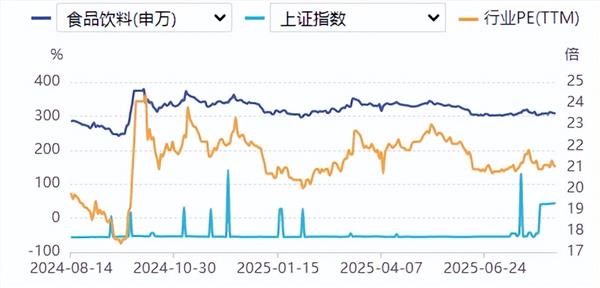
Market Performance - The Shanghai and Shenzhen 300 Index increased by 0.82% during the week of August 11 to August 15, 2025, with the Shenwan Food and Beverage Index also rising by 0.82% [1] - The top five performing stocks in the food and beverage sector were Guifaxiang, Angel Yeast, Tianwei Food, Gujing Gongjiu, and Shanxi Fenjiu [1] Institutional Insights - Guizhou Moutai is facing short-term demand pressure in the liquor market but is committed to deepening reform and focusing on sustainable development, with an increased dividend payout ratio [2] - Shanxi Fenjiu is also experiencing short-term demand challenges but has strong medium-term growth potential due to product upgrades and accelerated national expansion [2] - Ximai Food is seeing stable growth in its oat business, with improvements in raw material costs expected to enhance profitability [2] - Wancheng Group is expanding its snack retail operations and introducing new discount supermarket formats targeting young consumers [2] - Bairun Co. is witnessing an improvement in its pre-mixed cocktails segment, with a focus on enhancing cash flow from new products [2] Macro Events - The State Administration for Market Regulation reported a 0.57% defect rate in beverage products from 111,900 batches tested, indicating overall good quality and safety in the beverage sector [4] Global Food Prices - The FAO reported that global food prices reached a two-year high in July 2025, driven by rising meat and vegetable oil prices, with the FAO Food Price Index averaging 130.1 points, up 1.6% from June [5] Industry Trends - There is a growing divergence in views among public and private equity institutions regarding traditional consumer stocks, with some seeing potential for valuation recovery [7] - Major liquor brands are shifting towards lower-alcohol products to attract younger consumers, with Moutai, Wuliangye, and Luzhou Laojiao introducing new low-alcohol offerings [10] Company Developments - Guizhou Moutai reported a net profit of 45.4 billion yuan for the first half of 2025, a year-on-year increase of 8.89%, with total revenue reaching 91.09 billion yuan, up 9.16% [11] - Moutai's new product, the "Moutai Five-Star 70th Anniversary Commemorative Wine," has seen significant market speculation, with prices on secondary markets soaring [12] - Moutai has announced a partnership with Meituan Flash Purchase to enhance consumer access to its products through certified stores [13]



让消费者“上瘾”的白酒心法:从流量狂欢到心智扎根!
Sou Hu Cai Jing· 2025-08-15 02:52
Core Insights - The article emphasizes the need for liquor brands, particularly in the white liquor sector, to evolve their marketing strategies from merely chasing short-term "traffic" to building long-term brand loyalty and emotional connections with consumers [4][5][6] Group 1: Brand Building and Marketing Strategies - The current trend of relying on "traffic" as a marketing success metric is misleading, as it often leads to fleeting consumer attention without fostering brand loyalty [5][6] - Successful brands must focus on creating lasting brand assets and establishing long-term relationships with consumers rather than just capitalizing on temporary trends [6][7] - The article highlights the importance of avoiding the "one-time visit" sales approach, which is likened to a fleeting performance that lacks sustainability [6] Group 2: Consumer Engagement and Psychological Stages - The consumer journey is described as a progression from "unawareness" to "deep reliance," requiring brands to understand and navigate consumer psychology effectively [7][8] - Brands should create "memory hooks" to capture consumer attention in the initial stages, moving beyond mere exposure to meaningful engagement [7][8] - Lowering the cost of trial and establishing initial trust is crucial for converting curious consumers into repeat buyers [9][10] - Emotional connections can be strengthened by integrating the brand into significant life events, thereby creating "emotional anchors" for consumers [13][14] Group 3: Building Loyalty and Community - As consumers progress to becoming loyal customers, brands must engage them in their lives and demonstrate genuine care to foster a sense of belonging [13][14] - In the final stage of brand loyalty, consumers become co-creators, feeling a sense of ownership and pride in the brand, which drives them to advocate for it [14][15] - The article suggests that brands should focus on long-term consumer relationships rather than short-term promotional tactics to cultivate "spiritual stakeholders" who will support the brand over time [15]

即时零售“卷”向高端白酒 价格体系巨震
Nan Fang Du Shi Bao· 2025-08-14 23:21
Core Insights - The white liquor market is experiencing a price decline across various brands, with significant adjustments in retail pricing due to the introduction of new sales channels and promotional strategies [5][15][17] - Instant retail platforms are contributing to lower average prices, with many high-end products being sold at prices significantly below traditional retail channels [6][9][10] Price Trends - The average price of Feitian Moutai has dropped to approximately 2134.43 yuan, down from 2367 yuan in the previous period, with online prices as low as 1890 yuan on certain platforms [6][7] - The average price of Wuliangye's eighth generation has decreased to 953.1 yuan, down from 1054 yuan, reflecting a decline of 9.57% [16] - The average price of Guojiao 1573 has also seen a reduction, with current prices around 982.61 yuan, indicating a downward trend in the high-end liquor segment [10][12] Market Adjustments - The introduction of new retail channels, particularly instant retail platforms, has led to a more accurate reflection of market prices, with many products seeing a significant drop in their average prices [5][17] - The inclusion of Foshan in the pricing statistics has highlighted its status as a key market for liquor consumption, with average prices for high-end products like Feitian Moutai reaching around 2320.94 yuan [12][13] Product-Specific Changes - The average price of Dream Blue M6+ is reported at 708.46 yuan, with online prices being lower than offline prices, indicating a shift in consumer purchasing behavior [10][11] - The average price of the ancient well liquor, Gu 20, has decreased to 597 yuan, down from 660 yuan, showing a notable price adjustment in the mid-range segment [7][16] Consumer Behavior - The shift towards instant retail platforms is changing consumer purchasing patterns, with many consumers opting for lower-priced options available online [6][17] - The overall market dynamics are being influenced by promotional activities and discounts offered by instant retail platforms, leading to a more competitive pricing environment [5][15]



茅台、五粮液、洋河、泸州老窖…白酒巨头都在往“低”处走
Sou Hu Cai Jing· 2025-08-14 14:27
Core Viewpoint - The Chinese liquor industry is shifting focus towards low-alcohol products to attract younger consumers, as traditional high-alcohol beverages are losing popularity among this demographic [2][5][31]. Group 1: Industry Trends - Major liquor brands like Wuliangye, Yanghe, and Luzhou Laojiao are launching low-alcohol products, indicating a strategic pivot in the market [2][5]. - The demand for high-alcohol liquor has decreased due to changes in consumer behavior, particularly among younger generations who prefer lower alcohol content [10][17]. - The market for low-alcohol beverages is becoming a competitive battleground, with brands attempting to capture new consumer segments [5][31]. Group 2: Consumer Behavior - Young consumers show a strong preference for low-alcohol beverages, with over 60% indicating a dislike for the spiciness of high-alcohol liquor [17]. - The traditional high-alcohol liquor market is facing challenges as the demand from physical laborers declines, leading to a shift in consumption patterns [11][13]. - The younger generation is less inclined to participate in traditional drinking culture, which often involves high-alcohol consumption in social settings [15][28]. Group 3: Strategic Responses - Wuliangye is reintroducing its 29-degree product, which was previously discontinued, as part of its strategy to engage younger consumers [6][14]. - Liquor companies are investing in aesthetic packaging and branding to appeal to younger consumers, but this approach may be insufficient without addressing deeper consumer preferences [25][27]. - The competition is not only from domestic brands but also from international products like Japanese sake and craft beers, which are gaining traction among young consumers [31][36]. Group 4: Market Dynamics - The market share of new products like craft tea beers has rapidly increased, highlighting a shift in consumer preferences towards innovative beverage options [32]. - The liquor industry is experiencing a transformation as brands seek to redefine their identities and adapt to changing consumer landscapes [40]. - The concept of "infinite games" suggests that liquor brands must evolve beyond traditional boundaries to sustain growth and relevance in the market [39][40].