奈雪的茶

Search documents
奈雪健康赛道十年结硕果:“瘦瘦小绿瓶”成为行业首款获低GI证书的蔬果茶
Cai Jing Wang· 2025-12-29 11:12
Core Insights - The article emphasizes that a single product must leverage scientific authority and solid product strength to transition from a fleeting trend to a recognized "annual blockbuster" in the new tea beverage market [1][2] Group 1: Product Performance - The "Slim Green Bottle" fruit and vegetable tea from Nayuki has achieved cumulative sales exceeding 20 million cups and ranks first in both brand sales and repurchase rates [1] - The product has been awarded the title of "Annual Blockbuster Beverage" in the 2025 New Consumption and New Economy Awards hosted by Caijing [2] Group 2: Health Trend and Certification - The health trend in the tea beverage industry is not new, but the "Slim Green Bottle" distinguishes itself by introducing the "low GI" (glycemic index) concept, which has a clear threshold in food science [2] - The product has been recognized as the first fruit and vegetable tea to receive a low GI certification from global consulting firm CIC, marking a significant shift from brand claims to third-party validation [2] Group 3: Nutritional Innovation - The product utilizes D-allulose as a core sweetener, which has only 10% of the calories of sucrose and a very low glycemic effect, achieving a balance between reduced sugar and taste [3] - It follows the "rainbow diet" principle, incorporating 3-10 types of fresh fruits and vegetables, thus providing a rich source of dietary fiber and vitamins, aligning with the Chinese Nutrition Society's recommendation of 500g of fruits and vegetables daily [3] Group 4: Strategic Development - The success of the "Slim Green Bottle" is part of Nayuki's systematic efforts in the health sector over the past decade, evolving from the introduction of the "tea + soft European bread" model to advocating for sugar-free options and participating in nutrition grading trials [4] - The low GI certification of the "Slim Green Bottle" represents a core implementation of Nayuki's "Natural Nutrition+" initiative, showcasing the brand's commitment to scientific research and authoritative validation in health innovation [4]
新潮涌动,价值共生:2025年度财经网新消费·新经济评选榜单揭晓
Cai Jing Wang· 2025-12-29 08:38
Core Insights - The traditional methods of consumer engagement are becoming obsolete as Generation Z gains more influence, leading companies to adapt to new consumer demands for personalized and unique experiences [1][3] - The shift from standardized products to flexible customization is evident, with businesses focusing on tailored experiences rather than a one-size-fits-all approach [1][3] - Companies are increasingly recognizing the importance of value co-creation and social responsibility as key drivers for sustainable growth in the evolving market landscape [7][9] Industry Trends - The restaurant industry is witnessing a trend towards unique and innovative dining experiences, with brands like Haidilao and Domino's Pizza introducing new concepts and collaborations to enhance customer engagement [3][4] - Health-conscious products are gaining traction, with brands like Nayuki and Yuanqi Forest redefining the health beverage market by focusing on clear nutritional benefits [4][5] - The dairy and condiment sectors are exploring new marketing strategies, leveraging popular culture and collaborations to enhance brand visibility and consumer connection [5][6] Company Innovations - Nayuki's "Slim Green Bottle" has sold over 20 million cups since its launch, establishing itself as a symbol of health consumption [4] - Mengniu's low-temperature yogurt factory in Wuhan has been recognized as the world's largest single-unit low-temperature yogurt factory, showcasing the company's commitment to production efficiency [8] - The collaboration between brands and cultural events, such as Mengniu's marketing efforts linked to the film "Nezha 2," highlights the importance of storytelling in modern marketing strategies [5][6] Social Responsibility - Companies like Yili are actively engaging in social initiatives, such as the "Golden Crown 50°C Extraordinary Guardian" program, aimed at addressing infant nutrition challenges in underserved regions [8] - The emphasis on sustainability and social responsibility is becoming a core aspect of brand identity, with companies like Bawang Tea and IKEA China recognized for their contributions to ESG (Environmental, Social, and Governance) efforts [8][9]


茶专家评新茶饮“咖啡因”焦虑:茶叶中的咖啡因是天然植物成分 消除公众恐慌须补上“科普课”
21世纪经济报道· 2025-12-28 09:12
Core Viewpoint - The recent controversy surrounding the tea brand "霸王茶姬" highlights a significant misunderstanding of caffeine in tea, reflecting a broader need for public education about the new tea beverage industry and its health implications [1][3][9]. Group 1: Incident Overview - On December 26, "霸王茶姬" faced a public relations crisis when a media outlet linked caffeine in tea to controlled substances, causing public panic and stock price volatility [1]. - The incident is seen as a stigmatization of the entire new tea beverage industry rather than just one brand [1]. - In response, "霸王茶姬" emphasized product compliance and announced legal actions, while the China Tea Circulation Association provided educational content about tea and caffeine [1]. Group 2: Public Perception and Knowledge Gap - A survey indicated that 52.15% of respondents were unaware that tea contains caffeine, demonstrating a significant knowledge gap among consumers [3]. - The misconception that caffeine is an additive rather than a naturally occurring compound in tea contributes to public confusion [3]. Group 3: Scientific Insights on Tea Components - Experts explain that tea contains both caffeine and the calming amino acid L-theanine, which together create a balanced effect on alertness and relaxation [4]. - Caffeine in tea acts quickly but has a short-lived stimulating effect, while L-theanine provides a more prolonged calming effect [4]. Group 4: Industry Evolution and Consumer Education - The new tea beverage industry is evolving towards transparency and standardization, with brands like "喜茶" categorizing caffeine levels in their products to help consumers make informed choices [9][10]. - The recent controversy serves as a catalyst for the industry to enhance public understanding of tea's health benefits and its natural caffeine content [5][10]. Group 5: Historical Context and Future Directions - The challenges faced by the new tea beverage industry are reminiscent of the historical scrutiny coffee underwent, suggesting that education and cultural promotion are essential for acceptance [8]. - The industry must establish a clear and scientific knowledge framework about tea, akin to what has been achieved for coffee, to enhance its global standing and cultural significance [10].

茶专家评“咖啡因”焦虑:将茶饮与“毒品”绑定是对中国茶文化的污蔑
新华网财经· 2025-12-28 04:35
Core Viewpoint - The incident involving the tea brand BaWang Tea Ji highlights the urgent need for scientific education in China's new tea beverage industry, particularly regarding caffeine content and its effects on health [2][10]. Group 1: Incident Overview - On December 26, BaWang Tea Ji faced a public relations crisis when a self-media outlet linked caffeine in tea to controlled substances, causing public panic and significant stock price fluctuations [1]. - The Chinese Tea Circulation Association responded by educating the public about the relationship between tea and caffeine [1]. Group 2: Public Perception and Knowledge Gap - A survey indicated that 52.15% of respondents were unaware that tea contains caffeine, reflecting a significant knowledge gap among consumers [3]. - The misconception that tea is linked to addiction or harmful effects is a misrepresentation of tea culture and science [5]. Group 3: Scientific Insights on Tea Components - Tea contains both caffeine, which stimulates the central nervous system, and theanine, which has calming effects, creating a balanced experience for consumers [4]. - Caffeine in tea is a natural component, and its concentration in brewed tea is typically between 2% to 4%, insufficient to cause addiction [6]. Group 4: Industry Evolution and Consumer Trends - The new tea beverage industry has transitioned from using powdered ingredients to emphasizing fresh tea leaves and quality, which has led to increased caffeine awareness among consumers [7]. - Leading brands like Heytea and BaWang Tea Ji are adopting transparency in ingredient sourcing and caffeine content, catering to diverse consumer needs [9]. Group 5: Cultural and Historical Context - Tea, as a cultural symbol with a rich history, has faced similar scrutiny as coffee did in its early days, necessitating a collective effort from the industry to educate consumers [8]. - The new tea beverage sector plays a crucial role in modernizing traditional tea practices and making them relevant to younger consumers [9]. Group 6: Future Directions - The "caffeine anxiety" incident underscores the need for the industry to establish a clear and scientific knowledge framework about tea, akin to what has been achieved for coffee [10]. - By eliminating knowledge barriers and promoting standardized practices, the new tea beverage industry can enhance its global standing and cultural significance [10].

网红面包卖不动了?烘焙门店平均存活时长仅32个月
Xin Lang Cai Jing· 2025-12-28 01:57
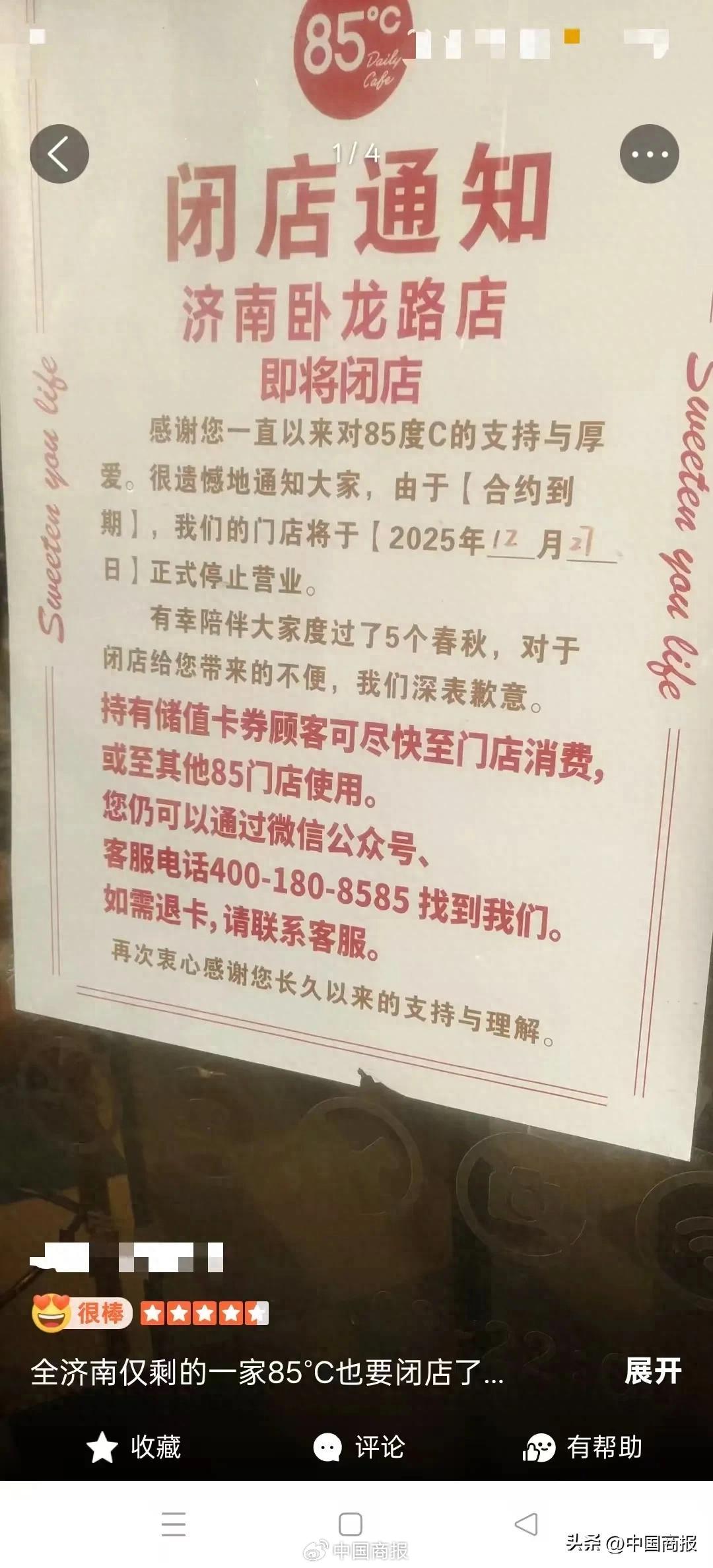
Core Viewpoint - The closure of 85°C stores in China highlights the challenges faced by traditional bakery brands, indicating a significant strategic contraction in the industry as consumer preferences shift and competition intensifies [4][12]. Group 1: Company Developments - 85°C closed its last store in Jinan on December 27, marking a significant reduction in its presence in China, with over 40 closures planned for the year, the largest in five years [4]. - The parent company, Meishi-KY, acknowledged the need to optimize operations, leading to this strategic retreat [4]. - The last store in Beijing closed on October 31, further indicating the brand's declining footprint in major markets [1]. Group 2: Industry Trends - Established brands like 85°C and Paris Baguette are experiencing brand aging and a lack of product differentiation, resulting in diminished appeal to younger consumers [5]. - Paris Baguette has closed 205 stores over four years, with a net increase of only 26 stores, reflecting a broader trend of declining store numbers in the bakery sector [5][7]. - The bakery market is undergoing rapid changes, with new entrants leveraging innovative strategies to attract consumers, while traditional brands struggle to keep pace [7][13]. Group 3: Market Dynamics - The average lifespan of bakery stores in China is only 32 months, with over 57% closing within two years, indicating a highly volatile market [12]. - The competitive landscape is shifting as new players from tea, coffee, and convenience store sectors enter the bakery market, utilizing their existing advantages to capture market share [13]. - The demand for high-quality, cost-effective products is rising, with new business models like low-cost bakeries gaining traction in the market [14]. Group 4: Financial Insights - A typical 100-square-meter bakery store with a monthly revenue of 270,000 yuan faces significant cost pressures, resulting in a low profit margin of approximately 8.9% [12]. - The rising costs of ingredients and rent, coupled with the need for substantial marketing investments, are squeezing profit margins for traditional bakery brands [12].
新茶饮上市背后:流水的品牌,铁打的供应链
Ge Long Hui· 2025-12-26 17:52
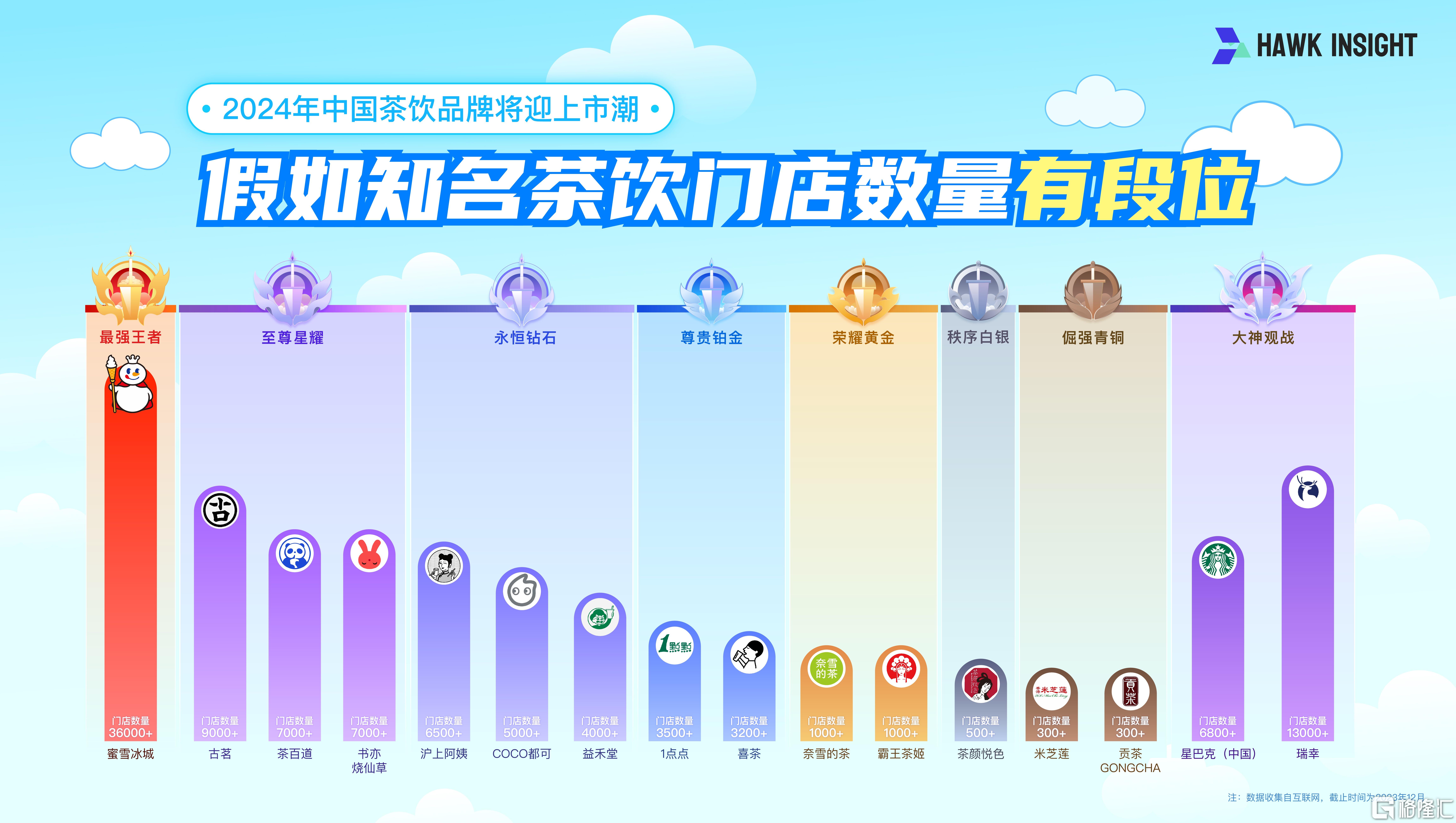
Group 1 - The new tea beverage industry is experiencing a resurgence, with significant interest in new products and flavors, leading to increased activity in the secondary market [2] - Major players like Cha Bai Dao, Mi Xue Bing Cheng, and Gu Ming have submitted IPO applications, indicating a competitive push in the new tea beverage sector [2][3] - The number of stores for the top 20 new tea brands has increased by 32% from 78,324 at the end of 2022 to 103,783 by the end of 2023, reflecting a strong growth trend [2] Group 2 - New tea brands are aggressively pursuing the "10,000 stores" goal as a strategy to capture market share, with Gu Ming reaching 9,001 stores and Mi Xue Bing Cheng leading with 36,000 stores [3][5] - The expansion into lower-tier markets is a key focus, with significant growth in delivery orders from fourth and fifth-tier cities, showing increases of 30% and 36% respectively [5][8] - The price competition in the tea beverage market has intensified, with many brands offering products at promotional prices around 9.9 yuan, reflecting a shift in consumer behavior towards value [7][14] Group 3 - The profitability of tea beverage brands is under pressure, with net profit margins for mature brands ranging from 10% to 15%, significantly lower than expected [8][11] - Companies like Nai Xue's Tea have faced substantial losses, with cumulative losses of 808 million yuan from 2020 to 2022, highlighting the financial challenges in the industry [8][11] - The supply chain has become a critical factor for success, with brands like Mi Xue Bing Cheng generating 98% of their revenue from selling materials and equipment to franchisees, emphasizing the importance of a robust supply chain [15][16] Group 4 - The new tea beverage industry is expected to see a gradual decline in growth rates, with projected market growth rates of 13.4%, 6.4%, and 5.7% from 2023 to 2025 [8] - The industry is characterized by low barriers to entry and high product homogeneity, leading to intense competition and price wars among brands [14][21] - Future trends in the industry are expected to focus on product innovation, supply chain optimization, and channel expansion, with a growing emphasis on the importance of supply chain management [21][22]
瑞幸+茅台,龙年没火起来
Ge Long Hui· 2025-12-26 17:52
Core Insights - The new collaboration product "Sauce Aroma Chocolate" from Luckin Coffee and Kweichow Moutai has not replicated the success of the previous "Sauce Aroma Latte" [2][5] - The initial response to "Sauce Aroma Chocolate" has been lukewarm, with low sales and minimal social media buzz compared to the previous product launch [2][5][11] Product Launch and Sales Performance - "Sauce Aroma Chocolate" was launched on January 22, priced at 38 yuan per cup, but available for 18 yuan after discounts [2] - In contrast to the "Sauce Aroma Latte," which sold over 5.42 million cups and generated over 100 million yuan in sales on its first day, "Sauce Aroma Chocolate" did not sell out at stores and had low consumer awareness [5][10] - Consumers reported that the product remained available at multiple Luckin locations even hours after its launch [2][11] Consumer Reception and Market Trends - The initial excitement for "Sauce Aroma Latte" stemmed from its unique blend of Moutai liquor and coffee, appealing to a younger demographic who found it affordable compared to other Moutai products [10] - However, after the novelty wore off, many consumers expressed a lack of interest in repurchasing, which may explain the poor reception of the new chocolate product [10][11] - Luckin Coffee has been recognized as a "product explosion machine" in the coffee industry, but the challenge remains to maintain consumer interest with new offerings [3][16] Competitive Landscape - Luckin Coffee's pricing strategy is more affordable than Starbucks, allowing it to capture a significant market share [18] - The company faces increasing competition from both traditional coffee brands and emerging tea beverage brands that are also entering the coffee market [22][23] - The ongoing price war in the coffee sector has led to many brands offering coffee at lower prices, intensifying competition [25]


现制茶饮巨头齐聚港股冲刺IPO 茶饮第二股将花落谁家?
Ge Long Hui· 2025-12-26 17:52
Core Viewpoint - The competition in the Chinese ready-to-drink tea market is intensifying as multiple brands, including Mixue Ice City, Gu Ming, and Cha Bai Dao, are preparing for IPOs, aiming to become the second listed tea brand after Nayuki Tea [2][27]. Group 1: Market Overview - The Chinese ready-to-drink tea market is projected to reach a scale of 149.8 billion yuan in 2023, with a compound annual growth rate of nearly 20% over the past three years, and is expected to expand to 201.5 billion yuan by 2025 [3]. - As of August 31, 2023, there are approximately 515,000 new tea drink stores in operation, a growth of over 36% from 378,000 stores at the end of 2020 [3]. Group 2: Company Expansion Strategies - Mixue Ice City has over 32,000 stores in China and approximately 4,000 overseas, with a cup output of about 5.8 billion cups in the first nine months of 2023, making it the leading ready-to-drink beverage company in China and the second globally [8]. - Gu Ming has 9,001 stores as of December 31, 2023, a 35% increase from the end of 2022, positioning it as a strong contender to enter the "10,000-store era" [8]. - Cha Bai Dao has 7,111 stores, achieving coverage across all provinces and cities in mainland China, and is also approaching the "10,000-store era" [8]. Group 3: Future Expansion Directions - Gu Ming plans to expand into northern China, where it currently has no presence in 19 provinces, indicating significant growth potential [10]. - Cha Bai Dao aims to increase its penetration in second-tier and lower-tier cities, where it currently has about 60% of its stores, and will focus on enhancing store density in potential business districts [12]. - Mixue Ice City is focusing on international expansion, having opened its first overseas store in Vietnam in 2018 and now operating in 11 countries, with plans to deepen its presence in Southeast Asia [13][15]. Group 4: Supply Chain and Logistics - Mixue Ice City has built a large-scale supply and logistics system, with 26 warehouses totaling over 300,000 square meters, making it the largest in the industry [15][16]. - Gu Ming operates the largest cold chain logistics infrastructure among Chinese ready-to-drink tea brands, with 21 warehouses and a delivery cost of only about 0.9% of GMV [18][19]. - Cha Bai Dao relies on a combination of self-operated and third-party logistics, with 22 high-standard warehouses covering a total area of approximately 80,000 square meters [21][22]. Group 5: Marketing Strategies - Mixue Ice City has successfully created a strong brand IP, "Xue Wang," which has garnered over 87 billion exposures on social media platforms, and has developed various related products and events [23][24]. - Other brands, such as Cha Bai Dao and Gu Ming, have engaged in numerous co-branding marketing events, with over 230 collaborations reported in the first three quarters of 2023 [26]. Group 6: Conclusion - The entry of brands like Cha Bai Dao into the IPO stage suggests a potential reshuffling in the ready-to-drink tea market, with various aspects such as R&D, supply chain, digitalization, cold chain logistics, and marketing presenting opportunities for growth [27].
奈雪的茶败走平价市场
Ge Long Hui· 2025-12-26 17:52
Core Insights - The article highlights the significant presence of milk tea brands in lower-tier markets, with a notable absence of high-end tea brands like Nayuki and Heytea in these areas [2][3] - Nayuki has faced challenges in penetrating the lower-tier market and has decided to shut down its sub-brand Taigai due to lack of profitability [4][5] Group 1: Market Trends - The lower-tier market has seen a surge in milk tea brands such as Mixue, Gu Ming, and Cha Bai Dao, while high-end brands like Nayuki and Heytea are rarely mentioned [2][3] - Nayuki's attempts to enter the lower-tier market through sub-brands have not been successful, leading to a focus on its main brand [4][7] Group 2: Nayuki's Strategy - Nayuki announced the closure of its Taigai sub-brand, which had only 7 operational stores left, indicating a drastic decline from its peak of over 800 stores [5][19] - The company has previously closed another sub-brand, Pear Mountain, which targeted price-sensitive consumers, indicating a pattern of struggling with lower-tier market strategies [5][7] Group 3: Competitive Landscape - Nayuki's market presence is significantly lower than that of Heytea, which has 3,326 stores compared to Nayuki's 1,505 [9][11] - The differences in brand strategy and market approach between Nayuki and Heytea are evident, with Heytea focusing on product innovation and collaborations to maintain consumer interest [11][12] Group 4: Challenges in Lower-Tier Markets - High-end tea brands face challenges in lower-tier markets due to higher price points and complex supply chains, making it difficult to attract price-sensitive consumers [18][19] - Nayuki's high franchise fees and operational requirements create barriers for expansion into lower-tier markets, limiting its growth potential [19][20]

“读秒捡钱”,这个春节县城奶茶赚疯了
Ge Long Hui· 2025-12-26 14:10
Core Insights - The rapid development of tea beverage brands in county-level markets reflects a significant shift in consumer preferences and market dynamics, with major brands like Starbucks and Heytea expanding into these areas [4][19] - The tea beverage industry experienced a surge in demand during the recent Spring Festival, with a notable increase in delivery orders from county markets, indicating a robust growth potential in these previously underserved regions [6][5] Market Trends - The number of new chain tea beverage stores in county areas exceeded 9,000 in 2022, with an overall opening rate of approximately 36%, showcasing the rapid expansion of this market segment [10] - Major tea brands have reported a 65% year-on-year increase in delivery orders during the Spring Festival period, highlighting the growing consumer base and demand in county markets [6] Consumer Behavior - Consumers in county areas are increasingly seeking diverse beverage options, with a shift from traditional offerings to modern tea drinks, reflecting changing tastes and preferences among younger demographics [5][19] - The average price of a tea beverage ranges from 10 to 20 yuan, making it accessible to a broad consumer base while still generating significant daily revenue for stores [11] Business Strategies - Brands are focusing on improving order fulfillment speed and operational efficiency to capitalize on peak demand periods, with some stores achieving beverage preparation times of around one minute [8][9] - The expansion strategy includes targeting lower-rent locations outside of prime commercial areas, allowing for cost savings while still reaching a wide customer base through delivery services [16][18] Competitive Landscape - The tea beverage market is becoming increasingly competitive, with many brands facing challenges related to product homogeneity and market saturation, prompting a focus on differentiation and innovation [11][12] - The rise of online marketing and delivery platforms has become crucial for brand visibility and sales, particularly in county markets where traditional foot traffic may be lower [18][23]