Arm

Search documents
一把套现27亿元!5倍大牛股多位股东折价卖票:股价150多元,只卖105元!股价应声大跌
Mei Ri Jing Ji Xin Wen· 2025-08-26 03:45
Core Viewpoint - The article discusses the recent share transfer pricing of VeriSilicon Limited and other shareholders of Chip Origin Co., Ltd. (688521.SH), highlighting the significant price difference between the transfer price and the market price, as well as the company's business structure and financial performance. Group 1: Share Transfer Details - Chip Origin Co., Ltd. has set a preliminary share transfer price of 105.21 CNY per share, which is approximately 66.63% of the closing price of 157.90 CNY on August 25 [1] - The total number of shares to be transferred accounts for 5.00% of the company's total share capital, with 37 institutional investors participating in the transfer [1] - The total transaction value is expected to exceed 2.7 billion CNY based on the transfer price [1] Group 2: Stock Performance - Over the past year, from September 24 to August 25, Chip Origin's stock price has increased by over 500% [1] - Following the announcement, the stock price experienced a significant drop of 9.87% in the morning session on August 26 [4] Group 3: Business Structure and Revenue - Chip Origin's revenue structure is characterized by a high proportion of one-time licensing fees compared to ongoing royalties, which is atypical for semiconductor IP companies [4][6] - In the first half of 2025, the company's intellectual property licensing fees amounted to 281 million CNY, a year-on-year increase of 8.20%, while royalty fees slightly decreased by 0.03% [6] - The licensing fees accounted for 84.64% of the IP business revenue, indicating a reliance on one-time fees [6] Group 4: Profit Margins and Market Position - The gross margin for Chip Origin's one-stop custom chip services is relatively low at 18.17%, compared to industry leaders like Broadcom and Marvell, which have gross margins around 60% to 75% [14][16] - The company is recognized as a leader in AI ASIC chip design and has provided services to major international clients, with nearly 200 million AI chips shipped globally [15] - The low gross margin in custom chip services is attributed to the diverse customer base and product structure, which may improve as domestic manufacturers expand into AI ASIC markets [17]


七折询价“甩卖”5%股份芯原股份六大股东为何大幅折价也要跑?
Xin Lang Cai Jing· 2025-08-26 01:39
Core Viewpoint - The article discusses the recent pricing and business performance of Chip Origin Technology Co., Ltd. (芯原股份), highlighting its revenue structure and market positioning in the semiconductor IP industry. Group 1: Shareholder Transfer and Pricing - Chip Origin plans to transfer 5% of its total shares at a price of 105.21 yuan per share, following inquiries from institutional investors [1] - The company's market capitalization is reported at 83.01 billion yuan, with a closing stock price of 157.90 yuan as of August 25 [1] Group 2: Revenue Structure - The revenue from knowledge property licensing fees for the first half of 2025 reached 281 million yuan, marking an 8.20% year-on-year increase, while the franchise fee was 50.74 million yuan, showing a slight decline of 0.03% [1] - In the first half of 2025, knowledge property licensing fees accounted for 84.64% of the IP business, while franchise fees made up 15.36% [2] Group 3: Business Model Comparison - Chip Origin's revenue model is primarily based on one-time licensing fees, contrasting with the industry trend where semiconductor IP firms typically rely more on royalty income [1][6] - For comparison, Arm's royalty income constituted 65%, 58%, and 63% of its total revenue in 2021, 2022, and 2023, respectively [3] Group 4: Market Position and Growth - Chip Origin is recognized as a leader in AI ASIC chip design, with significant growth attributed to its ASIC chip offerings [7][8] - The company has developed a comprehensive platform for AI applications, serving major international clients and shipping nearly 200 million AI chips globally [8] Group 5: Profitability Concerns - The gross margin for Chip Origin's one-stop custom chip service is reported at 18.17%, significantly lower than competitors like Broadcom and Marvell, which have margins around 60% [8] - The company acknowledges the need for continuous technological upgrades and innovation to maintain competitiveness in the market [8]
Suraj Gajendra:Arm Zena CSS助力汽车芯片开发时间缩短12个月
Zhong Guo Qi Che Bao Wang· 2025-08-22 01:48
Core Insights - Arm has officially launched the Arm® Zena Compute Subsystems (CSS), which is a standardized and pre-integrated computing platform designed to significantly shorten development cycles for automotive companies, allowing them to bring new models to market at least one year earlier [1][4]. Product Overview - Arm Zena CSS integrates a range of IPs, including CPU clusters, secure islands, and secure enclaves, along with debugging features, basic I/O interfaces, power, and clock modules, delivered in RTL design package form [4]. - The system includes the latest Cortex-720AE CPU cluster and CMN S3AE interconnect technology, as well as a secure island built on the latest Cortex-R82AE [4]. Development Cycle Reduction - The introduction of Arm Zena CSS is expected to accelerate the development cycle by an additional 12 months, building on the previous two-year reduction achieved with the launch of the Cortex-A720AE and its associated cloud-based virtual prototype platform [5][7]. - Traditionally, automotive development follows a linear process, causing delays as software developers must wait for chips to be released before starting their work. The virtual prototype technology allows software development to begin on the same day as IP release [7]. Complexity Management - Arm Zena CSS aims to address the complexity of automotive chip design, which has evolved from 4-core and 8-core systems to increasing demands for 16-core and 32-core systems [7][8]. - By providing a pre-validated core computing component, Arm Zena CSS allows partners to focus on product differentiation and innovation, thus saving significant development time [4][8]. Cost Efficiency - Contrary to expectations, the overall project costs associated with using Arm Zena CSS are expected to decrease, with engineering resource requirements projected to drop by 20% based on partner case studies [9]. - The early completion of designs also contributes to cost savings, enhancing both development cost efficiency and product design efficiency [9]. Market Reception - Since its launch, Arm Zena CSS has garnered interest from over 10 global partners, including automotive manufacturers and chip designers, with some already obtaining technical licenses [9]. - The solution has been recognized within the Chinese automotive ecosystem as a significant step towards accelerating innovation and achieving cross-platform scalability [9]. Future Directions - Arm envisions a future where AI applications will proliferate in vehicles, impacting advanced driver-assistance systems (ADAS), in-vehicle infotainment (IVI) systems, and overall vehicle experience [10]. - The company aims to continuously prepare for this evolution by strengthening core foundational technologies and providing adaptable software and tools for the entire software ecosystem [10][11].

一家芯片“新”巨头,横空出世
3 6 Ke· 2025-08-21 03:13
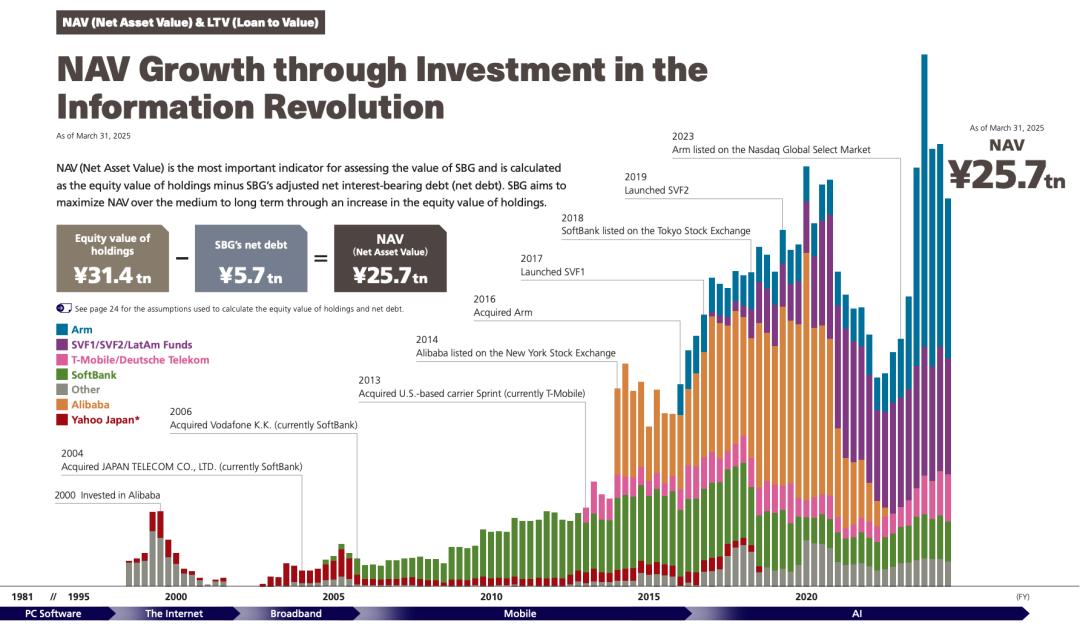
Group 1 - The article discusses the strategic moves of SoftBank under Masayoshi Son, focusing on its investments in AI and semiconductor industries to build a comprehensive AI computing ecosystem [1][3][25] - As of June 2025, SoftBank's net asset value is approximately 31 trillion yen, with a market capitalization of about 14 trillion yen, indicating a significant gap between asset value and market perception [3] - SoftBank's recent acquisitions include Graphcore, a struggling UK AI chip company, and a $20 billion investment in Intel, positioning itself as a major player in the semiconductor sector [9][10][11] Group 2 - Masayoshi Son's vision for SoftBank is to become the world's leading provider of Artificial Super Intelligence (ASI), focusing on AI chips, AI robots, AI data centers, and energy [7][19] - The Stargate project aims to create a new generation of AI infrastructure, with an investment of up to $500 billion to standardize and mass-produce AI servers in the U.S. [10][11] - SoftBank's investment in OpenAI, totaling $400 billion, signifies its commitment to both the infrastructure and application layers of AI technology [11][14] Group 3 - The acquisition of Ampere for $6.5 billion fills a gap in SoftBank's CPU capabilities, enhancing its position in the AI and cloud computing markets [14][15] - The purchase of Graphcore not only saves the company from bankruptcy but also diversifies SoftBank's AI accelerator technology portfolio [15][16] - SoftBank's strategy involves creating a capital map that integrates various components of the AI ecosystem, from IP (Arm) to CPUs (Ampere) and AI accelerators (Graphcore) [16][18] Group 4 - Arm's business model allows for long-term revenue generation through licensing, with a significant portion of its income coming from products launched years ago [20][21] - Arm is planning to develop its own chips, which could enhance its influence in the data center market, although this move carries risks and challenges [21][22] - SoftBank's approach contrasts with Nvidia's vertical integration and cloud giants' self-sufficient models, as it seeks to leverage capital to control various segments of the AI ecosystem [23][24]

一家芯片“新”巨头,横空出世
半导体行业观察· 2025-08-21 01:12
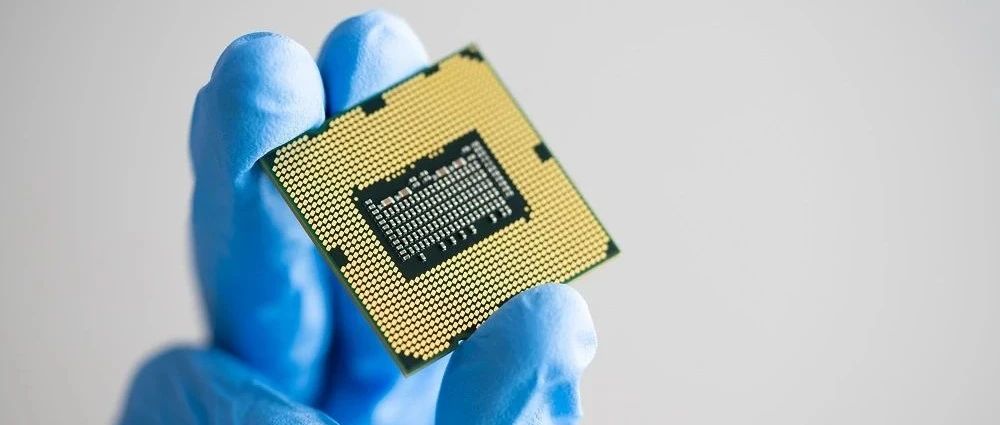
Core Viewpoint - SoftBank, under the leadership of Masayoshi Son, is strategically positioning itself to become the world's leading provider of Artificial Super Intelligence (ASI) by investing heavily across the AI and semiconductor value chain, from IP to application layers [5][10][37]. Group 1: Historical Context and Vision - Masayoshi Son's journey began in 1975 when he was inspired by a microcomputer chip photo, which ignited his lifelong commitment to technology and innovation [6][9]. - In the 2025 fiscal year report, Son articulated a new strategic goal for SoftBank: to become the foremost ASI platform provider, emphasizing the belief in the eventual emergence of intelligence surpassing human capabilities [9][10]. Group 2: Strategic Investments - SoftBank has made significant investments in various companies to build a comprehensive AI and semiconductor ecosystem, including a $20 billion investment in Intel, becoming one of its top shareholders [13]. - The Stargate project, in collaboration with OpenAI and Oracle, aims to construct large-scale data centers for AI infrastructure, with an estimated investment of up to $500 billion [14]. - SoftBank led a $40 billion financing round for OpenAI, indicating its commitment to both infrastructure and application layers in the AI stack [16][19]. - The acquisition of Ampere for $6.5 billion aims to fill gaps in SoftBank's CPU capabilities, enhancing its position in the cloud computing and AI inference markets [20]. - The purchase of Graphcore, a struggling AI chip company, allows SoftBank to diversify its AI accelerator technology portfolio [21]. Group 3: Capital Map and Ecosystem Integration - SoftBank is constructing a capital map that integrates various components of the AI and semiconductor ecosystem, from IP (Arm) to CPUs (Ampere) to AI accelerators (Graphcore) and manufacturing (Intel Foundry) [23]. - The strategy involves creating a closed-loop system that connects upstream IP with downstream applications, thereby enhancing SoftBank's influence in the AI sector [27][28]. Group 4: Arm's Role and Future Prospects - Arm remains a crucial asset for SoftBank, with the company holding approximately 90% of Arm's shares post-IPO, which is pivotal for revenue generation through licensing and royalties [26][30]. - Arm's business model, characterized by long-term benefits from initial licensing, positions it well for sustained revenue growth, particularly in emerging markets like AI and cloud computing [30][31]. - The potential development of proprietary chips by Arm could further solidify its position in the data center market, although it presents challenges and risks [31][32]. Group 5: Competitive Landscape - SoftBank's approach contrasts with Nvidia's vertical integration strategy, as it seeks to leverage capital to control various segments of the AI and semiconductor landscape without focusing solely on in-house development [34][35]. - Unlike cloud giants like Microsoft and Amazon, which emphasize self-developed chips and infrastructure, SoftBank aims to reorganize production factors across the ecosystem, culminating in applications like OpenAI [35][36].


智通港股解盘 | 科技股这边风景独好 消费三剑客集体发力
Zhi Tong Cai Jing· 2025-08-20 12:58
【解剖大盘】 港股连续调整了多日,今天在A股的带动下终于出现反弹,收盘恒指涨0.17%。 美商务部周二正式宣布,将风力涡轮机等407类钢铁和铝衍生产品纳入关税清单。特朗普钢铝关税范围 陡然扩大,美国进口商措手不及。这很显然对美国经济形成反噬,美股又陷入被动,惯用的伎俩就是打 中国牌。据报道,美国财政部长贝森特当地时间19日在接受采访时称:"我们与中方进行了非常良好的 对话,我预计在11月前我们会再次会面。我认为当前工作开展得很顺利。" 再看老铺黄金(06181)业绩也超预期,股东应占利润22.68亿元,同比增加285%。今年上半年,老铺黄金 在单个商场平均销售业绩4.59亿元,已领先国际奢侈品一线巨头。据弗若斯特沙利文调研数据,老铺黄 金消费者与路易威登、爱马仕、卡地亚、宝格丽等国际五大奢侈品牌的消费者平均重合率接近八成,这 意味着国际奢侈品牌消费者越来越多转向老铺黄金,而中国品牌也首次成为高端消费的主流力量。如果 能达到国际奢侈品牌的认知度,那么海外这块增量就会较大,只是品牌的建立还需要时间和底蕴,今天 涨近9%。另外蜜雪集团(02097)、名创优品(09896)均涨幅超4%。 昨日板块聚焦提到的果链类持续 ...

Arm聘请亚马逊AI高管推动自主芯片研发计划
Zheng Quan Shi Bao Wang· 2025-08-19 02:35
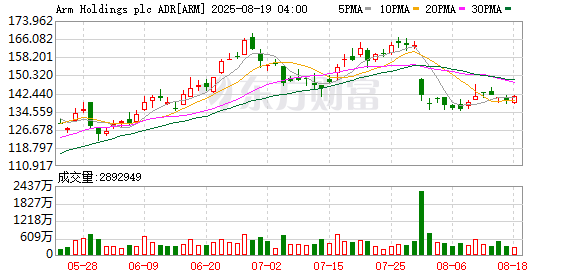
Arm的战略转型包括进军自行制造芯片,而不仅仅是设计核心架构。公司计划投资部分利润用于开发完 整的芯片和芯片组。Arm的目标是超越IP授权,开始设计和构建完整的芯片及系统。此前,Arm已招聘 了具有大规模系统设计经验和芯片工程背景的专业人才。 Arm已聘请亚马逊人工智能芯片主管Rami Sinno,以加强其自行开发完整芯片的计划。 (文章来源:证券时报网) ...
刚刚!软银投资20亿美元入股英特尔,成第五大股东
是说芯语· 2025-08-19 00:49
Core Viewpoint - SoftBank Group has signed a final share purchase agreement with Intel Corporation to invest $2 billion at a price of $23 per share, acquiring approximately 2% of Intel's shares, making it the fifth-largest shareholder [1][3]. Group 1: Investment Details - The investment price of $23 per share represents a discount of about 2.8% compared to Intel's closing price of $23.66, but the stock rose 6% in after-hours trading to $25, indicating market optimism about the partnership [3]. - SoftBank's investment will provide critical financial support to Intel, alleviating funding pressures in advanced process research and factory expansion [3][4]. Group 2: Intel's Current Challenges - Intel faces challenges such as delays in advanced process technology and market share erosion from competitors like TSMC and Samsung [3][4]. - Despite a 7% year-over-year revenue increase to $14.3 billion in Q1 2025 and a gross margin improvement to 42.1%, Intel reported a negative adjusted free cash flow of $1.5 billion, highlighting financial pressures during its transformation [3][4]. Group 3: Strategic Alignment - The investment aligns with the U.S. CHIPS and Science Act, under which Intel has received $7.86 billion in funding for advanced manufacturing projects [4]. - SoftBank's investment may enhance collaboration between its subsidiary Arm and Intel, potentially accelerating innovation in AI chips and cloud computing infrastructure [4]. Group 4: Future Outlook - Analysts view the partnership as a "strong alliance," combining SoftBank's investment experience in AI and IoT with Intel's expertise in chip design and manufacturing [4]. - The collaboration is expected to foster more efficient AI chip architectures and promote vertical integration within the U.S. semiconductor industry [4].
Arm的这项AI新技术,为手游减少50%GPU工作负载
Hu Xiu· 2025-08-18 09:23
Score: 210 + 近日,Arm在 SIGGRAPH 上,发布 Arm 神经技术 (Arm Neural Technology),该技术为业界首创,并将专用神经加速器引入 2026 年推出的 Arm GPU。这项 技术能将用于图形渲染的 GPU 性能提升至更高水平;为当今始于手游领域更为复杂的移动端内容减少了多达 50% 的 GPU 工作负载。而这仅仅只是开始, 这项新技术的面世为行业在未来实现更多的端侧人工智能 (AI) 创新奠定了基础。 Arm 人工智能和开发者平台技术院士 Geraint North 表示:"此次发布标志着桌面级别的神经图形技术已经可以在移动设备上实现,这对于正在向端侧 AI 转 型的前沿游戏开发者而言,无疑是一个重要的里程碑。Arm 神经技术不仅适用于游戏领域,还将对神经摄像头工作负载等应用带来切实的影响,为开发者 在从画质优化升级到路径追踪等端侧用例中,提供大规模实现图形技术的强大工具。" 以开发者需求为本:针对神经技术的开放开发套件 开发者即刻便能开始使用神经图形开发套件,在硬件面世前着手集成 AI 图形技术。该开发套件专为手游打造,涵盖集成和定制 AI 视觉效果所需的各项资 ...

桥水二季度“大换仓”:狂揽英伟达微软,清仓阿里京东引震荡!
Jin Rong Jie· 2025-08-14 01:02
Core Insights - Bridgewater Associates made significant adjustments to its investment portfolio in Q2, particularly increasing its holdings in major technology companies [1][2][3][6] Technology Sector - Nvidia was a key focus for Bridgewater, with an increase of nearly 4.39 million shares, bringing total holdings to 7.23 million shares, a growth of over 154% from Q1, making it the third-largest holding [1] - Microsoft also saw a substantial increase, with an addition of 905,600 shares to reach 1.72 million shares, a rise of approximately 111.9%, elevating its position to the sixth-largest holding [2] - Alphabet and Meta were also among the increased holdings, with Alphabet's shares rising by 2.56 million to 5.6 million shares (an 84.1% increase) and Meta's shares increasing by 381,000 to 807,000 shares (an increase of 89.6%) [2] Other Notable Holdings - Uber and Johnson & Johnson received significant increases, with Uber's shares rising by 3.14 million (531% increase) and Johnson & Johnson's shares increasing by over 1.99 million (667.8% increase) [3] - In contrast, Amazon and AMD saw reductions in holdings, with Amazon's shares decreasing by approximately 795,500 (6% decrease) and AMD's shares down by 408,900 (18.9% decrease) [3] Chinese Stocks - Bridgewater completely exited its positions in Chinese stocks, including Alibaba and Baidu, which had previously seen significant increases in Q1 [4] - This move has raised concerns about the future performance of Chinese stocks in the market [4] New Positions - The firm initiated new positions in several companies, including Arm (474,000 shares), Intuit (59,000 shares), EQT (787,000 shares), Lyft (247,900 shares), and Ulta Beauty (58,000 shares), although these positions represent a small percentage of the total portfolio [4] Core Holdings - The SPDR S&P 500 ETF (SPY) remains Bridgewater's largest holding, despite a reduction of 732,000 shares (21.9% decrease) [5] - The SPDR Gold ETF (GLD) maintained its position with approximately 1.11 million shares, while other significant holdings like iShares Core S&P 500 ETF (IVV) and Salesforce saw increases [5] Market Outlook - The adjustments in Bridgewater's portfolio reflect its optimistic outlook on the technology sector while indicating caution regarding Chinese stocks, influenced by geopolitical and market valuation factors [6]