
SPDR

Search documents
南华贵金属日报:地缘与贸易关税担忧缓和,贵金属市场承压回落-20250630
Nan Hua Qi Huo· 2025-06-30 02:59
Report Summary 1. Report Industry Investment Rating No investment rating provided in the report. 2. Core View of the Report The precious metals market declined under pressure due to the easing of geopolitical and trade tariff concerns, despite the warming of interest - rate cut expectations during the week. The medium - to long - term trend may be bullish, but the short - term technical pattern is weak and under pressure. The report suggests maintaining the idea of buying on dips [1][5]. 3. Summary by Relevant Catalogs 3.1 Market Review - Last week, gold prices in the precious metals market declined, and silver prices were volatile. Geopolitical tensions eased as the Iran - Israel conflict in the Middle East calmed down, reducing the safe - haven demand for precious metals. The trade tariff deadline was postponed, and the expectation of a Fed rate cut in September increased [1]. 3.2 Fund and Inventory - Long - term fund positions: The SPDR Gold ETF's weekly holdings increased by 4.58 tons to 954.82 tons, and the iShares Silver ETF's weekly holdings increased by 115.91 tons to 14,866.18 tons. - Short - term fund positions: As of June 24, according to the CFTC report, gold non - commercial net long positions decreased by 5,644 contracts to 195,004 contracts, and silver non - commercial net long positions decreased by 4,227 contracts to 62,947 contracts. - Inventory: COMEX gold inventory decreased by 16.3 tons to 1,152.3 tons, COMEX silver inventory increased by 112.7 tons to 15,523.5 tons, SHFE gold inventory increased by 69 kg to 18.24 tons, SHFE silver inventory increased by 65.43 tons to 1,295.7 tons, and Shanghai Gold Exchange silver inventory decreased by 21 tons to 1,357.8 tons [2]. 3.3 This Week's Focus - Data: Pay attention to the US non - farm payrolls report on Thursday night. - Events: The US Senate will vote on the "Great Beauty" bill, and several Fed officials will give speeches. The COMEX precious metals trading will end early on Friday due to the Independence Day holiday [4]. 3.4 Price and Related Ratios - SHFE gold main contract price was 766.4 yuan/gram, down 1.15%; SGX gold TD price was 763.08 yuan/gram, down 1.32%; CME gold main contract price was 3,286.1 dollars/ounce, down 1.66%. - SHFE silver main contract price was 8,792 yuan/kg, down 0.05%; SGX silver TD price was 8,748 yuan/kg, down 0.28%; CME silver main contract price was 36.165 dollars/ounce, down 1.05%. - CME gold - silver ratio was 90.8641, down 0.61% [6]. 3.5 Other Market Data - The US dollar index was 97.2616, down 0.05%; the US dollar against the Chinese yuan was 7.1643, unchanged. - The Dow Jones Industrial Average was 43,819.27 points, up 1%; WTI crude oil spot price was 65.52 dollars/barrel, up 0.43%. - LmeS copper 03 price was 9,896 dollars/ton, up 1.74%; 10 - year US Treasury yield was 4.29%, up 0.7%; 10 - year US real interest rate was 2%, up 1.01%; 10 - 2 - year US Treasury yield spread was 0.56%, unchanged [17].
“去美元化”为黄金价格提供长期支撑
Qi Huo Ri Bao· 2025-06-26 01:21
Group 1 - The geopolitical crisis in the Middle East, particularly the Israel-Iran conflict, has led to market fluctuations, but risk assets have rebounded after initial declines [1][2] - The VIX index, which measures market volatility, peaked at 22.17 during the conflict, significantly lower than the 52.33 recorded during previous trade tensions [2] - The conflict has resulted in a temporary ceasefire, with both Iran and Israel indicating a reduction in hostilities, which may stabilize market conditions [2] Group 2 - The "see-saw" effect between risk assets and safe-haven assets is evident, with U.S. stocks rebounding due to expectations of Federal Reserve rate cuts and easing geopolitical tensions, while gold and oil prices have retreated from highs [3] - As of June 23, the largest gold ETF, SPDR, held 957.4 tons of gold, approaching its previous high of 959.17 tons, indicating a gradual recovery in gold investment demand [3] - Historical trends suggest that U.S. stocks and the dollar may not move in tandem, with potential for both to decline simultaneously, challenging traditional market relationships [3][4] Group 3 - The current weak dollar may not benefit the U.S. economy as it has in the past, due to concerns over U.S. debt and trade policies, which could lead to capital outflows [4] - The weak dollar reflects market apprehension regarding U.S. fiscal policies, and without counteracting measures, it may accompany declines in U.S. stocks [4] Group 4 - Concerns over oversupply in the oil market are still present, but geopolitical tensions have caused temporary price spikes [5] - Iran's oil exports are currently at 1.6 million barrels per day, which has been factored into market pricing, limiting its impact on global supply [5] - Historical threats from Iran to close the Strait of Hormuz have not materialized due to practical constraints, suggesting that the oil market may stabilize despite geopolitical risks [5] Group 5 - The uncertainty in financial markets since the U.S. tariff increases in April has led to sustained support for gold prices, driven by ongoing geopolitical crises and a weakening dollar [6] - The lack of new catalysts for gold price increases, such as Federal Reserve rate cuts, may result in a period of high volatility without significant upward movement [6] - Investors are encouraged to utilize futures and options to hedge risks and capture opportunities in the gold market [6]
黄金有望部分替代美债 纳入高质量流动资产
经济观察报· 2025-06-05 18:45
Core Viewpoint - The potential inclusion of gold as High-Quality Liquid Assets (HQLA) by the Basel Committee on Banking Supervision (BCBS) could significantly impact global asset management strategies, especially as concerns grow over the sustainability of U.S. debt and volatility in U.S. Treasury prices [1][11]. Group 1: Current Market Dynamics - The World Gold Council has recommended that BCBS recognize gold as HQLA, citing recent market volatility due to U.S. trade policy uncertainties, which has led to significant sell-offs in U.S. Treasuries and increased spreads [3][4]. - Major asset management firms are shifting their strategies, favoring shorter-term U.S. Treasuries over long-term ones due to concerns about the U.S. debt situation [4][9]. - The average daily trading volume of gold in the London market has been higher than that of various U.S. Treasury maturities, indicating strong liquidity in the gold market [10]. Group 2: Implications of Gold as HQLA - If gold is recognized as HQLA, it may lead to a reduced demand for U.S. Treasuries, increasing risks in the U.S. bond market [1][11]. - The current treatment of gold as a first-tier asset under Basel III is less favorable compared to U.S. Treasuries, affecting asset managers' willingness to use gold for liquidity management [8][9]. - Despite gold's strong liquidity and risk management attributes, its acceptance as HQLA remains uncertain due to concerns from Western central banks about its impact on sovereign debt markets [5][11]. Group 3: Market Reactions and Future Outlook - Recent geopolitical tensions, such as the Russia-Ukraine conflict, have driven increased investment in gold, with significant inflows into gold ETFs [13][14]. - Analysts predict that if gold's price continues to rise, asset managers may need to adjust their strategies to capitalize on the growing demand for gold as a safe-haven asset [14][15]. - The ongoing uncertainty in the global macroeconomic landscape is expected to sustain or increase the demand for gold, further enhancing its appeal as a liquid asset [17].

美联储褐皮书惊现80次“不确定” 避险情绪带动美债久违大涨
Xin Hua Cai Jing· 2025-06-05 13:45
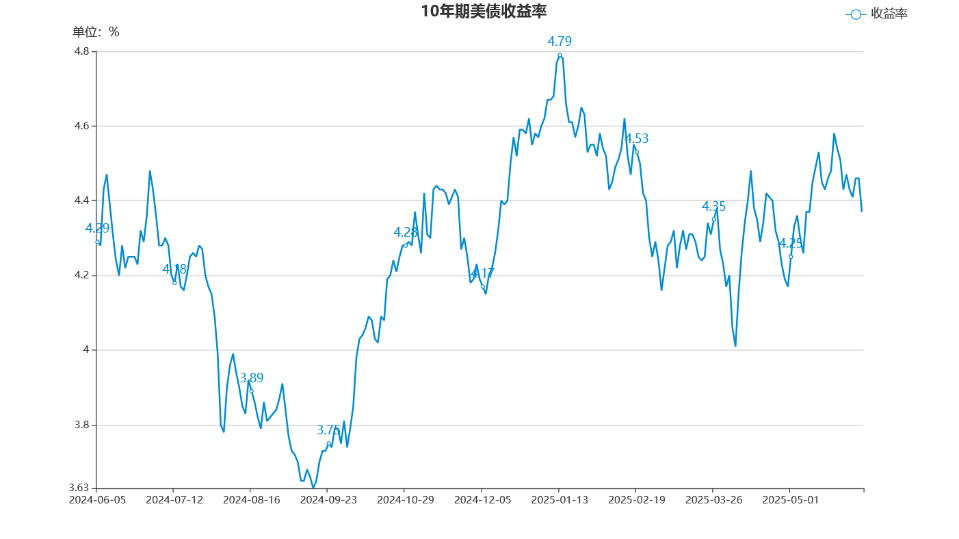
Core Viewpoint - The recent decline in U.S. economic activity and unexpected macro data in May have led to increased uncertainty, as reflected in the Federal Reserve's latest Beige Book, which used the term "uncertainty" 80 times, impacting the bond market positively with a notable rise in bond prices [1] Group 1: Economic Indicators - The Beige Book indicates a decline in U.S. economic activity, suggesting that tariffs and high uncertainty are causing a chain reaction in the economy [1] - ADP's report shows that private sector job growth in May was nearly stagnant, with only 37,000 jobs added, significantly below the expected 110,000, marking the lowest level in over two years [1] Group 2: Bond Market Trends - The yields on U.S. Treasury bonds have dropped to their lowest levels since May 9, with the 2-year yield down 8.25 basis points to 3.862% and the 10-year yield down 9.85 basis points to 4.355% [2] - Short-term bond ETFs have gained popularity, with significant inflows, including over $25 billion into iShares 0-3 Month U.S. Treasury Bond ETF (SGOV) and SPDR Bloomberg 1-3 Month U.S. Treasury Bond ETF (BIL) [4] Group 3: Investment Strategies - Many fixed-income investors are avoiding long-term U.S. Treasuries, shifting focus to short-term bonds as a substitute, reflecting a cautious market sentiment [4] - Current conditions are expected to lead to a supply-demand imbalance in the bond market, with potential upward pressure on term premiums, keeping medium to long-term Treasury yields elevated [5]
6月4日金市早评:黄金开启上行通道 美联储最佳策略是“保持耐心”
Jin Tou Wang· 2025-06-04 01:50
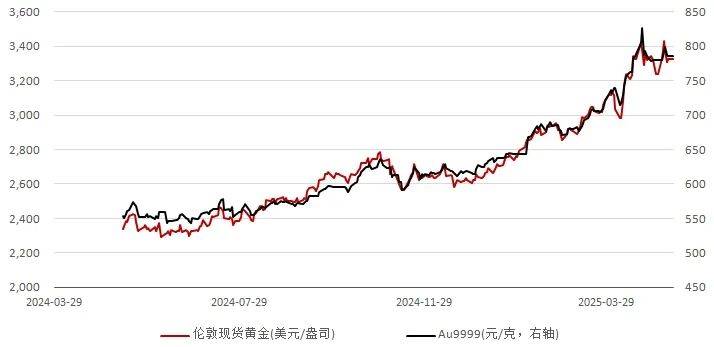
北京时间周三(6月4日)亚市盘中,美元指数交投于99.10附近,现货黄金开盘于3351.24美元/盎司,目 前交投于3366.88美元/盎司附近,黄金t+d交投于784.88元/克附近,沪金主力交投于781.28元/克附近。 上一交易日美元指数收涨0.61%,报99.28,现货黄金收跌0.84%,报3352.70美元/盎司。在现货黄金下跌 之际,其他贵金属涨跌不一:现货白银收跌0.70%,报34.50美元/盎司;现货铂金收涨0.67%,报1073.84 美元/盎司;现货钯金收涨1.76%,至1009.91美元/盎司。 【最新数据一览】 6月3日COMEX黄金库存1192.13吨,较前一交易日减少了0.68吨;COMEX白银库存15398.88吨,较前一 交易日减少了9.64吨。 6月3日SPDR黄金ETF持仓935.65吨,较前一交易日增加了2.58吨;SLV白银ETF持仓14416.65吨,较前一 交易日增加了64.83吨。 6月3日延期补偿费支付方向:Au(t+d)--空付多,Ag(t+d)--多付空,mAu(t+d)-多付空。 【要闻速递】 亚特兰大联储主席博斯蒂克在近期的一篇文章中明确表示,当前经济环 ...
海外创新产品周报:跨境产品表现出色,发行数量增加-20250519
Shenwan Hongyuan Securities· 2025-05-19 09:45
沈思逸 A0230521070001 shensy@swsresearch.com 邓虎 A0230520070003 denghu@swsresearch.com 联系人 沈思逸 (8621)23297818× shensy@swsresearch.com 2025 年 05 月 19 日 跨境产品表现出色,发行数量增加 ——海外创新产品周报 20250519 证券分析师 权 益 量 化 研 究 证 券 研 究 报 告 请务必仔细阅读正文之后的各项信息披露与声明 本研究报告仅通过邮件提供给 中庚基金 使用。1 ETP 研 究 ⚫ 美国 ETF 创新产品:跨境产品发行增加。上周美国共 17 只新发产品,跨境产品发行增加。 Lazard 上周一将其国际股票主动基金转为 ETF,产品的主要基准为 MSCI ACWI 除美国指 数,采用量化打分、风险因子优化的方式构建组合。今年除美国以外的投资机会关注度明 显提升,Horizon 发行一只日本 ETF,罗素、Harbor、Vontobel 上周都发行了跨境产品。 ⚫ 美国 ETF 资金流向:股票重新大幅流入。上周美国股票 ETF 重新恢复流入,国内股票单周 流入超过 ...
Is the Invesco S&P 500 Equal Weight ETF a Better Buy Than an S&P 500 ETF?
The Motley Fool· 2025-05-19 09:36
Core Insights - The SPDR S&P 500 ETF was the first ETF and has become a significant product category, with the Invesco S&P 500 Equal Weight ETF being highlighted as a better-performing variant for long-term investors [1][8]. Group 1: S&P 500 Index Overview - The S&P 500 index is designed to represent the U.S. economy, with stocks selected by a committee rather than tracking the market directly [2]. - Stocks in the S&P 500 are market-cap weighted, meaning larger companies have a greater impact on the index's performance [3]. Group 2: Historical Performance - Historically, investing in the S&P 500 index has proven beneficial over time, even when purchased at market peaks [5]. - Major downturns, such as the dot-com crash and the Great Recession, are viewed as minor blips in the overall upward trend of the S&P 500 index [6]. Group 3: Invesco S&P 500 Equal Weight ETF - The Invesco S&P 500 Equal Weight ETF holds the same stocks as the S&P 500 index but weights them equally, giving each stock the same impact on performance [9]. - Equal weighting addresses issues of market-cap weighting, such as overexposure to hot sectors during bull markets and underrepresentation of smaller, faster-growing companies [10][12]. - The Invesco S&P 500 Equal Weight ETF typically offers a higher yield compared to market-cap weighted ETFs, enhancing overall portfolio yield by approximately 30 basis points [13]. Group 4: Performance Comparison - The Invesco S&P 500 Equal Weight ETF has outperformed the SPDR S&P 500 ETF on both price-only and total-return bases, making it a preferable choice for passive long-term investors [14][15].


【日报】中美经贸高层会谈在瑞士举行 国内金价震荡收涨
Sou Hu Cai Jing· 2025-05-14 10:45
Group 1: International Gold Market - On Friday, international gold prices fluctuated and closed higher, opening at $3304.12 per ounce, reaching a high of $3347.59 and a low of $3274.30, ultimately closing at $3326.46 per ounce [1][10] - COMEX gold futures closed at $3329.10 per ounce [10] - The SPDR gold ETF holdings stood at 937.94 tons [12] Group 2: Currency and Monetary Policy - The onshore RMB against the USD closed at 7.2461, down 106 basis points from the previous trading day, with a weekly increase of 171 basis points [1][18] - The People's Bank of China conducted a 770 billion yuan 7-day reverse repurchase operation, resulting in a net injection of 770 billion yuan for the day [1][13] - The US dollar index decreased by 0.21%, closing at 100.4218 [1][18] Group 3: Macroeconomic Events - High-level economic talks between China and the US took place in Geneva, which alleviated some investor concerns and supported a rebound in US stocks and the dollar, putting pressure on international gold prices [1][20] - US Commerce Secretary warned that tariff negotiations with Japan and South Korea would take considerable time, and President Trump stated he would impose at least a 10% tariff on trade partners [1][20] - Several Federal Reserve policymakers expressed hawkish views, emphasizing the importance of maintaining stable long-term inflation expectations [1][20] Group 4: Domestic Gold Market - The Shanghai Gold Exchange's AU99.99 spot gold contract closed at 785.50 yuan per gram, while the main futures contract AU.SHF closed at 788.42 yuan per gram [11]
Pacer发行现金流轮动策略产品——海外创新产品周报20250512
申万宏源金工· 2025-05-13 03:06
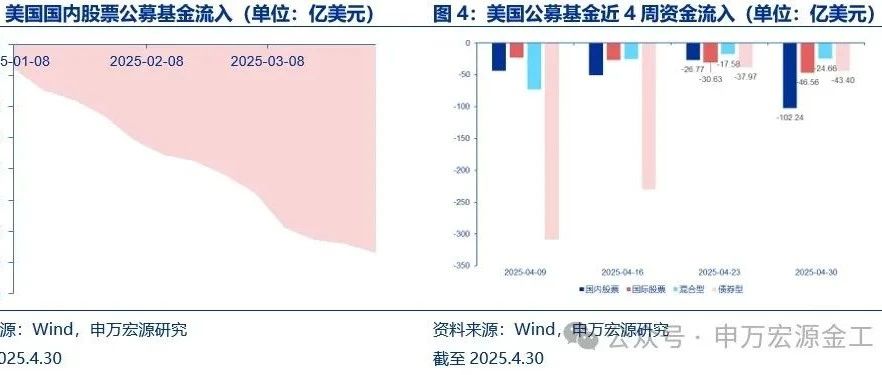
Group 1: New ETF Products - Pacer launched two new cash flow products, expanding its cash flow product line, including a quality-related product that selects S&P 500 stocks with at least 10 years of positive free cash flow [1] - VistaShares introduced an options strategy product that aims for a 15% annualized return by selecting stocks based on quality metrics and selling options [1] - Invesco launched three new products, including one focused on Nasdaq 100 stocks with an options strategy to control drawdowns [1] Group 2: ETF Fund Flows - U.S. stock ETFs experienced outflows, while international stocks and bond products saw significant inflows, particularly in bond ETFs [3][6] - Vanguard's S&P 500 ETF (VOO) had a net inflow of $27.11 billion, while iShares' core S&P 500 ETF (IW) saw a net outflow of $36.98 billion [7] - The iShares Bitcoin Trust ETF (IBIT) continued to attract over $1 billion in inflows [6] Group 3: Bond Market Dynamics - Long-term U.S. Treasury bonds have seen a decline of over 2% in May, but bond ETFs are experiencing inflows, indicating a shift in risk appetite [10] - The Vanguard Total Bond Market ETF (BND) has a year-to-date return of 2.21%, while the iShares 20+ Year Treasury Bond ETF (TLT) has a return of 1.08% [10] Group 4: Fund Flow Trends - In the week of April 23 to April 30, U.S. domestic stock funds experienced a significant outflow of $10.2 billion, while bond product outflows slowed [11] - As of March 2025, the total amount of non-money market mutual funds in the U.S. was $21.17 trillion, reflecting a decrease of $0.88 trillion from February [11]
Warren Buffett Sells His S&P 500 Index Funds Before the Market Crash and Buys a Restaurant Stock Up 375% in 10 Years
The Motley Fool· 2025-04-27 07:40
Group 1: Market Reaction to Tariffs - President Trump's "Liberation Day" tariffs included a 10% tax on most imported goods and reciprocal tariffs, leading to a 12% decline in the S&P 500 over the next five trading days, with the index falling 19% from its February record high [1] Group 2: Berkshire Hathaway's Investment Decisions - Berkshire Hathaway sold its entire stake in two S&P 500 index funds during the fourth quarter, which appears contradictory to Warren Buffett's previous advice to invest in the S&P 500 [4][5] - The decision to sell was driven by Buffett's goal to outperform the S&P 500, as he aims to increase per-share intrinsic value at a rate greater than the index's growth [4] - Berkshire's investment in the Vanguard S&P 500 ETF and SPDR S&P 500 ETF Trust was less than 0.02% of its portfolio, indicating the sale was not a lack of confidence in U.S. stocks [5] Group 3: Domino's Pizza Overview - Domino's is the largest pizza company globally, leveraging innovation such as AnyWare technology for ordering and Pinpoint Delivery for nontraditional delivery locations [9] - The company utilizes artificial intelligence to enhance customer experience by anticipating orders and ensuring quality through visual inspections [10] Group 4: Domino's Financial Performance and Strategy - In 2023, Domino's announced its "Hungry for More" strategy, aiming to open at least 1,100 stores annually through 2028, with sales and operating income growth targets of 7% and 8% respectively [11] - Despite a 3% revenue increase to $1.4 billion and a 9% rise in GAAP net income to $4.89 per diluted share, Domino's missed financial estimates in the fourth quarter [12] - Domino's gained market share in quick-service pizza, outperforming competitors like Papa John's and Pizza Hut in same-store sales growth [12] Group 5: Future Earnings and Valuation - Wall Street estimates that Domino's earnings will grow by 8% annually over the next two years, aligning with its performance goals [13] - The current valuation of Domino's at 29 times earnings is considered expensive, prompting a recommendation to wait for a better entry point before investing [13]

