
腾讯

Search documents
中欧资管合作提速,中国银行助力全球资管枢纽建设
Di Yi Cai Jing· 2025-10-18 07:54
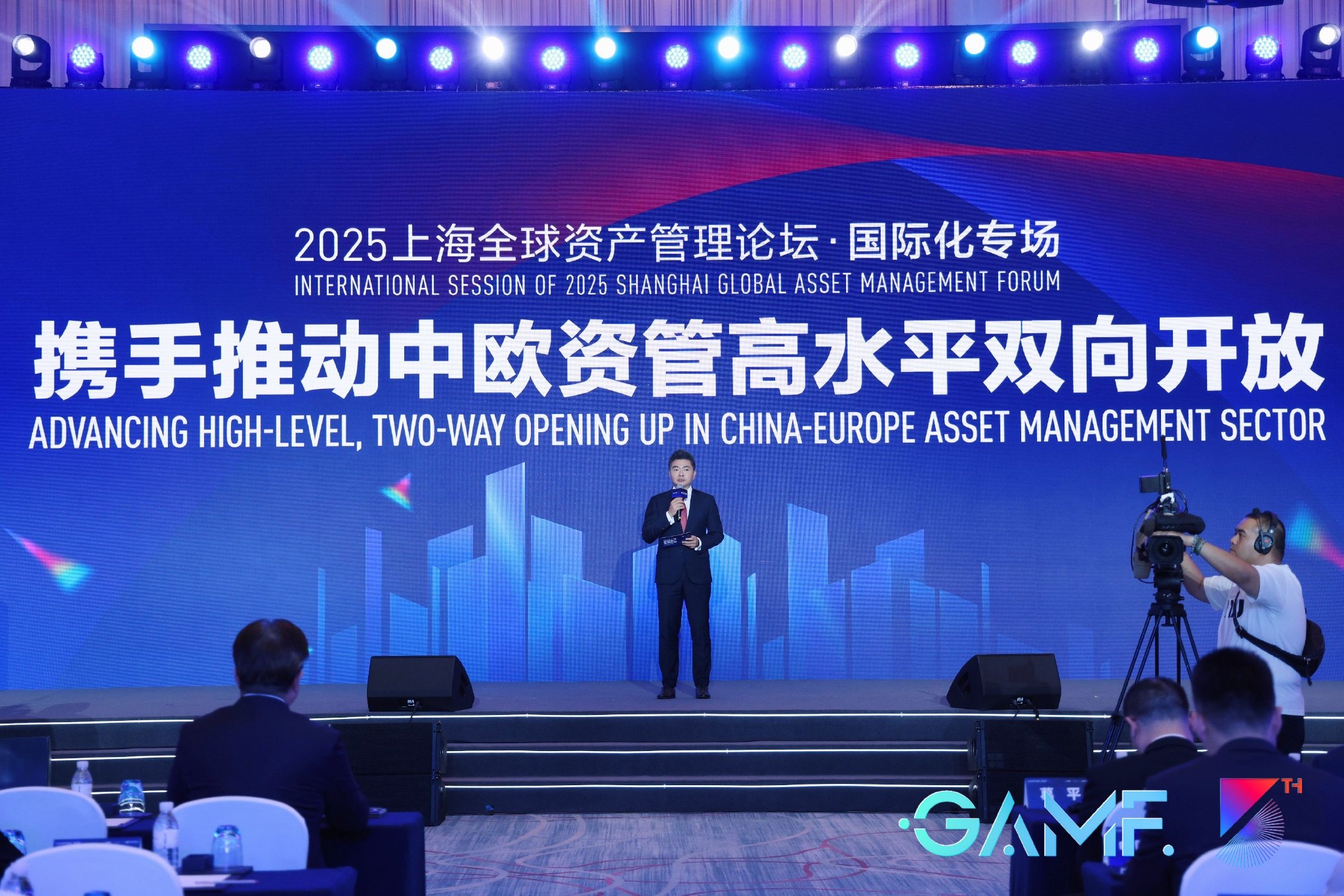
Core Insights - The "2025 Shanghai Global Asset Management Forum" emphasizes the importance of promoting high-level bilateral openness in the asset management sector between China and Europe amidst a complex international economic landscape [1][2] - China is enhancing its financial market and asset management openness, with the RMB gaining global attention as an investment and reserve currency, leading to increased interest from European institutions in China's stock and bond markets [3][4] Group 1: Economic and Financial Performance - Shanghai's GDP reached 2.6 trillion yuan in the first half of 2025, growing by 5.1% year-on-year, with the financial sector contributing 250 billion yuan, an 8.8% increase, accounting for 17.2% of the city's GDP [3] - The three leading industries in Shanghai—artificial intelligence, integrated circuits, and biomedicine—saw a combined output growth of 9.1%, supporting the city's competitiveness as an international financial center [3] Group 2: Policy and Institutional Developments - Shanghai is actively promoting the aggregation of financial institutions and enhancing financial service functions, currently hosting over one-third of the nation's foreign banks and nearly half of foreign insurance institutions [4] - The Shanghai Stock Exchange signed a memorandum of cooperation with the Swiss Exchange to advance cross-border openness, while also improving cross-border financial services and the internationalization of financial institutions [4] Group 3: Investment Trends and Opportunities - International investors are increasingly favoring Chinese assets due to supportive policies, technological innovations, and market performance, with net inflows exceeding 60% of the total for 2024 by mid-2025 [5] - The Chinese market is seen as having significant potential in areas like institutional openness, green finance, and pension markets, with suggestions to gradually relax restrictions on overseas investments in pensions [6] Group 4: Sector Performance and Investment Focus - From 2022 to 2024, energy and financial sectors showed resilience, while 2025 is expected to highlight sectors related to artificial intelligence and leading companies in pharmaceuticals and materials [7] - China is emerging as a leader in innovative drug development, with clinical-stage innovations accounting for 50% of global totals, and is also making strides in electric vehicles and robotics [7] Group 5: Financial Cooperation and Market Integration - The cooperation between China and Europe is characterized by accelerated infrastructure connectivity and deepening policy communication, with the RMB's role in bilateral cooperation becoming increasingly diverse [8] - The London Stock Exchange is implementing reforms to enhance its competitiveness, while also exploring opportunities for collaboration in green economy and energy sectors with Chinese firms [9] Group 6: Strategic Initiatives and Future Outlook - China Bank is positioned as a key player in facilitating China-Europe financial cooperation, with a global custody scale of 4.7 trillion yuan, serving over 100 countries [10] - Future initiatives will focus on enhancing collaboration in green finance, technology empowerment, product innovation, and risk management, aiming to leverage historical opportunities for high-quality development in China and green transitions in Europe [14]


巨额算力合同解约 海南华铁经受冲击波
Jing Ji Guan Cha Wang· 2025-10-18 02:49
Core Viewpoint - The termination of a significant 36.9 billion yuan computing power service agreement by Hainan Huatie has raised concerns about the company's operational integrity and the overall market environment for computing power services [1][3]. Group 1: Contract Termination - Hainan Huatie announced the termination of a 36.9 billion yuan computing power service agreement with Hangzhou X Company, which was expected to account for 70% of the company's projected revenue for 2024 [1][3]. - The company stated that since the signing of the agreement, no purchase orders had been received, and the market conditions had changed significantly since the contract was signed [1][3]. - The Shanghai Stock Exchange has issued a regulatory letter to Hainan Huatie regarding the termination of this major contract, and the China Securities Regulatory Commission has initiated an investigation for suspected violations of information disclosure laws [1][3]. Group 2: Company Background and Business Transition - Hainan Huatie, previously known as Huatie Emergency, primarily engaged in equipment leasing, with revenue growing from 2.607 billion yuan in 2021 to 5.171 billion yuan in 2024, although net profits showed significant fluctuations [2]. - Following a change in actual control to the Hainan Provincial State-owned Assets Supervision and Administration Commission in 2024, the company shifted its focus towards the computing power leasing industry to explore new growth opportunities [2][3]. - The company had signed a total of 24.75 billion yuan in computing power service orders by the end of 2024, with nearly 700 million yuan in asset delivery completed [3]. Group 3: Market Context and Trends - The computing power leasing market has seen a surge in demand, particularly from major internet companies investing heavily in AI infrastructure, with Alibaba planning to invest over 380 billion yuan and Tencent increasing its capital expenditure significantly [5][6]. - Analysts suggest that the current global shortage of high-end AI chips has led to a shift towards leasing rather than purchasing computing power, as this model is more cost-effective and adaptable [6]. - The computing power industry is experiencing a bifurcation in demand, with high-end computing power remaining in high demand while low-end computing power faces challenges in rental agreements [8].

通用型产品增长停滞,垂直赛道成市场新解法丨季度AI 100数据解读
量子位· 2025-10-18 02:07
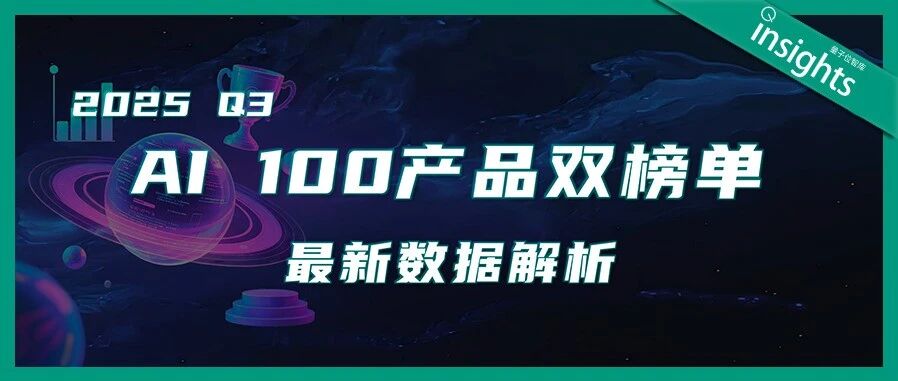
Core Insights - The "AI 100" list has been released, indicating a highly competitive landscape for AI products, with both internet giants and startups optimizing user experiences to capture market share [2][4]. APP Sector AI Product Status - There is a stagnation in growth for web-based AI products, with total visits and monthly active users (MAU) remaining flat at 600 million and 130 million respectively, while leading products show slight declines [6]. - Growth engines have shifted from general head products to niche, high-segment products, with new applications in emerging fields like AI health gaining significant traction [6]. - Notable growth in user numbers for comprehensive office agents and industry-specific agents, such as Kouzi Space and RoboNeo, indicates a validation of agent product value [6]. User Scale Top 10 Products - The top 10 AI products by cumulative downloads on the APP end as of September 2025 include: 1. Quark: ~251 million 2. Doubao: ~233 million 3. Kimi: ~92 million 4. DeepSeek: ~77 million 5. Xingtou: ~77 million 6. Jimeng AI: ~76 million 7. QQ Browser: ~74 million 8. Tencent Yuanbao: ~67 million 9. Meitu Xiuxiu: ~41 million 10. NetEase Youdao Dictionary: ~40 million - A total of 23 products have downloads exceeding 10 million [7]. User Growth Top 10 Products - The top 10 products by new downloads in September 2025 include: 1. Doubao: ~27 million 2. Quark: ~23 million 3. Jimeng AI: ~12 million 4. Tencent Yuanbao: ~11 million 5. QQ Browser: ~8.1 million 6. Xingtou: ~7 million 7. Xingge: ~6.7 million 8. NetEase Youdao Dictionary: ~5.6 million 9. AQ: ~5 million 10. Kimi: ~4.8 million - Total new downloads for AI apps exceeded 166 million in September, a 27% increase from June [9][10]. User Activity Top 10 Products - The top 10 products by daily active users (DAU) in September 2025 include: 1. WPS: ~61 million 2. QQ Browser: ~52 million 3. Doubao: ~33 million 4. DeepSeek: ~26 million 5. Quark: ~22 million 6. Meitu Xiuxiu: ~18 million 7. Tencent Yuanbao: ~17 million 8. Kuaidui: ~12 million 9. NetEase Mail Master: ~7.3 million 10. NetEase Youdao Dictionary: ~6.5 million - The average daily usage of AI apps reached nearly 300 million, with a nearly 50% increase since June [11][12]. APP Sector Analysis - The concentration of top AI products has weakened, with noticeable increases in downloads and daily active users for mid-tier products [14]. - The market share of the top 5 products has decreased from over 60% in Q2 to below 50% [15]. - Doubao and Quark are the only two products with new downloads exceeding 20 million in September, leading the market significantly [16]. Web Sector AI Product Status - The top 10 web-based AI products by total visits in September 2025 include: 1. DeepSeek: ~115 million 2. Doubao: ~85 million 3. Quark: ~82 million 4. Baidu AI Search: ~44 million 5. Tencent Docs: ~41 million 6. Kimi: ~30 million 7. Tongyi: ~29 million 8. WPS Office: ~25 million 9. Tencent Yuanbao: ~22 million 10. Baidu Wenku: ~17 million - The top three products account for 47% of total web-based AI product visits [18]. User Activity Top 10 Products (Web) - The top 10 products by unique visitors in September 2025 include: 1. Quark: ~19 million 2. Baidu AI Search: ~13 million 3. DeepSeek: ~13 million 4. Doubao: ~10 million 5. Baidu Wenku: ~8.6 million 6. Tongyi: ~7.1 million 7. Tencent Docs: ~6.2 million 8. WPS: ~4.9 million 9. Kimi: ~4.6 million 10. Zhihu Zhidao: ~3.4 million - There are 19 products with MAU exceeding 1 million, with Baidu AI Search showing significant growth [21][23]. User Engagement Top 10 Products (Web) - The top 10 products by average visits per user in September 2025 include: 1. Mogao Design: 9.5 2. DeepSeek: 9.1 3. Doubao: 8.3 4. Tencent Yuanbao: 8.2 5. Wenxiaobai: 8.0 6. Moke AI: 7.5 7. Modao AI: 6.8 8. Tencent Docs: 6.6 9. Xiangzhi HaiSnap: 6.6 10. Kimi: 6.5 - The top 10 in user engagement is dominated by AI office efficiency and intelligent assistant applications [25][26]. Web Sector Analysis - Total visits for web-based AI products exceeded 600 million in September, showing growth from 570 million in June, while total active users remained stable at approximately 124 million [27]. - The threshold for the top 10 products in visits and active users has decreased, indicating a shift in user engagement dynamics [27]. - The emergence of AI agents is diverting traffic from traditional web-based products, with agent products gaining significant traction [33].
AI应用与市场拓展双轮驱动 寒武纪前三季度营收同比增逾23倍
Shang Hai Zheng Quan Bao· 2025-10-17 18:38
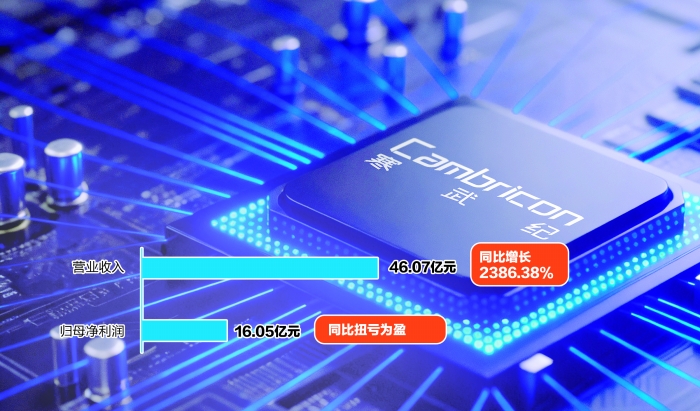
Core Insights - Cambrian's Q3 2025 report shows significant growth in revenue and profit, highlighting the company's explosive growth as a leading domestic AI chip manufacturer [2] - The company achieved a revenue of 4.607 billion yuan in the first three quarters, a year-on-year increase of 2386.38%, and a net profit of 1.605 billion yuan, marking a turnaround from losses [2] - Cambrian's financial indicators are positive, with prepayments and inventory reaching 690 million yuan and 3.729 billion yuan respectively, and R&D investment totaling 715 million yuan, up 8.45% year-on-year [2] Company Overview - Cambrian is a globally recognized emerging company in the smart chip sector, focusing on the research, design, and sales of AI core chips for various applications [3] - The product range includes smart chips and boards for cloud and edge computing, meeting diverse AI computing needs across multiple industries [3] Market Trends - The demand for high-end computing hardware is increasing due to the rapid growth of model networks and the need for improved computational efficiency [4] - Major global tech companies are significantly increasing their investments in AI computing hardware, with projected capital expenditures (Capex) for North American cloud service providers reaching between $351 billion and $357 billion in 2025 [4] Strategic Developments - Cambrian is actively optimizing its smart processor microarchitecture and instruction set to enhance performance in various AI applications [5] - The company has secured 3.985 billion yuan in funding for hardware development and software ecosystem construction, bolstering its long-term competitiveness in the smart chip industry [5]

“机器人服务智能体第一股”云迹科技登陆港股 首日高开低走
2 1 Shi Ji Jing Ji Bao Dao· 2025-10-17 17:55
Core Viewpoint - Yunji Technology has successfully listed on the Hong Kong Stock Exchange, becoming the fourth company under the specialized technology listing rules and is recognized as the "first stock of robot service intelligence" [2] Group 1: IPO Details - Yunji Technology's IPO involved a global offering of 6.9 million shares at an issue price of HKD 95.6 per share, raising approximately HKD 660 million, with a net amount of about HKD 590 million [2] - The IPO was highly sought after, with the public offering being oversubscribed by 5,657.20 times and the international offering oversubscribed by 18.62 times [2] - On the first trading day, the stock opened up 49.37% at HKD 142.8, reaching a market capitalization close to HKD 10 billion, but closed with a gain of 26.05% [2] Group 2: Business Overview - Founded in 2014, Yunji Technology focuses on commercial service robots, primarily serving the hotel sector, with major clients including Marriott, InterContinental, and Hyatt [3] - The company holds a 13.9% market share in China's hotel service robot market, ranking first according to data from Frost & Sullivan [3] - By May 2025, Yunji Technology's robots are expected to be deployed in over 34,000 hotels and more than 150 hospitals globally [3] Group 3: Financial Performance - Yunji Technology achieved a compound annual growth rate (CAGR) of 23.2% in revenue from 2022 to 2024, with projected revenue of CNY 245 million in 2024 [3] - The company's gross margin improved from 24.3% to 43.5%, and losses have been narrowing year by year [3] - The revenue from non-hotel scenarios increased significantly, with the proportion rising from 4.9% in 2023 to 17% in 2024, and the number of new contracts in non-hotel scenarios grew by 79.1% year-on-year [3] Group 4: Government Support - The Hong Kong government played a crucial role in Yunji Technology's listing process, actively introducing the advantages of Hong Kong in the AI and robotics sectors [4] - Following this engagement, Yunji Technology established its international headquarters and R&D center in Hong Kong [3][4]


港股速报|港股全线下挫 中兴通讯H股跌超12%
Mei Ri Jing Ji Xin Wen· 2025-10-17 10:19
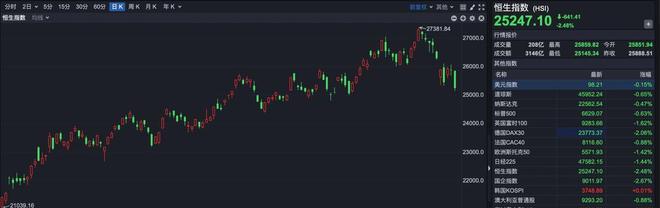
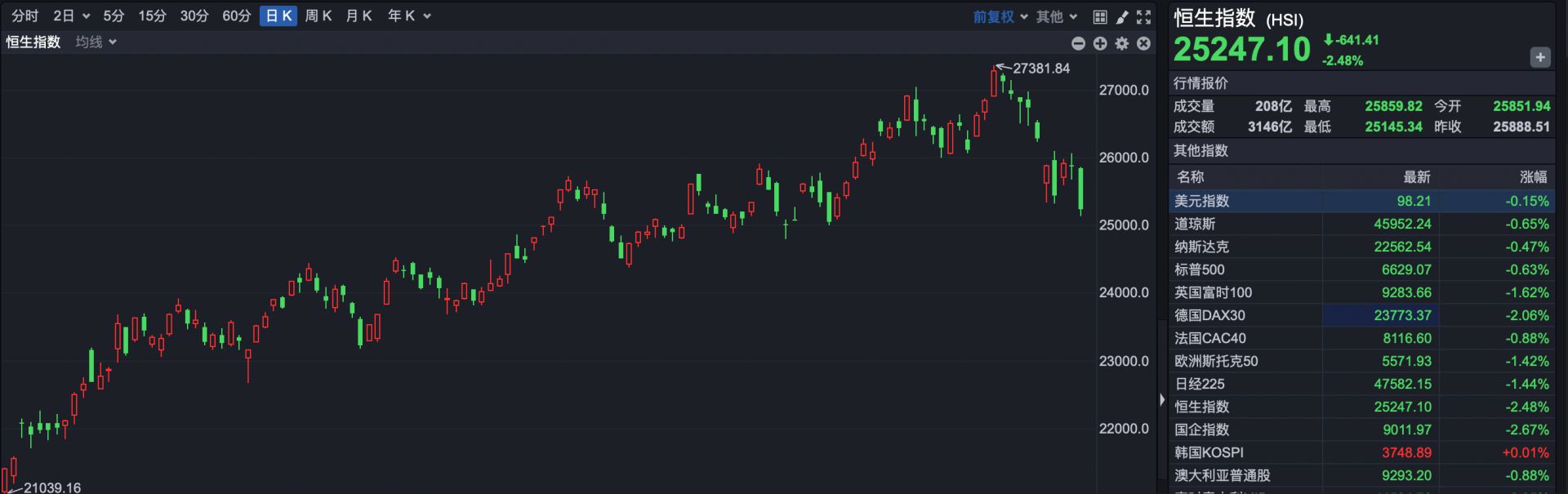
Market Overview - The Hong Kong stock market experienced a significant decline, with the Hang Seng Index closing at 25,247.10 points, down 641.41 points, representing a drop of 2.46%, marking the lowest closing since September 5 [1] - The Hang Seng Technology Index closed at 5,760.38 points, down 243.18 points, a decrease of 4.05%, with a cumulative decline of over 14% since the peak on October 2 [3] Company Performance - ZTE Corporation's H-shares (00763.HK) fell over 12%, with an intraday maximum drop of 14%, while its A-shares (000063.SZ) closed at the daily limit down [5] - Other tech stocks also faced declines, with Baidu, Alibaba, Meituan, and Kuaishou dropping over 4%, and Xiaomi and Bilibili down over 3% [9] Sector Performance - All sectors in the Wind Hong Kong secondary industry index declined, with semiconductors, hardware equipment, and defense industries experiencing the largest drops [7] - Notable declines in new consumption concept stocks included Weilian Meishi (09985.HK) and Blukoo (00325.HK), both down over 6%, while Nayuki Tea (02150.HK) and Pop Mart (09992.HK) fell over 4% [8] Capital Flow - As of market close, southbound funds recorded a net inflow of over 6.3 billion HKD into Hong Kong stocks [10] Market Outlook - Short-term outlook for the Asia-Pacific market appears bleak due to increased uncertainty in news, leading to heightened risk aversion. The market may continue to experience volatility in the absence of positive catalysts [12] - In the medium to long term, the initiation of a rate-cutting cycle by the Federal Reserve may lead to a "double easing" effect in China and the U.S., potentially driving sustained inflows into Hong Kong stocks and fostering a slow bull market trend [12]

新力量NewForce总第6885期
First Shanghai Securities· 2025-10-17 09:54
Investment Rating - The report assigns a "Buy" rating to multiple companies within the industry, indicating a positive outlook for their stock performance [15]. Core Insights - The implementation of the new advertising law on October 1 has reclassified traffic acquisition costs as advertising and promotional expenses, impacting tax deductions for businesses [4][6]. - The policy aims to curb short-term operational models reliant on heavy spending for traffic, encouraging businesses to focus on brand building and long-term operations [4][6]. - During the National Day holiday, significant increases in travel and consumption were reported, with high engagement on platforms like Gaode and Fliggy [7][9]. - Tencent has demonstrated strong confidence in its long-term value by repurchasing approximately HKD 609.6 billion worth of shares this year, reflecting a robust cash flow situation [10]. - JD.com has reported impressive sales growth during its Double Eleven promotion, with significant increases in various product categories and user engagement [11]. - ByteDance's Seed team has made substantial advancements in AI technology, showcasing a strong output despite organizational changes [12][13]. Policy Impact - The new advertising law affects different market participants variably, with live commerce platforms facing the most significant challenges due to their reliance on traffic acquisition costs [6]. - Major platforms are adapting by introducing new promotional tools and optimizing their merchant structures to mitigate the impact of the policy [6]. Company Performance - Alibaba's performance during the National Day holiday was highlighted by a 48% increase in GMV for travel services compared to the previous year [9]. - Tencent's share buyback program is expected to exceed HKD 800 billion for the year, positioning it as a leading example of shareholder returns in the Hong Kong market [10]. - JD.com has seen a 70% increase in orders for electronic products during its promotional period, indicating strong consumer demand [11]. Market Trends - The report notes a shift in focus among businesses from short-term traffic acquisition to sustainable brand development, driven by regulatory changes [4][6]. - The travel and consumption sectors are experiencing a resurgence, with significant increases in user engagement and spending during holiday periods [7][9].
港股收盘(10.17) | 恒指收跌2.48% 科技股集体下挫 老铺黄金(06181)逆市涨超3%
智通财经网· 2025-10-17 08:48
Market Overview - The credit crisis among U.S. regional banks has intensified, leading to a decline in U.S. stock markets and a significant drop in Hong Kong stocks, with the Hang Seng Index falling nearly 3% at one point [1] - The Hang Seng Index closed down 2.48% at 25,247.1 points, with a total turnover of HKD 314.62 billion, while the Hang Seng Tech Index dropped 4.05% [1] - For the week, the Hang Seng Index fell 3.97%, the Hang Seng China Enterprises Index fell 3.7%, and the Hang Seng Tech Index fell 7.98% [1] Blue Chip Performance - Hansoh Pharmaceutical (03692) rose 2.13% to HKD 36.5, contributing 1.43 points to the Hang Seng Index, after signing a licensing agreement with Roche for its ADC HS-20110, with a total deal value of USD 1.53 billion [2] - Chow Tai Fook (01929) increased by 5.02%, while Link REIT (00101) rose 0.57% [2] - BYD Electronic (00285) fell 8.13%, negatively impacting the index by 4.21 points [2] Sector Performance - Major tech stocks collectively declined, with Alibaba down over 4% and Tencent nearly 2% [3] - Chip stocks saw significant losses, with ZTE Corporation down over 12% and Hua Hong Semiconductor down nearly 7% [3][4] - The photovoltaic sector continued to decline, with rumors about a multi-crystalline silicon storage platform being unsubstantiated, leading to further losses in solar stocks [4][6] Cryptocurrency Market - The cryptocurrency market experienced a sharp decline, with Bitcoin dropping nearly 5% to USD 104,986, and Ethereum down nearly 7% [6] - The decline was attributed to concerns over credit markets following recent events involving U.S. regional banks and the ongoing government shutdown [6] Notable Stock Movements - Lao Pu Gold (06181) rose 3.11% after announcing a price adjustment for its products, marking its third price change this year [7] - China Duty Free Group (01880) increased by 2.05% following the announcement of expanded duty-free shopping policies in Hainan [8] - NIO Inc. (09866) saw a 2.17% increase, responding to a lawsuit that is not related to its recent operational status [9] - Fuyao Glass (03606) fell 5.73% after announcing a leadership change and reporting Q3 revenue of approximately CNY 11.855 billion, up 18.86% year-on-year [10]


港股速报 | 港股全线下挫 中兴通讯H股跌超12%
Mei Ri Jing Ji Xin Wen· 2025-10-17 08:45
Market Overview - The Hong Kong stock market experienced a significant decline, with the Hang Seng Index closing at 25,247.10 points, down 641.41 points, representing a drop of 2.46%, marking the lowest closing since September 5 [1] - The Hang Seng Tech Index closed at 5,760.38 points, down 243.18 points, a decrease of 4.05%. Since the peak on October 2, the index has seen a cumulative decline of over 14% [3] Company Focus - ZTE Corporation's H-shares (00763.HK) fell over 12%, with an intraday maximum drop of 14%. The A-shares (000063.SZ) hit the daily limit down [5] - New consumption concept stocks also saw declines, with companies like Weilang Meishi (09985.HK) and Blukoo (00325.HK) dropping over 6%, while Nayuki Tea (02150.HK) and Pop Mart (09992.HK) fell over 4% [8] Sector Performance - All sectors in the Wind Hong Kong secondary industry index declined, with semiconductors, hardware equipment, and defense industries experiencing the largest drops [7] - Specific sector declines included: - Defense and military down 5.18% - Hardware equipment down 5.51% - Semiconductor down 3.55% [8] Other Notable Stocks - Tech stocks also faced declines, with Baidu, Alibaba, Meituan, and Kuaishou all dropping over 4%. Xiaomi and Bilibili fell over 3%, while Tencent decreased by over 1% [9] - Apple-related stocks, such as Q Technology, saw a drop of over 9%, and solar energy stocks continued their downward trend, with Sunshine Energy falling over 5% [9] Capital Flow - As of market close, southbound funds net bought over 6.3 billion HKD in Hong Kong stocks [9] Market Outlook - Short-term outlook for the Asia-Pacific market appears bleak due to increased uncertainty in news, leading to heightened risk aversion. Without new positive catalysts, the market may continue to experience volatility [11] - In the medium to long term, with the Federal Reserve entering a rate-cutting cycle, a "double easing" effect between China and the U.S. is expected, which may lead to sustained capital inflow and a gradual bullish trend for Hong Kong stocks [11]
港股午评:恒科指大跌2.8%失守6000点,科技股弱势,半导体、光伏板块跌幅明显
Ge Long Hui· 2025-10-17 04:08
Market Overview - The Hong Kong stock market experienced a decline in the morning session, with the Hang Seng Tech Index falling the most by 2.81%, dropping below 6000 points and reaching a new recent low [1] - The Hang Seng Index and the Hang Seng China Enterprises Index also saw declines of 1.61% and 1.67%, respectively, with the Hang Seng Index down over 400 points, closing at 25,472 points, indicating a pessimistic market sentiment [1] Sector Performance - Major technology stocks, which serve as market indicators, collectively declined, putting significant pressure on the market. Notable declines included Baidu down 3.48%, Alibaba down 3.16%, and Xiaomi and Meituan both down nearly 3% [1] - Semiconductor stocks, Apple-related stocks, photovoltaic stocks, automotive stocks, and robotics concept stocks also faced declines, with notable drops such as Q Technology down over 9%, Hon Teng Precision down 8.8%, and GCL-Poly Energy down 6.5% [1] - Education stocks, which had seen a significant rise the previous day, also turned sluggish [1] - Gold prices fell sharply, dropping below $4,280, leading to a majority of gold stocks declining, along with copper and aluminum stocks [1] Resilient Sectors - In contrast, retail stocks showed resilience, and airline stocks rose again, with the three major airlines reporting strong operational data for September, suggesting a potential continuation of industry recovery [1]