蔚来

Search documents
A股三大指数尾盘回落,卫星互联网下挫,华体科技等多股跌停,港股多只科网股跳水
2 1 Shi Ji Jing Ji Bao Dao· 2025-12-23 07:48
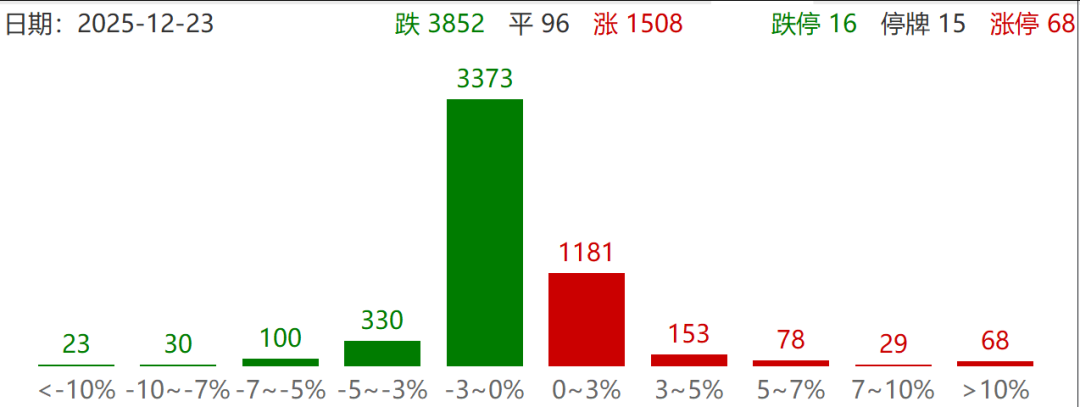
Market Overview - On December 23, A-shares experienced a slight increase with the Shanghai Composite Index rising by 0.07%, the Shenzhen Component Index by 0.27%, and the ChiNext Index by 0.41% [1] - The total trading volume in the Shanghai and Shenzhen markets approached 1.92 trillion, showing a slight increase compared to the previous day [1] - Over 1,500 stocks rose, with nearly 70 stocks hitting the daily limit, while around 3,900 stocks declined [1] Sector Performance - The Hainan Free Trade Zone concept stocks showed strong performance, with Hainan Haiyao (000566), Hainan Ruize (002596), and Hainan Development (002163) hitting the daily limit [3] - The lithium battery sector also performed well, with Tianji Co. (002759) reaching the daily limit [3] - Liquid cooling service providers saw gains in the afternoon, with Yingweike (002837) and Jitai Co. (002909) hitting the daily limit [3] - Semiconductor equipment concepts were active, with Shenghui Integration (603163) and Yaxiang Integration (603929) achieving consecutive limit-ups [3] - The non-ferrous tungsten sector was active, with Xianglu Tungsten (002842) and Zhangyuan Tungsten (002378) both hitting the daily limit [3] - The electric grid equipment sector saw a late surge, with Baobian Electric (600550) hitting the daily limit, followed by other stocks like Shun Sodium (000533) and Zhongneng Electric (300062) rising [3] New Listings - Three newly listed stocks all experienced significant gains, with N Tian Su (N天溯) and N Xi Hua (N锡华) triggering a second trading halt due to rapid price increases [3] Declining Sectors - The satellite internet sector faced declines, with stocks like Huati Technology (603679) hitting the daily limit down, and China Satellite Communications (601698) nearing the limit down [4] - The commercial aerospace sector also struggled, with Shunhao Co. (002565) and others hitting the daily limit down [4] - The tourism and hotel sector declined, with Qujiang Cultural Tourism (600706) hitting the daily limit down [4] - The education sector continued to decline, with China High-Tech (600730) hitting the daily limit down [4] - The Beidou navigation sector weakened, with Jiuzhiyang (300516) dropping over 12% [4] - Other sectors such as 3D glass, 6G concepts, and digital currency saw significant declines [4] Hong Kong Market - In the Hong Kong market, major indices turned negative, with the Hang Seng Technology Index falling by 0.8% [5] - Several tech stocks experienced sharp declines, including Horizon Robotics down nearly 5% and Kuaishou down 4% [5]


2025,中国汽车业定格局之年|36氪年度透视
Xin Lang Cai Jing· 2025-12-23 05:48
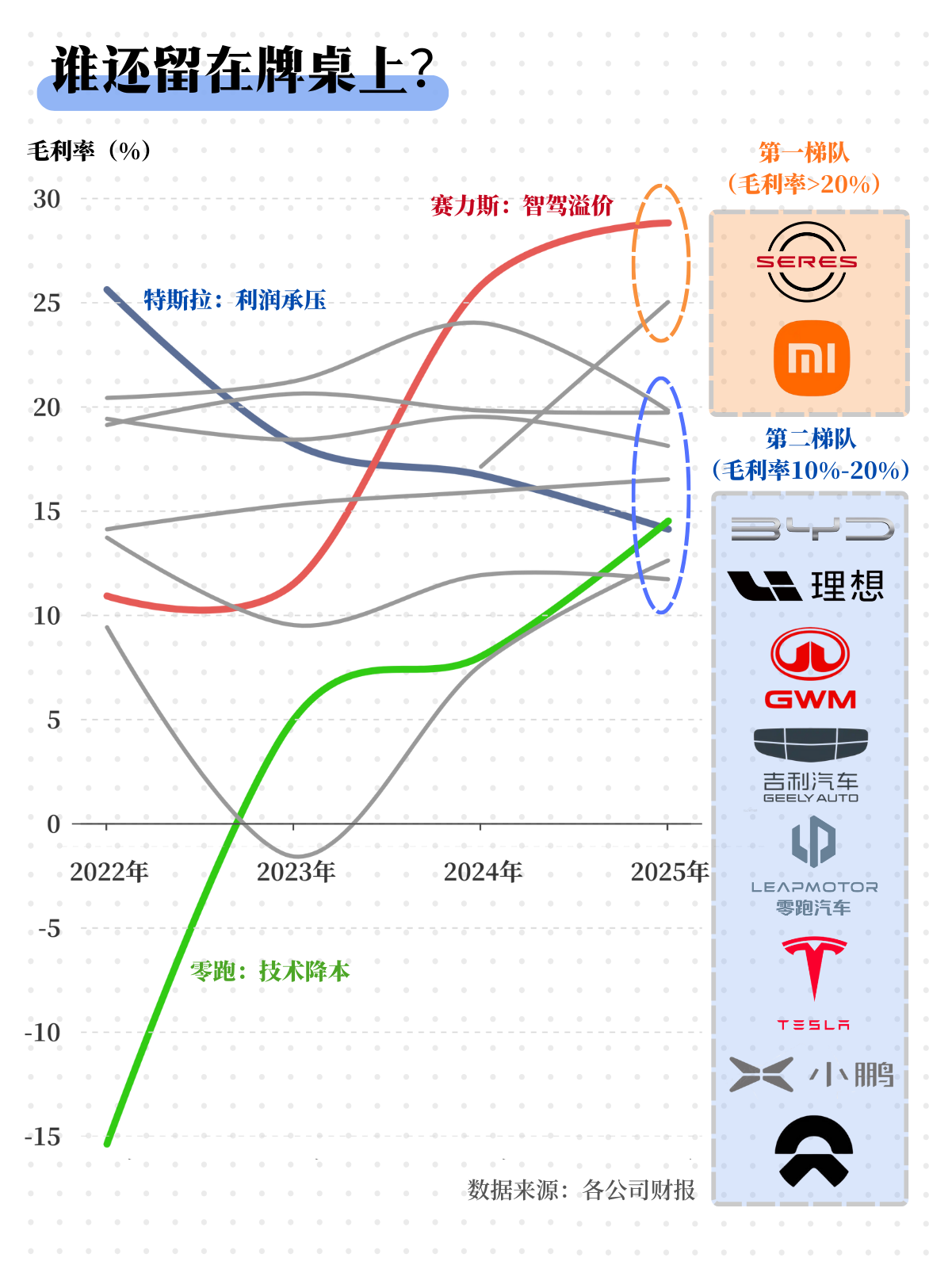
Core Viewpoint - The Chinese automotive market is undergoing significant changes, with a shift from price competition to a focus on technology and profit margins as key survival metrics by 2025 [1][6][7]. Group 1: Market Dynamics - The automotive industry in China cannot sustain too many brands, leading to a harsh reality of market differentiation rather than mere competition [1]. - Price wars have evolved into a long-term battle, where technological advantages are the only remaining cards for survival [1][6]. - Companies like Seres and Xiaomi are maintaining a gross margin above 20%, while traditional profit leaders like Tesla and BYD are facing unprecedented profit pressures [1][6]. Group 2: Technological Advancements - The industry is witnessing a "subtraction revolution" in technology, exemplified by BYD's cost reduction strategies, which have led to a 20% decrease in overall costs [3][10]. - The integration of electric drive systems and advancements in silicon carbide technology are crucial for cost reduction and efficiency improvements [3][10]. Group 3: Global Expansion - The shift towards international markets is becoming essential, with BYD's overseas sales experiencing a dramatic increase, doubling in volume [1][6]. - By 2025, the competition will not only be about pricing but will also encompass technology definition rights, global pricing power, and control over the supply chain [7]. Group 4: Market Share and Competition - New entrants like Xiaomi are making significant inroads into the market, capturing 25% of the 200,000-300,000 RMB segment with a single product [1][5]. - The traditional luxury market is being reshaped, with companies like WM Motor effectively clearing out competition from established brands like BMW, Benz, and Audi (BBA) [1][6].

龙旗科技港股上市聆讯取得进展:全球化布局提速 AI端侧创新赋能多元增长
财联社· 2025-12-23 03:35
Core Viewpoint - Longqi Technology's IPO on the Hong Kong Stock Exchange marks a significant step in its international capital strategy, aimed at enhancing its capital strength and global brand influence while supporting AI innovation and multi-business collaboration [1] Group 1: Globalization Strategy - The core strategic goal of Longqi Technology's IPO is to enhance capital strength and competitiveness, improve international brand image, and support global business development [2] - The company has established a "China R&D + Global Manufacturing" collaborative system, positioning itself as a leader in the global consumer electronics ODM market [2] - Longqi has set up production centers in Huizhou, Nanchang, Vietnam, and India, and has branches in the US, South Korea, and Japan, allowing for flexible capacity allocation to meet global demand and mitigate geopolitical risks [2] Group 2: R&D and Customer Support - Longqi has optimized global resource allocation by creating a "domestic R&D hub + overseas localized support" system, ensuring 24/7 technical service for overseas clients [3] - The company has established R&D centers in multiple Chinese cities, focusing on core technology and product innovation, which enhances customer loyalty and supports business expansion [3] Group 3: Fundraising and Investment Focus - The IPO funds will be directed towards expanding overseas production capacity, enhancing local production in Vietnam to meet growing demand from European and North American clients [4] - Investments will also focus on improving production efficiency and building overseas R&D and marketing teams to support business development [4] - Strategic investments or acquisitions will be pursued to strengthen technological positioning and expand the ecosystem [4] Group 4: Business Strategy and Growth - Longqi's "1+2+X" product strategy aims to create a growth pattern characterized by core stability, emerging explosions, and diversified collaboration [5] - The company is the second-largest consumer electronics ODM globally and the largest smartphone ODM, with a projected shipment of 173 million smartphones in 2024, capturing a market share of 32.6% [5] - The AI PC and automotive electronics sectors are emerging growth areas, with expectations for significant market expansion by 2026 [6] Group 5: Emerging Technologies and Partnerships - Longqi is actively involved in the smart hardware sector, particularly in smart glasses, and has secured orders for new AI smart glasses projects [7] - The company collaborates with leading internet clients and has established strategic partnerships in the AI/AR industry to enhance technological capabilities [7] - Longqi is also exploring opportunities in AI robotics, partnering with Zhiyuan Robotics to develop industrial-grade intelligent robot solutions [7] Group 6: Future Outlook - As the IPO progresses, Longqi aims to further enhance its global layout and deepen its core and emerging business strategies, benefiting from trends in AI terminal penetration and ODM industry consolidation [8] - The company is transitioning from a traditional ODM leader to a core supplier in the AI sector, with growth potential continuing to expand [8]

美股AI巨头集体走强
财联社· 2025-12-23 01:09
Core Viewpoint - The U.S. stock market experienced a positive trend with all three major indices rising for three consecutive days, driven by technology stocks, particularly those related to artificial intelligence [1][2][3]. Market Performance - The Dow Jones Industrial Average rose by 0.47% to close at 48,362.68 points, the S&P 500 increased by 0.64% to 6,878.49 points, and the Nasdaq Composite gained 0.52% to 23,428.83 points [2][3]. - The VIX, known as the "fear index," dropped to 14.08, marking the lowest level since December 13, 2024 [3]. Technology Sector - Major tech stocks showed strong performance, with Nvidia up 1.49%, Tesla up 1.56%, Oracle rising over 3%, and Micron Technology increasing by over 4% [3][5]. - Concerns about high valuations in tech stocks are present, with investors closely monitoring their performance as the year-end approaches [3]. Investor Sentiment - There is skepticism regarding the potential for a "Santa Rally" in the market, with some analysts suggesting a lack of catalysts for further gains [3]. - However, others express optimism for a strong start in 2026, indicating a potential return of the "Santa Rally" that could lead to new highs by year-end [3]. Economic Indicators - The S&P 500 has seen a year-to-date increase of 16.95%, with the possibility of achieving a third consecutive year of over 20% gains, which would be a rare occurrence [3]. Sector Highlights - The semiconductor sector rose by 1.1%, with 24 out of 30 stocks gaining, including a notable 4.01% increase in Micron Technology [6]. - The solar energy sector performed well, with Turbo Energy rising by 10.99% and First Solar reaching a new closing high since June 2024 [7]. Financial Sector - Citigroup shares increased by 2.81%, reaching the highest level since 2008 [8]. Chinese Stocks - The Nasdaq Golden Dragon China Index rose by 0.58%, with several Chinese stocks, including TAL Education and Pinduoduo, showing gains [9][10].






影石们找到了“活人感”
3 6 Ke· 2025-12-22 12:02
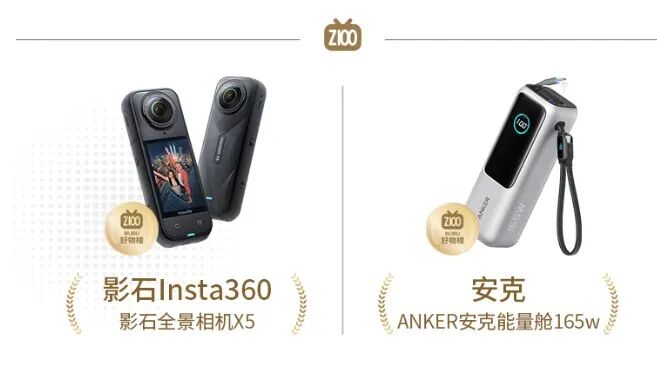
Core Insights - The article discusses the competitive landscape of the panoramic camera market, highlighting how the company YingShi maintains a dominant position despite strong competitors like DJI, with a global market share of approximately 81.7% as of the end of 2024 [1] - YingShi's revenue exceeded 6.6 billion yuan in the first three quarters of the year, surpassing its total revenue from the previous year [1] - The company effectively targets Generation Z consumers, leveraging innovative marketing strategies to engage with this demographic [1][3] Group 1: Market Position and Financial Performance - YingShi holds a significant market share of 81.7% in the global panoramic camera market as of the end of 2024 [1] - The company's revenue for the first three quarters of the year has already surpassed 6.6 billion yuan, exceeding its total revenue for the previous year [1] Group 2: Marketing Strategy and Brand Engagement - YingShi employs a unique brand marketing strategy characterized by a "human touch," which resonates well with younger audiences [3] - The company's Bilibili account has gained over 630,000 followers and accumulated more than 340 million video views, showcasing its effective engagement with users [3] - YingShi's marketing approach includes creating imaginative content and collaborating with popular creators to enhance brand visibility and relatability [5][7] Group 3: User-Centric Content Creation - The company invests heavily in user-generated content (PUGC) and collaborates with various creators to produce engaging videos that showcase innovative uses of its products [5] - Many of YingShi's video concepts originate from user feedback, enhancing the brand's connection with its audience and reinforcing its "human touch" [7] - The brand's strategy emphasizes creating high-quality content that subtly promotes its products without overtly pushing sales [7] Group 4: Broader Industry Trends - The concept of "human touch" in marketing is gaining traction among various brands, with examples like Duolingo successfully personifying its brand through a relatable mascot [4] - Other brands, such as Zhuangzhuang, are also exploring similar strategies by creating engaging personas to connect with consumers [10][12] - The shift towards more relatable and authentic brand representations reflects changing consumer preferences, particularly among younger generations [12][14]
年底车市静悄悄 | 棱镜
Xin Lang Cai Jing· 2025-12-22 11:19
Group 1 - The Chinese automotive market is experiencing a significant decline in sales, with retail sales of passenger vehicles dropping by 32% year-on-year in early December 2025, totaling 297,000 units [2][28] - The new energy vehicle (NEV) market also saw a decline, with retail sales of 185,000 units, down 17% year-on-year [2][28] - This decline is attributed to the phasing out of the vehicle purchase tax exemption and uncertainty surrounding the "trade-in" subsidy policies [3][29] Group 2 - The current vehicle purchase tax is set at 10%, with a reduced rate of 5% for NEVs, and the exemption cap has been lowered from 30,000 yuan to 15,000 yuan [5][31] - There is a prevailing market sentiment of caution among consumers, with 58.2% of dealers reporting that November sales did not meet expectations due to this cautious attitude [6][33] - The "trade-in" subsidies have been paused in many regions, impacting consumer purchasing behavior [8][34] Group 3 - The anticipated "year-end surge" in sales, typically seen in the fourth quarter, has not materialized this year, leading to a "flat tail" effect instead of the expected "tail effect" [36][44] - The automotive market saw a rare decline in November, with retail sales down 8.1% year-on-year, attributed to high sales figures from the previous year and the suspension of trade-in subsidies [38][39] - The inventory warning index for dealers reached a high of 55.6%, indicating over 3.3 million vehicles in stock, with more than 30% of dealers facing inventory pressure [35][41] Group 4 - Over 20 automotive companies have introduced "purchase tax guarantee" policies, where manufacturers will cover the difference in tax if consumers order vehicles before the end of 2025 but do not receive them until after [41][44] - This policy is expected to affect purchasing behavior, leading consumers to delay purchases, which could suppress immediate demand in the fourth quarter [42][44] - The exit of subsidies is projected to significantly impact the market, with estimates suggesting a potential sales growth slowdown from 8% in 2025 to -2% in 2026 [45][46] Group 5 - The automotive industry is shifting from a "policy-driven" to a "market-driven" and "technology-driven" model, indicating a maturation of the market [46] - The average price of new energy vehicles is expected to decrease from 185,000 yuan in 2023 to 156,000 yuan in 2025, putting pressure on profit margins [52] - The penetration rate of new energy vehicles has surpassed 50%, indicating a significant shift in consumer adoption and market dynamics [52]

奥动新能源港股IPO:“报表优化”后的盈利迷雾
经济观察报· 2025-12-22 10:26
Core Viewpoint - Aodong New Energy is striving to become the "first stock in battery swapping" in Hong Kong but is facing significant profitability challenges, with a net loss of 157 million yuan in the first half of 2025 and a worsening gross loss rate from 4.4% to 8.9% [1][2] Financial Performance - Aodong New Energy reported a net loss of 157 million yuan in the first half of 2025, a 44.52% reduction from 283 million yuan in the same period of 2024, but this improvement is attributed to business scale contraction and cost-cutting rather than enhanced profitability [5] - Revenue for the first half of 2025 was only 324 million yuan, a year-on-year decline of 31.7% [5] - The gross loss rate deteriorated from 4.4% in the first half of 2024 to 8.9% in the first half of 2025, indicating that for every 100 yuan in revenue, the loss increased from 4.4 yuan to 8.9 yuan [5] Business Model Challenges - Aodong New Energy is heavily reliant on the taxi and ride-hailing market, which has seen demand saturation and tightening policies, adversely affecting business performance [8] - The company has shifted from a focus on equipment sales to a service-driven model, halting the construction of new battery swapping stations and significantly reducing operations [8][9] - The number of self-owned battery swapping stations decreased from 321 in 2023 to 267 in the first half of 2025, raising concerns about revenue generation capabilities [9] Research and Development Issues - Aodong New Energy's R&D investment from 2022 to the first half of 2025 totaled only 248 million yuan, with a 27.4% decrease in R&D spending from 37.2 million yuan in the first half of 2024 to 27 million yuan in the first half of 2025 [6] - The company has faced significant staff turnover, with many R&D personnel and executives leaving, leading to a reduced R&D team of only 68 people, accounting for 4.4% of the total workforce [6] Market Position and Future Prospects - Aodong New Energy is currently the largest independent third-party battery swapping solution provider in China but is under pressure from larger competitors like NIO and CATL, which have established a more extensive network of battery swapping stations [15][17] - The company is attempting to pivot towards heavy-duty trucks and Robotaxi battery swapping solutions, but it lacks core competencies in the heavy-duty truck sector and faces challenges in customer acquisition for this new market [12][13] - The overall battery swapping industry is struggling, with a lack of unified standards and a comprehensive support system, which poses significant risks for Aodong New Energy's future [15][17]

大三排SUV市场巨变:纯电销量连续三个月排名第一,增程连续五个月下滑
Zheng Quan Shi Bao Wang· 2025-12-22 09:09
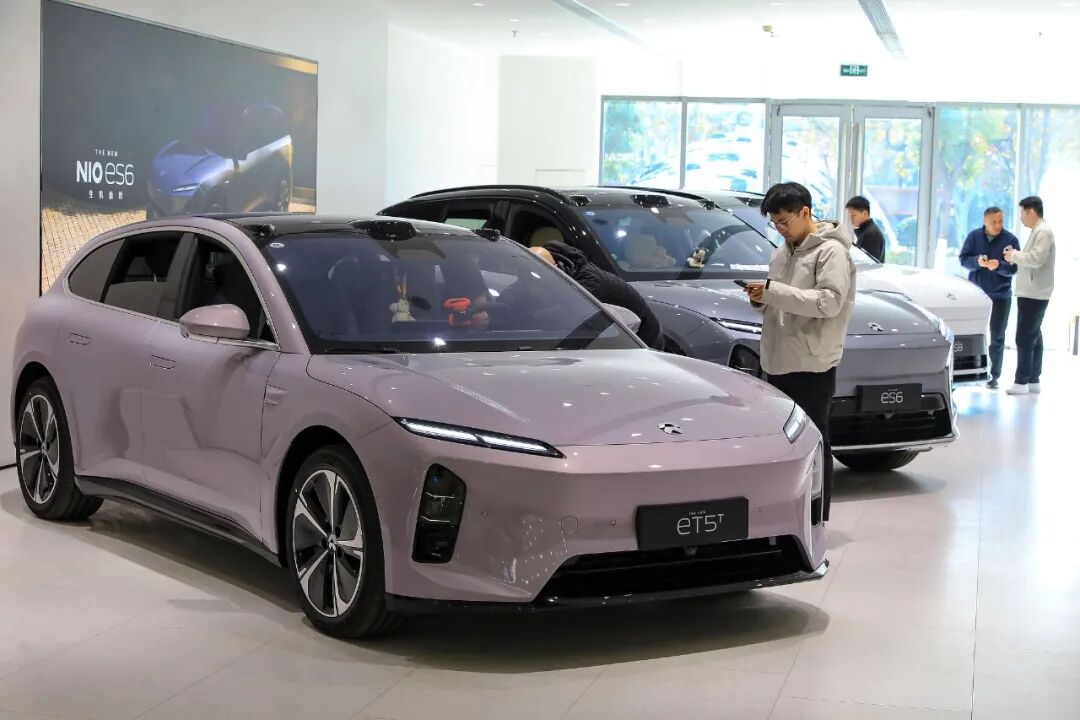
Group 1 - The core viewpoint indicates a significant shift in the SUV market, with pure electric large three-row SUVs achieving record sales of 46,209 units in November 2025, marking a 16% month-on-month increase and leading all powertrain types for three consecutive months [1] - The sales of range-extended vehicles have been declining, with a continuous year-on-year drop for five months, indicating a potential end to the growth phase that saw increases of 218%, 130%, 154%, and 70.9% from 2021 to 2024 [1] - NIO's CEO, Li Bin, emphasizes the transition from the golden era of range-extended large three-row SUVs to the golden era of pure electric models, aiming for a rebound in the fourth quarter [1] Group 2 - The sluggish growth of range-extended large three-row SUVs is attributed to cyclical adjustments by major brands like Li Auto and Aion, as well as the resolution of previous pain points such as insufficient electric vehicle range and inadequate charging infrastructure [2] - The competitive landscape for new energy large three-row SUVs is becoming crowded, with approximately 30 models expected to compete in the market next year, indicating a peak phase in the "gold rush" for this segment [2]
中金:中高端新能源市场或彰显韧性 关注L3智驾交易主线
Zhi Tong Cai Jing· 2025-12-22 08:35
Core Viewpoint - The domestic automotive market in China is expected to face pressures from the withdrawal of subsidy policies and demand exhaustion by 2026, leading to potential sales challenges. However, with government support for domestic demand, passenger vehicle sales may exhibit a trend of low performance initially followed by recovery later on [1][3]. Market Dynamics - The consumption structure is shifting downwards, with electric vehicles (EVs) taking over from hybrids to achieve high growth. The overall consumption structure of new energy passenger vehicles is expected to show a downward trend by 2025, with a significant increase in the share of vehicles priced below 100,000 yuan [2]. - The penetration rate of new energy vehicles is slowing, but pure electric vehicles are expected to see substantial growth in the mass market, while the hybrid market in the mid-to-high-end segment continues to grow despite a high base [2]. Sales Outlook - The first quarter of 2026 is anticipated to face pressures from the withdrawal of subsidies and demand exhaustion, potentially leading to lower sales. Nevertheless, the new energy sector is expected to maintain a double-digit year-on-year growth rate, particularly in the mid-to-high-end market where the impact of subsidy withdrawal is expected to be minimal [3]. Competitive Landscape - The competitive landscape for new energy vehicles is still in a state of reshuffling, with intense competition leading to a decline in market share for leading brands, while other brands are actively seeking to break through [2][4]. - Key trends to watch include tactical adjustments from leading new energy vehicle manufacturers and opportunities for latecomer brands to reverse their fortunes. Additionally, the introduction of Level 3 autonomous driving trials may mark a turning point in high-level intelligent driving, with companies that can differentiate their driving capabilities expected to gain competitive advantages [4]. Investment Recommendations - Companies to watch include: 1. Leading new energy manufacturers adjusting their strategies: Li Auto (02015), BYD (002594) [5] 2. Latecomer new energy manufacturers with potential for reversal: Chery Automobile (09973), Great Wall Motors (601633), Changan Automobile (000625.SZ), SAIC Motor (600104), Geely Automobile (00175) [5] 3. Companies with brand advantages and technological attributes: Seres (601127), Leap Motor (09863), NIO (09866), Xpeng Motors (09868) [5].
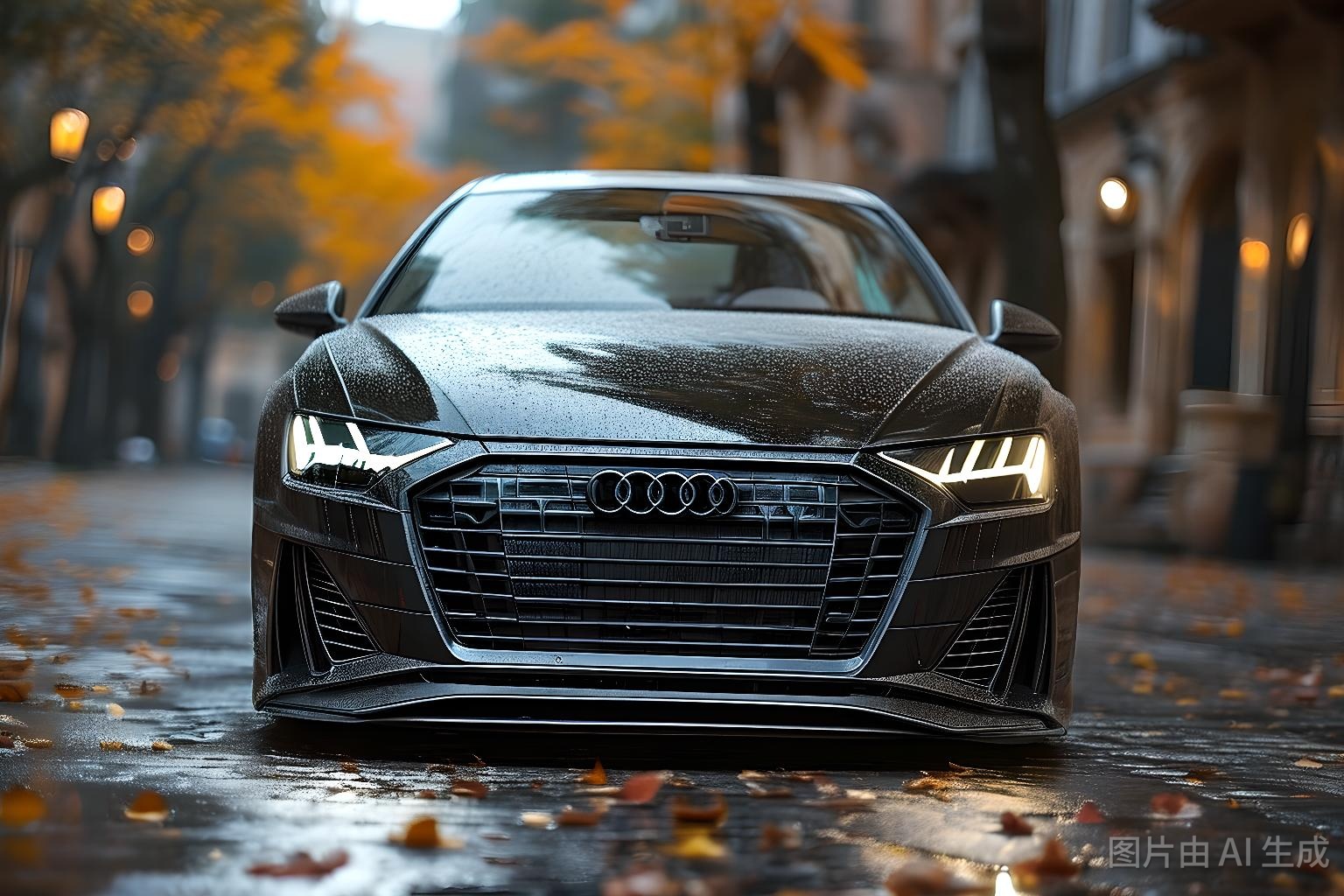
奥迪Q6L e-tron月销下滑 11月仅卖出459辆
Xi Niu Cai Jing· 2025-12-22 07:49
Core Insights - Audi's Q6L e-tron, the first luxury mid-size SUV built on the PPE electric platform, has underperformed in sales since its launch in August, with only 1,000 units sold in September and less than 600 units in both October and November [2] Product Performance - The Q6L e-tron features a battery pack over 100 kWh from CATL and Huawei's ADS intelligent driving system, demonstrating strong safety performance in collision tests [2] - Despite these strengths, the sales figures do not reflect the vehicle's capabilities, indicating a disconnect between product quality and market performance [2][3] Market Positioning - Priced between 369,800 to 399,800 yuan, the Q6L e-tron competes in a highly saturated segment against local high-end models like NIO ET7 and Li Auto L7, as well as strong competitors like Tesla Model Y and AITO M7 [2] - Audi's brand premium from the combustion engine era has diminished in the electric vehicle market, partly due to a lack of technological differentiation [2][3] Competitive Landscape - The rise of domestic brands has shifted consumer preferences, with technology and luxury becoming more appealing than traditional German brands [4] - AITO, as a leading domestic luxury brand, has delivered 376,668 units in the first 11 months of the year, approaching the sales figures of traditional luxury brands [4] - NIO's sales have increased by 45.6% year-on-year, with an average selling price of 342,000 yuan, surpassing Audi and other traditional luxury brands [4] Strategic Considerations - Audi's declining sales of the Q6L e-tron reflect the broader challenge faced by traditional luxury brands in the face of aggressive competition from domestic electric vehicle manufacturers [5] - The company needs to find a suitable pace for electrification in the Chinese market and redefine its positioning and value proposition in the electric era [5]