
荣耀

Search documents
【IPO前哨】芯片独角兽冲港股!飞骧科技能否乘“替代东风”起飞?
Sou Hu Cai Jing· 2025-09-02 07:15
Core Viewpoint - The Hong Kong stock market is experiencing an IPO boom, with the chip industry playing a significant role, exemplified by Shenzhen Feixiang Technology Co., Ltd. submitting its prospectus for listing on the Hong Kong Stock Exchange [2] Company Overview - Feixiang Technology, established in 2015, focuses on the design, research, and sales of RF front-end chips, with applications in smartphones, tablets, and wireless broadband routers [3] - The company operates on a fabless model, outsourcing manufacturing and testing processes to third-party companies [3] - Feixiang Technology has received multiple rounds of financing from institutions such as CICC Capital and Shenzhen High-tech Investment, and is listed among the 2024 GEI China unicorns [3] Financial Performance - The company's revenue grew from 1.021 billion RMB in 2022 to 2.458 billion RMB in 2024, achieving profitability in 2024 with a net profit of over 76 million RMB [4] - Revenue breakdown for 2025 shows that mobile smart devices accounted for 96.2% of total revenue in the first five months [3] - Despite a decline in revenue by 7.6% year-on-year in the first five months of 2025, the company maintained a gross margin increase, reaching 20% [6][4] Market Trends - The global RF front-end chip market is projected to grow from 107.2 billion RMB in 2020 to 159.5 billion RMB in 2024, with a compound annual growth rate (CAGR) of 10.4% [6] - The market is expected to reach 234.3 billion RMB by 2029, driven by the rapid development of smartphones, communication base stations, and the Internet of Things [6] Competitive Landscape - The RF front-end chip market has been historically dominated by international manufacturers, with major players like Skyworks, Broadcom, Qorvo, and Murata holding over 80% of the market share [7] - The trend towards domestic substitution is accelerating due to changes in international trade dynamics, enhancing the capabilities of China's chip industry [7] R&D and Innovation - Feixiang Technology invests significantly in R&D, with total expenditures reaching 272 million RMB in 2024, accounting for 11.1% of total revenue [8] - The company holds 21 core technologies and 331 patents, the most among RF front-end chip providers in China, focusing on ultra-wideband technology for high-speed wireless transmission [9] - Products are increasingly adopted by major smartphone brands such as Xiaomi, VIVO, and Samsung, indicating a growing market presence [9]


“AI+出海”双轮驱动业绩爆发 万咖壹联营收增39%
Zhong Guo Jing Ji Wang· 2025-09-02 03:41
Core Viewpoint - WanKa YiLian (01762) reported a significant increase in its mid-term performance for the first half of 2025, with total revenue exceeding 1.713 billion RMB, marking a year-on-year growth of 39.0% and overseas revenue reaching 41.9 million RMB, which is over 400% growth compared to the previous year [1] Group 1: Financial Performance - Total revenue for the first half of 2025 reached 1.713 billion RMB, reflecting a year-on-year increase of 39.0% [1] - Overseas revenue amounted to 41.9 million RMB, showing a remarkable growth of over 400% year-on-year [1] Group 2: Business Model and Partnerships - WanKa YiLian primarily provides comprehensive mobile ecosystem services, including commercial promotion and content distribution, to smartphone manufacturers and content developers [1] - The company is the only one in the industry that has deep collaborations with top smartphone manufacturers such as Huawei, Xiaomi, OPPO, Vivo, Honor, and Apple in the mobile game distribution sector [1] Group 3: Strategic Initiatives - The company has adopted a dual-driven strategy of "AI + Going Global" and has increased its investment in AI technology research and development since last year [1] - In 2025, WanKa YiLian plans to introduce a new CTO to empower the implementation of its technology strategy, focusing on core areas such as advertising engine, AI generation models, and data platforms [1] - The company aims to build a high-throughput, high-concurrency, and highly available distributed data processing system, transitioning towards an intelligent advertising and AI automated marketing platform to support rapid business growth [1]
英伟达新一代芯片预计26年出货,台积电预计Q4量产2nm | 投研报告
Zhong Guo Neng Yuan Wang· 2025-09-02 01:33
Market Overview - The overseas AI chip index decreased by 1.44% this week, with Marvell down 13.88%, AMD down 3.06%, and Nvidia down 2.14%. MPS and TSMC experienced declines of less than 1% [1][2] - The domestic AI chip index increased by 11.3%, with companies like Rockchip, Loongson Technology, and Cambricon rising over 20%. Tongfu Microelectronics rose by 9.46%, SMIC by 8.06%, and GigaDevice by 5.37%. Aojie Technology saw a decline of 7.53% [1][2] - The Nvidia mapping index rose by 18.9%, with Changxin Technology up 39.07% and Megmeet up 29.09%. Other companies like Huadian Technology, Invec, Shenghong Technology, and Jianghai Technology also saw increases of over 20%, while Jingwang Electronics and Industrial Fulian rose around 17% [2] Industry Data - The expected compound annual growth rate (CAGR) for the semiconductor industry from 2024 to 2030 is 12.8%, with smartwatches showing competitive advantages in health data monitoring due to screen and sensor capabilities [3] - In Q2 2025, the DRAM revenues for SK Hynix, Samsung Electronics, and Micron are projected to be $12.2 billion, $9.6 billion, and $7.1 billion respectively, with SK Hynix expected to surpass Samsung in revenue starting Q4 2024 [3] - The European smartphone market is projected to see a 9% year-on-year decline in Q2 2025, with Samsung, Apple, and Xiaomi experiencing declines of 10%, 4%, and 4% respectively [3] Major Events - The Ministry of Industry and Information Technology issued guidelines aiming for over 10 million satellite communication users by 2030, promoting large-scale applications of mobile direct satellite services [4] - Tesla's humanoid robot, Optimus, is being trained using a pure vision approach, consistent with its autonomous driving technology strategy [4] - Horizon's revenue for the first half of 2025 reached 1.567 billion yuan, a year-on-year increase of 67.6%, with market shares for ADAS and autonomous driving solutions at 45.8% and 32.4% respectively [5]



“非洲机王”被“偷家”,小米狂飙、传音失速
阿尔法工场研究院· 2025-09-02 00:03
Core Viewpoint - The African smartphone market is undergoing significant changes, with Transsion facing strong competition from Xiaomi, which is rapidly increasing its market share and sales in the region [2][4][23]. Market Dynamics - In Q2 2025, Xiaomi's smartphone shipments in Africa surged by 32% to 2.8 million units, while Transsion's shipments grew only 6% to 9.7 million units, maintaining a market share of 51% [5][6]. - Xiaomi's market share in Africa rose to 14.4%, positioning it as the third-largest player, just 4 percentage points behind Samsung [5][6]. Financial Performance - Xiaomi reported total revenue exceeding 227.25 billion yuan in H1 2025, a year-on-year increase of 38.2%, with smartphone revenue at approximately 96.13 billion yuan, reflecting a growth of 3.37% [4][11]. - Transsion's revenue for H1 2025 was 29.08 billion yuan, a decline of 15.86%, with net profit dropping 57.48%, marking the first time since its IPO in 2019 that both revenue and profit fell [11][12]. Competitive Strategies - Xiaomi's strategy in Africa includes aggressive pricing, channel expansion, and localization efforts, particularly in key markets like Nigeria and Egypt [8][14]. - Transsion's product pricing strategy focuses on low-cost models, while Xiaomi is targeting both low-end and mid-range segments, with products priced from approximately 60-80 USD to 200-450 USD [21][22]. Market Trends - The African smartphone market is experiencing a dual phase of smartphone penetration and consumer upgrade, with a growing demand for higher performance devices [22][26]. - Xiaomi's comprehensive ecosystem, including IoT products, enhances user engagement compared to Transsion's focus on mobile hardware [22][24]. Future Outlook - The competitive landscape in the African smartphone market is expected to intensify, with multiple brands vying for market share, indicating a shift from Transsion's previous dominance [24][27]. - Xiaomi's recent organizational changes in Africa suggest a commitment to refining its operational strategy in the region [26].


金标联盟携小米OPPO等成立智能终端生态专委会,共促产业升级
Sou Hu Cai Jing· 2025-09-01 07:42
Core Viewpoint - The establishment of the "Mobile Intelligent Terminal Ecological Professional Committee" by the Golden Standard Alliance and several major companies signifies a deeper commitment to the development and collaboration within the smart terminal ecosystem in China [1][4]. Group 1: Formation and Purpose - The Mobile Intelligent Terminal Ecological Professional Committee was initiated by Xiaomi, OPPO, Honor, Vivo, and Lenovo, aiming to create an open and non-profit social organization platform [1][4]. - The committee's establishment aligns with national industrial policies and is market-oriented, focusing on serving developers and enterprises to promote the comprehensive development of the smart terminal ecosystem [1][4]. Group 2: Responsibilities and Activities - The main responsibilities of the committee include formulating technical standards in the smart terminal field, building an ecological platform, and enhancing the capabilities of member units in research, design, integration, and services [4]. - The committee will conduct research on technical standards, policies, industry foresight, safety compliance, and intellectual property related to the smart terminal ecosystem [4][5]. - It aims to provide strong support for high-level development and business innovation in the mobile industry through the establishment and publication of technical standards [4]. Group 3: Promotion and Future Plans - To enhance its brand influence, the committee will promote its activities through major events, an official website, and professional media channels [4]. - The committee plans to gather more industry forces to conduct research on smart terminal technology standards and explore new technologies, models, and mechanisms [5]. - It aims to create a comprehensive service platform for the smart terminal ecosystem, injecting new vitality into the industry's sustainable development [5].

爱施德(002416):公司事件点评报告:苹果即将发布新款iPhone17系列,经销售龙头业绩有望环比提升
Huaxin Securities· 2025-09-01 07:37
Investment Rating - The report maintains a "Buy" investment rating for the company [9] Core Views - The company is expected to benefit from the upcoming release of the iPhone 17 series, coinciding with the consumer electronics peak season, which may lead to a sequential improvement in performance [6][8] - The company has faced challenges in the first half of 2025, with a significant decline in revenue and net profit, attributed to a decrease in market share and adjustments in business structure [5][8] Financial Performance Summary - For the first half of 2025, the company reported revenue of 253.70 billion yuan, a year-on-year decrease of 34.69%, and a net profit of 2.22 million yuan, down 43.98% year-on-year [4] - In Q2 2025, revenue was 126.33 billion yuan, a year-on-year decline of 26.52%, and net profit was 0.95 billion yuan, down 58.06% year-on-year [5] - The company’s gross margin for Q2 2025 was 4.76%, showing a year-on-year increase of 0.8 percentage points [5] Strategic Partnerships and Market Position - The company maintains long-term strategic partnerships with major brands like Apple, Honor, and Samsung, and has the largest number of self-operated Apple APR stores in China [8] - As of the first half of 2025, the company added 36 self-operated Apple APR stores, bringing the total to 236, solidifying its leading position in the APR channel [8] Earnings Forecast - The company’s projected revenues for 2025, 2026, and 2027 are 711.52 billion yuan, 782.67 billion yuan, and 853.12 billion yuan respectively, with corresponding EPS of 0.54 yuan, 0.66 yuan, and 0.71 yuan [9][11]

2025年第一季度深圳市经济分析报告
Sou Hu Cai Jing· 2025-09-01 04:33
Economic Overview - In Q1 2025, Shenzhen's economy shows resilience under pressure, with internal demand and industrial upgrades being key to breaking through challenges [1][7] - The overall trend indicates a passive inventory replenishment phase in the industrial sector, with a slowdown in both old and new industrial momentum [2][3] Industrial Performance - From January to February 2025, Shenzhen's industrial enterprises entered a passive replenishment phase, with revenue growth slowing to 2.9%, down 7.3 percentage points from December 2024 [2][14] - The increase in inventory is attributed to seasonal factors and the impact of U.S. tariffs, leading to a backlog in inventory despite a high base from the previous year [2][12] New and Old Industrial Dynamics - The transition between old and new industrial momentum in Shenzhen shows a simultaneous weakening, contrasting with improvements seen in Beijing and Shanghai [3][26] - The old momentum factor decreased by 0.1182, while the new momentum factor fell by 0.0305, primarily due to a high base effect from the previous year [3][25] Real Estate Sector - The real estate sector in Shenzhen remains a bright spot, with first-hand housing transaction area reaching 979,000 square meters, up 48.9% year-on-year, and second-hand housing transactions increasing by 146.6% [4][30] - The market is characterized by a "price for volume" strategy, with a slight recovery in second-hand housing prices despite a decline compared to the previous quarter [4][34] Emerging Industries - The new energy vehicle sector shows significant growth, with BYD's sales reaching 623,000 units, a 92.5% increase year-on-year, driven by new model releases and overseas market expansion [5][6] - However, there is a caution regarding reliance on a single leading enterprise, emphasizing the need for diversification in the industrial chain [5][6] Export Dynamics - Shenzhen's export value for January-February 2025 was 367.33 billion yuan, down 16.6% year-on-year, yet still the highest in the country for this period [7][13] - The structure of exports shows a decline in the proportion of exports to the U.S. and Europe, while increasing shares to emerging markets like Saudi Arabia, indicating a shift towards market diversification [7][13] Consumer Behavior - Retail sales in Shenzhen saw a decline of 2.9% year-on-year in January-February, reflecting a contraction in non-essential consumption amid high living costs [4][19] - Online retail is gradually recovering, with a 1.0% growth in January-February, supported by promotional activities and policy incentives [6][19]

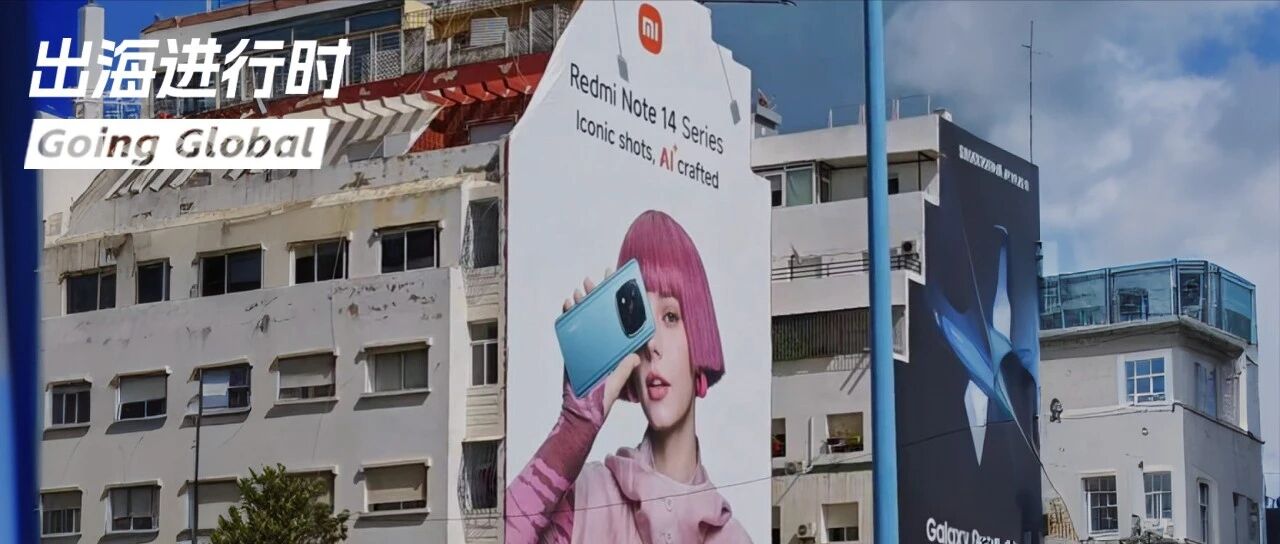
雷军又签任命通知,目标非洲
创业邦· 2025-09-01 03:48
Core Viewpoint - Xiaomi is intensifying its efforts in the African market, aiming to establish a stronger presence and compete effectively against local and international brands [5][25]. Group 1: Market Strategy - Xiaomi has made significant moves in Africa, including the opening of its first direct store in Morocco, marking a shift from third-party sales to direct control over the sales chain [15][12]. - The company aims to capture a share of the smartphone market, where it currently ranks third with a 14% market share, following Transsion and Samsung [15][19]. - Xiaomi plans to enhance its ecosystem in Africa, focusing on AIoT products and aiming to train 1,000 overseas talents in this field over the next 3-5 years [15][16]. Group 2: Organizational Changes - In August, Xiaomi announced a major restructuring of its African team, promoting key personnel to lead various regions and functions, indicating a serious commitment to the African market [9][13]. - The new appointments include experienced individuals from within the company, emphasizing a strategy of leveraging existing talent for market penetration [9][10]. Group 3: Competitive Landscape - The African smartphone market is characterized by strong competition, particularly from Transsion, which holds a 51% market share, and other brands like OPPO and Vivo [15][23]. - Xiaomi's previous attempts to enter the African market were met with challenges, but recent strategies indicate a more focused approach to capture market share [18][21]. Group 4: Future Outlook - Xiaomi's long-term strategy includes expanding its presence in Africa as a key growth area, especially as the market transitions from feature phones to smartphones [21][24]. - The company is also exploring opportunities in the electric vehicle sector, aiming to integrate its ecosystem further into the African market [16][24].
2025年第一季度粤港澳大湾区经济分析报告
Sou Hu Cai Jing· 2025-08-31 10:48
Economic Overview - The GDP of the Guangdong-Hong Kong-Macao Greater Bay Area is expected to grow by 3.4% in Q1 2025, reflecting resilience amid external and internal challenges [1][12][11] - The economic performance shows significant differentiation among cities, with Huizhou leading at 6.6% growth, followed by Zhongshan and Dongguan at 5.5% and 5.0% respectively [2][12] Industrial Production - Industrial production has slowed down, primarily affecting the economy, with Shenzhen's industrial value-added growth at only 2.6% in January-February, a stark decline from over 9% in previous months [3][13] - Despite the overall slowdown, the new energy vehicle sector has shown remarkable growth, with BYD's production increasing by 109.5% [3][15] Investment Trends - Fixed asset investment continues to decline, with negative growth in most cities except for Guangzhou, which saw a 1% increase [4][17] - The secondary industry investment has sharply decreased, particularly in Dongguan and Zhuhai, reflecting cautious corporate investment behavior due to uncertain external demand [4][18] Consumer Market - The consumer market shows a weak recovery, with social retail sales in major cities like Guangzhou and Shenzhen growing by 1.2% and 1.7% respectively, but still lagging behind the national average of 4% [5][22] - Factors such as declining automobile retail and high savings rates among the population are constraining consumer spending potential [5][35][36] Foreign Trade - The external trade landscape is marked by significant differentiation, with Guangdong's export growth declining by 12.7 percentage points to -4.3%, while cities like Guangzhou and Dongguan experienced positive growth [6][12] - Imports in the Greater Bay Area maintained a positive growth rate of 6.1%, indicating a shift towards a more balanced trade structure [6][12] Future Outlook - The second quarter is expected to face challenges, but technology and domestic demand are seen as key variables for growth, with potential boosts from AI integration and tourism [7][11] - The demographic advantages, including a high birth rate and significant young population, are anticipated to convert into consumer spending power, supporting long-term economic growth [7][11][35]
行业点评报告:电池:钢壳、掺硅、叠片三大趋势,打造高能量密度的AI终端“心脏”
KAIYUAN SECURITIES· 2025-08-31 04:13
Investment Rating - The industry investment rating is "Positive" (maintained) [1] Core Insights - The report highlights that the upcoming release of flagship smartphones in Q4 2024 is expected to stimulate growth in the consumer electronics market [3] - The demand for high energy density batteries is driven by the increasing integration of AI applications in smartphones and PCs, with a projected global smartphone shipment of 122 million units in 2025, where AI model phones will account for 34% [4][6] - The report identifies three major trends in battery technology: steel shell batteries, silicon-doped anodes, and the shift from winding to stacking processes [5][6] Summary by Sections Battery Technology Trends - Steel shell batteries are anticipated to become mainstream due to their safety, heat dissipation, and design flexibility, with iPhone 16 Pro already utilizing this technology [5] - Silicon-doped anodes are seen as a key technology for increasing battery capacity, with a projected increase in silicon content to over 10% by 2025, supporting capacities of 7000-8000mAh [6] - The stacking process is expected to gain traction in the industry, offering lower internal resistance and higher charging efficiency compared to traditional winding methods [6] Market Dynamics - The market share of smartphones with batteries over 6000mAh is rapidly increasing, from 8% in 2024 to 58% by mid-2025 [4][11] - The report recommends specific companies such as Lingyi Zhi Zao and identifies beneficiaries like Zhuhai Guanyu and Desay Battery, indicating potential investment opportunities [6]


