百度

Search documents
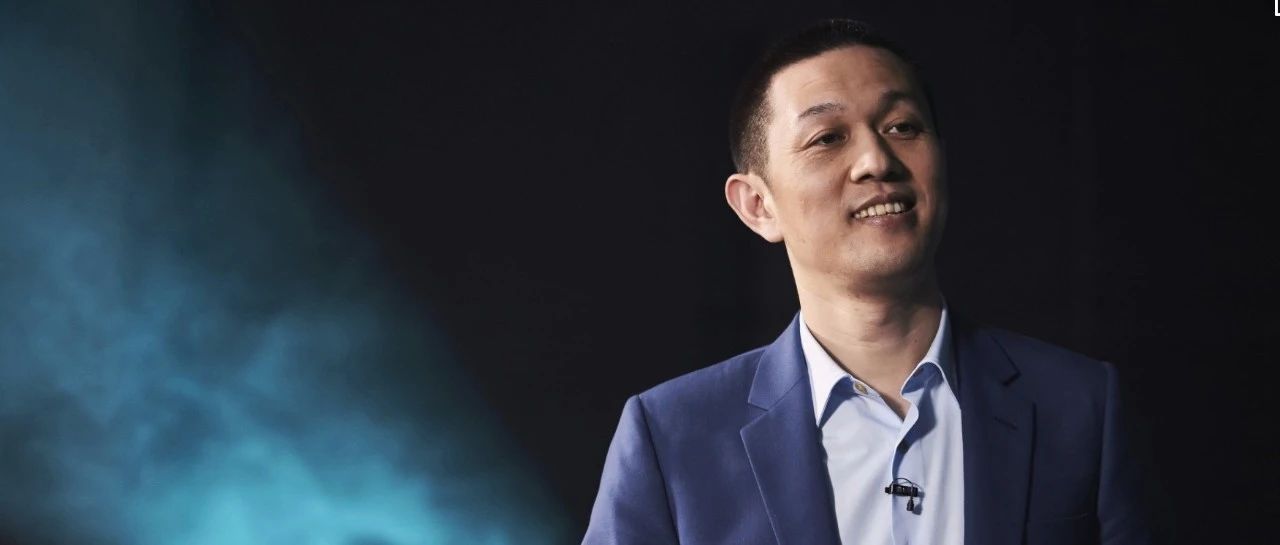
李斌称已赶走20多个VP,回应300元洗手液;华为前副总裁邓泰华任智元董事长兼CEO;腾讯QQ短视频将不再支持用户发布个人作品
雷峰网· 2025-03-25 00:22
Group 1 - Ant Group has made breakthroughs in AI training using domestic chips, reducing costs by 20% and achieving performance comparable to NVIDIA's H800 chip [1][3][4] - The company has developed two open-source MoE models, Ling-Lite and Ling-Plus, with parameter scales of 16.8 billion and 290 billion respectively [3][4] - Ant Group's AI training costs are significantly lower than those of competitors like DeepSeek and OpenAI, marking its entry into the AI technology competition [4][6] Group 2 - Huawei's former vice president Deng Taihua has officially taken over as chairman and CEO of Zhiyuan, with Tencent increasing its investment to over 80.45 million yuan [8] - Zhiyuan has undergone significant management changes, with Deng focusing on technology while the company has streamlined its workforce [8][10] - The company recently launched the Lingxi X2 robot, showcasing its capabilities in various tasks [10] Group 3 - NIO's CEO Li Bin addressed concerns regarding high operational costs and has initiated a restructuring process, resulting in the departure of over 20 vice presidents [10][11] - NIO aims to achieve quarterly profitability by Q4 2025 despite increasing losses and underwhelming sales from its sub-brand [10][11] Group 4 - Neta Auto has seen a wave of executive departures, including its CTO joining Chery and a senior director moving to SenseTime [12] - The company is facing operational challenges, prompting significant organizational changes [12] Group 5 - BYD reported a revenue of 777.1 billion yuan for 2024, with a net profit of 40.25 billion yuan, reflecting a year-on-year growth of 29.02% and 34.00% respectively [13] - The company’s automotive and related products generated approximately 617.38 billion yuan, accounting for 79.45% of total revenue [13][14] Group 6 - Xiaomi Group plans to raise approximately 42.5 billion HKD (around 39.63 billion yuan) through the placement of 800 million shares for business expansion and R&D investments [15] - The share placement represents about 3.2% of Xiaomi's existing issued share capital [15] Group 7 - OpenAI has undergone a leadership restructuring, with CEO Sam Altman focusing more on research and product development while expanding the COO's responsibilities [26] - The company has promoted two executives to its top management team, indicating a shift in operational focus [26] Group 8 - Stellantis has initiated a new voluntary buyout program for employees in the U.S. as part of its cost-cutting measures [28][29] - The company is reviewing its operations to enhance efficiency and maintain competitiveness in a dynamic market [28][29]






深夜,全线大涨!
券商中国· 2025-03-24 15:16
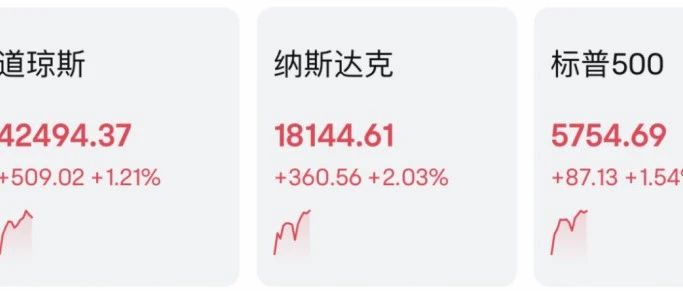
Core Viewpoint - The U.S. stock market staged a strong rebound, with major indices experiencing significant gains, driven by optimism surrounding potential changes in tariff policies announced by the Trump administration [2][5]. Group 1: Market Performance - The three major U.S. indices opened high and continued to rise, with the Dow Jones up 1.21%, Nasdaq up 2.03%, and S&P 500 up 1.54% [5]. - Major tech stocks saw substantial increases, with Tesla rising over 10%, Amazon up over 3%, and other companies like Nvidia, Google A, TSMC ADR, and Broadcom rising over 2% [6]. Group 2: Investment Trends - Investors are currently ignoring the risks posed by a potential full-scale trade war, as significant capital continues to flow into global equity markets. In the week ending last Wednesday, global equity funds saw an inflow of approximately $43.4 billion, the highest level this year [3][10]. - Retail investors in the U.S. have been actively buying Tesla shares, with a cumulative investment of $8 billion over 13 consecutive trading days, marking the largest inflow since 2015 [3][10]. - South Korean investors have also been heavily investing in U.S. stocks, with a net investment of $2.2 billion in Tesla shares this year, making it the most popular trade among them [11]. Group 3: Tariff Policy Insights - The Trump administration's upcoming tariff policy, set to be announced on April 2, is expected to be more targeted than previously suggested, which has contributed to market optimism [7][8]. - Officials have indicated that the new tariffs may exclude certain countries and will not simply be an addition to existing steel and aluminum tariffs, particularly regarding the automotive and semiconductor sectors [7][8].

独家丨哪吒汽车智驾高级总监王俊平加入商汤绝影
雷峰网· 2025-03-24 10:04
Core Viewpoint - SenseTime's R-UniAD end-to-end autonomous driving solution is set to be unveiled at the Shanghai Auto Show in April, with real vehicle deployment completed and expected delivery by the end of the year [1][3]. Group 1: Company Developments - Wang Junping, former senior director of intelligent driving at Nezha Auto, joined SenseTime's autonomous driving division in February 2023, previously being part of Baidu's intelligent driving team [2]. - SenseTime has been collaborating with Nezha Auto since September 2021, focusing on intelligent driving and smart cockpit technologies [2]. - Wang Weibao, who took over from Shijianping as the head of intelligent driving, joined SenseTime at the end of 2023 and has a background in Apple's autonomous driving team and as CTO at New Stone Unmanned Vehicle Company [3]. Group 2: Industry Context - The autonomous driving sector is experiencing intensified competition, particularly for companies not in the top tier, highlighting the challenges faced by solution providers [3]. - SenseTime collaborates with over 30 automotive companies, including GAC, BYD, Honda, and NIO, with solutions already deployed in models like the Haobo and Nezha's super sedan [3].
速递|告别996!百度秒哒掀起"开发革命",说话就能生成代码的时代来了
Z Finance· 2025-03-24 09:50
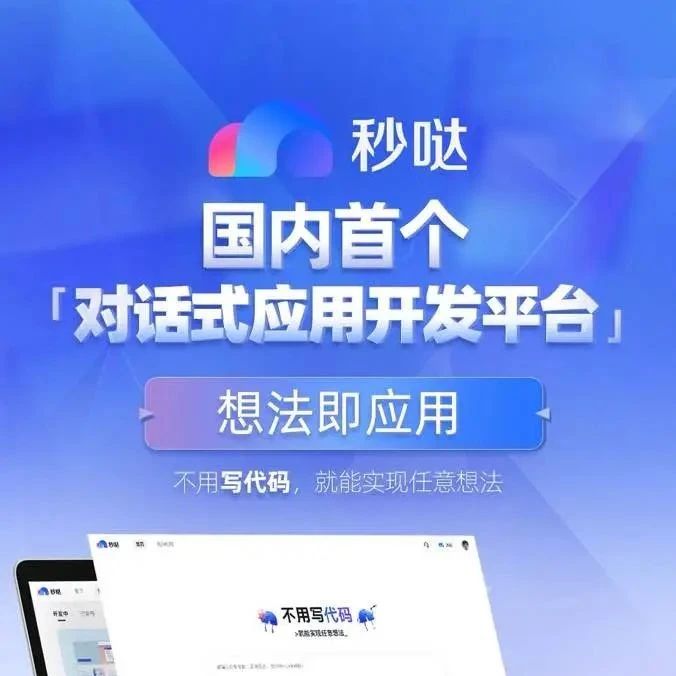
Core Viewpoint - Baidu's "MiaoDa" platform, the first conversational application development platform in China, has officially launched, aiming to democratize AI application development and make intelligent agents accessible to everyone [2]. Group 1: Platform Features - MiaoDa combines "no-code programming + multi-agent collaboration + multi-tool invocation," fundamentally changing traditional development processes [1]. - Users can generate complete functional code by simply describing their needs in natural language, achieving a development experience of "3 minutes to generate + 1 hour for iteration" [1]. - The platform includes a "smart agent collaboration matrix" with over ten vertical domain agents, allowing users to dynamically adjust strategies and behaviors based on task requirements [1]. Group 2: Integration and Support - MiaoDa integrates various third-party tools and services, enabling seamless connections with different data sources and tools, thus providing full-link support from demand to deployment [1].

速递|百度高管再现变动,T11级别搜索首席架构师离职,暂未确定下一步去向
Z Finance· 2025-03-24 09:50
Core Viewpoint - The article discusses the recent departure of Baidu's Chief Architect Gu Simiao and the implications of executive changes within the company, highlighting the trend of talent migration from Baidu to ByteDance and the strategic shifts in Baidu's organizational structure [1][2]. Group 1: Departure of Key Personnel - Gu Simiao, Baidu's Chief Architect, has recently left the company, holding the T11 position, which is a significant technical rank within Baidu [1]. - Gu Simiao has been a pivotal figure in Baidu's AI strategy, leading the development of key technologies such as knowledge graphs and recommendation systems, and has contributed to increasing the search satisfaction rate to 58% [1]. - His departure may signal a potential shift towards AI entrepreneurship, as he has been a strong advocate for generative search technologies [1]. Group 2: Executive Restructuring - Baidu has been undergoing significant executive changes, with a focus on high-level personnel rotations to enhance business collaboration and strategic focus [2]. - The former CFO, Luo Rong, has transitioned to lead the Mobile Ecosystem Group (MEG), integrating AI technology with search and health services [2]. - The Health Group has been merged into MEG to leverage B2B data service potential, indicating a strategic pivot towards commercial efficiency [2]. Group 3: Talent Migration to ByteDance - Several high-profile executives from Baidu have moved to ByteDance, including four CEO-level individuals, indicating a trend of talent acquisition that could impact Baidu's competitive position [2][3]. - Notable figures such as Yang Zhenyuan and Hong Dingkun, who held significant roles at Baidu, are now in key positions at ByteDance, showcasing the influence of Baidu's former talent on ByteDance's growth [3][4]. - The article lists various executives who have transitioned from Baidu to ByteDance, emphasizing the depth of talent that has migrated and its potential implications for both companies [3][4].
港股收盘(03.24) | 恒指收涨0.91% 家电股、有色股表现亮眼 TCL电子(01070)绩后大涨13%
智通财经网· 2025-03-24 08:57
Market Overview - The Hang Seng Index closed up 0.91%, reaching 23905.56 points, with a total trading volume of 233.1 billion HKD [1] - The Hang Seng Tech Index rose 1.72%, while the Hang Seng China Enterprises Index increased by 1.24% [1] - Market volatility may increase in April due to upcoming tariff issues and economic data releases, but the long-term outlook for Chinese assets remains positive [1] Blue-Chip Stocks Performance - CK Hutchison Holdings (00001) rebounded, closing up 4.16% at 45.05 HKD, contributing 7.98 points to the Hang Seng Index [2] - Haier Smart Home (06690) rose 6.02%, while Zijin Mining (02899) increased by 4.98% [2] - New Oriental Education (09901) fell 7.23%, negatively impacting the index [2] Sector Highlights Home Appliances - TCL Electronics (01070) surged 13.52% to 8.9 HKD, driven by strong earnings [3][4] - The home appliance sector saw significant sales growth, with nearly 9 million units sold under the trade-in program [4] - TCL reported a revenue of 99.322 billion HKD for 2024, a 25.7% increase, and a net profit of 1.759 billion HKD, up 136.6% [4] Non-Ferrous Metals - Luoyang Molybdenum (03993) rose 9.27% to 6.72 HKD, supported by rising copper prices [5] - International copper prices reached new highs, with COMEX copper futures hitting 5.1490 USD per pound [5] - Luoyang Molybdenum reported a revenue of 213.029 billion RMB, a 14.4% increase, and a net profit of 13.532 billion RMB, up 64% [6] New Energy Vehicles - New energy vehicle stocks saw gains, with Li Auto (02015) up 3.85% and XPeng Motors (09868) up 3.29% [6][7] - The retail market for passenger vehicles is projected to grow by 9.1% year-on-year in March, with new energy vehicles expected to reach 1 million units sold [7] Notable Stock Movements - Weichai Power (00856) saw a significant increase of 14.64% after reporting a revenue of 89.086 billion HKD, a 20.56% increase [8] - KANAT Optical (02276) rose 7.98%, benefiting from the growth of smart glasses in the AI+AR sector [9] - HAPO Pharmaceuticals (02142) gained 5.49% following a strategic partnership with AstraZeneca [10] - COSCO Shipping Holdings (01919) reported a revenue of 233.859 billion RMB, a 33.29% increase, and a net profit of 49.1 billion RMB, up 105.78% [11] - Brilliance China Automotive (01114) faced pressure, with a revenue decline of 2.3% and a net profit drop of 59.9% [12]
14点20分!神秘力量来了!三大指数集体翻红,上演深V反转!微盘股重挫跌近4%!怎么回事?
雪球· 2025-03-24 07:37
Core Viewpoint - The A-share market is experiencing significant differentiation between large-cap and small-cap stocks, with macroeconomic policies remaining supportive, but internal market risks are accumulating due to high valuations and potential profit-taking pressures [5][4]. Market Performance - The three major A-share indices saw slight increases, with the Shanghai Composite Index up 0.15%, the Shenzhen Component Index up 0.07%, and the ChiNext Index up 0.01%. However, there was a notable decline in the micro-cap index, which fell nearly 4%. The total market turnover was 14,744 billion, down 1,053 billion from the previous day, with over 3,800 stocks declining [2][4]. Sector Analysis - The hotel and tourism sector led the market today, with significant gains in stocks such as Zhangjiajie and Emei Mountain A, which both hit the daily limit. Other tourism-related stocks also saw increases, reflecting a growing interest in travel as the Qingming holiday approaches [7][8][10]. Policy and Economic Outlook - The Guangdong provincial government has launched initiatives to boost tourism, aiming for 9.5 billion annual visitors and 1.3 trillion in tourism revenue by 2027. This is expected to enhance the tourism economy, with a shift towards immersive experiences and personalized travel becoming trends [10][11]. AI Glasses Market - The AI glasses sector is gaining traction, with several companies, including major tech firms, actively developing products. The market anticipates significant growth in this area by 2025, driven by advancements in AI technology and consumer interest [12][13].

AI革命如何影响中国经济?
中信证券研究· 2025-03-24 00:12
Core Viewpoint - The AI revolution is expected to significantly boost macroeconomic demand through capital expenditure, with explosive growth in AI-related capital spending in the US and China projected for the coming years [1][2][3]. Group 1: AI Capital Expenditure in the US - In the second half of 2023, AI-related capital expenditure in the US has seen explosive growth, with an estimated increase of $861 million by 2025, accounting for approximately 0.3% of US GDP [2]. - The North American cloud service providers are projected to have a total capital expenditure of $3,385 million in 2025, reflecting a 34% increase from 2024 [2]. Group 2: AI Capital Expenditure in China - Following the emergence of DeepSeek, major Chinese companies have ramped up their AI capital expenditures, with Alibaba announcing an investment exceeding 3,800 billion RMB over the next three years, surpassing the total of the past decade [3]. - By 2025, the total capital expenditure increase for representative Chinese firms is expected to reach 1,498 billion RMB, approximately 0.11% of GDP, with optimistic and pessimistic scenarios predicting increases of 2,144 billion and 822 billion RMB, respectively [3]. Group 3: Comparison with Previous Investment Cycles - The current AI capital expenditure cycle is anticipated to resemble the scale of capital expenditures seen during the 2021-2022 new energy investment boom, serving as an additional driving force for traditional economic cycles and gradually enhancing productivity across various industries [4][5]. - Historically, capital expenditure in China has been a lagging variable, typically following improvements in real estate or exports, but the current AI investment cycle is driven by technological iteration, allowing for demand creation ahead of revenue and profit realization [5]. Group 4: Long-term Economic Impact of AI - The AI revolution is expected to increase economic growth by 1-2 percentage points through enhanced total factor productivity, although it may reduce the number of jobs created per unit of GDP growth [62]. - The impact of AI on employment is complex, with historical trends indicating that technological advancements often lead to both job displacement and creation, but recent studies suggest that the displacement effect may be more pronounced in the current AI context [62][69]. Group 5: Industry Beneficiaries - Industries such as information technology, education, finance, manufacturing, and healthcare are projected to benefit the most from AI integration, characterized by high AI penetration and elasticity [80][82]. - The highest AI penetration is observed in information services, professional technology, and educational services, while agriculture and utilities show the lowest penetration [82].

重估小米
虎嗅APP· 2025-03-23 23:47
Core Viewpoint - Xiaomi Group has shown significant growth in its 2024 annual performance, with revenue reaching 365.9 billion and a net profit of 23.58 billion, indicating a year-on-year growth of 35% and 34.9% respectively. The company has successfully delivered 137,000 electric vehicles, exceeding its initial target of 100,000 [1]. Group 1: Revenue Structure - The "Mobile x AIoT" segment generated revenue of 333.2 billion in 2024, reflecting a year-on-year growth of 22.9% [3]. - Xiaomi's smartphone revenue rebounded to 191.8 billion in 2024, with a slight increase in average selling price (ASP) to 1,138.2 yuan, marking a historical high [4]. - The IoT and lifestyle products segment surpassed 100 billion in revenue for the first time in 2024, achieving a year-on-year growth of 30% [6]. - Internet services revenue reached 34.1 billion in 2024, growing by 13.3% year-on-year [7]. - The global monthly active users (MAUs) exceeded 700 million in December 2024, a 9.5% increase year-on-year [8]. Group 2: Profit Structure - Internet services emerged as the most profitable segment for Xiaomi, with a total gross profit of 89.7 billion from 2021 to 2024, surpassing the gross profit from smartphones, which totaled 87.1 billion [9]. - In 2024, the gross profit from smartphones was 24.3 billion with a gross margin of 12.6%, while IoT products contributed 21.1 billion with a gross margin of 20.3% [10]. - The gross margin for smartphones improved from 13.1% in 2021 to over 20% in 2024, indicating a successful shift towards higher-end products [11]. Group 3: Market Positioning - Xiaomi is often labeled as a "hardware company," with smartphones and IoT products accounting for 80% of its revenue, which affects its valuation in the market [12]. - The IoT product range includes over 9 billion devices across more than 260 categories, indicating a broad market presence [13]. - Xiaomi's retail strategy includes a significant expansion of its offline stores, aiming to reach 15,000 by the end of 2024 and 20,000 by 2025 [14]. Group 4: New Ventures - The electric vehicle segment, including the Xiaomi SU7 series, has shown promising growth, with a gross profit of 44,000 yuan per vehicle by Q4 2024 [17][18]. - Despite the high costs associated with entering the automotive market, Xiaomi has managed to maintain a stable gross margin and control expenses effectively [20][22]. - The company aims to deliver 350,000 vehicles in 2025, with expectations of increasing gross profit per vehicle to 50,000 yuan [23]. Group 5: Strategic Outlook - Xiaomi's entry into the electric vehicle market positions it alongside major tech giants, potentially elevating its status within the competitive landscape of Chinese internet technology companies [29]. - The company is focused on expanding its ecosystem beyond smartphones, which is crucial for long-term growth and market competitiveness [25][28].
曹德旺捐100亿元建的大学,公布了:年学费5460元,双学位!首届招100人以内
21世纪经济报道· 2025-03-23 14:57
Core Viewpoint - The establishment of Fuyou University of Science and Technology aims to innovate and reform higher education in China, focusing on cultivating applied talents to address industry challenges and enhance international competitiveness [16][10]. Group 1: University Overview - Fuyou University of Science and Technology, located in Fuzhou, Fujian Province, is a non-profit, full-time ordinary university initiated by Fuyou Group's chairman, Cao Dewang, in collaboration with the He Ren Charity Foundation and the Fuzhou government [2][10]. - The university covers a total area of approximately 67,120.1 square meters (about 100.67 acres) [2]. - The university was approved for establishment on February 21, 2025, and is positioned as a new type of research university [3]. Group 2: Admission and Tuition - The university plans to enroll up to 100 students this year, with an annual tuition fee of 5,460 yuan and accommodation fees of 1,200 yuan per year for a double room [4][5]. - Students will receive dual degrees from Fuyou University and partner institutions abroad, with a curriculum that integrates undergraduate, master's, and doctoral education [5]. Group 3: Academic Structure and Curriculum - The academic program includes partnerships with several renowned universities, with students taking general education courses in the first two years and specializing in fields such as Computer Science, Intelligent Manufacturing Engineering, Vehicle Engineering, and Materials Science in the latter years [5][7]. - The university emphasizes personalized education, providing tailored course plans, academic mentors, and small class sizes to enhance student engagement and innovation [7]. Group 4: Partnerships and Research Opportunities - Fuyou University collaborates with numerous enterprises and research institutions, including Fuyou Group, China FAW, NIO, and Siemens (China), to provide students with practical training and research opportunities [8]. - The university aims to establish a broad research cooperation network with prestigious universities to enhance students' research capabilities and international competitiveness [8]. Group 5: Leadership and Vision - Wang Shuguo, known as a "celebrity principal," has been appointed as the president of the university, with a vision to model the institution after Stanford University [9][14]. - Cao Dewang has expressed that the purpose of establishing the university is not merely to add another institution but to explore and reform the educational landscape in China [16].