OPPO

Search documents
罗永浩:决定放弃进一步追究西贝;中美就妥善解决TikTok问题达成基本框架共识;雷军:小米17系列全面对标iPhone丨邦早报
创业邦· 2025-09-16 00:08
Group 1 - Xibei issued an apology letter stating it will adjust its pre-prepared food processing to on-site processing in stores by October 1, 2025 [3] - Luo Yonghao announced he would not pursue further action against Xibei after receiving an apology from the owner of Hua Yu Hua [4] - Xiaomi's Lei Jun stated that the Xiaomi 17 series will directly compete with the iPhone, featuring significant upgrades and the global debut of the fifth-generation Snapdragon 8 processor [4] Group 2 - China and the U.S. reached a basic framework consensus to resolve TikTok issues through cooperation, aiming to reduce investment barriers and promote economic cooperation [4] - The 2025 China Enterprise 500 list was released, with the revenue threshold for entry set at 47.96 billion yuan, an increase of 579 million yuan from the previous year [8] - The number of enterprises with revenue exceeding 100 billion yuan reached 267, accounting for 53.4% of the list [8] Group 3 - Zeekr Technology's shareholders approved a merger agreement with Geely Automobile, with 94.2% voting in favor [10] - Reports of Burger King's closures in Shenzhen were confirmed, attributed to changes in business strategy [10] - Amazon Web Services denied rumors of layoffs in its Greater China region, stating it continues to actively recruit talent [12] Group 4 - Apple is expected to launch its first display-less smart glasses within the next 12 to 16 months, competing with Meta's Ray-Bans [13] - Faraday Future announced the initiation of a spin-off listing plan for its Crypto Flywheel project [16] - Xiangjie Automotive plans to invest 20 billion yuan over three years to develop a dedicated team for its brand strategy [16] Group 5 - The first low-altitude economy internet platform in Hunan was launched, allowing users to book drone services similarly to ride-hailing [18] - Anku Energy completed an A+ round of financing, with previous funding from Xiaomi Group exceeding 100 million yuan [18] - Chip Vision Microelectronics completed a C+ round financing, focusing on ToF sensor chips for various applications [18]






粤港澳大湾区生成式人工智能安全发展联合实验室揭牌 联合实验室 “智汇”大湾区
Shen Zhen Shang Bao· 2025-09-15 23:22
【深圳商报讯】(首席记者 王海荣 文/图)9月15日,粤港澳大湾区生成式人工智能安全发展联合实验 室揭牌仪式在河套深港科技创新合作区举行。国家互联网应急中心、广东省及部分地市有关单位、香港 特区政府数字政策办公室、澳门特区政府个人资料保护局等单位负责人,腾讯、OPPO、小鹏、深信服 (300454)、视源、云蝶、云天励飞、元象、深译、陆兮等AI应用龙头和AI专精特新企业,中山大 学、华南师范大学、广州大学、广东技术师范大学、香港科技大学、澳门城市大学、工信部电子五所等 高校和科研机构,以及省内主流媒体代表近百人出席揭牌仪式。 联合实验室是一个适应人工智能时代敏捷、弹性、高效的创新治理联合体,由国家互联网应急中心作为 指导单位,广东省委网信办和国家互联网应急中心广东分中心联合牵头,粤港澳大湾区相关部门、企 业、高校、科研机构、媒体等共同参与建设,运行主体常设在深圳河套,并视情在香港、澳门、广州、 珠海、东莞等地设立地方服务站。 联合实验室 联合实验室将锚定国家战略方向,立足粤港澳大湾区科技创新高地,通过充分发挥"联合"优势,汇聚多 方资源合力,构建跨单位、跨地域、跨学科的"政产学研用"深度融合的创新生态,通过制 ...
中美就妥善解决TikTok问题达成基本框架共识;谷歌市值突破3万亿美元;中汽协发布倡议,17车企表态;西贝致歉!罗永浩放弃追究丨每经早参
Mei Ri Jing Ji Xin Wen· 2025-09-15 21:57
Group 1 - US stock markets saw collective gains, with the Dow Jones up 0.11%, S&P 500 up 0.47%, and Nasdaq up 0.94%, marking new closing highs for S&P 500 and Nasdaq [4] - Major tech stocks performed well, with Google rising over 4% to become the fourth US company with a market cap exceeding $3 trillion, while Tesla and Oracle also saw gains of over 3% [4] - Chinese concept stocks mostly rose, with the Nasdaq Golden Dragon China Index up 0.87%, and notable gains from Li Auto (over 6%), Bilibili (over 5%), and NIO (over 4%) [4] Group 2 - International precious metal futures generally rose, with COMEX gold futures up 0.90% to $3719.50 per ounce, and COMEX silver futures up 0.84% to $43.19 per ounce [5] - International oil prices saw slight increases, with WTI crude oil up 0.94% to $63.28 per barrel, and Brent crude oil up 0.69% to $67.45 per barrel [6] Group 3 - The Chinese Ministry of Commerce announced a basic framework consensus with the US to address the TikTok issue and reduce investment barriers, promoting economic cooperation [8] - The Ministry of Commerce expressed opposition to US unilateral trade restrictions related to Russian oil imports, labeling it as economic coercion that could disrupt global trade [8][9] Group 4 - The National Foreign Exchange Administration of China announced reforms to enhance cross-border investment, including allowing foreign investors to reinvest foreign exchange profits domestically [10] - The National Bureau of Statistics reported that the real estate market in China is stabilizing, with a narrowing decline in sales and prices, indicating progress towards recovery [11] Group 5 - Nvidia is under further investigation by China's market regulator for violating antitrust laws related to its acquisition of Mellanox Technologies [12] - The China Automobile Industry Association released a payment standard initiative for automotive suppliers, aiming to improve payment practices and collaboration within the industry [13][14] Group 6 - Baidu and Huawei have upgraded their collaboration to a strategic community, focusing on a comprehensive ecosystem for the automotive industry, with plans to invest 20 billion yuan over three years [21] - Xiaomi's new 17 series smartphones are set to directly compete with Apple's iPhone, showcasing significant upgrades and innovations [27] Group 7 - Silver Lake Capital completed the acquisition of 51% of Altera's shares, previously held by Intel, positioning Altera as a leading independent provider of FPGA solutions [33] - Merck's new antiviral drug for CMV prevention has been approved in China, potentially impacting the market for antiviral treatments [35] - Elon Musk purchased over 2.5 million shares of Tesla stock, valued at approximately $1 billion, indicating confidence in the company's future [37]


手机厂商打响AI全生态竞争战
Zheng Quan Ri Bao· 2025-09-15 16:08
Group 1 - Meizu announced a comprehensive upgrade of its smart ecosystem, including the launch of the Meizu 22 flagship smartphone and AI camera glasses StarV Snap, along with updates to its Flyme AIOS and Flyme Auto systems [1] - The upgrades reflect a strategic push towards AI and ecosystem integration, indicating a shift in the smartphone industry towards competition based on "ecosystem capability + scenario experience" rather than just individual products [1] - Industry experts note that competition among smartphone manufacturers is evolving into a new phase characterized by "end-cloud collaboration + scenario integration," with major players like Huawei, Xiaomi, and OPPO also advancing their AI ecosystem strategies [2] Group 2 - The competition among smartphone manufacturers is now defined by three new characteristics: AI becoming a standard feature in operating systems, accelerated cross-device integration, and hardware innovation focused on specific scenarios like photography and travel [2] - The collaboration between smartphone manufacturers and other industries is increasing, with a focus on creating integrated solutions that enhance user experience across devices [2] - Experts emphasize the need for industry alliances to promote interoperability and the establishment of national or international standards to address systemic issues in device connectivity [3]
希荻微(688173):H1亏损边际收窄 AI、汽车电子市场产品有望放量
Xin Lang Cai Jing· 2025-09-15 10:30
Core Viewpoint - The company reported significant revenue growth in the first half of 2025, driven by a recovery in the consumer electronics market and increased demand for high-performance power management chips, while also narrowing its losses compared to the previous year [1][2]. Financial Performance - In 2025H1, the company achieved revenue of 466 million yuan, a year-on-year increase of 102.7%, with a net loss attributable to shareholders of 45 million yuan, a reduction in loss of 73 million yuan year-on-year [1][2]. - The second quarter of 2025 saw revenue of 289 million yuan, a year-on-year increase of 169.4%, with a net loss attributable to shareholders of 17 million yuan, a reduction in loss of 51 million yuan year-on-year [1][2]. Product Performance - The revenue breakdown for 2025H1 includes: - Power management chips: 182 million yuan - Autofocus and optical image stabilization chips: 142 million yuan - Port protection and signal switching chips: 47 million yuan - Sensor chips and others: 96 million yuan [2]. - The overall gross margin for 2025H1 was 29.4%, a decrease of 5.34 percentage points year-on-year [2]. Market Expansion and Strategic Initiatives - The company is making strides in emerging markets such as AI and automotive electronics, with multiple breakthroughs in AI-related products and ongoing development of high-performance chips for smart devices and vehicles [3]. - The company is also pursuing acquisitions, with a focus on integrating the target company Chengxin Micro, which specializes in analog and mixed-signal products, into its supply chain to enhance its market position in consumer electronics [3]. Future Outlook - The company forecasts net profits attributable to shareholders for 2025-2027 to be -46 million, +18 million, and +54 million yuan, respectively, with corresponding price-to-earnings ratios of -141, +373, and +121 times [4].

安克具身业务软件平台 CTO 刘海峰离职
雷峰网· 2025-09-15 09:34
Core Viewpoint - Anker's embodiment business faces significant challenges ahead, with a strategic focus on embodied intelligence projects as a top priority for the company [2][3]. Group 1: Leadership Changes - Liu Haifeng, the CTO of Anker's embodied software platform, has left the company several months ago [3]. - Liu Haifeng joined Anker this year and was responsible for leading the embodied intelligence project, which is crucial for the company's development in robotics technology [3]. - Anker has recently brought in a new executive from Li Auto to strengthen its embodied business [5]. Group 2: Background of Liu Haifeng - Before joining Anker, Liu Haifeng held significant positions at JD.com and OPPO, where he contributed to major technological advancements [4]. - At JD.com, he served as the Chief Architect and Vice President of Technology, leading the development of critical systems and infrastructure [4]. - At OPPO, he was the President of the Intelligent Engineering Division, involved in the development of self-researched chips and software systems [4].
段永平挣了大钱的3家公司
Sou Hu Cai Jing· 2025-09-15 09:10
Core Insights - The primary investment risk is a lack of understanding of the companies being invested in, rather than macroeconomic trends or stock price fluctuations [1] Investment Success Stories - Notable investments by a successful investor include: - NetEase: Initial investment of over $2 million, held for 8-9 years, resulting in over 100 times return, earning approximately 2 billion RMB [2] - Apple: Purchased in 2011, held for over 14 years, with a return exceeding 20 times, and current holding value over $10 billion [2] - Kweichow Moutai: Investment at 8-10 times PE, held for over 12 years, yielding over 10 times return, with a holding value exceeding 20 billion RMB [3] Understanding and Belief in Investments - The investor's background in gaming and technology, along with a deep understanding of the companies, contributed to their ability to hold investments confidently [4] - The investor's personal enjoyment of Moutai also played a role in their belief and commitment to the investment [5] Investment Philosophy - The investor emphasizes a disciplined approach of "not touching what one does not understand," leading to impressive investment performance despite spending less than 20% of their time on investments [5] - The investor does not manage institutional funds, allowing for a long-term focus on a single stock like Apple [6] Investment Opportunities - Notable investors like Charlie Munger and Warren Buffett suggest that a few well-understood investment opportunities can lead to significant success, with Munger stating that 4-5 great opportunities in a lifetime are sufficient [6][7] - The investor's experience aligns with this philosophy, having identified and invested heavily in a limited number of companies over a decade [7]


OPPO成立专项小组打击“黑公关”
Guan Cha Zhe Wang· 2025-09-15 08:31
Core Viewpoint - The Central Cyberspace Administration of China has launched a special action named "Clear and Optimized Business Network Environment" to address issues such as malicious defamation, extortion against enterprises, malicious marketing, and infringement of rights, aiming to protect the legitimate rights of companies and support high-quality economic development [1] Group 1 - OPPO's legal department has reported that certain entities have been spreading false information about the company, damaging its product quality, business reputation, and future prospects, which constitutes civil infringement and unfair competition, potentially violating criminal laws [1][2] - OPPO has taken a zero-tolerance stance against these illegal activities and will pursue all legal avenues, including civil liability, administrative reporting, and criminal prosecution, to protect its rights and reputation [1][2] Group 2 - OPPO has successfully initiated legal actions against multiple cases of "commercial defamation and unfair competition," including the use of artificial intelligence to alter or fabricate facts and the dissemination of false information [2] - A special task force has been established within OPPO to combat "black public relations" activities, enhancing public opinion monitoring, evidence collection, and legal remedies [2][3] Group 3 - OPPO's Chief Legal Officer has emphasized that combating "black public relations" is a top priority for the legal department, with a comprehensive mechanism in place to address malicious fabrication and dissemination of false information that harms OPPO's reputation [3] - Legal experts have warned that the online space is not free from legal consequences, and individuals or entities engaging in defamation may face civil, administrative, and criminal liabilities, including fines and detention [3]
小米硬刚苹果,跳过16直推17系列,雷军:全面对标iPhone!
Hua Er Jie Jian Wen· 2025-09-15 07:32
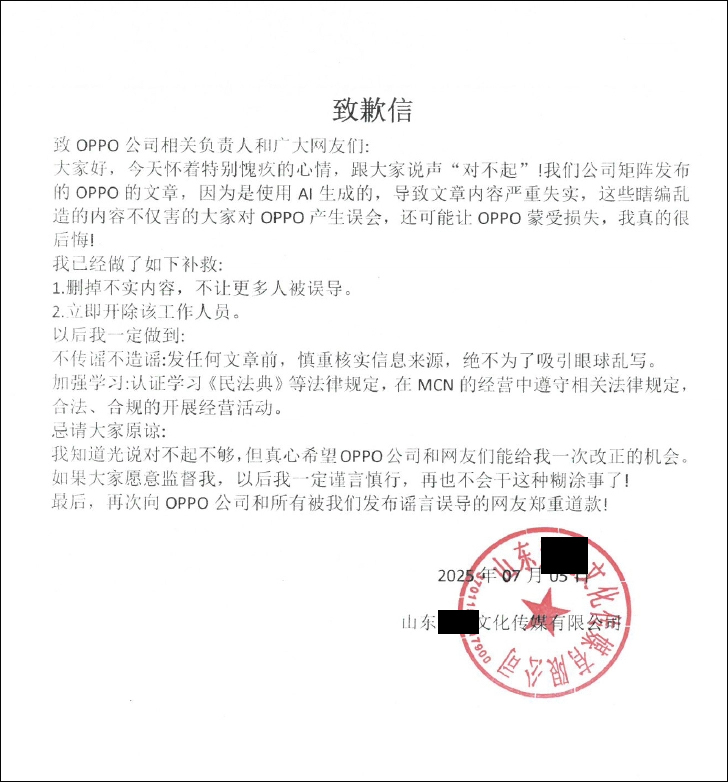
Core Viewpoint - Xiaomi is directly challenging Apple's iPhone by skipping the 16 series and launching the Xiaomi 17 series, marking a significant shift in its high-end strategy after five years of development [1][3][5]. Group 1: Product Launch and Strategy - The Xiaomi 17 series will include three models: Xiaomi 17, Xiaomi 17 Pro, and Xiaomi 17 Pro Max, and will globally debut the fifth-generation Snapdragon 8 Supreme mobile platform [1][5][6]. - The launch of the Xiaomi 17 series is one month earlier than its predecessor, indicating a strategic move to align more closely with Apple's product cycle [1][5][6]. - Xiaomi's president, Lu Weibing, emphasized that this series represents the most significant leap in the history of Xiaomi's digital series, with a clear focus on high-end market competition [5][6]. Group 2: Investment in R&D - Xiaomi has invested over 100 billion RMB in research and development over the past five years, with plans to increase this investment to 200 billion RMB in the next five years [4][7]. - This substantial investment is expected to showcase the latest technological advancements in the Xiaomi 17 series, reflecting the company's commitment to high-end product development [4][7]. Group 3: Competitive Positioning - Lu Weibing stated that Xiaomi's strategy involves learning from the best competitors, specifically targeting the iPhone, and expressed confidence in competing at the same level as Apple [5][6][7]. - The company aims to shift its product philosophy from parameter superiority to prioritizing user experience, indicating a deeper integration of hardware and software [7].
被恶意抹黑产品质量,OPPO法务部称将严肃追责
Xin Lang Cai Jing· 2025-09-15 07:28
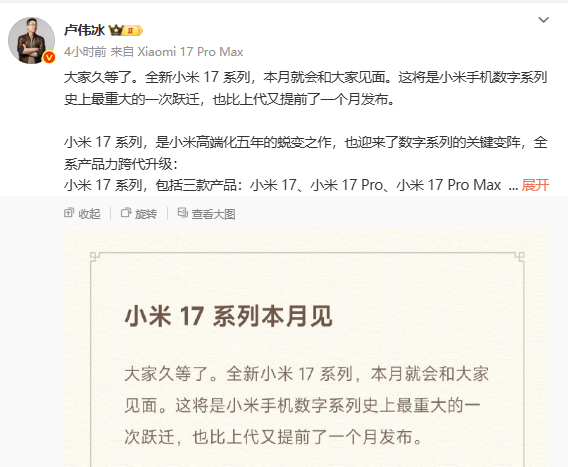
Group 1 - OPPO's legal department issued a statement on September 15, condemning the spread of false information about the company and its products, emphasizing a zero-tolerance policy towards such actions [1] - The company is pursuing legal action against entities involved in commercial defamation, unfair competition, and the use of AI technology to distort facts, having already achieved some success in these cases [1] - A recent court ruling indicated that a media company used biased language to disparage OPPO's products, exceeding the limits of objective evaluation [1] Group 2 - In June, OPPO's legal department expressed its commitment to combat malicious defamation, highlighting that some media and marketing accounts were spreading false claims about OPPO's sales [2] - The company has initiated investigations into unauthorized disclosures of unreleased software information, indicating a proactive approach to protecting its intellectual property [2] - OPPO's market share has declined from first place in Q1 2023 to fifth place by 2024, facing significant scrutiny from the market [4] Group 3 - According to CounterPoint Research, the overall smartphone shipment volume in China decreased by 2% year-on-year in Q2 2025, with OPPO maintaining a stable market share of 16% [5] - The market landscape has become more polarized, with Huawei and Vivo each holding 18%, while OPPO and Xiaomi both hold 16%, indicating a competitive environment [5] - OPPO's Find series and OnePlus series have helped sustain its market position despite the overall decline in the smartphone market [5]