
永达汽车

Search documents
永达汽车(03669.HK)将于8月26日召开董事会会议以审批中期业绩
Ge Long Hui· 2025-08-14 09:03
格隆汇8月14日丨永达汽车(03669.HK)公布,公司将于2025年8月26日召开董事会会议,以(其中包括) 审议及通过集团截至2025年6月30日止六个月的中期业绩及其发布,以及审议派发中期股息的建议(如 有)。 ...
永达汽车(03669) - 董事会会议召开日期
2025-08-14 08:42
香港交易及結算所有限公司及香港聯合交易所有限公司對本公告的內容概不負責,對其準確性或完整性亦不發表任何聲 明,並明確表示,概不對因本公告全部或任何部分內容而產生或因倚賴該等內容而引致之任何損失承擔任何責任。 董事會會議召開日期 中國永達汽車服務控股有限公司(「本公司」)董事會(「董事會」)謹此宣佈,本公司將於二零二 五年八月二十六日(星期二)舉行董事會會議,藉以(其中包括)考慮及批准本公司及其附屬公司 截至二零二五年六月三十日止六個月之中期業績及其發佈,並考慮派發中期股息(如有)。 承董事會命 中國永達汽車服務控股有限公司 董事長 張德安 中國,二零二五年八月十四日 於本公告日期,董事會由(i)六名執行董事,即張德安先生、蔡英傑先生、王志高先生、徐悅先生、陳昳女士及唐亮先生; 及(ii)三名獨立非執行董事,即朱德貞女士、呂巍先生及牟斌瑞先生組成。 China Yongda Automobiles Services Holdings Limited 03669 ...
卖车销售盆满钵满,卖车老板赔得退网?
创业邦· 2025-08-09 01:09
Core Viewpoint - The article highlights the contrasting experiences of individual car salespeople who can earn high incomes from selling popular new models, while traditional dealerships face significant financial challenges and a wave of closures due to declining profitability and market pressures [9][16][32]. Group 1: Sales Performance and Challenges - In late 2023, the launch of the AITO M9 saw salespeople achieving remarkable sales figures, with one salesperson selling 28 units in a month [6][8]. - Despite the potential for high earnings, the reality for many salespeople is marked by intense work pressure and high turnover rates, as many leave due to the demanding nature of the job [12][15]. - The sales environment is increasingly competitive, with new models from various brands entering the market, yet many salespeople report low sales during off-peak months [10][13]. Group 2: Dealership Financial Struggles - The China Automobile Dealers Association predicts that over 4,400 dealerships will close in 2024, with a loss rate among dealers reaching 41.7% [9][17]. - Price inversion affects 84.4% of dealerships, with over 60.4% experiencing a price drop exceeding 15% [17][18]. - Major dealership groups like Zhongsheng Holdings and Yongda Automotive are experiencing significant declines in new car sales and profitability, with some reporting net profit drops of over 80% [19][20]. Group 3: After-Sales Service as a Revenue Stream - After-sales services are becoming a crucial revenue source for traditional dealerships, with Zhongsheng Holdings reporting a 9.6% increase in after-sales revenue in 2024 [25][26]. - The focus on after-sales services is seen as a potential lifeline for dealerships struggling with new car sales [25][32]. Group 4: Industry Transformation and Future Outlook - The article discusses the need for dealerships to adapt to changing market conditions, emphasizing collaboration with manufacturers and a shift towards after-sales and user engagement strategies [32]. - The success of individual salespeople and mid-sized dealerships in the new energy vehicle market illustrates the potential for growth and adaptation within the industry [30][32]. - The ongoing transformation in the automotive industry highlights the importance of flexibility and innovation for both dealerships and sales personnel to thrive in a competitive landscape [32].



卖车销售盆满钵满,卖车老板赔得退网?
3 6 Ke· 2025-08-07 01:10
Core Insights - The automotive sales industry in China is experiencing a significant divide between individual salespeople benefiting from high commissions on popular new models and traditional dealerships facing severe financial losses and network reductions [3][10][23] - The introduction of new electric vehicle models is seen as a potential lifeline for struggling dealerships, but the ongoing price wars and channel transformation pressures may exacerbate the existing challenges [3][10][23] Group 1: Sales Performance and Challenges - Individual salespeople have reported high earnings during the launch of popular models, with some achieving monthly incomes of 30,000 to 40,000 yuan [4][6] - However, the high earnings come with extreme work intensity and high turnover rates among sales staff, indicating a challenging work environment [6][9][23] - The automotive sales sector is witnessing a significant number of dealership closures, with over 4,400 4S stores expected to exit the market in 2024, reflecting a 41.7% loss rate among dealers [10][11] Group 2: Financial Performance of Dealerships - Major dealership groups are reporting declining new car sales and revenues, with companies like Zhongsheng Holdings and Yongda Automotive experiencing significant drops in both sales volume and profit margins [11][12] - The overall profitability of traditional dealerships is under pressure, with many reporting negative gross margins on new car sales, leading to a shift in focus towards after-sales services as a key revenue source [15][16] - The after-sales business has shown growth, with Zhongsheng Holdings reporting a 9.6% increase in after-sales revenue, highlighting a potential area for profitability amidst declining new car sales [15][16] Group 3: Industry Transformation and Future Outlook - The automotive industry is undergoing a transformation, with traditional dealerships needing to adapt to new market realities, including the rise of electric vehicles and changing consumer preferences [23] - Collaboration between manufacturers and dealerships is emphasized as a necessary strategy for survival, with calls for more flexible arrangements and support from manufacturers to help dealers navigate the current challenges [23] - The success of individual salespeople and mid-sized dealerships in the electric vehicle market suggests that there are opportunities for growth and adaptation, provided that stakeholders can work together effectively [23]

永达汽车(03669) - 截至二零二五年七月三十一日止月份之股份发行人的证券变动月报表
2025-08-06 08:50
股份發行人及根據《上市規則》第十九B章上市的香港預託證券發行人的證券變動月報表 截至月份: 2025年7月31日 狀態: 新提交 致:香港交易及結算所有限公司 公司名稱: 中國永達汽車服務控股有限公司 (於開曼群島註冊成立的有限公司) 呈交日期: 2025年8月6日 I. 法定/註冊股本變動 | 1. 股份分類 | 普通股 | 股份類別 | 不適用 | | 於香港聯交所上市 (註1) | | 是 | | | --- | --- | --- | --- | --- | --- | --- | --- | --- | | 證券代號 (如上市) | 03669 | 說明 | | | | | | | | | | 法定/註冊股份數目 | | | 面值 | | 法定/註冊股本 | | | 上月底結存 | | | 2,500,000,000 | HKD | | 0.01 HKD | | 25,000,000 | | 增加 / 減少 (-) | | | | | | HKD | | | | 本月底結存 | | | 2,500,000,000 | HKD | | 0.01 HKD | | 25,000,000 | 本月底法定/註 ...
来自华为问界经销商的实时反馈-Real-time Feedback from Huawei Aito Dealers
2025-08-05 03:19
Summary of Conference Call Notes Industry Overview - **Industry**: China Auto Dealers - **Company**: Huawei Aito Key Points and Arguments Dealer Sentiment - Aito dealers are optimistic about the upcoming launch of the new M7 model, scheduled for September [1] - Despite the M7 launch, dealers are conservative about 2025 sales volume, targeting only flat growth [1] - The new M9 and M8 models are expected to compete with Li Auto i8 and NIO's Onvo L90, but not with Xiaomi, as M9/M8 target customers over 35 years old, while Xiaomi targets younger consumers [1] Customer Profile - The typical customer for the M9 is identified as high-net-worth individuals, while the M8 targets the middle-income group [1] Dealer Margins - Aito dealers earn sales commissions from Huawei and delivery commissions from Seres [2] - Compared to Xiaomi, Aito dealers have more flexibility in selling new car accessories, auto finance, and insurance products, contributing to a 4-5% margin on new car sales [2] Dealer Network Expansion - The Aito dealer network is still expanding, although the pace has slowed since Q4 2024, when Zhongsheng and Yongda rapidly added Aito stores [2] Additional Important Information - The report includes analyst certifications and disclosures regarding potential conflicts of interest, emphasizing that Morgan Stanley may have business relationships with companies covered in the research [3][4] - The document outlines the stock ratings distribution and methodology used by Morgan Stanley, indicating a relative rating system without assigning traditional buy/sell recommendations [23][28] Conclusion - The sentiment among Aito dealers is cautiously optimistic, with expectations for new model launches but conservative sales targets for 2025. The dealer network continues to grow, albeit at a slower pace, and margins remain healthy due to flexible sales strategies.
港股收评:三大指数齐跌,恒指跌0.15%,创新药逆市活跃
Ge Long Hui A P P· 2025-07-29 08:41
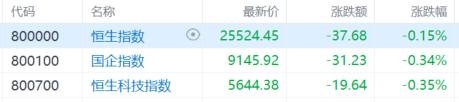
Market Overview - The Hong Kong stock market indices showed a recovery in the afternoon, with the Hang Seng Index and the Hang Seng China Enterprises Index down by 0.15% and 0.34% respectively, while the Hang Seng Tech Index fell by 0.35% after a larger drop of 2% during the day [1][2] - Despite the index adjustments, southbound funds significantly net bought over 10 billion HKD in Hong Kong stocks [1] Sector Performance - Large tech stocks saw a narrowing of losses in the afternoon, with Alibaba slightly turning positive, while Tencent, JD.com, Meituan, and Kuaishou experienced declines within 1%. Xiaomi continued to decline by 2.6% [2] - Biopharmaceutical stocks performed strongly, particularly in the innovative drug sector, with WuXi AppTec rising over 11%, and both CSPC Pharmaceutical and Luye Pharma increasing by over 8% [2] - The "anti-involution" sectors, including steel and photovoltaic stocks, showed a notable recovery, while oil, gambling, and semiconductor stocks mostly rose [2] - The three-child policy subsidy of 3600 yuan led to a mixed performance in related stocks, with some experiencing declines [2][6] Banking Sector - The banking sector faced declines, with several banks such as Chongqing Rural Commercial Bank and China Everbright Bank dropping over 3% [4][5] - Major banks like Industrial and Commercial Bank of China, China Construction Bank, and Agricultural Bank of China also saw declines [4] Biopharmaceutical Sector - WuXi AppTec reported a strong performance with a revenue of 20.8 billion yuan for the first half of 2025, a year-on-year increase of 20.64%, and a net profit surge of 101.92% [8] - The company expects continued double-digit growth in operating revenue, adjusting its growth forecast from 10-15% to 13-17% [8] Automotive Sector - Automotive dealership stocks rose against the trend, with Guanzhong Holdings increasing over 9% and Zhongsheng Holdings up over 6% [9][10] - UBS reported that the rebound in stock prices for Zhongsheng and Yongda Automotive is attributed to expectations of improved profit margins from new car sales due to government policies [10] Steel Sector - Steel stocks experienced gains, with Maanshan Iron & Steel rising over 8% and several other companies like Ansteel and Asia Pacific Resources also seeing increases [11][12] Apple-Related Stocks - Apple-related stocks were active, with AAC Technologies rising over 3% and other companies like GoerTek and BYD Electronics also showing gains [13] Future Outlook - Haitong Securities expressed optimism about the Hong Kong stock market, particularly in the technology sector, suggesting a focus on sectors with improving conditions and low valuations [15]

异动盘点0729|婴童概念高开,医药强劲,券商股低迷;特斯拉涨超3%、SMCI涨超10%(附本周业绩日历)
贝塔投资智库· 2025-07-29 04:14
Group 1: Baby and Childcare Sector - The baby and childcare concept stocks mostly opened higher, with notable increases in shares of companies such as Jinxin Reproductive Medicine (1951.HK) up 8.93%, H&H International Holdings (1112.HK) up 7.33%, and China Feihe (6186.HK) up 5.12% following the announcement of a new childcare subsidy policy [1] - The new policy, effective from January 1, 2025, provides an annual subsidy of 3,600 yuan for each child until they reach three years old, which is expected to boost the sector [1] Group 2: Pharmaceutical Sector - WuXi AppTec (2359.HK) opened over 4% higher after reporting a revenue of 20.799 billion yuan for the six months ending June 30, 2025, a year-on-year increase of 20.6%, with a net profit of 8.287 billion yuan, up 95.5% [1] - Fosun Pharma (2196.HK) saw a 1.37% increase after signing a licensing agreement for AR1001, aimed at treating Alzheimer's disease and other neurological disorders [2] - Deqi Pharmaceutical (6996.HK) rose 4.70% after receiving approval for a new indication of its drug, Xivio, for treating multiple myeloma [2] - Kangzheng Pharmaceutical (0867.HK) increased over 2% after announcing the acceptance of its new drug application for ZUNVEYL, aimed at treating Alzheimer's symptoms [4] - BeiGene (6160.HK) rose over 3% following a positive recommendation from the European Medicines Agency for its drug, Tislelizumab, for non-small cell lung cancer [4] Group 3: Automotive Sector - Hong Kong automotive dealer stocks rose, with Zhongsheng Holdings (0881.HK) up nearly 6% and Yongda Automotive (3669.HK) up over 4%, driven by expectations of improved profit margins from new car sales due to government policies [2] - UBS reported that Zhongsheng and Yongda's stock prices rebounded approximately 20% and 5% respectively, as the market anticipates industry consolidation and improved profitability [2] Group 4: Beverage Sector - Hong Kong Brewery (0236.HK) surged 26% after reporting a revenue of approximately 390 million HKD for the first half of 2025, a year-on-year increase of 3.22%, with a net profit of 49.644 million HKD, up 31.97% [3] Group 5: Securities Sector - Chinese brokerage stocks collectively declined, with Shenwan Hongyuan (6806.HK) down nearly 5%, amid tightening regulatory scrutiny in the securities industry, which has seen over 30 fines issued recently [3]






瑞银:“反内卷”下的中国汽车经销商、保险业、互联网巨头们
Zhi Tong Cai Jing· 2025-07-25 10:30
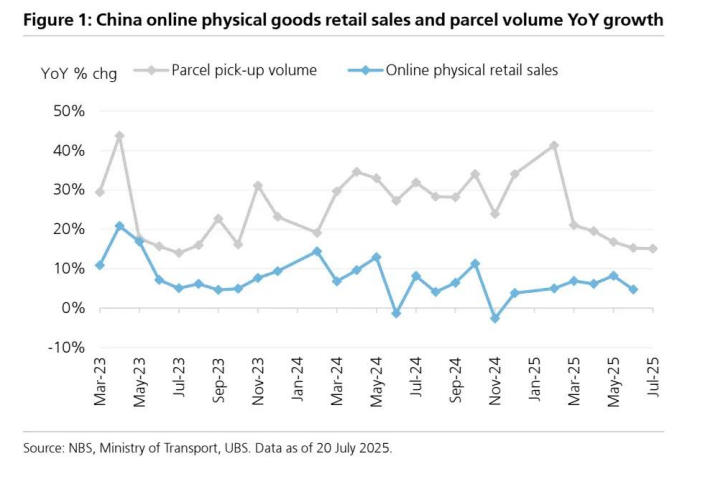
Group 1: Chinese Luxury Car Dealers - UBS analysts noted a recent stock price increase for Zhongsheng Group and Yongda Automotive, with respective rises of approximately 20% and 5% over the past five days, attributed to expectations of improved new car profit margins and market speculation on industry consolidation [2][3] - The Chinese government's crackdown on irrational competition is expected to stabilize retail prices and improve profit margins for dealers, which are sensitive to changes in new car profit margins [3][4] - Traditional luxury car brands are facing declining sales, with a 14% year-on-year drop in the first half of 2025, as domestic brands capture a larger market share, leading to potential further retail price discounts [4][5] Group 2: Chinese Insurance Industry - Following recent anti-involution measures, the Chinese life insurance sector saw a 9.1% increase in H-shares over four trading days, outperforming the Hang Seng Index [7] - Rising interest rates are expected to benefit life insurance companies in the long term, enhancing net asset value and reducing risks associated with interest spreads [8] - UBS anticipates that the upcoming lower pricing interest rate benchmark may make dividend-type policies more attractive, benefiting insurers with strong investment and distribution capabilities [8][9] Group 3: Chinese E-commerce Industry - The second quarter saw a 6.3% year-on-year increase in online retail sales, indicating a shift towards high-quality growth, with improved return rates attributed to policy changes on e-commerce platforms [11][12] - Instant retail investments by Alibaba and JD.com have led to a recovery in daily active users, although the conversion rate of new traffic remains lower compared to traditional channels [13][14] - UBS favors Alibaba in the e-commerce sector due to its potential in artificial intelligence-related businesses and expects significant value realization if execution is successful [18]
32家港股公司回购 腾讯控股回购5.00亿港元



Zheng Quan Shi Bao Wang· 2025-07-03 01:22
Summary of Key Points Group 1: Core Insights - On July 2, 32 Hong Kong-listed companies conducted share buybacks, totaling 25.43 million shares and an aggregate amount of HKD 762 million [1] - Tencent Holdings led the buybacks with 996,000 shares repurchased for HKD 500 million, marking a year-to-date total of HKD 37.04 billion [1] - AIA Group and Kang Hsin Pharmaceutical also made significant buybacks, with AIA repurchasing 3 million shares for HKD 214 million and Kang Hsin repurchasing 840,000 shares for HKD 9.46 million [1] Group 2: Buyback Details - The highest buyback amount on July 2 was from Tencent Holdings at HKD 500 million, followed by AIA Group at HKD 214 million [1] - In terms of share volume, the most shares were repurchased by Founder Holdings with 4.92 million shares, followed by Ying Group and China Electric Power at 4 million and 3.2 million shares, respectively [1] - Year-to-date, Tencent Holdings has conducted multiple buybacks totaling HKD 37.04 billion, indicating a strong commitment to returning capital to shareholders [1]