易方达基金

Search documents
ETF周评|近五百亿资金趁大跌抄底,哪些ETF成了香饽饽
Sou Hu Cai Jing· 2025-11-24 10:44
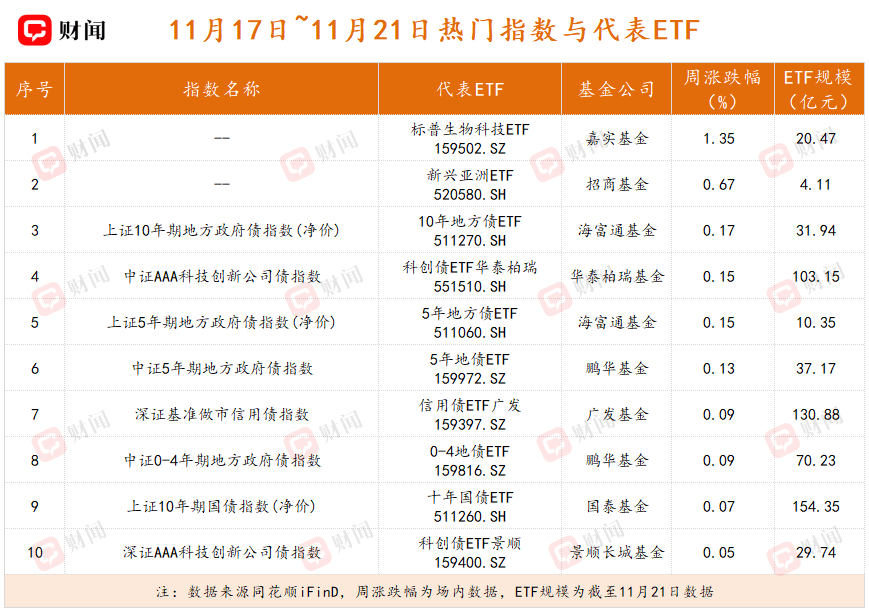
Market Overview - The A-share market experienced significant adjustments from November 17 to November 21, with the Shanghai Composite Index falling below 4000 points and a cumulative decline of 3.9% [1] - The Shenzhen market showed even weaker performance, with the Shenzhen Component Index down 5.13% and the ChiNext Index down 6.15% [2] - The Hong Kong market also faced pressure, with the Hang Seng Index dropping over 5% during the same period [2] ETF Performance - All stock-type ETFs in the market saw declines, particularly those related to new energy sectors like photovoltaic and lithium batteries, with 23 ETFs dropping over 10% [3] - The leading ETFs in decline were the Sci-Tech Innovation New Energy ETF (588960.SH) and the Sci-Tech New Energy ETF (588830.SH), with weekly declines of 13.44% and 13.17%, respectively [3] - Only 52 ETFs managed to rise, with the S&P Biotechnology ETF (159502.SZ) being the sole ETF to increase by more than 1%, up 1.35% [4] Fund Flows - The overall market saw a net inflow of 981.24 billion yuan into ETFs, with stock-type ETFs attracting the most significant inflow of 494.70 billion yuan [6] - On November 21, despite the market downturn, stock-type ETFs received a substantial net inflow of 357.95 billion yuan, with total trading volume reaching 1558.48 billion yuan, a 40.89% increase from the previous week [6] - Major contributors to the inflow included the CSI 300 ETF (510300.SH) and the CSI 500 ETF (510500.SH), each with net inflows exceeding 30 billion yuan [6] Sector-Specific Trends - Industry and thematic ETFs experienced notable outflows, with the Bank ETF (512800.SH) seeing a net outflow of 13.56 billion yuan, the only ETF with outflows exceeding 10 billion yuan [7] - Other cyclical ETFs, such as the Chemical ETF (159870.SH) and Coal ETF (515220.SH), also faced significant outflows of 9.64 billion yuan and 9.26 billion yuan, respectively [7] ETF Size Changes - Despite the inflow into broad-based index ETFs, the market volatility led to a reduction in the sizes of major ETFs, with the CSI 300 ETF and the CSI 500 ETF both shrinking by over 100 billion yuan [11] - As of November 21, the sizes of the two ETFs were reported at 2901.18 billion yuan and 4117.08 billion yuan, respectively [11] Top Performing ETFs - The top 10 ETFs by net inflow included the CSI 500 ETF (510500.SH) with an inflow of 57.78 billion yuan, followed by the Hua Bao Tian Yi ETF (511990.SH) with 51.79 billion yuan [9] - Other notable ETFs in the top inflow list included the ChiNext ETF (159915.SZ) and the CSI 300 ETF (510300.SH), with inflows of 46.78 billion yuan and 44.62 billion yuan, respectively [9] Bottom Performing ETFs - The Bank ETF (512800.SH) led the outflows with a decrease of 13.56 billion yuan, followed by the Chemical ETF (159870.SH) and Coal ETF (515220.SH) with outflows of 9.64 billion yuan and 9.26 billion yuan [10] - Other ETFs experiencing significant outflows included the 5G Communication ETF (515050.SH) and Financial Technology ETF (159851.SZ) [10]

公募基金泛固收指数跟踪周报(2025.11.17-2025.11.21):美联储降息预期摇摆,国内债市窄幅震荡-20251124
HWABAO SECURITIES· 2025-11-24 09:07
Report Summary 1. Report Industry Investment Rating No information provided regarding the report industry investment rating. 2. Core Viewpoints of the Report - Last week, the bond market remained volatile. The 1-year Treasury yield dropped 0.96BP to 1.40%, the 10-year yield slightly rose to 1.82%, and the 30-year yield increased 0.95BP to 2.16%. The short - end was stronger than the long - end, and there was no expected stock - bond "see - saw effect" [3][10]. - The short - term 10 - year Treasury yield may fluctuate between 1.75% - 1.85%. Investors can wait for the yield to reach the upper limit for potential increasing allocation opportunities [3][10]. - U.S. Treasury yields declined last week. The market's expectation of a December Fed rate cut has risen to about 70% after Fed official Williams' speech, but Fed officials' internal differences on further rate cuts are intensifying [11]. - The REITs market had a phased correction last week, with the data center, affordable housing, and warehousing logistics sectors leading the decline. There were also new developments in the primary market [11]. - E Fund's Ruyi Ying'an FOF raised over 5.8 billion yuan, and China Merchants Bank's "TREE Changying Plan" has helped expand the scale of medium - and low - risk FOFs [3][12]. 3. Summary by Relevant Catalogs 3.1 Weekly Market Observation 3.1.1 Pan - Fixed - Income Market Review and Observation - **Domestic Bond Market**: The domestic bond market was volatile last week. The short - end was stronger than the long - end, and there was no stock - bond "see - saw effect". The 10 - year Treasury yield may stay in the 1.75% - 1.85% range in the short term [10]. - **U.S. Bond Market**: U.S. Treasury yields declined last week. Fed officials' different views on rate cuts reflect internal differences, and the debate on further rate cuts continues [11]. - **REITs Market**: The REITs market had a phased correction last week. There were new developments in the primary market, with 3 new public REITs making progress [11]. 3.1.2 Public Fund Market Dynamics E Fund's Ruyi Ying'an 6 - month holding hybrid initiated (FOF) was established on November 19, 2025, with a fundraising scale of over 5.8 billion yuan. China Merchants Bank's "TREE Changying Plan" has contributed to the expansion of medium - and low - risk FOFs [12]. 3.2 Pan - Fixed - Income Fund Index Performance Tracking 3.2.1 Currency Enhancement Index Tracking - **Currency Enhancement Strategy Index**: Aims for liquidity management, targeting a curve that surpasses money market funds. It mainly invests in money market funds and inter - bank certificate of deposit index funds. The performance benchmark is the China Securities Money Fund Index [14]. 3.2.2 Pure Bond Index Tracking - **Short - Term Bond Fund Preferred Index**: Focuses on liquidity management, aiming for a smooth curve while controlling drawdowns. It selects 5 funds with stable long - term returns, strict drawdown control, and strong absolute return capabilities. The benchmark is 50% Short - Term Pure Bond Fund Index + 50% General Money Fund Index [18]. - **Medium - and Long - Term Bond Fund Preferred Index**: Seeks stable returns by investing in medium - and long - term pure bond funds. It aims for excess returns compared to the medium - and long - term bond fund index and a stable net value curve. It selects 5 funds, balancing coupon strategies and band operations, and adjusts duration and bond types according to market conditions [20]. 3.2.3 Fixed - Income + Index Tracking - **Low - Volatility Fixed - Income + Preferred Index**: The equity center is set at 10%. It selects 10 fixed - income + funds with an equity position (considering convertible bonds and stocks) within 15% in the past three years and recently. The benchmark is 10% CSI 800 Index + 90% ChinaBond New Composite Full - Price Index [22]. - **Medium - Volatility Fixed - Income + Preferred Index**: The equity center is 20%. It selects 5 fixed - income + funds with an equity position between 15% - 25% in the past three years and recently. The benchmark is 20% CSI 800 Index + 80% ChinaBond New Composite Full - Price Index [23]. - **High - Volatility Fixed - Income + Preferred Index**: The equity center is 30%. It selects 5 fixed - income + funds with an equity position between 25% - 35% in the past three years and recently. It focuses on funds with strong stock - picking ability in the equity part and no credit downgrading in the bond part. The benchmark is 30% CSI 800 Index + 70% ChinaBond New Composite Full - Price Index [26]. 3.2.4 Convertible Bond Fund Preferred Index It selects 5 convertible bond funds from a sample space of bond funds with a convertible bond investment ratio of at least 60% in the latest period and at least 80% on average in the past four quarters. It evaluates funds from multiple dimensions and selects the best - performing ones based on market conditions [30][31]. 3.2.5 QDII Bond Fund Preferred Index Tracking It selects 6 QDII bond funds with stable returns and good risk control, investing in overseas bonds in regions like the global market, Asia, and emerging markets, including investment - grade and high - yield products [31]. 3.2.6 REITs Fund Preferred Index Tracking It selects 10 REITs funds with stable operations, reasonable valuations, and some elasticity, based on the underlying assets of mature and high - quality infrastructure projects with relatively clear cash - flow expectations [35].
AI应用全线爆发,58位基金经理发生任职变动
Sou Hu Cai Jing· 2025-11-24 08:47
Market Performance - On November 24, the three major A-share indices closed higher, with the Shanghai Composite Index rising by 0.05% to 3836.77 points, the Shenzhen Component Index increasing by 0.37% to 12585.08 points, and the ChiNext Index up by 0.31% to 2929.04 points [1]. Fund Manager Changes - In the past 30 days (October 25 to November 24), a total of 644 fund managers have left their positions across various funds. On November 24 alone, 72 funds announced changes in their fund managers [3]. - The reasons for the changes include 15 fund managers leaving due to job changes from managing 40 funds, 6 due to product expiration from managing 9 funds, and 3 for personal reasons from managing 23 funds [3]. Fund Manager Performance - Lu Yushan from Southern Fund currently manages assets totaling 1.109 billion yuan, with the highest return of 147.82% achieved in the Southern Reform Opportunity fund over 6 years and 305 days [5]. - Yu Haiyan from E Fund manages assets of 440.629 billion yuan, with the highest return of 155.84% from the E Fund CSI 300 Non-Bank ETF over 11 years and 154 days [5]. Fund Research Activity - In the past month, the most active fund company in conducting company research was Chuangjin Hexin Fund, which researched 214 listed companies. Other active fund companies included Bosera Fund, Huaxia Fund, and Ping An Fund, researching 117, 113, and 112 companies respectively [7]. - The medical device industry was the most researched sector, with 639 instances of research, followed by the chemical products industry with 502 instances [7]. Recent Company Focus - The most researched company in the last month was Luxshare Precision, with 76 fund management companies participating in the research. Other notable companies included Lens Technology and Ninebot, with 74 and 72 fund management companies involved respectively [8]. - In the past week (November 17 to November 24), Ninebot was the most researched company, receiving attention from 47 fund institutions, followed by Lens Technology, Rongbai Technology, and Boying Special Welding [9].


破局·重构:2025雪球嘉年华将于12月20-21日在上海举办
雪球· 2025-11-24 08:13
Core Viewpoint - The 2025 Xueqiu Carnival in Shanghai will focus on analyzing investment opportunities and strategies across various markets, sectors, and assets, driven by the positive market sentiment from recent policy measures and strong performance in technology sectors [1][2]. Group 1: Macroeconomic Overview - The carnival will review the economic situation of 2025 and forecast the macroeconomic outlook for 2026, highlighting the dual support from policies and the economy that has led to a steady upward trend in the A-share market [2]. - The overseas markets have also experienced strong performance this year, although they face challenges such as inflation, high valuations, and geopolitical risks [2]. Group 2: Industry Insights - The Shanghai Composite Index has reached historical highs this year, with sectors such as pharmaceuticals, technology, advanced manufacturing, and cyclical industries providing significant returns to investors [2]. - The carnival will feature professional investors focusing on these hot industry sectors to share insights on investment opportunities [2]. Group 3: Investment Strategies - Various investment strategies, including macro, equity long/short, and quantitative strategies, have gained attention this year, with discussions on how different strategies suit various types of investors and how to balance risk and return in the current market environment [2]. - Leading public and private fund managers will provide in-depth thoughts on these strategies during the carnival [2]. Group 4: Notable Participants - The event will host nearly a hundred prominent guests, including chief economists and fund managers, who will share their insights on economic trends, market observations, and investment opportunities [3]. - Popular Xueqiu users will also participate in sharing their experiences and reflections on the market [3]. Group 5: Community Engagement - Prior to the offline event, Xueqiu has set up five online discussion topics to engage the community, starting from November 24 [5]. - The annual Xueqiu Awards, recognizing influential users and funds, will also be announced during the event [5].

ETF改名潮,千余只基金明年3月底前完成
Feng Huang Wang· 2025-11-24 07:33
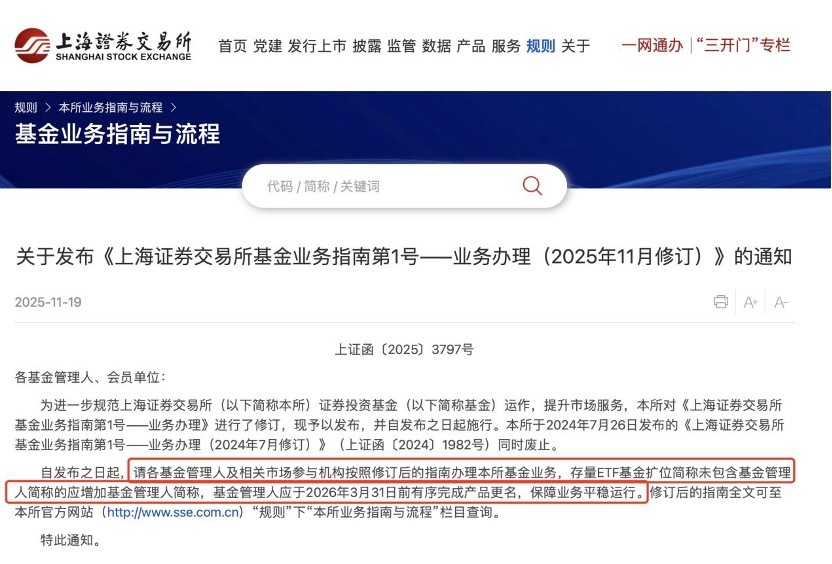
Core Viewpoint - The recent regulatory changes by the Shanghai and Shenzhen Stock Exchanges mandate a standardized naming convention for ETFs, enhancing product recognition and investor decision-making efficiency [2][4][8]. Group 1: Regulatory Changes - The revised guidelines require that the expanded abbreviations for ETFs must include the fund manager's name and follow specific naming structures, such as "core investment element + ETF" [4][5]. - Existing ETFs must complete their name changes by March 31, 2026, to comply with the new regulations [5][6]. Group 2: Market Impact - As of November 24, there are 1,367 ETFs in the market, with a significant increase in similar products leading to potential confusion among investors [5]. - Major fund companies like E Fund and Harvest have already begun adjusting their ETF names to align with the new standards, improving product clarity and investor experience [7][8]. Group 3: Industry Perspectives - Industry experts believe that the new naming conventions will enhance the identification of ETFs, allowing investors to better understand the underlying indices and the fund managers [8][9]. - The inclusion of fund manager names in ETF abbreviations is expected to reduce the likelihood of investors confusing similar products, thereby improving overall market efficiency [9][10].
天赐良基日报|多只红利ETF规模刷新纪录;16只硬科技主题基金同日获批
Mei Ri Jing Ji Xin Wen· 2025-11-24 07:31
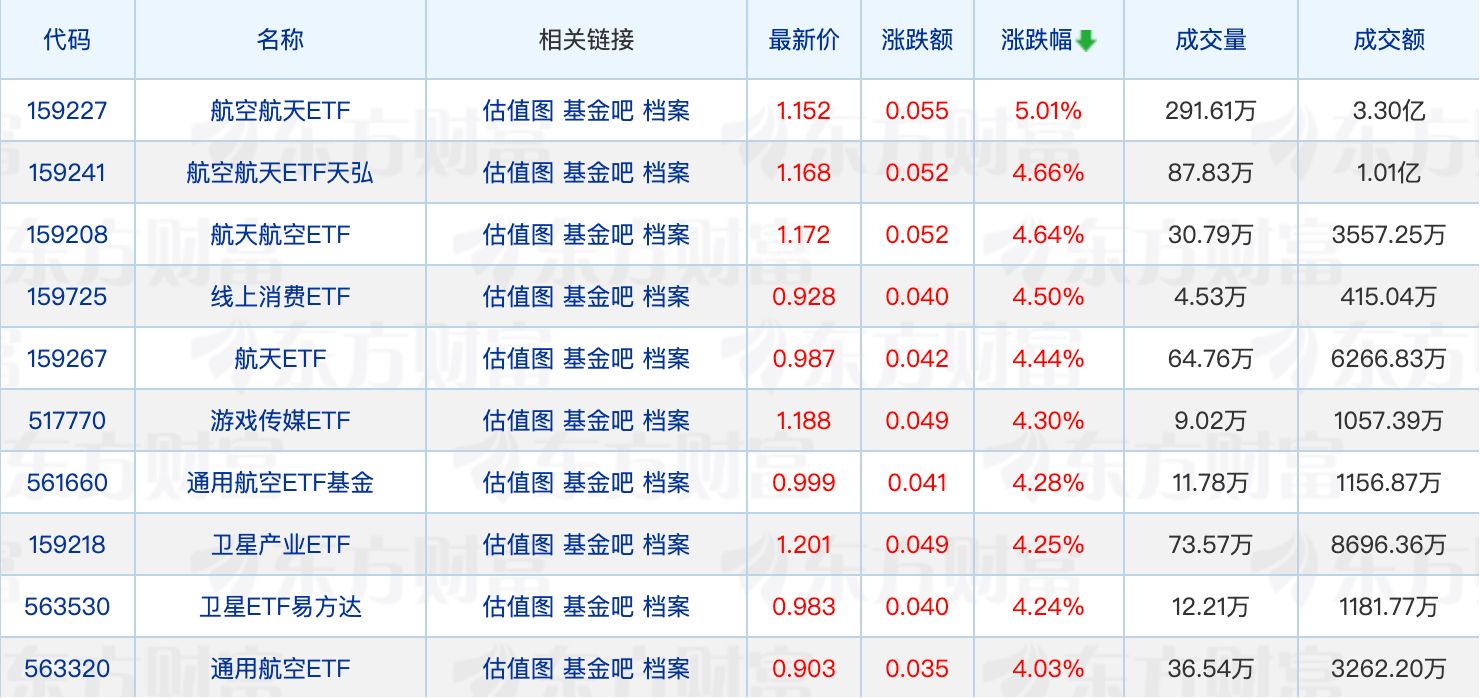
Group 1: Fund News Overview - 16 hard technology-themed funds were approved on November 21, including 7 AI ETFs, 3 chip ETFs, 4 chip design ETFs, and 2 actively managed technology equity funds from various fund managers such as E Fund, GF Fund, and Morgan Asset Management [1] - Several dividend ETFs have reached record sizes, with one product exceeding 26.6 billion yuan. As of November 21, the net inflow for dividend-themed ETFs in November reached 6.318 billion yuan, totaling 35.623 billion yuan year-to-date, representing a 49.31% increase since the beginning of the year [2] - More than half of Hong Kong stock funds have a return rate exceeding 30%. As of November 18, out of 337 funds with "Hong Kong" in their names, 336 had positive returns this year, with 174 funds achieving returns over 30%, accounting for approximately 52% [3] Group 2: Fund Manager Updates - Fund subscriptions for multiple funds managed by Lan Xiaokang will be limited starting November 24, with a maximum subscription amount of 500,000 yuan per day per account. The two funds, managed by Lan Xiaokang, have scales of 9.668 billion yuan and 7.170 billion yuan respectively [4] Group 3: ETF Market Commentary - The market showed a slight recovery, with the Shanghai Composite Index rising by 0.05%, the Shenzhen Component Index by 0.37%, and the ChiNext Index by 0.31%. The total trading volume in the Shanghai and Shenzhen markets was 1.73 trillion yuan, a decrease of 237.9 billion yuan from the previous trading day. Sectors such as aerospace, internet services, and communication equipment saw significant gains, while energy metals and insurance sectors experienced declines [5] - The commercial aerospace sector is highlighted as a key opportunity, with satellite applications and 6G technology showing strong integration potential. The next important phase for satellite networks will be the deployment of powerful on-orbit computing capabilities, which can be explored through aerospace ETFs and general aviation ETFs [9]
A股大利好,狂买400亿
Zhong Guo Ji Jin Bao· 2025-11-24 06:34
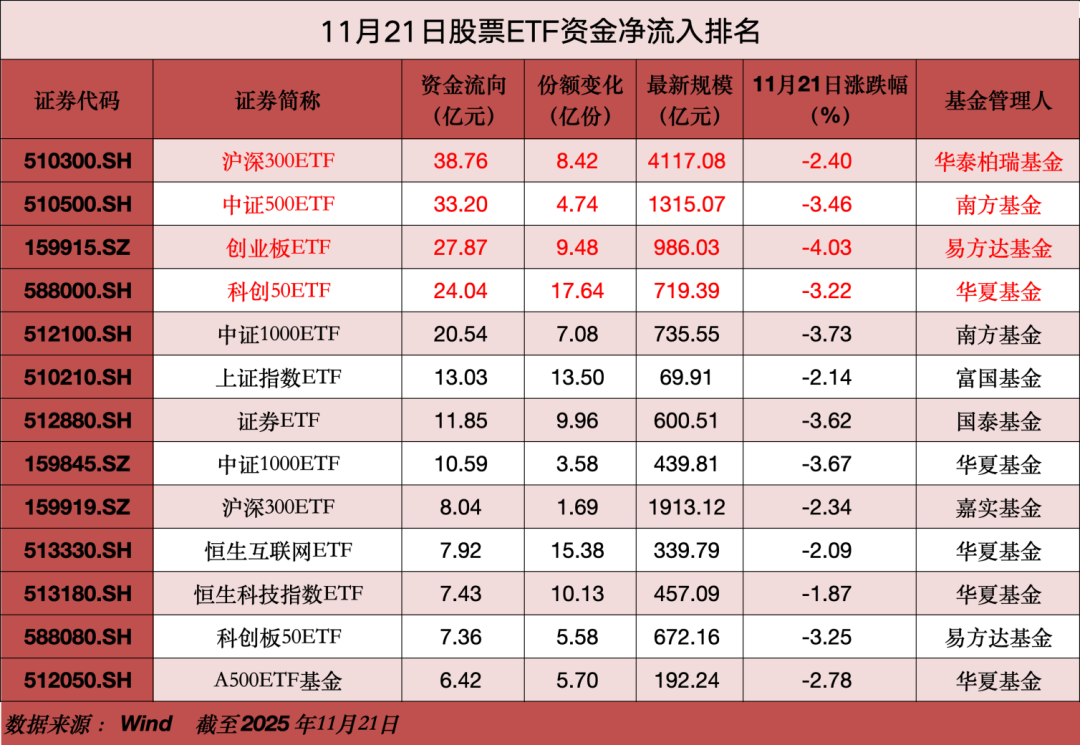
Core Viewpoint - The A-share market experienced a significant pullback on November 21, with the ChiNext Index dropping over 4%, the Shenzhen Component Index down 3.41%, and the Shanghai Composite Index falling 2.45%. Despite this, stock ETFs saw a net inflow of over 40 billion yuan as investors engaged in bottom-fishing and increased their positions [1]. Group 1: ETF Market Overview - As of November 21, the total scale of 1,262 stock ETFs in the market reached 4.47 trillion yuan, with a reduction in scale primarily due to the market downturn [2]. - On November 21, the overall net inflow of funds into stock ETFs was 407.57 billion yuan, indicating a strong interest from investors to buy at lower prices [2]. - The net inflows were led by broad-based ETFs and industry-themed ETFs, with net inflows of 272.7 billion yuan and 73.57 billion yuan, respectively [2]. Group 2: Specific ETF Inflows - The ETFs tracking the CSI 300 Index saw a net inflow of 48.9 billion yuan, while those tracking the CSI 500 Index had a net inflow of 39 billion yuan [2]. - The net inflows for the ChiNext Index ETF and the STAR 50 Index ETF were 37.8 billion yuan and 38.6 billion yuan, respectively [2]. - Notable single product inflows included 27.87 billion yuan for the E Fund ChiNext ETF and 24.04 billion yuan for the Huaxia STAR 50 ETF [2]. Group 3: Sector-Specific Inflows - The technology sector, particularly the artificial intelligence and robotics segments, also attracted significant investment, with net inflows of 9.1 billion yuan and 10.2 billion yuan, respectively [3]. - The brokerage sector, often seen as a market leader, recorded net inflows of 11.85 billion yuan for the Guotai Fund's securities ETF and 4.76 billion yuan for the Huabao Fund's brokerage ETF [3]. Group 4: ETF Outflows - The banking sector experienced notable outflows, with a total of 4.6 billion yuan leaving the sector on the same day [6]. - The top outflowing ETFs included the Battery 50 ETF with a net outflow of 4.22 billion yuan and the Bank ETF with a net outflow of 3.21 billion yuan [7]. Group 5: Market Outlook - Short-term market fluctuations are anticipated due to expectations of a Federal Reserve interest rate cut, but the downside potential for indices is limited due to policy support and stabilizing measures [8]. - Mid-term prospects for the A-share market appear positive, with potential structural opportunities in dividend-paying sectors and areas supported by policy initiatives [8].
A股大利好,狂买400亿!
Zhong Guo Ji Jin Bao· 2025-11-24 06:21
Core Insights - On November 21, the stock ETF market saw a net inflow exceeding 40 billion yuan, indicating a trend of investors "bottom-fishing" during market corrections [1][2] Summary by Category Market Overview - The three major A-share indices experienced significant declines, with the ChiNext Index dropping over 4%, the Shenzhen Component Index down 3.41%, and the Shanghai Composite Index falling 2.45% [1] - The total scale of 1,262 stock ETFs in the market reached 4.47 trillion yuan, primarily affected by the market downturn [1] Fund Inflows - On November 21, the overall net inflow into stock ETFs was 407.57 billion yuan, with significant contributions from broad-based ETFs and thematic industry ETFs [1] - The net inflows for broad-based ETFs and industry-themed ETFs were 272.7 billion yuan and 73.57 billion yuan, respectively [1] - Specific ETFs tracking major indices saw substantial inflows: - 48.9 billion yuan for the CSI 300 ETF - 39 billion yuan for the CSI 500 ETF - 38.6 billion yuan for the STAR Market 50 ETF - 37.8 billion yuan for the ChiNext ETF - 33.3 billion yuan for the CSI 1000 ETF [1] Notable ETF Performances - The E Fund's ChiNext ETF had a net inflow of 27.87 billion yuan on the same day, totaling 46 billion yuan for the week [2] - The Huaxia Fund's STAR 50 ETF and CSI 1000 ETF saw net inflows of 24.04 billion yuan and 10.59 billion yuan, respectively [2] - Over the past five days, the Hang Seng Technology Index attracted over 10.5 billion yuan, while the CSI 500 Index received over 6.4 billion yuan [2] Sector Analysis - The artificial intelligence sector also attracted significant inflows, with a total of 9.1 billion yuan for AI-related ETFs and 10.2 billion yuan for robotics ETFs [2] - The brokerage sector, often seen as a "bull market flag bearer," also experienced inflows, with the Guotai Fund's securities ETF receiving 11.85 billion yuan [2] Fund Outflows - The banking sector faced notable outflows, with a total of 4.6 billion yuan leaving the sector on November 21 [4] - The top outflowing ETFs included the Battery 50 ETF with a net outflow of 4.22 billion yuan and the Bank ETF with 3.21 billion yuan [5] Future Outlook - Short-term market fluctuations may occur due to expectations of a Federal Reserve interest rate cut, but the potential for significant declines is limited due to policy support [6] - Mid-term prospects for A-shares appear stable, with opportunities in dividend sectors and areas supported by innovation policies [6]
A股大利好,狂买400亿!
中国基金报· 2025-11-24 06:17
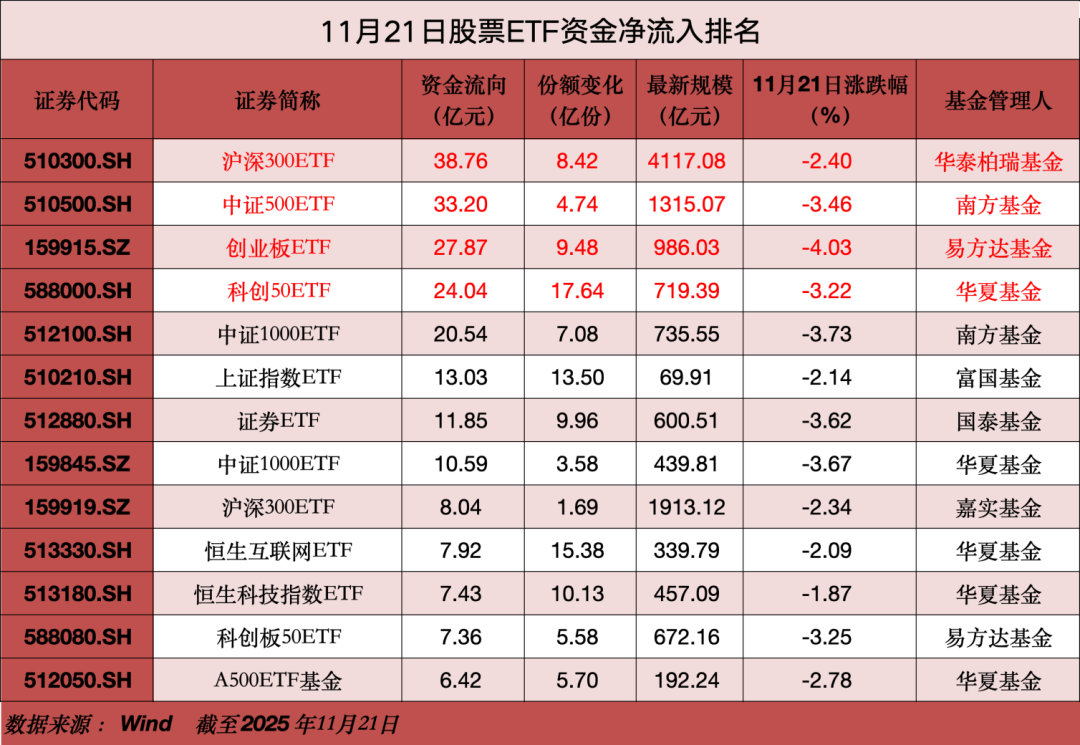
Core Viewpoint - On November 21, the stock ETF market saw a net inflow exceeding 40 billion yuan, indicating a trend of investors increasing their positions in ETFs amid market volatility [2][4]. Group 1: Market Overview - On November 21, A-share indices experienced significant declines, with the ChiNext Index dropping over 4%, the Shenzhen Component Index down 3.41%, and the Shanghai Composite Index falling 2.45% [2]. - The overall scale of the stock ETF market reached 4.47 trillion yuan, with a notable reduction in size due to the market downturn [4]. Group 2: Fund Inflows - On November 21, the net inflow for broad-based ETFs was 272.7 billion yuan, while industry-themed ETFs saw a net inflow of 73.57 billion yuan [5]. - Specific ETFs tracking major indices attracted substantial inflows, including 48.9 billion yuan for the CSI 300 ETF, 39 billion yuan for the CSI 500 ETF, and 38.6 billion yuan for the STAR 50 ETF [5]. Group 3: Notable ETF Performance - The E Fund's ChiNext ETF recorded a net inflow of 27.87 billion yuan on November 21, with a total inflow of 46 billion yuan for the week [5]. - The Huaxia Fund's STAR 50 ETF and CSI 1000 ETF saw net inflows of 24.04 billion yuan and 10.59 billion yuan, respectively [5]. Group 4: Sector-Specific Inflows - Over the past five days, the Hang Seng Technology Index attracted over 10.5 billion yuan, while the CSI 500 Index saw inflows exceeding 6.4 billion yuan [6]. - The artificial intelligence sector also performed well, with a total net inflow of 9.1 billion yuan, and the robotics sector attracted 10.2 billion yuan [6]. Group 5: Outflows from Specific Sectors - The banking sector experienced significant outflows, totaling 4.6 billion yuan on November 21, indicating a shift in investor sentiment [10]. - The net outflow for the Bank ETF was 3.21 billion yuan, reflecting broader trends in the financial sector [11]. Group 6: Future Outlook - Short-term market fluctuations may occur due to expectations of a Federal Reserve interest rate cut, but the potential for significant declines is limited by policy support and stabilization measures [12]. - Mid-term prospects for A-shares appear positive, with anticipated growth driven by policies aimed at stabilizing the economy and supporting key sectors [12].