
零跑汽车

Search documents
瑞银深度调研报告:2026年中国两大产业主线:自主可控与海外扩张
Zhi Tong Cai Jing· 2026-02-13 13:31
Group 1: Core Insights - UBS's in-depth research in China identifies two main industry themes for 2026: self-sufficiency and overseas expansion [1] - The research covered various sectors including technology, industrial, healthcare, consumer, and utilities, visiting over 100 companies and industry experts [1] - The report highlights a shift in investor interest, with capital goods, media entertainment, and real estate development seeing increased research focus, while semiconductor and automotive parts sectors experienced a decline [1] Group 2: Technology Sector Insights - The technology sector is a key focus, with advancements in self-sufficiency moving from isolated breakthroughs to industry-wide collaboration [2] - AI capital expenditure is expected to grow steadily in 2026, driven by strong demand for AI applications and local semiconductor production [3] - Despite uncertainties regarding H200 GPU imports, domestic supply chains are adapting through technology substitution and demand upgrades [3] Group 3: Semiconductor Developments - The localization of China's semiconductor industry is accelerating, with significant progress in advanced etching/ deposition equipment, advanced packaging, and high-end analog chips [4] - Capital expenditure for wafer fabrication equipment (WFE) is projected to grow by 10-15% annually, driven by capacity expansion in advanced logic and memory wafer fabs [4] - Domestic manufacturers anticipate a substantial increase in storage capital expenditure in 2026, aligning with a global upcycle in the storage industry [4] Group 4: Overseas Expansion Trends - Multiple industries, including industrial, biopharmaceuticals, and consumer goods, are focusing on overseas expansion as a key growth strategy [6] - In the industrial sector, overseas orders for AIDC and renewable energy storage equipment are increasing significantly [7] - The healthcare sector is also prioritizing global expansion, with biopharmaceutical companies actively pursuing international collaborations and local sales team development [9] Group 5: Key Recommendations - UBS recommends several core stocks in the technology and semiconductor sectors, including Northern Huachuang (advanced etching/ deposition), Changdian Technology (advanced packaging), and Horizon Robotics (edge AI) [5][12] - In the healthcare sector, companies like WuXi AppTec (CRO/CDMO) and 3SBio (biopharmaceuticals) are highlighted as key beneficiaries of global expansion [12] - The consumer sector sees recommendations for Jason Furniture (overseas expansion) and Leap Motor (new energy vehicles), while Gree Electric Appliances is advised to sell due to margin pressures [12] Group 6: Overall Industry Outlook - The report concludes that China's industrial development in 2026 will be characterized by a dual focus on self-sufficiency in technology and overseas expansion in various sectors [13] - The integration of these two themes is expected to enhance China's economic globalization, with technology supporting overseas expansion and vice versa [13] - Investment opportunities are identified in sectors with low crowding and improving fundamentals, as well as in high-growth areas like AI and semiconductors [13]


车企成本与用户税负双上升的2026 ,消费者如何聪明购车?
3 6 Ke· 2026-02-13 12:32
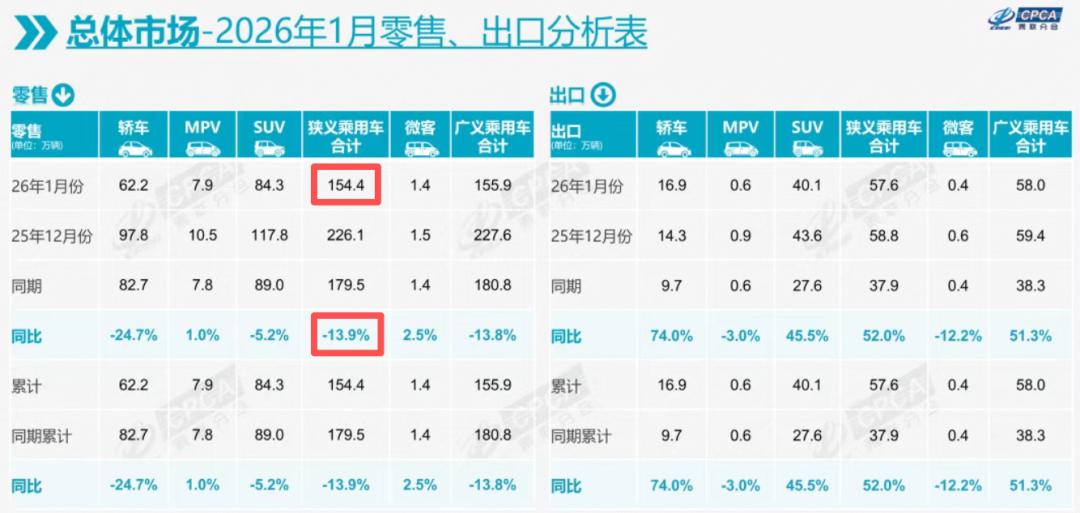
Group 1 - The Chinese new energy vehicle (NEV) market faced a significant downturn at the start of 2026, with major automakers experiencing substantial sales declines, including BYD, which saw a year-on-year decrease of approximately 30% and a month-on-month drop of 50% [1][3][6] - In January 2026, nationwide retail sales of passenger cars reached 1.544 million units, reflecting a year-on-year decline of 13.9% [1][2] - The decline in sales is attributed to multiple factors, including the expiration of tax incentives, preemptive demand exhaustion, and rising cost pressures, marking the end of an era of easy growth for the NEV industry [1][6][12] Group 2 - The new tax policy implemented on January 1, 2026, which reduced the exemption on NEV purchase tax, has led to a significant drop in consumer demand as buyers rushed to purchase vehicles before the policy change [6][9][11] - Major brands like Leap Motor, Xiaomi, and NIO also reported significant month-on-month sales declines, with some brands experiencing drops exceeding 60% [3][5] - The competitive landscape is shifting towards a "survival of the fittest" scenario, where automakers must focus on technology, cost control, and efficiency to remain viable [12][14] Group 3 - Consumers are advised to consider various factors when deciding the optimal time to purchase a vehicle in 2026, including policy changes, market conditions, and technological advancements [18][21] - The first quarter of 2026 may present opportunities for consumers due to significant inventory pressures on dealers, potentially leading to aggressive promotional offers [21][23] - The introduction of new technologies, such as semi-solid batteries and advanced driving systems, may influence consumer decisions between purchasing older models at discounts or new models with cutting-edge features [23]


持股5%,销量并表引关注:中国一汽计入零跑销量后,1月新能源销量实现同比增长9%
Mei Ri Jing Ji Xin Wen· 2026-02-13 11:55
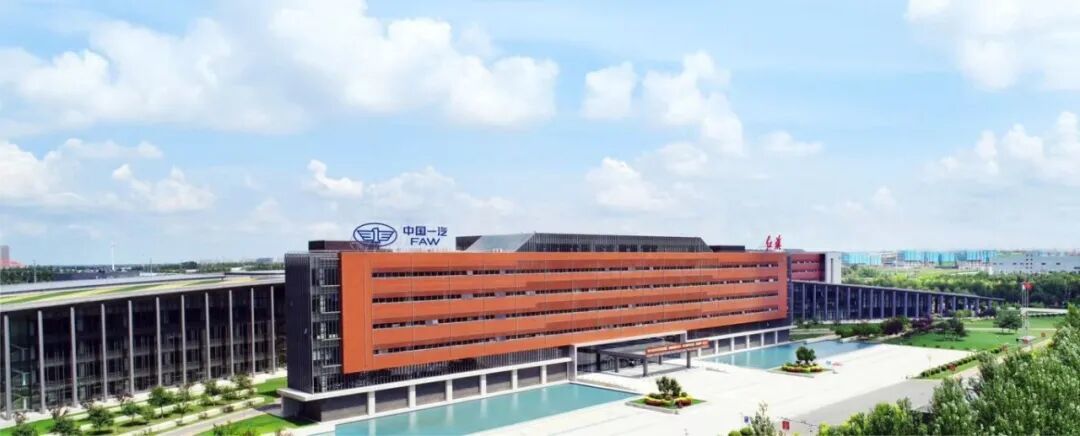
Group 1 - The core point of the article is that China FAW Group has included the sales figures of Leap Motor in its own sales statistics, despite only holding a 5% stake, raising questions about the validity of this consolidation [1][2] - In January 2026, China FAW's new energy vehicle sales reached 51,000 units, a year-on-year increase of 9%, but excluding Leap Motor's sales, the actual sales were only 19,000 units [1][4] - Leap Motor's chairman has emphasized that the company will maintain its independence and that the investment from China FAW is primarily as an investor, not as a controlling entity [2] Group 2 - In comparison, Dongfeng Motor and Changan Automobile reported new energy vehicle sales of 83,000 units and 37,000 units respectively in the same period, indicating that China FAW's performance is lagging behind its peers [4] - For 2026, Dongfeng has set a sales target of 3.25 million units, with a new energy vehicle target of 1.7 million units, while Changan aims for 3.3 million units overall, with 1.4 million in new energy vehicles [4] - China FAW has set an overall sales target of 3.546 million units for 2026 but has not disclosed specific targets for new energy vehicles [5]


年销2700万辆,中国汽车又一个世界冠军
3 6 Ke· 2026-02-13 09:55
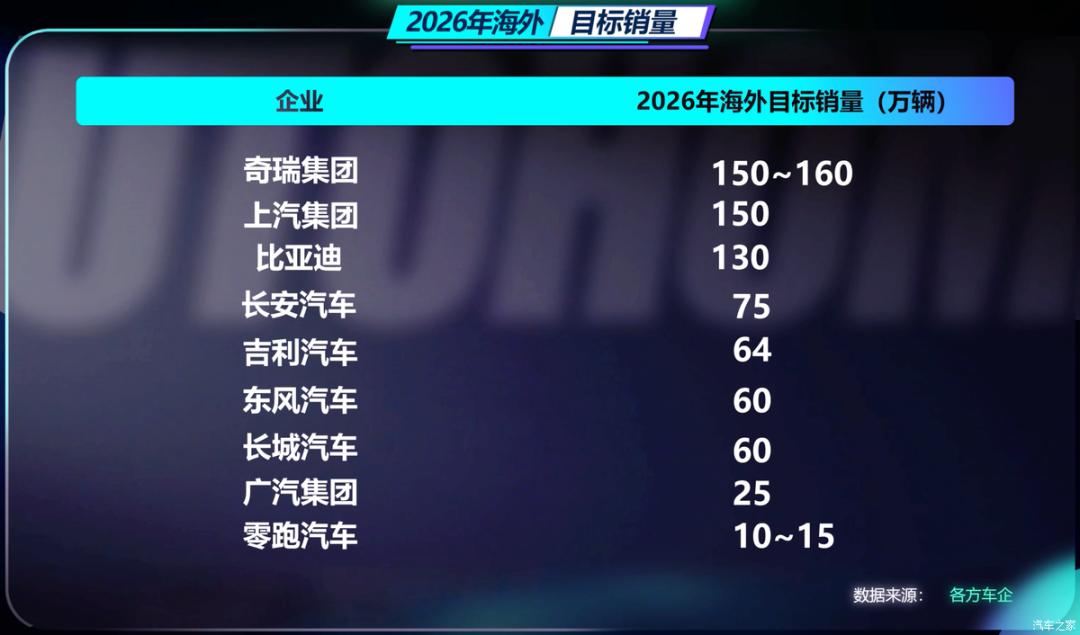
Core Insights - In 2025, Chinese automakers achieved a total global sales volume of 27 million vehicles, surpassing Japan for the first time in over 20 years, marking a significant milestone in the automotive industry [1] - Chinese automobile exports reached 8.32 million units in 2025, maintaining the title of the world's largest exporter for the third consecutive year, with Japan trailing at 4.21 million units [1] - Nine Chinese automakers have already set ambitious overseas sales targets for 2026, indicating confidence in continued growth in international markets [1][2] Group 1: Sales Performance - In 2025, Chery, SAIC, and BYD each exceeded 1 million units in overseas sales, with Chery selling 1.34 million units, representing nearly half of its total sales and a 17% increase year-on-year [3] - BYD's overseas sales surged by 145%, showcasing rapid growth from negligible figures to over 1 million units in just four years [3] - The overall export volume of Chinese automobiles grew by 29.9% in 2025, with December alone witnessing a remarkable 73.2% year-on-year increase, reaching 994,000 units [5] Group 2: Market Trends - The export of Chinese new energy vehicles (NEVs) reached 3.43 million units in 2025, a 70% increase, reflecting a growing global acceptance of electric vehicles [8] - In Europe, electric vehicles accounted for a record 19% of the market share in 2025, with Germany producing 1.67 million electric passenger cars, marking a 23% year-on-year growth [10] - Chinese brands are increasingly gaining traction in international markets, with significant sales growth in Australia and Europe, where they are becoming more competitive against traditional automakers [10][12] Group 3: Strategic Developments - Chinese automakers are expanding their presence in North America and Latin America, with Mexico becoming the largest market for Chinese car exports in 2025 [14] - Agreements with Canada allow Chinese companies to export electric vehicles at a reduced tariff rate, indicating a favorable trade environment [16] - The establishment of local supply chains and partnerships in various regions is a strategic move to enhance competitiveness and market penetration [16][17]




请回答2026:38位中国AI关键人物的Magic Moment和趋势判断
3 6 Ke· 2026-02-13 09:44
Core Insights - 2025 is identified as a pivotal year for China's artificial intelligence (AI) industry, with the core industry scale expected to exceed 1.2 trillion yuan, driven by policy and capital support [1] - The focus of the industry is shifting from mere model size and rankings to practical questions about technology deliverability and real-world impact [1] - A consensus among key figures in the AI sector indicates a transition from large models to multi-modal models and system-level intelligence by 2026 [3] Group 1: Founders - Founders are concerned with the broader implications of AI on society and organizations, rather than just product success [2] - The emergence of the "DeepSeek moment" in early 2025 marked a significant shift in the global AI landscape, with Chinese models gaining industry influence [5] - The year 2026 is anticipated to be the "year of enterprise multi-agent deployment," emphasizing organizational restructuring and the evolution of business models [6] Group 2: Innovators - Innovators are exploring new possibilities for AI, moving beyond traditional applications to create emotional connections and enhance productivity [2] - The focus is shifting from model capability competition to developing systems with long-term memory and real-world feedback loops [20] - The integration of multi-modal capabilities is expected to redefine AI's role in understanding and interacting with the physical world [21] Group 3: Breakthrough Players - Breakthrough players are navigating survival pressures, focusing on the viability of production and business models [2] - The emergence of long-term memory and self-evolving capabilities in AI models is expected to lead to a significant increase in the penetration of intelligent agents in various sectors [62] - The transition from isolated efficiency tools to AI as a collaborative partner in core business processes is reshaping organizational dynamics [74]

雷军官宣小米SU7停产,一个时代结束了
商业洞察· 2026-02-13 09:21
Core Viewpoint - The discontinuation of the first-generation Xiaomi SU7 marks a significant transition for Xiaomi from a "newcomer" in the automotive industry to a serious player, reflecting a strategic decision by Lei Jun to pivot towards future developments in electric vehicles [2][12]. Group 1: Discontinuation of the First-Generation SU7 - The first-generation SU7 has exceeded its mission, achieving impressive sales of 381,000 units within less than two years since its launch in April 2024 [8][11]. - The decision to stop production is strategic, as the initial model's features have become outdated in the rapidly evolving electric vehicle market, allowing Xiaomi to make way for the next generation [10][12]. - The SU7 has successfully established Xiaomi's credibility in the automotive sector, proving that the company can manufacture and sell vehicles effectively [12]. Group 2: New Generation SU7 and Future Ambitions - The new generation SU7 is positioned as a key player in Xiaomi's broader strategy, with Lei Jun emphasizing improvements based on user feedback, such as the design of door handles to meet new national standards [18][20]. - Xiaomi plans to diversify its product line beyond a single model, introducing various types of vehicles including SUVs and performance cars to mitigate risks [23]. - The new SU7 will feature advanced safety technologies, including standard laser radar and high-strength steel, with a maximum range of 902 kilometers, showcasing Xiaomi's commitment to safety and performance [23]. Group 3: Challenges and Public Perception - Despite high sales, Xiaomi faces significant public criticism, particularly following safety incidents involving the SU7, which have raised questions about the company's commitment to safety [30][35]. - The backlash stems from a combination of jealousy and self-inflicted issues, as Xiaomi's marketing strategies have sometimes backfired, leading to negative public perception [33][40]. - The company must address core concerns regarding safety and transparency, as failure to do so could hinder its aspirations to become a major player in the automotive industry [42][44].


2026车企新车规划盘点 这些新车值得关注
Zhong Guo Zhi Liang Xin Wen Wang· 2026-02-13 06:54
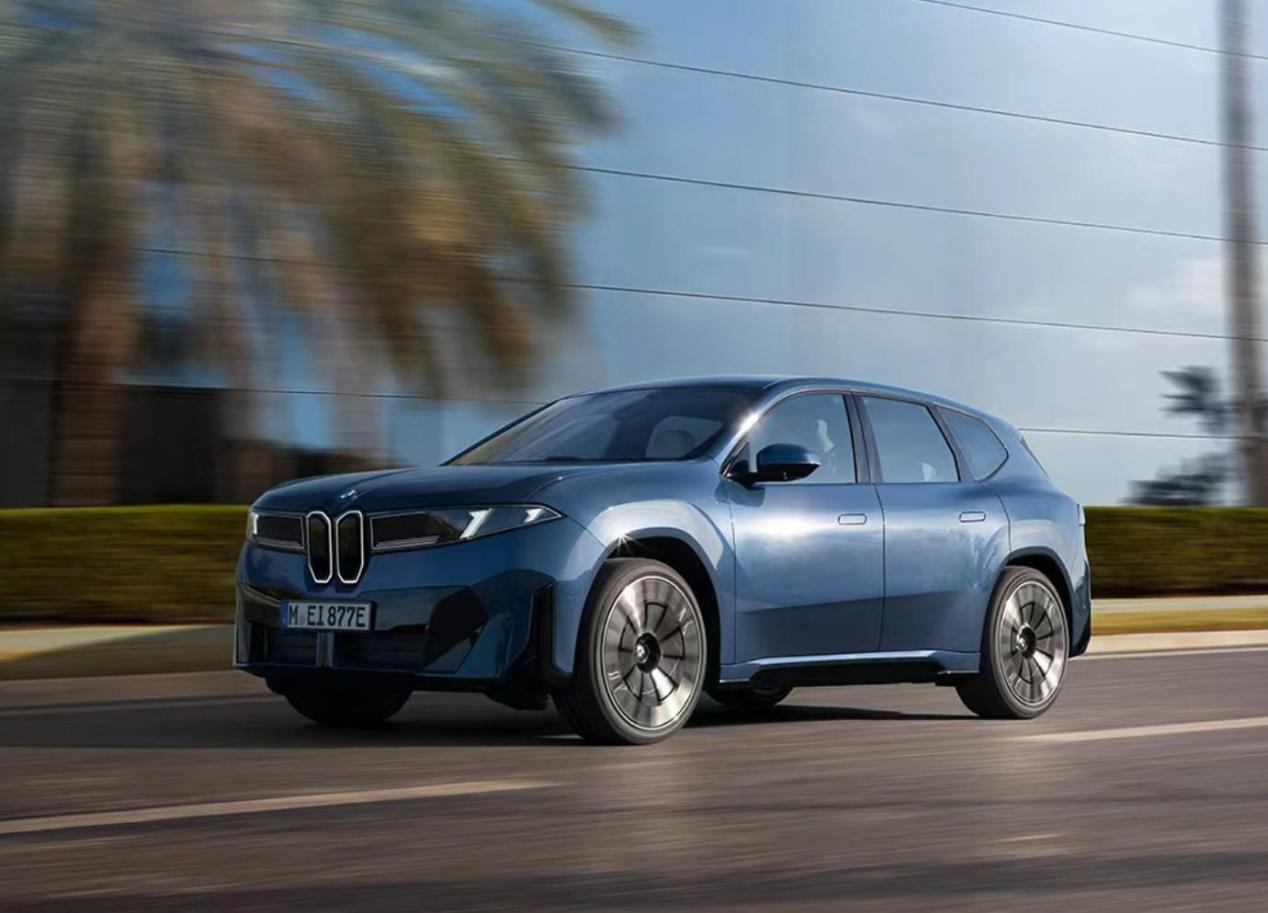
Industry Overview - The domestic automotive industry is entering a new phase focused on quality and efficiency, moving away from price competition to technology innovation and product upgrades to attract consumers [1] - In 2025, domestic passenger car production and sales are expected to reach new highs, with various automakers announcing new vehicle plans across different segments [1] BMW Group - BMW Group plans to launch approximately 20 new models across its three brands by 2026, including the locally produced BMW iX3 long-wheelbase version [2] - The new models will incorporate advanced technologies such as BMW's new generation electric drive technology and AI integration [2][4] Mercedes-Benz - Mercedes-Benz will introduce over 15 new and updated products in 2026, adhering to a strategy of "oil-electric homogeneity" and "oil-electric intelligence" [5] - The lineup will include new models like the long-wheelbase pure electric GLC SUV and the next-generation S-Class sedan [5][7] FAW-Volkswagen - FAW-Volkswagen plans to launch up to 13 new models in 2026, covering fuel, hybrid, and pure electric vehicles [9] - New models will include the all-new Sagitar S, Tayron S, and several Audi models, with a focus on advanced intelligent cockpit and driving assistance systems [9] SAIC Volkswagen - SAIC Volkswagen aims to release at least 7 new energy vehicles in 2026, emphasizing a strategy of "oil-electric co-progression" [11] - The ID.ERA 9X will be the first model in the new ID.ERA series, marking a significant step in the brand's transition to new energy [11] BYD - BYD plans to launch multiple new models across its various brands in 2026, including flagship models in the Dynasty and Ocean series [13] - The company will hold 12 product launch events throughout the year, covering high-end SUVs, performance supercars, and sedans [13] Geely - Geely is expected to introduce over 10 new energy models in 2026, covering various segments such as sedans, SUVs, and MPVs [15] - The Galaxy series will see the addition of new mid-to-large sedans and SUVs, while the Zeekr brand will focus on high-end models [15] Leap Motor - Leap Motor plans to launch 4 new models targeting the mainstream and high-end markets, including a small pure electric SUV and a flagship MPV [17] NIO - NIO will introduce several new models across its three brands, including the flagship ES9 SUV and the L80, a "super five-seat SUV" [18] XPeng Motors - XPeng Motors will launch 7 new "dual-energy" models in 2026, including the new AI luxury SUV [20] - The company emphasizes the integration of self-developed technologies in its new models [20] Hongmeng Zhixing - Hongmeng Zhixing plans to launch 12 new models in 2026, covering a wide price range from family cars to ultra-luxury vehicles [22] - The lineup will include new SUVs and MPVs, with a focus on differentiating market segments [22]


零跑汽车2026年销量目标上调,战略融资完成,全球化进程加速
Jing Ji Guan Cha Wang· 2026-02-13 05:48
业务进展情况 经济观察网 零跑汽车在2026年销量目标上调,并计划推出多款新车型以覆盖全品类,同时渠道建设加 速。公司已完成战略融资,资金将用于研发、运营及销售网络扩张,以支持销量目标。此外,与 Stellantis集团的合作深化,全球化进程加速,已进入多个国际市场并设定了海外销量目标。 业绩经营情况 公司于2026年2月1日公布1月交付量为3.2万台,同比增长27.4%,并宣布将全年销量目标从100万辆上调 至105万辆。 公司状况 公司与Stellantis集团合作持续深化,截至2026年1月已进入超35个国际市场,全球销售网点超1800个。 新车型A10于2026年1月在布鲁塞尔车展亮相,瞄准欧洲市场,未来海外销量目标为10万-15万辆。 以上内容基于公开资料整理,不构成投资建议。 2026年计划推出多款新车型,包括旗舰SUV D19、MPV D99和全球车型A10,以覆盖轿车、SUV和 MPV全品类。渠道建设同步加速,截至2026年1月5日全国门店达1068家。 资金动向 2026年1月,零跑汽车通过向一汽股权和金义高新发行内资股完成两笔溢价融资,总金额约67.4亿元, 认购价较H股当时市价溢价约9. ...
观察|1月车市三把“王座”全部易主
Guang Zhou Ri Bao· 2026-02-13 03:15
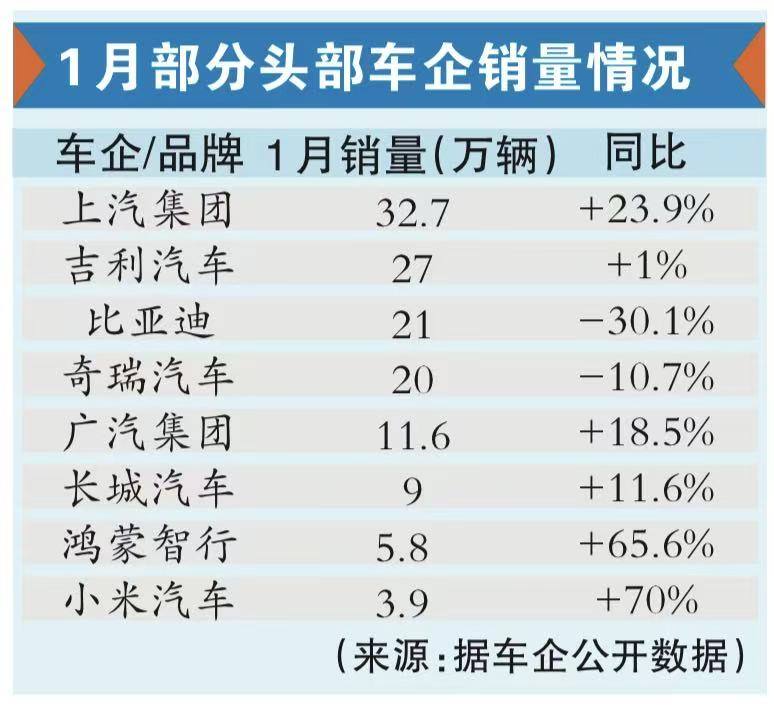
Core Insights - The January sales figures indicate a significant shift in the competitive landscape of the Chinese automotive market, with traditional giants like SAIC and Geely reclaiming leadership positions, while BYD's dominance is challenged [1][3][4] Group 1: Sales Performance - SAIC Group achieved sales of 327,000 vehicles in January, marking a year-on-year increase of 23.9% [2][4] - Geely Automotive sold 270,100 vehicles, a year-on-year growth of 1%, surpassing BYD to become the top-selling domestic brand [2][4] - BYD's sales fell to 210,000 vehicles, experiencing a significant year-on-year decline of 30.1% [2][4] - New energy vehicle sales for SAIC reached 85,000 units, growing by 39.7% [4] - The overall automotive production and sales in January were 2.45 million and 2.346 million units, respectively, with a slight year-on-year production increase of 0.01% [7] Group 2: New Players and Market Dynamics - The new energy vehicle segment saw a reshuffling, with Hongmeng Zhixing leading the new force with 57,915 units sold, a remarkable year-on-year increase of 65.6% [6] - Xiaomi Automotive followed closely with over 39,000 units sold, achieving a year-on-year growth of approximately 70% [6] - The previous leaders in the new force segment, such as Leap Motor, have seen a decline, with their sales dropping to 32,059 units [6] Group 3: International Market Growth - The overseas market is identified as a key growth area for automotive companies, with January exports reaching 681,000 vehicles, a year-on-year increase of 44.9% [7] - Exports of new energy vehicles doubled to 302,000 units, highlighting the importance of global expansion for competitive advantage [7]
年会折叠:有人狂撒黄金,有人食堂吃自助餐
3 6 Ke· 2026-02-13 00:13
Core Insights - The traditional corporate annual meeting is facing a decline, with many companies opting to cancel or significantly reduce the scale of their events, reflecting a shift in workplace culture and employee preferences [2][8][10]. Group 1: Trends in Corporate Annual Meetings - The proportion of companies hosting large annual meetings for over 100 people has dropped from 68% in 2019 to 31% in 2024, with projections indicating that less than 20% will maintain this tradition by the end of 2025 [1]. - Many companies are transitioning to smaller gatherings, such as departmental dinners or online events, with a notable increase in cost-cutting measures [1][10]. - The enthusiasm for large-scale annual meetings has diminished, impacting hotel bookings and event planning, with a reported 30% reduction in annual meeting orders this year [9][10]. Group 2: Examples of Corporate Practices - Some companies, like Chasing Technology, are still hosting extravagant events, offering significant rewards such as gold and luxury items, which serve as effective promotional tools [3][4]. - In contrast, companies like Leap Motor have faced criticism for poorly organized events that lack basic amenities, highlighting the disparity in how annual meetings are executed [6]. - Many firms are now choosing to hold meetings in-house or at minimal cost venues, with some opting for self-catered events to save expenses [7][10]. Group 3: Employee Sentiment and Cultural Shift - Employees are increasingly viewing annual meetings as burdensome, with younger generations preferring clear work-life boundaries and expressing dissatisfaction with obligatory participation in such events [10][12]. - There is a growing sentiment among employees that financial rewards or bonuses may be more appreciated than traditional gatherings, reflecting a shift in expectations regarding workplace culture [11][12].