东鹏饮料

Search documents
恒生前海沪港深新兴产业精选混合:2025年第二季度利润227.11万元 净值增长率4.18%
Sou Hu Cai Jing· 2025-07-18 04:22
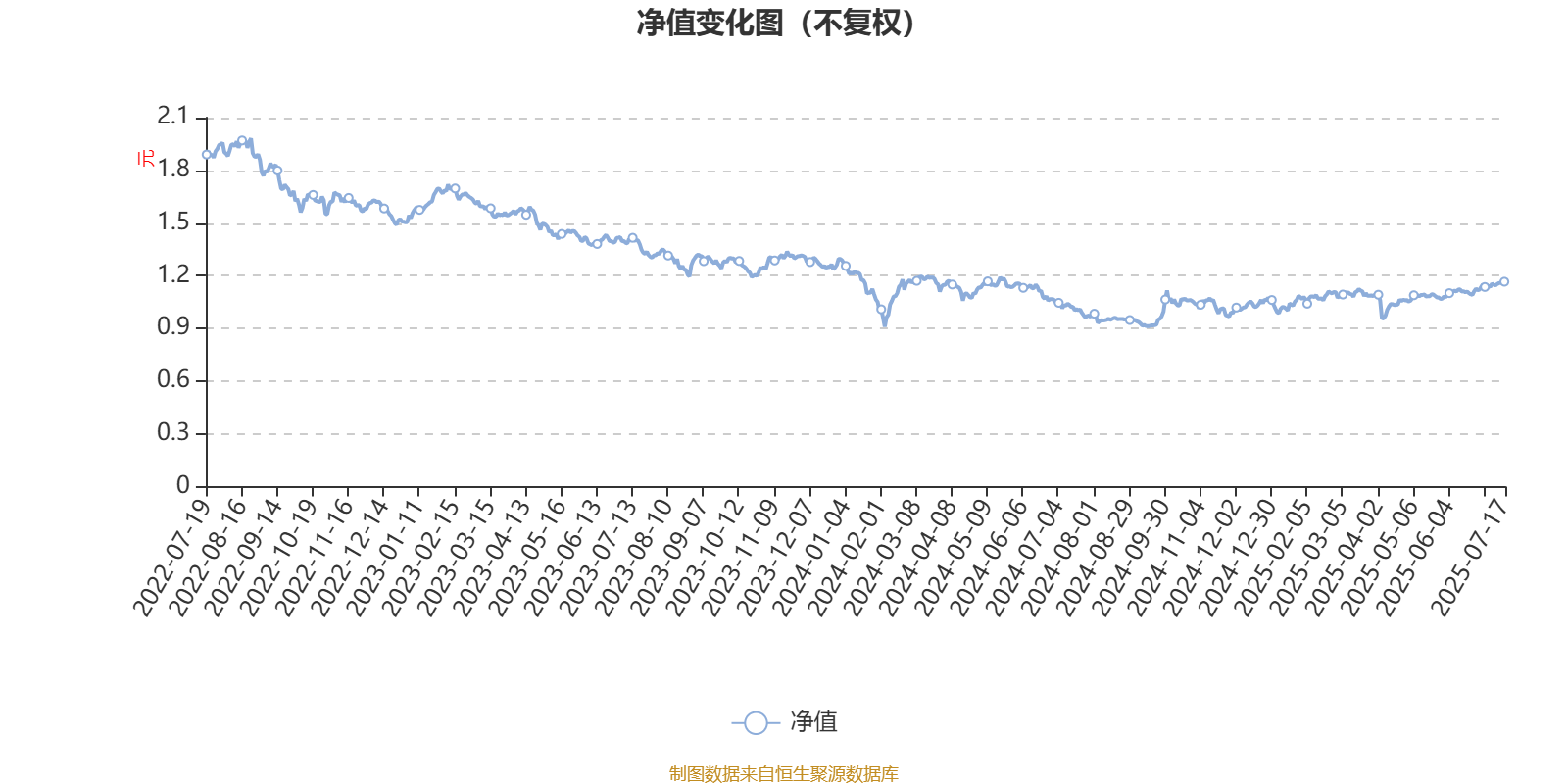
Core Viewpoint - The AI Fund Hang Seng Qianhai Hong Kong-Shanghai Emerging Industry Selected Mixed Fund (004332) reported a profit of 2.2711 million yuan for Q2 2025, with a weighted average profit per fund share of 0.0446 yuan. The fund's net value growth rate was 4.18%, and the fund size reached 56.6848 million yuan by the end of Q2 2025 [3][14]. Fund Performance - As of July 17, the fund's unit net value was 1.166 yuan. The fund manager, Xing Cheng, currently manages four funds. The Hang Seng Qianhai High-end Manufacturing Mixed A fund had the highest one-year growth rate at 38.68%, while the Hang Seng Qianhai Hong Kong-Shanghai Emerging Industry Selected Mixed Fund had the lowest at 16.15% [3]. - The fund's performance over different time frames includes a three-month growth rate of 12.63%, a six-month growth rate of 10.71%, a one-year growth rate of 16.15%, and a three-year growth rate of -38.20% [4]. Risk Metrics - The fund's Sharpe ratio over the past three years was -0.4274, ranking 284 out of 319 comparable funds [8]. - The maximum drawdown over the past three years was 54.08%, with the largest single-quarter drawdown occurring in Q1 2024 at 29.78% [10]. Investment Strategy - The fund maintained an average stock position of 89.57% over the past three years, higher than the comparable average of 83.13%. The fund reached its highest stock position of 94.03% at the end of Q1 2025 and its lowest at 69.98% at the end of 2022 [13]. - The fund manager anticipates a market characterized by fluctuations and structural opportunities, with limited macro policy support. The focus is on thematic and value assets that are less correlated with macroeconomic cycles, which may benefit from lower discount rates and liquidity overflow [3]. Top Holdings - As of the end of Q2 2025, the fund's top ten holdings included Shenghong Technology, Dongpeng Beverage, Lanke Technology, Chuanfeng Power, New Strong Union, Daotong Technology, Pudong Development Bank, Longxin General, Daikin Heavy Industry, and Haoyuan Pharmaceutical [17].

东鹏饮料现2笔大宗交易 均为折价成交
Zheng Quan Shi Bao Wang· 2025-07-17 12:07
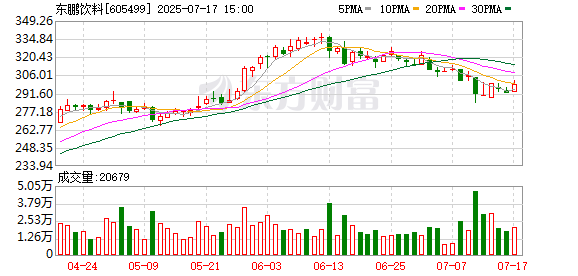
Group 1 - Dongpeng Beverage executed 2 block trades on July 17, totaling 494,300 shares and a transaction amount of 130 million yuan, with a transaction price of 262.53 yuan, reflecting a discount of 12.20% compared to the closing price [2][3] - Over the past three months, Dongpeng Beverage has recorded a total of 115 block trades, amounting to 1.738 billion yuan [2] - The closing price of Dongpeng Beverage on the same day was 299.01 yuan, with an increase of 2.51%, a turnover rate of 0.40%, and a total transaction volume of 618 million yuan, resulting in a net inflow of 14.13 million yuan from main funds [2] Group 2 - The latest margin financing balance for Dongpeng Beverage is 256 million yuan, with an increase of 19.51 million yuan over the past five days, representing a growth rate of 8.26% [3] - In the past five days, seven institutions have rated Dongpeng Beverage, with the highest target price set by Pacific Securities at 332.50 yuan as of July 14 [3]
今日共96只个股发生大宗交易,总成交16.9亿元



Di Yi Cai Jing· 2025-07-17 09:54
Summary of Key Points Core Viewpoint - The A-share market experienced significant trading activity on July 17, with a total of 96 stocks involved in block trades amounting to 1.69 billion yuan, indicating a robust trading environment [1]. Group 1: Trading Activity - A total of 96 stocks had block trades, with a total transaction value of 1.69 billion yuan [1]. - The top three stocks by transaction value were SAIC Motor Group (1.6 billion yuan), Dongpeng Beverage (1.3 billion yuan), and Lakala (89.83 million yuan) [1]. - Among the stocks, 5 were traded at par, 3 at a premium, and 88 at a discount [1]. Group 2: Premium and Discount Rates - The stocks with the highest premium rates were Huayuan Biological (5.52%), CATL (0.05%), and Haitian Flavoring (0.05%) [1]. - The stocks with the highest discount rates were Guangxin Technology (31.22%), Kunlun Technology (31.12%), and Lakala (21.14%) [1]. Group 3: Institutional Buying and Selling - The top institutional buying positions were held by Shenzhen City Transportation (45.77 million yuan), Keli Ke (39.10 million yuan), and Cambridge Technology (28.57 million yuan) [2]. - The top institutional selling positions were led by CATL (22.34 million yuan), Jidong Cement (17.30 million yuan), and Zhongke Software (564.15 thousand yuan) [3].
东鹏饮料(605499):Q2预计收入持续高增,新品表现可期
Xinda Securities· 2025-07-17 08:47
Investment Rating - The investment rating for the company is "Buy" [1] Core Views - The company is expected to achieve a revenue of 10.63 to 10.84 billion yuan in H1 2025, representing a year-on-year increase of 35.01% to 37.68% [1][2] - The forecasted net profit attributable to the parent company for H1 2025 is between 2.31 to 2.45 billion yuan, indicating a year-on-year growth of 33.48% to 41.57% [1][2] - The company is focusing on channel management and national expansion, which is driving strong growth in its core markets [2] - The new product "Guozhi Tea" launched at the beginning of 2025 is expected to contribute to revenue growth due to the company's channel advantages [2] Financial Performance Summary - The total revenue for 2023 is projected at 11.263 billion yuan, with a year-on-year growth of 32.4% [3] - The net profit attributable to the parent company for 2023 is estimated at 2.04 billion yuan, reflecting a year-on-year increase of 41.6% [3] - The gross profit margin is expected to improve from 43.1% in 2023 to 48.3% by 2027 [3] - The earnings per share (EPS) for 2025 is projected to be 9.02 yuan, with a price-to-earnings (P/E) ratio of 32 based on the closing price of 291.7 yuan per share on July 16, 2025 [2][3]
低度酒风暴来袭!吃喝板块开盘拉升,白酒、大众品携手上攻!
Xin Lang Ji Jin· 2025-07-17 02:25
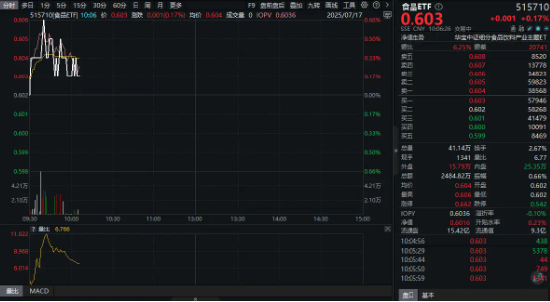
Group 1: Market Performance - The food and beverage sector saw a strong opening on July 17, with the Food ETF (515710) rising by up to 0.66% during the session [1] - Key stocks in the sector, including Dongpeng Beverage and Yili, experienced significant gains, with Dongpeng rising over 3% and several others increasing by more than 1% [1] Group 2: Industry Developments - Multiple liquor companies are actively launching low-alcohol products in response to the challenge of attracting younger consumers [2] - Wuliangye plans to reintroduce a 29-degree liquor product after 20 years, targeting a price point of 500 yuan [2] - Luzhou Laojiao announced the successful development of a 28-degree product, while Yanghe launched a 33.8-degree product earlier this year [2] - Industry experts suggest these moves are a collective response to the loss of young consumer demographics [2] Group 3: Valuation Insights - The current valuation of the food and beverage sector is seen as an attractive investment opportunity, with the Food ETF's underlying index PE ratio at 19.91, marking a low point historically [3] Group 4: Future Outlook - Dongxing Securities anticipates an improvement in the food and beverage sector's overall performance as economic stimulus policies take effect [4] - Open-source Securities highlights potential benefits for the sector from domestic demand policies, suggesting a focus on leading companies in the liquor segment [4] - The Food ETF (515710) is recommended for investors looking to gain exposure to core assets in the food and beverage sector [4]
万联晨会-20250717
Wanlian Securities· 2025-07-17 00:42
Core Insights - The A-share market experienced a collective decline on Wednesday, with the Shanghai Composite Index down 0.03%, the Shenzhen Component down 0.22%, and the ChiNext Index down 0.22%. The total trading volume in the Shanghai and Shenzhen markets was 1,441.854 billion yuan [2][7] - In terms of industry performance, sectors such as social services, automotive, and pharmaceutical biotechnology led the gains, while steel, banking, and non-ferrous metals lagged behind. Concept sectors like animal vaccines, generic drug consistency evaluation, and artemisinin saw significant increases, whereas lead metal, silicon energy, and zinc metal faced declines [2][7] Important News - The State Council, led by Premier Li Qiang, held a meeting on July 16 to discuss key policy measures to strengthen domestic circulation. The meeting emphasized the importance of enhancing domestic circulation as a strategic move for stable economic growth, focusing on boosting consumption and optimizing supply [3][8] - The third China International Supply Chain Promotion Expo opened in Beijing on July 16, with Vice Premier He Lifeng highlighting China's role in the global supply chain and its commitment to promoting cooperation and stability in the global industrial chain [3][8] Industry Analysis - The food and beverage sector showed a lackluster performance in the first half of 2025, with revenue and net profit growth rates of 2.46% and 0.28% respectively in Q1, marking a decline compared to the previous year. The sector's stock prices fell by 7.33%, ranking second to last among 31 industries [9][10] - The macroeconomic environment indicates a focus on boosting domestic demand to achieve GDP growth targets, with comprehensive policies aimed at enhancing consumption across various sectors [10] - The food and beverage industry is witnessing three main consumption trends: rational consumption, emotional consumption, and health-oriented consumption, which are driving changes in consumer behavior and creating new growth opportunities [10] Investment Opportunities in Food and Beverage Sector - Growth Tracks: - Energy drinks are experiencing high demand, with a projected compound annual growth rate of 10.2% from 2024 to 2029. Companies with competitive advantages in this segment are recommended for investment [12] - The snack industry is evolving with new sales channels and product innovations, particularly in health-oriented snacks [12] - The health supplement market is seeing structural investment opportunities driven by increased health awareness among younger consumers [12] - Marginal Improvement Tracks: - The beer industry is expected to see improved profitability due to cost reductions and a recovery in mid-to-high-end demand driven by the restaurant sector [13] - The condiment market is benefiting from lower raw material costs and a growing demand for health-oriented products [13] - The dairy sector is anticipated to recover as inventory levels normalize and demand increases due to consumption stimulus policies [13] - Bottoming Tracks: - The liquor industry is currently in a phase of inventory destocking, with performance expected to remain under pressure. However, the market has adjusted expectations for liquor company profits, potentially limiting downside risk [14]
2025年中期食品饮料行业投资策略报告:政策与新趋势共振,把握结构性机会-20250716
Wanlian Securities· 2025-07-16 09:39
Group 1 - The food and beverage sector experienced a decline in performance and stock prices in the first half of 2025, with revenue growth of 2.46% and net profit growth of 0.28%, both significantly lower than the previous year [1][16] - The food and beverage sector's stock price fell by 7.33%, ranking second to last among 31 sectors in the first half of 2025, with the liquor segment being particularly hard hit [1][26] - The current PE valuation percentile for the food and beverage sector is at 7.26%, indicating a historical low [1][35] Group 2 - Macroeconomic policies aimed at boosting domestic consumption are crucial for achieving GDP growth targets, with a comprehensive consumption promotion plan issued on March 16, 2025 [2] - The Chinese consumption market is witnessing three concurrent trends: rational consumption, emotional consumption, and health-oriented consumption, which are driving changes in the industry [2] - Rational consumption is characterized by a preference for high-quality, low-cost products, leading to rapid growth in discount retail [2] Group 3 - In the beverage segment, energy drinks are experiencing significant growth, with a projected compound annual growth rate of 10.2% from 2024 to 2029 [3] - The snack food sector is seeing growth driven by channel restructuring and product innovation, with new retail formats like bulk snack stores emerging [3] - The health supplement industry is benefiting from increased health awareness among consumers, leading to structural investment opportunities [3] Group 4 - The beer sector is expected to see marginal improvements due to cost reductions and a recovery in mid-to-high-end beer demand driven by restaurant recovery and sports events [8] - The condiment sector is benefiting from continued cost advantages and a growing demand for compound and health-oriented products [8] - The dairy sector is showing signs of cost stabilization, with a potential easing of price wars expected in 2025 [8] Group 5 - The liquor industry is currently in a phase of inventory destocking, with performance under pressure and a prolonged destocking cycle anticipated due to recent "alcohol bans" [8] - The performance of mid-range and mass-market liquor is expected to be relatively better, as they gain favor in a rational consumption environment [8] - The liquor sector is projected to be in a bottoming phase, with low valuations and high dividends providing strong support for stock prices [8]
食品饮料行业主题报告
2025-07-16 06:13
Summary of Conference Call Notes Industry Overview - The report focuses on the food and beverage industry, analyzing new consumer demands, products, and channels [1][2][3]. Key Points and Arguments New Consumer Demands - The emerging consumer base primarily consists of Generation Z (post-1995), characterized by a heightened self-awareness and faster development compared to previous generations [1]. - Government policies aimed at boosting consumption have been introduced, including the "Special Action Plan to Boost Consumption" and "Consumer Service System Benefit Action 2025" [2]. - Consumer behavior is diversifying, with Generation Z and affluent groups showing more optimistic consumption attitudes, while middle-class and rural older consumers exhibit weaker consumption willingness [3]. Changes in Consumption Patterns - There is a notable shift towards value-for-money products, with consumers increasingly prioritizing cost-effectiveness [4]. - The market has identified four potential growth categories: education, food and beverages, health products, and travel, while three risk categories include home appliances, tobacco, and certain consumables [3]. - The health consciousness among consumers is rising, leading to increased demand for health-related products, with the health food market projected to reach 836.2 billion by 2027, reflecting a 42% growth from 2022 [5]. Innovations in Products and Channels - Companies are innovating to meet health demands, introducing products like konjac, seaweed, and quail eggs [6]. - The focus on cost-effectiveness has led to supply chain optimization, reducing intermediaries to lower prices for consumers [7]. - The beverage market is witnessing significant growth in sugar-free teas and plant-based drinks, with growth rates of 19% and 32% respectively [8]. New Sales Channels - The rise of temporary retail channels has transformed the market, with the temporary retail industry expected to grow from 211 billion in 2019 to 1.5 trillion by 2027 [12]. - Membership warehouse stores are gaining traction, with the market size increasing from 20 billion in 2012 to 36.4 billion in 2023 [14]. - Online sales are rapidly growing, with a 56% year-on-year increase in online sales across nine categories, surpassing 120 billion in 2023 [18]. Recommendations and Risks - The report suggests focusing on new products, channels, and consumer demands as key investment themes, maintaining a strong rating for the food and beverage industry [20]. - Specific recommendations include companies like Three Squirrels, Yili, and Qingdao Beer, while highlighting the potential for profitability recovery in dairy and seasoning sectors [21][22]. - Risks include raw material price fluctuations and intensified industry competition [23]. Additional Important Insights - The emotional value of consumption is increasing, with service-related spending rising from 43% in 2020 to 46% in 2024 [5]. - The shift in consumer purchasing habits is leading to a more significant online presence for traditional products, including liquor, which is becoming a focus for major brands [17].




国信证券晨会纪要-20250716



Guoxin Securities· 2025-07-16 01:31
Macro and Strategy - June financial data shows a significant rebound in credit, with new social financing reaching 4.20 trillion yuan, exceeding expectations of 3.71 trillion yuan, and new RMB loans at 2.24 trillion yuan, surpassing the forecast of 1.84 trillion yuan [8][9][10] - The M2 money supply grew by 8.3% year-on-year, indicating a recovery in domestic economic momentum as private sector balance sheet expansion improves [8][9] - The "seesaw effect" between government financing and corporate loans has weakened, suggesting a shift in credit dynamics as local governments approach their annual debt targets [9][10] Retail Industry - The jewelry market is projected to grow steadily, with the market size reaching 728 billion yuan in 2024, reflecting a compound annual growth rate of 3.6% since 2019 [11][12] - The top five companies in the jewelry sector hold a market share of 41.4%, indicating increasing industry concentration as consumer preferences shift towards quality and design [11][12] - The retail sector is benefiting from the recent Amazon Prime Day, which generated an estimated $24.1 billion in sales, a 30% increase year-on-year, highlighting the growth potential in cross-border e-commerce [13][14] Food and Beverage Industry - The food and beverage sector saw a 0.92% increase, underperforming the Shanghai Composite Index by 0.17 percentage points [14] - The liquor market is stabilizing, with major brands focusing on brand positioning and market health, while the overall demand remains under pressure [15][16] - Recommendations include leading brands like Kweichow Moutai and Wuliangye, which have shown resilience and potential for recovery [15][16] Construction and Building Materials - The construction materials sector is expected to improve due to a shift towards healthy competition and urban renewal initiatives, with a focus on technological innovation [17][18] - Cement prices have stabilized, with a slight decrease of 0.4% week-on-week, while demand remains steady despite seasonal fluctuations [17][18] - Recommendations include companies like Three Trees and China National Building Material, which are well-positioned to benefit from domestic demand [18] Computer Industry - The AI ASIC market is rapidly expanding, with a projected market size growth from $14.8 billion in 2024 to $83.8 billion by 2030, reflecting a compound annual growth rate of 33.5% [19][20] - The price advantage of AI ASIC chips over GPUs is significant, with average prices of $5,236 compared to $8,001 for GPUs, making them more attractive for specific applications [19][20] - Companies like Google and Amazon are accelerating their development of ASIC chips, indicating strong future demand in this sector [21] Home Appliances - The home appliance sector is experiencing stable growth in domestic sales, driven by government subsidies, while exports face challenges due to high bases and tariff impacts [22][23] - White goods are seeing a slight increase in domestic sales, with air conditioning units showing a 9.5% growth in domestic shipments [22][23] - Recommendations include leading brands such as Midea and Gree, which are expected to maintain strong performance [22][23] Pharmaceutical Industry - Merck's acquisition of Verona for $10 billion aims to enhance its portfolio with a new COPD treatment, indicating strong growth potential in respiratory therapies [27][28] - WuXi AppTec is projected to achieve a 102% increase in net profit for the first half of 2025, reflecting robust operational performance [29] - The pharmaceutical sector is showing resilience, with a focus on innovative treatments and strategic acquisitions [27][28] Coal Industry - The coal market is expected to stabilize as domestic production increases and imports decrease, with a projected production of 4.85 billion tons in 2025, a 2% increase year-on-year [31][32] - Demand for coal is anticipated to improve in the second half of the year, particularly for non-electric uses such as chemical production [33] - Recommendations include leading coal companies like China Shenhua and China Coal Energy, which are well-positioned to benefit from market dynamics [34] Electronics Industry - The electronics sector is experiencing positive momentum, with a 0.93% increase in stock performance, driven by strong demand in the optical and semiconductor segments [34] - The industry is expected to see significant catalysts in the coming months, particularly in the context of AI and cloud computing advancements [34] - Companies involved in ASIC development are likely to benefit from the ongoing trends in computing and data processing [34]
城市工作会议联合解读电话会议
2025-07-16 00:55
Summary of Conference Call on Urban Development and Industry Insights Industry and Company Involved - **Industry**: Real Estate, Building Materials, Energy Drinks - **Companies Mentioned**: Dongpeng Beverage, Conch Cement, Taipai Group, Huaxin Cement, China Resources, Binjiang, Greentown, Jianfa Zhonghai Key Points and Arguments Urban Development and Real Estate Policy - The Central Urban Work Conference emphasizes a shift from large-scale expansion to improving existing urban stock, indicating a focus on urban renewal rather than large-scale stimulus, which benefits post-cycle industries like building materials and home appliances [1][2][3] - The policy aims to steadily advance the renovation of urban villages and dilapidated housing, avoiding a return to the monetization of shantytown renovations seen in 2015-2016, suggesting limited demand for incremental cyclical products [1][3][5] - The real estate market is transitioning from expansion to quality enhancement, focusing on improving existing housing quality and surrounding environments rather than new construction [1][6][7] Regional Market Performance - The real estate markets in first and second-tier core cities and their metropolitan areas are expected to outperform the national average, with regional developers like China Resources, Binjiang, Greentown, and Jianfa Zhonghai being noteworthy [1][8] Energy Drink Consumption Trends - Population movement significantly impacts energy drink consumption, with higher preferences in first and second-tier cities. As population density increases, energy drink consumption is expected to rise, making Dongpeng Beverage a recommended investment [1][9][10] - The consumption of energy drinks varies across provinces, with Guangdong leading in market share for Red Bull and Dongpeng, which is projected to maintain a 35% revenue growth rate [1][11] Building Materials Industry Insights - Urban renewal and village renovation will have limited demand pull for the building materials industry, with the consumption of building materials being most affected, particularly in segments like waterproofing, piping, and coatings [2][12][15] - The cement sector is expected to benefit from demand growth and supply-side reforms, with recommendations for Conch Cement, Taipai Group, and Huaxin Cement as investment targets due to their strong market positions and profitability [2][15][16] Market Outlook and Investment Strategy - The overall sentiment from the conference indicates a cautious approach to large-scale stimulus, with the market expected to remain within a relatively stable range [3][5] - Investment strategies should focus on a "barbell" approach, balancing technology and military sectors with dividend-paying assets like bank stocks and high-dividend service sector stocks [3] Conclusion - The conference highlights a significant policy shift in urban development and real estate, with implications for various industries. The focus on quality over quantity in housing and urban infrastructure suggests a need for investors to adapt their strategies accordingly, particularly in the building materials and consumer goods sectors.