
长安汽车

Search documents
我国首批L3级自动驾驶车型产品获得准入许可,商业化应用加速推进!
Zhi Tong Cai Jing· 2025-12-16 16:35
Group 1 - The first batch of L3 conditional autonomous driving vehicle permits in China has been officially announced, including Changan's SC7000AAARBEV and Arcfox's BJ7001A61NBEV, marking the transition from testing to commercial application [3] - In the first three quarters of this year, Pony.ai reported a total revenue of $60.876 million, representing a year-on-year increase of 54.1% [3] - Revenue from autonomous ride-hailing services (Robotaxi) reached $9.95 million, up 111.7% year-on-year, while technology licensing and application services surged by 216.8% to $23.443 million [3] - The revenue from autonomous truck services remained stable at $27.483 million, roughly unchanged from the same period last year [3] - Pony.ai's management anticipates achieving breakeven before 2030, driven by a vision of expanding its Robotaxi fleet to over 100,000 vehicles by that year [3]


腾讯研究院AI速递 20251217
腾讯研究院· 2025-12-16 16:32
Group 1: Apple AI Server Chip - Apple is developing its first AI server chip, codenamed "Baltra," in collaboration with Broadcom, utilizing TSMC's 3nm process, expected to be deployed in 2027 [1] - Apple has shifted from building its own large models to paying approximately $1 billion annually for Google's customized 1.2 trillion parameter Gemini model, with Baltra primarily aimed at meeting significant AI inference demands [1] - The chip architecture will focus on optimizing latency and throughput, employing low-precision operations like INT8, and may utilize a configuration of 64 interconnected chips with large-capacity LPDDR memory [1] Group 2: NVIDIA Nemotron 3 Series - NVIDIA has launched the Nemotron 3 series of open models, which includes Nano, Super, and Ultra scales, featuring a breakthrough heterogeneous mixture expert architecture [2] - The Nemotron 3 Nano has a throughput that is four times higher than its predecessor, achieving leading token generation rates per second in large-scale multi-agent systems, significantly enhancing inference efficiency [2] - The model achieves exceptional accuracy through advanced reinforcement learning techniques and large-scale parallel multi-environment post-training, providing a complete training dataset and reinforcement learning library [2] Group 3: ChatGPT Memory System - Developer Manthan Gupta has reverse-engineered ChatGPT's memory system, revealing a four-layer architecture: session metadata, user memory, recent conversation summaries, and a sliding window [3] - The system does not utilize vector databases or RAG retrieval but instead relies on pre-generated lightweight summaries and explicitly stored structured information to achieve the effect of "remembering users" [3] - GPT-4 has a maximum context window of 128k tokens, beyond which the earliest content is forgotten, and users can request the model to delete or modify memory content at any time [3] Group 4: Tencent Yuanbao Writing Mode - Tencent Yuanbao has launched a writing mode that supports automatic completion of plot character outlines and one-click generation of manuscripts, capable of producing tens of thousands of words in a single session [4] - The feature is adaptable to various genres, including historical, science fiction, and fan fiction, allowing users to set a single sentence to let AI complete the outline and chapter structure, with customizable story direction and endings [4] - Yuanbao can generate approximately 30,000 words in about 14 minutes and 50,000 words in half an hour, with support for one-click export to local documents or Tencent documents [4] Group 5: Tongyi Wanxiang 2.6 Release - Tongyi Wanxiang 2.6 has become the first video model in China to support role-playing functions, featuring audio-visual synchronization, multi-camera generation, and voice-driven capabilities, making it the most comprehensive video generation model globally [5] - The video generation supports 15-second long videos, multi-camera narratives, and natural audio-visual synchronization, allowing for single and multi-person collaborations based on input video character appearance and voice [5] Group 6: ByteDance Seedance 1.5 Pro Model - ByteDance has released the Seedance 1.5 Pro audio-video generation model, which supports precise audio-visual synchronization, multilingual dialects, cinematic-level camera movements, and 15-second long video generation [6] - The model employs the MMDiT architecture to achieve precise audiovisual collaboration, natively supporting multiple languages, including Chinese, English, Japanese, Korean, and dialects like Sichuanese and Cantonese, with audio instructions at industry-leading levels [6] - In comprehensive evaluations, SeedVideoBench 1.5 demonstrated rich dynamic performance, vivid character expressions, and significantly reduced audio-visual misalignment, applicable in film, advertising, and short drama scenarios [6] Group 7: L3 Autonomous Driving Models - The Ministry of Industry and Information Technology has conditionally approved Chang'an's Deep Blue SL03 and Arcfox Alpha S as the first L3 autonomous driving models in China [8] - The Deep Blue SL03 can achieve single-lane autonomous driving at a maximum speed of 50 km/h in congested environments, limited to designated routes like the Chongqing Inner Ring; the Arcfox Alpha S can reach 80 km/h, restricted to routes like the Beijing-Jingtai Expressway [8] - Both companies have completed product testing and safety evaluations, with plans to conduct on-road trials in designated areas through Chang'an Vehicle Networking Technology and Beijing Travel Automotive Services [8] Group 8: Eric Schmidt's Views on AI - Former Google CEO Eric Schmidt proposed the "San Francisco Consensus," suggesting that the combination of language agents and reasoning capabilities will approach human core abilities, leading to recursive self-improvement in AI as technology converges [9] - He predicts that AI mathematicians will emerge within the next year, driving the birth of new mathematical theories, with industry consensus on this transformation occurring within 2-4 years, while emphasizing the need to maintain human agency and decision-making authority [9] - The paths of US-China AI competition are diverging: the US focuses on superintelligence development but faces power shortages, while China is fully promoting AI commercial applications with ample power supply, both relying on the private sector for development [9] Group 9: AI "Finger Problem" - Multiple AI models failed to accurately count the number of fingers in images depicting six-fingered hands, even when prompts explicitly stated there were six fingers, with models insisting on five [10] - The root of the problem lies in the strong association in training data of "human hands = five fingers" and the lack of explicit structural constraints in the Transformer architecture, which cannot track state information in a single forward pass [10] - Diffusion models excel at capturing overall distributions and textures but struggle with precise control of local discrete structures, revealing current AI's Achilles' heel in visual reasoning and causal relationship understanding [10]





我国首批L3级自动驾驶车型获准上路 试点应用开启商业化探索新阶段
Zheng Quan Ri Bao Zhi Sheng· 2025-12-16 16:09
Core Viewpoint - The Ministry of Industry and Information Technology of China has officially granted conditional access permits for the first batch of L3-level conditional autonomous driving vehicles, marking a significant step towards real-world operation and commercialization of autonomous driving technology in China [1][2]. Group 1: Regulatory Framework - L3-level conditional autonomous driving is seen as a critical milestone in the development of autonomous driving, allowing vehicles to perform all dynamic driving tasks under specific conditions while requiring the driver to remain capable of taking control [2][3]. - The two models approved for conditional access are from Changan Automobile and BAIC Group's Arcfox brand, with specific operational limits: Changan's model can operate at speeds up to 50 km/h in congested traffic, while BAIC's model can reach 80 km/h in relatively smooth conditions [2][3]. Group 2: Testing and Safety Measures - The approval process involved collaboration among multiple government departments, ensuring comprehensive testing and safety evaluations of the vehicles, which included multiple safety redundancy designs in critical systems [3][4]. - The Arcfox Alpha S (L3 version) has undergone rigorous testing, completing over 800,000 kilometers of equivalent mileage tests, ensuring comprehensive coverage of its operational design domain [5][6]. Group 3: Industry Implications - The introduction of L3-level autonomous driving is not just a technological breakthrough but a systemic engineering challenge that involves collaboration across various sectors, including vehicle manufacturing, core components, software algorithms, and data governance [4][6]. - The approval of these vehicles provides real-world application scenarios for automakers and suppliers, fostering collaborative development across the industry chain [4][5]. Group 4: Future Outlook - Experts suggest that while the approval of L3 vehicles represents a milestone, the current operational scenarios are limited to simpler environments like highways and urban expressways, which aligns with safety requirements and technological maturity [6][7]. - The pilot program will involve designated operators, insurance requirements, and continuous monitoring of vehicle performance, with the potential for adjustments based on operational feedback [7].


首批两款L3准入车型,均暂不能变道
第一财经· 2025-12-16 16:06
Core Viewpoint - The article discusses the recent approval of two L3 conditional autonomous driving models, highlighting their limitations in terms of lane changing and speed restrictions, which has sparked market discussions [3][4]. Group 1: Model Specifications - The two approved L3 models are the Deep Blue SL03 from Changan Automobile and the Alpha S from BAIC, both of which currently do not support lane changing [3]. - The operational scenarios for the Deep Blue SL03 are limited to specified congested traffic environments on highways and urban expressways within a single lane, with a maximum speed of 50 km/h [4]. - The Alpha S has a similar operational scenario but allows for a higher maximum speed of 80 km/h [4]. Group 2: Approval Process and Industry Context - The approval process for these models is part of a broader pilot program organized by the Ministry of Industry and Information Technology (MIIT), which includes five stages: application, product approval, road testing, suspension and exit, and evaluation [5]. - Currently, only these two models have progressed to the road testing phase, while seven out of nine companies in the pilot program have yet to receive L3 approval [5]. - Other companies, such as Xpeng and Li Auto, are still waiting to be selected for the pilot program after their application submissions [5].
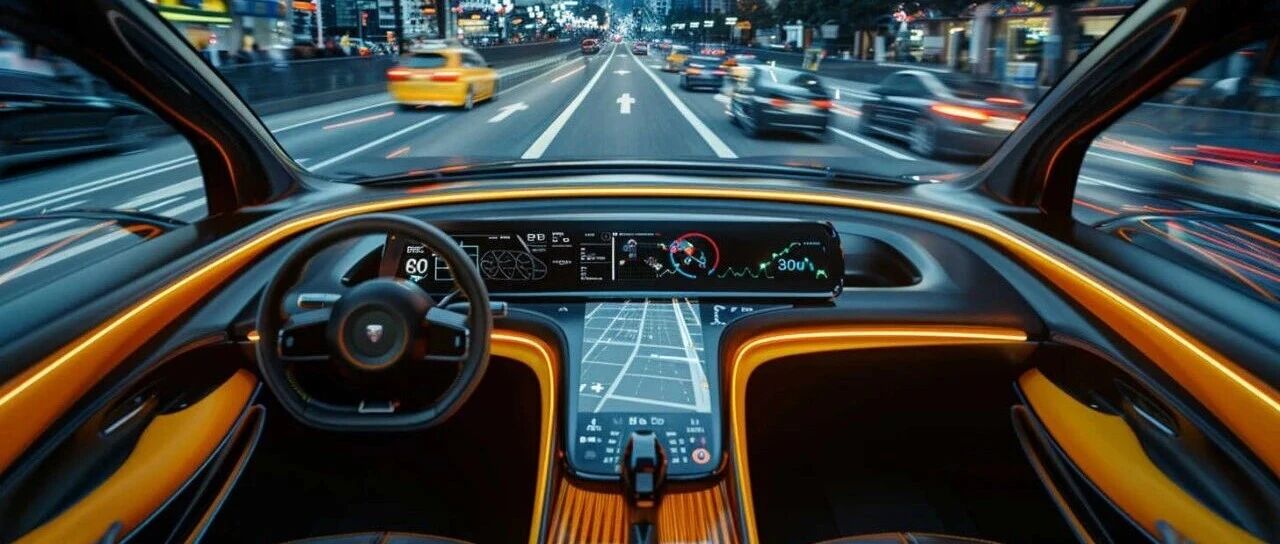
首批2款L3准入车型均暂不能变道
Di Yi Cai Jing· 2025-12-16 16:02
Core Viewpoint - The market is focused on the limitations of the first two L3 conditional autonomous driving models, specifically regarding lane changing capabilities and speed restrictions [1] Group 1: Model Specifications - The two L3 models, Changan Automobile's Deep Blue SL03 and BAIC's Arcfox Alpha S, currently do not support lane changing [1] - The operational scenarios for Deep Blue SL03 are limited to specified congested traffic environments on highways and urban expressways within a single lane, while Arcfox Alpha S is restricted to designated highways and urban expressways in a single lane [1] - The maximum speed for Deep Blue SL03 in its operational scenario is set at 50 km/h, whereas Arcfox Alpha S has a higher limit of 80 km/h [1] Group 2: Technical Capabilities and Future Plans - Changan has the technical capability for intelligent lane changing but has opted not to include this feature in the initial approval for safety considerations, planning to incorporate it in future approvals [1]

福田摘冠,江淮/江铃并列,跃进暴涨1.4倍!11月轻卡销量近18万辆 | 头条
第一商用车网· 2025-12-16 15:59
Core Viewpoint - In November 2025, China's commercial vehicle sales increased by 24% year-on-year, with the truck market growing by 26%, slightly above the overall commercial vehicle market growth. The light truck segment, being the largest in the truck market, showed a mixed performance, raising questions about its competitiveness in the final month of the year [1][3][6]. Summary by Sections Overall Market Performance - In November 2025, the truck market sold 338,400 units, a month-on-month increase of 9% and a year-on-year increase of 26%. The light truck market sold 179,500 units, with a year-on-year growth of 7%, marking a "10 consecutive months increase" [3][4][6]. Light Truck Market Analysis - The light truck market's year-on-year growth of 7% in November was lower than the overall truck market's growth, indicating a recent decline in performance compared to earlier months. Cumulatively, from January to November, the light truck market grew by 6%, also lagging behind the overall truck market growth [6][28]. Historical Context - November is typically not a peak sales month for the truck market, with average sales in the last decade around 150,000 units. The 2025 November sales of 179,500 units ranked third in the last ten years, indicating a decent performance but not exceptional [8][10]. Company Performance - In November, nine companies sold over 10,000 light trucks, with Foton leading at 37,000 units, followed by Changan and Great Wall. The top five companies accounted for 56.07% of the market share [13][14][20]. - Year-to-date, Foton maintained the highest cumulative sales at 403,100 units, with a market share of 22.11%. Other notable companies included Changan, Great Wall, and Jianghuai, each exceeding 150,000 units in sales [20][21]. Growth Trends - Among the top ten companies, eight reported year-on-year sales increases in November, with Leap Motor and BYD showing significant growth rates of 142% and 70%, respectively. The overall light truck market growth was outpaced by several companies [18][19][23]. Market Share Changes - Compared to 2024, companies like Leap Motor and BYD saw notable increases in market share, while others experienced declines. The competitive landscape shifted, with Jianghuai and Changan moving up in rankings [26][28].



美股异动 | 小马智行(PONY.US)涨近4% 我国首批L3级自动驾驶车型产品获得准入许可
智通财经网· 2025-12-16 15:15
Core Viewpoint - Pony.ai's stock rose nearly 4% to $14.12 following the announcement of the first batch of L3 conditional autonomous driving vehicle permits in China, marking a significant step towards commercial application of L3 autonomous driving technology [1] Group 1: Company Performance - In the first three quarters of the year, Pony.ai reported a total revenue of $60.876 million, representing a year-on-year increase of 54.1% [1] - Revenue from autonomous ride-hailing services (Robotaxi) reached $9.95 million, showing a substantial year-on-year growth of 111.7% [1] - The technology licensing and application business generated $23.443 million in revenue, a remarkable increase of 216.8% compared to the previous year [1] - Revenue from autonomous truck services remained stable at $27.483 million, approximately the same as the previous year [1] Group 2: Future Outlook - Pony.ai's management anticipates that the company may achieve breakeven before 2030, driven by the vision of expanding its Robotaxi fleet to over 100,000 vehicles by 2030 [1]
首批两款L3准入车型,均暂不能变道
Di Yi Cai Jing· 2025-12-16 15:13
Core Viewpoint - The market is focused on the limitations and specifications of two L3 conditional autonomous driving models, namely the Deep Blue SL03 and the Arcfox Alpha S, particularly regarding lane changing capabilities and speed restrictions [2][3]. Group 1: Model Specifications - Both the Deep Blue SL03 and Arcfox Alpha S currently do not support lane changing [2]. - The operational scenarios for the Deep Blue SL03 are limited to specified congested traffic environments on single lanes of highways and urban expressways, while the Arcfox Alpha S is restricted to designated single lanes on highways and urban expressways [2]. - The maximum speed for the Deep Blue SL03 is set at 50 km/h, whereas the Arcfox Alpha S has a higher limit of 80 km/h [2]. Group 2: Regulatory Context - The Ministry of Industry and Information Technology (MIIT) has outlined a five-stage process for the trial implementation of intelligent connected vehicles, which includes trial application, product approval, road testing, trial suspension and exit, and evaluation adjustments [3]. - Currently, only two models have progressed to the road testing phase, while seven out of nine companies that entered the trial application stage have yet to receive L3 approval [4]. - Companies such as BYD, GAC, SAIC, FAW, NIO, SAIC Hongyan, and Yutong Bus are still awaiting L3 approval, while others like XPeng and Li Auto are in line for selection to join the trial [4].
首批L3自动驾驶车型获批,智驾险难在哪
Bei Jing Shang Bao· 2025-12-16 15:08
首批L3车型上路,一场关于责任、风险与创新的变化或逐步展开。12月15日,工业和信息化部正式公布我国首批L3级有条件自动驾驶车型准入许可,两款 分别适配城市拥堵、高速路段的车型将在北京、重庆指定区域开展上路试点,标志着我国L3级自动驾驶从测试阶段迈入商业化应用的关键一步。业内一致 认为,此次获批将带动新出行、新保险等衍生业态发展。 其实,政策层面早已释放出行业可以提前布局的信号。今年1月,国家金融监督管理总局、工业和信息化部等四部门发布的《关于深化改革加强监管 促进新 能源车险高质量发展的指导意见》明确提出,要统筹保险行业力量,全面系统研究智能驾驶、车型快速迭代等对车险经营的中长期影响,及早谋划转型发 展。 "保险业要适应智能化趋势下风险的变化,在模型的优化完善、保险产品创新服务方面,让保障更全面、更公平,也让汽车的价值更安全。"在2025金融街论 坛年会"中欧保险创新论坛"上,中国银行保险信息技术管理有限公司副总裁王罡表示。 保障缺口明显,市场空白待填补 当自动驾驶技术从炫酷的"可用"概念迈向日常的"常用"工具之际,传统保险体系正直面一场新的挑战。 这场由代码和算法驱动的出行革命,在引发无限遐想的同时,也将 ...
汽车行业:L3商用加速落地,有望推动智能底盘批量应用
Dongxing Securities· 2025-12-16 14:56
Investment Rating - The report maintains a "Positive" investment rating for the automotive industry, indicating an expectation of performance that exceeds the market benchmark by more than 5% [3][19]. Core Insights - The commercial application of L3 level conditional autonomous driving is expected to accelerate, with more vehicles equipped with L3 features likely to receive regulatory approval in the future [1][2]. - The introduction of L3 systems is anticipated to drive the mass application of intelligent chassis technologies, including active suspension, electronic brake-by-wire (EMB), and steer-by-wire (SBW) systems, which are crucial for higher levels of autonomous driving [2][9]. - The report highlights the significant advancements in hardware and software for automotive intelligence, suggesting a robust growth trajectory for companies involved in these technologies [2][9]. Summary by Sections Industry Overview - The automotive industry consists of 232 listed companies, with a total market capitalization of approximately 46,540.79 billion and a circulating market value of about 36,782.9 billion [4]. - The average price-to-earnings ratio for the industry stands at 31.78 [4]. Key Developments - The report notes that the recent approval of L3 autonomous vehicles by the Ministry of Industry and Information Technology marks a significant step towards the commercialization of advanced driving technologies in China [1][2]. - The intelligent chassis is seen as the final piece in the puzzle for L3 and higher-level autonomous driving, with a focus on the upcoming mass production of active suspension, EMB, and SBW systems [2][9]. Investment Strategy - The report suggests focusing on two main areas for investment: the complete vehicle application sector, where leading companies are establishing advantages in training data and ecosystems, and the intelligent chassis sector, which is poised for rapid growth due to regulatory support and technological advancements [2][9].