中国平安

Search documents
深圳创新四姐妹,2025年三大关键词
21世纪经济报道· 2025-12-31 12:50
Core Viewpoint - The rapid development of artificial intelligence (AI) is prompting a revaluation of technology assets globally, with Shenzhen emerging as a focal point for investors seeking opportunities in China. The city has produced several tech giants, referred to as the "Four Sisters" of innovation: Huawei, Tencent, China Ping An, and BYD, all of which have market capitalizations exceeding 1 trillion yuan and revenues above 600 billion yuan, with Ping An's revenue surpassing 1 trillion yuan in 2024 [1][2]. Group 1: Characteristics of the "Four Sisters" - The "Four Sisters" have experienced a collective revaluation, with stock prices and market capitalizations reaching new highs. Except for Huawei, which is not publicly listed, Tencent, Ping An, and BYD have all seen significant stock price increases this year, benefiting from the narrative of asset revaluation in China [3][4]. - The average stock price increase for the "Four Sisters" is 44.87% year-to-date, outperforming the average increase of 27.95% for the "Magnificent Seven" in the U.S. [4][5]. - Each of the "Four Sisters" has achieved record market capitalizations this year, with Tencent reaching a peak of 683 HKD per share and a market cap of 5.45 trillion HKD, while Ping An's market cap is around 1.3 trillion HKD [6][7]. Group 2: AI Investment and Strategy - The "Four Sisters" are heavily investing in AI, engaging in a talent acquisition race and increasing R&D expenditures. For instance, Huawei's R&D spending reached 96.95 billion yuan in the first half of the year, accounting for 22.7% of its revenue [8][9]. - Each company has a differentiated AI strategy: Huawei focuses on foundational technologies, Tencent integrates AI into its social applications, Ping An emphasizes AI in financial and healthcare services, and BYD incorporates AI into smart transportation solutions [12][13]. Group 3: Global Expansion and Influence - The global influence of the "Four Sisters" is on the rise, as evidenced by their improved rankings in the 2025 Fortune Global 500 and Kantar BrandZ lists. Ping An ranks 13th, Huawei 24th, BYD 27th, and Tencent 32nd [13][14]. - BYD has surpassed Tesla in global electric vehicle sales, exporting 878,000 units from January to November, a 144% increase year-on-year. Huawei operates in over 170 countries, while Tencent's international gaming revenue grew by 43% [14][15].


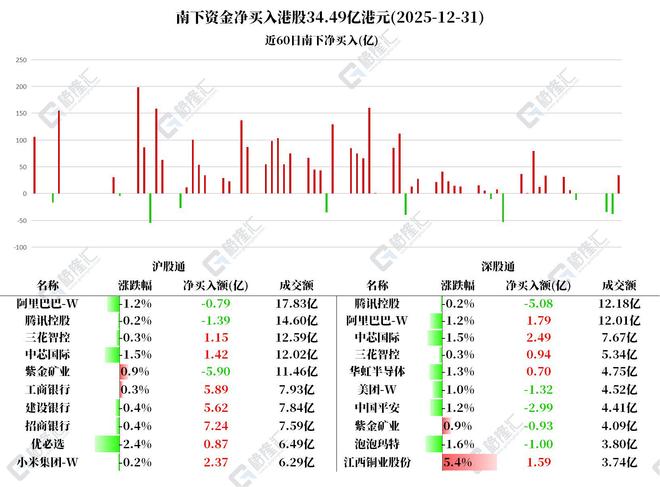
图解丨2025年最后一天,南下资金大举买入中资银行股
Xin Lang Cai Jing· 2025-12-31 12:33
Group 1 - Southbound funds net bought Hong Kong stocks worth 3.449 billion HKD today [1] - The top net purchases included China Merchants Bank at 724 million HKD, Industrial and Commercial Bank of China at 589 million HKD, and China Construction Bank at 562 million HKD [1] - Notable net sales included Zijin Mining at 682 million HKD, Tencent Holdings at 646 million HKD, and China Ping An at 298 million HKD [1] Group 2 - Southbound funds have recorded a continuous net sell of Tencent for five consecutive days, totaling 3.94334 billion HKD [2]



2025养老护理员职业发展公益活动启动,多项成果助力老龄化应对
Jin Rong Jie· 2025-12-31 12:02
Core Insights - The "2025 Elderly Care Worker Career Development Co-Creation Public Welfare Activity" was launched in Shanghai, focusing on the professional development of elderly care workers and the high-quality development of elderly services [1][2] - The "2025 Elderly Care Worker Current Status Survey Report" was released, highlighting significant issues such as the aging workforce, low income, and high levels of burnout among caregivers [1][2] Group 1: Survey Findings - The report indicates that over 80% of elderly care workers belong to the "4050" age group, with nearly 10% aged 60 and above, and less than 3% hold a bachelor's degree or higher [1] - 83.33% of caregivers are engaged in home and community care, with about 30% earning less than 4,000 yuan per month, leading to a "fatigue and low income" dilemma [1] - More than 40% of caregivers experience significant burnout, posing challenges to workforce stability [1] Group 2: Policy and Development Initiatives - The report emphasizes the need for enhancing caregivers' professional skills to meet the demands of an aging population, despite high public recognition of the profession [1][2] - A new platform for "recruitment, training, and career development" for caregivers was launched to address challenges in hiring, training, and career progression [2] - The event also included a donation ceremony for the "Professor Fu" elderly service talent empowerment platform course resources [2] Group 3: Industry Perspectives - Experts at the event discussed the importance of promoting "long-term care insurance expansion" and "increasing caregiver income" in tandem [3] - The integration of "artificial intelligence+" in elderly services was highlighted as a strategic direction to address aging challenges [3] - The collaboration between leading elderly service companies and insurance groups aims to innovate the "insurance + service" business model, enhancing the accessibility of care services [3] Group 4: Future Outlook - The event and its outcomes are positioned as critical support for building a robust elderly care workforce, improving the elderly service system, and fostering the development of elderly finance [4]
银河金工指数分析系列:市场基准分析:主要单市场指数
Yin He Zheng Quan· 2025-12-31 11:46
- The report focuses on the analysis of single-market indices, including comprehensive indices (e.g., Shanghai Composite Index, Shenzhen Composite Index) and component indices (e.g., SSE 50, ChiNext Index), highlighting their construction principles, industry distribution, and performance characteristics [1][3][50] - Comprehensive indices aim to cover the entire market or a specific segment without subjective selection, reflecting the overall market performance through total market capitalization weighting [3][4][10] - Component indices, such as SSE 50 and ChiNext Index, are constructed by selecting representative stocks based on criteria like market capitalization, liquidity, and industry position, aiming to efficiently reflect the performance of specific stock groups [50][51][52] - Comprehensive indices exhibit "broad coverage, low concentration" characteristics, with diluted individual stock weights due to the large number of constituents, while component indices show "high concentration" in both industry and stock weights, reflecting their focus on large-cap stocks [10][57][62] - The industry distribution of comprehensive indices is relatively balanced, with traditional large-cap sectors like banking having weight advantages, whereas component indices are more concentrated in specific industries, such as technology for ChiNext and banking for SSE 50 [5][53][57] - Market valuation analysis reveals that technology-focused indices (e.g., ChiNext, STAR 50) have higher PE and PB ratios compared to market-wide indices, indicating different pricing logic for growth-oriented sectors [21][65][69] - Performance analysis shows that technology-oriented indices outperformed in 2025 due to structural market trends, but their risk-adjusted returns (e.g., Sharpe ratio) are comparable to market-wide indices due to higher volatility [23][71][83] - Dividend analysis indicates that market-wide indices (e.g., Shanghai Composite, Shenzhen Composite) have higher dividend yields compared to technology-focused indices, reflecting their composition of more mature, dividend-paying companies [41][80][87] - Profitability metrics, such as ROE and net profit growth, show that technology-focused indices generally have higher growth potential but exhibit greater volatility, while market-wide indices demonstrate more stable returns [43][89][93]
保险业2025年11月保费点评:产寿险保费均边际改善,看好寿险开门红
HUAXI Securities· 2025-12-31 11:44
Investment Rating - The industry investment rating is "Recommended" [2] Core Insights - The report indicates that the premium income for life insurance and health insurance has shown a marginal improvement, with a year-on-year increase of 9.1% in original premium income for the first 11 months of 2025, totaling 414.72 billion yuan [1] - In November, the decline in premium income for personal insurance narrowed compared to October, with a monthly income of 154.8 billion yuan, down 2.4% year-on-year, an improvement from the previous month's decline of 4.6% [1] - The report highlights a positive trend in property insurance, with total premium income for the first 11 months of 2025 reaching 161.57 billion yuan, a year-on-year increase of 3.9%, and a monthly income of 124.8 billion yuan in November, up 2.3% year-on-year [2] - The total assets of the insurance industry reached 4.06463 trillion yuan by the end of November 2025, reflecting a robust growth of 13.2% compared to the end of 2024, driven by premium income growth and appreciation of investment assets [3] - The report suggests that the demand for savings insurance remains strong due to higher preset interest rates compared to bank deposits, which may attract some deposits into the insurance sector [4] - The supply side is expected to benefit from ongoing reforms in the insurance marketing system and the removal of certain restrictions, leading to a concentration of market share among leading insurance companies [4] Summary by Sections Personal Insurance - Original premium income for personal insurance companies from January to November 2025 was 414.72 billion yuan, with life insurance, health insurance, and accident insurance contributing 338.74 billion, 72.52 billion, and 3.46 billion yuan respectively [1] - The monthly premium income for November was 154.8 billion yuan, with life insurance at 112.6 billion yuan, health insurance at 40.2 billion yuan, and accident insurance at 2 billion yuan [1] Property Insurance - Original premium income for property insurance companies from January to November 2025 was 161.57 billion yuan, with motor insurance and non-motor insurance at 84.32 billion and 77.25 billion yuan respectively [2] - The monthly premium income for November was 124.8 billion yuan, with motor insurance at 82 billion yuan and non-motor insurance at 42.8 billion yuan [2] Asset Growth - Total assets of the insurance industry reached 4.06463 trillion yuan by the end of November 2025, with life insurance companies holding 3.57526 trillion yuan and property insurance companies holding 314.81 billion yuan [3] - Net assets totaled 367.97 billion yuan, reflecting a year-on-year increase of 10.7% [3]





中国平安全力应对大范围雨雪冰冻天气 已开展超2769次应急救援
Jing Ji Guan Cha Wang· 2025-12-31 11:35
Core Viewpoint - The extreme weather conditions in December have posed significant challenges to transportation, public welfare, and business operations across multiple provinces in China, prompting China Ping An to activate its emergency response plan and provide comprehensive support to clients [1][2]. Group 1: Emergency Response Measures - China Ping An has implemented a full-process emergency handling mechanism covering pre-disaster warnings, in-disaster responses, and post-disaster claims to ensure comprehensive service and protection for clients [2]. - The company utilized technology to send over 140 million pre-warning messages to clients, including safety tips for driving and home protection during the cold wave [2]. - A green channel for claims was established to simplify the claims process, allowing clients to receive compensation in the most convenient manner possible [2][3]. Group 2: Resource Allocation and Support - To address the surge in vehicle accidents due to snow, China Ping An formed temporary emergency rescue teams and coordinated with repair shops nationwide to ensure timely assistance [3]. - An emergency case-sharing center was set up to manage severely damaged vehicles, expediting the claims and repair processes [3]. - Frontline employees of China Ping An provided on-site assistance and emotional support to clients affected by the extreme weather, demonstrating the company's commitment to customer care [4][5]. Group 3: Public Awareness and Preparedness - China Ping An published a detailed disaster prevention and reduction guide to enhance public and corporate awareness of disaster preparedness [6]. - Recommendations for residents included protecting water supply systems from freezing and safe driving practices on icy roads [6]. - For businesses, advice included insulating firewater pipes and ensuring the availability of snow removal equipment, while agricultural producers were encouraged to take measures to protect crops from snow damage [6]. Group 4: Commitment to Service and Innovation - China Ping An aims to enhance public and corporate resilience against extreme weather through risk reduction services and safety knowledge dissemination [7]. - The company is committed to optimizing its disaster response system and leveraging technology to improve service efficiency and customer experience [7].
银河金工指数分析系列研究:市场基准分析:主要策略指数
Yin He Zheng Quan· 2025-12-31 11:27
Core Insights - The report highlights a clear differentiation in the performance of growth and value indices, with growth indices showing superior profitability and elasticity, while value indices emphasize defensive characteristics and dividends [1][3][23]. Group 1: Major Large and Mid-Cap Indices - The major indices analyzed include the CSI 300 Growth Index, CSI 300 Value Index, CSI 500 Growth Index, and CSI 500 Value Index, all of which are designed to capture excess returns or enhance specific style returns [3][4]. - Growth indices are characterized by lower allocation to financials and higher allocation to technology, consumer, and manufacturing sectors, while value indices are the opposite, focusing more on financials and cyclical sectors [6][10]. - The CSI 300 Growth Index has a significant concentration of large-cap stocks, with the top ten stocks accounting for 67.1% of the index weight, indicating a strong leader effect [10][11]. Group 2: Fundamental Performance of Indices - Growth indices exhibit higher PE and PB ratios compared to value indices, reflecting market expectations for future growth, with the CSI 300 Growth Index showing a cumulative increase of over 100% [1][23]. - The annualized returns since the inception of the indices show that the CSI 500 Growth Index leads with a cumulative increase of over 150%, while the CSI 300 Value Index has a more modest increase of approximately 30% [25][39]. - Dividend yields are significantly higher in value indices, with the CSI 300 Value Index maintaining a dividend rate of 3.5%-4.5%, while growth indices show lower dividend willingness [39][41]. Group 3: Market Capitalization Distribution - The CSI 300 indices are primarily composed of large-cap stocks, with over 80% of the CSI 300 Growth Index constituents having a market capitalization exceeding 100 billion [17][20]. - The CSI 500 indices focus on mid-cap stocks, with a significant portion of constituents falling within the 10 billion to 50 billion range, highlighting the distinct characteristics of mid-cap indices [17][20]. Group 4: Shareholder Attributes - Growth indices are predominantly composed of private enterprises, while value indices are mainly represented by state-owned enterprises, indicating a divergence in shareholder characteristics [11][53].
“深圳创新四姐妹”年终三重奏:价值重估、AI突围、全球拓局
2 1 Shi Ji Jing Ji Bao Dao· 2025-12-31 11:27
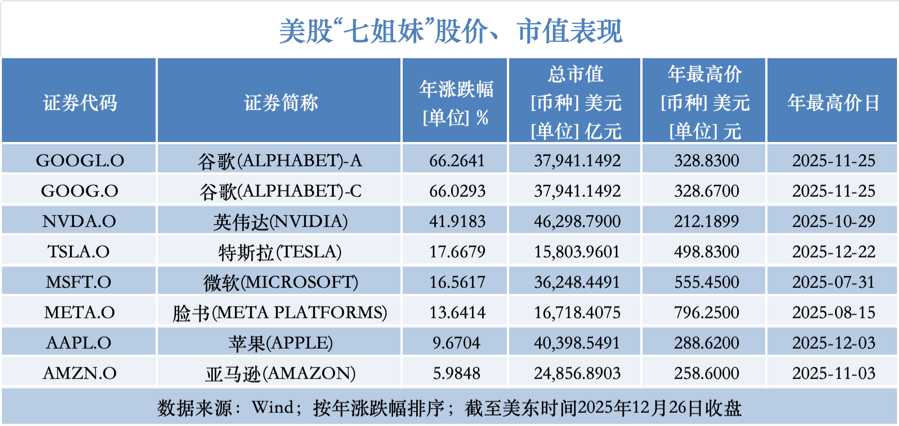
Core Viewpoint - The rapid development of artificial intelligence (AI) is prompting a revaluation of technology assets globally, with Shenzhen emerging as a focal point for investors seeking opportunities in China. The city has produced several leading tech giants, referred to as the "Shenzhen Innovation Four Sisters," including Huawei, Tencent, China Ping An, and BYD, all of which have market capitalizations exceeding 1 trillion yuan and revenues above 600 billion yuan [1][2]. Group 1: Performance and Market Trends - The "Shenzhen Innovation Four Sisters" have experienced significant stock price and market capitalization increases, benefiting from a narrative of asset revaluation in China. Notably, Tencent, Ping An, and BYD have all reached new highs in stock prices and market values this year [1][4]. - The average annual stock price increase for the "Four Sisters" is 44.87%, outperforming the average increase of 27.95% for the "Magnificent Seven" in the U.S. stock market [4][6]. - As of December 29, 2025, China Ping An's stock price increased by 52.25%, Tencent by 44.29%, and BYD by 10.47%, with Ping An leading the group [4][6]. Group 2: AI Development and Talent Acquisition - The "Four Sisters" are heavily investing in AI, with each company focusing on different aspects of AI technology to gain competitive advantages. They are engaged in a talent acquisition race to attract top AI professionals [9][10]. - Huawei's R&D expenditure reached 96.95 billion yuan in the first half of the year, accounting for 22.7% of its revenue, while Tencent's R&D spending in Q3 was 22.82 billion yuan, marking a 28% year-on-year increase [10][11]. - The companies are implementing differentiated AI strategies: Huawei focuses on foundational technologies, Tencent aims to reshape consumer services, Ping An emphasizes specialized AI services, and BYD integrates AI into smart mobility solutions [12][11]. Group 3: Global Expansion and Influence - The global influence of the "Four Sisters" is on the rise, as evidenced by their improved rankings in the 2025 Fortune Global 500 and Kantar BrandZ lists. China Ping An ranks 13th, Huawei 24th, BYD 27th, and Tencent 32nd in the Fortune list [12][13]. - BYD has surpassed Tesla to become the top seller of electric vehicles globally, with exports reaching 878,000 units from January to November, a 144% increase year-on-year [13][14]. - Tencent's international gaming revenue grew by 43% to 20.8 billion yuan in Q3, while Huawei's wearable device shipments exceeded 200 million units globally, maintaining a leading position in the market [13][14].
工行蝉联2025年银行股“股王” 20只个股年内创新高
2 1 Shi Ji Jing Ji Bao Dao· 2025-12-31 11:24
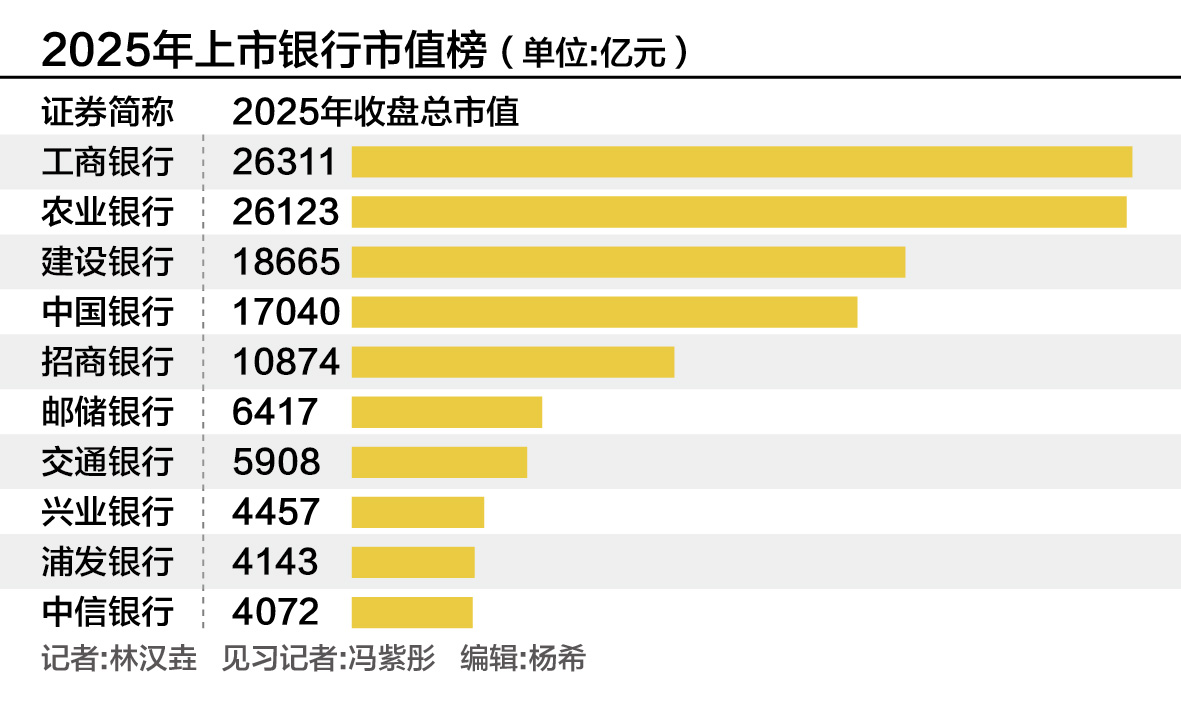
12月31日,上证指数收于3968.84点,深证成指收于13525.02点,为波澜起伏的2025年A股市场画下句点。 作为市场价值"压舱石"的代表,银行板块经历了一整年的"震荡——冲高——回调",最终整体涨幅定格于7%。这一数字与2024年高达34.39%的闪耀收益率 相比稍显平淡,甚至在31个申万一级行业中排名靠后。 但若用一词概括2025年A股银行板块的个股行情,"新高"或许最为精准。平淡的板块指数之下,个股对于"历史最高价"的冲击与创造从未停歇。截至年末收 盘,板块内42只个股中有35家收涨,仅7只下跌;其中,多达20家银行的股价创下了历史新高,更有21家全年涨幅超过10%、6家涨幅超过20%。 尤其引人注目的是,A股"股王"争夺战罕见地在银行板块内部展开了激烈角逐。农业银行年内股价累计涨幅超过52%,市值在2025年11月一度突破3万亿元, 并曾数次超越工商银行、短暂夺得"股王"桂冠。不过,凭借全年的稳健表现,"宇宙行"工商银行成功捍卫地位,截至2025年12月31日收盘以2.63万亿元的总 市值稳坐"股王"宝座,其全年股价亦累计上涨21.54%。 与此同时,对门外众多未上市的中小银行而言,A股的大门 ...
2025年,保险股凭什么成为A股涨幅最大的“意外”
Tai Mei Ti A P P· 2025-12-31 11:23
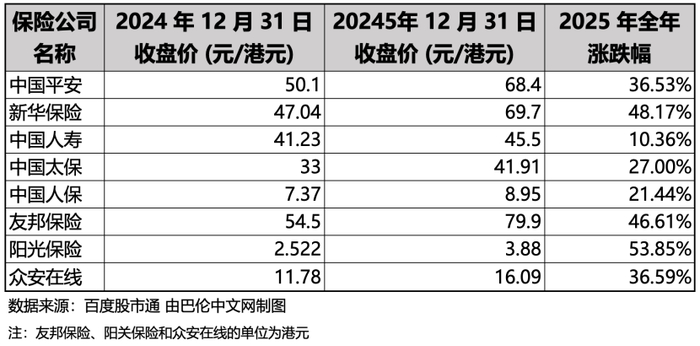
Core Viewpoint - The insurance sector in China's A-share market has emerged as a standout performer in 2025, with significant price increases and a strong upward trend since the lows of 2024, outperforming both banking and non-bank financial sectors [1][6]. Market Performance - The insurance sector index closed at 1554.89 points by December 31, 2025, with notable short-term momentum reflected in its 10-day, 20-day, and 60-day price increases [1]. - The total market capitalization of the five major listed insurance companies grew from approximately 2.16 trillion yuan to over 3.3 trillion yuan, an increase of over 1.1 trillion yuan [5]. Individual Company Performance - New China Life Insurance led the sector with a price increase of over 45% in 2025, driven by high earnings elasticity and a 58.9% year-on-year increase in net profit for the first three quarters [2]. - Ping An Insurance's stock price rose by 36.53% in 2025, reaching a peak of 71.98 yuan per share, attributed to its proactive asset-liability management and strong financial ecosystem [3]. - China Pacific Insurance's stock reached a new high of 43 yuan per share, supported by effective life insurance transformation and improved profitability in property insurance [4]. - China Life and China Re also achieved significant returns, with China Life benefiting from reduced interest rate risks and China Re excelling in property insurance profitability [5]. Valuation and Market Sentiment - Despite the strong stock performance, insurance stocks remain undervalued, with P/EV ratios generally between 0.6 and 0.9, significantly lower than consumer sector valuations [6]. - The market's confidence in the long-term profitability of the insurance sector is gradually recovering, with expectations for P/EV ratios to return to 1.0 in the future [6]. Policy Impact - Regulatory policies have played a crucial role in the sector's performance, focusing on reducing costs, expanding investment opportunities, and promoting market order [7][12]. - The introduction of a dynamic adjustment mechanism for predetermined interest rates has significantly lowered liability costs, enhancing the sector's profitability [8]. - The health insurance market has responded positively to policy changes, with premium income reaching 894.3 billion yuan in the first ten months of 2025 [9]. Future Outlook - The insurance sector is expected to enter a "golden development period" in 2026, with anticipated double-digit growth in new business value and premium income driven by strong demand for dividend insurance and health products [21]. - The investment environment is projected to improve, with a continued focus on high-dividend blue-chip stocks and technology innovation stocks, supporting a stable investment return of around 5% [22]. - The sector's valuation is expected to gradually recover, with many institutions predicting a return to 1.0 P/EV, indicating substantial potential for price appreciation [22][23].