荣耀

Search documents
新一轮旗舰手机大战将至,影像持续进化,AI或是新的胜负手?
3 6 Ke· 2025-08-04 07:16
Core Insights - Qualcomm confirmed that Xiaomi will be the first manufacturer to launch a smartphone equipped with the next-generation Snapdragon 8 Elite chip, expected to be unveiled on September 23 [1] - The competition for flagship smartphones is intensifying, with Xiaomi and iQOO leading the charge, while other manufacturers are also expected to join the fray [3][5] - The release schedule for flagship smartphones has been significantly advanced, with major brands aligning their launches closer to the release of new chips [5][6] Group 1: Market Dynamics - The flagship smartphone release cycle has shifted, with Qualcomm and MediaTek now targeting late September for new chip launches, prompting manufacturers to release their devices earlier [5][6] - The upcoming flagship models from Xiaomi and iQOO are expected to showcase advancements in imaging and AI capabilities, which are becoming critical differentiators in the market [6][10] - The competition is not limited to Xiaomi and iQOO; OPPO and vivo are also set to release their flagship models, indicating a broader competitive landscape [5][15] Group 2: Product Strategies - Xiaomi's strategy for the upcoming Xiaomi 16 series appears to be conservative, focusing on a dual-model approach and maintaining a balance between performance and overall user experience [14] - In contrast, iQOO is expected to adopt a more aggressive strategy with the iQOO 15 series, emphasizing enhancements in gaming performance and imaging capabilities [6][7] - The trend towards "smart" features, particularly in AI and imaging, is likely to influence product positioning and consumer preferences in the flagship segment [10][15] Group 3: Sales Performance - Recent sales data indicates that Apple's iPhone 16 Pro and Pro Max models have significantly outperformed competitors, with over 23 million units activated [12] - Xiaomi's 15 series has shown strong sales, closely trailing Huawei's Mate 70 series, highlighting its competitive positioning in the market [12][16] - The sales figures for various flagship models reveal a competitive landscape, with Xiaomi and Huawei leading, while other brands like vivo and OPPO are also making notable contributions [16]


龙旗科技(603341):“1+2+X”持续推进,ODM龙头打开成长空间
Changjiang Securities· 2025-08-04 05:23
Investment Rating - The report assigns a "Buy" rating for the company, marking its first coverage [10]. Core Insights - The company is positioned as a leading ODM in the smartphone sector, with a strategic focus on expanding its product offerings and customer base, aiming to become the world's largest smartphone ODM by 2024 [4][8]. - The "1+2+X" strategy is being effectively implemented, with the company diversifying its product lines to include tablets, smart wearables, AIPC, AI glasses, and automotive electronics, which are expected to drive significant revenue growth [6][20]. - The demand for AI-enabled devices is anticipated to sustain high growth, with AI smartphones and AI glasses emerging as key growth areas, benefiting the company's market position [7][51]. Summary by Sections Company Overview - The company has over 20 years of experience in the ODM industry, evolving from IDH for feature phones to a comprehensive ODM model for various consumer electronics [6][20]. - The company has established a solid foundation in smartphone manufacturing, contributing to 78% of its revenue, while AIoT and tablets are becoming significant revenue streams [20]. Strategic Development - The "1+2+X" strategy focuses on smartphones as the core, while expanding into tablets and AIoT, with successful ventures into AIPC and AI glasses [6][20]. - The company aims for a revenue CAGR of approximately 10% and a net profit CAGR of around 20% from 2025 to 2028, reflecting confidence in its growth trajectory [29]. Market Position and Trends - The ODM industry is characterized by increasing technical barriers and a concentration of market share among leading players, with the company expected to benefit from these trends [7][8]. - The AI glasses market is projected to experience exponential growth, with the company positioned to capitalize on this trend through partnerships with major clients [62][68]. Financial Performance - The company experienced a significant revenue increase of 71% in 2024, although net profit declined by 17.21% due to rising raw material costs and intensified competition [33]. - The gross margin is expected to recover as raw material prices stabilize, with a projected gross margin of 7.45% in Q1 2025, indicating a positive trend [35]. Industry Dynamics - The ODM sector is witnessing a shift towards AI-enabled products, which are expected to drive demand and enhance the competitive landscape for leading ODM firms [51][55]. - The report highlights the importance of cost management and supply chain efficiency in maintaining profitability amid fluctuating raw material prices [78][81].
吴声解读AI场景革命:新物种迈进哲学生活方式周期
Huan Qiu Wang Zi Xun· 2025-08-04 02:46
Core Insights - The essence of the AI scene revolution is the reconstruction of meaning coordinates in specific scenarios, with a focus on the emergence of new business entities and the need for careful scene design [1][4] Group 1: Four Chapters of Meaning Reconstruction - The first chapter "NOW·The Connection of the Moment" emphasizes that meaning density, rather than speed, is crucial for new business entities to understand time and find true value [2] - The second chapter "FLOW·Smooth Human-Machine Interaction" highlights the importance of meaningful integration and the evolution of human-machine interaction into a seamless cognitive resonance [2] - The third chapter "HERE·Narrative Beyond the Scene" discusses the significance of digital immersion and scene twin technology in enhancing competitive advantage in the AI era [3] - The fourth chapter "EGO·My Consensus" focuses on the need for new business entities to maintain uniqueness while fostering collective wisdom and understanding the significance of individual existence [3] Group 2: Predictions for New Business Entities - Prediction 1: Existentialist commerce will provide actionable plans for life [3] - Prediction 2: Social interactions will be redefined through multi-terminal resets and individual metaverse definitions [3] - Prediction 3: The concept of no-inventory shelves will emerge, utilizing product streaming and 3D printing [3] - Prediction 4: The idea of "super scene" will lead to perpetual carbon-silicon fusion concerts [3] - Prediction 5: New mediums for content distribution will arise, integrating spatial intelligence and brain-machine interfaces [3] - Prediction 6: The transition from cross-border payments to encrypted living will accelerate the fusion of stablecoins with real-world applications [3] - Prediction 7: A new knowledge era in spatial commerce will develop, focusing on local knowledge graphs and experiential data sets [3] - Prediction 8: AI ethics will evolve towards the necessity of algorithm-free environments [3]
联通客户日 融合新生态 ——济南联通多元服务绘就惠民新图景
Qi Lu Wan Bao· 2025-08-04 01:16
Core Insights - Jinan Unicom launched a series of customer engagement activities in July, targeting various demographics including seniors, students, VIP customers, and government enterprises, emphasizing the company's commitment to customer needs and satisfaction [1][3][5] Group 1: Activities for Seniors - On July 14, Jinan Unicom held a "Technology Assistance for Seniors" event, focusing on the digital needs of the elderly, providing hands-on guidance on smartphone features and offering customized gifts [1] - The event included a Q&A session that generated over ten suggestions for improving services for seniors, highlighting the company's responsiveness to customer feedback [1] Group 2: Engagement with Students - On July 18, a "Youth Special" event was organized at the Bayi flagship store, featuring a product showcase and interactive activities to engage student customers [3] - The event successfully attracted over 80 VIP customers and new subscribers to a 199 yuan fusion package, demonstrating the effectiveness of innovative service models that combine communication and health services [3] Group 3: Collaboration with Huawei - On July 23, the "Jinan Unicom-Huawei Brand Service Day" provided customers with immersive experiences of Huawei's products, enhancing the strategic collaboration between the two companies [5] - The event also included educational components on fraud prevention, showcasing the company's commitment to customer safety and service quality [5] Group 4: Overall Impact - The July customer day activities served nearly 220 participants, receiving widespread positive feedback and trust from customers, indicating the success of Jinan Unicom's customer engagement strategy [7] - The company plans to continue evolving its service offerings and customer engagement initiatives to enhance the overall customer experience in the city [7]


吴声2025年度演讲:词是旧的,意义才是新的
虎嗅APP· 2025-08-04 00:39
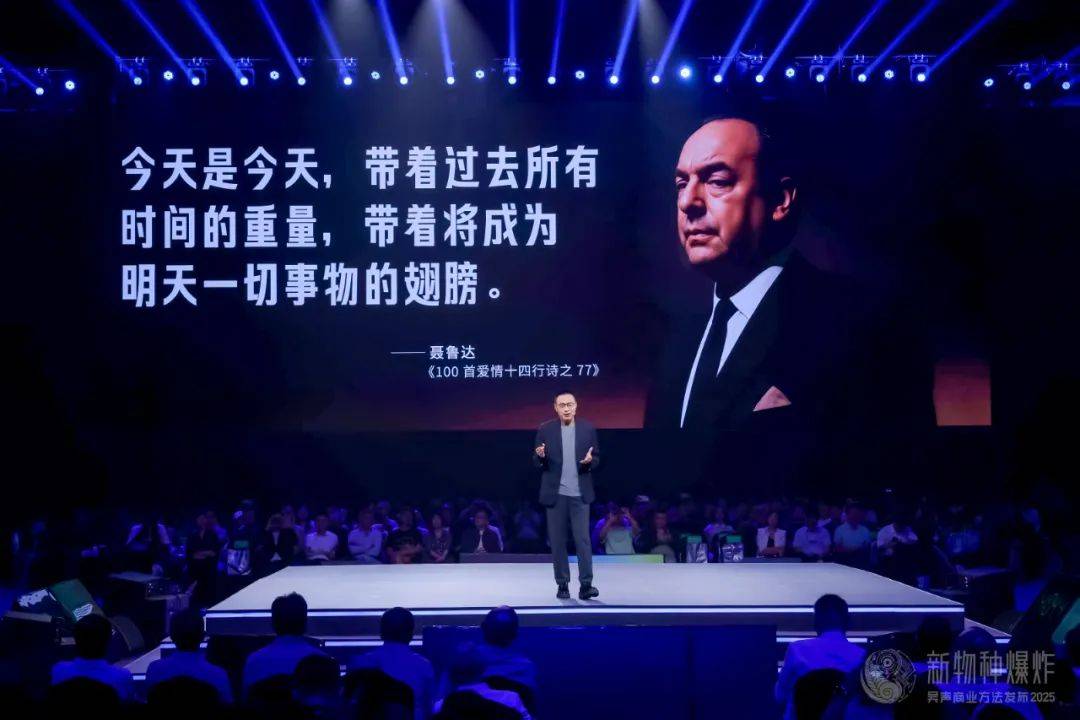
Core Viewpoint - The article discusses the "AI Scene Revolution" and its impact on business, emphasizing the need for reconstructing meaning in various scenarios through innovative methods and the emergence of new species in the market [5][20]. Group 1: Scene Creation Over the Past Decade - The past decade has been marked by the evolution of "scene creation," where meticulously designed scenarios drive the growth of new market entities [11][19]. - The evolution of brands like Sanwing Bird illustrates the shift from product-centric to solution-oriented approaches, focusing on personalized home scene customization [14][15]. - Red Star Macalline's transformation into an "AI home life destination" showcases the integration of home appliances, furniture, and decoration into a cohesive business model [17][19]. Group 2: Instant Emergence and Meaning Reconstruction - The concept of "instant emergence" highlights the importance of designing specific scenarios to avoid losing sight of the rapid changes in AI applications and market dynamics [20][22]. - The advancements in AI technology, such as Amazon's robotics and Google's Gemini Robotics, signify a shift towards cognitive capabilities in machines, although the full potential is yet to be realized [22][24]. - The article posits that the AI scene revolution is fundamentally a cognitive revolution, urging a return to philosophical inquiries about human existence and meaning [24][26]. Group 3: The Four Keywords of Meaning Coordinates - The four keywords for reconstructing meaning in the current era are NOW (the power of connection), HERE (the reality of presence), FLOW (the pursuit of immersive experiences), and EGO (the core question of self) [26][28]. Group 4: The NOW Connection - The NOW concept emphasizes the significance of real-time connections in the AI era, where platforms like Xiaohongshu redefine user engagement through immediacy and shared experiences [30][33]. - The organizational innovation at brands like Three Squirrels demonstrates how understanding the needs of younger consumers can lead to effective decision-making and product development [38][39]. Group 5: Flowing Human-Machine Interaction - The evolution of human-machine interaction is characterized by the emergence of "intelligent agents" that enhance user experiences through seamless communication and emotional understanding [51][52]. - Companies like Lenovo are leading the way in creating integrated AI ecosystems that facilitate smooth interactions across various devices [54][56]. Group 6: Beyond the Scene Narrative - The article discusses how physical retail spaces, such as Anta's innovative stores, serve as both entry points and destinations, enhancing customer engagement through unique narratives [78][79]. - The integration of digital and physical experiences is crucial for creating meaningful interactions in today's market [82][83]. Group 7: The EGO Consensus - The importance of maintaining uniqueness while fostering collective intelligence is emphasized, as seen in brands like Maogeping, which focus on individual beauty and personalized experiences [101][102]. - The article suggests that the AI cycle is leading to a new balance, where brands must adapt to the evolving landscape while staying true to their core values [103].

吴声2025年度演讲:场景革命十年,哲学生活方式到来
创业邦· 2025-08-04 00:09
Core Insights - The article emphasizes the concept of "scene creation" as a driving force behind the evolution of new business models and brands in the AI era, highlighting the importance of designing specific scenarios to foster innovation and user engagement [5][15][21]. Group 1: Scene Creation and Brand Evolution - The evolution of brands like San Yi Niao and Red Star Macalline illustrates how understanding user needs and creating tailored solutions can lead to significant business transformations [10][12]. - The concept of "effective time" is replacing "effective space" as the core standard in home living, indicating a shift towards personalized experiences in smart home solutions [10]. - The "scene brand evolution" is characterized by a dual process of deconstruction and emergence, driven by unique situational endowments in various fields [14]. Group 2: AI and Technological Integration - The article discusses the emergence of "Agentic AI" and its potential to reshape productivity and efficiency, although it notes that many applications are still in the exploratory phase [17][19]. - The integration of AI into everyday scenarios is seen as a pathway to enhance user experiences and create new value propositions, as demonstrated by companies like Xiaomi and Star Charging [29][32]. Group 3: Consumer Engagement and Experience - The rise of platforms like Xiaohongshu showcases how real-time connections and user-generated content can redefine consumer engagement and brand value [25][26]. - The concept of "NOW" emphasizes the importance of immediate connections and experiences in the digital age, where traditional metrics of engagement are being replaced by real-time interactions [22][40]. Group 4: Physical and Digital Integration - The article highlights the need for seamless integration between physical spaces and digital experiences, as seen in the collaboration between companies like Fenjun Media and Alipay [35]. - The evolution of human-machine interaction is discussed, with a focus on creating fluid and intuitive experiences that enhance user engagement [41][43]. Group 5: Cultural and Community Engagement - The development of localized cultural spaces, such as the "New Species Space" project, illustrates the importance of community engagement and cultural relevance in modern business strategies [72][73]. - The article emphasizes the role of emotional connections and personal narratives in shaping consumer experiences, particularly in the context of emerging brands and products [69][70].

终于,AI应用也想预装了,但手机厂商却不乐意……
3 6 Ke· 2025-08-03 23:29
Core Viewpoint - The article discusses the competitive dynamics between AI application providers, like Perplexity, and smartphone manufacturers, highlighting the struggle for control over user interaction and data in the AI era [1][4][17]. Group 1: AI Application Providers - Perplexity is attempting to promote its AI browser, Perplexity Comet, by lobbying Android phone brands for pre-installation, aiming to secure a primary entry point for AI interactions [1][4]. - The strategy of pre-installation is seen as a challenge to smartphone manufacturers, who prefer to maintain control over their devices' AI capabilities and user data [3][12]. Group 2: Smartphone Manufacturers - Major smartphone brands, including Xiaomi, OPPO, and Samsung, are developing their own AI models and integrating them into core functionalities, making them reluctant to allow external AI applications to dominate user interactions [8][16]. - Manufacturers view the pre-installation of external AI applications as a threat to their strategic control over user data and experience, which they believe is essential for long-term competitiveness [17][18]. Group 3: Competitive Dynamics - The relationship between AI application providers and smartphone manufacturers is characterized by a complex interplay of competition and cooperation, where both parties seek to leverage their strengths [5][12]. - The article draws parallels between the current situation in the AI mobile sector and the past experiences of car manufacturers with Apple’s CarPlay, emphasizing the importance of controlling user interaction and data [13][16].



高通携技术生态亮相 ChinaJoy 以创新合作助力数字娱乐产业升级
Di Yi Cai Jing Zi Xun· 2025-08-03 14:32
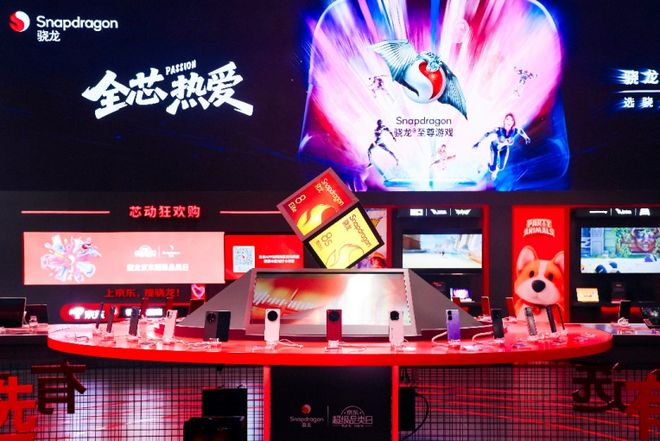
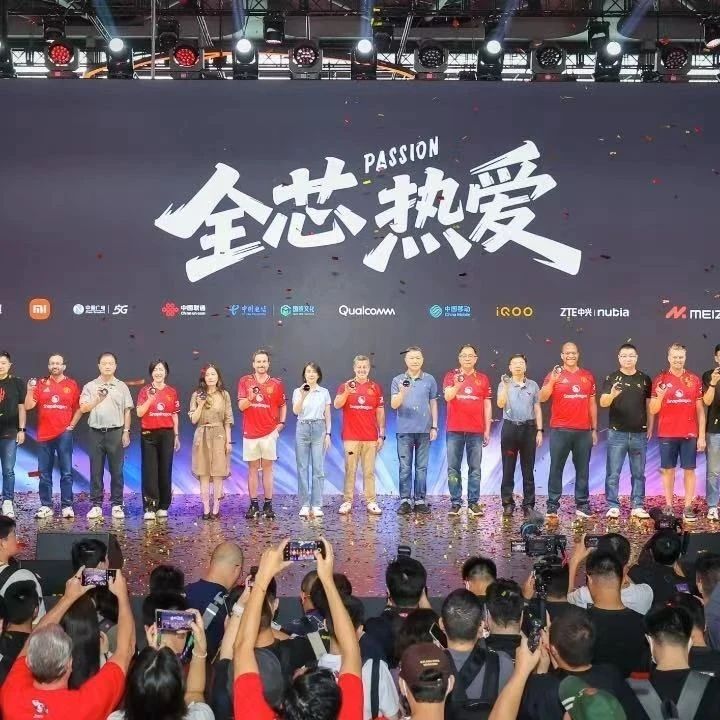
Core Insights - Qualcomm is actively participating in the gaming industry by showcasing its technological advancements at the ChinaJoy event, emphasizing the importance of gaming as a critical application for its semiconductor capabilities [1][4][16] - The digital entertainment industry in China is experiencing significant growth, supported by government policies and increasing consumer demand, with the gaming market reaching a revenue of 325.78 billion yuan in 2024, a year-on-year increase of 7.53% [3][16] - The integration of AI, 5G-A, and other technologies into gaming is driving innovation and creating new market opportunities for semiconductor companies like Qualcomm [2][16] Qualcomm's Role in the Gaming Industry - Qualcomm's Snapdragon platform is being utilized in over 184 products, enhancing gaming experiences across various devices, including mobile phones, PCs, and XR devices [15] - The Snapdragon 8 Gen 2 mobile platform features significant performance improvements, with a 45% increase in single-core and multi-core performance, and a 44% reduction in power consumption [6] - The company is collaborating with 75 partners across the digital entertainment ecosystem, including game studios and terminal manufacturers, to create a comprehensive industry chain [10][12] Market Trends and Opportunities - The mobile gaming market is projected to continue its growth, with revenues from mobile games reaching 238.22 billion yuan in 2024, accounting for over 70% of the total gaming market [3][16] - The rise of cross-terminal gaming and XR experiences is creating new demands for high-performance, low-power chips, pushing semiconductor companies to innovate [2][8] - The esports sector is also gaining traction, with Qualcomm's Snapdragon Pro Series attracting millions of viewers and showcasing the potential of mobile esports [13] Technological Innovations - Qualcomm's advancements in AI and real-time graphics processing are enhancing gaming experiences, as seen in titles like "Ningchao" and "League of Legends Mobile," which leverage Snapdragon's capabilities for improved performance [6][12] - The integration of 5G-A technology with XR devices is enabling high-resolution, low-latency experiences, demonstrating the commercial potential of these technologies [8][9] - The company's focus on creating a unified technology platform across devices is facilitating seamless user experiences and responding to the trend of multi-platform gaming [9][16]

高通携技术生态亮相 ChinaJoy 以创新合作助力数字娱乐产业升级
第一财经· 2025-08-03 14:21
Core Viewpoint - Qualcomm is leveraging its technological advancements to integrate into the gaming industry, showcasing its capabilities at the ChinaJoy event, which highlights the synergy between semiconductor technology and digital entertainment [1][22]. Group 1: Industry Trends - The digital entertainment industry is experiencing a growth window, supported by favorable government policies and increasing consumer demand for gaming and esports [3][4]. - In 2024, China's gaming market revenue reached 325.78 billion yuan, with a year-on-year growth of 7.53%, while mobile gaming accounted for over 70% of the market [4][22]. - Global gaming market revenue in 2024 was estimated at $182.7 billion, with mobile gaming representing 55% of the total [4]. Group 2: Technological Innovations - The demand for high-performance, low-power chips is rising due to new gaming formats like mobile, cross-device, and XR, driving advancements in CPU, GPU, and NPU technologies [2][21]. - Qualcomm's Snapdragon 8 Gen 2 mobile platform features significant performance improvements, including a 45% increase in single-core and multi-core performance, and a 44% reduction in power consumption [8][21]. - The integration of AI and 5G-A technologies is creating new demands for real-time interactions and cross-device collaboration in gaming [2][10]. Group 3: Ecosystem Collaboration - Qualcomm's participation in ChinaJoy involved 75 partners across the digital entertainment industry, showcasing a collaborative ecosystem that includes operators, device manufacturers, and game studios [12][13]. - Partnerships with major companies like Tencent and NetEase are focusing on integrating advanced technologies into popular games, enhancing user experience and performance [16][21]. - The collaboration with telecom operators, such as China Telecom, demonstrates the potential of 5G-A networks in delivering high-quality gaming experiences [15][21]. Group 4: Consumer Engagement - Qualcomm's strategy includes engaging consumers through immersive experiences at events, showcasing the latest technologies and products to bridge the gap between innovation and market acceptance [20][22]. - The introduction of various Snapdragon-powered devices across different price ranges supports consumer demand and enhances the overall gaming experience [20][21]. - Online and offline marketing initiatives aim to boost consumer awareness and drive sales, reflecting a comprehensive approach to digital consumption [17][18].
吴声2025年度演讲:词是旧的,意义才是新的
Hu Xiu· 2025-08-03 14:09
Core Insights - The event "New Species Explosion 2025" emphasizes the significance of AI in reshaping business through a philosophical lifestyle cycle, focusing on the reconstruction of meaning in specific scenarios [1][2][21] - The presentation outlines four innovative methods for "meaning reconstruction": NOW (connection in the present), FLOW (smooth human-machine interaction), HERE (narrative beyond presence), and EGO (consensus of self) [1][22][26] Group 1: Scene Creation and Evolution - The concept of "scene creation" has evolved over the past decade, highlighting the importance of well-designed scenarios in driving the growth of new business entities [6][14] - The case of "Three Wings Bird" illustrates the transition from product-focused strategies to personalized home scene customization, emphasizing the need for effective time management over mere spatial efficiency [9][10] - Red Star Macalline's transformation into an "AI home life destination" showcases the integration of home appliances, furniture, and decoration into a cohesive business model [12][14] Group 2: Instant Emergence and Meaning Reconstruction - The notion of "instant emergence" suggests that the evolution of AI applications will occur through meticulously designed scenarios, avoiding superficial trends [15][19] - The advancements in AI technology, such as Amazon's robotics and Google's Gemini Robotics, indicate a shift towards cognitive capabilities, although the full potential of AI remains to be realized [17][19] - The potential economic impact of AI is significant, with projections suggesting a GDP growth of 20-30%, indicating a transformative phase for society [19] Group 3: Connection and User Engagement - The concept of NOW emphasizes the importance of real-time connections facilitated by AI, which compresses processes and enhances user engagement [26][29] - The success of brands like Three Squirrels demonstrates the effectiveness of a decentralized organizational model that aligns with the values of younger consumers [34][35] - Xiaomi's approach to integrating consumer electronics into the automotive sector exemplifies the restructuring of organizational systems to enhance connectivity and efficiency [36] Group 4: Fluid Human-Machine Interaction - The evolution of human-machine interaction is characterized by the emergence of "intelligent agents" that enhance user experiences through seamless integration [47][50] - The concept of "physical AI" is reshaping interactions in the physical world, allowing for a more intuitive and responsive environment [57][59] - Brands like AAC Technologies are pioneering the integration of sensory technology to create immersive human-machine interactions [58][59] Group 5: Narrative Beyond Presence - The importance of physical presence in retail is highlighted through the innovative store concepts of brands like Anta, which create immersive and community-focused experiences [80][81] - The shift towards experiential retail emphasizes the need for physical spaces to resonate with digital narratives, enhancing customer engagement [84][85] - The concept of "here" as a narrative tool underscores the significance of local culture and community in shaping brand experiences [91][93] Group 6: Consensus of Self - The emphasis on individual uniqueness and collective consensus is illustrated through brands like Mao Geping, which focus on personalized beauty experiences [106][107] - The concept of "new balanceism" in health and wellness reflects a growing societal focus on achieving equilibrium in the face of rapid technological change [110][113]