泸州老窖

Search documents
今天,A股“股王”反弹,四大行集体上涨
Zhong Guo Zheng Quan Bao· 2025-10-14 04:55
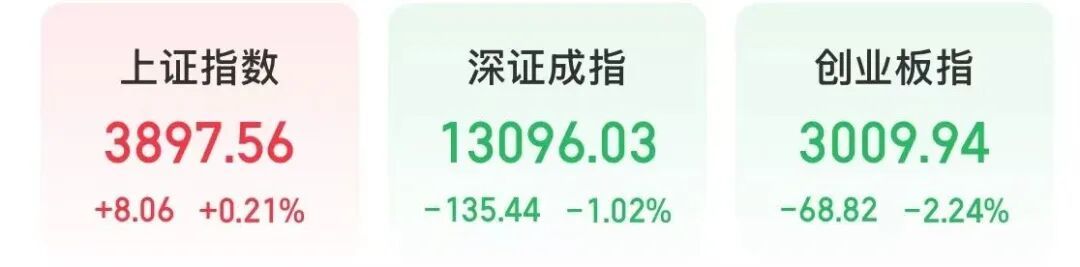
今天上午,市场风格发生明显变化,科技股大幅调整,中际旭创、中芯国际、寒武纪、华虹公司等龙头股下跌。顺周期、高股息板块迎来反弹,白酒、煤 炭、银行、保险等板块涨幅居前。四大行——工商银行、农业银行、建设银行、中国银行集体上涨,"股王"贵州茅台上涨2.35%。 截至午间收盘,上证指数上涨0.21%,深证成指下跌1.02%,创业板指下跌2.24%。 顺周期主线走强 今天上午,顺周期主线走强,白酒、工程机械、房地产等板块上涨。 具体看,白酒板块中,酒鬼酒、舍得酒业等个股涨幅居前。 | | | 白酒 | | | | --- | --- | --- | --- | --- | | | | 3053.91 2.97% | | | | 成分股 | 基金 | 简况(F10) | 资金 | 板块分析 | | 名称代码 | | 最新 | 涨幅 ◆ | 流通市值 | | 酒鬼酒 融 000799 | | 63.75 | 7.02% | 207亿 | | 王得漫业 融 600702 | | 62.23 | 6.92% | 207亿 | | 泸州老窖 ■ 000568 | | 132.76 | 4.29% | 1951亿 | | 金徽酒 ...

午评:创业板指半日跌超2%,半导体、CPO概念股多数调整
Xin Lang Cai Jing· 2025-10-14 04:11
Market Overview - The three major indices showed mixed performance in early trading, with the Shanghai Composite Index up by 0.21%, the Shenzhen Component down by 1.02%, and the ChiNext Index down by 2.24% [1] - The total trading volume in the Shanghai and Shenzhen markets reached 1.6815 trillion yuan, an increase of 90.8 billion yuan compared to the previous day [1] - Over 2,800 stocks in the market experienced declines [1] Sector Performance - The sectors that saw the highest gains included cultivated diamonds, insurance, liquor, coal, photovoltaic equipment, banking, and precious metals [1] - Conversely, the sectors that faced the most significant declines were photolithography machines, semiconductors, CPO, PEEK materials, and consumer electronics [1] Notable Stock Movements - The semiconductor sector opened high but closed lower, with ChipSource Micro dropping by 10%, and Huahong Semiconductor, Huahai QK, and Zhongwei Company also experiencing notable declines [1] - CPO concept stocks saw a sharp decline, with New Yi Sheng dropping over 9%, and several other stocks like Zhongji Xuchuang, Yuanjie Technology, and Tongfu Microelectronics falling over 5% [1] - The coal sector performed well against the trend, with Baotailong and Dayou Energy hitting the daily limit [1] - The photovoltaic equipment sector was active, with Yijing Optoelectronics hitting the daily limit, and Longi Green Energy, JA Solar, and Trina Solar showing significant gains [1] - The liquor sector mostly rebounded, with brands like Jiu Gui Jiu, Shede Liquor, and Luzhou Laojiao leading the gains [1]

段永平加仓茅台!“茅五泸汾洋”集体飙涨,吃喝板块打响估值修复战!布局机会来了?
Xin Lang Ji Jin· 2025-10-14 03:15
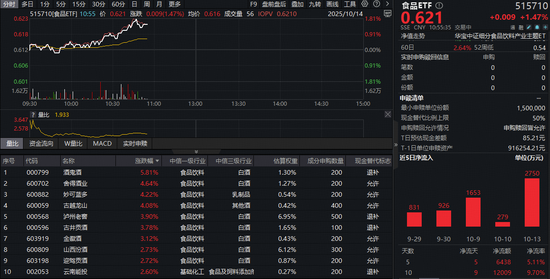
Group 1 - The food and beverage sector experienced a significant rally on October 14, with the Food ETF (515710) showing a price increase of 1.47% after a brief fluctuation, reaching a peak increase of 1.8% during trading [1][2] - Major stocks in the liquor industry saw substantial gains, with brands like Jiu Gui Jiu rising over 5%, She De Jiu Ye increasing over 4%, and several others including Lu Zhou Lao Jiao and Gu Jing Gong Jiu rising over 3% [1][2] Group 2 - Notable investor Duan Yongping publicly expressed support for Kweichow Moutai, indicating his recent purchase of the stock, which aligns with his previous endorsements during periods of price decline [1][3] - Analyst Cai Xuefei noted that the liquor industry is undergoing a deep adjustment with declining overall production, but Moutai's scarcity, brand value, and rigid demand support its long-term value, making it attractive for investors [3] Group 3 - Guosheng Securities highlighted that the demand for liquor is recovering during the Mid-Autumn Festival and National Day, with leading brands performing better and supply-side improvements contributing to the industry's long-term value [4] - According to Fangzheng Securities, while overall liquor consumption during the holiday period was in line with expectations, there were regional performance differences, and the industry is seeing marginal improvements in inventory accumulation [4] Group 4 - The Food ETF (515710) tracks the China Securities Index's segmented food and beverage industry index, with approximately 60% of its holdings in leading high-end and mid-range liquor stocks, and nearly 40% in other beverage and dairy segments [5]

盘点白酒年度业绩目标:茅、五、汾、泸“有惊无险”,剩下的悬
Sou Hu Cai Jing· 2025-10-14 03:00
Core Viewpoint - The performance of the liquor industry during the Mid-Autumn Festival did not exceed expectations, raising concerns about the feasibility of achieving annual targets, with a focus on the challenges in the fourth quarter [1] Company Performance Summaries - **Kweichow Moutai**: The company aims for a revenue growth of approximately 9% for the year, with a high certainty of achieving this target due to its strong brand and clear strategy [2][3] - **Wuliangye**: The company is experiencing pressure to meet its target of maintaining revenue growth in line with GDP, with a 4.19% revenue increase in the first half of the year, slightly below the GDP growth of 5.3% [6][3] - **Shanxi Fenjiu**: The company is on track for steady growth, achieving a 5.35% revenue increase in the first half of the year, indicating a possibility of meeting its targets [4][6] - **Luzhou Laojiao**: The company faces pressure to achieve its goals, with a 2.7% decline in revenue in the first half of the year, prompting a cautious approach to its 2025 development strategy [10][8] - **Jinshiyuan**: The company struggles to meet its target of increasing the proportion of revenue from outside the province to 15%, with a 4.84% decline in total revenue in the first half of the year [11][13] - **Daohuaxiang**: The company aims for sales collections of at least 4.5 billion yuan, but has historically struggled to meet its performance targets, raising doubts about future achievements [14][16] - **Jiananchun**: The company has set an ambitious revenue target of 30 billion yuan by 2025, but faces challenges in achieving this due to reliance on a single product and market conditions [17][19][21] Industry Challenges - The liquor industry is undergoing significant adjustments, facing challenges such as high channel inventory and price inversion, which are pressing issues for many companies [24] - Increased competition and market concentration have led to a "stock competition" era, where leading brands maintain strong positions, making it difficult for regional brands to compete [24] - Changing consumer demand and weakened growth momentum are impacting the industry's performance, with consumers becoming more price-sensitive [24] Strategic Adjustments - In response to these challenges, liquor companies are shifting their strategies from rapid expansion to focusing on high-quality and sustainable development [25] - Companies like Luzhou Laojiao and Jinshiyuan are adopting more cautious growth targets, emphasizing stability and long-term strategies [25]




茶酒融合催生“微醺”新赛道,新茶饮品牌争饮“昼夜”经济
Qi Lu Wan Bao· 2025-10-14 02:35
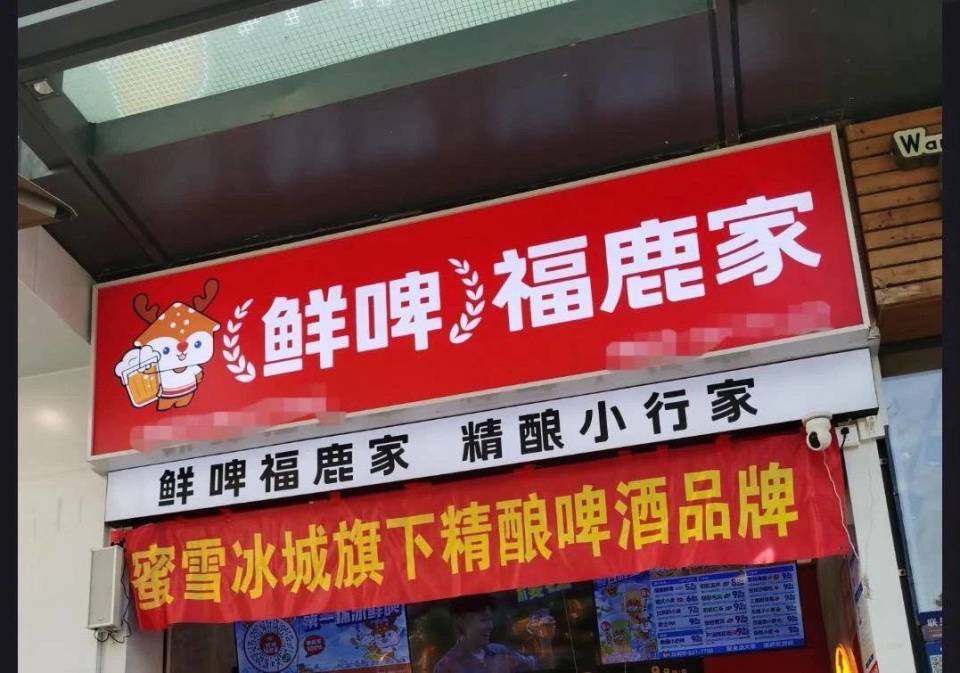
Core Insights - The emergence of a new "tipsy" trend in the domestic consumption market is driven by the blending of daytime tea drinks and nighttime alcoholic beverages, with brands like Cha Baidao and Tea Yan Yue Se leading the charge into this crossover market [2][4] Group 1: Market Trends - The return of Cha Baidao's classic liquor milk tea has achieved impressive sales, with nearly 120,000 cups sold on the first day, indicating strong consumer interest in tea-alcohol fusion products [3][4] - The market for craft beer is rapidly growing, with projections suggesting it will exceed 100 billion yuan by 2025, providing an attractive crossover opportunity for tea brands [4] Group 2: Consumer Preferences - Younger consumers are increasingly favoring light, low-alcohol beverages, which aligns well with the offerings of new tea drinks, creating a synergy between the two markets [4][5] - The pricing strategy for these new products is aimed at being accessible, with most items priced between 15 to 25 yuan, lowering the barrier for consumers to try these innovative drinks [3] Group 3: Business Strategies - The success of the "tea + alcohol" model requires a shift from mere product mixing to deeper scene-based operations, enhancing user engagement through community-focused experiences [5] - Brands are encouraged to innovate continuously and ensure product quality to transform this trend from a temporary market phenomenon into a sustainable business model [5]
13家酒企年内狂推近60款新品,价格为何两极分化?
Mei Ri Jing Ji Xin Wen· 2025-10-14 00:34
Core Insights - The Chinese liquor industry has entered a "new product competition" phase in 2025, with 13 companies launching nearly 60 new products this year, particularly concentrated in August and September before the National Day and Mid-Autumn Festival [1][2] Group 1: New Product Launch Strategy - The timing of new product launches aligns with the traditional consumption calendar, maximizing brand exposure and allowing for sufficient channel preparation [2] - Companies are adopting a "precision strike" strategy, focusing resources on key products during peak sales windows, as evidenced by Guizhou Moutai's significant sales growth in August and September [2][3] - The successful trial sales of "Zhenjiu Dazhen" indicate a positive market response, with 100,000 boxes sold across 30 provinces and a revenue of 370 million yuan [2] Group 2: Price Polarization - The product landscape shows a clear polarization, with high-end products like Moutai's commemorative liquor priced at 7,000 yuan and 3,788 yuan, while the mid-range segment remains underrepresented [3][4] - Nearly half of the new products launched this year are priced below 500 yuan, indicating a downward shift in the industry's pricing focus [3][4] - The dual strategy of elevating brand value while penetrating the mass market reflects the industry's response to current consumer segmentation trends [4] Group 3: Cross-Industry Expansion - Companies are exploring "low-alcohol" and "non-alcoholic" products to attract younger consumers and meet health-conscious demands [5][6] - Moutai's "Youmi" brand and other companies are introducing a variety of low-alcohol beverages, targeting diverse consumer scenarios such as home drinking and social gatherings [5][6] - The low-alcohol market is projected to exceed 74 billion yuan by 2025, with a compound annual growth rate of 25%, highlighting its potential as a significant growth area for liquor companies [6]
当茶遇见酒,能调出什么新口味|经济观察
Chang Sha Wan Bao· 2025-10-13 23:40
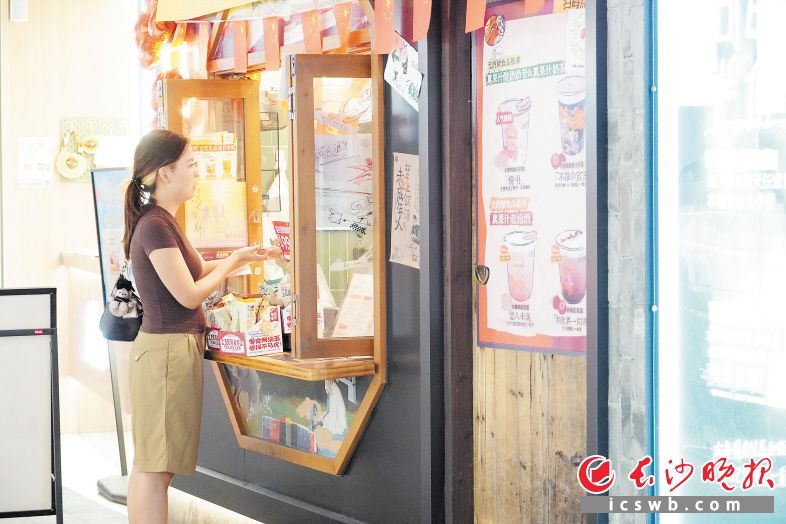
Core Insights - The fusion of tea and alcohol is becoming a popular trend among urban consumers, with brands like Cha Baidao and Mixue Group exploring this "micro-drunk economy" by introducing alcoholic beverages into their offerings [2][6][10] Industry Trends - The new tea beverage market is transitioning from a blue ocean to a red ocean, with the market size expected to exceed 350 billion yuan by 2024, while the top five brands hold nearly 40% market share [6] - The craft beer market in China is projected to grow from 20 billion yuan in 2020 to 80 billion yuan by 2024, with a compound annual growth rate exceeding 30% [6] - Traditional alcohol brands are recognizing the need to attract younger consumers, with a focus on lightweight, portable beverages that align with the preferences of the 85-94 age group [6][10] Consumer Behavior - The combination of tea and alcohol is appealing to consumers, with products like "Drunken Step on the Road" and various fruit-infused alcoholic teas gaining traction [4][5] - The price range for these new alcoholic tea products is generally between 15 to 25 yuan, making them accessible to a broader audience [7] Market Opportunities - The integration of alcohol into tea beverages represents an opportunity for both new tea brands and traditional alcohol companies to expand their consumer base and explore new growth avenues [6][10] - Brands are encouraged to create engaging consumption scenarios and emotional connections with consumers to enhance brand loyalty and market presence [9][10]
从一瓶难求到价格暴跌!中秋也救不了场,茅台为啥割不动年轻人了
Sou Hu Cai Jing· 2025-10-13 16:45
Core Insights - The market price of Moutai has dramatically dropped, breaking the psychological barrier of 1800 yuan, indicating a significant shift in consumer demand and market dynamics [2][5][37] - The traditional high demand for Moutai, once considered a "hard currency" at social gatherings, is waning among younger consumers who prefer alternative beverages [15][20][22] Group 1: Market Dynamics - Moutai's wholesale price has fallen to 1770 yuan, marking a 50% decrease from its peak in 2021 [5][7] - The average inventory turnover days in the industry have reached 900 days, a 10% increase year-on-year, with inventory levels up by 25% compared to the previous year [7][22] - Online platforms are exacerbating the price drop, with prices as low as 1700 yuan on e-commerce sites [5][10] Group 2: Changing Consumer Preferences - Younger consumers are shifting away from traditional liquor, favoring lower-alcohol beverages like fruit wines, beers, and cocktails [17][20] - The proportion of white liquor in business banquets has fallen below 50%, with coffee and tea gaining popularity [20][22] - The cultural significance of Moutai as a status symbol is diminishing among younger generations, who are more focused on the quality and value of the beverage [15][18] Group 3: Company Strategies - Moutai is attempting to adapt by launching products aimed at younger consumers, such as Moutai ice cream and coffee, though these efforts have had limited success [24][26] - The company is focusing on three transformations: customer base, consumption scenarios, and service models, encouraging distributors to sell a lifestyle rather than just products [31][33] - Moutai is enhancing its digital presence through partnerships with platforms like Douyin to create a more engaging consumer experience [33][35]
食品饮料周报(25年第37周):品类基本面延续分化,关注三季报业绩表现-20251013
Guoxin Securities· 2025-10-13 15:08
Investment Rating - The report maintains an "Outperform the Market" rating for the food and beverage sector [1][4][5]. Core Views - The food and beverage sector is experiencing a divergence in fundamentals, with beverages outperforming food and alcoholic beverages. The report emphasizes the importance of monitoring third-quarter performance [2][3]. - The report highlights the potential for stock price increases due to low expectations and the possibility of demand recovery, particularly in the snack, beverage, and frozen food segments [3][4]. Summary by Sections 1. Sector Overview - The food and beverage sector saw a slight decline of 0.16% this week, with A-shares down 0.20% and H-shares up 0.42%, indicating defensive allocation demand [1]. - The top performers in the sector included Zhuangyuan Pasture (21.07%), Yangyuan Beverage (16.80%), and Guangming Meat Industry (6.48%) [1]. 2. Alcoholic Beverages - The report notes that the liquor sector is still in a bottoming phase, with a focus on changes in the industry as the autumn sugar market approaches. Recommendations include Luzhou Laojiao, Kweichow Moutai, and Shanxi Fenjiu for their strategic advantages and growth potential [2][10]. - The report anticipates a 15-20% decline in sales volume during the upcoming holiday season, with a shift towards mass-market consumption [10]. 3. Beverages - The beverage sector is experiencing stable demand recovery, with leading companies like Nongfu Spring and Dongpeng Beverage showing strong performance. The report suggests focusing on the growth of sugar-free tea and energy drinks [2][15]. - The beverage sector's revenue increased by 18% year-on-year in the first half of 2025, despite entering the off-season [15]. 4. Snacks - The report emphasizes the importance of selecting strong alpha stocks in the snack sector, particularly in the konjac snack category, where leading companies like Weilong and Yanjinpuzi are expected to perform well [3][12]. - The snack industry is transitioning from channel-driven growth to category-driven growth, increasing competition among brands [12]. 5. Dairy Products - The dairy sector is seeing a gradual recovery in demand, with a focus on leading companies like Yili, which are expected to benefit from supply-demand improvements by 2025 [14]. - The report highlights the importance of monitoring inventory clearance and new product performance in the dairy supply chain [13][14]. 6. Investment Recommendations - The recommended investment portfolio includes Baba Food, Dongpeng Beverage, Weilong, and Luzhou Laojiao, which have shown strong performance and positive earnings expectations [3][16]. - The report suggests that any changes in supply and demand dynamics could catalyze stock price increases, particularly in segments with high growth potential [3][4].



双节白酒动销平淡,关注内需政策:——食品饮料行业周报-20251013
Guohai Securities· 2025-10-13 13:01
Investment Rating - The report maintains a "Recommended" rating for the food and beverage industry [1] Core Views - The overall sales of liquor during the recent double festival are weak, with a year-on-year decline of 20%-30%, aligning with previous expectations. High-end brands like Moutai and Wuliangye performed relatively well, while lower-tier brands faced significant pressure [5] - The price stability of liquor during the double festival is noted, with slight increases observed post-festival. The report suggests monitoring price trends as e-commerce promotions begin [5] - The upcoming Sugar and Wine Conference is expected to provide marginal feedback, with the industry showing signs of bottoming out. The report emphasizes the importance of this event for potential recovery opportunities [6][7] Summary by Sections Recent Trends - The food and beverage sector has underperformed the Shanghai Composite Index, with a 0.61% increase compared to the index's 1.80% rise over the past two weeks [14] - The soft drink segment saw the highest increase of 9.98%, while several companies like Zhuangyuan Pasture and Yangyuan Beverage led the gains [14] Key Companies and Earnings Forecast - The report highlights several key companies with their respective earnings per share (EPS) and price-to-earnings (PE) ratios, recommending stocks such as Kweichow Moutai, Wuliangye, and Luzhou Laojiao for investment [25] - The report provides a detailed table of key companies, their stock prices, and projected earnings for 2024, 2025, and 2026, indicating a bullish outlook for several firms [25] Investment Strategy - The report suggests that recent policy changes may improve macroeconomic expectations, potentially enhancing both valuation and performance in the food and beverage sector. The overall valuation remains low, justifying the "Recommended" rating [8][23] - Specific recommendations include high-end liquor brands and popular consumer goods, indicating a diversified investment strategy across different segments of the food and beverage industry [8][23]