
吉利

Search documents
燃油车仍是主力,新能源车型供应增加,马年新春上海租车市场火爆
Hua Xia Shi Bao· 2026-02-24 09:03
Core Insights - The Shanghai car rental market is experiencing significant growth during the Spring Festival, driven by both local and inbound travel demand, with a notable increase in rental orders and vehicle availability [3][5][11] Market Overview - Shanghai serves as a central hub for the Yangtze River Delta car rental market, featuring major platforms like Shenzhou Car Rental, Ehi Car Services, and Hello Car Rental, alongside numerous local enterprises [3] - The market offers a diverse range of vehicles, including economy, compact, mid-to-high-end fuel vehicles, and an increasing supply of new energy vehicles from brands like BYD, Geely, and Li Auto [5][6] Demand Trends - During the Spring Festival, the demand for car rentals in Shanghai aligns with national trends, showing steady growth, particularly in on-the-ground rentals, intercity rentals, and family travel [5][11] - The user demographic is diverse, including local residents, domestic tourists, and international visitors, with families and younger users being the primary drivers of rental activity [10][11] Pricing Dynamics - Rental prices during the Spring Festival have increased compared to regular days, following typical holiday pricing patterns, with significant variations based on vehicle type, rental duration, and platform [7][8] - Head rental platforms have achieved price transparency, clearly displaying all fees during the booking process, while some smaller companies still engage in hidden charges [8][9] Regulatory Environment - The Shanghai Road Transport Management Bureau has intensified oversight of the car rental industry, focusing on price violations, hidden fees, and vehicle safety to ensure orderly market operations [12] - Complaints during the Spring Festival primarily stem from smaller rental companies, highlighting issues such as hidden fees, deposit refund delays, and vehicle condition problems [12] Industry Outlook - Overall, the Shanghai car rental industry is showing steady development, with leading platforms dominating the market through standardized services and improved offerings, particularly in new energy vehicles [13] - The necessity for regulatory compliance and self-discipline within the industry is emphasized to ensure sustainable growth and consumer protection [13]


记者回乡记 | 马不停蹄,AI助“网红”变“长红”
Xin Lang Cai Jing· 2026-02-23 23:45
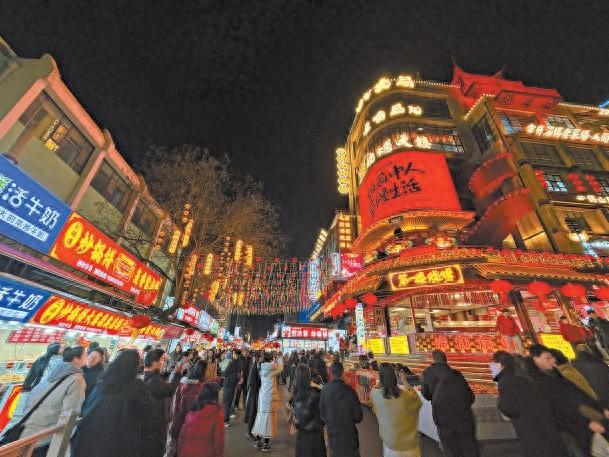
Core Insights - Zibo has transformed into a "first-generation internet celebrity" city, attracting visitors from various regions and showcasing its cultural and tourism appeal through upgraded attractions and AI technology integration [2][5] Group 1: Tourism and Cultural Development - The "Badaju" area has evolved from a traditional market into an AI immersive cultural tourism complex, enhancing consumer experience and cultural engagement [2][5] - The "Caishenju" section features interactive AI and non-heritage cultural workshops, allowing visitors to create personalized art pieces, thus transforming them from mere observers to active participants [3][5] - The China Ceramic Glaze Museum has become a popular destination, offering immersive experiences through VR technology that transports visitors to historical scenes [3][4] Group 2: Industrial and Technological Advancements - AI technology is being integrated into Zibo's industrial sector, exemplified by the self-learning spray glaze robots that enhance production efficiency and product quality [4][5] - Zibo has been designated as a demonstration zone for the transformation and upgrading of old industrial bases, with a focus on incorporating "Artificial Intelligence+" into its development plans [4][5] - The digital economy in Zibo has surpassed 30 billion yuan, with R&D expenditure accounting for 3% of GDP, indicating a strong commitment to innovation and technology [4][5] Group 3: Data and AI Initiatives - Zibo launched its first AI data labeling project, processing an average of 150,000 data entries daily, and establishing partnerships with leading companies like Alibaba and Geely [5] - The city is developing a complete "data collection-labeling-algorithm" industry chain, showcasing its potential in cutting-edge fields such as autonomous driving and medical imaging [5]
港股大涨,中芯国际、华虹半导体涨超4%,智谱、MiniMax跌超10%,
2 1 Shi Ji Jing Ji Bao Dao· 2026-02-23 02:06
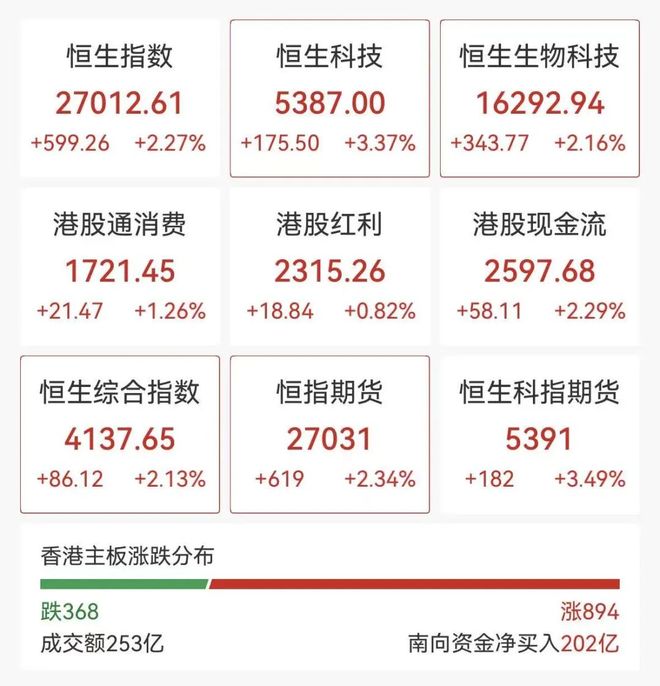
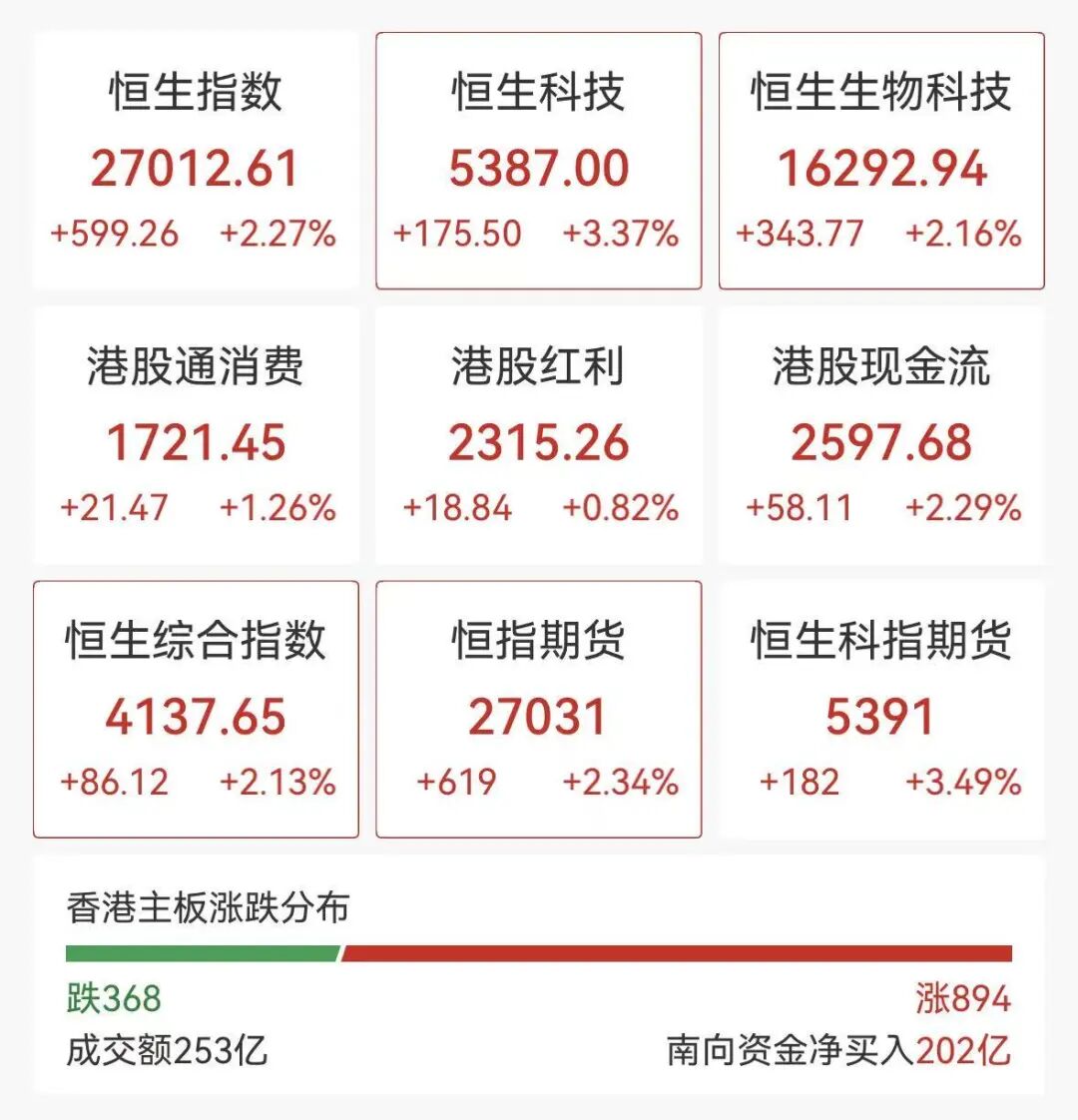
Market Overview - The Hong Kong stock market opened higher on the 23rd, with the Hang Seng Index rising by 2.27% to 27,012.61 points, and the Hang Seng Tech Index increasing by 3.37% to 5,387.00 points [2] - The overall trading volume reached 25.3 billion HKD, with net inflows of 20.2 billion HKD from southbound trading [2] Sector Performance - Technology stocks saw significant gains, with Meituan up over 5%, JD.com nearly 4%, and NetEase and Kuaishou both rising over 3% [2] - The semiconductor sector also opened strong, with SMIC and Hua Hong Semiconductor both increasing by over 4% [2] - Gold stocks generally rose, with China Gold International gaining over 3% [2] - Automotive stocks were active, with Geely increasing by over 1% [2] Company-Specific News - Zhizhu (智谱) experienced a significant drop of over 10% following the release of an apology letter regarding its GLM Coding Plan, which acknowledged three main errors: lack of transparency, slow update pace, and poor upgrade mechanism for existing users [3][6] - Despite the recent decline, Zhizhu's stock had previously surged by 42.72% on February 20, reaching a market capitalization of 323.2 billion HKD, with a total increase of 524% since its IPO price of 116.2 HKD [6]

港股大涨,中芯国际、华虹半导体涨超4%,智谱、MiniMax跌超10%
2 1 Shi Ji Jing Ji Bao Dao· 2026-02-23 02:04
Market Overview - The Hang Seng Index rose by 599.26 points, or 2.27%, closing at 27,012.61 [1] - The Hang Seng Technology Index increased by 175.50 points, or 3.37%, reaching 5,387.00 [1] - The Hang Seng Biotech Index gained 343.77 points, or 2.16%, ending at 16,292.94 [1] - The total trading volume was 25.3 billion [1] - Net inflow from southbound funds was 20.2 billion [1] Sector Performance - Technology stocks saw widespread gains, with Meituan rising over 5%, JD.com nearly 4%, and NetEase and Kuaishou both up over 3% [1] - The semiconductor sector opened high, with SMIC and Hua Hong Semiconductor both increasing by over 4% [1] - Gold stocks generally rose, with China Gold International up over 3% [1] - Automotive stocks were active, with Geely gaining over 1% [1] - However, stocks like Zhizhu and MiniMax experienced significant declines, both dropping over 10% [1] Company Specifics - Zhizhu (2513) reported a market capitalization of 278.7 billion and a price-to-earnings ratio of 141, with a recent price drop of 13.79% [2] - On February 21, Zhizhu issued an apology regarding its GLM Coding Plan, acknowledging three main errors: insufficient transparency, slow update pace for GLM-5, and poorly designed upgrade mechanisms for existing users [4] - Despite the apology, Zhizhu's stock price surged by 42.72% on the previous trading day, reaching a new high and a total market value of 323.2 billion HKD, marking a 524% increase since its IPO price of 116.2 HKD [4]
三个“万亿”的跃迁——“十四五”期间浙江经济稳进提质
Sou Hu Cai Jing· 2026-02-18 21:40
Economic Growth - During the "14th Five-Year Plan" period, Zhejiang's GDP has successfully crossed the milestones of 7 trillion, 8 trillion, and 9 trillion yuan, reaching 94,545 billion yuan by 2025, maintaining its position as the fourth largest economy in China [1][7] - The automotive industry in Zhejiang is thriving, with the production of new energy vehicles expected to exceed 1.38 million units by 2025, ranking third in the country [2][3] Innovation and Development - Zhejiang is focusing on innovation as a new driving force for development, with the goal of becoming a high-level innovative province by 2025, aiming for a regional innovation capability ranking fourth nationally and a research and development intensity of around 3.3% [4] - The province is nurturing its "Six Little Dragons" of Hangzhou, with companies like Qunhe Technology expected to be the first to go public, reflecting the optimization of the innovation ecosystem [4] Industrial Transformation - Zhejiang is transforming its industrial structure by integrating technological and industrial innovation, with the digital economy's core industries expected to account for 12.3% of GDP by 2024 [5] - The province's strategic emerging industries are projected to contribute one-third of the added value of industrial enterprises above designated size [5] Income and Common Prosperity - By 2025, the per capita disposable income of residents in Zhejiang is expected to surpass 70,000 yuan, with rural residents' income exceeding 45,000 yuan, leading the nation for 41 consecutive years [6] - The "Ten Million Project" aims to reduce disparities and promote common prosperity, enhancing public service quality and increasing income for urban and rural residents [6] Future Outlook - Zhejiang has achieved three significant economic milestones in five years, positioning itself to strive for a 10 trillion yuan economy [8]
谷爱凌回应被传入职硅谷风投公司:这不是真的;黄仁勋跌出全球十大富翁之列;极佳视界具身基础模型GigaBrain-0.5M*发布丨邦早报
Sou Hu Cai Jing· 2026-02-15 01:27
Group 1: ByteDance and Chip Development - ByteDance's chip research team is starting large-scale recruitment in cities like Beijing, Shanghai, and Shenzhen, focusing on positions such as chip architecture and SoC design [1] - The team is currently centered on chip design, developing custom hardware for cloud scenarios using advanced semiconductor processes to enhance performance and reduce computing costs [1] - Multiple cloud chips have already entered mass production, with steady progress in research and deployment across various advanced process nodes [1] Group 2: GigaAI and GigaBrain-0.5M* - GigaAI has launched GigaBrain-0.5M*, a more powerful model following the success of GigaBrain-0.1, which won first place in RoboChallenge [2] - The new model utilizes a world model paradigm to redefine embodied intelligence capabilities, achieving error-free performance in real-world robotic tasks [2] Group 3: Wealth Changes Among Billionaires - Jensen Huang, CEO of NVIDIA, has fallen out of the top ten billionaires list, with a net worth of $151 billion, down over $3 billion this year [3][4] - Other tech billionaires, including Larry Page and Sergey Brin, have also seen significant wealth declines, with losses exceeding $5 billion each [4] - The Walton siblings have entered the top ten billionaires list, collectively holding a net worth of $465.8 billion [4] Group 4: Automotive Industry Developments - Beijing Benz is recalling 19,481 units of EQA and EQB vehicles due to safety concerns, with the recall set to begin on June 25, 2026 [6] - BYD and Geely are reportedly in the final bidding for a Nissan-Mercedes-Benz factory in Mexico, aiming to establish a manufacturing base in the country [6] - The Chinese electric vehicle market saw exports of over 302,000 units in January 2026, marking a 100% year-on-year increase [7] Group 5: AI and Technology Investments - Anduril, a U.S. defense tech startup, is negotiating a new funding round that could value the company at $60 billion, nearly doubling its previous valuation [6] - Various companies, including Wuji Power and Starfire Space, have completed significant funding rounds to advance their technology and product development [6] Group 6: Film Industry Performance - The film "Zootopia 2" has surpassed 4.545 billion yuan in box office revenue, ranking among the top seven in Chinese film history [7] - The Valentine's Day box office for 2026 has exceeded 100 million yuan, indicating strong consumer interest during the holiday season [7]






谷爱凌回应被传入职硅谷风投公司:这不是真的;黄仁勋跌出全球十大富翁之列;极佳视界具身基础模型GigaBrain-0.5M*发布丨邦早报
创业邦· 2026-02-15 01:18
Group 1 - ByteDance's chip team is starting large-scale recruitment in cities like Beijing, Shanghai, and Shenzhen, focusing on chip architecture and SoC design to enhance performance and reduce computing costs [2][3] - The team has successfully completed multiple chip tape-outs and several projects have entered mass production, utilizing advanced semiconductor processes [2][3] Group 2 - GigaAI launched GigaBrain-0.5M*, a new generation model that enhances embodied intelligence capabilities, achieving stable performance in real-world tasks [3] - The model aims to redefine the capabilities of physical AI, moving from "can do" to "do well and do steadily" [3] Group 3 - The global billionaire rankings have shifted, with Nvidia's CEO Jensen Huang dropping out of the top ten, his wealth decreasing to $151 billion, a drop of over $3 billion this year [6][7] - Other tech billionaires, including Larry Ellison and Jeff Bezos, have also seen significant wealth reductions, while the Walton siblings have entered the top ten with a combined net worth of $465.8 billion [6][7] Group 4 - The car rental market has seen a surge in demand, particularly for new energy vehicles, with rental bookings increasing by 600% during the Spring Festival period [8] - The trend indicates a growing preference for smart and green vehicles among consumers [8] Group 5 - Keda Xunfei's president announced that the AI office product is expected to generate over 1 billion yuan in revenue by 2025, with significant overseas sales [8] - The company is focusing on enhancing its AI capabilities amid increasing competition in the global AI industry [8] Group 6 - OpenAI has officially retired the GPT-4o model, pushing users towards the more expensive GPT-5 model, which has led to dissatisfaction among users accustomed to the previous model's flexibility [8] - The transition aims to guide users towards more advanced capabilities while adjusting pricing strategies [8] Group 7 - Baidu's Kunlun Chip has submitted a confidential listing application to the Hong Kong Stock Exchange, with plans to prioritize existing shareholders for investment opportunities [8] - The company is expected to start investor roadshows after the Spring Festival, with a post-financing valuation of 21 billion yuan [8] Group 8 - The Chinese automotive industry reported a significant increase in new energy vehicle exports, with January 2026 exports reaching over 300,000 units, a year-on-year growth of 100% [13] - Domestic sales, however, saw a decline, indicating a shift in market dynamics [13]

耐世特(1316.HK):綫控转向量产将至
Ge Long Hui· 2026-02-14 13:25
Core Viewpoint - 2026 is projected to be the year of mass production for steer-by-wire (SBW) technology, aligning with the trend of autonomous driving, leading to an industry upgrade. The target price is set at HKD 10.2 based on an 18x PE valuation for 2026, with a buy rating [1]. Group 1: Industry Trends - The steering system in automobiles is transitioning from electric power steering (EPS) to steer-by-wire (SBW), with average selling prices (ASP) increasing from C-EPS at 1,000 yuan to R-EPS at 2,000 yuan, and further to SBW at 4,000 yuan [1]. - Currently, EPS remains the mainstream technology in the industry, with a domestic penetration rate reaching 99% [1]. Group 2: Company Developments - The company has seen a growing number of clients and orders for its steer-by-wire technology, being the exclusive supplier for Tesla's robotaxi and the supplier for the Li Auto L9 Livis, both set for mass production in the first half of the year [1]. - Tesla's Cybercab is a key vehicle for achieving Level 4 autonomous driving, aiming to eliminate human intervention through a combination of pure vision FSD solutions and steer-by-wire chassis [1]. Group 3: Regulatory Environment - The legal status of steer-by-wire technology has been clarified with the release of the national certification standard "Basic Requirements for Automotive Steering Systems," effective from July 1, 2026. This standard emphasizes safety requirements and introduces functional safety terminology and verification methods [3]. - The new regulations remove the mandatory mechanical connection between the steering wheel and the steering system, establishing the legal status of SBW and setting strict safety redundancy and failure response standards [3].
墨西哥基金面临多重因素交织,市场波动性或将阶段性推高
Jing Ji Guan Cha Wang· 2026-02-13 21:45
Group 1: Macroeconomic Policies and External Events - The US-Mexico-Canada Agreement (TMEC) is set for a mid-term review in summer 2026, which may increase market volatility due to negotiations over rules of origin [1] - The Bank of Mexico lowered the benchmark interest rate to 7% in December 2025, with expectations of a gradual reduction to around 6.5% in 2026, while inflation is projected to return to the 3% target range by the third quarter [1] - Mexican President López Obrador criticized the US sanctions on Cuba as "unjust" and announced continued humanitarian aid, which may impact expectations regarding US-Mexico relations [1] Group 2: Stock Market Trends - The Mexican automotive industry is facing potential changes as Chinese companies like BYD and Geely are reported to be bidding for the Nissan-Mercedes-Benz plant in Mexico, which could reshape the local automotive manufacturing landscape and indirectly affect related industry stocks [2] - This event, combined with pressures from US tariff policies, has heightened geopolitical uncertainty for Mexican assets [2] Group 3: Institutional Perspectives - Analysts from Economic Observer and other institutions indicate that the Mexican fund market in 2026 will be influenced by multiple factors, including the Federal Reserve's interest rate cuts, expectations of interest rate hikes from the Bank of Japan, and a trend of global capital diversification towards emerging markets, which may exert short-term pressure on the peso and capital flows [3] - In the long term, the Mexican government aims to optimize the investment environment through tax reforms, but there are risks associated with fluctuating trade policies [3]
福特汽车2025年净亏81.8亿美元,大众搁置美国建厂计划
Jing Ji Guan Cha Wang· 2026-02-12 19:02
Group 1: Core Insights - The impact of Trump's tariff policy continues to affect the U.S. automotive manufacturing industry, with Volkswagen suspending its plan to build a new Audi factory in the U.S. due to tariffs, freezing a project worth over $4 billion, and potentially canceling it if tariffs are not reduced [1] - Ford is actively seeking partnerships with Chinese automakers to address transformation challenges, indicating a trend of reliance on the Chinese supply chain [2] Group 2: Financial Performance - Ford reported a revenue of $187.3 billion for 2025, a slight increase of 1.23% year-over-year, but recorded a net loss of $8.182 billion, marking a shift from profit to loss and the lowest in nearly five years [3] - The fourth quarter loss was $11.1 billion, primarily due to impairments in the electric vehicle business and rising costs, with expectations for adjusted EBIT in 2026 to be between $8 billion and $10 billion, and projected losses in the electric vehicle segment to be between $4 billion and $4.5 billion [3]
