
平安人寿

Search documents
接力!开年7家银行获股东、高管大力增持
2 1 Shi Ji Jing Ji Bao Dao· 2026-02-11 06:33
Core Viewpoint - The banking sector continues to attract significant investment, with major banks' stock prices reaching new highs, driven by shareholder and executive buybacks [1][5]. Group 1: Shareholder Buybacks - Seven banks have seen their shareholders and executives increase their stakes in their own companies this year [1]. - Shanghai International Group's subsidiary increased its stake in Shanghai Pudong Development Bank by 93,999,979 shares, representing 0.32% of the total share capital [2]. - Ping An Life increased its holdings in China Merchants Bank by 12.48 million H-shares, investing approximately HKD 572 million, raising its total holdings to 368 million H-shares, which is over 8% of the total [2]. - Lanzhou Bank's major shareholder increased its stake by 419,120 shares, amounting to approximately RMB 1 million [3]. - Everbright Bank and other banks have also seen significant shareholder buybacks, with Everbright Group planning to increase its stake by up to RMB 800 million [4]. Group 2: Bank Performance and Growth - In 2024, 30 listed banks received shareholder buybacks, indicating strong investor confidence [5]. - Major state-owned banks, including ICBC and ABC, received substantial increases in their shareholdings, totaling over 1 billion shares [5]. - Eight banks reported a net profit growth exceeding 10%, reflecting positive financial performance [7]. Group 3: Regulatory and Economic Factors - Regulatory requirements for managing the market value of banks with low price-to-book ratios have prompted shareholder buybacks [7]. - The upcoming maturity of convertible bonds and low conversion rates have made shareholder buybacks a strategic move to enhance core tier one capital [7]. - The recent National People's Congress meeting highlighted economic growth targets and supportive fiscal policies, which are expected to improve the banking environment [8].
险资购金试点一周年:配置克制 显“耐心资本”本色
Bei Jing Shang Bao· 2026-02-10 16:05
政策闸门开启一年后,曾被认为将汹涌入市的近2000亿元保险资金,在黄金市场的巨浪前展现出了怎样 的配置策略?2月10日,北京商报记者了解到,保险资金投资黄金业务试点已开展一周年,获批开展试 点的10家保险公司中,6家完成了上海黄金交易所的入会手续,真正迈入了直接投资的大门。更为关键 的是,即便已经入场的机构,其落下的棋子也极为审慎,与市场一度期待的"长期重量级买家"形象相去 甚远。 一边是理论上的广阔投资空间,另一边是实际运作中的克制。在刚刚经历了历史性高位与剧烈震荡的黄 金市场面前,保险资金这番选择背后,究竟是基于对后市风险的警惕,还是暴露出其作为"市场新兵"在 专业能力与内部机制上的短板? 试点周年:克制入场 2025年2月7日,国家金融监督管理总局发布《关于开展保险资金投资黄金业务试点的通知》(以下简称 《通知》),正式批准包括人保财险在内的10家保险公司开展黄金投资业务试点。 尽管黄金投资闸门已经打开一年,北京商报记者了解到,保险资金并未在一路疯涨中"追高",对黄金的 投资较为审慎,更多处于试水阶段。 回顾来看,政策落地后,首批试点机构迅速响应,纷纷完成入会流程并落地首笔交易。2025年3月,中 国人 ...
险资购金试点一周年:配置克制,显“耐心资本”本色
Bei Jing Shang Bao· 2026-02-10 14:32
Core Viewpoint - The cautious entry of insurance funds into the gold market, despite the potential for significant investment, reflects a careful strategy rather than the anticipated aggressive buying behavior [1][5][10]. Group 1: Policy and Market Entry - The pilot program for insurance funds to invest in gold was officially launched on February 7, 2025, allowing ten insurance companies, including major players like China Life and PICC Property and Casualty, to participate [3][7]. - Six out of the ten approved insurance companies have completed the membership process with the Shanghai Gold Exchange, marking their entry into direct gold investment [1][3]. - Initial transactions were completed by several companies, with China Life and PICC Property and Casualty executing the first trades shortly after gaining membership [3][4]. Group 2: Investment Strategy and Behavior - Despite the theoretical investment limit of nearly 200 billion yuan, actual investments by insurance companies remain low, indicating a cautious approach to gold investment [5][8]. - Many insurance firms are still in a trial phase, with some reporting minimal gold investment proportions, reflecting a strategy of "testing the waters" rather than aggressive accumulation [5][6]. - The overall sentiment among insurance companies is one of prudence, as they navigate the complexities of gold investment amidst market volatility and high prices [6][10]. Group 3: Challenges and Professional Barriers - The investment in gold presents challenges due to its volatile nature and the need for specialized knowledge, which many insurance companies currently lack [8][9]. - Regulatory requirements impose strict limits on the proportion of total assets that can be allocated to gold, further constraining investment strategies [7][9]. - There is a recognized need for insurance companies to enhance their professional capabilities in gold market analysis and risk management to effectively engage in gold investments [8][9]. Group 4: Long-term Perspectives - Long-term, insurance companies are beginning to recognize the strategic value of gold in their asset allocation, particularly as a hedge against inflation and market volatility [10][11]. - The shift towards including gold in investment portfolios is seen as a response to the limitations of traditional fixed-income assets in the current low-interest-rate environment [10][11]. - Future expectations suggest that insurance companies may gradually increase their gold investment ratios, although current market conditions and high prices necessitate a cautious approach [12].




非银周报:券商经营环境进一步改善,保险基本面维持向上,强烈推荐非银板块-20260208
SINOLINK SECURITIES· 2026-02-08 13:41
证券板块 券商经营环境进一步改善。交易活跃背景下业绩有望延续高增,上交所数据显示,2026 年 1 月 A 股新开户 491.58 万 户,环比增长 89%,同比 2025 年 1 月的 157.0 万户增长 213%;1 月日均股基成交额同比增长 157%至 3.6 万亿元,日 均两融余额同比增长 47%至 2.7 万亿元,IPO 向常态化恢复。预计交易层面 ETF 净流出将缓解、再融资影响可控,券 商的压制因素逐步解除,当前估值性价比极高。当前板块 PB(LF)估值 1.36 倍,处于十年 34%分位数。 投资建议:建议关注三条主线:(1)强烈推荐估值及业绩错配程度较大的优质券商,重点关注国泰海通;建议关注 AH 溢价率较高、有收并购主题的券商;建议关注短期受益于科技股上市的券商。(2)四川双马:科技赛道占优,创投业 务有望受益,布局基因治疗赛道新标的,深化生物医药产业链。公司管理基金的已投项目:屹唐股份、西安奕材、沐 曦股份(科创板已上市)、奕斯伟计算以及群核科技(港交所 IPO 申报)、邦德激光、丽豪半导体等上市进程加快;公 司参投基金已投:傅利叶已完成多轮融资,奇瑞汽车港交所已上市,慧算账向港交所递 ...
险资掘金港股IPO 加码配置超15亿港元
Zhong Guo Jing Ying Bao· 2026-02-08 08:36
Core Viewpoint - The Hong Kong IPO market has seen a surge in activity since the beginning of 2026, with insurance capital accelerating its investments in this market, indicating a strategic shift towards global asset allocation and a preference for undervalued quality assets [1][2]. Group 1: Insurance Capital Participation - Since January 2026, insurance capital has participated in cornerstone subscriptions for 10 Hong Kong IPOs, with a total subscription amount of HKD 1.558 billion, compared to HKD 2.620 billion for 12 IPOs in 2025 [1]. - Major cornerstone investors in recent IPOs include Ping An Life and Taikang Life, with Ping An Life acquiring 6 million shares of Muyuan Foods, representing 2.2% of the base issuance, and Taikang Life acquiring 943,100 shares of Dongpeng Beverage, representing 2.31% of the H-share issuance [3][4]. Group 2: Market Dynamics and Preferences - The current low-interest-rate environment makes the Hong Kong market an attractive avenue for insurance capital seeking global asset diversification, especially given the lower valuations and higher dividend yields of H-shares compared to A-shares [2]. - Insurance capital is increasingly focusing on "hard technology" and new consumption sectors, aligning with national strategic priorities, and has shown a tendency to engage in competitive bidding for select IPO projects [3]. Group 3: Long-term Investment Logic - In 2025, Hong Kong's capital market regained its position as the global leader in IPO fundraising, with a total of USD 37.4 billion raised, marking a new high since 2021 and surpassing the total of the previous three years [5]. - The average first-day increase for new stocks was 23.8%, with a cumulative first-month increase of 30.7%, particularly strong in the biotech and healthcare sectors, making the IPO market appealing for insurance capital seeking stable returns [5]. - Tax advantages for insurance companies, such as exemptions on dividend income from H-shares held for over 12 months, enhance the attractiveness of investing in Hong Kong stocks compared to individual investors and mainland public funds [5].

险资投资黄金开闸一年,为何审慎入场?
Guo Ji Jin Rong Bao· 2026-02-05 02:33
Core Viewpoint - The international gold price has experienced significant fluctuations in early 2026, with spot gold prices surpassing $5,000 per ounce, while insurance capital remains cautious in its investment approach [1] Group 1: Regulatory Background - In February 2025, the National Financial Regulatory Administration issued a notice allowing insurance funds to invest in gold, marking the official opening of this investment channel [2] - The pilot investment scope includes various gold trading contracts on the Shanghai Gold Exchange, with ten insurance companies participating in the trial [2] - Insurance companies are required to limit their gold investments to no more than 1% of their total assets as of the previous quarter, potentially bringing an additional 200 billion yuan into the gold market [2] Group 2: Investment Behavior - Most insurance institutions have not engaged in large-scale gold investments, maintaining a cautious investment pace [3] - The cautious approach is attributed to internal constraints and the nature of gold as a non-yielding asset, which conflicts with profit-driven assessment mechanisms [3] - Insurance companies are still developing their capabilities in professional research and risk management, which affects their investment decisions [3] Group 3: Long-term Strategic Value - Despite short-term caution, the strategic value of gold in insurance asset allocation is being re-evaluated, particularly for risk hedging rather than pure profit generation [4] - Gold's low correlation with traditional financial assets can enhance portfolio stability during extreme market conditions, making it a valuable asset for insurance funds [5] - The potential for expanding the pilot program exists, but any increase in participation or investment limits will depend on the risk management capabilities and operational maturity of the insurance companies involved [5][6] Group 4: Future Outlook - If the initial pilot runs smoothly, expansion is likely, but investment pace will remain cautious due to ongoing price increases [6] - Insurance companies, such as Ping An Life, are focusing on the role of gold in their asset allocation, emphasizing risk diversification and overall portfolio stability [6]
险资火力全开 近10亿扫货港股基石 密集调研310家A股公司
2 1 Shi Ji Jing Ji Bao Dao· 2026-02-03 23:43
Group 1 - The insurance capital is increasingly active in equity market allocation due to a low interest rate environment and asset scarcity, participating in cornerstone investments in Hong Kong stocks and conducting research on A-share companies [1][5] - Since the beginning of 2026, insurance capital has participated in cornerstone placements for 7 Hong Kong stocks, with a total subscription amount nearing 1 billion yuan, covering sectors from technology to consumer [1][2] Group 2 - Insurance capital is becoming a core player in Hong Kong's IPO market, utilizing cornerstone investments as a strategy to achieve significant investment returns while establishing a clear long-term asset allocation path [2][9] - A notable example is the IPO of Hunan Mingming Henmang Commercial Chain Co., which raised 3.336 billion HKD, attracting major institutions like Tencent and Temasek, with a total subscription amount of 195 million USD [2][10] Group 3 - Taikang Life is leading the charge in this wave of insurance capital moving south, participating in multiple IPOs across various sectors, with individual subscription amounts ranging from 78 million HKD to 233 million HKD [3][11] - The synchronized investment strategy among insurance companies indicates a focus on optimizing asset allocation and value recovery, particularly as the Hong Kong market is at a historical valuation low [11][12] Group 4 - Since 2025, insurance capital has significantly increased its participation in Hong Kong IPO cornerstone investments, with 20 cases and a total subscription amount of 4.679 billion HKD, reflecting a favorable market return [12] - Future trends suggest that as global liquidity improves, insurance capital will continue to accelerate its investments in the Hong Kong market, capitalizing on the valuation discrepancies and enhancing overall portfolio returns [12] Group 5 - In addition to Hong Kong, insurance capital is actively investing in A-shares, with 713 A-share companies appearing in the top ten shareholders list, and a notable increase in research activity on 310 A-share companies [6][13] - The focus on consumer sectors, particularly in the pre-made food industry, is evident, with companies like Qianwei Yangchu achieving a revenue increase of 1% year-on-year [13][14]

险资火力全开!近10亿扫货港股基石,密集调研310家A股公司
2 1 Shi Ji Jing Ji Bao Dao· 2026-02-03 07:39
Group 1 - The core viewpoint of the articles highlights the increasing activity of insurance capital in equity markets, particularly in Hong Kong stocks, driven by a low interest rate environment and asset scarcity [1][4] - Insurance capital has participated in cornerstone investments for seven Hong Kong IPOs in 2026, with a total subscription amount nearing 1 billion yuan, covering sectors from technology to consumer goods [1][2] - The cornerstone investment mechanism in Hong Kong serves as a market value indicator, with insurance capital becoming a key player in this space, particularly in new consumption and hard technology sectors [2][3] Group 2 - Notable examples of cornerstone investments include the IPO of Hunan Mingming Henmang Commercial Chain Co., which raised 3.336 billion HKD, attracting major institutions like Tencent and Temasek [2][3] - Insurance companies like Taikang Life have led the charge in Hong Kong IPOs, participating in multiple cornerstone investments across various sectors, including AI and biomedicine [3][4] - The trend of insurance capital's involvement in Hong Kong IPOs has significantly increased since 2025, with a total of 20 IPOs and a subscription amount of 4.679 billion HKD, reflecting the value of quality assets in the Hong Kong market [4] Group 3 - In addition to Hong Kong, insurance capital is actively researching A-share companies, having surveyed 310 firms in early 2026, focusing on sectors like technology and consumer goods [5][6] - The insurance sector's investment strategy includes a notable stake in Shanghai Airport, marking the first major acquisition of 2026, indicating a proactive approach in the A-share market [6] - The pre-made food sector, particularly companies like Qianwei Yangchu, has attracted attention from insurance capital, with significant revenue growth reported [6][7] Group 4 - The insurance capital's strategy is influenced by the need for asset allocation optimization and value recovery, as the Hong Kong market is currently at a historical valuation low, providing a safety margin [3][4] - Analysts suggest that the low interest rate environment necessitates increased investment in equity assets, particularly high-dividend and stable cash flow companies, to enhance investment returns [7][8] - The ongoing trend of insurance capital entering equity markets is expected to continue, driven by improved global liquidity and policy guidance encouraging long-term investments [4][7]
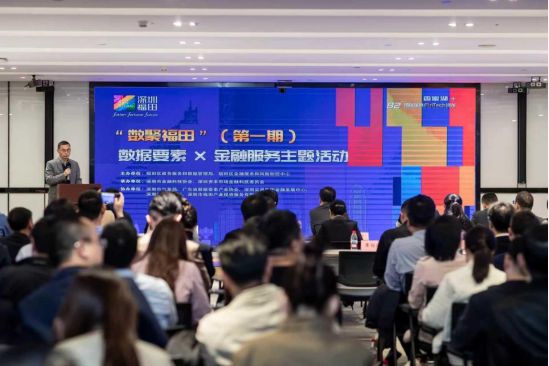
聚焦“数据要素×金融服务”,福田率先建设金融高质量数据集
Nan Fang Du Shi Bao· 2026-01-30 07:17
Core Viewpoint - The article emphasizes the increasing value of data as a key production factor in the context of a new technological revolution and industrial transformation, with 2026 designated as the "Year of Data Element Value Release" in China's 14th Five-Year Plan [1] Group 1: Event Overview - The "Data Element × Financial Services" theme event, "Data Gathering Futian" (first phase), was successfully held in Bay Area Jin Ke City, organized by various local government and financial institutions [1][3] - The event gathered over 150 representatives from government, industry, and financial sectors, including major banks and insurance companies, to explore the integration of data elements and financial services [3] Group 2: Policy and Ecosystem Development - Shenzhen's Futian District is focusing on the integration of data elements and financial services, leveraging its dual industrial advantages to activate new momentum for digital economic development [4] - The district has implemented multiple supportive policies and established the first national data element ecosystem industrial park to promote the application of data in various fields [4] Group 3: Data Quality Initiatives - A "Financial High-Quality Data Set Collection Initiative" was launched during the event, aiming to gather high-quality data resources that meet regulatory requirements and support various financial applications [8] - The initiative focuses on compliance, security, diversity, and quality enhancement of data, creating a resource pool for AI applications in financial services [9] Group 4: Technical and Collaborative Insights - The event featured discussions on the construction of data circulation platforms, high-quality data set development, and the supply-demand dynamics of financial computing power, providing technical references for the integration of data and finance [11] - A roundtable discussion addressed key issues and solutions in the fusion of data elements and financial services, offering diverse perspectives and practical insights for the industry [13]
险资巨头积极参与港股IPO“普遍实现浮盈” ,有望提升行业盈利预期
Sou Hu Cai Jing· 2026-01-30 00:55
Group 1 - In early 2026, four insurance companies participated as cornerstone investors in eight Hong Kong IPOs, indicating strong interest in equity investments [1] - Since 2025, seven insurance institutions have participated in 20 Hong Kong IPOs as cornerstone investors, with a total subscription amount of 4.679 billion HKD, and these investors have generally achieved floating profits [1] Group 2 - The enthusiasm of insurance capital in equity investments is significantly supported by policy easing, including a directive from the State Council in March 2025 to enhance long-term investment forces [2] - In April 2025, the National Financial Regulatory Administration raised the upper limit for equity asset allocation to 50% of total assets and simplified regulatory tiers, promoting a "support the strong, limit the weak" approach [2] - A long-cycle assessment mechanism introduced by the Ministry of Finance in July 2025 aims to reduce the impact of short-term market fluctuations on performance evaluations, encouraging long-term holdings [2] - It is projected that in 2026, insurance capital's equity investments will shift from "valuation-driven" to "profit-driven," with expectations of comprehensive improvements on both asset and liability sides [2] - Central enterprise insurance companies are expected to allocate 30% to 40% of new premiums to A-shares, potentially exceeding 250 billion CNY in incremental funds, which may boost profit growth expectations for insurance companies [2] - The current valuation of the insurance sector in the A-share market is relatively low, benefiting from profit recovery and increased equity allocation, indicating potential for valuation recovery [2]