上海瀚讯

Search documents
开源证券:太空算力有望推动商业航天产业变革 可复用火箭是规模化应用关键
智通财经网· 2025-12-23 03:04
Group 1 - The core viewpoint is that policy and industry collaboration is driving a new turning point for China's commercial aerospace sector [1] - The expected operational cost of China's ultimate space computing power is projected to be only 1/12 of that on the ground, indicating significant economic value [2] - The successful vertical recovery test of the Zhuque-3 rocket and the imminent maiden flight of the Long March 12A rocket highlight advancements in reusable rocket technology [1][3] Group 2 - The commercial aerospace sector's large-scale application heavily relies on low-cost and high-frequency launch capabilities, with reusable rockets being crucial [3] - By 2030, China is expected to achieve 100 launches per year at a cost of approximately 10 million yuan per launch, with the annual output value of rocket launches and satellite manufacturing reaching 85 billion yuan [3] - The development of space computing power is anticipated to provide a new path for forming an economic closed loop in China's commercial aerospace sector [2] Group 3 - Beneficiary companies in the commercial rocket sector include Superjet, Srey New Materials, Aerospace Power, and others [4] - Satellite payload companies include China Satellite, Guobo Electronics, and others [4] - Downstream application companies include Haige Communication, Zhongke Xingtou, and others [4]
上海瀚讯(300762) - 关于使用部分闲置募集资金进行现金管理的进展公告
2025-12-22 08:34
上海瀚讯信息技术股份有限公司 关于使用部分闲置募集资金进行现金管理的进展公告 本公司及董事会全体成员保证信息披露的内容真实、准确、完整,没有虚假 记载、误导性陈述或重大遗漏。 上海瀚讯信息技术股份有限公司(以下简称"公司")于 2025 年 4 月 25 日召开第三届董事会第十六次会议、第三届监事会第十三次会议,并于 2025 年 5 月 20 日召开 2024 年年度股东大会,会议审议通过了《关于使用部分闲置募集 资金进行现金管理的议案》,同意在不影响公司正常生产经营和募集资金投资项 目建设及确保资金安全的前提下,使用不超过人民币 5 亿元(含本数)的闲置募 集资金进行现金管理,用于购买安全性高、流动性好的保本型理财产品或结构性 存款、大额存单等,使用期限自 2024 年年度股东大会审议通过之日起至 2025 年年度股东大会召开之日止内有效,在上述额度和期限范围内,资金可以循环滚 动使用。同时授权公司董事长及其授权代理人在股东大会批准的额度范围内签署 相关合同及办理相关事宜,由公司财务部负责组织实施和管理。 公司保荐机构对上述募集资金现金管理事项发表了明确同意意见。具体内容 详见公司于 2025 年 4 月 ...

行业深度报告:太空算力有望推动商业航天产业变革
KAIYUAN SECURITIES· 2025-12-22 07:45
Investment Rating - The investment rating for the defense and aerospace industry is optimistic (maintained) [1] Core Insights - The collaboration between policy and industry is driving a new development phase for China's commercial aerospace sector, with significant advancements in technology and capital market engagement expected [4][42] - The deployment of space computing is anticipated to create a sustainable economic model for commercial aerospace, with operational costs projected to be significantly lower than ground-based data centers [19][20] - The Chinese commercial aerospace industry is expected to achieve a market value of 85 billion yuan by 2030, driven by advancements in reusable rocket technology and increased launch frequency [5][6] Summary by Sections 1. Low Earth Orbit Satellite Planning - China has ambitious plans for low Earth orbit satellites, with over 12,000 satellites proposed under the national plan and additional projects like the G60 constellation aiming for over 14,000 satellites [12] - However, the launch progress is slow, with only 86 satellites launched by the national plan and 90 by the G60 project as of October 2025, indicating significant bottlenecks in deployment [12] 2. Space Computing Potential - Space computing is expected to provide a solution for the long-term economic closure of commercial aerospace, with lifecycle operational costs projected to be 1/20 of ground-based data centers [19] - The anticipated deployment of space computing will enable a "multi-launch, multi-saving" model, enhancing operational efficiency and reducing costs [20] 3. Challenges and Breakthroughs in Space Computing - The deployment of space computing faces challenges such as launch capacity, radiation resistance of electronic components, and energy supply in orbit, but clear pathways for technological breakthroughs are emerging [29][30] - Companies are developing solutions to address these challenges, including advanced radiation shielding and energy-efficient cooling systems [31] 4. Industry Transformation through Space Computing - The introduction of space computing is expected to catalyze a significant transformation in the commercial aerospace industry, enabling large-scale applications and innovations as costs decrease [36] - The capacity limitations of low Earth orbit satellites will accelerate the deployment of space computing clusters, which are prioritized for their favorable conditions [36] 5. Comparison with U.S. Industry - There are notable gaps between China's and the U.S.'s capabilities in space computing, particularly in launch capacity and cost efficiency, with China's reusable rocket technology still in the validation phase [38] - The expected advancements in China's reusable rocket technology are projected to follow a similar trajectory to that of SpaceX, with significant improvements anticipated in the coming years [38]
国盛证券:全球加码空天时代 国内火箭回收加速打破产业瓶颈
Zhi Tong Cai Jing· 2025-12-22 06:25
Group 1 - The U.S. government, under Trump's administration, has signed an executive order to enhance space policy support, aiming to ensure U.S. leadership in space exploration, security, and commercial sectors by 2028 and establishing a permanent lunar outpost by 2030 [1] - The order includes directives for deploying nuclear reactors on the Moon and in orbit, upgrading launch infrastructure, and developing commercial pathways to replace the International Space Station by 2030, stimulating private sector innovation and investment [1] Group 2 - The Starship rocket has successfully conducted multiple test flights and is validating its V2 version, which is crucial for future deep space exploration and the deployment of Starlink V3 satellites [2] Group 3 - The first large language model (LLM) trained using H100 space GPUs has been developed, showcasing the potential for AI workloads to be run in space, with plans for a 5GW orbital data center equipped with solar panels and cooling systems [3] - Starcloud's next phase includes a launch in October 2026, which will carry multiple H100 GPUs and integrate the Blackwell platform to enhance AI performance [3] Group 4 - China's commercial space sector is expected to see significant advancements by 2025, with multiple private aerospace companies completing rocket launch tests and the development of reusable rockets, which will lower launch costs and mature the commercial space profit model [4] - The recent launch of the Zhuque-3 rocket, despite a recovery test failure, is viewed as a valuable experience for China's private space industry in rocket recovery technology [4] Group 5 - Relevant companies in the space computing sector include Shunhao Co., Ltd. (002565.SZ), Putian Technology (002544.SZ), and Maiwei Co., Ltd. (300751.SZ) [5] - Companies involved in rocket technology include Western Materials (002149.SZ), Aerospace Power (600343.SH), and Aerospace Machinery (600151.SH) [5] - Satellite-related companies include China Satellite (600118.SH), Shanghai Hanxun (300762.SZ), and Zhenlei Technology (688270.SH) [6]

中信证券:商业航天驶入“快车道” 投资当循新范式
智通财经网· 2025-12-22 01:28
Core Viewpoint - The development of China's aerospace industry is entering a new era with the mass launch of satellites and the use of commercial launch sites, leading to significant demand in space computing and potential growth in lunar exploration and space travel [1] Group 1: Commercial Space Industry - Commercial space has become a global focus, with over 3,000 Starlink satellites expected to be launched by 2025, driven by private sector innovation and investment [1] - The U.S. has set ambitious goals for lunar exploration, including a return to the moon by 2028 and establishing a permanent lunar outpost by 2030, which emphasizes the competitive nature of commercial space [1] Group 2: Rocket Development - High hardware costs are a significant bottleneck in the rocket industry, with new rockets costing $50 million, while reusable rockets can reduce costs to $15 million [2] - The successful launch of the reusable Zhuque-3 rocket marks a milestone for domestic commercial rocket companies, indicating potential breakthroughs in launch capacity and cost [2] Group 3: Satellite Manufacturing - China successfully launched 16 low-orbit satellites in December, with expectations for accelerated growth in the satellite industry as private companies engage in satellite constellation projects [3] - The introduction of advanced satellite technologies, such as digital phased array antennas, is anticipated to drive market expansion [3] Group 4: Terminal and Application Market - The satellite manufacturing and launch segments account for only about 6.9% of the industry value, with significant growth potential in downstream terminal and application markets [4] - Recent successful bids for satellite communication projects indicate a growing market for satellite applications [4] Group 5: Space Computing - The deployment of space computing and solar energy solutions is seen as a new trend to address energy consumption issues in computing, with significant commercial value recognized by investors [5] - The launch of the "Trinity Computing Constellation" and plans for large-scale data centers highlight the urgency for advancements in space computing technology [5] Group 6: Policy Support - The Chinese government has emphasized the importance of becoming a space power, with new policies aimed at promoting commercial space development and easing industry access [6] - The establishment of a national commercial space development fund and the opening of infrastructure for shared use are expected to enhance market opportunities [6]

商业航天概念继续领涨,全市场首支航天航空ETF(159208)盘中涨超2%
Xin Lang Cai Jing· 2025-12-19 02:22
Group 1 - The commercial aerospace sector continues to lead the market, with the CN5082 Aerospace and Aviation Index rising by 2.20% as of December 19, 2025, and key stocks such as China Satellite up by 8.52% [1] - The global satellite internet market is projected to grow at a compound annual growth rate (CAGR) of 18.1% from 2025 to 2030, with China emerging as a significant growth driver due to policy and technological advancements [1] - The industry is transitioning from customized satellite manufacturing to a more standardized production model, akin to automotive assembly lines, as the G60 Qianfan and GW National Grid enter a phase of intensive launches [1] Group 2 - As of November 28, 2025, the top ten weighted stocks in the CN5082 Aerospace and Aviation Index account for 49.9% of the index, including companies like Guoke Technology and AVIC Shenyang Aircraft [2] - The Aerospace and Aviation ETF (159208) closely tracks the CN5082 index and is characterized by high growth and high elasticity [2]
ETF日报|“春季躁动”值得期待吗?商业航天再爆发,国防军工ETF盘中涨逾2.1%!创业板人工智能ETF获2亿份净申购
Sou Hu Cai Jing· 2025-12-18 11:57
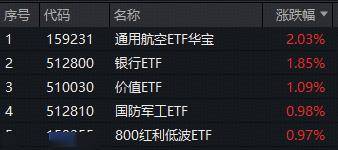
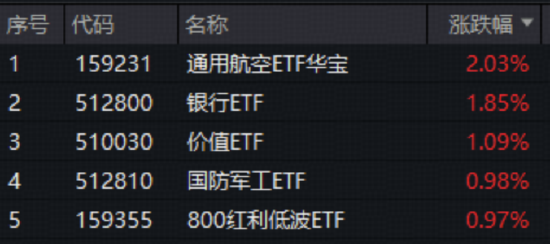
Market Overview - A-shares showed mixed performance on December 18, with the Shanghai Composite Index slightly up by 0.16%, while the Shenzhen Component and ChiNext fell by 1.29% and 2.17% respectively. The total trading volume exceeded 1.6 trillion yuan, a decrease of over 150 billion yuan compared to the previous day [1] Banking Sector - The banking sector led the market, with the largest bank ETF (512800) rising by 1.85%. Major banks such as Agricultural Bank of China and Industrial and Commercial Bank of China saw gains exceeding 2% [3][5] - The banking sector's price-to-book (PB) ratio has increased from 0.5 times at the 2022 low to 0.7 times, indicating potential for further valuation recovery [5] - Institutions are optimistic about the banking sector's performance in 2026, driven by macro policies and strategic capital inflows [6][7] Defense and Aerospace Sector - The defense and aerospace sector experienced significant inflows, with a net capital inflow of 95.6 billion yuan, leading all industries. The corresponding ETF (512810) reached a three-month high, closing up by 0.98% [9][10] - The commercial aerospace industry is expected to enter a new era, supported by national policies and technological breakthroughs, creating new growth opportunities for the defense sector [9][10] Artificial Intelligence Sector - The AI sector is seeing increased capital inflow, particularly in light of the ongoing demand for AI computing power. The leading AI ETF (159363) experienced a net subscription of 200 million units, indicating strong investor interest [11][13] - Despite a recent pullback in AI stocks, the overall trend remains positive, with institutions suggesting that the AI computing supply chain is still in a high-growth phase [13][14] Investment Recommendations - Investment strategies should focus on four key areas: growth sectors like AI, dividend assets in low-interest environments, traditional industries benefiting from supply chain restructuring, and strategic assets such as gold and rare earths [2]


商业航天引爆军工行情,512810上探阶段高点,6只成份股创历史新高!主力豪掷近百亿,机构继续看好
Xin Lang Cai Jing· 2025-12-18 11:49
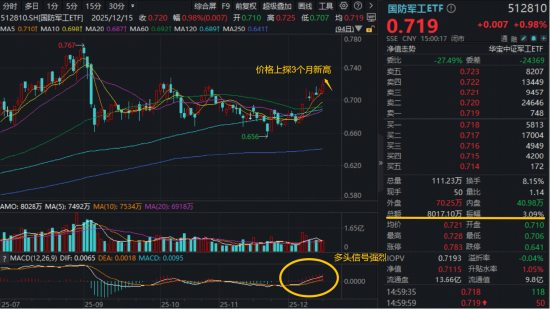
Core Viewpoint - The commercial aerospace sector is experiencing significant growth, driven by military technology applications in civilian industries, creating a trillion-yuan market opportunity [1][4][10]. Market Performance - The core ETF "512810" saw an intraday increase of up to 2%, reaching a nearly three-month high, and ultimately closed with a gain of 0.98%, marking a successful consecutive rise [1][7]. - The trading volume for the day was 80.17 million yuan, with a fluctuation exceeding 3% [1][7]. Stock Highlights - Key stocks in the commercial aerospace sector surged, with Aopu Optoelectronics hitting the daily limit, and other stocks like Bolite and Zhongke Xingtou rising by 13.67% and 10.79% respectively, both reaching historical highs [1][7]. - Other companies such as Guobo Electronics, Zhenlei Technology, Shanghai Hanhua, and Aerospace Electronics also achieved historical price highs during the trading session [1][7]. Technical Analysis - The ETF "512810" shows strong bullish signals, with a MACD golden cross indicating a potential market shift from bearish to bullish, and increasing momentum as evidenced by the lengthening red bars [3][9]. Fund Flow - The defense and military industry saw a net inflow of 9.56 billion yuan, leading all 31 primary industries, with the banking sector trailing by nearly 4 billion yuan [3][9]. - Over the past five days, the net inflow for the defense and military sector exceeded 20 billion yuan [3][9]. Investment Outlook - The commercial aerospace industry is poised for a new era, supported by national policies and technological advancements, with military technology spilling over into civilian applications [4][10]. - Analysts suggest that the current moment is an opportune time to invest in military assets, especially as the "14th Five-Year Plan" approaches and new equipment construction plans are set to be clarified [4][10]. - The latest report from Dongfang Securities expresses a positive outlook on the military sector at this juncture [4][10]. Investment Tools - The CSI Military Industry Index, despite some recovery, remains over 736 points below its annual high, and 2500 points below its five-year peak [5][11]. - The ETF "512810" is highlighted as an efficient investment tool covering various hot themes such as commercial aerospace, controllable nuclear fusion, low-altitude economy, large aircraft, deep-sea technology, and military AI [5][11].
“春季躁动”值得期待吗?商业航天再爆发,国防军工ETF盘中涨逾2.1%!创业板人工智能ETF获2亿份净申购
Xin Lang Cai Jing· 2025-12-18 11:44
Market Overview - A-shares showed mixed performance on December 18, with the Shanghai Composite Index slightly up by 0.16%, while the Shenzhen Component and ChiNext Index fell by 1.29% and 2.17% respectively. The total trading volume exceeded 1.6 trillion yuan, a decrease of over 150 billion yuan compared to the previous day [1][18]. Banking Sector - The banking sector led the market with significant gains, as 36 out of 42 listed banks saw their stocks rise by over 1%. Major banks like Shanghai Bank and Chongqing Rural Commercial Bank surged over 3%, while the largest bank ETF (512800) increased by 1.85%, recovering three key moving averages [4][21]. - The banking sector's price-to-book (PB) ratio has improved from 0.5 to 0.7 since the low in 2022, indicating potential for further valuation recovery. Despite this, most banks remain below their net asset value [6][23]. - Institutions are optimistic about the banking sector's performance in 2026, driven by favorable macro policies and increased strategic investments from insurance and asset management companies [7][24][25]. Defense and Aerospace Sector - The defense and aerospace sector experienced a significant boost, with the defense ETF (512810) reaching a three-month high, driven by strong inflows of 95.6 billion yuan, the highest among all sectors [10][28]. - Key stocks in the commercial aerospace segment, such as Aopu Optoelectronics and Platinum Power, achieved historical highs, reflecting strong market sentiment and institutional support [26][30]. - Analysts suggest that the upcoming "14th Five-Year Plan" will provide a solid foundation for the defense sector, with expectations of increased demand and investment opportunities [30]. Artificial Intelligence Sector - The AI sector is seeing increased capital inflow, particularly in light of the ongoing demand for AI computing power. The leading AI ETF (159363) experienced a net subscription of 200 million yuan, indicating strong investor interest [1][31]. - Despite a recent pullback in AI stocks, the overall sentiment remains positive, with institutions highlighting the ongoing supply-demand imbalance in AI computing resources [14][35]. - The AI industry is expected to continue its growth trajectory, with significant investments anticipated in the coming years, particularly in light of advancements in AI capabilities and applications [35].
最强金融投研 AI Agent 2.0,它又来了
佩妮Penny的世界· 2025-12-18 08:00
Core Viewpoint - The article discusses the rapid evolution of AI tools in the financial research and investment sector, highlighting the advancements in AI capabilities and the introduction of new features in tools like AlphaEngine's FinGPT and Gemini3 pro [1][5]. Group 1: AI Model Competition - The competition among foundational AI models is intense, with leading companies consistently releasing superior versions. The latest model, Google’s Gemini3 pro, has shown significant advantages in financial research applications [2]. - A comparative evaluation of various AI models in financial analysis reveals that Gemini3 pro excels in areas such as financial analysis (9.6), industry know-how (9.7), and overall performance (9.15) [2]. Group 2: Advancements in Financial AI Tools - Financial AI research tools are continuously improving, with specialized applications leveraging expert knowledge and reliable data to enhance problem-solving capabilities [5]. - AlphaEngine has integrated new functionalities, including "one-page reports," "thematic stock selection," and "research checklists," which streamline the research process and improve efficiency [6][11]. Group 3: Practical Applications and Case Studies - The "one-page report" feature generates comprehensive company analyses with minimal input, providing essential investment logic, tracking metrics, and valuation models [7][8]. - The "thematic stock selection" tool allows users to explore investment opportunities in specific sectors, such as the commercial aerospace industry, producing detailed reports and visual data representations [9][11]. Group 4: AI's Role in Investment Decision-Making - AI tools help bridge the information gap between ordinary and professional investors, enabling users to achieve a baseline understanding of investment topics [12]. - While AI cannot fully replace human decision-making in investments, it significantly aids in data collection and analysis, allowing investors to focus on deeper research and market sensitivity [12].