奥特维

Search documents
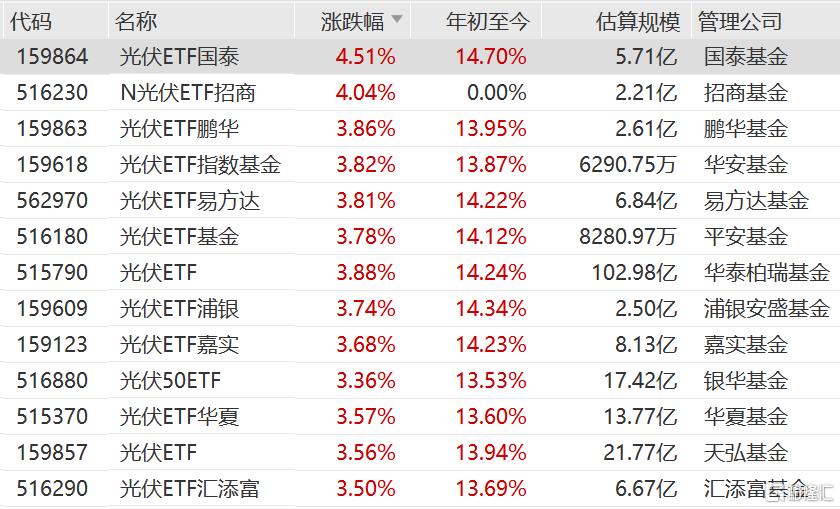
太空光伏概念拉升,光伏ETF国泰、光伏ETF招商涨超4%,光伏ETF易方达、光伏ETF上涨
Ge Long Hui A P P· 2026-02-03 02:49
Core Viewpoint - The space photovoltaic concept is gaining traction, with significant stock price increases in related companies and ETFs, indicating a growing interest and potential in the sector [1][4]. Group 1: Stock Performance - Companies such as Shuangliang Energy and Aotewi have seen their stock prices hit the daily limit, while others like Maiwei Co., Dike Co., and Guosheng Technology also experienced notable gains [1]. - Various photovoltaic ETFs, including Guotai and CMB, have risen over 4%, with others like E Fund and Ping An also showing increases above 3.5% [1][2]. Group 2: Industry Insights - SpaceX's acquisition of xAI highlights the integration of AI in space technology, emphasizing the importance of AI in expanding the capabilities of space-based systems [3]. - The development of space photovoltaics is not merely speculative; it is on the verge of large-scale deployment driven by the need for "space computing power + AI" and the ongoing competition for low Earth orbit resources [4][5]. - The evolution of space photovoltaics is linked to national strategic interests, communication satellite deployment, and the energy revolution driven by AI computing power [4].

科创新能源ETF(588830)涨超3.2%,行业需求有望爆发
Xin Lang Cai Jing· 2026-02-03 02:42
Group 1 - The National Development and Reform Commission has issued a notice to establish an independent new energy storage capacity pricing mechanism based on coal power capacity pricing standards, which is a significant strategic move [1] - The capacity pricing calculation will be based on local coal power capacity pricing standards (RMB 165-330 per kW per year), adjusted by peak capacity and other factors, with project lists to be determined by provincial energy authorities [1] - The introduction of this mechanism is expected to accelerate the construction progress of some previously paused energy storage projects [1] Group 2 - Multiple provinces are expected to introduce corresponding energy storage capacity pricing policies, leading to a surge in demand [2] - The subsidy standard for energy storage is projected to be RMB 193 per kW for a 4-hour storage duration, with an internal rate of return (IRR) of 8-9%, meeting the return requirements of funding parties [2] - The new energy storage capacity is expected to grow from 183 GWh in 2025 to 275 GWh in 2026, driven by a potential stabilization of lithium carbonate prices [2] Group 3 - As of January 30, 2026, the top ten weighted stocks in the Sci-Tech Innovation Board New Energy Index account for 46.03% of the index, including major companies like Trina Solar and JinkoSolar [3] - The Sci-Tech Innovation New Energy ETF closely tracks the performance of the Sci-Tech Innovation Board New Energy Index, which includes 50 large-cap stocks in solar, wind, and electric vehicle sectors [2][4]
光伏ETF基金(516180)涨近4%,商业航天催化太空光伏走强
Xin Lang Cai Jing· 2026-02-03 02:37
截至2026年2月3日 10:10,中证光伏产业指数(931151)强势上涨3.95%,成分股奥特维上涨20.00%,罗博 特科上涨16.10%,晶盛机电上涨16.07%,拉普拉斯,福斯特等个股跟涨。光伏ETF基金(516180)上涨 3.90%,最新价报0.91元。 受商业航天概念催化,太空光伏概念震荡拉升,中金指出,商业航天蓬勃发展背景下,太空光伏作为其 电源系统升级的核心方向,在星座批量组网的牵引下正迈向技术路线升级与产业化交付的新阶段。随着 我国低轨星座进入密集部署期、单星功率持续上行叠加太空算力等新应用场景推进探索,建议把握太空 光伏带来的全产业链变革,持续关注制造产业端落地密集催化。 数据显示,截至2026年1月30日,中证光伏产业指数(931151)前十大权重股分别为特变电工、隆基绿 能、TCL科技、阳光电源、迈为股份、通威股份、捷佳伟创、罗博特科、正泰电器、德业股份,前十大 权重股合计占比53.49%。 光伏ETF基金(516180),场外联接(平安中证光伏产业ETF联接发起式A:026720;平安中证光伏产业 ETF联接发起式C:026721),相关指数基金(平安中证光伏产业指数A:0127 ...
太空光伏概念拉升!金银反弹
Shang Hai Zheng Quan Bao· 2026-02-03 02:24
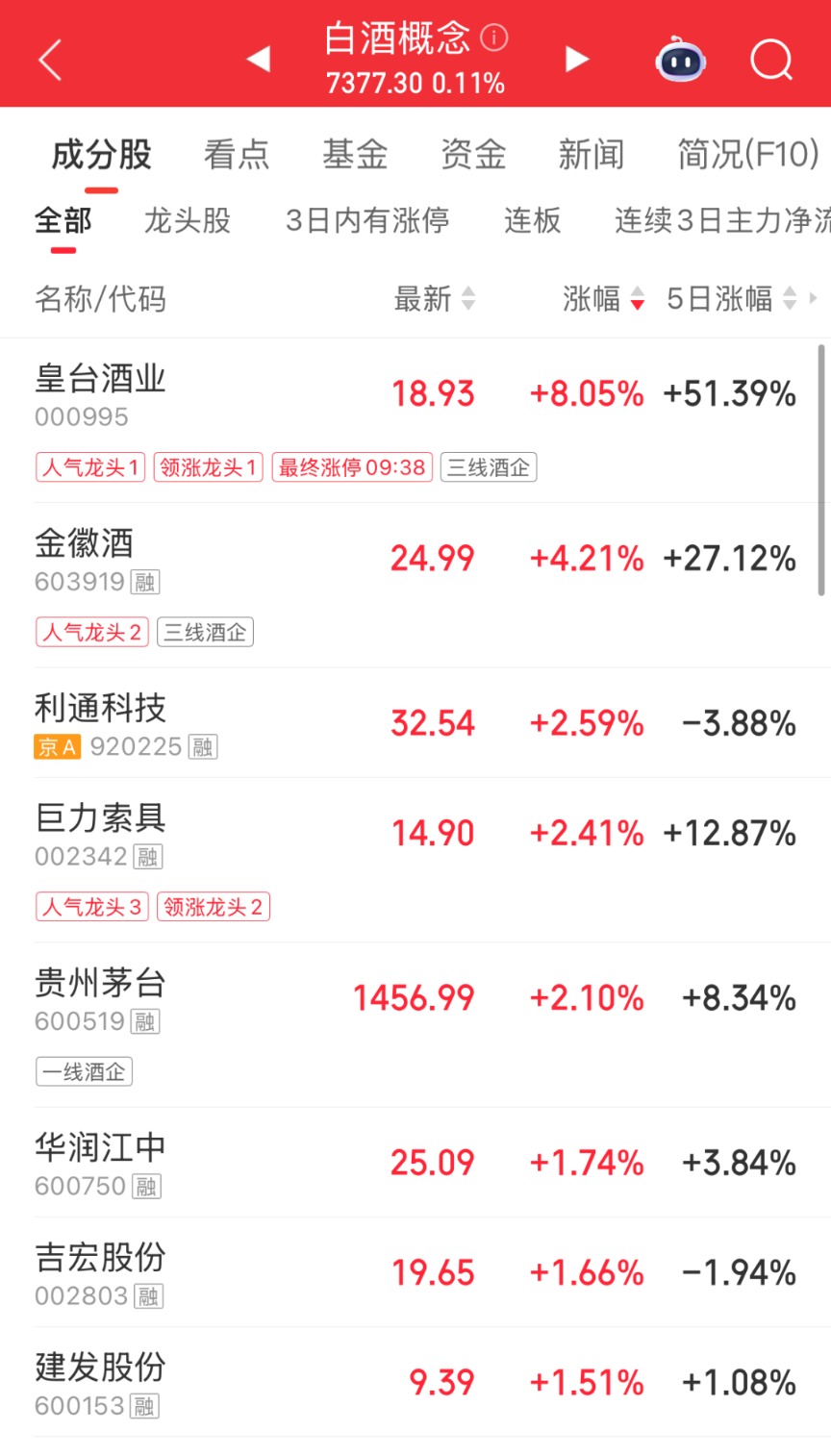
早盘,太空光伏概念震荡拉升。双良节能直线涨停,奥特维"20cm"涨停,迈为股份、帝科股份、国晟科技等多股跟涨。消息面上,当地时间2月2日,美 国企业家马斯克旗下的太空探索技术公司(SpaceX)发表声明,宣布已收购同属于马斯克旗下的人工智能企业xAI公司。xAI公司同时也发表声明,证明 已"加入SpaceX"。 9:40 4838.93个 9:40 4837.48J 9:40 4837.89个 9:40 4836.94J 9:40 4837.31个 4464.27 -4.20% 9:40 4837.20↓ 量比 9:40 4836.837 9:40 4837.10↑ k 7 9:40 4836.85J 9:40 4836.95个 白酒概念股持续活跃。皇台酒业触及涨停 ,金徽酒、利通科技、贵州茅台等多股跟涨。消息面上,国信证券表示,近期白酒、地产等前期滞涨板块表现 较优,其背后逻辑是春季行情进入下半场后,市场结构分化趋于收敛。 | ▼ | 白酒概念 1 | | --- | --- | | | 7377.30 0.11% | | 成分股 看点 | 基金 资金 新闻 | | 実部 龙头股 | 3日内有涨停 连板 连 ...




太空光伏概念拉升,光伏ETF华夏(515370)高开3.08%,太空光伏含量指数维度全市场第一
Mei Ri Jing Ji Xin Wen· 2026-02-03 02:12
Group 1 - The core viewpoint of the article highlights the rising interest in space photovoltaic concepts, with the Huaxia Photovoltaic ETF (515370) opening up 3.08% and significant gains in related stocks such as Aotewi, which rose over 17%, and Maiwei, which increased by over 10% [1] - The Huaxia Photovoltaic ETF has seen a net inflow of over 80 million yuan in the past five trading days, indicating strong investor interest [1] - The index tracked by the ETF has an 18.49% content of space photovoltaic, ranking first across the entire market [1] Group 2 - The commercial aerospace sector is thriving, with space photovoltaic technology being a core direction for upgrading power systems, driven by the deployment of low-orbit satellite constellations [1] - According to Zhongjin Company, Chinese photovoltaic manufacturers are actively developing efficient silicon and perovskite technologies for space environments, with companies capable of on-orbit verification and production line implementation expected to gain a first-mover advantage [1] - The Huaxia Photovoltaic ETF and its linked funds track the CSI Photovoltaic Industry Index, covering upstream, midstream, and downstream enterprises in the photovoltaic industry, which includes silicon wafers, polysilicon, battery cells, cables, photovoltaic glass, battery modules, inverters, photovoltaic brackets, and power stations [1]
如何看SpaceX申请百万卫星发力太空AI
2026-02-03 02:05
Summary of Conference Call on Commercial Aerospace Industry Industry Overview - The discussion primarily revolves around the commercial aerospace sector, with a focus on SpaceX and its recent developments, including Elon Musk's application for launching 1 million satellites and the implications for the industry [1][2][22]. Key Points and Arguments 1. **Significance of Musk's Application**: The application to the FCC marks a shift from mere announcements to actionable plans, indicating that SpaceX is moving towards actual implementation of its satellite launch goals [1]. 2. **SpaceX's Funding and Strategy**: Musk is actively promoting SpaceX's capabilities, particularly in rocket launches, to attract investment for future projects, including space computing [2][3]. 3. **Growth in Commercial Aerospace**: The year 2026 is anticipated to be pivotal for commercial aerospace, with expectations for the introduction of reusable liquid rockets and significant advancements in satellite constellations [3]. 4. **Emergence of Space Computing**: The concept of space computing is gaining traction, paralleling the development of satellite internet in 2019, with significant investments expected in this area [4][5]. 5. **Investment Recommendations**: Analysts suggest focusing on companies with substantial satellite constellations and government backing, as these factors are critical for success in the commercial aerospace sector [6][7]. 6. **Key Players**: Companies like 正号股份 and 轨道晨光 are highlighted as significant players due to their large satellite constellations and strategic partnerships [7]. 7. **Space Solar Power**: The concept of space solar power is emerging as a critical area of interest, with Musk's references to utilizing stellar energy indicating a long-term vision for energy consumption in space [7][8]. 8. **Material and Equipment Needs**: The aerospace sector requires advanced materials and equipment, with companies like 西部材料 and 斯瑞新材 identified as key suppliers for rocket components and high-temperature materials [16][18]. 9. **Market Potential**: The potential market for space solar power is estimated to reach around 10 trillion yuan, significantly larger than terrestrial solar power markets [27][28]. 10. **Technological Advancements**: The development of advanced materials for extreme conditions in space is crucial, with companies focusing on high-performance composites and 3D printing technologies [19][31]. Additional Important Insights - **Government Support**: The importance of government backing for satellite projects is emphasized, as it can significantly influence funding and project viability [6]. - **Long-term Vision**: The discussions reflect a broader vision for the future of space exploration and technology, with implications for energy, computing, and global infrastructure [8][22]. - **Investment Timing**: Analysts suggest that the upcoming months will be critical for securing contracts and orders in the aerospace sector, particularly in light of regulatory timelines and market dynamics [11][12][30]. This summary encapsulates the key discussions and insights from the conference call, highlighting the commercial aerospace industry's current landscape and future potential.

海优新材20260202
2026-02-03 02:05
Summary of Haiyou New Materials Conference Call Industry and Company Overview - **Company**: Haiyou New Materials - **Industry**: Space photovoltaic packaging materials and automotive information films - **Market Potential**: The global solar wing market could reach between 1.35 trillion to 3.5 trillion RMB, with the film segment estimated at around 270 billion RMB. Long-term market potential could reach 5 trillion RMB [2][4][12]. Core Insights and Arguments - **Space Photovoltaic Development**: The company is strategically positioned in the space photovoltaic sector, with key products including CPM and POE films. The market is expected to grow significantly as satellite launches increase, with SpaceX's recent application for 1 million satellites indicating a vast potential market [4][5]. - **Dual Growth Strategy**: The company is leveraging both photovoltaic and automotive sectors to create a second growth curve. In the photovoltaic sector, it is optimizing capacity and focusing on core customers, while in the automotive sector, it has entered industrialization and secured orders from major car manufacturers [2][6]. - **Financial Performance**: In the first half of 2026, the company reported revenues of 870 million RMB, a nearly 60% decline year-on-year. Cumulative losses for the first three quarters were approximately 211 million RMB, although losses are narrowing. The company anticipates a turnaround in 2026, with profits expected to exceed 200 million RMB by 2027, corresponding to a valuation of 22 times earnings [7][17]. Additional Important Insights - **Technological Advancements**: The company is focusing on lightweight and efficient solar wing technologies, which have seen a 50% reduction in weight and over 30% improvement in efficiency. These advancements are crucial for applications in low-power to high-power scenarios [10]. - **Market Trends**: The demand for space computing is driving the need for solar energy, with AI's growing computational needs further emphasizing the importance of solar power in space applications [8][9]. - **Automotive Information Films**: The company has made significant progress in the automotive sector, with a diverse product range including PDLC smart dimming films. The market for these films is projected to reach 18 billion RMB by 2030, with a penetration rate of 20% in passenger vehicles [13][15]. - **Future Growth Areas**: The company is also exploring new products in the ground photovoltaic sector and other emerging fields, including high-end architectural smart dimming films and AI/VR applications [16]. Conclusion - **Investment Outlook**: The company is positioned to benefit from the space energy revolution and has a promising outlook for growth in both the space photovoltaic and automotive information film markets. A recommendation rating is given based on the anticipated future growth potential [18].

SpaceX:从“变革”中崛起的“星际先行者”
Soochow Securities· 2026-02-02 11:53
证券研究报告 SpaceX:从"变革"中崛起的"星际先行者" 东吴证券研究所所长助理、计算机首席分析师 王紫敬 执业证书编号:S0600521080005 联系邮箱:wangzj@dwzq.com.cn 2026年2月2日 核心观点 ◆ 1. 传统主业:由"星链"与"火箭发射"构筑的万亿航天基本盘 ◆ SpaceX已通过技术代差重塑了航天经济学,其核心收入来源由星链(Starlink)和火箭发射业务组成 。星链已从早期的空间互联网集群进化为全球维度的数字资 产,截至2026年1月,在轨卫星已超9500颗,全球活跃用户达900万,Payload Space预计2025年星链将贡献公司约70%的收入 。特别是通过收购频谱许可证和部署 DTC(手机直连)技术,星链正转型为全球移动运营商,消除通信盲区 。火箭发射则是其物理支撑,猎鹰9号作为世界上最成功的商业复用火箭,已将发射成本 压低至传统火箭的十分之一 。这种强大的发射能力不仅支撑了星链的快速组网,更确立了SpaceX在全球商业发射市场近乎垄断的地位 。 ◆ 2. 太空算力:从地球代偿到构建"在轨智能"的生态闭环 ◆ 随着星舰带来的发射成本大幅下行,每一枚卫星正在 ...
"太空光伏"概念走热,部分企业触发交易异常,业内: 目前仍处于0到1阶段
Di Yi Cai Jing· 2026-02-02 07:45
Core Viewpoint - The "space photovoltaic" concept has become a major focus in the secondary market, significantly influenced by Tesla CEO Elon Musk's endorsements, with the relevant index rising 19.83% in the past month, outperforming the CSI 300 index's 1.18% increase [1] Group 1: Market Performance - The space photovoltaic concept index has seen a substantial increase, with notable stocks such as JunDa Co., Ltd. rising by 84.62%, Mingyang Smart Energy increasing by 60.22%, and Jiejia Weichuang up by 44.04% over the past 20 days [1] - Several photovoltaic companies have experienced significant stock price surges, triggering trading anomalies, with stocks like Dongfang Risen and Laplace exceeding a cumulative price deviation of 30% over multiple trading days [3] Group 2: Technology and Feasibility - Space photovoltaic energy involves utilizing solar photovoltaic technology in outer space to generate and supply energy, with the potential for direct power transmission to Earth or powering satellites and space stations [3] - The feasibility of space photovoltaic technology is supported by the abundant sunlight in space and the ability to deploy photovoltaic components on satellites, with near-Earth orbit satellites experiencing over 60% sunlight exposure [3] - Despite the market enthusiasm, the industry faces significant uncertainties regarding the maturity and long-term reliability of the technology, as well as the economic viability required for large-scale commercialization [4][5] Group 3: Industry Insights - Industry insiders indicate that the application scenarios for space photovoltaic technology are still in the exploratory phase, with many companies in the secondary market not yet supplying products to commercial space satellite companies [4] - Analysts emphasize that space photovoltaic technology is currently in the early stages, requiring validation of technical routes and economic benefits for large-scale commercial applications [5] - The current cost of space photovoltaic energy is estimated to be around $2-3 per kilowatt-hour, significantly higher than ground photovoltaic costs of $0.03-0.05 per kilowatt-hour, highlighting the economic challenges ahead [6] Group 4: Future Outlook - Companies like Trina Solar and HaiMuxing express optimism about the future of space photovoltaic technology, with ongoing collaborations with leading aerospace institutions to accumulate practical experience [6] - The commercial viability of space photovoltaic technology is projected to gradually materialize over the next 10 to 15 years, driven by decreasing launch costs and breakthroughs in battery technology [7]





国盛证券:低轨星座竞赛与太空算力革命 引爆太空光伏需求新周期
智通财经网· 2026-02-02 07:34
Group 1 - The rapid increase in satellite deployment and the planning of space AI computing power are driving exponential growth in demand for space photovoltaic systems, which are transitioning from supporting components to strategic infrastructure [1] - China plans to submit applications for 203,000 satellites by the end of December 2025, while the US has launched over 10,000 satellites under the SpaceX Starlink program, intensifying the global space race [1] - The emergence of "space-based data centers" is driven by the limitations of ground data centers, with space offering continuous sunlight and near-zero cost cooling due to the cold cosmic background [1] Group 2 - New technological pathways are emerging, including P-type HJT batteries and silicon/perovskite tandem cells, which offer lower costs and improved performance compared to traditional gallium arsenide batteries [2] - P-type HJT batteries benefit from lower costs due to their manufacturing process and established supply chains, while silicon/perovskite tandem cells have demonstrated laboratory efficiencies of around 35% [2] - Perovskite materials are seen as the ultimate solution for space photovoltaics due to their high defect tolerance and radiation resistance, making them suitable for the harsh conditions of space [2] Group 3 - The global manufacturing landscape is misaligned, presenting historic opportunities for Chinese equipment and battery manufacturers as the US lacks capabilities in HJT and perovskite production lines [3] - The demand for photovoltaic equipment is expected to surge as SpaceX and Tesla plan to build a total of 200 GW of photovoltaic capacity in the US over the next three years [3] - Chinese photovoltaic companies, equipped with aerospace certification and large-scale delivery capabilities, are transitioning from ground support to core space applications, positioning themselves to benefit from the growing demand for space photovoltaics [3] Group 4 - Investment recommendations include photovoltaic equipment suppliers such as Maiwei Co., and potential players like Laplace, Liancheng CNC, Jiejia Weichuang, Aotwei, Gaocai Co., Dier Laser, and Jingsheng Mechanical & Electrical [4] - Material suppliers recommended include Junda Co., Dongfang Risheng, Mingyang Smart Energy, Shanghai Port, Qianzhao Optoelectronics, Trina Solar, and Shuangliang Energy [4]