阿特斯

Search documents
太空应用强化美国光伏自主可控诉求,海风与电网设备迎重大催化
Zhong Guo Neng Yuan Wang· 2026-01-19 01:46
Core Viewpoint - The report highlights the significant advancements in the space photovoltaic industry, emphasizing the strong demand for ground data centers and space computing, which aligns with the U.S. push for "self-controlled" photovoltaic solutions, thereby enhancing China's photovoltaic industry's competitive edge in the global market [1][2]. Sub-industry Weekly Core Insights Photovoltaics & Energy Storage - The resonance between ground data centers and space computing demand is noted, with the U.S. reinforcing its "self-controlled" photovoltaic demands, which will accelerate the growth of the space photovoltaic market, benefiting core equipment companies [2]. - Major companies in the photovoltaic supply chain are releasing annual performance forecasts, confirming a "performance bottom" in Q4 alongside improved asset quality, positioning them well for the anticipated recovery in 2026 [1][2]. Wind Power - The UK government announced the results of the AR7 offshore wind auction, totaling 8.4 GW of projects, exceeding market expectations of 6-7 GW, which strengthens the outlook for domestic supply chain exports amid capacity shortages in Europe [2]. Power Grid - The State Grid's investment plan for the 14th Five-Year Plan is set at 4 trillion yuan, a 40% increase from the previous plan, establishing a strong foundation for long-term domestic market growth [3]. - The aging infrastructure in North America is highlighted, with transformer explosions and calls for tech companies to cover data center electricity costs, reinforcing the need for grid upgrades [3]. Lithium Batteries - New regulations on battery recycling are set to take effect on April 1, 2026, emphasizing a "vehicle-battery integrated scrapping" system and establishing a digital identity for batteries [3]. - Fulin Precision plans to raise 3.175 billion yuan to enhance its lithium iron phosphate production capacity and advance its strategic positioning in the industry [3]. Hydrogen and Fuel Cells - Inner Mongolia has optimized the economic viability of green hydrogen projects with a 1.2x ratio and consumption agreements, indicating a nearing explosion in the hydrogen industry supported by strong policies [4]. - The sales of hydrogen vehicles are expected to surge in December, with projections for over 10,000 units sold in 2025, signaling robust growth in the sector [4]. Important Industry Events - JunDa Co. has officially launched investments related to space photovoltaics, expanding its product range from batteries to packaging materials [5]. - Strategic collaborations have been established between Dongfang Risheng and Shanghai Port for advanced photovoltaic technologies [5]. - The UK AR7 offshore wind auction results have been published, with a total capacity of 8.4 GW, surpassing expectations [5].
国家电网“十五五”投资4万亿元,固态电池近期催化密集落地



GOLDEN SUN SECURITIES· 2026-01-18 06:32
Investment Rating - The report indicates a positive outlook for the power equipment industry, particularly in the renewable energy sector, with significant investments and technological advancements expected to drive growth [1][2][4]. Core Insights - The report highlights that the State Grid's investment during the "14th Five-Year Plan" period is projected to reach 4 trillion yuan, marking a 40% increase compared to the previous plan [2]. - The report emphasizes the stability in polysilicon prices and the continuous rise in battery component prices, with N-type battery prices increasing to 0.40 yuan per watt [15][16]. - The report identifies three key areas of focus: supply-side reform leading to price increases in the industry chain, long-term growth opportunities from new technologies, and industrialization opportunities from perovskite GW-level layouts [16]. Summary by Sections 1. New Energy Generation 1.1 Photovoltaics - Polysilicon prices remain stable, while battery component prices are on the rise, with N-type battery prices reaching an average of 0.40 yuan per watt [15]. - The report notes that leading component companies are responding to industry self-discipline by raising component prices, with distributed sales prices reaching 0.72 yuan per watt [15][16]. - Key companies to watch include Tongwei Co., GCL-Poly, LONGi Green Energy, JA Solar, and Trina Solar [16]. 1.2 Wind Power & Grid - The UK AR7 offshore wind auction results exceeded expectations, with a total scale of approximately 8.4GW, validating the upward trend in European offshore wind [17]. - The State Grid's investment is expected to enhance transmission capacity significantly, addressing bottlenecks in renewable energy delivery [18]. - Companies to focus on include Goldwind, Yunda Wind Power, Mingyang Smart Energy, and Sany Heavy Energy [18]. 1.3 Hydrogen & Energy Storage - By 2025, the production and sales of fuel cell vehicles in China are projected to reach 7,797 units, reflecting a 44% year-on-year increase [20]. - The report anticipates that new energy storage installations will reach 58.6GW/175.3GWh by 2025, with significant growth expected in the energy storage sector [21]. - Key players in the hydrogen sector include Shuangliang Energy, Huadian Heavy Industries, and Shenghui Technology [20]. 2. New Energy Vehicles - Solid-state batteries are gaining traction, with several automakers making progress towards mass production by 2026 [29]. - Companies such as BYD, Changan Automobile, and Chery are expected to achieve significant milestones in solid-state battery technology [29]. - The report suggests monitoring companies like Xiamen Tungsten, Hailiang Co., and Nanjing Advanced Lithium Battery [29]. 3. Industry Trends - The report notes a 0.4% increase in the new energy equipment sector from January 12 to January 16, 2026, with a cumulative increase of 5.3% since the beginning of the year [12]. - The photovoltaic equipment sector saw a 3.52% increase, while the wind power equipment sector experienced a decline of 1.28% during the same period [13].
机器人“纯度”提高!热门基金,最新调仓曝光
券商中国· 2026-01-18 03:40
Group 1 - The core viewpoint of the article is that the 2025 market will be dominated by a "technology bull market," with humanoid robots and AI-driven energy sectors performing exceptionally well [1] Group 2 - The "purity" of robot-themed funds has increased, as evidenced by the significant growth in the Huafu Technology Momentum Fund's shares from 1.08 billion at the end of 2024 to 23.97 billion by the end of Q4 2025 [2] - The fund maintained a high stock position of 87.34% and continued to focus on the robot sector, with the manager expressing optimism about the domestic humanoid robot industry's ongoing development [2] - The top holdings of the fund shifted, with Zhejiang Rongtai becoming the largest holding and Xinquan shares moving up to the second position, while previous top holdings like Sanhua Intelligent Control and Top Group exited the top ten [2] Group 3 - The Huafu New Energy Fund also saw a significant increase in size, rising from 13.1 billion shares in Q3 to 35.45 billion by the end of Q4 [3] - The fund adjusted its holdings, increasing exposure to lithium battery materials and photovoltaic sectors while reducing positions in wind power and humanoid robots [3] - The fund manager highlighted the investment opportunities in the energy sector driven by AI, noting that large-scale energy storage is expected to experience explosive growth starting in 2024 [3] Group 4 - The Jin Xin Fund reported that while the consumer sector, represented by liquor, performed generally, the Jin Xin Consumer Upgrade Fund saw an increase of over 20% for the year, with a Q4 rise of approximately 13.36% [4] - The fund focused on service consumption sectors such as aviation, scenic spots, hotels, and tourism, rather than traditional consumer stocks [4] - The top holdings included major airlines and tourism companies, with favorable conditions in Q4 contributing to the aviation sector's strong performance [5]

告别“退税依赖” 中国光伏开启技术与全球化新竞速
Zheng Quan Shi Bao Wang· 2026-01-17 12:29
Core Viewpoint - The recent adjustment in the value-added tax export rebate policy for photovoltaic products has led to an unexpected increase in component prices, despite the typical seasonal demand downturn in the first quarter of the year [1]. Group 1: Policy Impact - The Ministry of Finance and the State Taxation Administration announced the cancellation of the value-added tax export rebate for photovoltaic products starting April 1, 2026, affecting 249 products across the entire industry chain [2]. - The cancellation of the rebate is expected to trigger a "last-minute rush" for exports, as overseas buyers place orders to avoid increased costs after the policy change [2]. - Analysts predict a significant increase in component export volume during this period, potentially boosting short-term industry demand [2]. Group 2: Financial Implications for Companies - Major photovoltaic and energy storage companies are projected to lose between 1 billion to 2 billion yuan in export rebates annually, which could reduce the profit per 210R photovoltaic component by 46 to 51 yuan, leading to a potential decline in export volume by 5% to 10% [3]. Group 3: Strategic Responses from Companies - In response to the policy changes, leading companies like Longi Green Energy, JinkoSolar, Trina Solar, and Canadian Solar are accelerating their global expansion efforts, establishing production bases in regions such as Southeast Asia, the Middle East, and the United States [4]. - Companies are focusing on local production to bypass export rebate losses and enhance supply chain resilience [4]. - The cancellation of the rebate is expected to diminish the cost advantage of Chinese photovoltaic components, prompting a shift towards technological innovation and brand development as key competitive strategies [4]. Group 4: Long-term Industry Outlook - The policy adjustment aims to address the long-standing issue of low-price competition in the photovoltaic industry, which has led to reduced profit margins and increased international trade friction [5]. - The removal of the export rebate is anticipated to redirect financial resources towards domestic technological research and development, thereby improving the efficiency of fund utilization [6]. - The adjustment is likely to accelerate industry consolidation and capacity elimination, with leading battery companies expected to enhance their global competitiveness and market share in the long run [6].

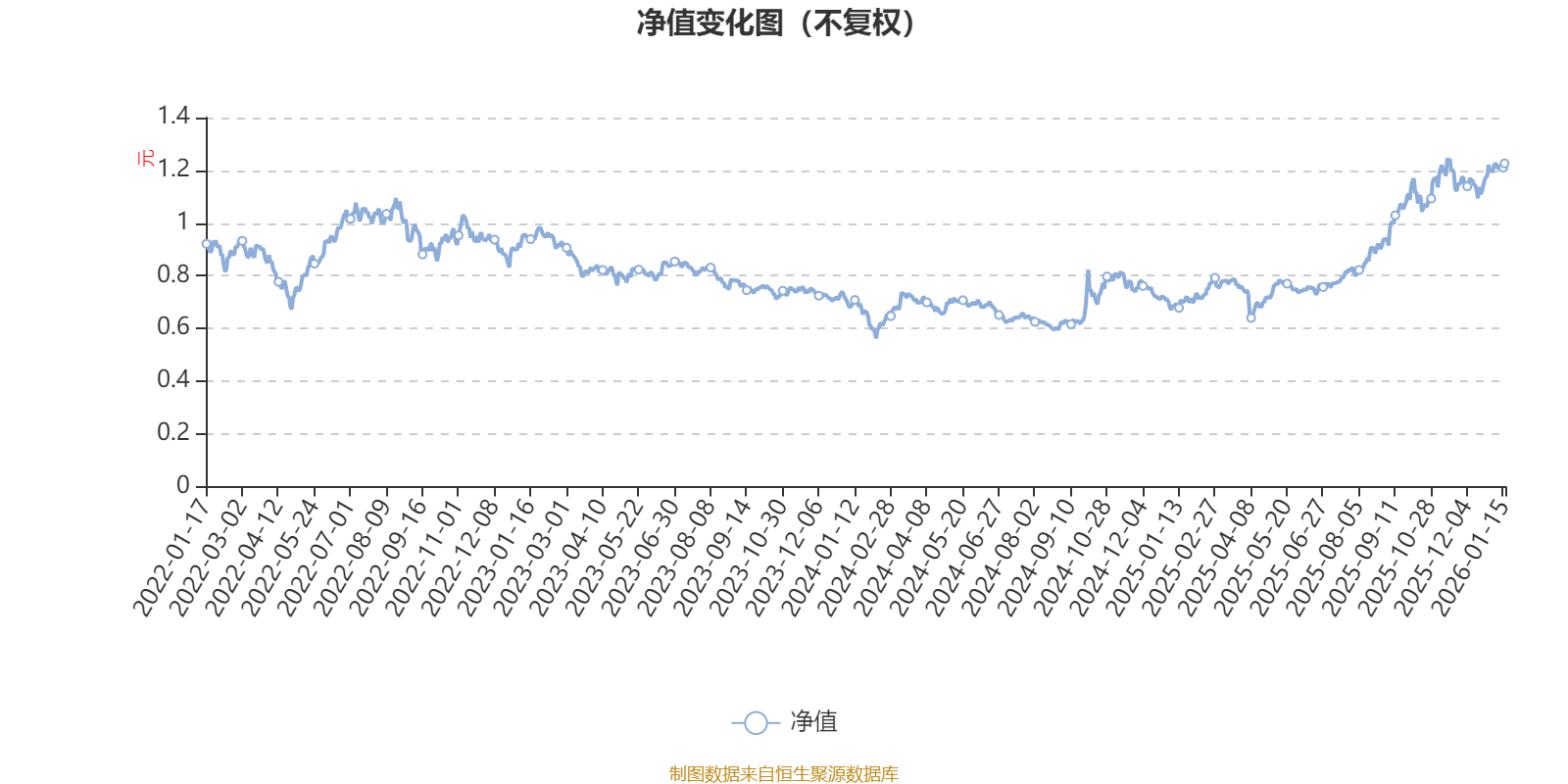
华富新能源股票型发起式A:2025年第四季度利润1427.77万元 净值增长率2.67%
Sou Hu Cai Jing· 2026-01-16 07:51
Core Viewpoint - The AI Fund Huafu New Energy Stock Type A (012445) reported a profit of 14.28 million yuan for Q4 2025, with a weighted average profit per fund share of 0.0273 yuan, and a net asset value growth rate of 2.67% during the reporting period [3] Fund Performance - As of January 15, the fund's unit net value was 1.226 yuan, with a three-month net value growth rate of 11.29%, ranking 10 out of 39 comparable funds [4] - The fund's six-month net value growth rate was 58.08%, ranking 4 out of 39 comparable funds [4] - The one-year net value growth rate was 74.66%, ranking 3 out of 38 comparable funds [4] - The three-year net value growth rate was 30.66%, ranking 5 out of 32 comparable funds [4] Risk and Return Metrics - The fund's Sharpe ratio over the past three years was 0.6435, ranking 6 out of 32 comparable funds [8] - The maximum drawdown over the past three years was 42.87%, ranking 12 out of 32 comparable funds, with the largest quarterly drawdown occurring in Q1 2024 at 23.68% [10] Fund Holdings and Strategy - As of December 31, the fund's average stock position over the past three years was 86.66%, compared to a peer average of 87.74% [13] - The fund reached its highest stock position of 90.81% at the end of Q3 2025, while the lowest was 65.43% at the end of Q3 2021 [13] - The top ten holdings of the fund as of Q4 2025 included companies such as Sungrow Power Supply, CATL, and Aiko Solar [17] Fund Size - As of the end of Q4 2025, the fund's total size was 732 million yuan [14]
金元证券每日晨报-20260116
Jinyuan Securities· 2026-01-16 02:18
Market Overview - The Dow Jones Industrial Average increased by 0.60% to close at 49,442.44 points, while the S&P 500 rose by 0.26% to 6,944.47 points and the Nasdaq Composite gained 0.25% to 23,530.02 points [1][12] - In the European market, the DAX index rose by 0.26% to 25,352.39 points, while the CAC40 index fell by 0.21% to 8,313.12 points, and the FTSE 100 index increased by 0.54% to 10,238.94 points [6][12] - The Hang Seng Index in the Asia-Pacific region decreased by 0.28% to 26,923.62 points, and the Nikkei 225 index fell by 0.42% to 54,110.5 points [6][12] Domestic News - The People's Bank of China announced a reduction in the re-lending and re-discount rates by 0.25 percentage points effective January 19, 2026, with new rates set at 0.95%, 1.15%, and 1.25% for 3-month, 6-month, and 1-year loans respectively [13] - The State Grid Corporation of China is expected to reach a fixed asset investment of 4 trillion yuan during the 14th Five-Year Plan period, marking a 40% increase compared to the previous plan [14] - China Aerospace Science and Technology Corporation held a meeting to discuss major aerospace projects for 2026, emphasizing the importance of advancing manned lunar missions and deep space exploration [15] - The first gold ETF in the market with a scale exceeding 100 billion yuan was established, with the Huaan Gold ETF reaching a circulation scale of 100.762 billion yuan [16] Company News - OpenAI is seeking to strengthen its hardware supply chain in the U.S. and is looking for partners to expand into consumer devices, robotics, and cloud data centers [17] - Apple announced the expansion of Apple Pay's cross-border payment support, allowing Chinese cardholders to use their Visa debit cards for payments abroad [17] - Alibaba's Qianwen App has integrated various services within the Alibaba ecosystem, enabling users to order food, shop, and book travel through AI functionalities [17] - Tian Sheng New Materials signed a share transfer agreement, while Jintong Co. acquired a 24% stake in Anhui Jinsha Molybdenum Co. for 173.087 million yuan, increasing its ownership from 10% to 34% [17]
美股芯片股深夜爆发,中概股多数下跌,国际油价大跳水跌5%,加密货币集体下挫
21世纪经济报道· 2026-01-15 23:08
Market Overview - The US stock indices experienced slight gains, with the Dow Jones up 0.6%, S&P 500 up 0.26%, and Nasdaq up 0.25% [1] - Major technology stocks showed mixed results, with Nvidia rising over 2% and Google falling nearly 1% [2] Semiconductor Sector - The Philadelphia Semiconductor Index increased by 1.76%, reaching a historical high, with notable gains from companies like Kioxia (over 7%), ASML (over 5%), TSMC (over 4%), and AMD (nearly 2%) [2] - Texas Instruments fell over 2%, while Qualcomm and Marvell Technology dropped over 1% [2] Chinese Stocks - The Nasdaq Golden Dragon China Index declined by 0.6%, with significant drops in stocks like Brain Rejuvenation (over 14%), Tencent Music (nearly 5%), and Kingsoft Cloud (over 4%) [3] - Conversely, companies like Hesai Technology rose over 7%, and Bawang Tea and Canadian Solar saw increases of nearly 4% and over 3%, respectively [3] Commodity Prices - Gold and silver prices decreased, with spot gold down 0.24% to $4615.5 per ounce and spot silver down 0.79% to $92.4 per ounce [3] - International oil prices saw a significant drop, with WTI crude oil falling over 4% to $59.19 per barrel [3] Cryptocurrency Market - Major cryptocurrencies experienced a collective decline, with Bitcoin dropping below $96,000 to $95,511 per coin, marking a 1.99% decrease [4][5] - Over 120,000 individuals faced liquidation in the past 24 hours due to market volatility [4] Federal Reserve Outlook - The probability of a 25 basis point rate cut by the Federal Reserve in January is at 5%, while the likelihood of maintaining the current rate is 95% [5] - By March, the cumulative probability of a 25 basis point cut rises to 20.8%, with a 78.4% chance of no change [5] - Economic expert analysis suggests that despite potential negative impacts from tariffs, upcoming rate cuts and government policies may improve employment and income growth [6]


后退税时代,组件龙头谁在“裸泳”?
Xin Lang Cai Jing· 2026-01-15 14:09
Core Viewpoint - The photovoltaic industry is facing a critical turning point in 2026, with major companies like JA Solar, JinkoSolar, and Trina Solar forecasting significant losses for 2025, compounded by the cancellation of export tax rebates that previously supported their profits and operational cash flow [1][11]. Group 1: Financial Impact - The cancellation of export tax rebates is expected to severely impact cash flow for photovoltaic companies, which had relied on these rebates as a stable source of income [2][12]. - In the first three quarters of 2025, the total tax refunds for the four leading module manufacturers approached 10 billion yuan, while the top ten companies received over 20 billion yuan in tax refunds for the 2024 fiscal year [1][12]. - The sudden loss of this crucial cash flow source is likened to cutting off an external lifeline during a time of industry "blood loss," forcing companies to rely more on their operational cash generation capabilities [2][12]. Group 2: Cash Flow Analysis - A clear differentiation in cash flow status among photovoltaic companies has emerged, with some companies struggling significantly as the industry faces a downturn [3][13]. - The cash flow rankings of listed photovoltaic companies over the past five years show that Tongwei Co. leads with a total cash generation of 860 million yuan, while companies like LONGi Green Energy and Aiko Solar are also notable [4][14]. - The abrupt policy change regarding export tax rebates has had the most severe impact on companies with already thin profit margins, necessitating a restructuring of financial management strategies [4][14]. Group 3: Market Dynamics - In an effort to capitalize on the last window of opportunity, major module manufacturers are stockpiling inventory while also clearing existing stock, leading to market chaos with contract breaches and price hikes becoming common [5][15]. - Current market prices for photovoltaic modules show fluctuations, with companies like JinkoSolar and Trina Solar adjusting their prices upward, indicating a volatile market environment [7][17]. - Companies are urged to maintain their reputations while seizing opportunities for recovery, emphasizing the importance of balancing profit-seeking with brand integrity [7][17]. Group 4: Strategic Responses - Leading companies are adopting various strategies to survive the cash flow challenges, such as technological innovation and product differentiation [9][19]. - LONGi and Aiko are promoting BC battery technology to achieve higher premiums in overseas markets, while JA Solar is implementing a "three-pole management system" to reduce production costs [9][19]. - Trina Solar is collaborating with financial institutions to utilize accounts receivable for cash flow supplementation, and JinkoSolar is launching new TOPCon products to enhance market competitiveness [9][19].




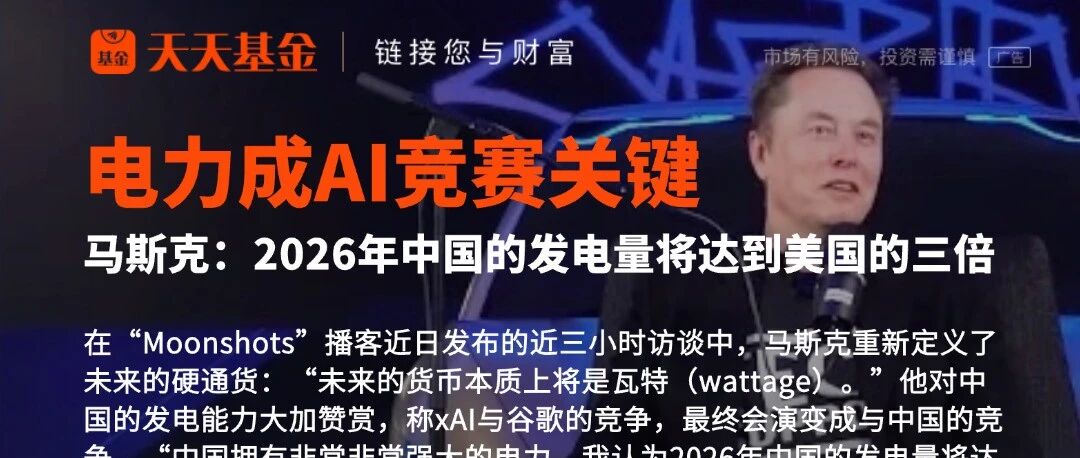
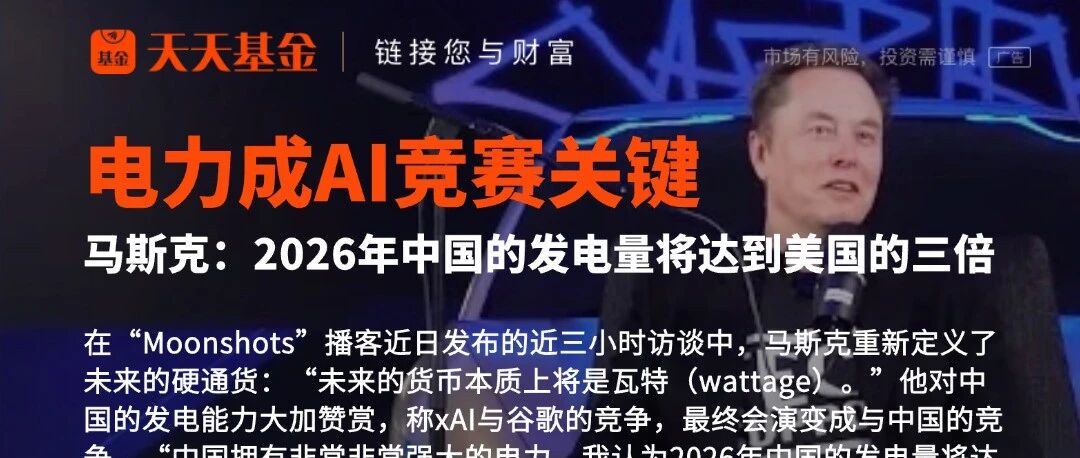
电力成AI竞赛关键!一图梳理受益概念
天天基金网· 2026-01-15 09:56
Core Insights - The article emphasizes the critical role of electricity in the competition for artificial intelligence (AI) advancements, highlighting Elon Musk's assertion that future currency will be measured in wattage, and that China's electricity generation capacity will surpass that of the U.S. by 2026, reaching three times the U.S. output [1][5]. Electricity Generation Capacity - According to data, China's electricity generation capacity is projected to grow from 411 TWh in 1985 to 10,087 TWh by 2024, representing an increase of over 20 times [6]. - In contrast, the growth of electricity generation in the U.S. and the EU has been relatively stable, with India's projected generation in 2024 being approximately one-fifth of China's output [6]. Investment in Power Infrastructure - The State Grid Corporation of China plans to invest 4 trillion yuan during the 14th Five-Year Plan period, marking a 40% increase from the previous plan, aimed at enhancing the new power system's industrial chain and supply chain [7]. - Analysts suggest that the power equipment industry will benefit from the global data center construction boom, with significant demand for transformers and switchgear, particularly in North America, where long-term investment in critical infrastructure has been insufficient [7]. Competitive Landscape - The article notes that Chinese power equipment companies are expected to maintain a competitive edge in the North American market due to their scale manufacturing capabilities and experience in overseas delivery, especially as demand for high-voltage and ultra-high-voltage transformers and digital grid equipment increases [7].
电力成AI竞赛关键!一图梳理受益概念
天天基金网· 2026-01-15 08:37
Core Insights - The article emphasizes the critical role of electricity in the competition for artificial intelligence (AI) development, highlighting Elon Musk's assertion that future currency will be measured in wattage, and predicting that by 2026, China's electricity generation will reach three times that of the United States [1][5]. Electricity Generation Comparison - China's electricity generation capacity is projected to grow significantly, from 411 TWh in 1985 to 10,087 TWh by 2024, representing an increase of over 20 times [6]. - In contrast, the growth of electricity generation in the United States and the European Union has been relatively stable, with India's projected generation in 2024 being approximately one-fifth of China's [6]. Investment in Power Infrastructure - The State Grid Corporation of China plans to invest 4 trillion yuan during the 14th Five-Year Plan period, a 40% increase from the previous plan, aimed at enhancing the new power system's industrial chain and supply chain [7]. - The electric equipment industry is expected to benefit from the global data center construction boom, with demand for AIDC power equipment experiencing explosive growth [7]. - North America's long-term underinvestment in key areas such as high-voltage transformers and distribution equipment is expected to create a demand surge for related infrastructure, particularly as AI data center loads increase [7]. Competitive Landscape - Chinese power equipment companies are anticipated to maintain a competitive edge in the North American market due to their scale manufacturing capabilities and overseas delivery experience, especially as local production faces cyclical and cost constraints [7].