蔚来

Search documents
中国汽车的真正考验,才刚开始
虎嗅APP· 2025-12-06 03:32
Core Viewpoint - The article highlights that 2026 is expected to be a challenging year for the Chinese automotive industry, with significant declines in sales and a shift from subsidy-driven growth to competition based on real demand and efficiency [2][9]. Sales Performance - Retail sales of passenger cars in China saw a 15% year-on-year growth at the beginning of the year, but the growth rate has sharply declined since July, with October experiencing an overall negative growth [4][8]. - In November, the average daily retail sales of passenger cars were 46,000 units, down 19% year-on-year in the first week, 9% in the second week, and 7% in the third week [6]. Company Targets and Achievements - BYD aimed for 4.6 million units and achieved 4.18 million units by November, facing challenges to meet its target [7]. - SAIC Group set a target of 4.5 million units, with 4.11 million units sold by November, likely to meet its goal [7]. - Chery and Li Auto are unlikely to meet their targets, while Xiaomi and Leap Motor have already achieved theirs [11]. Market Dynamics - The automotive industry is experiencing its lowest profit margins in five years, with an average profit margin of only 3.8%, leading to significant price reductions [8]. - The market is shifting from a subsidy-driven model to one focused on genuine consumer demand and efficiency, indicating a potential industry "cold wave" in 2026 [8][41]. Subsidy Impact - The impact of subsidies is diminishing, with over 50% of sales in 2025 attributed to trade-in programs, which are now facing adjustments and reductions in many regions [10][13]. - The withdrawal of subsidies is leading to a significant drop in consumer purchasing activity, as many are adopting a "wait-and-see" approach [19][23]. Technological Developments - The article discusses various technological advancements in the automotive sector, including developments in autonomous driving and battery technology, which are seen as potential growth areas for 2026 [26][30]. - The shift towards "software-defined vehicles" and advancements in intelligent driving systems are expected to play a crucial role in the market's future [30][40]. Industry Outlook - The automotive industry is facing a structural adjustment, with weaker companies likely to exit the market as competition intensifies [47]. - The transition from scale expansion to value competition is seen as essential for the long-term health of the industry, with a focus on innovation and efficiency [47][48].





比特币跌穿9万美元;奈飞5000亿元收购华纳兄弟;我国将迎来首部上市公司监管行政法规丨每经早参
Mei Ri Jing Ji Xin Wen· 2025-12-05 23:20
Economic and Market Updates - The U.S. stock market saw slight gains with the Dow Jones up by 0.22%, Nasdaq up by 0.31%, and S&P 500 up by 0.19% [5] - International oil prices increased, with WTI crude oil rising by 0.79% to $60.14 per barrel and Brent crude oil up by 0.82% to $63.78 per barrel [6] - The Nasdaq China Golden Dragon Index rose by 1.29%, with notable gains in Chinese concept stocks such as Baidu up over 5% and Global Data up over 4% [5] Corporate Developments - Netflix announced a deal to acquire Warner Bros. Discovery's film studio and streaming business for $827 billion, with a share value of $27.75 per share, expected to close in Q3 2026 [16][17] - Three rare earth permanent magnet companies, including Jinli Permanent Magnet, Zhongke Sanhuan, and Ningbo Yunsheng, have obtained general export licenses, which will streamline their export processes [16] - Tencent launched its latest language model, Tencent HY2.0, which features significant improvements in pre-training data and reinforcement learning strategies [21] Regulatory and Policy Changes - The China Securities Regulatory Commission released a draft for the "Regulations on the Supervision and Administration of Listed Companies," marking the introduction of a dedicated regulatory framework for listed companies [8][9] - The Ministry of Commerce emphasized the promotion of durable goods consumption and the integration of AI in consumer sectors, aiming to enhance consumer experience and stimulate economic growth [7] Industry Trends - The banking sector is witnessing a trend of increasing deposit rates, with Hangzhou Bank raising its three-year fixed deposit rate to 1.9% for new funds [10] - The electric vehicle market is responding to new regulations, with Yadea clarifying misconceptions about its new national standard models, emphasizing compliance and market adaptation [19][20] - SpaceX is reportedly negotiating an internal share sale that could value the company at $800 billion, with plans for an IPO in the second half of next year [26]






美加墨世界杯分组结果出炉;阿巴边境爆发冲突;比特币跌穿9万美元;奈飞5000亿元收购华纳兄弟;我国将迎来首部上市公司监管行政法规丨每经早参
Mei Ri Jing Ji Xin Wen· 2025-12-05 23:15
Group 1 - Premier Li Qiang chaired a State Council meeting to discuss energy conservation and carbon reduction efforts, reviewing administrative law enforcement actions and legislative drafts [3] - The U.S. stock market saw slight gains, with the Dow Jones up 0.22%, Nasdaq up 0.31%, and S&P 500 up 0.19%, driven by large tech stocks [3] - International oil prices rose, with WTI crude oil increasing by 0.79% to $60.14 per barrel and Brent crude oil up 0.82% to $63.78 per barrel [4] Group 2 - The Ministry of Commerce emphasized promoting durable goods consumption and integrating AI with consumer activities to enhance market growth [7] - The China Securities Regulatory Commission released a draft for the "Regulations on the Supervision and Administration of Listed Companies," marking the introduction of specific regulatory laws for listed companies [5] - Several banks, including Hangzhou Bank, raised deposit rates, indicating a temporary strategy to attract deposits amid a general trend of declining rates [8] Group 3 - Netflix announced a deal to acquire Warner Bros. Discovery for approximately $82.7 billion, enhancing its market share and content competitiveness [16][17] - The European Union found the social media platform X, owned by Elon Musk, in violation of transparency regulations, imposing a fine of €120 million [18] - Yadi Electric clarified misconceptions regarding new national standards for electric vehicles, emphasizing compliance and product diversity [19] Group 4 - NIO reported legal actions against malicious online accounts that spread false information about the company, resulting in court-ordered compensation and apologies [27][28] - SpaceX is reportedly negotiating an internal share sale that could value the company at $800 billion, with plans for an IPO in the second half of next year [29]


广汽集团扩张600家品牌店背后的风险博弈
Zhong Guo Jing Ying Bao· 2025-12-05 20:29
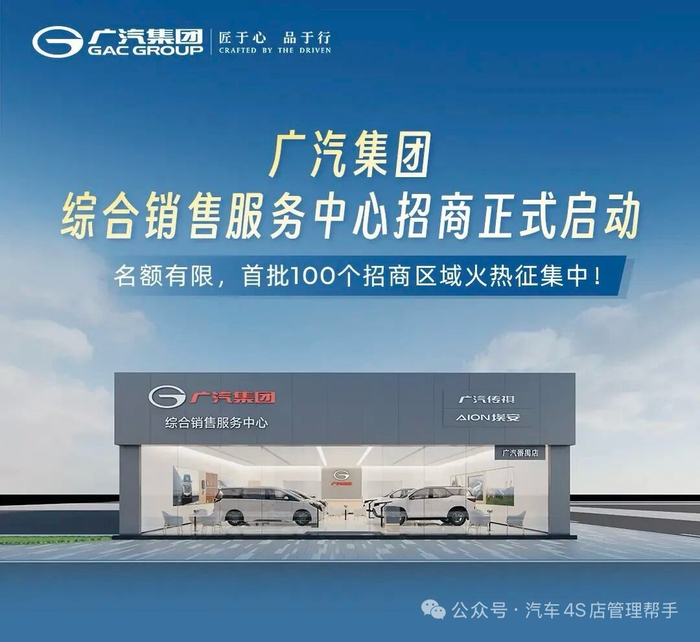
Core Viewpoint - GAC Group is actively seeking to expand its brand presence by establishing 600 brand collection stores in lower-tier cities by mid-2026, with over 1,000 investors showing interest in the investment opportunity of 1 million yuan for brand agency rights [2][6]. Group 1: Investment Opportunity - The investment threshold for becoming a GAC brand agent is set at 1 million yuan, significantly lower than the traditional 4S store model which often requires around 10 million yuan [3]. - Investors are required to prepare a venue of 200-300 square meters and provide a deposit of 3 million yuan, while GAC will assist with standardized renovations [3][4]. - Despite the low entry cost, operational expenses such as rent and labor will be borne by the dealers, raising concerns about profitability in a challenging market [2][5]. Group 2: Market Challenges - A survey by the China Automobile Dealers Association indicates that 84.4% of car dealers are experiencing price inversions, with 60.4% facing price inversions exceeding 15% [2]. - The automotive market is undergoing a transformation from traditional 4S store models to a more diversified system including agency and direct sales, leading to a competitive environment between dealers and manufacturers [2][8]. - The overall market demand in first and second-tier cities is saturated, pushing manufacturers to focus on lower-tier markets for growth [8]. Group 3: Strategic Expansion - GAC's plan to open 600 brand collection stores reflects its strategy to build a skilled sales team and target county-level markets, which account for 38.35% of China's economic output [6][7]. - Other brands like BYD and Xpeng are also targeting county markets, indicating a broader industry trend towards down-market expansion [6][7]. - The establishment of charging infrastructure in rural areas is expected to support this market shift, with government initiatives promoting the development of charging stations [7]. Group 4: Risks and Concerns - The lightweight agency model may lead to challenges in after-sales service quality, as smaller dealers may lack the resources to provide adequate support [9]. - The rapid expansion of GAC's network could complicate channel management and increase operational risks for both manufacturers and dealers [9]. - Industry experts warn that the profitability of dealers is increasingly dependent on the manufacturers' product strength and pricing strategies, making the investment landscape more uncertain [9].
丰田汽车入局 近20家车企激战车险市场
Zhong Guo Jing Ying Bao· 2025-12-05 19:10
Core Viewpoint - The increasing importance of insurance business for automotive companies is highlighted as the electric vehicle market continues to grow, with many car manufacturers entering the insurance sector to diversify their services and enhance customer loyalty [2][10]. Group 1: Company Developments - Beijing Shengtang Insurance Brokerage Co., Ltd. has changed its name to Toyota Insurance Brokerage (Beijing) Co., Ltd. as of November 24, 2023, following the acquisition of the insurance brokerage license by Toyota Motor Corporation [1][3]. - Toyota Insurance Brokerage aims to provide a variety of insurance products for Toyota and Lexus dealers, as well as retail and institutional clients, leveraging its extensive business network [3][4]. Group 2: Industry Trends - Nearly 20 major automotive companies have obtained insurance qualifications in the domestic market through self-built or acquisition methods, indicating a trend towards diversification and ecosystem development within the automotive industry [2][8]. - The entry of automotive companies into the insurance sector reflects a shift in the insurance market, with a focus on electric vehicles and smart driving, leading to new demands for product pricing, risk management, and service innovation [10][12]. Group 3: Market Dynamics - The competition in the insurance market is evolving from channel-driven to data-driven and industry collaboration, as automotive insurance companies leverage vehicle data and customer touchpoints to gain market share [11][12]. - The rise of automotive insurance companies is expected to lead to a more segmented market, allowing for personalized insurance products tailored to different vehicle models and user groups [12][13]. Group 4: Financial Insights - In 2024, the insurance loss for new energy vehicles in China is projected to be 5.7 billion yuan, with 2,795 vehicle models covered, of which 137 models have a claims ratio exceeding 100% [13]. - The average insurance premium for new energy vehicles is approximately 21% higher than that of traditional fuel vehicles, with pure electric vehicles costing an average of 1,687 yuan more annually than fuel vehicles [13].

1699起,理想AI眼镜开卖!整花活还是真刚需?
电动车公社· 2025-12-05 16:05
关注 「电动车公社」 和我们一起重新思考汽车 零跑 虽然表面上没整什么花活,但别忘了零跑母公司大华可是安防龙头。 似乎, 理想 成了一 股清流,除了 造车以外很少干" 出格 "的事。 但如今,理想这个浓眉大眼的也" 叛变 "了 。 12 月 3 号晚上,理想汽车发布了旗下首款人工智能附件—— AI 眼镜 Livis ,正式进军 具身智能行业。 15% 国补后, 起售价 1699 元。 大家好,我是电动车公社的社长。 如果把现存的新势力整一个 "花活度" 排名,我想大概应该这样去排: 做 3C 、家电产品起家的 小米 必然是浓度最高的, 人车家全生态应有尽有。 小鹏 野心最大,飞 行汽车、人形机器人、机器狗 …… 一抓一大把,争当科技排头兵。 蔚来 也差不多,又造手 机又研发芯片,NIO Life有声有色,还在换电站上投了不少光伏项目。 在理想 Livis 上市之后,我怀着好奇的心态,对比了一下市面上同类型智能眼镜的售价(小米、 Mate 、雷鸟等),发现这个定价 已经算非常亲民的了。 我们就借此机会,一起聊聊理想 AI 眼镜到底怎么样?对于理想汽车的发展有什么意义?今后的 AI 眼镜,又会朝着什么形态发展? ...


热门中概股多数上涨,百度涨超4%
Di Yi Cai Jing Zi Xun· 2025-12-05 15:18
Core Viewpoint - The majority of popular Chinese concept stocks experienced an increase, with the Nasdaq Golden Dragon China Index rising over 1% [1] Group 1: Chinese Concept Stocks - Baidu Group rose over 4% [1] - Xpeng Motors and NIO both increased by over 2% [1] - Li Auto and Alibaba saw gains of over 1% [1] Group 2: U.S. Market Performance - On December 5, U.S. stock indices opened slightly higher, with the Nasdaq up 0.27%, the Dow Jones up 0.13%, and the S&P 500 up 0.17% [1] Group 3: Netflix and Warner Bros. Discovery - Netflix fell over 4% while Warner Bros. Discovery rose over 3% [1] - Netflix plans to acquire Warner Bros. Discovery's film studio and streaming business for $72 billion [1]


纳斯达克中国金龙指数上涨1.3%
Di Yi Cai Jing· 2025-12-05 14:54
Core Viewpoint - The Nasdaq China Golden Dragon Index experienced an initial increase of 1.3%, indicating positive market sentiment towards Chinese stocks listed in the U.S. [1] Company Performance - Baidu Group saw a rise of over 4%, reflecting strong investor interest and confidence in the company's performance [1] - Xpeng Motors and NIO both increased by over 2%, suggesting a favorable outlook for the electric vehicle sector [1] - Li Auto and Alibaba experienced gains of over 1%, indicating a stable performance among major Chinese companies [1]
热门中概股多数上涨,百度涨超4%
第一财经· 2025-12-05 14:47
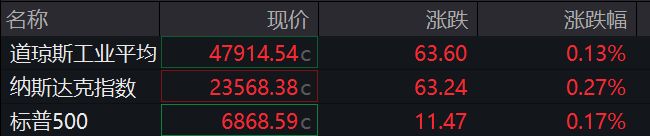
Market Overview - On December 5, US stock indices opened slightly higher, with the Nasdaq up 0.27%, the Dow Jones up 0.13%, and the S&P 500 up 0.17% [1] - The Dow Jones Industrial Average was at 47,914.54, increasing by 63.60 points or 0.13% [2] - The Nasdaq Index reached 23,568.38, rising by 63.24 points or 0.27% [2] - The S&P 500 stood at 6,868.59, gaining 11.47 points or 0.17% [2] Chinese Stocks Performance - Most popular Chinese stocks saw an increase, with the Nasdaq Golden Dragon China Index rising over 1% [2] - Baidu Group surged over 4%, while Xpeng Motors and NIO both increased by over 2% [2] - Li Auto and Alibaba rose by over 1% [2] Company News - Netflix experienced a decline of over 4%, while Warner Bros. Discovery saw an increase of over 3% [2] - Netflix is set to acquire Warner Bros. Discovery's film studio and streaming business for $72 billion [2]

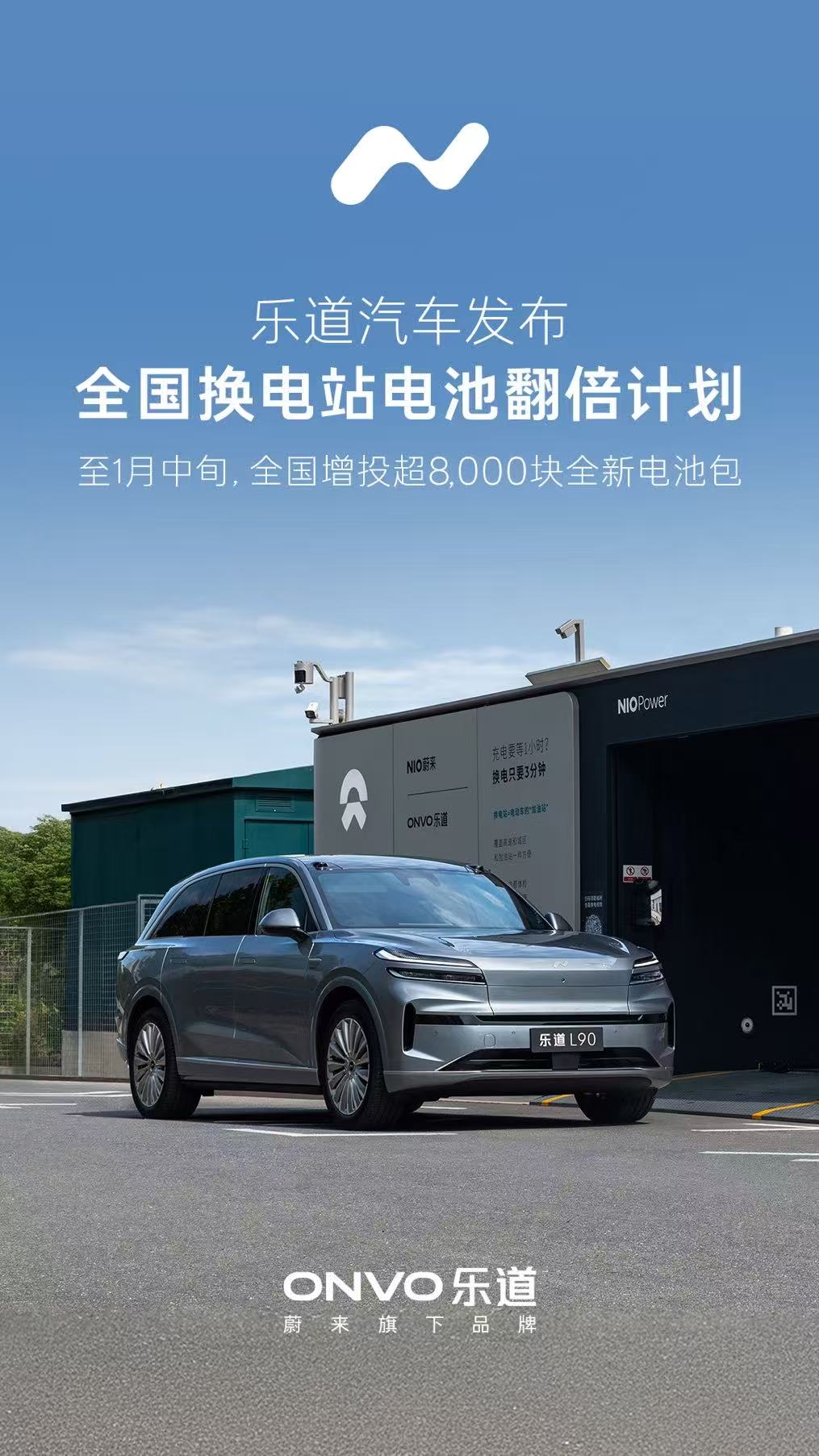
乐道发布“电池翻倍计划”,蔚来秦力洪:有望加速纯电转化
Xin Lang Cai Jing· 2025-12-05 13:35
Core Insights - The core viewpoint of the news is that LeDao Auto has announced a nationwide battery doubling plan for its battery swapping stations, aiming to enhance user experience and meet the growing demand for battery swapping services in the electric vehicle market [1][5]. Group 1: Battery Doubling Plan - LeDao Auto plans to invest over 8,000 new battery packs into its nationwide battery swapping network, including 4,500 units of 85kWh battery packs [1]. - The battery investment initiative began in November and is expected to be completed by mid-January 2026, resulting in more than double the number of batteries compared to previous plans [5]. - The strategy for battery resource allocation will prioritize northern regions based on user ownership and demand for battery swapping [5]. Group 2: Market Performance and Demand - The demand for battery swapping is driven by the rapid sales growth of LeDao's electric vehicles, with the L90 model achieving 40,000 deliveries since its launch on August 1, making it the top-selling large electric SUV [6]. - In November, LeDao's delivery volume reached 11,794 units, representing a year-on-year increase of 132.1% [6]. - The overall market for electric vehicles is showing significant growth, with pure electric vehicle sales in the first half of 2025 reaching 4.415 million units, a year-on-year increase of 46.24% [6]. Group 3: Industry Context - The battery doubling plan is a proactive response to the increasing user demand for battery swapping, which is essential for maintaining LeDao's competitive edge in the electric vehicle market [7]. - The initiative is expected to alleviate user anxiety during peak periods and enhance the experience for existing vehicle owners, thereby attracting more consumers to switch to electric mobility [7]. - The industry is approaching a "pure electric turning point," as indicated by the growing acceptance and reduced range anxiety among users, which is expected to accelerate the adoption of electric vehicles [5][7].