三全食品

Search documents
三全食品(002216) - 关于对外投资设立境外子公司及孙公司的进展公告
2025-10-27 10:16
证券代码:002216 证券简称:三全食品 公告编号:2025-035 三全食品股份有限公司 关于对外投资设立境外子公司及孙公司的进展公告 本公司及董事会全体成员保证信息披露内容的真实、准确和完整,没有虚假记载、误导 性陈述或重大遗漏。 一、对外投资概述 英文名称:SQ Group Global Holdings Ltd. 2、注册号:426872 3、注册资本:100万美元 4、注册地址:Palm Grove Unit 4, 265 Smith Road, George Town, P.O. Box 52A Edgewater Way, #1653, Grand Cayman KY1-9006, Cayman Islands 5、公司业务性质:Equity Holding Company 6、股权结构:由全资子公司持股100%,系公司全资孙公司。 三全食品股份有限公司(以下简称"三全食品"或"公司")于2025年7月 21日召开第九届董事会第二次会议审议通过了《关于对外投资设立境外子公司及 孙公司的议案》,同意公司在中国香港设立全资子公司、由香港子公司在开曼群 岛投资设立一家全资子公司,由开曼孙公司出资在澳 ...

三全食品:第三季度净利润为8252.03万元,同比增长34.91%
Xin Lang Cai Jing· 2025-10-27 10:16
三全食品公告,第三季度营收为14.32亿元,同比下降1.87%;净利润为8252.03万元,同比增长 34.91%。前三季度营收为50亿元,同比下降2.44%;净利润为3.96亿元,同比增长0.37%。 ...
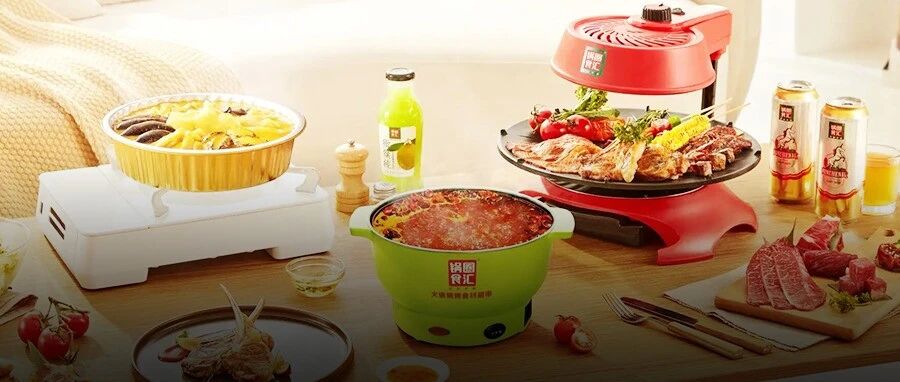
当锅圈不再只是“锅圈”:一个“社区央厨”的稀缺性
市值风云· 2025-10-27 10:09
Core Viewpoint - The article highlights the rapid growth and strategic evolution of Guoquan, a company that has successfully capitalized on the increasing demand for home dining in China, positioning itself as a significant player in the food supply chain and retail market [4][6][18]. Group 1: Company Overview - Guoquan was established in 2015, focusing on various hot pot ingredients and adopting a retail-centric business model by 2017 [6]. - The company expanded its store count from over 4,000 to nearly 10,000 between 2020 and 2022, leveraging a franchise model to enhance its market presence [6][12]. - As of 2024, Guoquan's revenue from franchise sales accounted for 84.2% of total revenue, while service fees contributed 2.4% [8]. Group 2: Financial Performance - In the first half of 2025, Guoquan achieved revenue of 3.24 billion RMB, a year-on-year increase of 21.6%, and a net profit of 183 million RMB, up 113.2% [12]. - The company’s core operating profit reached 190 million RMB, reflecting a growth of 52.3% [12]. - The average store efficiency declined from 700,000 RMB to 520,000 RMB in 2023 but began to recover in 2024, reaching 250,000 RMB in the first half of 2025, a 3.1% increase year-on-year [10][11]. Group 3: Strategic Initiatives - Guoquan has shifted its strategic focus from rapid expansion to optimizing existing franchise operations, termed the "seedling-sitting" strategy [11]. - The company plans to enhance its product offerings beyond hot pot ingredients to include barbecue, beverages, and breakfast items, aiming for comprehensive meal coverage [14]. - Guoquan has launched a second 10,000-store plan, targeting the addition of 10,000 new stores over the next five years, with a focus on expanding in lower-tier cities and towns [25]. Group 4: Supply Chain and Production - The company has invested in building its own food production facilities, increasing the proportion of self-produced products from less than 4% in 2021 to approximately 20% by mid-2025 [28][31]. - Guoquan has established a digital supply chain system, ensuring next-day delivery to retail stores, which has contributed to a stable gross margin of over 20% for three consecutive years [31][34]. - The company’s logistics capabilities have also led to a new growth segment in B2B sales, with revenue from other channels reaching 867 million RMB in 2024, a 50.8% increase [36]. Group 5: Market Position and Competitive Advantage - Guoquan is uniquely positioned in the market, with a significant presence in third-tier cities and below, where it operates approximately 80% of its stores [22][25]. - The company offers competitive pricing, with its products priced significantly lower than those in supermarkets and dining channels, providing a natural advantage in lower-income markets [20][21]. - Guoquan's business model integrates production, retail, and supply chain management, allowing for greater control and efficiency compared to traditional players in the market [18][19].

锅圈(02517):连锁化过万店,探索全供应链新模式
Guoxin Securities· 2025-10-27 07:27
Investment Rating - The report maintains an "Outperform" rating for the company [5]. Core Insights - The company, Guoquan, is a leading brand in the home dining food product sector in China, with over 10,150 stores as of 2024, and a revenue forecast of 6.47 billion yuan for the same year, with 84% of revenue coming from franchisees [1][4]. - The home dining market in China has grown significantly, with a CAGR of approximately 14.7% from 2018 to 2022, and the segment for food products has seen even faster growth at 25.5% [1][34]. - Guoquan's business model includes a deep integration of the supply chain and a focus on optimizing its commercial model, which is expected to enhance profitability [2][55]. Summary by Sections Company Overview - Guoquan is positioned as a leading brand in home dining food products, offering a variety of ready-to-eat and ready-to-cook ingredients across eight categories [12][14]. - The company has established a nationwide franchise network, achieving a store count of 10,150 by the end of 2024 [1][26]. Industry Analysis - The home dining market in China has expanded from 32.48 trillion yuan in 2018 to 56.16 trillion yuan in 2022, with projections to reach 71.09 trillion yuan by 2027 [34]. - The competitive landscape is highly fragmented, with Guoquan holding a market share of approximately 3.0%, leading the industry [39]. Core Advantages - Guoquan employs a "single product, single factory" model, operating seven factories to cover various product categories, which enhances its supply chain efficiency [2][55]. - The company has established a robust network of over 300 suppliers, ensuring a comprehensive supply chain and optimizing production costs [55][56]. Future Outlook - The company aims to expand its store count to 20,000, primarily targeting lower-tier cities, with a projected revenue growth of 13.3% to 95.9 billion yuan by 2027 [2][3]. - Profitability is expected to improve, with net profit margins projected to rise as operational efficiencies are realized [3][27].
预制菜企业最集中的省份 为什么是河南?
3 6 Ke· 2025-10-27 02:05
Core Insights - Henan province, known for its large population, is emerging as a significant player in the new consumption landscape, particularly in the prepared food sector [1][2] - The province is home to over 4,000 companies related to prepared food, ranking first in the country for the number of such enterprises [2] - Henan's agricultural advantages contribute to its dominance in the prepared food industry, producing a substantial portion of China's staple foods [3][4] Industry Overview - Henan produces 25% of China's steamed buns, 33% of instant noodles, 50% of ham sausages, and 60% of dumplings, showcasing its agricultural strength [3] - The province is recognized as a major agricultural hub, with its grain output second only to Heilongjiang in 2024, and it consistently ranks first in wheat production [3] - The local market provides high-quality, low-cost raw materials, supported by a well-established food production and management system [3] Market Dynamics - The population density in Henan provides a robust market and labor force, while its strategic location enhances logistics and cold chain transportation capabilities [4] - Companies like Shuanghui have successfully entered the prepared food market, launching various products under their brands [3] - The combination of agricultural output and industrial development positions Henan as a key player in the prepared food sector, often referred to as "China's kitchen" [4]


预制食品行业深度报告解读
2025-10-27 00:31
Summary of the Pre-prepared Food Industry Conference Call Industry Overview - The pre-prepared food industry is experiencing favorable policies, with a notification from six departments in 2024 clarifying the scope of pre-prepared dishes, which is expected to promote high-quality development in the industry [1][4] - The frozen food market in China benefited from the development of cold chain logistics and consumption upgrades, reaching a market size of 199.2 billion yuan in 2022, with a compound annual growth rate (CAGR) of 10.25%, projected to reach 330 billion yuan by 2025 [1][5] - The frozen hot pot ingredient market is continuously growing, with a market size of 52 billion yuan in 2021, expected to reach 83.3 billion yuan by 2025 [1][6] - The frozen noodle and rice products market has entered a mature phase, with a market size of 78.2 billion yuan in 2021, projected to exceed 100 billion yuan by 2025 [1][7] - The pre-prepared dishes market is rapidly growing, with a market size of 419.6 billion yuan in 2022, a year-on-year increase of 21.31%, and expected to surpass 1 trillion yuan by 2026 [1][8] Key Players and Market Structure - The upstream of the pre-prepared food industry includes raw material suppliers from agriculture, forestry, animal husbandry, and fishery, as well as packaging materials [2] - The midstream consists of five categories: agricultural and aquaculture companies, traditional frozen food companies, specialized pre-prepared food companies, restaurant chains, and retail companies [2] - The downstream includes large B-end, small B-end, and C-end markets, covering diverse dining scenarios such as chain restaurants, takeout, and group meals [2] Market Dynamics and Trends - Chain restaurants adopting pre-prepared dishes can improve service speed, stabilize quality, and reduce costs, with leading chain restaurants using pre-prepared dishes exceeding 85%, increasing profit margins from 25% to 32% [3][10] - The online takeout market in China grew from 0.3 trillion yuan in 2017 to 1.12 trillion yuan in 2022, increasing its share of the overall dining market from 7.6% to 20% [10] - The group meal market is expected to maintain a growth rate of around 10%, with a low concentration level (CR100 of only 6.7%) indicating significant potential for consolidation [11] Consumer Insights - C-end consumers of pre-prepared dishes are primarily women, middle to high-income individuals in first and second-tier cities, and young adults [13] - The trend of smaller households and a faster-paced lifestyle are driving the demand for pre-prepared dishes, with sales on major e-commerce platforms increasing by 120.5% year-on-year in January 2024 [13] Competitive Landscape - The frozen hot pot ingredient market has a low concentration (CR5 of only 15%), indicating potential for further consolidation, with key players including Anjijia and Haixin [7] - The frozen noodle and rice products market has a high concentration (CR3 of 64%), dominated by three major players: Sanquan, Sinian, and Wanchai Ferry [7] Future Outlook - The pre-prepared food market in China is considered a blue ocean market, with a projected size of 1 trillion yuan by 2026, and low industry concentration suggesting ample growth opportunities [15] - Companies with product, customer, channel advantages, and high supply chain efficiency are expected to stand out, with recommendations to focus on leading companies like Anjijia and Qianwei Central Kitchen, as well as others like Longda Meishi and Weizhi Xiang [15]
整个社会都在喊没钱了,为什么这些公司反而年赚百亿?
创业家· 2025-10-26 10:16
Core Insights - The article emphasizes that despite the prevailing narrative of economic hardship, certain industries are thriving and generating substantial profits, particularly in Japan and China [3][4]. - It identifies eight key sectors that are capitalizing on changing consumer behaviors and preferences, presenting significant business opportunities [5]. Group 1: Key Industries - **Second-Hand Economy**: The second-hand luxury market in Japan, exemplified by companies like Daikokuya, has seen a dramatic revenue increase. In China, platforms like Hongbulin and Panghu are experiencing similar growth [6][7][8]. - **Pet Economy**: With a decline in birth rates, spending on pets has surged. Brands like Inaba in Japan and Guobao in China are witnessing strong sales in pet food and healthcare products [12][13][15]. - **Adult Care**: The adult diaper market in Japan has surpassed $10 billion, indicating a growing demand for adult care products in China as well [16][18]. - **Health Food and Beverages**: The rise in health consciousness has led to increased sales of sugar-free beverages and functional drinks in both Japan and China [20][21]. Group 2: Emerging Consumer Trends - **Beauty Economy**: Despite economic constraints, spending on beauty products like collagen supplements remains high, with brands like Wei Yi Mei achieving significant market valuations [23][24][26]. - **Outdoor Recreation**: Companies in the outdoor equipment sector, such as Snow Peak in Japan, are thriving as consumers seek leisure activities despite economic challenges [29][31]. - **Emotional Economy**: Brands like Labubu and Rio are tapping into consumers' emotional needs, providing affordable luxuries that enhance well-being [34][35][36]. - **Lazy Economy**: The demand for convenience products, such as frozen foods and smart home appliances, is rising as younger generations prioritize time-saving solutions [40][42][44]. Group 3: Strategic Insights - The article suggests that businesses should focus on understanding consumer needs and adapting to market changes rather than relying solely on data-driven decisions. This approach is exemplified by successful Japanese brands that emphasize real consumer interactions and product quality [51][53][55].

预制菜企业最集中的省份,为什么是河南?
36氪· 2025-10-26 02:00
Core Viewpoint - The article emphasizes that Henan province plays a crucial role in China's food industry, particularly in the prepared food sector, making it a significant contributor to the national dining table [4][10]. Group 1: Industry Overview - Henan is home to several popular new consumer brands, including Mixue Ice City and Pop Mart, which have emerged from the province [4]. - The province has a high concentration of food processing companies, with over 4,000 related enterprises, ranking first in the country [9]. - Major food brands from Henan include Sanquan Foods, Shuanghui Development, and Si Nian Foods, which dominate various segments of the prepared food market [6][7]. Group 2: Market Share and Production - Sanquan Foods holds a market share of 20% to 40% in the frozen food sector, with a sales scale of 7.434 billion yuan in 2023 [6]. - Shuanghui Development, a leader in meat products, reported a sales scale of 60.1 billion yuan, capturing 5% of the market [6]. - Henan produces a significant portion of China's staple foods, including 1/4 of the country's steamed buns, 1/3 of instant noodles, and 1/2 of ham sausages [10]. Group 3: Agricultural Advantages - As a major agricultural province, Henan is known as the "granary of the world," with its grain output second only to Heilongjiang in 2024 [10]. - The province's meat, egg, and milk production totals 13.37 million tons, ranking third nationally, with a leading position in pig farming [14]. - The availability of local raw materials, such as flour and pork, combined with a well-established food production and management system, supports the growth of the prepared food industry [14]. Group 4: Strategic Location - Henan's geographical position in the center of China, along with its developed transportation infrastructure, provides a logistical advantage for the food industry [14]. - The province's population offers a substantial market and labor force, further enhancing its role in the prepared food sector [14].

食品加工板块10月23日涨0.05%,*ST春天领涨,主力资金净流出9880.5万元
Zheng Xing Xing Ye Ri Bao· 2025-10-23 08:20
Market Overview - On October 23, the food processing sector rose by 0.05% compared to the previous trading day, with *ST Chuntian leading the gains [1] - The Shanghai Composite Index closed at 3922.41, up 0.22%, while the Shenzhen Component Index closed at 13025.45, also up 0.22% [1] Stock Performance - The following stocks in the food processing sector showed notable performance: - *ST Chuntian (600381) closed at 5.58, up 2.39% with a trading volume of 146,300 shares and a turnover of 80.837 million yuan [1] - Huifa Food (603536) closed at 11.14, up 1.74% with a trading volume of 104,700 shares and a turnover of 116 million yuan [1] - Kemei Food (002661) closed at 9.68, up 1.36% with a trading volume of 33,000 shares and a turnover of 31.6787 million yuan [1] - Other notable stocks include Jiyuan Group (603262), Weizhi Xiang (605089), and Xiwang Food (000639) with respective gains [1] Capital Flow - The food processing sector experienced a net outflow of 98.805 million yuan from institutional investors, while retail investors saw a net inflow of 105 million yuan [2] - The following stocks had significant capital flow: - Xiwang Food (000639) had a net inflow of 19.6873 million yuan from institutional investors, but a net outflow from retail investors [3] - Jiyuan Group (603262) also saw a net inflow from institutional investors, while retail investors had a slight outflow [3] - Other stocks like Jinzi Ham (002515) and Sanyuan Food (002216) showed mixed capital flows [3]


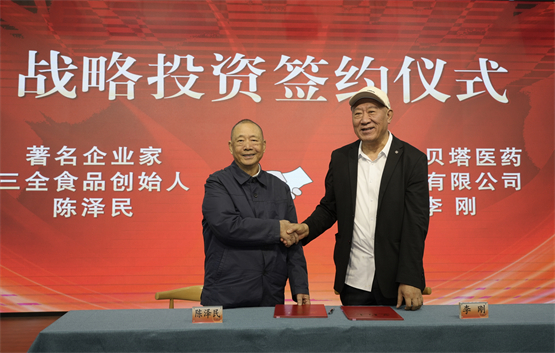
无锡贝塔融资破亿,推动碳-14全产业链建设及碳-14核电池产业化
Cai Fu Zai Xian· 2025-10-21 05:28
Group 1: Company Overview - Wuxi Beta Pharmaceutical Technology Co., Ltd. announced the completion of a strategic financing round worth hundreds of millions of yuan on October 20, with funds primarily allocated for the development of a global leading C-14 industry chain and the "Zhulong" series of C-14 nuclear batteries [1] - Founded in November 2008 by Dr. Li Gang, Wuxi Beta is the first high-tech enterprise in China specializing in the development and application of C-14 isotope technology [6] - The company aims to become a leading enterprise in the C-14 field in China and an international leader in C-14 technology, focusing on a comprehensive C-14 industry chain [6][9] Group 2: Strategic Investment - Renowned entrepreneur Chen Zemin, founder of Sanquan Foods, has joined Wuxi Beta as a strategic investor and will serve as the honorary chairman and president [1][10] - Chen Zemin's investment represents his third entrepreneurial venture, emphasizing his commitment to advancing cutting-edge technology and contributing to national strategic security and industrial upgrades [10][14] Group 3: Technological Development - Wuxi Beta has developed a complete C-14 industry chain technology system, including irradiation target materials, separation and purification, C-14 source materials, and C-14 products [6][9] - The company has successfully achieved the domestic production of C-14 source materials in collaboration with the China Nuclear Power Research and Design Institute, breaking the reliance on imports [8][9] - The "Zhulong No. 1" C-14 nuclear battery prototype was launched in March 2025, marking a significant milestone in the company's technological advancements [10] Group 4: Future Prospects - Wuxi Beta is currently progressing with the development of the "Zhulong No. 2" C-14 nuclear battery, with successful cold tests and ongoing optimization of thermal testing processes [12] - The company has established a wholly-owned subsidiary to accelerate the iteration and industrialization of C-14 nuclear batteries, while also preparing for the necessary regulatory approvals and facility constructions [12][14]