Momenta

Search documents
自动驾驶港股上市潮持续,天瞳威视欲借L4突围
Hua Er Jie Jian Wen· 2025-11-24 08:54
继自动驾驶企业小马智行(2026.HK)、文远知行(0800.HK)登陆港股市场后,又一家公司踏上了IPO 之路。 日前,苏州天瞳威视电子科技股份有限公司(下称"天瞳威视")向港交所递交了IPO申报材料。 天瞳威视的定位是技术服务商,主要提供自动驾驶技术解决方案,涵盖L2-L2+级及L4级自动化水平。 但与已上市的自动驾驶技术服务商地平线机器人(9660.HK)相比,天瞳威视的规模相对有限。 2024年,天瞳威视的收入为4.83亿元,同期净亏损高达4.63亿元。 近期以来,自动驾驶企业掀起了港股上市热潮。 天瞳威视能否借此在L4级市场中占有一席之地,正受到关注。 加码L4 天瞳威视所提供的自动驾驶解决方案采取L2-L2+级、L4级双线并进。 L2-L2+级的辅助驾驶解决方案主要包括泊车、驾驶及智能座舱,但该业务的收入占比正逐渐下滑。 2025年上半年,L2-L2+级解决方案创收0.58亿元,占比为36.8%,同比下滑了超4成。 这是市场竞争激烈的结果。 目前自动驾驶行业主要分成车企和第三方两类参与者。前者包括坚持自研的比亚迪、理想等车企;后者 包括地平线机器人(9660.HK)、天瞳威视、福瑞泰克、Momen ...
上汽奥迪AUDI品牌首款SUV概念车全球首秀,量产版明年上市
Jing Ji Guan Cha Bao· 2025-11-24 02:04
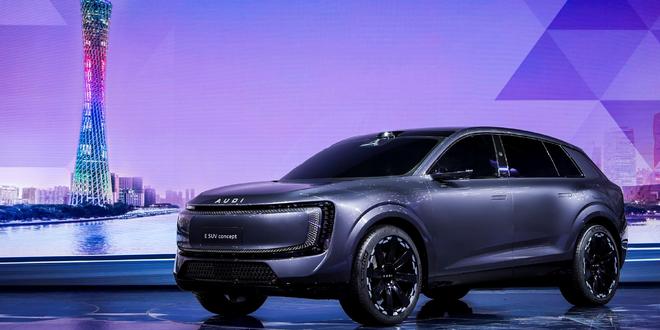
Core Insights - SAIC Audi launched the Audi E5 Sportback quattro model at the 2025 Guangzhou Auto Show, marking a significant step in its electrification strategy in China [2][3] - The Audi E5 Sportback features a limited-time price of 279,900 yuan, with an additional 10,000 yuan for a premium configuration worth nearly 50,000 yuan [2] - The vehicle boasts a maximum CLTC range of 773 kilometers and can recharge 380 kilometers of range in just 10 minutes, utilizing a 800V high-voltage platform [3] Product Features - The Audi E5 Sportback quattro model includes three major upgrades in handling and experience, such as 20-inch wheels, unique tires, air suspension, and a variable damping system [2] - Standard luxury features include massage front seats, heated rear seats, privacy glass, and a BOSE sound system [2] - The vehicle is powered by CATL's CTP battery technology and integrates the new AUDI OS operating system with Qualcomm Snapdragon 8295 chip [3] Brand Development - The unveiling of the Audi E SUV concept car signifies further development of the AUDI brand's family product system, showcasing a blend of design language and core technological advantages [3] - SAIC Audi has launched a new after-sales service brand and commitment system, with nearly 200 upgraded showrooms and plans to establish over 240 full-function user centers across more than 100 cities by year-end [3]

快速响应高效协同 庄睦德:中国研发团队是梅赛德斯-奔驰全球研发网络核心支柱
Zhong Guo Jing Ying Bao· 2025-11-22 11:24
Core Insights - Mercedes-Benz showcased the AMG GT XX concept car at the "2025 Mercedes-Benz XX Technology Innovation Day," highlighting its advancements in electrification and intelligence, marking a significant step towards future mobility [1][2] - The GT XX concept car features innovative technologies such as an axial flux motor and direct cooling battery technology, breaking 25 performance records on real racetracks, demonstrating Mercedes-AMG's leadership in high-performance electrification [1][3] Group 1: Technological Advancements - The AMG GT XX concept car is the first pure electric model utilizing F1-derived driving technology, showcasing a commitment to high performance and durability in electric vehicles [1][3] - The vehicle is equipped with a super-fast charging system, achieving an average charging power of over 850 kW, allowing for a range increase of 400 kilometers in approximately 5 minutes [4] - The battery design incorporates advanced materials, achieving an energy density of 300 Wh/kg, and features a lightweight aluminum alloy casing for improved safety and heat dissipation [4] Group 2: R&D and Collaboration - The Chinese R&D teams are identified as a core pillar of Mercedes-Benz's global R&D network, leading various projects such as new hybrid batteries and intelligent parking systems [2][3] - Mercedes-Benz emphasizes a collaborative approach, partnering with companies like ByteDance and Momenta to enhance AI capabilities and autonomous driving technologies [5][6] - The company is celebrating 20 years of R&D in China, focusing on integrating local partnerships to bring innovative technologies into everyday use for Chinese consumers [6]
BMW新世代四大技术上车:电动化能否守住“宝马味”?
Tai Mei Ti A P P· 2025-11-22 10:11
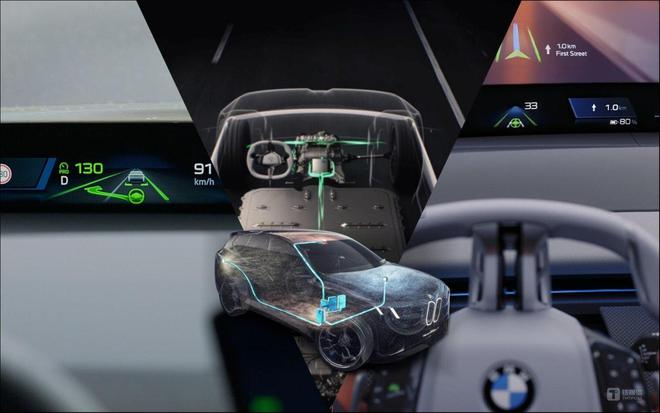
Core Insights - BMW showcases its new generation technology cluster at the 2025 Guangzhou Auto Show, emphasizing its advancements in electric and intelligent driving technologies [2] - The new generation BMW iX3 will be the first model to feature these technologies, set to be produced in 2026 at BMW's Shenyang plant, representing a significant step in BMW's future direction [2] Electric Drive System - The sixth-generation eDrive system is highlighted as a "performance champion," featuring a 46mm standard diameter cylindrical battery that achieves a 20% increase in energy density [3] - The system supports an 800V high-voltage platform, allowing for a 400km range increase with just 10 minutes of charging, and a CLTC range exceeding 900km [3] Driving Control Technology - The BMW Driving Control Super Brain integrates AI algorithms and hardware to replicate the driving feel of traditional fuel vehicles, addressing common issues in electric vehicle handling [3][4] - It processes data from 23 sensing units to perform 1000 dynamic calculations per second, enabling real-time adjustments to torque distribution, suspension damping, and steering force [3] Intelligent Cockpit and User Experience - The new panoramic iDrive system focuses on user-centered, scenario-based simplification, utilizing AR technology to enhance information accessibility while maintaining driving safety [5] - BMW collaborates with Huawei to integrate HarmonyOS NEXT for features like the BMW digital key and HUAWEI HiCar, tailored for local user habits [5] AI and Smart Driving Solutions - BMW partners with Alibaba to develop an intelligent cockpit system based on AI technology, aiming to create a new BMW personal assistant with advanced communication capabilities [6] - The collaboration with Momenta focuses on developing a new generation of intelligent driving assistance solutions, designed specifically for the Chinese market [6][7] Integration and Synergy of Technologies - The four key technologies form a synergistic effect, enhancing the overall driving experience by integrating electric drive, driving control, and intelligent assistance [8] - The system's ability to adjust based on real-time conditions, such as wet road surfaces, exemplifies the interconnectedness of these technologies [8] Market Position and Future Outlook - BMW's new generation technology cluster indicates its commitment to maintaining driving pleasure while addressing the challenges of electric and intelligent vehicle markets [9] - The success of these innovations will depend on their real-world performance and the company's ability to adapt to the rapidly evolving competitive landscape in China [9]
北美供应链“去中国化”?通用特斯拉在华业务已深度本土化
第一财经· 2025-11-21 14:30
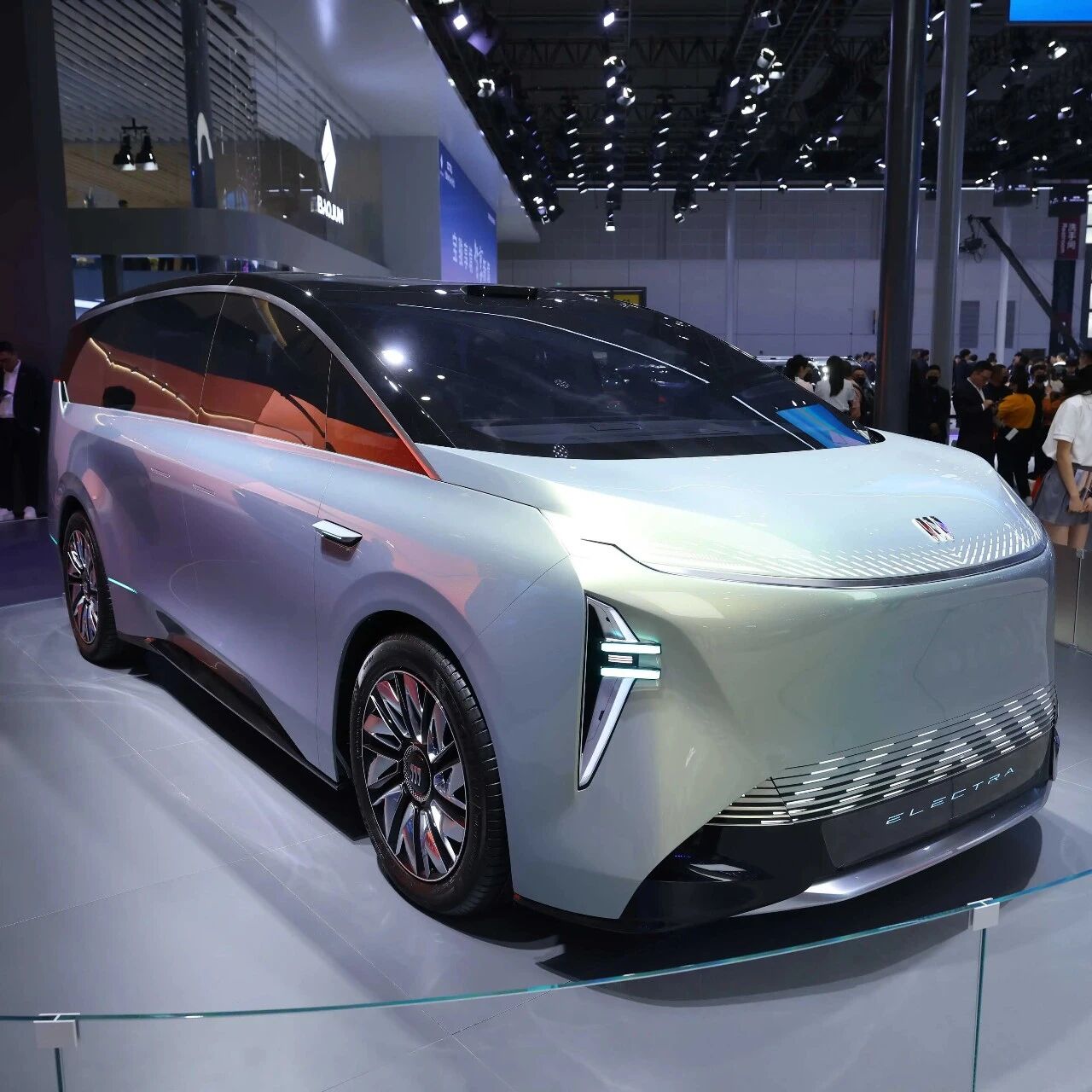
Core Viewpoint - General Motors (GM) is accelerating its supply chain localization strategy in North America, moving away from reliance on Chinese suppliers, while maintaining a strong local production system in China [3][4]. Group 1: General Motors' Strategy - GM's overall strategy emphasizes "local production, local procurement," aiming to build a resilient supply chain that is not specific to any country or region [3]. - Since 2021, GM has been implementing a global strategy of local procurement and nearshore outsourcing, particularly in response to tariff avoidance measures [4]. - In addition to North America, GM is applying similar localization strategies in other global markets, including China and South America, achieving a high level of localization in its supply chain and manufacturing systems [4]. Group 2: SAIC-GM's Localization in China - SAIC-GM has achieved over 99% localization in its parts supply chain and domestic production system, with local teams leading the product definition and core component development for new models [4]. - Starting in 2025, new models from SAIC-GM will be fully defined around Chinese customer needs, with all digital functionalities developed by local software and digital centers [5]. Group 3: New Product Launches - The Buick high-end electric sub-brand "Zhijing" represents SAIC-GM's high level of localization, with its second model "Shijia" unveiled at the Guangzhou Auto Show, featuring a hybrid powertrain and advanced digital capabilities [6]. - The "Shijia" model boasts a pure electric range of 224 km and a comprehensive range of 1320 km, with a 0-100 km/h acceleration time of 5.8 seconds [6]. Group 4: Tesla's Supply Chain Dynamics - Tesla has not officially responded to reports requiring suppliers to avoid using Chinese-made parts in vehicles produced in the U.S., but it is expected that this will not impact Tesla's Shanghai Gigafactory [6]. - Over 95% of parts for the Model 3 and refreshed Model Y produced at the Shanghai factory are sourced locally from China [6]. - Chinese suppliers are increasingly providing parts for Tesla's global factories, with over 400 Chinese suppliers collaborating with Tesla's Shanghai factory, and more than 60 of them integrated into Tesla's global procurement system [7].


采用4695大圆柱电池 宝马新世代iX3续航将突破900公里
Feng Huang Wang· 2025-11-21 11:01
Group 1 - The core point of the article is that BMW is set to launch the new generation iX3, featuring a proprietary 4695 large cylindrical battery that offers over 900 kilometers of CLTC range and can recharge over 400 kilometers in just 10 minutes [1] - The new 46mm diameter cylindrical battery utilizes a high-nickel ternary positive electrode and a cylindrical steel shell, enhancing energy while stabilizing nickel elements [1] - The negative electrode employs silicon-carbon technology and a customized electrolyte to extend battery life, with energy density improved by 20% compared to the previous prismatic battery [1] Group 2 - The new generation iX3 will highlight four key features: spacious interior, long range, enhanced safety, and ultra-fast charging [1] - The vehicle's design incorporates a module-free and integrated battery structure, resulting in increased longitudinal space within the cabin [1] - The 4695 large cylindrical battery's steel shell design, combined with a bottom-mounted explosion-proof valve, enhances safety [1] - Charging capabilities allow for 400 kilometers of range in 10 minutes and 80% charge in 21 minutes [1] Group 3 - BMW also showcased advancements in cockpit interaction and driving control technologies, including a collaboration with Momenta for developing driver assistance technologies [2] - The cockpit features a 4K projection area with a nano-coated glass that remains functional even when wearing polarized sunglasses [2] - The driver assistance technology is being developed and tested in collaboration with Momenta across four major cities: Beijing, Shanghai, Shenyang, and Nanjing [2] - This technology will be applied to multiple models, including the domestically produced new generation BMW iX3 [2]
一汽丰田技术品牌再升级:补智能短板 固混动长板
Jing Ji Guan Cha Wang· 2025-11-21 01:35
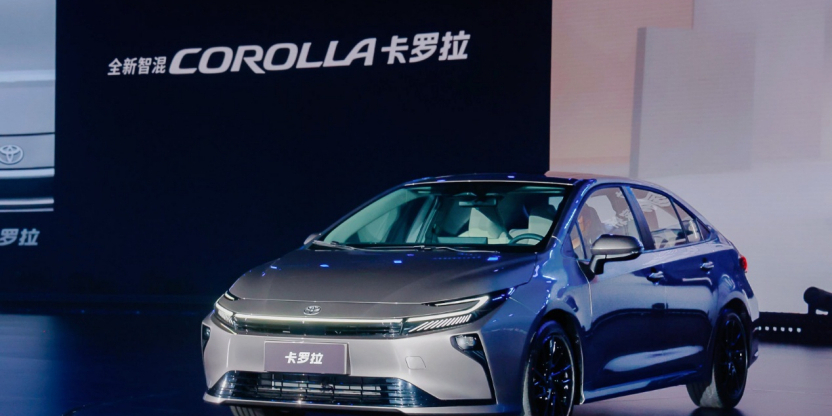
Core Insights - FAW Toyota has launched its IT'S TiME 3.0 technology brand, focusing on rapid enhancement of intelligence in its vehicles, aiming to catch up in the smart driving and cockpit sectors [2][5] - The company has introduced three new models: the new intelligent hybrid Corolla, the new bZ3 smart family car, and the new RAV4, which cover fuel, hybrid, and pure electric powertrains [4] Group 1: Technology and Innovation - The IT'S TiME 3.0 technology upgrade emphasizes smart driving and cockpit enhancements, with the Toyota Pilot smart driving assistance system utilizing a dual approach of in-house development and open collaboration [2][5] - FAW Toyota's collaboration with Momenta aims to develop localized smart driving solutions tailored for complex Chinese road conditions, leveraging 33 high-precision perception hardware and 544 TOPS computing power [2][3] Group 2: Product Features and Performance - The new RAV4 offers three power options: 2.0L intelligent hybrid, 2.5L intelligent hybrid, and 2.0L gasoline version, with the intelligent hybrid model achieving a fuel consumption as low as 3.99 liters per 100 kilometers [3][4] - The new intelligent hybrid Corolla has been lengthened by 75 mm and has a wheelbase extended by 50 mm to enhance passenger space, with a fuel consumption of 4.13 liters per 100 kilometers for the 1.8L HEV version [4] Group 3: Market Strategy - FAW Toyota's strategy reflects a response to the competitive landscape, where joint ventures are no longer passive but actively pursuing technological advancements through partnerships and in-house development [5] - The introduction of the IT'S TiME 3.0 brand and the new models signifies a pragmatic approach to balancing traditional strengths with emerging market demands during the transition to electrification [4][5]
从技术路线到人员更迭,为什么智能驾驶又开始了“新造词”?
3 6 Ke· 2025-11-19 12:19
Core Insights - The automotive and intelligent driving industry is experiencing rapid technological iterations, leading to new terminologies and concepts that challenge user understanding and acceptance [1] - The transition from rule-based systems to end-to-end and world model architectures is reshaping the landscape of autonomous driving, with significant implications for company strategies and personnel [2][4][10] Industry Trends - The shift towards end-to-end systems, exemplified by Tesla's FSD V12, has prompted other companies like Huawei, Xpeng, and NIO to explore similar approaches, indicating a trend towards more integrated solutions [2][4] - The industry recognizes the upcoming critical period for the implementation of advanced driver assistance technologies, particularly from Q4 2023 to mid-2024, as companies race to adopt and refine these technologies [1] Technical Developments - Current autonomous driving systems, whether rule-based or end-to-end, primarily rely on mimicking human driving through extensive data collection and learning, which presents challenges in efficiency and adaptability [4][5] - The introduction of VLA (vision-language-action) models aims to enhance understanding of the physical world, moving beyond mere imitation to a more human-like comprehension of driving scenarios [7][11] Company Strategies - Companies like Xpeng and Li Auto are pivoting towards VLA models, with Xpeng's second-generation VLA eliminating the language translation step to improve efficiency and data utilization [8][11] - The restructuring of R&D departments within companies such as Li Auto and NIO reflects a strategic shift towards prioritizing VLA and world model approaches, indicating a broader industry trend towards adapting organizational structures to new technological demands [15][17] Competitive Landscape - The competition between self-developed autonomous driving technologies and third-party solutions is intensifying, with companies increasingly opting for partnerships with specialized suppliers to enhance their capabilities [18][21] - The financial burden of self-development is prompting companies to reconsider their strategies, as seen in Xpeng's significant investment in computing resources and the need for profitability in Q4 2023 [19][22]


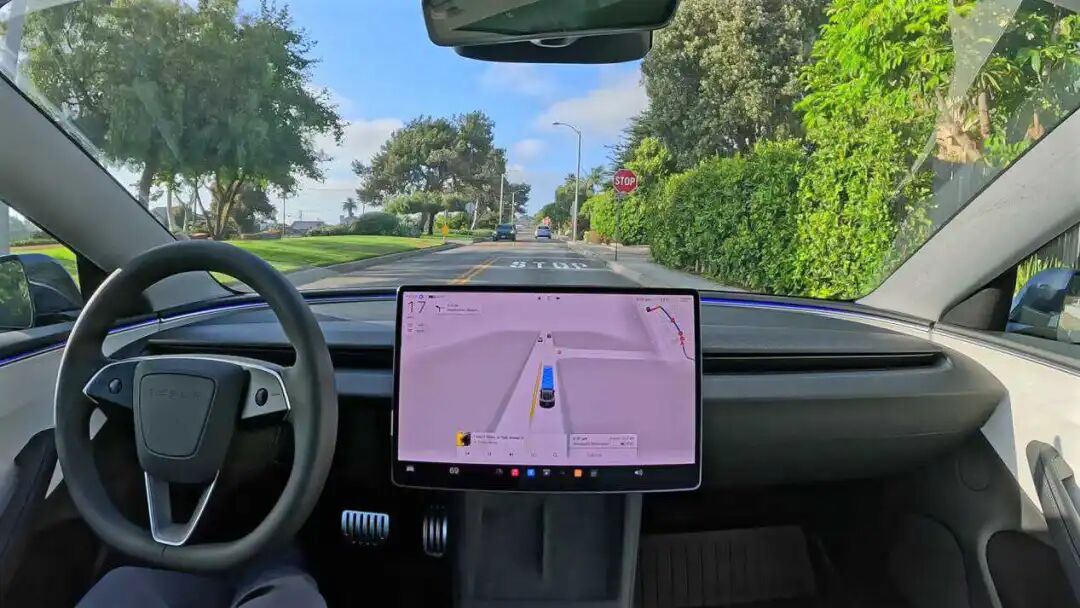
从技术路线到人员更迭,为什么智能驾驶又开始了“新造词”? | 电厂
Xin Lang Cai Jing· 2025-11-19 10:20
Core Insights - The automotive and smart driving industry is experiencing rapid technological iterations, leading to new terminologies and concepts that challenge user understanding and acceptance [1] - The transition from rule-based systems to end-to-end and world model architectures is reshaping the industry, with significant implications for company strategies and personnel [2][6] Group 1: Technological Evolution - The shift from rule-based to end-to-end systems has highlighted the limitations of modular approaches, particularly in terms of latency and information loss [2] - Tesla's introduction of the end-to-end FSD V12 has sparked interest among other companies like Huawei, Xpeng, and NIO, who are also developing similar solutions [2][5] - The industry is moving towards VLA (vision-language-action) models, which aim to better understand the physical world and improve driving actions [8][12] Group 2: Challenges in Implementation - Current systems, whether rule-based or end-to-end, rely heavily on passive learning from vast amounts of driving data, which limits their ability to adapt to new scenarios [5][6] - The VLA model faces challenges such as multi-modal feature alignment and the inherent limitations of language models in processing complex real-world situations [11][15] - Companies like Ideal Auto and Xpeng are exploring innovative VLA approaches to enhance their systems' capabilities and efficiency [8][12] Group 3: Organizational Adjustments - The transition to new technological routes has led to significant organizational restructuring within companies like Xpeng, Ideal Auto, and NIO, reflecting a shift in focus towards foundational models [13][14] - Xpeng's leadership changes indicate a strategic pivot from traditional VLA to innovative VLA, emphasizing the need for a robust foundational model [14] - NIO and Ideal Auto have also undergone multiple organizational adjustments to align their resources with the evolving technological landscape [15][17] Group 4: Competitive Landscape - The trend of self-research in autonomous driving technology is shifting towards partnerships with specialized suppliers, as seen with companies like Chery and Great Wall [18][19] - Suppliers are gaining an edge in flexibility and rapid iteration capabilities compared to traditional automakers, which face constraints in their development processes [21] - The competition is intensifying, with suppliers expected to play a more dominant role in the market as they advance their solutions [18][22]

新型3D打印工艺造出微型德尔塔机器人;搭载Momenta智能驾驶辅助系统的国产宝马iX3计划明年投产丨智能制造日报
创业邦· 2025-11-18 03:50
Group 1 - A new 3D printing technology has been developed by scientists at Carnegie Mellon University, successfully creating microDeltas, miniature delta robots that are expected to play significant roles in micro-manipulation, micro-assembly, minimally invasive surgery, and wearable haptic devices [2] - In Q3 2025, the global storage market reached a record high of $58.459 billion, with the DRAM market growing 24.7% to $40.037 billion and the NAND market increasing 16.8% to $18.422 billion. Samsung regained its position as the leading DRAM supplier with a market share of 34.8%, slightly ahead of SK Hynix at 34.4% [2] - Foton Motor announced that its jointly developed semi-solid-state battery has been mass-produced and is performing well in the market, while solid-state batteries are still in the technology reserve and product development phase [2] - Momenta and BMW Group have announced the development of a new generation of intelligent driving assistance solutions for the Chinese market, which will first be featured in the domestically produced BMW iX3, set to begin production in 2026 [2]