京东健康

Search documents
2026京东健康年度医生盛典在京举行 AI赋能共创互联网医疗新生态
Jing Ji Wang· 2026-01-22 01:24
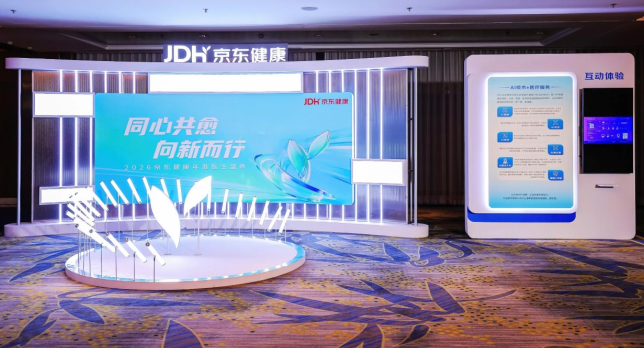
Group 1 - The 2026 JD Health Annual Doctor Ceremony was held in Beijing, focusing on building a broad ecosystem to enhance the professional value of doctors and promote quality medical resources to the public [1] - JD Health's CEO emphasized the company's commitment to collaborating with doctors and expanding its services [1] Group 2 - The launch of the evidence-based medicine AI product "ZhiYi" was a highlight of the event, integrating millions of authoritative medical literature and guidelines to support clinical decision-making and research [3] - "ZhiYi" will be fully integrated into the JD Doctor APP and is designed to enhance diagnostic efficiency and research quality [3] - JD Health has established a leading AI health service matrix, including various AI models and products, marking a significant leap in its AI technology capabilities [3] Group 3 - JD Health's internet medical services have evolved beyond online consultations to offer personalized solutions that link "AI + physical products + services," creating a comprehensive service loop [3] - The company is recognized for its strong supply chain and digital quality control capabilities, effectively connecting patients with quality medical resources, particularly in traditional Chinese medicine [3] Group 4 - JD Health has entered a new phase of "ecological co-construction" with top hospitals, exemplified by the "JD Home Fast Testing" service that allows nurses to collect samples at home [4] - Collaborations with various institutions in remote medical care, smart outpatient services, and health education are underway to build a collaborative ecosystem [4] - JD Health is actively involved in industry standard-setting, having published 317 standardized treatment paths in collaboration with the medical community [4] Group 5 - The "Great Doctor Charity Action Plan" was launched in partnership with several charitable organizations, aiming to encourage more doctors to participate in social welfare services through research, case collection, and resource linking [4]


张坤4100点上首“发声”:消费、房价、AI和国运,究竟该怎么看?
Xin Lang Cai Jing· 2026-01-22 00:56
来源:资事堂 当市场在交易当下的热点时,张坤在思考和下注未来的"国运"。 2025年1月22日凌晨,张坤的四季报准时上网,一如既往、不差分毫,恰如他始终如一的投资风格。 但本季度的观点有了更多的"新"内容。 其一、这是近十年来,张坤管理的产品首次在上证指数4100点以上"发声",面对过去两年间1000点的涨 幅和高度分化的行情表现,张坤的看法和应对颇引人关注。 其二、这是外界印象中,张坤首次提及AI和AI泡沫论,他不仅坦率的讲出了自己的看法,而且也藉由 价值投资的逻辑推演,并点评了部分中国企业在AI大潮中的表现。 其三、这也是张坤罕见的从增量和存量角度分析了未来我们所在国家的经济、消费、房地产等关键要素 的走向,很多判断和论述也颇有新意。 总之,张坤这一季的季报,不容错过。 中期经济增速不会低 经历了市场的回暖后,场内机构观点在2016年初明显趋暖,这也是张坤在过去几个季度里始终坚持、相 信并重申的。 但他看的更加长远,张坤在本季报里展示了他对中国未来增速和增长空间的"大级别趋势的预判"。 换言之,他认为,从增量角度看,未来几年的经济增速不会低,而由此带动的内需、消费等因素也值得 比市场共识更积极的看待。 主 ...
微医三闯港交所上市:历史包袱难卸,模式瓶颈待破
Sou Hu Cai Jing· 2026-01-21 11:52
Core Insights - WeDoctor is undergoing a significant transformation, moving from a digital healthcare platform to a "B2G" model focused on AI-driven health management services, particularly in collaboration with local governments and health insurance funds [5][6][20] - The company has reported impressive growth in revenue, particularly in health management services, which surged from 354 million RMB in 2023 to 3.893 billion RMB in 2024, with a 131.4% year-on-year increase in the first half of 2025 [8][14] - Despite the growth, WeDoctor faces structural vulnerabilities, heavily relying on a single client, the Tianjin health insurance fund, which accounted for 77.6% of its total revenue in the first half of 2025 [8][14] Business Model and Performance - WeDoctor's new operational model is based on a "per capita bundled payment" system, where health insurance funds prepay a budget for specific populations, linking revenue directly to cost control outcomes [5][6] - The company has achieved notable improvements in patient health metrics during its Tianjin pilot, with significant increases in control rates for chronic diseases [6] - However, the gross profit margins for WeDoctor's health management services have remained extremely low, fluctuating between 0.7% and 3.8%, indicating ongoing profitability challenges [8][14] Competitive Landscape - The healthcare sector is becoming increasingly competitive, with major players like Alibaba and JD.com entering the "AI + grassroots healthcare" space, leveraging their technological and market advantages [16][18] - WeDoctor's approach of deep integration with local healthcare services and insurance systems presents a unique positioning but also entails higher operational risks and slower expansion [17][20] - Competitors like DXY and Yilian have adopted different strategies, focusing on building trust and technology-driven solutions, which may pose further challenges for WeDoctor [16][18] Governance and Financial Health - WeDoctor's governance issues, particularly related to founder Liao Jieyuan's past regulatory violations, have raised concerns about the company's management stability and investor confidence [10][13] - The company's financial situation is precarious, with cumulative losses reaching 17.826 billion RMB over seven years, and a significant net loss of 7.508 billion RMB from 2022 to the first half of 2025 [14][15] - Despite a positive cash flow in the first half of 2025, the company has a low cash reserve of 455 million RMB, raising questions about its financial sustainability [15][14] Future Outlook - WeDoctor aims to replicate its Tianjin model in other regions, but faces challenges due to varying local policies and the complexity of implementation [19][20] - The company's ability to navigate these challenges and innovate its business model will be crucial for its survival in a competitive market [21]

刷新17年纪录的“公募冠军基金经理”任桀,持仓大调整!新赛道布局+最新研判来了
Mei Ri Jing Ji Xin Wen· 2026-01-21 05:24
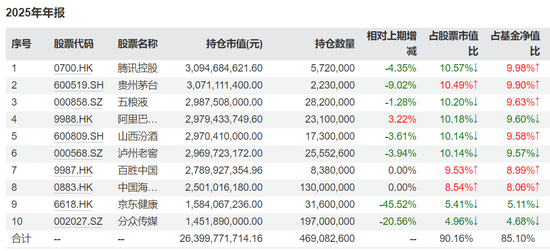
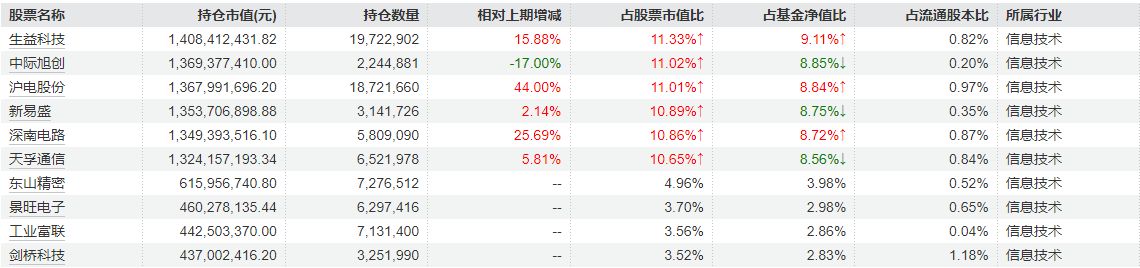
Group 1 - The core point of the article highlights that Yongying Fund's manager Ren Jie achieved a remarkable annual return of 233.29% for the Yongying Technology Smart A fund in 2025, breaking a 17-year record in the public fund industry [1] - The fund significantly reduced its equity investment from 91.59% in Q3 to 78.76% by the end of Q4 2025, reallocating assets to bank deposits and clearing out bond investments [2] - The top ten holdings of the Yongying Technology Smart A fund saw changes, with new additions including Dongshan Precision, Jingwang Electronics, Industrial Fulian, and Cambridge Technology, while previous holdings like Taicheng Light, Lanke Technology, and Shijia Light did not appear in the top ten [2][3] Group 2 - The fund manager emphasized a continued focus on global cloud computing investments, particularly in the optical communication and PCB sectors, while also acknowledging the potential for mean reversion after valuation expansion cycles [1][4] - The Yongying Hong Kong Stock Connect Technology Smart fund also underwent significant changes, with major reductions in holdings of Tencent Holdings and Bilibili-W, both exceeding 20% [5][7] - The performance of the Yongying Hong Kong Stock Connect Technology Smart A and C shares showed a net value growth rate of -22.02% and -22.14% respectively, underperforming their benchmarks by 7.88 and 8.00 percentage points [7]



巨头竞逐医疗AI赛道 健康160与京东健康等国内龙头打造中国方案
Zheng Quan Ri Bao Wang· 2026-01-21 04:09
Core Insights - Artificial intelligence (AI) is deeply integrated into the healthcare system, driving high-quality development in the industry [1] - The competition in the medical AI sector is intensifying among internet healthcare companies and tech firms [1] - Companies like JD Health and Alibaba Health are advancing from "single-point tools" to "ecosystem competition" [1] Company Developments - JD Health launched the evidence-based medicine AI tool "ZhiYi" aimed at doctors, which is considered a Chinese version of "OpenEvidence" [1] - Alibaba Health's AI product "Hydrogen Ion" has completed internal testing and is designed to be the lowest hallucination rate AI assistant in the medical field [1] - Health 160 has developed a dual-driven model combining public and private WeChat accounts to enhance digital healthcare services [2] Technological Advancements - Health 160 has tested an AI health steward multi-agent system covering pre-diagnosis, diagnosis, and post-diagnosis scenarios [3] - JD Health aims to evolve internet healthcare into a core engine for precise, personalized, and comprehensive health management [3] - OpenAI's ChatGPT for Healthcare has been deployed in various institutions, emphasizing data integration and personalized experiences [2] Industry Trends - The focus of AI healthcare competition has shifted from "usefulness" to "stable, compliant, and sustainable implementation" [3] - Future trends in China's AI healthcare include a complementary relationship between major players' full-chain layouts and precise niche market cultivation [4] - The industry is expected to transition from a "treatment-oriented" approach to "proactive health" as technology matures [4]
大厂AI,激战医疗
创业邦· 2026-01-21 03:45
Core Viewpoint - The article discusses the resurgence of interest in AI applications in healthcare, particularly through major tech companies like Ant Group, Baidu, and JD Health, which are leveraging AI to enhance healthcare services and address the growing demand for health management solutions [6][7][16]. Group 1: Market Dynamics and Company Strategies - Ant Group's AI health application "Afu" achieved 30 million monthly active users within a month of its new version release, indicating a strong market interest in AI health management [6]. - Major tech companies are shifting their strategies from merely providing online consultations to integrating AI into a comprehensive healthcare ecosystem, focusing on "assisting" rather than replacing healthcare professionals [7][10]. - The two main strategic approaches in the healthcare AI sector are "horizontal platformization" (e.g., Ant Group, Baidu, JD Health) and "vertical specialization" (e.g., ByteDance, iFlytek, Baichuan Intelligent), each with distinct goals and operational focuses [10][15]. Group 2: Challenges in Healthcare AI - Despite the technological advancements, challenges such as commercial viability, data quality, and responsibility delineation remain unresolved, indicating that the path to successful healthcare AI implementation is complex and long-term [8][30]. - The healthcare sector's unique nature requires deep industry knowledge and resource investment, making it difficult to achieve simple online connectivity [10][24]. - The reliability of AI technology in healthcare is critical, as errors can have life-threatening consequences, necessitating rigorous validation processes that may counteract efficiency gains [25]. Group 3: Market Opportunities - The demand for healthcare services is increasing, driven by a mismatch between quality medical resources and patient needs, with AI positioned as a key tool for improving efficiency in medical workflows [17]. - AI applications are expanding from disease treatment to proactive health management, reflecting a shift in user needs towards more frequent and active health maintenance [17][20]. - The healthcare AI market is attractive due to its potential to connect government, business, and consumer sectors, creating a comprehensive ecosystem that enhances service delivery and data utilization [21][22].

CXO订单预期回升、AI医疗加速C端渗透,港股通医疗ETF易方达(520850)助力把握医疗产业发展机遇
Mei Ri Jing Ji Xin Wen· 2026-01-21 03:03
1月21日早盘,港股医疗板块盘初下探后持续走强。截至10:29,中证港股通医疗主题指数上涨1.4%,成 分股中,微创机器人-B涨超12%,微创医疗涨超4%,阿里健康涨超3%。 消息面上,在2026年1月举办的J.P. Morgan医疗健康大会上,全球药企密集披露前沿研发管线与大额BD 交易,为CXO行业带来明确订单预期。与此同时,AI医疗在C端的渗透正在加速,从智能问诊到慢病管 理的应用场景不断拓展,推动阿里健康、京东健康等港股互联网医疗平台价值重估。 有分析指出,当前医疗板块具备多重投资机会。CXO行业在海外订单回暖和国内产能出清的双重推动 下,景气度持续提升且估值仍具修复空间;医疗器械领域受益于国内设备更新政策支持与海外市场拓 展,脑机接口、AI影像等前沿方向催化不断;互联网医疗则在医保支付改革深化背景下,平台运营效 率持续优化,盈利增长曲线愈发清晰。 中证港股通医疗主题指数从港股通证券范围内选取50只业务涉及医疗器械、医疗商业与服务、制药与生 物科技服务等领域的股票作为指数样本,重点覆盖CXO与互联网医疗等港股特色标的。港股通医疗ETF 易方达(520850)跟踪该指数,可助力投资者精准把握医疗产业创新 ...
慢牛下的AI算力与应用
2026-01-21 02:57
Summary of Key Points from Conference Call Records Industry Overview - The AI computing sector is currently experiencing a bottoming phase, with expectations of gradual recovery starting in February and reaching a peak in March and April, with an overall increase potentially exceeding 50% [1][2][6] - AI applications are expected to see short-term adjustments but maintain a positive long-term outlook, with a new wave of growth anticipated during the March earnings release period [1][2][6] Core Insights and Arguments - The decline in annual report forecasts should not be overly concerning, as it reflects strong industry demand rather than a lack of it. For instance, Shenghong Technology's lower forecast was attributed to raw material shortages and capacity constraints [1][4][7] - Current valuations are estimated at 15-20 times for 2026 and 7-10 times for 2027, suggesting that market dips present good buying opportunities [4][15][17] - The domestic computing industry is supported by strong supply and demand dynamics, with significant growth expected this year, particularly in cabinet-level and superpoint solutions [1][5][9] Investment Opportunities - Investors should focus on sectors where AI applications are gaining traction, such as customer service, video, and finance, which have begun to scale up [1][10][19] - Companies with technological barriers and core competitiveness, such as Alibaba and Tencent, are highlighted as potential investment targets due to their strong growth prospects [11][19] - The optical cable industry is experiencing increased demand, with China Telecom planning to procure over 78 million kilometers of new optical cables, indicating a tightening supply-demand relationship [3][22][23] Additional Important Insights - The AI computing sector is expected to see significant growth opportunities in the coming months, particularly in March, with core companies potentially doubling in value [14][18] - The light-asset model of companies like Xuchuang and Xinyi Sheng is expected to outperform heavier asset models due to their ability to increase shipment volumes even during large-scale expansions [16][17] - The optical cable market is projected to continue its upward trend in pricing due to increased demand from AI data center construction, with companies like Hengtong, Zhongtian, and Changfei being well-positioned [3][22][23] Conclusion - The overall sentiment towards the AI computing and application sectors remains optimistic, with significant growth expected in the near future. Investors are encouraged to strategically position themselves in these sectors to capitalize on upcoming opportunities.
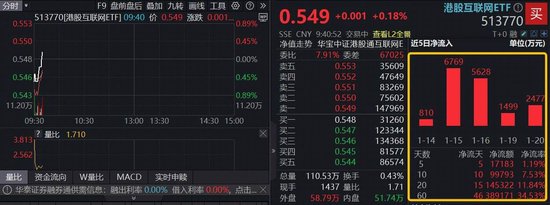
低吸时机到,南向资金连续10日买入腾讯、连续7日买入阿里!港股互联网ETF(513770)溢价翻红,14亿资金涌入
Xin Lang Cai Jing· 2026-01-21 02:10
Core Viewpoint - The Hong Kong stock market is experiencing fluctuations due to tariff concerns, but there are positive movements in key stocks like Alibaba, Tencent, and Kuaishou, indicating a resilient market sentiment [1][8]. Group 1: Market Performance - The Hong Kong Internet ETF (513770) opened lower but managed to rise by 0.18%, with a real-time premium rate of nearly 0.5%, reflecting positive buying sentiment [1][8]. - Over the past 20 days, the Hong Kong Internet ETF has seen a net inflow of 1.453 billion yuan [1][8]. - Southbound funds recorded a net purchase of 3.663 billion HKD, with Tencent receiving a net buy of 663 million HKD for ten consecutive days, and Alibaba seeing net purchases for seven consecutive days [8][9]. Group 2: Strategic Insights - Goldman Sachs reports that 2026 will be a pivotal year for leading Chinese internet companies, focusing on AI investments aimed at consumers and competition around "AI super entry points" [3][9]. - Companies like Alibaba are working to solidify their leading positions in e-commerce, while Tencent is accelerating AI functionalities in WeChat [3][9]. - The competitive landscape in sectors like food delivery is becoming more rational, leading to improved unit economics [3][9]. Group 3: ETF and Fund Details - The Hong Kong Internet ETF (513770) tracks the CSI Hong Kong Internet Index, with Alibaba being the largest weight at 14.71%, and the top ten stocks accounting for nearly 77% of the ETF [3][10]. - As of January 20, the fund size reached a historical high of 14.182 billion yuan, with an average daily trading volume exceeding 600 million yuan since 2025 [10]. - The Hong Kong Large Cap 30 ETF (520560) is recommended for those looking to reduce volatility while investing in technology and dividend stocks [10].
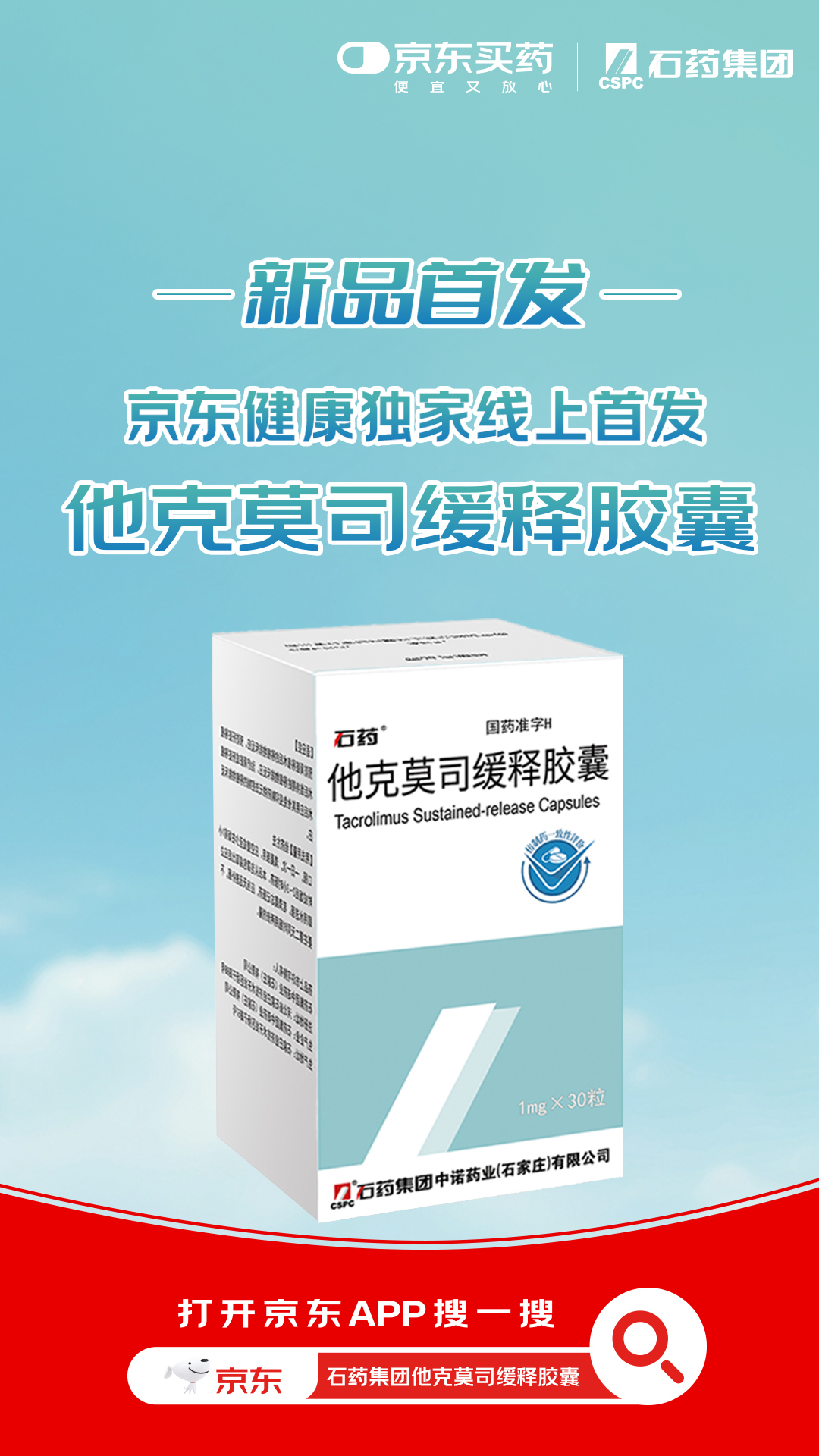
石药集团新药他克莫司缓释胶囊在京东健康全网首发
Zhong Jin Zai Xian· 2026-01-20 09:18
Core Viewpoint - The launch of the Tacrolimus extended-release capsules by Shiyao Group on JD Health represents a significant advancement in immunosuppressive therapy for organ transplant patients, offering a more convenient and stable treatment option [1][3]. Group 1: Product Launch and Features - The Tacrolimus extended-release capsules are designed to prevent transplant rejection in kidney and liver transplant patients, providing a safer and more effective immunosuppressive treatment [1]. - This new formulation allows for once-daily dosing, a shift from the traditional twice-daily regimen, which helps to stabilize drug concentration levels in the body and reduce the risk of side effects [3]. Group 2: Patient Benefits and Support - The extended-release formulation is expected to improve medication adherence and reduce patient burden, ultimately enhancing long-term treatment safety and protecting transplant kidney function [3]. - JD Health's comprehensive supply chain and online pharmacy services ensure that this specialized medication reaches patients efficiently and safely, while also offering online follow-up consultations and medication guidance [3]. Group 3: Future Plans - JD Health aims to collaborate with leading global pharmaceutical companies to introduce more innovative treatment options and provide a full spectrum of healthcare services, enhancing the quality of life for patients [4].