现代汽车集团

Search documents
黄仁勋算力帝国现两大隐忧,在韩国找“援军”,一声“伙伴”,一杯啤酒,胜算几何?
Mei Ri Jing Ji Xin Wen· 2025-11-01 10:48
Core Insights - Nvidia's CEO Jensen Huang visited South Korea after 15 years, signaling a strategic partnership with major Korean conglomerates to address supply chain concerns [1][3] - Nvidia recently became the first company to surpass a market capitalization of $5 trillion, highlighting its dominance in the AI sector [1] - The meeting with Samsung and Hyundai leaders was not just a casual gathering but a strategic move to strengthen Nvidia's supply chain and market position [1][3] Group 1: Strategic Partnerships - Huang's meeting with Samsung's Lee Jae-Yong and Hyundai's Chung Eui-sun at a casual venue symbolizes a deeper partnership beyond mere supplier-client relationships [1][6] - Nvidia aims to secure a stable supply of GPUs and HBM (High Bandwidth Memory) from Samsung, which is crucial for its production capabilities [2][3] - The partnership includes significant GPU allocations: 50,000 units each for the South Korean government, Samsung, and SK Group, and 60,000 units for NAVER Cloud [7] Group 2: Market Dynamics - The global AI arms race has intensified, making wafer production and HBM supply critical bottlenecks for Nvidia's capacity expansion [3] - Competitors in China, such as Huawei and Alibaba, are forming alliances to create an independent AI computing ecosystem, posing a long-term threat to Nvidia's market share [6][7] - The importance of building a comprehensive ecosystem is emphasized, as future demand for inference will surpass training needs, making cost-effectiveness and ecosystem integration vital [6] Group 3: Risks and Challenges - Despite the strategic alliances, Nvidia's heavy reliance on a single region for its supply chain presents inherent risks [8] - The potential for cracks in these alliances could lead to vulnerabilities in Nvidia's market position, highlighting the need for diversification [8]



算力帝国现两大隐忧,黄仁勋找韩国“援军”胜算几何
Mei Ri Jing Ji Xin Wen· 2025-11-01 08:03
Core Insights - Nvidia's CEO Jensen Huang visited South Korea after 15 years, signaling a strategic partnership with major Korean conglomerates to address supply chain concerns [1][2] - Nvidia recently became the first company to surpass a market capitalization of $5 trillion, highlighting its dominance in the AI sector [1] - The meeting with Samsung and Hyundai leaders was not just a casual gathering but a strategic move to secure a stable supply chain for GPUs and HBM [2][4] Group 1: Strategic Partnerships - Huang's visit to South Korea included a meeting with Samsung's Lee Jae-Yong and Hyundai's Chung Eui-sun, emphasizing a partnership rather than a simple supplier-client relationship [1][3] - The term "Kkanbu," meaning "close friends" in Korean, was used to symbolize the deepening ties between Nvidia and these companies [1] - Nvidia's strategy involves securing 50,000 GPUs each for the South Korean government, Samsung, SK Group, and Hyundai, along with 60,000 GPUs for Naver Cloud [4] Group 2: Supply Chain Concerns - The global AI arms race has intensified, making wafer production and HBM supply critical bottlenecks for Nvidia's capacity expansion [2] - Samsung is positioned as a key second supplier for Nvidia's wafer production and HBM, essential for maintaining a competitive edge [2] - Huang's remarks about the historical context of memory chips reflect the competitive landscape and the need for Nvidia to solidify its supply chain [3] Group 3: Competitive Landscape - The rise of Chinese chip companies like Huawei and Cambricon, along with local cloud giants, poses a significant long-term threat to Nvidia's market dominance [3][4] - These companies are forming a robust ecosystem that could challenge Nvidia's CUDA ecosystem, potentially leading to a "second world" independent of Nvidia [4] - The reliance on a single region for supply chains could become a vulnerability for Nvidia, despite the current strategic alliances [5][6]
英伟达宣布与三星电子合作建设新型人工智能工厂
Jing Ji Guan Cha Wang· 2025-11-01 03:53
Core Viewpoint - Nvidia announced a partnership with Samsung Electronics to establish a new AI factory, laying the groundwork for next-generation AI-driven manufacturing [2] Group 1: Nvidia's AI Factory Initiative - The Samsung semiconductor AI factory will be equipped with over 50,000 Nvidia GPUs, serving as a core vehicle for digital transformation [2] - Nvidia plans to collaborate with the South Korean government and industry giants such as Samsung, Hyundai Motor Group, and SK Group to deploy over 260,000 GPUs in South Korea [2] - This initiative aims to build a national-level AI infrastructure and "AI factory" cluster, facilitating the comprehensive transition of South Korea's manufacturing and digital economy into an intelligent phase [2] Group 2: Investment and Ecosystem Development - Through joint investments from the government and industry, Nvidia's AI platform will penetrate various sectors in South Korea, including automotive, semiconductor, telecommunications, and cloud computing [2] - The initiative will create a complete ecosystem from model training to industrial application [2] - Additionally, seven companies, including Amazon Web Services (AWS), Renault, and Siemens Healthineers, announced a total investment of approximately $9 billion in South Korea during the summit [2]
谷歌:安卓诈骗短信比iPhone少58%|首席资讯日报
首席商业评论· 2025-11-01 03:39
Group 1 - Google reported that Android users receive 58% fewer scam messages compared to iPhone users, indicating a significant advancement in Android's scam protection capabilities [2] - The global mobile scam situation is worsening, with losses exceeding $400 billion in the past year, equivalent to approximately 2.85 trillion yuan [2] - A survey showed that a higher percentage of Android users reported no scam messages in the past week compared to iOS users, with a difference of 58% [2] Group 2 - Morgan Stanley analysts noted that SK Hynix's DRAM inventory has dropped to two weeks, indicating a state of production and shipment simultaneously due to rising demand driven by AI [3] - The demand for DRAM and NAND storage chips has surged, leading to rapid inventory depletion and supporting continuous price increases [3] Group 3 - Apple executives stated that the supply constraints for the iPhone 17 are due to production plans falling short of actual demand, rather than manufacturing capacity issues [4] - The strong market demand for the iPhone 17 has resulted in a significant backlog of pre-orders as of the end of Q4 [4] Group 4 - The Minister of Finance emphasized the need to increase residents' income through various channels and optimize income distribution structures during the "15th Five-Year Plan" period [5] - The focus will be on enhancing tax, social security, and transfer payments to boost consumption [5] Group 5 - The Minister of Housing and Urban-Rural Development proposed reforms to the real estate development, financing, and sales systems, advocating for a "sell what you see" approach to mitigate delivery risks [6] - Regulations on pre-sale fund supervision will be strengthened to protect buyers' legal rights [6] Group 6 - Ganfeng Lithium announced that its 324Wh battery pack has been utilized in quadruped and humanoid robots [6] Group 7 - TSMC plans to invest approximately 1.5 trillion New Taiwan dollars to build four A14 semiconductor factories, expected to create nearly 10,000 jobs [6] - The project aims to start risk production by the end of 2027 and achieve mass production in the second half of 2028 [6] Group 8 - Vanke completed the redemption of its "22 Vanke 07" corporate bond, with a total redemption amount of 2.5 billion yuan and interest payment of 86.25 million yuan [7] - The bond had a coupon rate of 3.45%, and the redemption was fully executed [7] Group 9 - In the Yangtze River Delta region, over 30 companies in the embodied intelligence field announced key technology demands totaling 50.13 million yuan, with four collaborative projects signed for over 10 million yuan [8] Group 10 - Nvidia's CEO dined with major South Korean conglomerates, highlighting the importance of personal connections in business collaborations [9] Group 11 - Hunan Province announced measures to extend marriage leave to 20 days and maternity leave to 188 days, encouraging employers to adopt these policies [10] Group 12 - Xiaohongshu's life service sector saw a 37% year-on-year increase in search trends, with notable growth in niche demands such as film photography and interest training [11]

英伟达将在韩国部署26万枚GPU,与三星、现代等一起建设人工智能工厂;美的机器人家族公开亮相丨AIGC日报
创业邦· 2025-11-01 01:11
Group 1 - Nvidia plans to deploy up to 260,000 GPUs in South Korea, collaborating with the government and major companies like Samsung and Hyundai to establish AI factories [2] - The South Korean government will deploy 50,000 GPUs to support a national "sovereign AI" platform aimed at training large language models optimized for Korean language and industry applications [2] - The total GPU capacity in South Korea will increase from approximately 65,000 to over 300,000, positioning it as one of the largest AI computing centers outside the US [2] Group 2 - Midea Group unveiled its humanoid robot family, which includes three generations and five models, at its 30th Technology Month event [2] - The development strategy for Midea's robots involves releasing one generation, developing another, and planning a future generation, with the third generation model "Mei Luo U" currently in the planning stage [2] Group 3 - OpenAI announced the launch of Aardvark, an autonomous cybersecurity research agent powered by GPT-5 [3] Group 4 - Australian police are utilizing AI to decode commonly used emojis and modern internet slang to prevent crime and apprehend suspects, focusing on young individuals involved in hate organizations [2]

纳指月线7连涨,奇富科技涨13%领跑,中概股多数飘红
21世纪经济报道· 2025-10-31 23:42
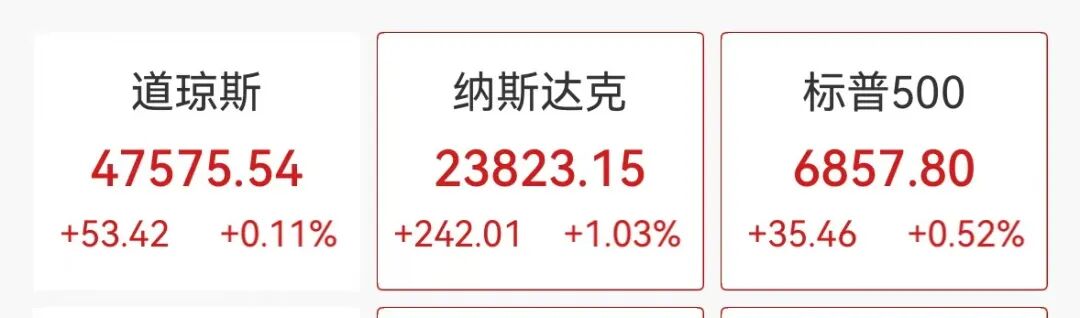
Market Overview - On October 31, the three major U.S. stock indices experienced slight gains, with the Dow Jones up 0.09%, S&P 500 up 0.26%, and Nasdaq up 0.61%. The Dow and S&P 500 have seen six consecutive monthly gains, while the Nasdaq has achieved seven consecutive monthly gains [1] - Despite strong earnings reports from major U.S. tech companies and ongoing AI investments, factors such as Federal Reserve policy divergence, high interest rates affecting real estate and consumption, government shutdown risks, and trade uncertainties are suppressing the upward potential of U.S. stocks, leading to a cautious outlook on growth [3] Company Performance - Amazon's stock surged by 12.2% at the opening, increasing its market value by approximately $274.2 billion (about 1.95 trillion RMB). By the end of the day, it was still up over 9%. Amazon's Q3 net sales rose 13% year-over-year to $180.2 billion, exceeding market expectations of $177.8 billion, with net profit reaching $21.2 billion, a nearly 40% increase. Notably, AWS cloud business revenue grew 20% year-over-year to $33 billion, surpassing analyst expectations and marking the strongest growth since 2022 [3] - Nvidia's stock fluctuated, initially rising over 2% before closing down 0.2%, with a market capitalization of $4.9 trillion. On the same day, Nvidia announced a collaboration with the South Korean government and major companies like Samsung and Hyundai to deploy over 260,000 GPUs in South Korea, aiming to build national-level AI infrastructure and "AI factory" clusters [3] Chinese Stocks - The Nasdaq Golden Dragon China Index rose by 0.53%, while the Wind China Technology Leaders Index fell by 1.70%. Notable individual stock movements included a nearly 16% increase for Canadian Solar, over 13% for Qihoo 360, and more than 11% for Luokung Technology. Conversely, Xpeng Motors and TAL Education fell over 5%, with Alibaba down about 2% and JD Group down nearly 1% [4] Commodity Market - In the precious metals market, gold prices fell by 0.51% to $4004.02 per ounce, with a cumulative increase of 3.74% in October. Gold futures on COMEX rose by 0.06% to $4018.50 per ounce. Silver prices dropped by 0.54% to $48.6651 per ounce [5][6] - Oil prices continued to rise, with the main U.S. oil contract closing up 0.51% at $60.88 per barrel, while Brent crude rose 0.43% to $64.65 per barrel. As of the week ending October 28, speculative net long positions in Brent crude increased significantly by 119,046 contracts to 171,567 contracts, indicating a growing bullish sentiment in the market [7]

陆家嘴财经早餐2025年11月1日星期六
Wind万得· 2025-10-31 22:34
Group 1 - The U.S. Treasury Secretary indicated that a U.S.-China trade agreement could be signed as early as next week, with China expressing willingness to work with the U.S. to implement the consensus reached by the two heads of state [1] - The public fund industry in China, valued at over 36 trillion yuan, is undergoing significant reforms, including guidelines for performance benchmarks that may lead to reduced compensation for fund managers whose long-term performance falls below benchmarks [1] Group 2 - The State Council is focusing on deepening reforms in key areas and expanding institutional openness, aiming to enhance market access and optimize regulatory frameworks for factor markets [2] - The People's Bank of China is working on optimizing the monetary policy framework and addressing market "herding effects," while also preparing policy tools to respond to macroeconomic and financial market fluctuations [2] - The Ministry of Finance plans to utilize special bonds and long-term government bonds effectively to encourage private capital participation in major projects and improve income distribution [2] Group 3 - The National Development and Reform Commission announced that 2 trillion yuan of the 5 trillion yuan local government debt limit will be allocated for new special bonds to support investment in certain provinces [3] - China's manufacturing PMI for October was reported at 49%, a decrease of 0.8 percentage points from the previous month, while the non-manufacturing PMI rose slightly to 50.1 [3] - A new action plan for smart city development aims to establish over 50 fully digital transformation cities by the end of 2027 [3] Group 4 - The China Securities Regulatory Commission (CSRC) is emphasizing the need for a more inclusive and adaptable capital market system during the 14th Five-Year Plan period, including reforms in the Sci-Tech Innovation Board and the Growth Enterprise Market [5] - The CSRC has taken a strict stance against misinformation in the capital market, reinforcing a "zero tolerance" policy towards false information dissemination [5] - A-shares experienced a decline, with the Shanghai Composite Index closing down 0.81% at 3954.79 points, while small-cap stocks saw a rebound [6] Group 5 - The Hong Kong Hang Seng Index closed down 1.43%, with technology stocks continuing to struggle, while healthcare stocks performed well [6] - The Shanghai Stock Exchange reported a year-on-year increase in net profit for listed companies in Q3, with significant growth in mergers and acquisitions since the introduction of new policies [6] - The Hong Kong Stock Exchange announced an expansion of the "Southbound ETF Connect" list, increasing the number of ETFs available for trading [7] Group 6 - The Ministry of Housing and Urban-Rural Development is reforming the real estate development and sales system to prevent delivery risks and protect buyers' rights [10] - The top 100 real estate companies in China reported a sales amount of 253 billion yuan in October, reflecting a year-on-year decrease of 41.9% [10] - The China Automotive Dealers Association reported an increase in the inventory warning index for October, indicating improved conditions in the automotive circulation industry [11]


中国资产深夜拉升 乐信飙涨26% 亚马逊市值大增1.9万亿元
2 1 Shi Ji Jing Ji Bao Dao· 2025-10-31 15:46
Group 1: Amazon - Amazon's stock price surged by 12.2% at opening, with market capitalization increasing by $274.2 billion (approximately ¥1.95 trillion) [2] - In Q3, Amazon reported net sales of $180.2 billion, a 13% year-over-year increase, surpassing market expectations of $177.8 billion; net profit reached $21.2 billion, up nearly 40% [4] - AWS cloud business revenue grew by 20% year-over-year to $33 billion, exceeding analyst expectations and marking the strongest growth since 2022, alleviating concerns about AWS lagging in the AI competition [4] Group 2: Apple - Apple reached a historical high in stock price before a short-term decline; Q4 revenue was $102.47 billion, exceeding $100 billion and marking a year-over-year increase of 8% [5] - Net profit for Q4 was $27.47 billion, a significant year-over-year increase of 86%, with diluted earnings per share rising by 91% to $1.85 [5] - Despite overall strong performance, revenue from Greater China declined by 3.6%, becoming the only region with negative growth [5] Group 3: Cryptocurrency - Most cryptocurrencies saw an increase, with Bitcoin returning to the $110,000 mark, up 2.81%, Ethereum at $3,874, up 2.39%, and Dogecoin rising over 3% [7] Group 4: Gold Market - The World Gold Council noted that geopolitical tensions, persistent inflation, and uncertainty in global trade policies have driven demand for gold as a safe-haven asset [6] - The outlook for the gold market remains optimistic, supported by a weakening dollar, expectations of rate cuts, and the risk of stagflation, indicating further potential for gold price increases [6]




中国资产深夜拉升,乐信飙涨26%,多股涨超10%,亚马逊市值大增1.9万亿元
2 1 Shi Ji Jing Ji Bao Dao· 2025-10-31 15:28
Group 1 - Amazon's stock surged by 12.2%, increasing its market value by $274.2 billion (approximately 1.95 trillion RMB) [3] - Amazon's Q3 net sales reached $180.2 billion, a 13% year-over-year increase, surpassing market expectations of $177.8 billion. Net profit was $21.2 billion, up nearly 40% [5] - AWS cloud business revenue grew by 20% year-over-year to $33 billion, marking the strongest growth since 2022 and alleviating concerns about AWS lagging in the AI competition [5] Group 2 - Nvidia's stock rose over 1.6%, with its market value returning to $500 billion. Nvidia announced a collaboration with the South Korean government and major companies to deploy over 260,000 GPUs for national AI infrastructure [5] - Apple's Q4 revenue reached $102.47 billion, a historical high for the period, with a year-over-year growth of 8%. Net profit was $27.47 billion, up 86% [6] - Apple's total revenue for the fiscal year reached $416.16 billion, with net profit exceeding $112 billion, continuing its growth trend. However, revenue from Greater China declined by 3.6%, marking it as the only region with negative growth [6] Group 3 - The Nasdaq Golden Dragon Index saw a shift from decline to increase, with notable stock performances: Lexin surged by 26%, and several other stocks rose over 10% [6][7] - International oil prices experienced a short-term increase, with both Brent and WTI crude oil rising nearly 1% [8] - Gold prices fell below $4,020 per ounce, with Morgan Stanley predicting gold prices could reach $4,500 per ounce by mid-2026 due to geopolitical tensions and inflation pressures [11]




中国资产深夜拉升,乐信飙涨26%,多股涨超10%,亚马逊市值大增1.9万亿元
21世纪经济报道· 2025-10-31 15:19
Core Viewpoint - The article highlights significant movements in the stock market, particularly focusing on the performance of major companies like Amazon, NVIDIA, and Apple, as well as trends in oil prices and gold. Group 1: Company Performance - Amazon's stock surged by 12.2%, with its market value increasing by $274.2 billion (approximately 1.95 trillion RMB). The company's Q3 net sales rose by 13% year-on-year to $180.2 billion, exceeding market expectations of $177.8 billion. Net profit reached $21.2 billion, a nearly 40% increase. AWS cloud business revenue grew by 20% year-on-year to $33 billion, marking the strongest growth since 2022, alleviating concerns about AWS's competitiveness in AI [2][3]. - NVIDIA's stock rose over 1.6%, with its market capitalization returning to $500 billion. NVIDIA announced a collaboration with the South Korean government and major companies like Samsung and Hyundai to deploy over 260,000 GPUs for national AI infrastructure, enhancing Korea's manufacturing and digital economy [3]. - Apple's Q4 revenue reached $102.47 billion, a historical high, with a year-on-year growth of 8%. Net profit was $27.47 billion, up 86%, and diluted earnings per share increased by 91% to $1.85. However, revenue from the Greater China region declined by 3.6%, marking it as the only region with negative growth [3]. Group 2: Market Trends - The Nasdaq Golden Dragon Index for Chinese stocks saw a reversal from decline to increase, with notable gains in companies like Lexin, Qifu Technology, and Xinyi Technology, which rose over 10%. However, Alibaba and Xiaomi both experienced declines of over 2% [3]. - International oil prices saw a short-term increase, with Brent and WTI crude oil both rising nearly 1% [6][8]. - Gold prices experienced a short-term decline, falling below the $4,020 mark. Morgan Stanley predicts gold prices could reach $4,500 per ounce by mid-2026, up from a previous forecast for the second half of 2026 [8][9].