寒武纪

Search documents
存储价格涨势将贯穿全年!相关ETF年内涨超25%,基金经理看好半导体机会
Sou Hu Cai Jing· 2026-02-23 03:20
Core Viewpoint - The global memory chip industry has shifted to a seller's market, with price increases expected to continue throughout 2026 [2] Group 1: Market Dynamics - SK Hynix reports that DRAM and NAND inventory levels are critically low, with only about 4 weeks of supply remaining, leading to increased bargaining power for suppliers [2] - The demand for memory chips is driven by the surge in AI models and high-performance computing, which exceeds industry expectations [2] - The production capacity for high bandwidth memory (HBM) has been sold out in advance, indicating a significant supply-demand gap [2] Group 2: Financial Performance - SK Hynix's financial report for the fiscal year ending December 31, 2025, shows record-high revenues of 97.1467 trillion KRW and operating profits of 47.2063 trillion KRW, with a profit margin of 49% [3] - The fourth quarter of 2025 saw a revenue of 32.8 trillion KRW and an operating profit of 19.2 trillion KRW, marking a quarter-on-quarter increase of 34% and 68% respectively [3] - The fiscal year 2025 revenue is projected to increase by approximately 30 trillion KRW compared to 2024, with operating profits expected to double [3] Group 3: Investment Opportunities - The Huatai-PB CSI Korea Semiconductor ETF has seen a year-to-date increase of 25.65%, providing investors with a channel to benefit from the rising memory prices [4] - Fund managers express optimism about the semiconductor investment landscape, particularly in high-end equipment and key components related to memory expansion [4][6] - The semiconductor industry is viewed as being in the middle of an innovation cycle, with AI-related capital expenditures expected to remain high through 2026 [5] Group 4: Sector Focus - Investment managers highlight three key areas: domestic computing power, wafer fab expansion, and military semiconductors, with domestic computing power being a core growth driver [6] - The expansion of wafer fabs is expected to benefit from AI demand and supply shortages, creating upward potential for related equipment and materials [6] - The military semiconductor sector is anticipated to see growth driven by increased demand from commercial aerospace and government planning initiatives [6]


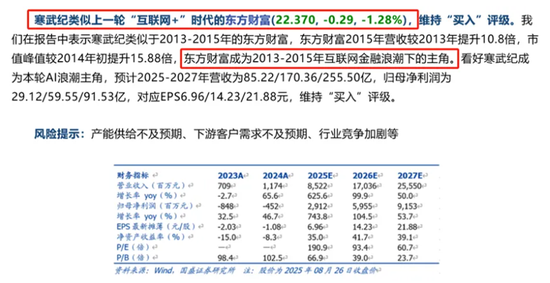
从寒武纪,到东方财富,再到英伟达,有多少股民能“耐寂寞”、“扛阴跌”?
Xin Lang Cai Jing· 2026-02-22 23:12
来源:基本面力场 昨天力场君以寒武纪(688256.SH)这只股票为例,就着国盛证券在研报中将其类比为东方财富 (300059.SZ)在10多年前那一波股价大涨的评价,和小伙伴们做了个交流分享。 再说大洋彼岸的英伟达(NVIDIA),与寒武纪更具有行业可比性,也更令人神往:在2021年到2022年 期间,也曾一度下跌了三分之二,随后则一路长红、涨到了没朋友,诞生了多少个千万富翁、亿万富翁 呀;只要能稳稳抓住,我不也能是千万富翁、亿万富翁的其中一个了吗? 但是从力场君的自身感受来说,这种"事后诸葛亮"的判断,在实际投资操作当中,基本没什么参考价 值,它只是基于明确结果下的后视镜,而现实持股过程中的心理恐惧,却是伴随着未知,源于对自我判 断的怀疑。 当股价走势与心理预期出现巨大偏差、眼前只有一片未知的迷雾的时候,特别是眼见着其他行业个股轮 番上涨,巨大的机会成本焦虑和比较心理,在日复一日地侵蚀耐心,有多少人还能耐得住寂寞、扛得住 阴跌?这不是对投资技巧的考验,而是一场对心性的磨砺修炼。 说回到东方财富,这是"互联网+证券资讯"行业里,后期表现最好的一个了,典型的幸存者偏差。其他 的几家就惨多了,比如赢时胜(300 ...


打醒了美国华盛顿!特朗普即将访华,中方或将拒绝美方的G2提议
Sou Hu Cai Jing· 2026-02-22 09:04
Group 1 - The recent performance of humanoid robots during the Chinese Spring Festival Gala showcased significant advancements in robotics, indicating China's transition from a manufacturing powerhouse to a stronghold in intelligent manufacturing [1][3] - The performance of robots, which included complex movements and recovery from falls, has drawn international attention, with foreign media highlighting the impressive capabilities of Chinese robotics companies [1][3] - The rise of Chinese robotics and AI technology signals a potential shift in global automation standards, with predictions that by 2025, Chinese robots will be capable of performing advanced stunts [1][3] Group 2 - The upcoming visit of Trump to China is seen as a necessity for the U.S. to reassess its trade strategies, particularly in light of the Supreme Court ruling that may require the refund of over $175 billion in tariffs [1][3] - The U.S. is facing the reality that the trade war has not yielded the desired results, as China remains a critical supplier for various industries, including rare earths and pharmaceuticals [3][5] - The technological restrictions imposed by the U.S. have inadvertently accelerated China's advancements in key sectors, such as AI and semiconductor manufacturing, with significant breakthroughs achieved in domestic production capabilities [3][5] Group 3 - The interdependence of the U.S. and Chinese economies suggests that a decoupling would be detrimental to both parties, emphasizing the need for dialogue to resolve trade disputes [5][7] - The focus on innovation in robotics and semiconductor technology indicates that the country is positioning itself to lead in future technological developments, reducing reliance on foreign technologies [7] - The combination of China's technological advancements and the need for the U.S. to engage in constructive dialogue reflects a shift in the dynamics of U.S.-China relations, with implications for global technology trends [7]
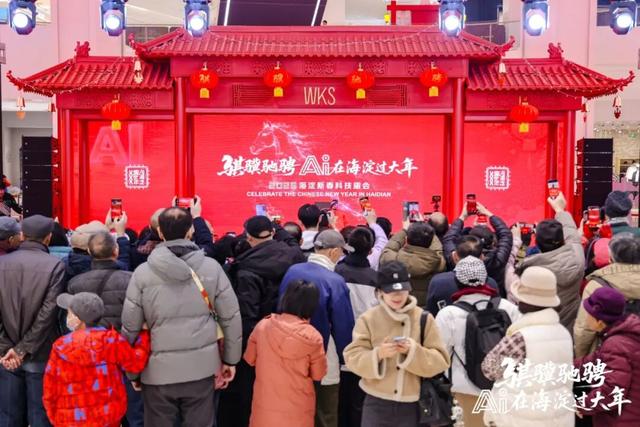
海淀科技庙会上的“全家福”!从一颗芯片到一个机器人的协同进化
Bei Jing Ri Bao Ke Hu Duan· 2026-02-21 14:47
当财神爷机器人巡游送上新春祝福 当诗词机器人与小朋友对答如流 当灵巧的机械臂稳稳递上一杯咖啡 当VR眼镜带你一秒穿越到三山五园 …… 2026年的海淀新春科技庙会 不再是"科技过年"的新奇体验 透过这些跃动的科技身影 一幅海淀AI产业集群的"全家福" 正悄然铺展 70余家企业、150余件展品,在五棵松万达广场1至6层,拼出了一张从"中国芯"到"智慧大脑"、到"灵巧 双手",再到具身智能机器人的完整产业链图谱。在这里,我们看到的不仅是单个产品的炫酷,更是底 层芯片、核心算法、精密零部件与整机的完整链条,以及由此产生的强大协同效应。 算力筑基:从一粒芯片看见产业"黑土地" 人工智能的智慧 芯片是什么?算力意味着什么?海淀芯为何重要?在科普互动区,这些问题被一一拆解。不远处还有芯 片雕刻封装体验,市民可以亲手制作一枚芯片钥匙扣,在激光雕刻中感受"造芯"的仪式感。 作为人工智能的"心脏",芯片是每一行代码、每一次交互的物理承载。这个展区如同整个生态的"黑土 地",默默支撑着楼上楼下奔跑、跳跃的每一个机器人。没有这里的底层突破,就没有上层应用的百花 齐放。在庙会现场,这种"隐形"的支撑力量,第一次如此直观地站在了台前。 ...

西方专家集体懵圈!一年时间,中国怎么就成了 “看不懂的奇迹”?
Sou Hu Cai Jing· 2026-02-21 09:26
Economic Performance - China's GDP growth reached 5% with a total economic output exceeding 140 trillion yuan, contributing approximately 30% to global growth [3][5] - Manufacturing value added has been the highest globally for 16 consecutive years, with industrial added value increasing by 5.9% [3][5] - China's export total reached 45.47 trillion yuan, marking a year-on-year increase of 3.8%, with high-tech product exports rising by 13.2% [3][5] Trade and Foreign Relations - China achieved a trade surplus of 1.2 trillion USD despite predictions of a trade downturn, with exports to ASEAN and Latin America growing faster than overall exports, particularly an 11.2% increase to Latin America [3][5] - The Belt and Road Initiative emphasizes mutual benefit and cooperation, with investments in partner countries increasing by 20% [9] Technological Advancements - Despite Western technological blockades, Chinese companies have made significant advancements, such as the DeepSeek-R1 model, which performs competitively with Western counterparts [7] - China's R&D investment reached 39.262 billion yuan, ranking second globally, with the highest number of PCT patent applications [7] Industrial and Economic Structure - The share of the service sector in China's economy reached 57.7%, while the proportion of high-tech manufacturing in industrial output rose to 17.1% [5] - China has maintained a complete industrial system and a large-scale market, with a strong focus on innovation and industrial upgrading [5][9]

春节AI 模型大战,谁是最大赢家?
虎嗅APP· 2026-02-20 03:20
Core Viewpoint - The article discusses the transformation of domestic AI models in China, highlighting a shift from theoretical capabilities to practical applications, particularly during the concentrated product launches around the 2026 Spring Festival, which serve as a testing ground for real-world applications [6][10][22]. Group 1: Practical AI Models - The recent launches of AI models such as Kimi K2.5, Seedance 2.0, and GLM-5 indicate a trend towards more practical and efficient AI solutions capable of handling complex tasks [9][11]. - The focus has shifted from traditional performance metrics to practical evaluation criteria, emphasizing the ability to complete tasks in real-world scenarios rather than just providing standard answers [10][14]. - The Spring Festival provided a unique environment for testing AI capabilities in real-life applications, such as meal planning and travel coordination, which require task decomposition and tool utilization [14][22]. Group 2: Haidian District's Role - Haidian District in Beijing has emerged as a significant hub for AI innovation, characterized by a dense concentration of talent and companies, facilitating rapid technological iteration [18][20]. - The ecosystem in Haidian combines academic research, infrastructure support, and application-driven enterprises, creating a complete chain from research to practical implementation [18][19]. - The local policies and funding initiatives have further strengthened the innovation landscape, allowing for a supportive environment for startups and technology development [19][20]. Group 3: Future Implications - The concentrated release of AI models marks a critical period for validating the industrial value of these technologies, with real user data expected to drive product improvements [22][23]. - The competitive landscape is shifting, with global giants like OpenAI and Google adapting their strategies in response to the advancements made by Chinese companies [22][25]. - The evolution of AI from a tool to a digital employee will necessitate new governance frameworks to accommodate the societal impacts of these technologies [24][25].

马年春节,AI走出“五环”
Nan Fang Du Shi Bao· 2026-02-19 15:55
Core Insights - The competition for AI user engagement in China is intensifying, with significant user growth in lower-tier cities, indicating a shift in the primary user base from urban elites to a broader demographic [2][3] - Major AI companies are investing heavily in user acquisition strategies, with over 4.5 billion yuan spent on incentives during the Spring Festival to increase daily active users from 1-2 billion to 3-4 billion [3] User Engagement and Growth - Tencent's Yuanbao reported over 50 million daily active users and 114 million monthly active users, while ByteDance's Doubao achieved 1.9 billion interactions during the New Year [2] - Alibaba's Qianwen facilitated 130 million first-time AI shopping experiences, with growth primarily from outside first-tier cities [2] Market Challenges - China's AI development faces challenges such as reliance on domestic chip production and a relatively weak consumer market, with user willingness to pay only 1/3 to 1/4 of that in the U.S. [2] - The majority of China's AI models adopt a free strategy, contrasting with the U.S. market where over 90% of growth comes from SaaS subscriptions and personal memberships [2] Product and Service Strategy - AI companies are focusing on creating real value for users rather than relying solely on promotional tactics, as seen with Doubao's interactive features during the Spring Festival [3][5] - Alibaba's Qianwen utilized a 3 billion yuan red envelope strategy to encourage users to engage with AI for completing transactions, thus lowering barriers and collecting valuable data [3] AI Integration in Social Contexts - Tencent's Yuanbao is enhancing social interactions by integrating AI into group chats, allowing users to engage with AI as a companion for various tasks [4] - The AI experience during the Spring Festival aims to transition from novelty to necessity, emphasizing the importance of product capability and team effectiveness [5] Safety and Ethical Considerations - As AI technology becomes more advanced, concerns about safety and potential misuse by malicious actors are highlighted, stressing the need for adherence to security standards in AI development [5]




马年春节 AI走出“五环”
Nan Fang Du Shi Bao· 2026-02-19 15:43
Core Insights - The competition for AI user engagement in China is intensifying, with significant user growth in lower-tier cities, while major companies are investing heavily to increase their active user base [1][2] Group 1: User Engagement and Growth - Tencent Yuanbao reported over 50 million daily active users and 114 million monthly active users, while ByteDance's Doubao achieved 1.9 billion interactions during the Spring Festival [1] - Alibaba's Qianwen facilitated AI shopping experiences for 130 million users, with growth primarily from outside first and second-tier cities [1] - AI giants invested over 4.5 billion yuan in red envelopes to boost user engagement, aiming to increase daily active users from 100-200 million to 300-400 million [2] Group 2: Market Challenges - China's AI development faces challenges such as reliance on imported hardware chips and a relatively weak consumer market for AI products, with user willingness to pay only 1/3 to 1/4 of that in the U.S. [1] - The majority of China's AI models adopt a free strategy, contrasting with the U.S. market where over 90% of growth comes from SaaS subscriptions and personal memberships [1] Group 3: Product and Service Innovation - AI companies are focusing on creating real value for users rather than relying solely on promotional tactics, as seen with Doubao's interactive features during the Spring Festival [2] - Alibaba's Qianwen utilized a 3 billion yuan red envelope strategy to encourage users to engage with AI for completing transactions, achieving a 782-fold increase in orders from lower-tier cities [2] Group 4: Safety and Security Concerns - As AI technology becomes more advanced, concerns about security and potential misuse by malicious actors are rising, necessitating adherence to safety standards in AI development [3]
2025中国算力产业实录:狂热、阵痛与价值回归丨年度盘点
雷峰网· 2026-02-19 03:32
Group 1 - The core viewpoint of the article emphasizes the transformation of the AI computing power industry, driven by the emergence of DeepSeek, which optimizes computing efficiency and breaks down barriers for deploying large models, marking a significant moment for China's AI industry [2][6] - The article highlights the rapid rise and subsequent decline of integrated machines within four months, illustrating the struggles faced by intelligent computing centers amid idle computing power and the need to sell cards for survival [3][10] - A year-long investigation into the industry reveals the underlying factors that will support the scaling and ecological development of China's AI computing power, emphasizing the importance of endurance, ecology, and trust in this ongoing battle [4][25] Group 2 - DeepSeek's explosive popularity catalyzed a transformation in the AI computing power industry, prompting domestic chip manufacturers to accelerate adaptation processes, benefiting companies like Huawei and Cambricon [7][8] - The article discusses the structural contradictions in the AI computing market, where demand for computing power is surging while many intelligent computing centers face low utilization rates, leading to a paradox of computing shortages on one side and idle resources on the other [10][11] - The article notes that the AI computing power industry is entering a mature phase, with a shift from speculative profits to a focus on core business principles, as evidenced by various industry challenges such as contract breaches and fraudulent activities [12][13] Group 3 - The article outlines the emergence of domestic inference chips, driven by urgent demands for autonomy and rapid growth in inference needs, with several companies like Moore Threads and Nuxi going public [16][17] - It highlights the competitive landscape where domestic chips are attempting to challenge Nvidia's dominance, with the inference segment becoming a critical breakthrough point for domestic computing power [19][20] - The storage sector is experiencing a price surge due to increased demand, significantly impacting the AI server industry and creating survival challenges for smaller manufacturers [21][23] Group 4 - The article reflects on the key developments in 2025, from the initial excitement surrounding DeepSeek to the industry's entry into a more complex phase characterized by chaos and bubble clearing [25] - It notes the collective market entry of several domestic GPU companies, referred to as the "Four Little Dragons," which has expanded the competitive landscape for domestic computing power [25] - Looking ahead to 2026, the article emphasizes the need to focus on the real adaptation progress in AI chips and storage, tracking technological breakthroughs and capital market dynamics to witness the evolution of domestic computing power from mere usability to leadership [25]



FINE2026火热招展!机器人轻量化/热管理,数据中心液冷、固态电池、AI芯片热管理......
DT新材料· 2026-02-18 16:04
Core Viewpoint - The 2026 Future Industries New Materials Expo (FINE 2026) aims to lead global innovation in new materials, emphasizing their critical role in the transformation of high-tech industries and future economic development [1][2]. Group 1: Event Overview - FINE 2026 will take place from June 10 to June 12, 2026, at the Shanghai New International Expo Center, featuring a total exhibition area of 50,000 square meters and over 300 strategic and cutting-edge technology reports [2][18]. - The expo will focus on popular innovations applicable to various industries, including artificial intelligence, aerospace, smart vehicles, and renewable energy, while addressing five common needs in future industries: advanced semiconductors, advanced batteries, lightweight functionalization, low-carbon sustainability, and thermal management [2][10]. Group 2: Historical Context and Participation - The previous editions of the expo, including the 2025 International Carbon Materials Expo and the 2025 Thermal Management Expo, achieved record attendance with over 35,000 professional visitors from 27 countries and regions, showcasing more than 500 exhibitors [7][36]. - The event is expected to attract over 100,000 professional visitors, including representatives from major companies such as BYD, Huawei, and Xiaomi, as well as over 5,000 industry investors [37][36]. Group 3: Thematic Focus and Special Features - FINE 2026 will feature seven specialized thematic exhibition areas, including advanced semiconductors, AI chips, thermal management, and sustainable materials, aiming to present a comprehensive chain of innovation from components to cutting-edge technologies [13][15]. - The expo will host over 30 forums with more than 300 renowned experts discussing trends in technology, investment strategies, and advanced manufacturing techniques related to new materials [22][24]. Group 4: Strategic Importance - The event is positioned as a critical opportunity for companies to connect with industry funds, government parks, and project resources, facilitating the integration of technological and industrial innovation in the new materials sector [2][10]. - The timing of the expo in June is highlighted as a strategic window for seizing business opportunities in the second half of the year, leveraging Shanghai's advantages as a major international exhibition platform [10].