老板电器

Search documents
厨卫电器板块11月10日涨1.04%,浙江美大领涨,主力资金净流出2162.95万元
Zheng Xing Xing Ye Ri Bao· 2025-11-10 08:49
Core Insights - The kitchen and bathroom appliance sector experienced a 1.04% increase on November 10, with Zhejiang Meida leading the gains [1] - The Shanghai Composite Index closed at 4018.6, up 0.53%, while the Shenzhen Component Index closed at 13427.61, up 0.18% [1] Stock Performance - Zhejiang Meida (002677) closed at 7.78, up 2.77% with a trading volume of 142,700 shares and a turnover of 110 million yuan [1] - Boss Electric (002508) closed at 19.95, up 1.99% with a trading volume of 85,900 shares and a turnover of 170 million yuan [1] - Sunrise Oriental (603366) closed at 9.85, up 1.97% with a trading volume of 155,600 shares and a turnover of 152 million yuan [1] - Other notable stocks include Aopu Technology (603551) at 11.17, up 1.55%, and Mars Man (300894) at 12.66, up 1.52% [1] Capital Flow - The kitchen and bathroom appliance sector saw a net outflow of 21.63 million yuan from institutional investors and 8.06 million yuan from retail investors, while individual investors contributed a net inflow of 29.69 million yuan [1] - Boss Electric had a net inflow of 15.60 million yuan from institutional investors, while experiencing a net outflow of 1.43 million yuan from retail investors [2] - Sunrise Oriental also saw a net inflow of 14.82 million yuan from institutional investors, with retail investors contributing a net outflow of 7.18 million yuan [2]





2025Q3家电行业综述汇报
2025-11-10 03:34
Summary of the Home Appliance Industry Conference Call Industry Overview - The home appliance industry experienced an overall revenue growth of nearly 3% in Q3 2025, although the growth rate slowed compared to the previous quarter [1][3] - The smart home segment stood out with a growth of approximately 25%, while the black appliances and small appliances faced pressure [1][3] - The white goods segment saw a revenue increase of about 4%, with a year-on-year gross margin improvement of 0.55 percentage points, mainly due to an increase in domestic sales proportion and pricing strategy adjustments by leading companies [1][4] Key Points by Segment White Goods - Revenue growth of approximately 4% in Q3 2025, with domestic sales slowing down and exports showing mixed results [4] - Air conditioning exports faced pressure, while washing machine exports improved significantly, achieving double-digit growth [4] - Gross margin improved by 0.55 percentage points, ending a four-quarter decline, attributed to increased domestic sales and pricing strategies by leading companies [4] Black Appliances - Revenue decreased by 3% year-on-year in Q3 2025, with mixed performance among companies [5][6] - Notably, Hisense achieved a 3% growth, while other companies like Changhong and Zhaochi saw declines [5] - Despite the revenue drop, net profit increased significantly by 37%, driven by stable panel prices and increased penetration of mini LED technology [5] Smart Home - The smart home segment achieved a revenue growth of 25% in Q3 2025, with a nearly 3 percentage point increase in net profit margin [12] - Companies like Ecovacs and Roborock reported substantial growth, while individual performance varied significantly [12] - Ecovacs improved its gross margin by nearly 8 percentage points due to new product launches and moderate pricing strategies [12] Small Appliances - Revenue declined by approximately 4% year-on-year in Q3 2025, with significant pressure on performance [13] - Companies like Supor faced substantial impacts from reduced export orders, while others like Bear and Beiding performed relatively better [13] - Overall, the segment's net profit decreased by 1.4%, with total performance down nearly 30% [13] Post-Cycle Sub-Industries - The post-cycle sub-industries, including large kitchen appliances and integrated stoves, faced about a 4% revenue decline in Q3 2025 [7][8] - Leading kitchen appliance companies showed stable performance, but integrated stove companies experienced significant revenue declines of 20% to 40% [8] Lighting Industry - The lighting industry saw a revenue decline of about 4% for Bull Group and remained nearly flat for Op Lighting [9][10] - The decrease in engineering channel proportion positively impacted overall gross margin, despite a 10 percentage point drop in average price for commercial lighting channels [10] Future Outlook - The home appliance sector is expected to face fundamental pressures from Q4 2025 to Q1 2026, with anticipated declines in revenue and profitability [2][16] - However, this period may represent a bottoming out for the sector, with potential recovery expected in the second half of 2026 [16][17] - External sales are projected to improve in early 2026, with leading companies like Midea and Hisense showing optimistic order trends [17] Investment Insights - The home appliance sector is currently at low valuation and holding levels, with public fund holdings dropping to 2.2% in Q3 2025, down from 5% in Q4 2024 [18] - The sector's price-to-earnings ratio is at historical lows compared to the CSI 300 index, indicating strong future investment potential [18] - Recommended companies for investment include Midea, Haier, Hisense, Ecovacs, and Roborock, with expectations for performance improvements through new product launches [19]
老板电器(002508):Q3收入与利润均实现增长,盈利能力持续增强
Changjiang Securities· 2025-11-09 23:30
Investment Rating - The investment rating for the company is "Buy" and is maintained [7]. Core Insights - In the first three quarters of 2025, the company achieved operating revenue of 7.312 billion yuan, a year-on-year decrease of 1.14%. The net profit attributable to the parent company was 1.157 billion yuan, down 3.73% year-on-year. The net profit excluding non-recurring items was 1.060 billion yuan, a decrease of 1.37% year-on-year. In Q3 2025, the company reported operating revenue of 2.704 billion yuan, a year-on-year increase of 1.42%, and a net profit of 446 million yuan, up 0.65% year-on-year [4][11]. Summary by Sections Financial Performance - For the first three quarters of 2025, the company's gross margin was 51.80%, an increase of 1.37 percentage points year-on-year. In Q3 2025, the gross margin was 54.12%, up 0.94 percentage points year-on-year. The operating profit for the first three quarters was 1.140 billion yuan, a year-on-year increase of 3.15%, with an operating profit margin of 15.59%, up 0.65 percentage points year-on-year [11][16]. Market Strategy - The company has optimized its channels and implemented a multi-brand strategy, which has begun to show results. The company is focusing on retail channels while reducing high-risk engineering channel business. The overseas market has also performed well, mitigating the impact of the decline in engineering channels. The product matrix includes high, medium, and low-end products under the brands "Boss," "Mingqi," and "Xingchen," effectively addressing diverse consumer needs [11][16]. Future Outlook - The company is expected to explore new product directions, including dishwashers and integrated stoves, leveraging its channel resources to further open up incremental markets. The projected net profits attributable to the parent company for 2025-2027 are 1.662 billion, 1.747 billion, and 1.847 billion yuan, corresponding to PE ratios of 11.12, 10.58, and 10.00 times, respectively [11][16].
家用电器行业投资策略报告:内销承压增速回落,外销改善自主品牌更优-20251107
CAITONG SECURITIES· 2025-11-07 12:24
Core Insights - The home appliance industry is experiencing a decline in domestic sales growth while external sales are improving, with a focus on self-owned brands [5][6][11] Industry Overview - The home appliance sector reported a revenue of 12,678 billion yuan and a net profit of 955 billion yuan for the first three quarters of 2025, reflecting a year-on-year growth of 6.4% and 10.2% respectively [11][12] - The overall profitability of the industry remains stable, with a gross margin of 24.3% and a net profit margin of 7.5% [11][12] White Goods Sector - In Q3 2025, the domestic sales growth of air conditioners, refrigerators, and washing machines showed a decline, with external sales down by 13%, 5%, and 1% respectively [6][16] - The revenue and net profit growth for key white goods companies in Q3 2025 was 9.0% and 2.7% respectively, indicating a slowdown compared to Q2 2025 [26][28] Small Appliances Sector - The small appliances segment saw rapid growth in cleaning appliances, with a year-on-year revenue increase of 21.5%, while traditional small appliances maintained a stable growth rate of 5.6% [35][37] - Key players like Ecovacs and Roborock reported significant revenue growth of 29.3% and 60.7% respectively [35][37] Black Goods Sector - The black goods sector experienced a revenue decline of 4.5% in Q3 2025, but net profit increased by 94.4%, showing a significant recovery from the previous quarter [50][52] - Companies like XGIMI led the industry with a revenue growth of 2.9% and a net profit increase of 79.7% [50][51] Kitchen Appliances Sector - The traditional kitchen appliance segment reported a slight revenue decrease of 0.7% but a net profit increase of 2.0%, indicating an improvement compared to Q2 2025 [59][60] - Boss Electric showed strong performance with a revenue growth of 1.4% and a net profit increase of 0.2% [59][60]





厨卫电器板块11月7日跌0.38%,亿田智能领跌,主力资金净流出7657.68万元
Zheng Xing Xing Ye Ri Bao· 2025-11-07 08:41
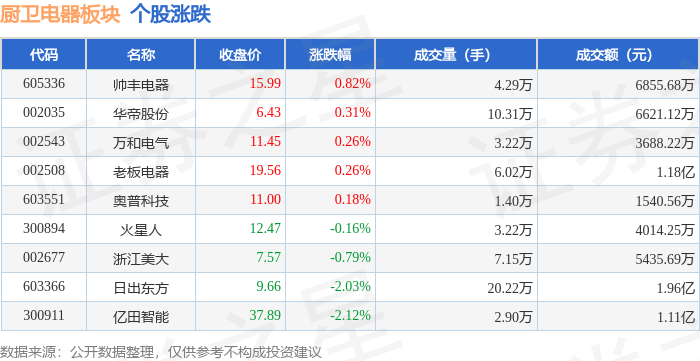
Market Overview - The kitchen and bathroom appliance sector experienced a decline of 0.38% on November 7, with Yitian Intelligent leading the drop [1] - The Shanghai Composite Index closed at 3997.56, down 0.25%, while the Shenzhen Component Index closed at 13404.06, down 0.36% [1] Stock Performance - Notable stock performances include: - Shuaixing Electric: Closed at 15.99, up 0.82% with a trading volume of 42,900 shares and a turnover of 68.56 million yuan - Chuan Dai Co.: Closed at 6.43, up 0.31% with a trading volume of 103,100 shares and a turnover of 66.21 million yuan - Wanhe Electric: Closed at 11.45, up 0.26% with a trading volume of 32,200 shares and a turnover of 36.88 million yuan - Boss Electric: Closed at 19.56, up 0.26% with a trading volume of 60,200 shares and a turnover of 118 million yuan - Aopu Technology: Closed at 11.00, up 0.18% with a trading volume of 14,000 shares and a turnover of 15.41 million yuan - Yitian Intelligent: Closed at 37.89, down 2.12% with a trading volume of 29,000 shares and a turnover of 111 million yuan [1] Capital Flow - The kitchen and bathroom appliance sector saw a net outflow of 76.58 million yuan from main funds, while retail investors contributed a net inflow of 67.74 million yuan [1] - Detailed capital flow for specific stocks includes: - Shuaixing Electric: Main funds net inflow of 4.65 million yuan, retail net outflow of 2.95 million yuan - Aopu Technology: Main funds net outflow of 0.31 million yuan, retail net inflow of 0.46 million yuan - Yitian Intelligent: Main funds net outflow of 15.38 million yuan, retail net inflow of 10.57 million yuan - Daybreak Oriental: Main funds net outflow of 40.26 million yuan, retail net inflow of 38.18 million yuan [2]

家电3C大牌“开卷”,苏宁易购双11“真惠补”
Xin Lang Cai Jing· 2025-11-07 06:25
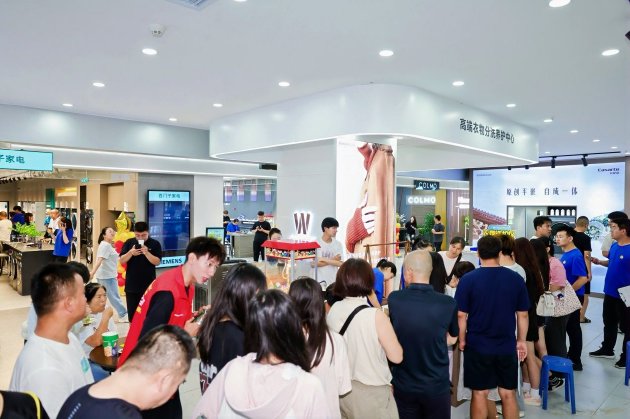
Core Insights - The annual Double 11 shopping festival is witnessing a shift in focus within the home appliance and 3C market, moving away from a mere price chase to a more rational approach where consumers value technological advancements, genuine discounts, and immersive services [1][3] - Major home appliance and 3C brands are competing on the platform of Suning.com, presenting a multi-dimensional "involution" that encompasses products, subsidies, and consumer experiences [1][4] Product Innovations - This year's festival features a strong emphasis on new product launches, including the Skyworth SU8F Pro 100-inch cinema, Hisense U7S Pro 100-inch RGB Mini LED TV, and customized products catering to individual consumer needs [1][3] - Notable new products include the Midea 10-year no-change core soft water purifier and the Boss AI digital kitchen appliance suite, showcasing cutting-edge technology and personalized options for consumers [1] Subsidy Strategies - Suning.com introduced a more effective subsidy program called "True Benefit Subsidy," which is based on extensive user feedback and expert recommendations, leading to significant price reductions on popular products [3] - Examples of discounted products include a 436L cross-door refrigerator priced at 2999 yuan and a 75-inch Mini LED TV available for 3999 yuan, making advanced smart appliances more accessible to families [3] Consumer Engagement - Brands are enhancing user satisfaction and loyalty by transforming shopping into an entertainment and social activity, featuring celebrity endorsements and interactive events during the Double 11 period [4] - Events include appearances by Olympic champion Chen Yibing and cooking competitions that allow consumers to experience the appeal of smart kitchens firsthand [4] Market Dynamics - The competitive landscape is benefiting consumers as brands strive to offer the best products, sincere offers, and innovative experiences, creating a positive cycle of mutual benefit [4] - Suning.com is establishing itself as a key player in the home appliance and 3C market, proving its value as a platform that can amplify product visibility, provide substantial savings, and foster emotional connections with consumers [4]

《新消费食代家庭饮食洞察报告》发布
Di Yi Cai Jing· 2025-11-07 03:37
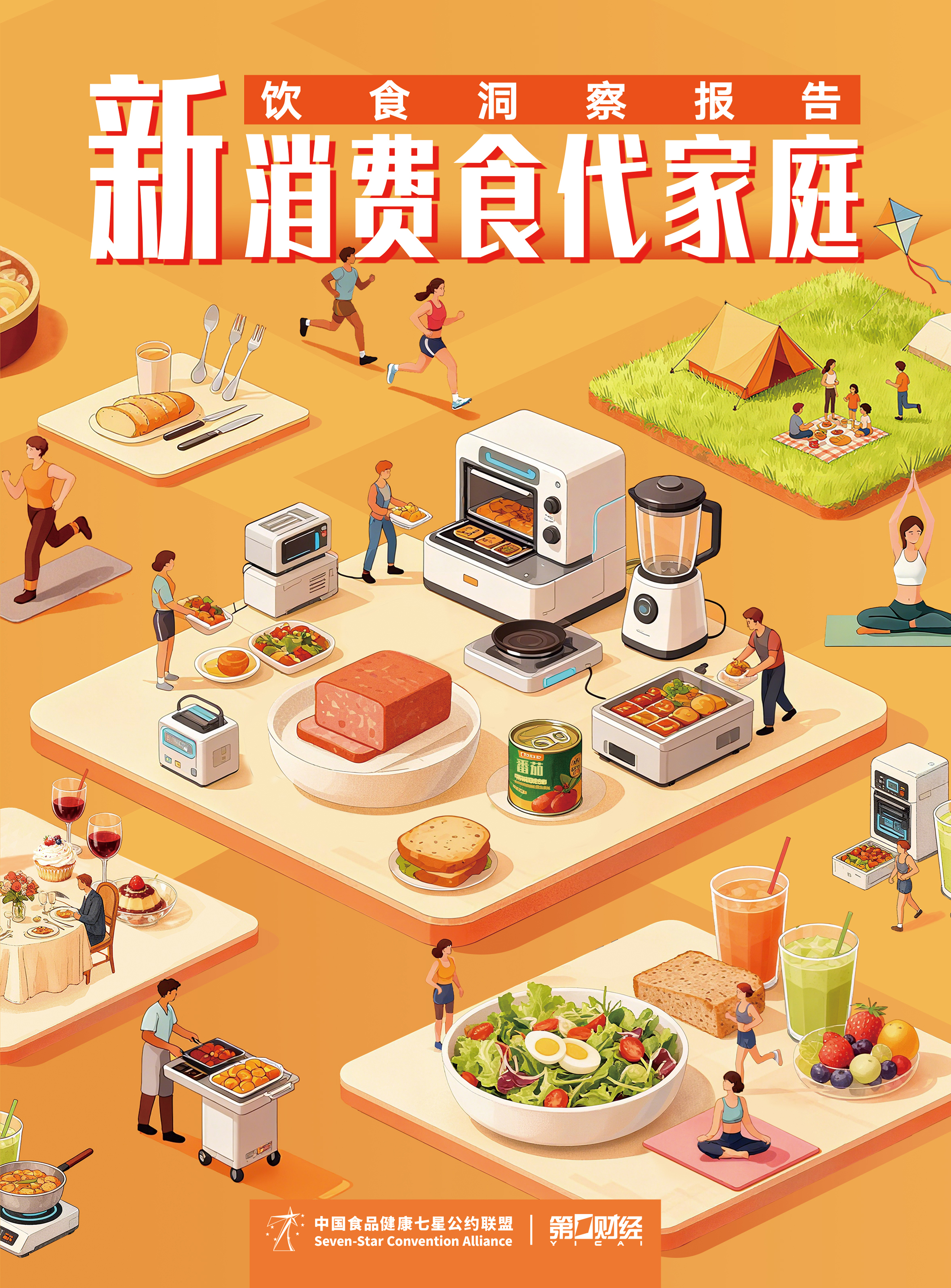
Core Insights - The article discusses the evolving dietary consumption patterns in Chinese families, particularly focusing on the "New Consumption Era" driven by health awareness and efficiency demands in the context of the "Healthy China 2030" strategy [1][5][19]. Group 1: Background and Context - The prevalence of overweight and obesity among the population has reached 50.7%, prompting a shift in dietary needs from merely "eating well" to "precisely catering to the family" while balancing efficiency and a sense of ritual [1][5]. - The report highlights the emergence of the "New Consumption Era" family, primarily consisting of individuals born in the 1980s and 1990s, who prioritize health, quality, and efficiency in their dietary choices [1][19]. Group 2: Key Trends in Dietary Consumption - Four major shifts in consumption patterns are identified: 1. From "personal preferences" to "family adaptation" 2. From "passive acceptance" to "active planning" 3. From "functional consumption" to "emotional consumption" 4. From "traditional procurement" to "technology-enabled" solutions for precise health management [5][6]. - The report indicates that over 53% of families in first-tier or new first-tier cities prefer low-fat and low-calorie foods, reflecting a stronger health consciousness in these areas [20]. Group 3: Economic and Demographic Insights - Among the "New Consumption Era" families, 78.5% have a monthly income exceeding 10,000 yuan, with 36.0% earning between 10,000 to 20,000 yuan, indicating a willingness to pay a premium for quality ingredients [21]. - The primary decision-makers in dietary choices are predominantly women aged 26-40, who account for 50% of the decision-making demographic [24]. Group 4: Consumer Behavior and Preferences - The report categorizes "New Consumption Era" families into three personas: "Health Management Control," "Efficiency Lifestyle," and "Exquisite Experience," each exhibiting distinct dietary preferences and behaviors [31]. - A significant 82% of families prioritize checking ingredient labels when purchasing food, reflecting a heightened awareness of health and safety [84]. Group 5: Future Trends and Innovations - The future of dietary consumption is expected to focus on sustainability, convenience, quality, and scenario-based consumption, driven by technological advancements and supply chain innovations [145][147]. - Consumers are increasingly looking for personalized dietary solutions, with 64.8% expressing interest in AI-driven nutrition planning and smart kitchen devices [147][148].
家居行业线上线下争相圈地,各有烦忧
3 6 Ke· 2025-11-07 03:18
Core Viewpoint - The recent surge in offline stores by e-commerce giants like Tmall and JD is reshaping the home furnishing retail landscape, emphasizing smart home solutions and immersive shopping experiences [1][2][12]. Group 1: E-commerce Expansion - Tmall Genie opened eight stores in Sichuan, marking a significant offline expansion that contrasts with the relative calm of traditional retail [1][2]. - JD MALL has surpassed 26 stores nationwide, focusing on a one-stop shopping experience that includes a wide range of products [1][2]. - The competition between Tmall and JD in offline retail is intensifying, with both companies adopting innovative strategies to attract consumers [2][3]. Group 2: New Retail Models - The shift from traditional retail to integrated smart home solutions is evident, with Tmall Genie implementing a "space as a service" strategy that enhances user experience through automation [2][4]. - Tmall Genie collaborates with local traditional retailers like Fusenmei to create immersive AI home experiences, showcasing advanced smart home technologies [4][5]. - JD MALL is pursuing a heavy asset model with large self-operated stores, while also forming partnerships with traditional retailers like Juran Home to enhance its market presence [4][5]. Group 3: Traditional Retail Response - Traditional home furnishing retailers are not passive; they are actively transforming into smart home experience centers to compete with e-commerce [6][7]. - Juran Home aims to establish over 30 smart home experience centers, focusing on personalized consumer trends and integrated smart home solutions [7]. - Red Star Macalline is undergoing a comprehensive transformation to appeal to younger consumers through digital channels and innovative service models [8]. Group 4: Market Dynamics - The competition is not just between e-commerce and traditional retail; both sides face unique challenges in adapting to changing consumer demands [10][11]. - E-commerce platforms are expanding into lower-tier cities, which may disrupt the existing traditional retail landscape [10][11]. - The effectiveness of e-commerce's offline expansion in converting foot traffic into long-term sales remains uncertain, as the home furnishing sector involves complex customer interactions [11][12]. Group 5: Future Outlook - The future of home retail will blur the lines between online and offline, with a focus on experiential shopping and emotional connections with consumers [12]. - Both e-commerce giants and traditional retailers must adapt to the evolving landscape to maintain competitiveness in the home furnishing market [12].



第一财经“历久出新典范”:探寻老板电器品牌的“长青之道”
Di Yi Cai Jing· 2025-11-06 14:39
Core Insights - The article emphasizes the shift from a singular focus on "growth speed" to "growth quality" and "brand sustainable value" in the business landscape of 2025, highlighting the importance of brands that can navigate market fluctuations and lead industry breakthroughs [1][3] Brand Recognition - The "2025 Annual Brand Power Case" evaluation recognized eight brands, including Boss Electric, for their ability to embody the concept of "lasting innovation," showcasing their resilience and adaptability in a changing market [1][3] - Boss Electric reported a revenue of 7.312 billion yuan and a net profit of 1.157 billion yuan in the first three quarters of 2025, demonstrating robust growth while launching a new brand positioning as "Your AI Cooking Partner" [1][3] Brand Evolution - The article discusses how brands like IKEA and Boss Electric have maintained their foundational values while continuously innovating, with Boss Electric's journey reflecting the evolution of China's economy and consumer behavior over the past four decades [3][4] - The concept of "lasting innovation" requires brands to actively engage in youth-oriented, localized, and digital transformations to stay relevant to new consumer segments [3][4] Market Dynamics - The competitive landscape in the cooking appliance sector has intensified over the past 40 years, with Boss Electric emerging as a leader by focusing on improving cooking environments and setting industry standards [5][6] - The transition from basic functionality to quality-driven consumer demands has characterized the Chinese home appliance market, with Boss Electric choosing to deepen its focus on the cooking sector rather than diversifying into unrelated areas [6][9] Technological Integration - The rise of artificial intelligence (AI) has expanded the boundaries of brand value, with Boss Electric leveraging AI to enhance user experience and create a more interactive kitchen environment [7][10] - Boss Electric's AI cooking model, "Shishen," integrates extensive culinary knowledge and user data to provide personalized dietary planning and facilitate seamless operation across kitchen devices [10][11] Cultural and Humanistic Approach - The brand's new positioning emphasizes the role of AI as a supportive tool in the cooking process, ensuring that the human element remains central to culinary creativity [11][12] - Boss Electric has invested in cultural initiatives, such as establishing a Culinary Humanities Research Institute and promoting culinary education, to deepen its connection with consumers and enhance brand warmth [12][14] Conclusion - Brands like Boss Electric exemplify the journey of local brands in China, demonstrating that maintaining core values while embracing innovation is crucial for sustained growth and relevance in a rapidly changing market [14]

第一财经“历久出新典范”:探寻老板电器品牌的“长青之道”
第一财经· 2025-11-06 14:26
Core Viewpoint - The article emphasizes the shift from a singular pursuit of "growth speed" to a focus on "growth quality" and "brand sustainable value" in the business landscape of 2025, highlighting the importance of brands that can navigate cycles and lead industry breakthroughs [1][4]. Group 1: Brand Recognition and Performance - Eight brands, including Boss Electric, were recognized for their enduring innovation and brand strength, with Boss Electric reporting a revenue of 7.312 billion yuan and a net profit of 1.157 billion yuan in Q3 2025, showcasing robust growth and a new brand positioning as "Your AI Cooking Partner" [1][4]. - The brands recognized share a common theme of balancing "enduring" foundations with "innovative" breakthroughs, with Boss Electric exemplifying this through its historical commitment to the cooking sector and recent AI-driven brand evolution [4][6]. Group 2: Brand Evolution and Consumer Engagement - The essence of "enduring innovation" lies in brands' dedication to their core business while adapting to consumer needs, as highlighted by Boss Electric's focus on user value and its evolution from improving cooking environments to enhancing kitchen experiences [6][12]. - The competitive landscape in the cooking sector is intense, with Boss Electric emerging as a leader by establishing industry standards and continuously innovating, having participated in the drafting of 163 industry standards [7][8]. Group 3: Technological Integration and User-Centric Approach - The rise of artificial intelligence (AI) presents opportunities for brands to redefine their value propositions, with Boss Electric leveraging AI to create a comprehensive digital ecosystem that enhances user experience and meets evolving consumer demands [9][12]. - Boss Electric's AI Cooking Model, "Shishen," integrates extensive culinary knowledge and user data to provide personalized dietary planning and seamless device coordination, transforming traditional kitchens into interactive living spaces [15][16]. Group 4: Cultural and Humanistic Values - The brand's new positioning emphasizes a blend of technology and humanistic values, aiming to make cooking a more engaging and meaningful experience, with initiatives like the Culinary Humanities Research Institute and partnerships to promote cooking culture among younger generations [17][19]. - Boss Electric's commitment to integrating cultural depth with product innovation reflects a broader trend among enduring brands to maintain relevance and connection with consumers in a rapidly changing market [19].