长江存储

Search documents
突发!美日韩澳新已签署协议建立芯片全产业链联盟,中国如何应对
Sou Hu Cai Jing· 2025-12-20 00:25
Group 1 - The signing of the "Rare Earth Supply Chain Agreement" by the US and eight allied countries indicates a strategic move to reduce reliance on China for critical minerals and semiconductor materials [1][30]. - The agreement aims to create an independent supply chain that excludes Chinese elements, reflecting the US's desire to not be the second player in the global market [30][18]. - Japan is tightening export approvals for critical semiconductor materials, particularly photoresists, which are essential for chip manufacturing, indicating a coordinated effort among allied nations [6][8]. Group 2 - The US and its allies are shifting their focus from equipment to materials, aiming to disrupt the supply of essential components like photoresists, which are crucial for chip production [4][12]. - China's current self-sufficiency in photoresists is only 12%, with even lower rates for advanced materials, highlighting a significant vulnerability in its semiconductor industry [12][13]. - The US's strategy includes using administrative power to distort market rules, aiming to eliminate China's long-held advantages in rare earth resources and semiconductor materials [22][24]. Group 3 - China's response to the supply chain agreement emphasizes the importance of market-driven supply chains and criticizes the creation of exclusive clubs that undermine fair competition [32][30]. - New regulations in China could restrict the export of products containing even a small percentage of Chinese rare earth elements, potentially impacting the global semiconductor supply chain [34][36]. - The current geopolitical landscape is pushing China to innovate and develop its semiconductor capabilities, with domestic companies beginning to fill gaps left by foreign suppliers [41][39]. Group 4 - The domestic market in China is becoming a testing ground for new technologies, with local material suppliers gaining opportunities to validate their products amid external supply threats [41][43]. - Chinese companies are exploring alternative architectures like RISC-V to reduce dependency on traditional semiconductor designs, with significant growth projected in this area [45][48]. - The ongoing geopolitical tensions may ultimately lead to a transformation in China's semiconductor industry, as it seeks to overcome challenges and achieve greater self-sufficiency [50][52].


消费电子ETF(561600)盘中交投活跃,AI终端迎来爆发临界点
Xin Lang Cai Jing· 2025-12-19 05:41
Group 1 - The core viewpoint of the articles highlights the contrasting dynamics in the global consumer electronics market, characterized by a slowdown in traditional business and an explosion of AI innovation, with AI terminal shipments expected to exceed 300 million units in 2025, driving revenue growth of 25%-40% for related supply chain companies [2] - The shortage and price increase of storage chips are identified as critical variables affecting the industry, with DRAM and NAND Flash spot prices rising over 300% from September to mid-December 2025, and major manufacturers like Samsung and SK Hynix raising prices by up to 30% in Q4 [1][2] - The consumer electronics ETF closely tracks the CSI Consumer Electronics Theme Index, which includes 50 listed companies involved in component production and design, reflecting the overall performance of the consumer electronics sector [2][3] Group 2 - The top ten weighted stocks in the CSI Consumer Electronics Theme Index account for 56.39% of the index, with notable companies including Luxshare Precision, Cambricon, and Industrial Fulian [3] - The anticipated price increase of storage chips in 2025 is projected to be between 30%-50% year-on-year, with the cost of storage for AI phones expected to rise by $80-$120 per unit, potentially leading to a 5-8 percentage point decline in gross margins for brands lacking core technology reserves [2] - The consumer electronics ETF has various connection options, including multiple classes of the Ping An CSI Consumer Electronics Theme ETF, indicating a structured investment approach for investors [3]


大摩、美银一致预见芯片股“长牛逻辑”完好,2026年聚焦半导体最强“卖铲人”!
Jin Rong Jie· 2025-12-19 02:59
从2024年复苏到2025年持续强劲,半导体行业从未经历过如此复杂的周期叠加。 摩根士丹利发布的最新报告一针见血:在史无前例的AI基建热潮以及传统模拟芯片/MCU强劲去库存步 伐推动之下,芯片股的"长期牛市逻辑"仍然完好无损。 美国银行的资深分析师团队更是直接,直言带领美股踏入这轮超级牛市的芯片板块,2026年有望继续牛 市上攻行情,成为市场的最核心焦点。 【为什么如此强劲?】 因为表面上,我们正身处典型的半导体库存周期复苏阶段——传统模拟芯片和MCU的去库存接近尾 声,需求开始回暖。但其实这次周期复苏更是结构性需求爆发与传统周期回升的历史性共振。 现在半导体行业的投资逻辑已经彻底重构。我们面对的是由AI驱动的、可能持续十年的基础设施升级 大周期。因此,2026年的特殊之处可能在于,我们可以同时看到AI推理需求的大规模爆发、传统芯片 的全面复苏、和上游半导体设备资本开支的峰值共振。 【主线:半导体设备的"卖铲人"逻辑】 要知道,因为"卖铲子"的地位,所有关于催化先进制程AI芯片产能的消息,可谓对于半导体设备来说都 是积极与正向。 SEMI最新预测,2025年半导体制造设备销售额将达1330亿美元,创历史新高; ...

中邮保险旗下基金投资项目——沐曦股份、摩尔线程于科创板成功上市
Sou Hu Cai Jing· 2025-12-18 09:43
Group 1 - The core viewpoint of the news highlights the successful IPOs of domestic GPU leaders, Mu Xi Co., Ltd. and Moer Thread, on the Shanghai Stock Exchange's Sci-Tech Innovation Board, with opening day gains exceeding 400%, setting a record for IPO returns in the A-share market under the comprehensive registration system [1][3] - The rise of Mu Xi and Moer Thread signifies a significant exploration in breaking the monopoly in the domestic chip industry, as both companies focus on independent innovation and the development of commercially viable domestic GPU chips, which are increasingly applied in high-performance heterogeneous computing and other core scenarios [3] - The successful listings of these companies reflect market recognition of domestic GPU technology capabilities and validate the investment value in the hard technology sector, supported by long-term capital from China Post Insurance through fund investments [1][3] Group 2 - China Post Insurance has adopted a "long-termism + strategic layout" approach, utilizing a dual-driven model of "direct investment + funds" to strategically invest in the hard technology sector, covering key areas such as chips, robotics, and artificial intelligence [3] - The investment strategy of China Post Insurance has positioned it as a stabilizing force for many domestic hard technology companies, exemplified by its investments in various firms, including Yushu Technology, Gokong Technology, Changxin Storage, and Yangtze Memory Technologies [3] - As the digital economy continues to integrate with the real economy, the innovation vitality in the hard technology field is expected to persist, with China Post Insurance committed to maintaining its long-term investment philosophy and injecting capital into more domestic innovative enterprises [4]
中金:算力强势打开SSD需求天花板 2026年NAND价格或将维持高位
Zhi Tong Cai Jing· 2025-12-18 07:56
Core Viewpoint - NAND contract prices have more than doubled since Q1 2025, driven by increased demand from AI model training and inference, which require higher write speeds, IOPS, capacity, and durability for enterprise SSDs [1][2] Demand Side - The convergence of cloud and edge AI is significantly boosting SSD demand, with expectations for substantial growth in storage capacity for mobile devices and PCs [2] - Global NAND Flash shipment volume is projected to approach 2000 EB by 2028, maintaining nearly 30% high growth over the next three years [2] Supply Side - Cautious capacity expansion by NAND manufacturers is expected to support prolonged price increases, with the current market dominated by a few key players [2] - The new joint factory by Kioxia and Western Digital has commenced production in Q3 2025, utilizing the advanced BiCS8 technology, which will contribute to revenue in the first half of 2026 [2] - Supply tightness is anticipated to last at least until the end of 2026, with NAND manufacturers likely to maintain price support through supply control [2] - Yangtze Memory Technologies' capacity expansion and its Xtacking architecture are expected to reshape the domestic NAND supply landscape [2] HDD Market - HDD remains a cost-effective choice for cloud computing vendors for cold storage, with advantages in unit storage cost and total cost of ownership (TCO) [3] - As NAND technology advances, the cost advantage of HDDs is expected to diminish, with current price differences ranging from 4 to 6 times [3] - Future HDD applications will focus on large-scale data lakes and cold data archiving, with a market growth rate of approximately 15% over the next three years [3]
重视国产设备与存储产业大趋势
2025-12-17 02:27
摘要 存储需求预计 2026 年超供,2025 年 9 月现货价已大幅上涨,四季度 合约价涨幅预期上修,行业维持供不应求状态,2026 年 Q1 合约价预计 持续超预期,CSP 服务器存储器需求增速预计至少 30%。 存储行业大缺货背景下,长鑫存储和长江存储等国内企业扩产有望超预 期,逻辑先进制程扩产亦将受益,设备厂商如拓荆科技将受益于扩产带 来的额外订单,国产化率提升带来相应收益。 半导体设备指数今年以来增长显著,拓荆科技和微导纳米涨幅居前。9 月初以来,存储涨价催化及产品上市预期强化,相关公司股价进一步上 涨,预计长鑫和长江 2026 年扩产量约为 10-11 万片。 存储设备板块未来几年有望保持较高增速,订单确定性较高,对营收和 利润预测准确性提升。北方华创等公司 PE 较低,有望通过 EPS 增长推 动市值上升,年初设备板块胜率较高。 晶合集成主业稳健,各领域处于满载状态。CBA 和 CFA 技术发展有望 推动 DRAM 阵列与 CMOS 外围电路分离制造,产生外包需求,为晶合 集成等公司带来巨大机会,如 28 纳米节点代工可带来显著营收增量。 Q&A 2025 年存储行业的市场表现和未来预期如何? ...


长江存储致态灵·潮流版移动固态硬盘首发评测:缓外性能最强移动SSD
Xin Lang Cai Jing· 2025-12-16 14:04
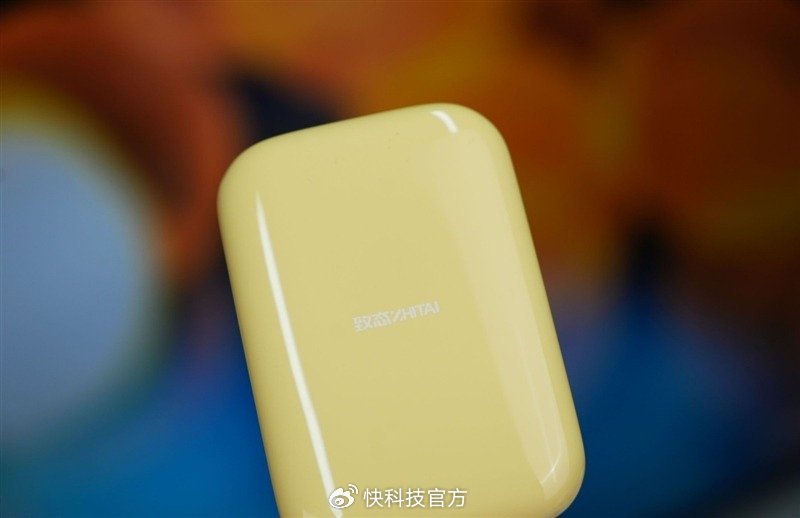
来源:快科技官方 一、前言:可能是缓外性能最强移动固态硬盘 我们测试过很多移动存储设备,比如某品牌1.5TB TF卡,持续写入速度只有20MB/s,拷贝100GB数据得数小时时 间。至于移动SSD,大部分只能在初始阶段保证较强写入性能,但很快就会掉到100MB/s甚至更低。 近日,原厂品牌长江存储致态推出了致态灵·潮流版移动固态硬盘,支持磁吸功能,是一款兼具兼具高性能、高颜 值、高品质的磁吸款旗舰移动存储产品。 更为难得的是,它拥有千元价位最强的缓外写入性能。甚至不少国际大厂同类产品,也鲜有缓外写入速度能超越 它的。 从名字就能看出,致态灵·潮流版移动固态硬盘兼具颜值与性能的移动存储产品,它以清新柔和的配色、圆润精致 的小巧造型,契合年轻群体的时尚审美。 在性能方面,这款产品采用了20Gbps Type-C接口,顺序读写速度可达2000MB/s,十倍于HDD。而在长江存储晶 栈Xtacking架构的原厂闪存颗粒的加持下,它的可以做到满盘写入不掉速,这样的表现超越了很多顶级PCIe 4.0 SSD。 作为移动设备,致态灵·潮流版移动固态硬盘采用了磁吸设计,可直连安卓、鸿蒙、iPhone15系列及以上机型,充 当 ...
马斯克身家超6000亿美元史上首位;苹果WWDC 2026前瞻;AMD CEO苏姿丰到访中国...
Sou Hu Cai Jing· 2025-12-16 12:54
Group 1 - Elon Musk becomes the first individual with a net worth exceeding $600 billion, primarily due to the doubling of SpaceX's valuation, with potential to become a trillionaire in the future [1] Group 2 - Apple is expected to unveil numerous software features in iOS 27, including expanded health services and enhanced Siri AI capabilities, as revealed by leaked early version code [2] Group 3 - AMD CEO Lisa Su's visit to Lenovo's headquarters in Beijing may pave the way for further collaboration between the two companies [3] Group 4 - Huawei's CEO He Gang hints at "double surprises" for the nova 15 series, with speculation about dual red maple lenses for both front and back cameras [4] Group 5 - The Huawei Mate X2 series foldable phone receives an upgrade to HarmonyOS 4.2.0.182, enhancing user experience and incorporating security patches [5] Group 6 - A report indicates that global HDD contract prices are set to rise approximately 4% in Q4 2025, marking the largest increase in eight quarters, driven by changes in China's procurement strategies and a surge in US AI infrastructure [11][12] Group 7 - Longsys launches the Ling·Trend mobile SSD, featuring magnetic attachment and a 20Gbps interface, available in three capacities: 1024GB, 2048GB, and 4096GB [13] Group 8 - Sapphire calls on AMD and other GPU manufacturers to provide chips and memory, seeking greater design freedom, a situation that also applies to NVIDIA's board partners [14] Group 9 - The BAIC Arcfox Alpha S (L3 version) is confirmed to use Huawei's QianKun intelligent driving ADS system, as part of the first batch of L3 conditional autonomous driving models approved in China [15] Group 10 - Microsoft announces that Windows Server 2025 will natively support NVMe storage, resulting in an approximately 80% increase in IOPS performance [16]




突发特讯!东南亚国家、发声:很依赖中国供应链,但又怕被美国加征转运附加费,引发国际舆论
Sou Hu Cai Jing· 2025-12-16 06:49
Group 1 - The article highlights the increasing pressure on Southeast Asian low-cost export countries due to US tariff policies amid US-China structural competition, prompting a reevaluation of global supply chain dynamics [1][3] - The US has imposed additional tariffs of up to 40% on goods transiting through Southeast Asia, directly impacting industries reliant on the "China supply chain" model, such as textiles in Vietnam and furniture in Indonesia [3] - Southeast Asian countries are adopting differentiated strategies in response to US pressures, with Vietnam utilizing "bilateral accumulation" rules and Malaysia tightening origin certificate issuance [3][4] Group 2 - Despite external pressures, the supply chain integration between China and ASEAN shows resilience and an upgrading trend, with investments from Chinese companies like SAIC-GM Wuling and BYD in Indonesia and Thailand [4][6] - The trade volume between China and ASEAN is projected to exceed $597 billion in 2024, accounting for 16.7% of China's total foreign trade, with emerging fields like digital and green economies driving future growth [6] - The "Resilient Supply Chain Initiative" by the US aims to redirect military suppliers to "trusted partners," with countries like Vietnam and Indonesia seen as key nodes due to their geographical and industrial advantages [9] Group 3 - The US's "de-China" supply chain strategy faces challenges, as local production in Southeast Asia remains cost-effective, evidenced by an 18% drop in import inquiries for Chinese intermediate products by Q2 2025 [7] - China is leveraging "industrial chain leapfrogging" to capture high-value segments in sectors like semiconductors and AI, showcasing its commitment to innovation and technological advancement [10] - Southeast Asian nations are actively seeking diversified cooperation paths, with Indonesia and Malaysia enhancing ties with China, Japan, and South Korea while pursuing local investments in sectors like semiconductors [11]
2026年的IPO宝座,已经预定好了
阿尔法工场研究院· 2025-12-16 05:23
Core Viewpoint - The article discusses the upcoming IPO wave in the technology sector, particularly focusing on AI and related industries, predicting a significant shift in the market dynamics towards a few leading companies rather than a broad-based IPO market [4][14][22]. Group 1: IPO Market Trends - The IPO market in 2026 is expected to be drastically different, with potentially only one-tenth the number of companies compared to 2021, but with a record fundraising scale of $450-500 billion [21][22]. - In the first three quarters of 2025, only 13 AI expansion-stage companies went public, contributing 87% of the total exit value, indicating a concentration of capital towards a few leading firms [15][16]. - The average exit value for AI companies is 50-100 times that of ordinary companies, highlighting the high growth potential and market interest in these firms [17][19]. Group 2: Key Players in the Market - Major players like SpaceX, OpenAI, and Anthropic are set to dominate the IPO landscape, with combined valuations reaching $1.65 trillion, significantly surpassing previous records [26][28][42]. - OpenAI, despite substantial losses, has achieved a valuation of $500 billion due to its rapid revenue growth, projected to reach $600 billion by the end of 2026 [30][32]. - SpaceX holds a monopoly in the rocket launch market, planning to raise over $30 billion through its IPO, which could account for more than half of the total global IPO fundraising in 2025 [38][42]. Group 3: China's Technology Sector - China's technology sector is witnessing a collective push towards IPOs, with companies across the entire supply chain, including AI, chips, and robotics, preparing for public offerings [45][61]. - Companies like Yushun Technology and Zhiyuan Robotics are pursuing IPOs, with Yushun expected to submit its application soon, showcasing the market's readiness for innovative technology firms [48][49]. - The storage chip sector is represented by Changjiang Storage and Changxin Storage, both of which are positioned as strategic assets in China's semiconductor landscape, with valuations potentially exceeding one trillion RMB combined [60][61].