联想

Search documents
2025年第二季度全球PC出货量同比增长8.4%,消费电子ETF(561600)翻红拉升
Xin Lang Cai Jing· 2025-07-25 02:22
Group 1 - Counterpoint Research reports that global PC shipments are expected to grow by 8.4% year-on-year in Q2 2025, marking the largest increase since the peak demand during the pandemic in 2022 [1] - The growth in Q2 2025 is attributed to the countdown to the end of Windows 10 support, the rise of AI PCs, and early inventory purchases due to anticipated changes in tariff policies [1] - Major companies such as Lenovo, Apple, and ASUS have seen their shipment volumes increase by over 10%, further solidifying their dominant positions in the global market [1] Group 2 - As of June 30, 2025, the top ten weighted stocks in the CSI Consumer Electronics Theme Index account for 51.02% of the index, including companies like Luxshare Precision, SMIC, and BOE Technology Group [2] - The CSI Consumer Electronics Theme Index tracks 50 publicly listed companies involved in component production and consumer electronics brand design and manufacturing [2] - The Consumer Electronics ETF closely follows the CSI Consumer Electronics Theme Index, with various fund options available for investors [2]




李善友教授重磅新课|为竞争建模:拆解价值网,重构创新维度
混沌学园· 2025-07-24 08:04
Core Insights - A significant statistic reveals that 63% of companies fail due to being trapped in mainstream value networks, while those choosing edge value networks have a success rate of 37% [1][5][9] - The competition among companies is not merely about products or technologies, but rather a battle between value networks [1][8] Group 1: Course Overview - The course titled "Modeling Competition: Deconstructing Value Networks and Reconstructing Innovation Dimensions" will be led by Professor Li Shanyou, focusing on a methodology developed over 10 years of research [2][30] - The course aims to provide actionable competitive modeling methodologies for decision-makers and entrepreneurs facing growth challenges [2][5] Group 2: Key Values of the Course - The course addresses the growth dilemma, emphasizing that 63% of companies fail due to their choice of value networks, rather than technological or managerial shortcomings [5][6] - It challenges the conventional understanding of competition, asserting that the real competition occurs between value networks rather than individual companies [8][9] Group 3: Value Network Competition Theory - The course will explore the concept of disruptive innovation, highlighting that disruption arises from the combination of new technologies and new markets [10][21] - It will provide insights into how companies can transition from being disrupted to actively disrupting their competitors by understanding their value network positioning [10][21] Group 4: Course Content and Methodology - The course will utilize the "One Thinking, Three Stages of Innovation" framework to help participants build competitive models and identify breakthrough points [14][15] - Participants will learn to identify key market entry points in edge markets through the lens of disruptive innovation [17][18] Group 5: Target Audience - The course is designed for various stakeholders, including corporate decision-makers, entrepreneurs, innovation managers, and those seeking cognitive upgrades [27][30] - It aims to equip participants with tools to diagnose their company's value network and develop strategies for competitive advantage [28][30]


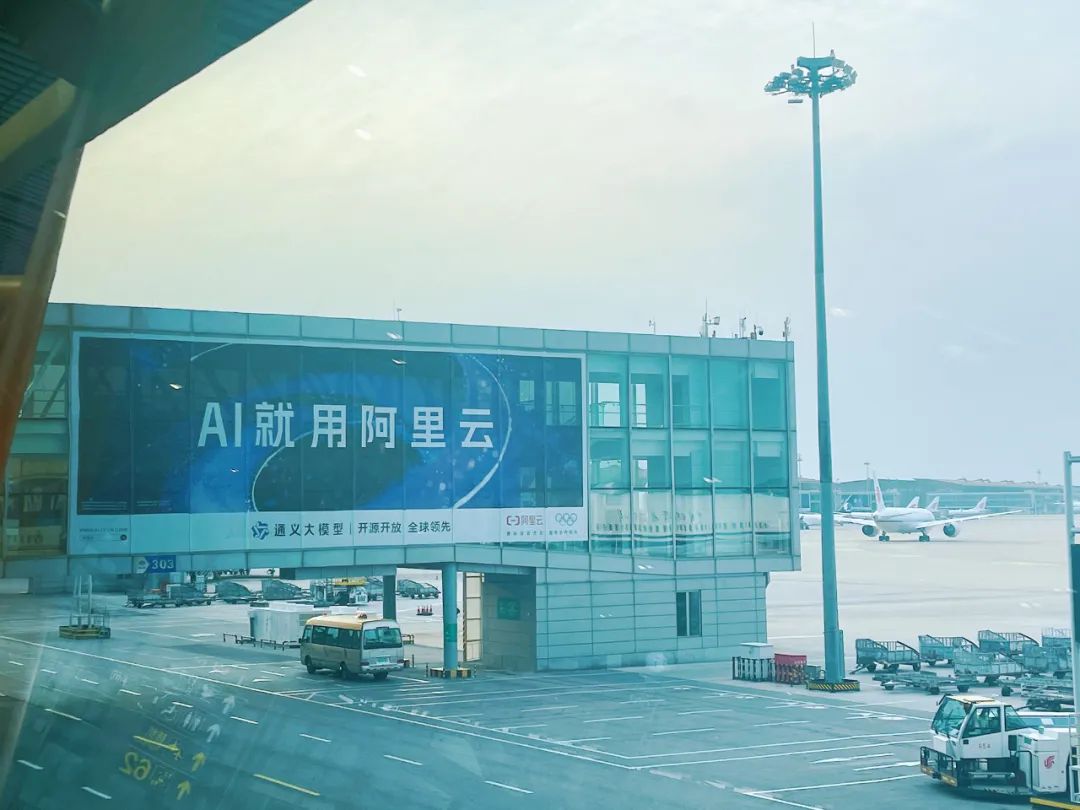
机场广告,AI乱斗
3 6 Ke· 2025-07-23 06:16
Group 1 - The core observation of the article is the increasing competition among AI and cloud service providers for advertising space in major airports, indicating a significant investment trend in AI marketing strategies [1][3][6] - Alibaba Cloud has made a substantial advertising investment, reportedly exceeding 100 million yuan, marking one of the largest promotional efforts in the current AI model wave [1][3] - Baidu Cloud has also entered the advertising space aggressively, securing high-value locations in airports that were previously occupied by luxury brands, indicating a shift in advertising strategies towards AI [3][6] Group 2 - The AI advertising trend is not limited to a few companies; various players including telecom operators and new energy vehicle manufacturers are also pivoting towards AI, aiming to capture the attention of business travelers in airports [6][8] - In the past two years, IT and internet advertising, particularly related to AI and cloud computing, has accounted for 20% of advertising revenue at airports, second only to the food and beverage industry [8][11] - Major airports in China, such as Beijing Capital and Shanghai Pudong, handle 80% of the country's air passenger traffic, with a significant portion being business travelers who are key decision-makers for AI product purchases [11][13] Group 3 - The competition for prime advertising spots in airports is intense, with companies needing to commit to long-term contracts to secure these high-traffic locations [13][20] - Despite the buzz around AI advertising, many companies are reallocating existing budgets rather than increasing overall spending, indicating a cautious approach to marketing investments [20][21] - Smaller AI firms are beginning to explore offline advertising opportunities in other transportation hubs, as they seek to establish brand presence and attract talent [21][23] Group 4 - The article highlights a potential disconnect between the excitement surrounding AI and the actual financial commitment to advertising, with many companies still hesitant to invest heavily in airport advertising [20][21] - As AI applications expand globally, companies are recognizing the value of offline advertising in unfamiliar markets, where it can provide a more tangible brand presence [23][25] - The overall advertising landscape is shifting, with traditional advertisers reducing budgets, creating opportunities for AI companies to capture market share in the advertising space [23][25]





机器人行业跟踪报告:星动纪元发布新款人形机器人产品,产业发展态势持续向上
GUOTAI HAITONG SECURITIES· 2025-07-23 05:05
Investment Rating - The report assigns an "Accumulate" rating for the humanoid robot industry [4]. Core Insights - The humanoid robot industry is experiencing continuous upward development, with technological iterations and commercialization progressing simultaneously. The report highlights the successful launch of the full-size humanoid robot, Star L7, by Star Motion Era, which has already begun mass delivery and has a full order book [2][4]. Summary by Sections Industry Overview - The humanoid robot industry is seeing significant advancements, with Star Motion Era's new product, the Star L7, featuring a height of 1.71m, weight of 65kg (excluding dexterous hands), and a total of 55 degrees of freedom. The robot is equipped with dual cameras, 3D LiDAR, and a microphone array, showcasing its capabilities in complex environments [4]. Technological Developments - Star Motion Era has developed a comprehensive technology stack that includes the VLA model, body, and dexterous hands. The VLA model ERA-42 integrates visual understanding, prediction, and action into a single end-to-end model, enhancing the robot's operational capabilities [4]. Commercialization Progress - Star Motion Era has successfully delivered over 200 units of its humanoid robots this year, with more than 50% of orders coming from international clients. The company is rapidly advancing in high-value sectors such as industrial logistics and retail, with notable clients including Haier and Lenovo [4]. Investment Recommendations - The report suggests focusing on several key companies within the humanoid robot sector, including: - Joint Drive Module: Zhongchen Technology, Shuanghuan Transmission, Landai Technology, and Fengli Intelligent - Linear Actuator Module: Hengli Hydraulic - Motors: Mingzhi Electric - Encoders: Yap Technology and Fengcai Technology H - Dexterous Hands and Sensors: Hanwei Technology and Zhaowei Electromechanical - Structural Components: Changying Precision [4].
【快讯】每日快讯(2025年7月22日)
乘联分会· 2025-07-22 14:28
Domestic News - The coverage rate of charging piles in highway service areas has reached 98.4%, with 62,000 charging parking spaces built, alleviating "range anxiety" for electric vehicles, which now account for about 20% of daily highway traffic [4] - Guangdong and Anhui provinces are implementing measures to promote healthy development in the automotive industry, including commitments from companies like GAC, BYD, and Xpeng to optimize payment processes for suppliers [5] - GAC Group has established a new energy technology company focusing on AI applications, IoT technology development, and related services [6] - BYD's high-end brand Yangwang will enter the European market, targeting luxury brands like Bentley and Porsche with high-tech and high-performance models [7] - Toyota and Sheneng Co. signed a strategic cooperation agreement to explore the application of Toyota's nickel-hydrogen batteries in energy storage systems [8] - Hongmeng Zhixing reported over 600 user centers nationwide and integrated over 1,100 Huawei supercharging stations, creating an efficient charging network [9] - WeRide has formed strategic partnerships with Guanggu Intelligent Manufacturing Park and Hubei Science Investment to deepen collaboration in battery asset management and capital markets [12] International News - The EU plans to mandate that rental companies only purchase electric vehicles starting in 2030, accelerating the phase-out of internal combustion engine vehicles [13] - The UK is seeking public input on a licensing plan for autonomous vehicle services, with the first services expected to launch in spring 2026 [14] - Canada's share of North American automotive production has dropped to a 30-year low of 7.6%, with a 6.4% decline in production [15] - Tesla has upgraded its Robotaxi service to allow for more precise passenger pickups based on user location, enhancing user experience [16] Commercial Vehicles - Supa and TÜV Nord have partnered to enhance the efficiency of global certification for new energy heavy trucks [17] - SAIC Yuejin launched two new energy light trucks, T2 and T3, aimed at covering various logistics needs [18] - Shandong Heavy Industry's heavy truck exports accounted for 61.3% of the national total, with a 3% increase in export revenue [19] - Fast Intelligent Brake Company received recognition as an advanced intelligent factory, marking a significant achievement in smart manufacturing [20]



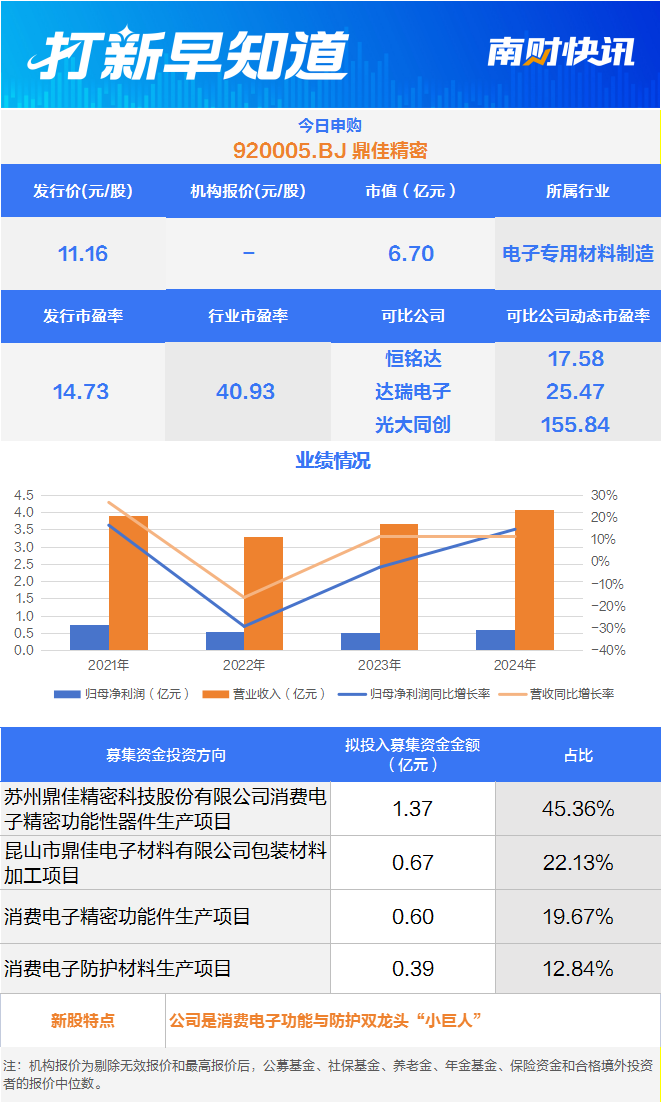
消费电子“小巨人”,京东方“小伙伴”今日申购丨打新早知道
2 1 Shi Ji Jing Ji Bao Dao· 2025-07-21 23:05
Group 1 - The core business of Dingjia Precision is the design, research and development, production, and sales of functional and protective products for consumer electronics, with applications in laptops, tablets, smartphones, and other devices [2] - The company has developed several core technologies, including multi-layer combination asynchronous processing and automated positioning cutting, and has obtained 208 patents as of March 31, 2025 [2] - Dingjia Precision has established long-term relationships with major clients, including Compal Electronics and Delta Electronics, with products ultimately used by well-known brands like Dell and HP [2] Group 2 - Dingjia Precision faces customer concentration risk, with sales to Compal Electronics accounting for 59.48%, 58.69%, and 56.83% of total revenue from 2022 to 2024 [3] - The company has internal control risks due to the significant control held by its actual controllers, which could lead to decisions that favor their interests over those of other shareholders [3]
AI功能是噱头吗?测评小米、Rokid等10款AI眼镜
Nan Fang Du Shi Bao· 2025-07-19 03:03
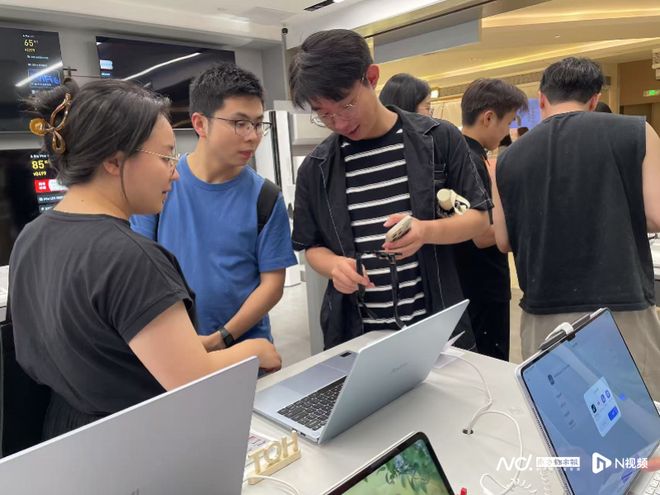
Core Insights - The smart glasses market is experiencing renewed interest, with major players like Alibaba and Xiaomi launching new products, indicating a competitive landscape [1][6] - Xiaomi's AI glasses have gained significant consumer attention, selling out quickly after their launch, highlighting strong market demand [1][4] - The introduction of AI features in smart glasses, such as translation and image recognition, is becoming a key selling point for manufacturers [9][12] Company Developments - Alibaba is reportedly developing AR glasses based on waveguide technology, expected to launch within the year [1] - Xiaomi's AI glasses were launched at a starting price of 1999 yuan, featuring capabilities like photo and video recording, translation, and payment functions [4][12] - Other companies like Rokid, Huawei, and Lenovo are also entering the AI glasses market, with various models offering different functionalities and price points [6][12] Market Trends - The price range for AI glasses varies significantly, from 799 yuan to 8999 yuan, with higher prices typically associated with models that include display capabilities [7][8] - The market is seeing a trend towards the integration of AI capabilities, with many glasses featuring functions like real-time translation and AI-assisted navigation [10][11] - The overall smart glasses market in China is projected to grow, with a significant increase in shipments expected in the coming years [15][16] Consumer Insights - Initial consumer feedback indicates a strong interest in AI functionalities, although there are concerns regarding battery life and comfort [6][15] - The ability to perform tasks such as real-time translation and payment through smart glasses is appealing to consumers, suggesting a shift towards practical applications of the technology [10][12] - The competitive landscape is evolving, with established brands like Xiaomi potentially lowering entry barriers for new users and expanding the overall market [16]
我们逛了链博会1.4万平数科馆,深扒黄仁勋盛赞的“中国供应链奇迹”
3 6 Ke· 2025-07-17 23:56
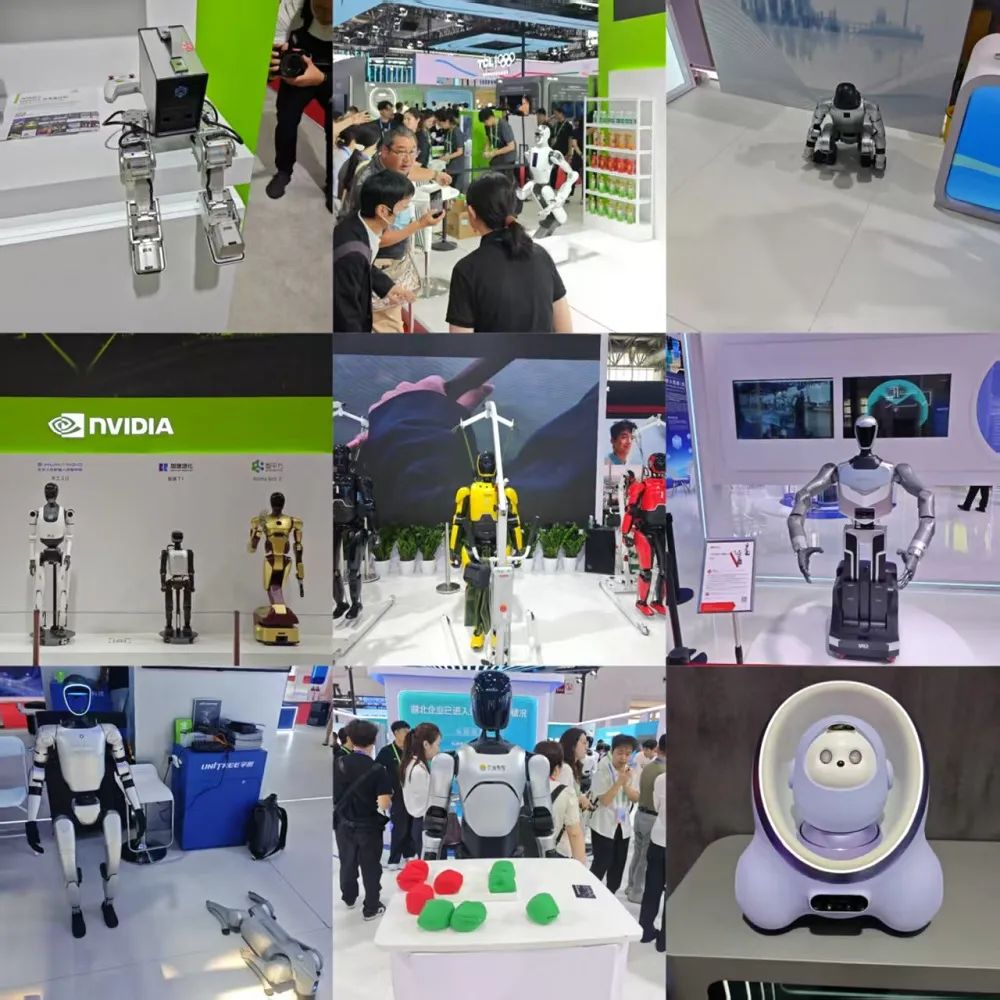
Group 1 - The third China International Supply Chain Promotion Expo is being held in Beijing from July 16 to July 20, showcasing over 650 companies and advanced technologies in AI, robotics, chips, and XR [1][3] - NVIDIA's founder, Jensen Huang, praised China's supply chain as a "miracle," highlighting its comprehensive layout and advanced technology, which plays a significant role in the global supply chain [1][3] - The digital technology exhibition area featured over 20 humanoid robots, demonstrating the integration of AI technology into various consumer electronics and applications for smart cities and factories [1][3] Group 2 - The expo emphasized collaboration between upstream and downstream supply chain enterprises, with Apple showcasing production lines instead of its products, alongside major semiconductor companies like NVIDIA, Intel, Qualcomm, and Micron [3][31] - The humanoid robot density was notably high, with various robots engaging with attendees, including the Galbot G1 from Galaxy General, which interacted with prize-winning visitors [4][5] - Companies from Hubei, Zhejiang, and Guangdong presented their humanoid robot technologies, showcasing a robust supply chain with over 80 core enterprises in Hubei alone [13][11][12] Group 3 - AI was a central theme at the expo, with Alibaba's DingTalk introducing AI spreadsheet features and 1688 launching AI digital employees to assist small businesses [18][20] - Lenovo showcased multiple "super intelligent" products for government, enterprise, and personal use, while Inspur presented AI solutions for various applications [20][22] - The expo featured innovative consumer electronics, including Lenovo's transparent screen laptop and HP's latest AI business laptop, highlighting the vibrant consumer electronics market [28][39] Group 4 - Major semiconductor companies participated, with NVIDIA not displaying its popular GPUs but showcasing solutions utilizing its technology, including AI workstations and the Spectrum-X switch [46][48] - Qualcomm presented 12 smartphones powered by its Snapdragon 8 platform, while Intel showcased AI PCs using its second-generation Core Ultra processors [49][50] - Domestic chip manufacturers like Hezhima and Wan Youying presented their products, indicating a growing focus on local production and innovation in the semiconductor industry [53][54] Group 5 - The expo illustrated the rapid development of AI technology in China, with a strong emphasis on integrating AI into product design, manufacturing, and sales processes [56] - Huang's positive outlook on the Chinese robotics industry was supported by the expo's demonstrations of humanoid robots and the collaborative efforts of upstream and downstream enterprises [56]

港股概念追踪 | 规模空前!2025世界人工智能大会举办在即 哪些公司将受益?(附概念股)
Zhi Tong Cai Jing· 2025-07-16 23:39
Core Viewpoint - The 2025 World Artificial Intelligence Conference (WAIC) will be held in Shanghai from July 26 to July 28, focusing on AI infrastructure, intelligent terminals, and AI-enabled new industrialization among other key areas [1][2]. Group 1: Event Overview - The WAIC will feature an unprecedented exhibition scale, with over 70,000 square meters of exhibition space and participation from more than 800 companies, over 50% of which are from outside China [1]. - The event will showcase over 3,000 cutting-edge exhibits, including 40 large models, 50 AI terminal products, and 60 intelligent robots, marking the largest scale in the history of the conference [1]. Group 2: Product Launches and Innovations - The conference will highlight innovative products in three main areas: model applications, embodied intelligence, and smart hardware, with numerous first-time launches [2]. - Notable product launches include Siemens' Industrial Copilot, Tesla's Tesla Bot, and various AI applications from major companies like Google, Alibaba, and Tencent [2]. Group 3: Industry Insights - Analysts from Dongwu Securities and Guojin Securities indicate that AI applications are experiencing rapid growth, with significant cost reductions and increasing penetration rates, suggesting a transition into a fast growth phase for the industry [3][4]. - The emergence of AI Agents is seen as a pivotal moment in the software revolution, reshaping various aspects of work and life [4]. Group 4: Company Developments - Baidu has announced the open-sourcing of its Wenxin large model series, marking a significant advancement in the large model field [5]. - Alibaba is collaborating with China FAW to develop a dedicated large model for the automotive industry, aiming to enhance efficiency and drive business transformation [5]. - SenseTime plans to launch its new productivity tools and an embodied intelligence platform during the conference [5]. Group 5: Market Predictions - Horizon Robotics is projected to achieve a compound annual growth rate of 57.5% from 2025 to 2027, with expectations of reaching breakeven by 2028 [6]. - The company is anticipated to capture 54% of the market share for advanced driver-assistance systems (ADAS) in China by 2027, leveraging local automotive chip advantages [6].
以数观势丨5.3%增速背后:新动能撑起新发展
Xin Hua Wang· 2025-07-16 12:29
Economic Performance - In the first half of 2025, China's GDP reached 66,053.6 billion yuan, with a year-on-year growth of 5.3% [1] - The high-quality development trend has gained consensus, accumulating new momentum and enhancing sustainable economic development capabilities [1] Consumer Market Trends - The consumer market showed significant performance, with an increase in service consumption and enhanced holiday consumption effects [2] - New consumption models and formats are emerging, with "China Travel" and "China Purchase" gaining popularity [2] Innovation and Digital Economy - The number of effective invention patent applications in China approached 5 million, growing by 12.8% from January to May [2] - The core industry value added of the digital economy accounts for about 10% of GDP, indicating rapid development and integration with traditional industries [2] Industrial Development - Tianjin has cultivated 400 smart factories and digital workshops, with plans to nurture at least 100 more advanced smart factories this year [3] - New industries, new business formats, and new models are continuously emerging, contributing to the steady progress of economic transformation and high-quality development [3]